
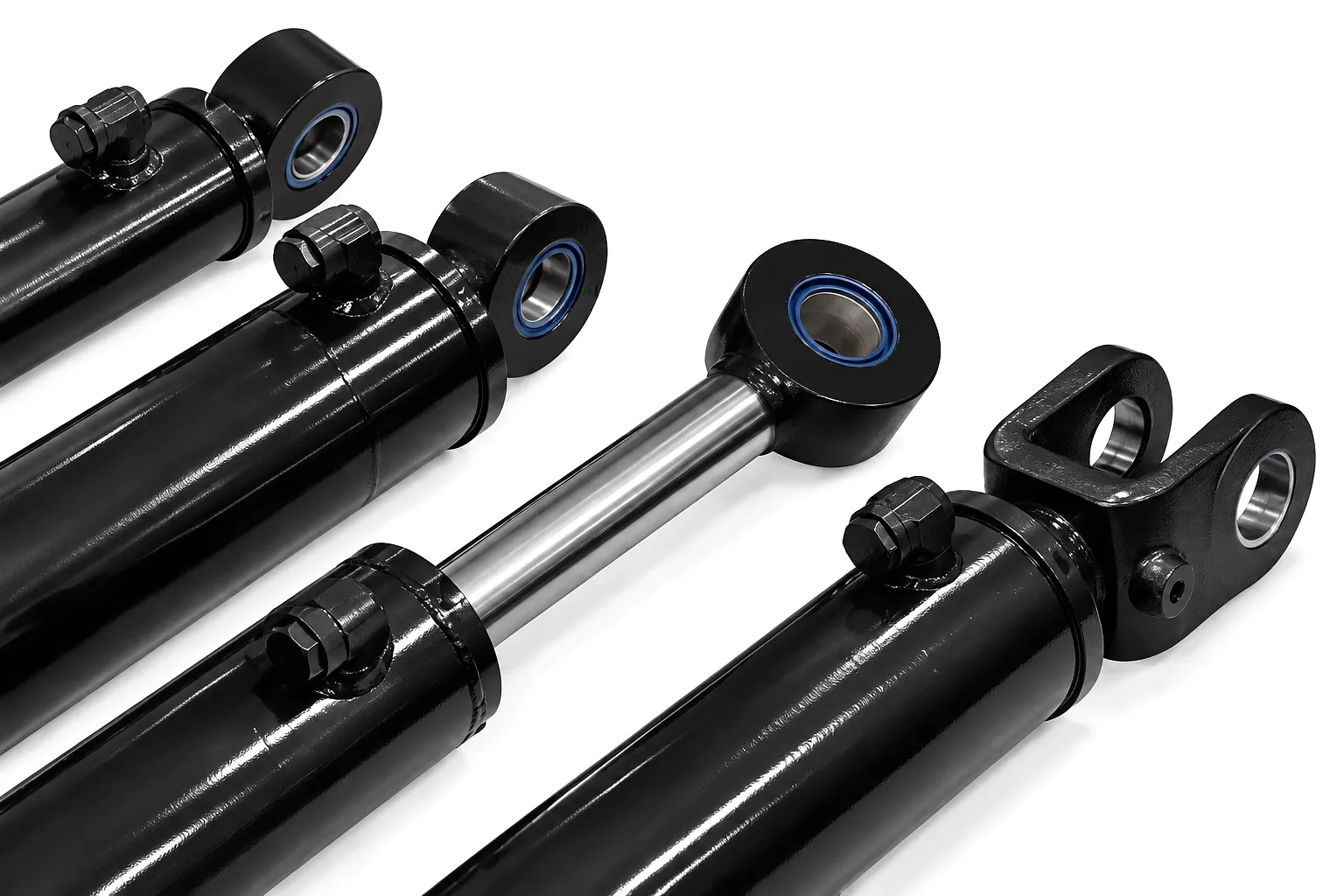
 Walk through any manufacturing floor in the West Midlands or past the heavy machinery on a North Sea oil platform support vessel, and you will find hydraulic cylinders everywhere — yet very few people who use them daily could explain precisely why a cylinder of modest physical dimensions is capable of exerting forces measured in tens or hundreds of tonnes. The answer lies at the intersection of fluid dynamics, mechanical engineering, and a 17th-century discovery that still governs every hydraulic system operating anywhere on Earth. Hydraulic cylinders are linear actuators that translate fluid pressure into linear mechanical force and motion. Their apparent simplicity — a sealed barrel, a piston, a rod, and hydraulic fluid — conceals the elegance of Pascal’s Law acting at scale, producing the kind of controlled, enormous force that no purely mechanical mechanism of equivalent size can replicate. For British manufacturers, from the aerospace supply chain in Bristol to the agricultural equipment sector in Lincolnshire, understanding the physics of hydraulic actuation is not an academic exercise. It is the foundation of specifying the right cylinder for the right application, avoiding premature failure, and extracting maximum productive value from every hydraulic system installed on-site.
Pascal’s Law: The Governing Principle of Hydraulic Force Generation
Core Equation
F = P × A
F = Force (Newtons / kN)
P = Pressure (bar / PSI)
A = Piston Area (cm² / in²)
Blaise Pascal, the 17th-century French physicist, demonstrated that pressure applied to an enclosed fluid transmits equally in all directions throughout the fluid. In practical hydraulic engineering terms, this means that when a pump delivers oil at a given pressure — say 200 bar, which is commonplace in industrial hydraulic systems — that pressure acts with equal intensity on every square centimetre of the piston face inside the cylinder barrel. A piston with a bore diameter of 100 mm has an effective area of approximately 78.5 cm². At 200 bar (20 N/mm²), the resulting thrust force is 20 × 785 = 15,700 N — nearly 16 kilonewtons — from a cylinder that can be held in both hands. Scale the bore to 250 mm and the same system pressure delivers close to 100 kN of usable force. This is the core physics that makes hydraulic cylinders indispensable across every sector of UK heavy industry.
The true power of this relationship becomes apparent when you consider what engineers call the mechanical advantage inherent in hydraulic systems. Unlike a mechanical lever, which trades distance for force along a fixed ratio, a hydraulic cylinder can sustain its full rated force throughout the entire stroke length. Whether the piston has moved 5 mm or 500 mm, the force output remains constant so long as system pressure is maintained. This characteristic — full force delivery across the complete stroke — is one reason hydraulic cylinders remain the actuator of choice for pressing, clamping, lifting, tilting, and pushing operations across industries ranging from Birmingham’s automotive stamping plants to offshore construction in Aberdeen. There is no equivalent mechanical system that can deliver the same force density — the ratio of force output to equipment weight and volume — while maintaining the controllability and reliability that hydraulic actuation provides under sustained industrial loading.
How a Hydraulic Cylinder Actually Works: Anatomy of Actuation
Step 1 — Pressurisation: The hydraulic pump draws fluid from the reservoir and delivers it under pressure to the cylinder port.
Step 2 — Piston Loading: Pressurised fluid fills the annular space between barrel and piston, exerting equal force across the full piston face area.
Step 3 — Linear Displacement: The net pressure differential across the piston creates an unbalanced force, driving the piston and attached rod in the direction of lower resistance.
Step 4 — Retraction: In double-acting cylinders, fluid is directed to the rod-side port, and the reduced annular area on the rod side generates a retraction force slightly lower than the extension force.
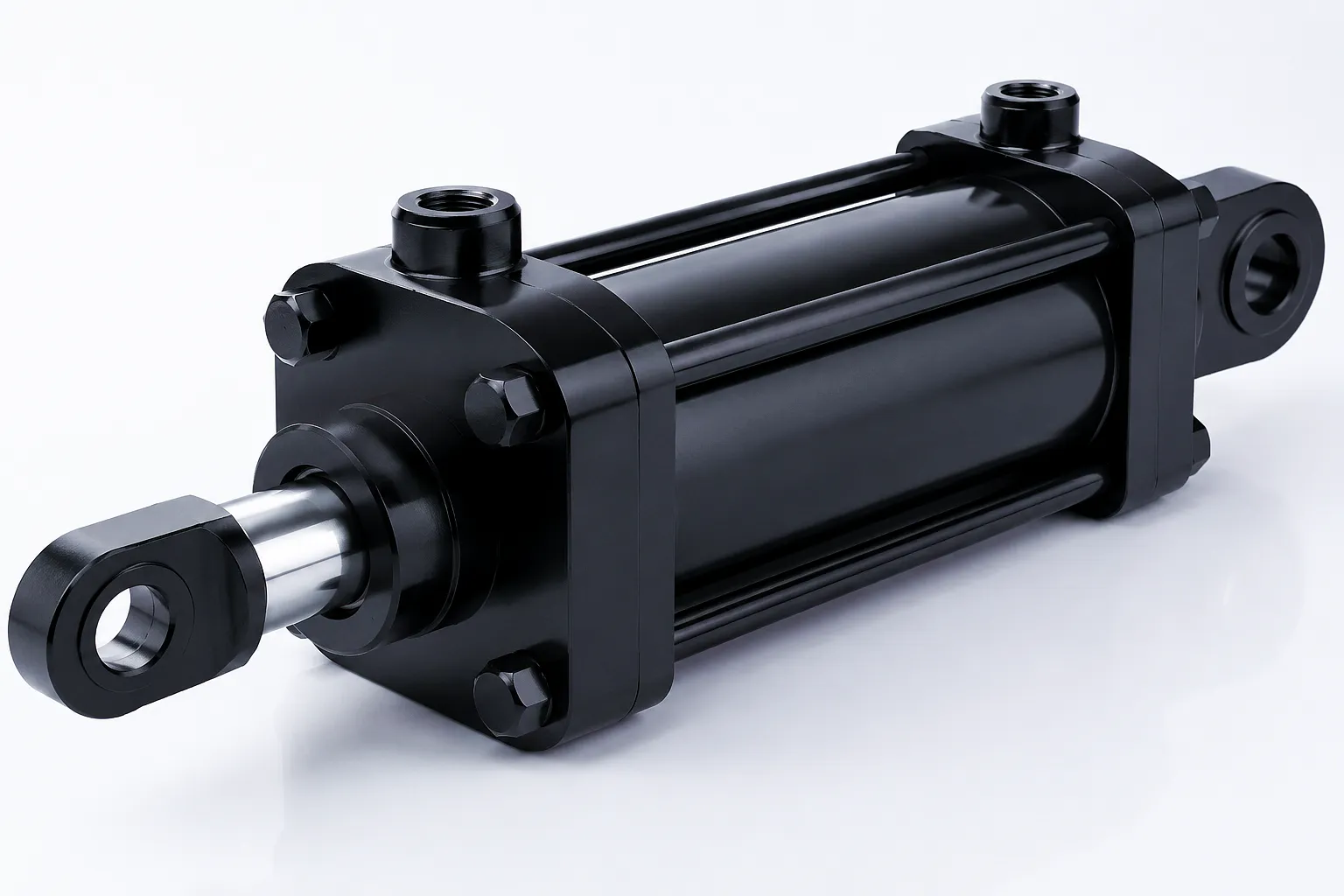
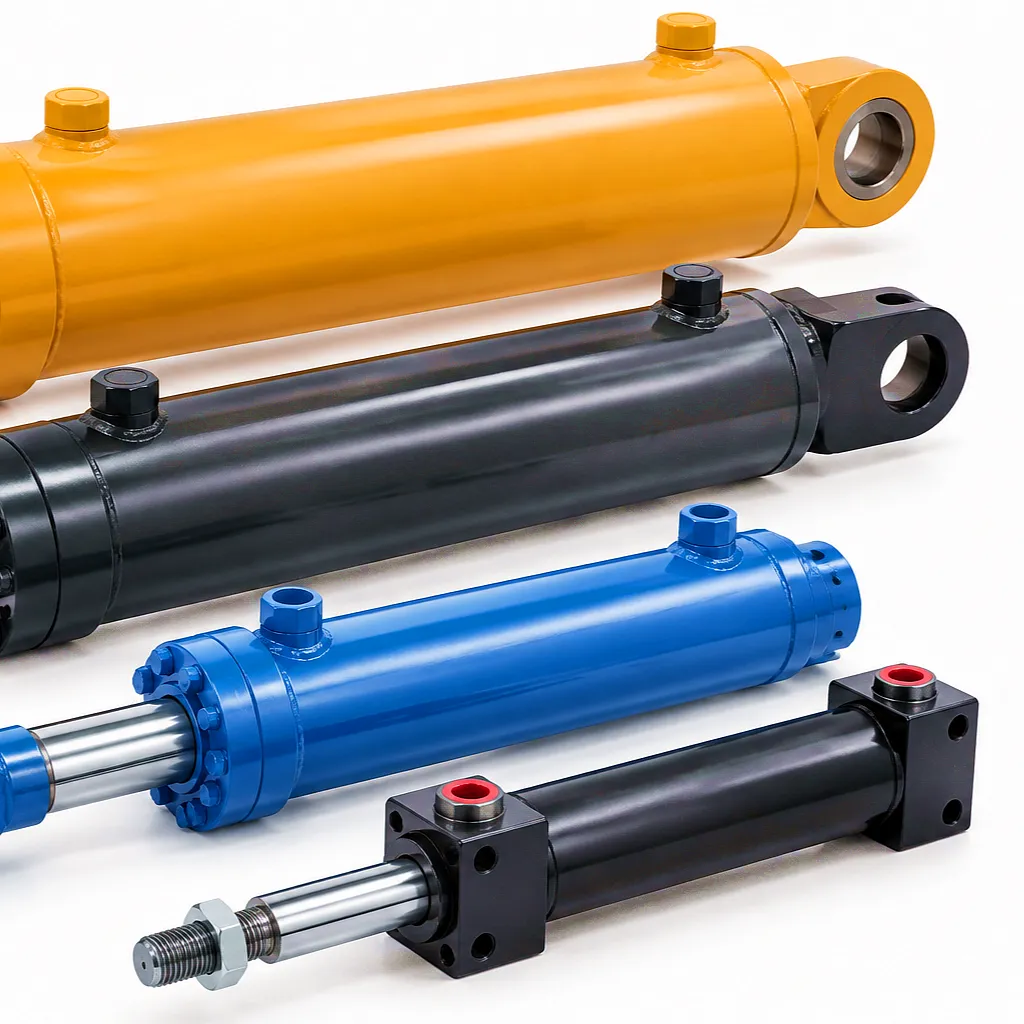
The internal architecture of a hydraulic cylinder is deceptively straightforward, yet each component must be manufactured to exacting tolerances to sustain the pressures involved without leakage, galling, or fatigue failure. The cylinder barrel — a precision-honed tube — houses the piston, which slides axially along a sealed bore. The piston rod, typically manufactured from chrome-plated carbon steel or stainless steel for corrosion resistance, protrudes through the cylinder head and connects to the external load. High-density polyurethane or PTFE-based seals prevent fluid bypass around the piston face and prevent external leakage past the rod seal in the cylinder head. The quality and design of these seals are in many ways the limiting factor in both performance and service life.
The distinction between single-acting and double-acting cylinders is fundamental to understanding force generation. A single-acting hydraulic cylinder receives pressurised fluid on one side only — typically the cap end — and relies on an external return mechanism, whether a mechanical spring, gravity, or the mass of the load itself, to retract the piston rod once pressure is released. These are widely used in applications such as vehicle lifting jacks, agricultural implement mounting systems, and press tooling where the load itself provides the return force. Double-acting cylinders, by contrast, can receive pressurised fluid on either side of the piston, enabling powered extension and powered retraction with the full force of Pascal’s Law available in both directions. This makes them the preferred choice for any application requiring precise bidirectional positional control, such as the cylinder systems deployed in steel press lines in Sheffield or the levelling actuators on heavy construction machinery used on UK infrastructure projects.
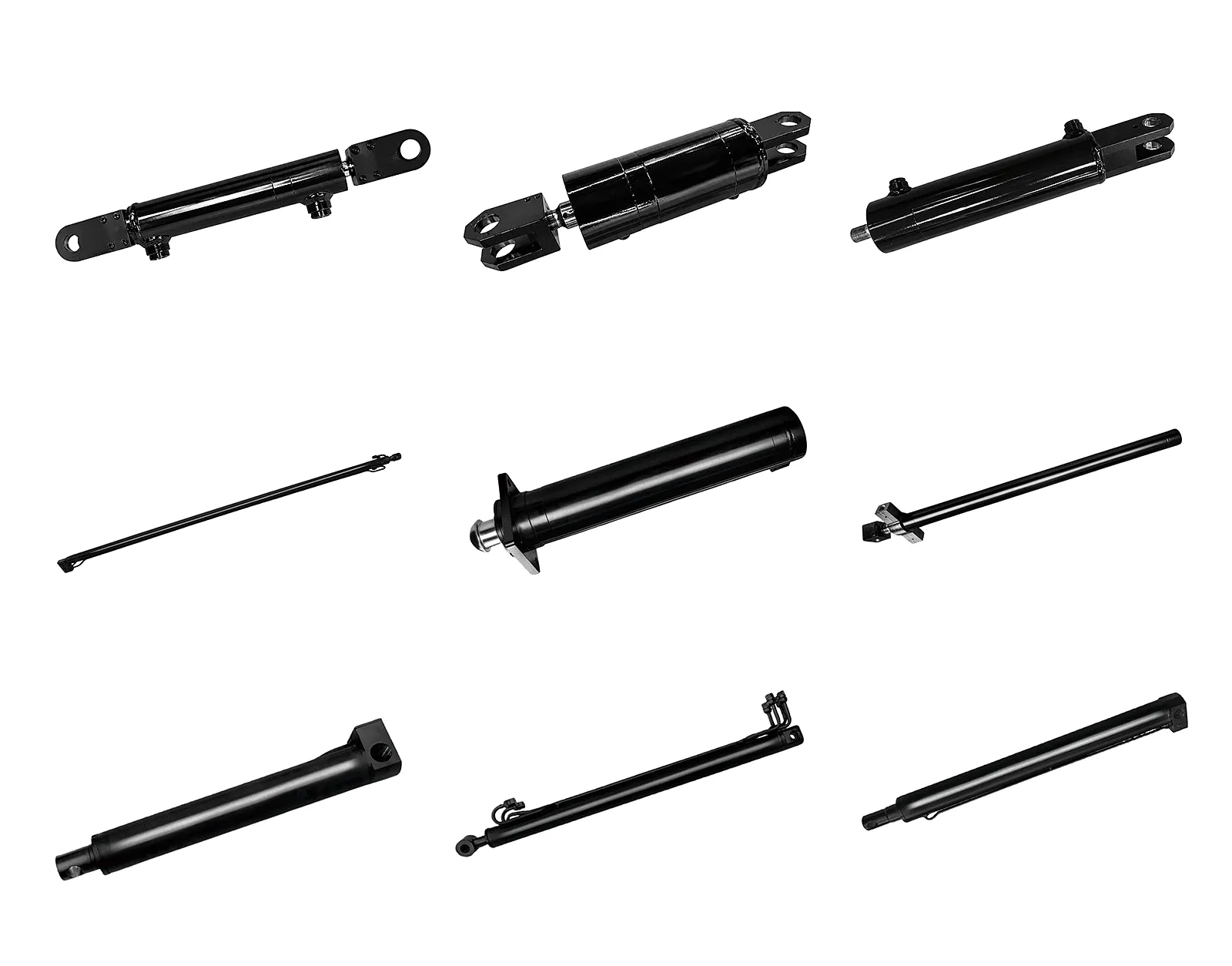
The rod-side retraction force in a double-acting cylinder is always lower than the cap-end extension force, and this difference is directly attributable to the displacement of cross-sectional area by the rod itself. Where the bore diameter is 120 mm and the rod diameter is 60 mm, the cap-end area is approximately 113 cm² while the rod-side annular area is only about 85 cm². At the same system pressure, the retraction force is correspondingly lower. This differential is a key consideration when specifying a cylinder for applications requiring equal force in both directions, such as Custom Double Acting Telescopic Hydraulic Cylinders for Lifting Platforms where load-lowering control demands predictable retraction force.
Core Materials: What Hydraulic Cylinders Are Made From and Why It Matters
Cylinder Barrel
Cold-drawn seamless steel tube (ST52 / E355) is the global standard for industrial hydraulic cylinder barrels. The bore is precision-honed to Ra 0.2–0.4 µm surface roughness, ensuring optimal seal contact and minimal friction throughout the piston stroke. For corrosive environments — marine applications around UK coastal installations or chemical processing plants — stainless steel 316L or aluminium alloy barrels are specified instead.
Piston Çubuğu
High-tensile chrome-plated carbon steel (CK45 / 42CrMo4) dominates rod material selection. The hard chrome coating — typically 20–30 µm thick — provides both wear resistance against the rod seal and corrosion protection. For heavy-duty applications in UK food processing or pharmaceutical environments, electroless nickel or induction-hardened stainless steel rods are preferred to meet hygiene and chemical resistance standards.
Seals & End Caps
Polyurethane (PU), nitrile rubber (NBR), and PTFE composite seals cover the vast majority of industrial hydraulic applications from -40°C to +120°C. End caps — threaded or flanged to the barrel — are typically manufactured from high-grade forged carbon steel or ductile iron, providing the structural integrity to withstand cyclical pressure loading over millions of operating cycles without fatigue cracking at the weld or thread interface.
Hydraulic Fluid
Mineral-based hydraulic oil (ISO VG 46 or VG 68) remains the dominant fluid for most UK industrial applications, offering an excellent balance of viscosity stability, lubricity, and anti-wear performance. Fire-resistant fluids — HFDU, HFA, or water-glycol — are mandatory in UK steel foundries and mining applications under the Provision and Use of Work Equipment Regulations where fire risk proximate to hydraulic lines is assessed as significant.
Product Technical & Performance Parameters
Standard and custom specification ranges available from Ever Power — all parameters adjustable to project requirements.
Core Technical Advantages of Modern Industrial Hydraulic Cylinders
⚡
Exceptional Force Density
Hydraulic cylinders deliver force outputs that no comparable volume of electrical or mechanical actuator can match. A cylinder with a 200 mm bore operating at 250 bar produces approximately 785 kN — equivalent to holding 80 tonnes in sustained extension — from a unit weighing perhaps 80–120 kg. This force-to-weight ratio makes them uniquely suited to the space-constrained environments found in mining equipment in Wales or heavy press tooling in Sheffield’s manufacturing plants.
🎯
Precise, Infinitely Variable Speed Control
Unlike electrical linear actuators with fixed motor speeds or mechanical systems with discrete gear ratios, the extension and retraction speed of a hydraulic cylinder is continuously variable by adjusting the flow rate delivered by the pump or controlled via proportional flow control valves. This makes hydraulic actuators the preferred choice wherever smooth, controllable motion is required — from the precise clamping of aerospace components in Bristol’s Airbus supply chain to the slow, controlled lowering of bridge sections on UK infrastructure projects.
🔄
Self-Cushioning and Overload Protection
Well-designed hydraulic circuits include relief valves that set an absolute ceiling on system pressure. When an unexpected overload occurs — a jammed press, a blocked lifting mechanism, an accidental impact — the relief valve opens and diverts flow before mechanical damage can propagate to the cylinder or the load. This inherent overload protection is absent in most purely mechanical actuation systems and makes hydraulic cylinders significantly safer to operate in the heavy-duty industrial environments characteristic of UK manufacturing sites under HSE oversight.
📐
Load Holding Without Energy Consumption
A hydraulic cylinder held under load by a closed check valve maintains its position without any continuous energy input — fluid is incompressible under normal operating conditions, so a locked cylinder simply holds. This distinguishes hydraulic actuation from electromechanical systems, which must sustain motor current to resist gravity loads. For applications such as vehicle lift platforms, hydraulic presses in Birmingham’s metalworking industry, or holding clamps on CNC machining fixtures, this feature represents both an energy saving and a critical safety advantage.
Industrial Application Scenarios: Where Hydraulic Cylinders Excel in the UK
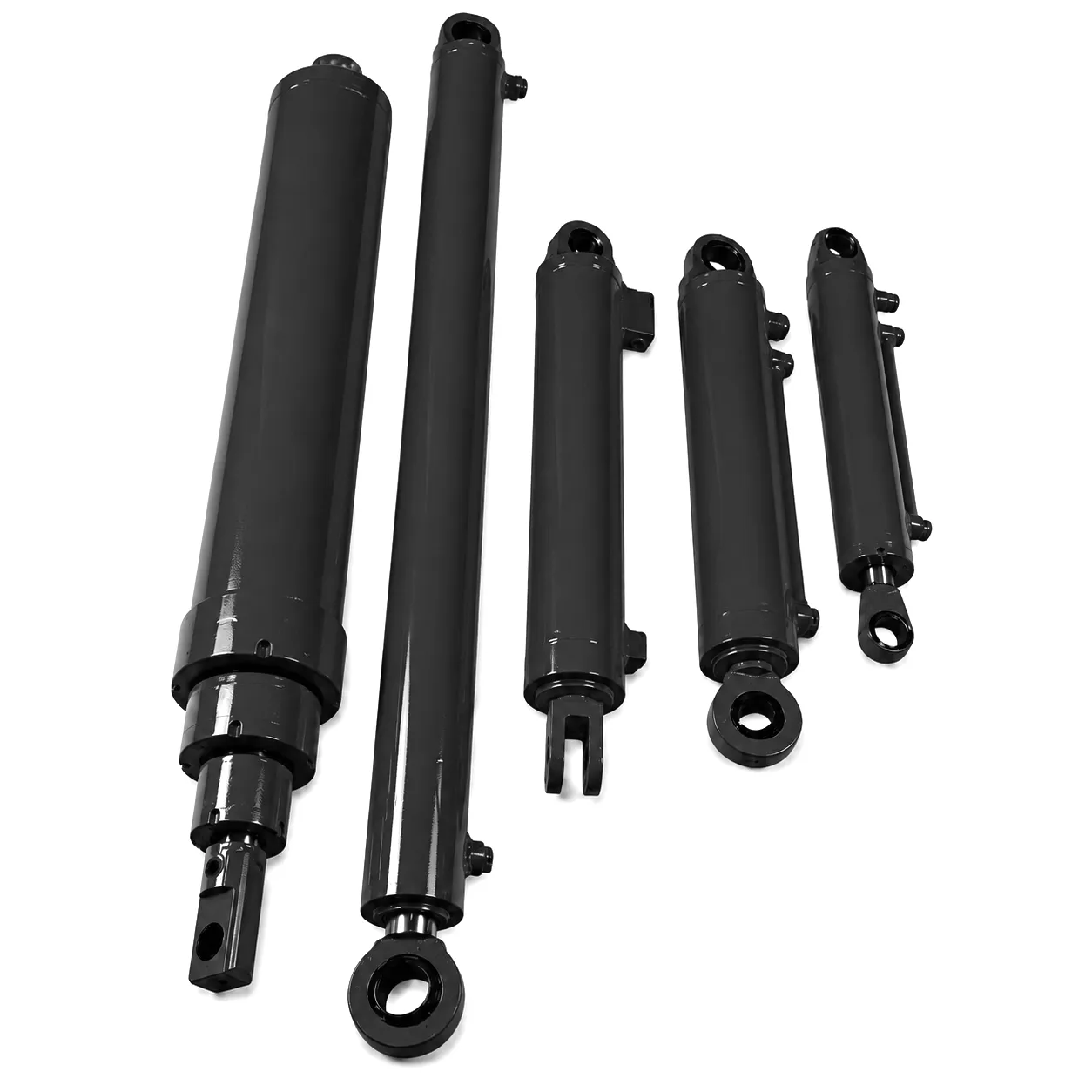
Ever Power: Precision Manufacturing & Unlimited Customisation Capability
Factory-direct supply — engineered to your exact specification, despatched to any UK port or directly to site.
🏭
Full-Scope In-House Manufacturing
Ever Power operates integrated manufacturing from raw steel tube procurement through to finished, tested assembly. CNC precision honing of cylinder bores, automated chrome plating of piston rods, robotic welding of end caps and flanges, and computerised coordinate measuring machine (CMM) inspection of all critical dimensions — all under one roof. This vertical integration eliminates third-party quality risks and gives UK clients direct traceability from mill certificate to despatch documentation, satisfying the audit requirements of ISO 9001-certified customers and CE-marked machine builders across Britain.
🔧
Customisation Without Limits
Every dimension, mounting configuration, port location, seal material, surface treatment, and pressure rating can be specified to customer requirements. Ever Power’s engineering team works directly from customer CAD drawings, assembly envelopes, or even dimensional sketches, translating design intent into manufacturable cylinder specifications with a formal review process that covers wall thickness calculations, rod buckling analysis, and seal pressure compatibility before production is released. Lead times for custom hydraulic cylinder production are typically 15–25 working days from approved drawing to UK despatch, with express production available for urgent replacement applications.
🚢
UK Supply Chain & Logistics
Ever Power maintains established logistics routes to UK ports including Felixstowe, Southampton, and Liverpool, with freight-forwarding partnerships that include door-to-door delivery coordination for oversized or heavy cylinder assemblies. For UK stocking distributors, blanket order agreements allow scheduled monthly or quarterly deliveries with call-off flexibility, reducing warehousing costs while securing production capacity. All shipments are accompanied by material test certificates, dimensional inspection reports, and pressure test certificates as standard, satisfying the technical file requirements for UK UKCA-marked machinery and PSSR (Pressure Systems Safety Regulations) compliance documentation.
Speak directly with Ever Power’s engineering team about your hydraulic cylinder requirement — custom or standard, small batch or production volume.
📧 Request a Custom Cylinder Quote
[email protected] — Response within 24 hours (UK business days)
Customer Success Story: Derbyshire Heavy Press Upgrade Programme
Case Study — Chesterfield, Derbyshire
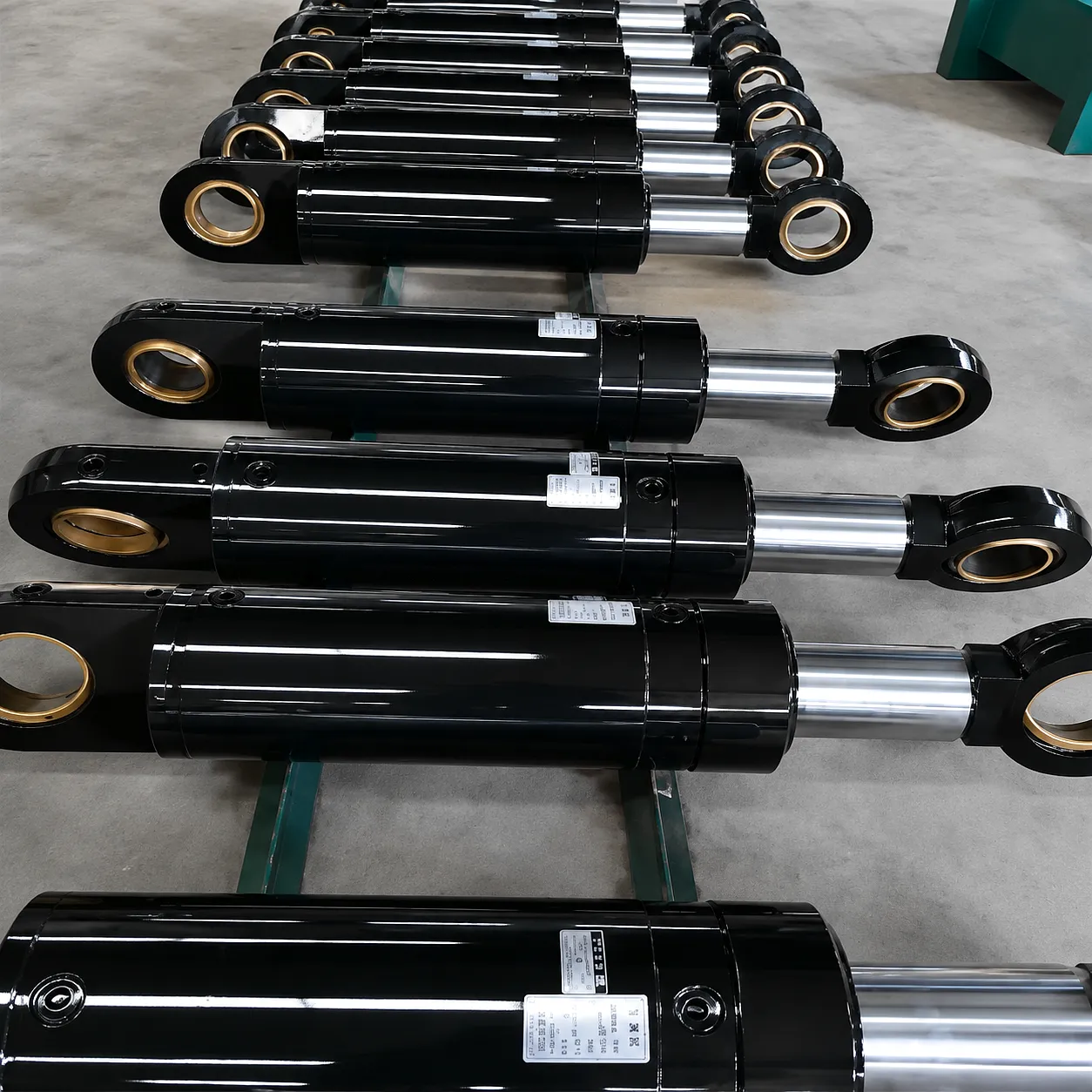 A medium-sized precision forging company based in Chesterfield, Derbyshire — supplying forged components to the UK rail and automotive sectors — was experiencing chronic unplanned downtime on three hydraulic press lines. The cylinders in service, sourced from a European supplier whose delivery schedule had become unreliable post-Brexit, were suffering rod seal failures after an average of fourteen months of operation, well below the anticipated service life. Each seal failure event resulted in an average of two days of lost production across the affected line, translating to significant costs in missed component deliveries and overtime recovery.
The company’s engineering manager contacted Ever Power after sourcing Ever Power through an online technical search for hydraulic cylinder suppliers with genuine customisation capability. After a detailed technical review of the original cylinders’ dimensional drawings and failure history, Ever Power’s engineering team identified that the rod seal failures were driven by a combination of inadequate rod chrome layer thickness — measured at just 12 µm on failed samples — and a standard NBR seal specification that was at the lower boundary of compatibility with the operating temperature range near the forge. Ever Power proposed a replacement specification with a 28 µm hard chrome rod, an upgraded composite PU/PTFE rod seal, and a redesigned wiper seal geometry to improve particulate exclusion in the forge environment.
Three replacement hydraulic cylinders were manufactured, tested, and despatched to Chesterfield within eighteen working days of drawing approval. Installation was completed during a scheduled weekend maintenance window. In the eighteen months since installation, none of the three replacement cylinders has required any seal intervention. The annualised reduction in unplanned downtime has been calculated by the client’s maintenance team as equivalent to a significant improvement in overall equipment effectiveness across the affected press lines. The client has since placed a blanket order for ever power cylinders to begin replacement of additional press cylinders during the coming year.
Client Reviews
★★★★★
“We’d been through two suppliers before trying Ever Power, and neither could match our operating temperature and seal spec from stock. Ever Power’s engineering team understood the forging environment immediately and came back with a technically credible proposal within 48 hours. Eighteen months in, zero seal failures. The ROI has been exceptional.”
— Engineering Manager, Precision Forging Company, Chesterfield, Derbyshire
★★★★★
“Our combine harvester fleet runs hard from late July through to October, and we simply cannot afford hydraulic cylinder failures mid-harvest. Ever Power’s agricultural cylinder range is built to a noticeably higher standard than what we were buying through our previous dealer channel — the chrome quality is superior and the wiper seals keep the dust out properly. We’ve had two seasons of clean operation across twelve harvesters now.”
— Operations Director, Large-Scale Arable Farming Business, Lincolnshire
★★★★★
“We manufacture scissor lifts and elevated work platforms for the UK market, and LOLER compliance is non-negotiable for our certification. Ever Power provided full material traceability documentation, pressure test certificates, and dimensional inspection reports with every shipment — exactly what our technical file requires. The telescopic cylinder quality is consistently excellent, lead times are reliable, and their pricing gives us a genuinely competitive edge in a market where margins are tight.”
— Technical Director, Lifting Platform Manufacturer, Birmingham, West Midlands
Sıkça Sorulan Sorular
Answers to the questions UK buyers and engineers ask most often about hydraulic cylinders.
Ready to Source Your Hydraulic Cylinders?
Ever Power engineers are ready to review your specification, calculate force requirements, and provide a detailed quotation — standard or fully custom.
[email protected] | Ever Power — Hydraulic Cylinder Manufacturer
gzl tarafından düzenlendi
 Turkish
  English
  Italian
  Portuguese
  Dutch
Dutch  Swedish
  Danish
  Finnish
  Polish
  Hindi
Hindi  Kazakh
  Ukrainian
  Romanian
  Spanish
  German
  Russian
  Korean
  Japanese
  Vietnamese
  Thai
Thai  Indonesian
  Malay
Malay  French
  Greek
Greek