
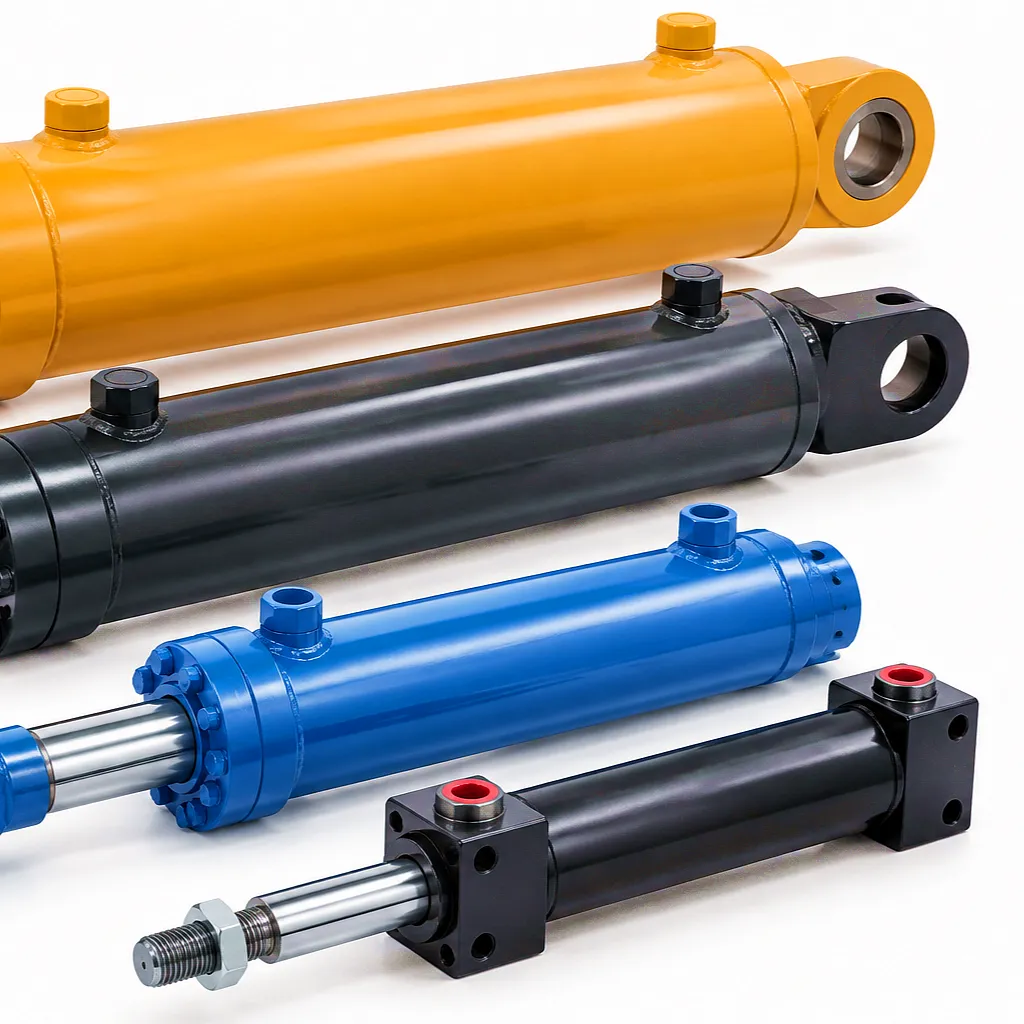
 A hydraulic cylinder does one job with extraordinary precision: it converts hydraulic pressure into controlled linear force. That sentence sounds straightforward, but the engineering inside a well-built cylinder involves dozens of interdependent components — each holding tolerances measured in microns, each chosen from materials that must resist pressure spikes, corrosion, temperature extremes, and millions of fatigue cycles. For procurement managers sourcing from Sheffield fabricators, maintenance teams keeping presses running in Birmingham manufacturing parks, or OEM engineers designing agricultural attachments in Lincolnshire, understanding every component is not academic. It determines how long a cylinder lasts, how little it leaks, and how confidently it can be specified into a safety-critical assembly. This guide walks through every anatomical layer of a modern hydraulic cylinder — from the outermost barrel wall to the geometry of its rod end — covering material science, dimensional tolerances, functional logic, and the failure modes that arise when any single element is compromised.
The Barrel: Where Pressure Becomes Geometry
The barrel — also called the cylinder tube or body — is the outer pressure vessel that contains the hydraulic fluid and defines the bore diameter against which the piston generates thrust. In high-performance industrial cylinders, barrels are machined from cold-drawn seamless steel tube, typically to EN 10305-1 or DIN 2393 standards. Cold drawing refines the grain structure of the steel, eliminating weld seams and producing a surface finish inside the bore that starts around Ra 3.2 µm before honing. The final honed bore finish is typically Ra 0.2 µm to Ra 0.4 µm — smooth enough for dynamic seals to run without cutting, but with just enough cross-hatch pattern from the honing stones to retain a microscopic film of hydraulic fluid that lubricates each stroke.
Wall thickness is calculated from the working pressure, bore diameter, and material yield strength — typically using the Lamé thick-wall cylinder formula when the wall-to-bore ratio exceeds 0.1. For a 100 mm bore cylinder rated at 250 bar, standard carbon steel (S355 equivalent) typically yields a wall thickness of 8–12 mm. Stainless steel 316L barrels are specified where external corrosion is a risk — common in marine applications around Aberdeen or coastal plant installations in South Wales. Exterior surface protection varies from black phosphating through electroless nickel to thermal spray coatings depending on the environment. The end closures — front and rear heads — are either welded, flanged, or threaded into the barrel ends, with the method chosen for repairability, pressure rating, and production cost.
The Piston: Pressure Surface and Seal Carrier
The piston is the disc-shaped component that divides the barrel into two fluid chambers. It is threaded or pinned to the rod and fits the bore with a diametrical clearance of just 0.05–0.15 mm — tight enough to guide the rod centrally but loose enough that all sealing is carried by the piston seals rather than by metal-to-metal contact. Pistons are commonly machined from ductile iron, aluminium alloy, or medium-carbon steel depending on bore size and operating pressure. For cylinders running above 300 bar — common in heavy pressing lines in Wolverhampton and Coventry — steel pistons are essentially mandatory. The piston carries one or two dynamic sealing elements in machined grooves: typically a PTFE-faced bi-directional piston seal backed by an O-ring energiser, or a dedicated step-cut seal assembly for higher-speed applications.
A wear ring — sometimes called a guide ring or bearing ring — sits alongside the seal in its own groove. Made from filled PTFE, Orkot, or bronze-composite material, the wear ring prevents the piston from contacting the barrel bore under side-load conditions. Without this ring, lateral forces from off-axis loading — common in tie-rod cylinders used on agricultural machinery in Yorkshire and Herefordshire — would cause the steel piston body to score the honed bore, dramatically accelerating both piston seal and barrel wear. The wear ring absorbs the contact, distributes the load across a defined bearing length, and sacrifices itself over many thousands of cycles rather than damaging the hardened bore surface. Specifying the correct ring material for the fluid type and temperature range is one of the most consequential design decisions in piston assembly.
Piston assembly quality is where budget cylinders most commonly diverge from precision-engineered units. A machined groove with incorrect radius on the corners causes the energiser O-ring to extrude and fail within months. Groove width tolerances must be held to ±0.05 mm to maintain the correct squeeze on elastomeric seals without over-compressing them. At Ever Power, every piston groove is measured with a dedicated groove-checking gauge after CNC turning, ensuring seal performance from the first stroke to the millionth.
The Piston Rod: The Visible Backbone of Linear Force
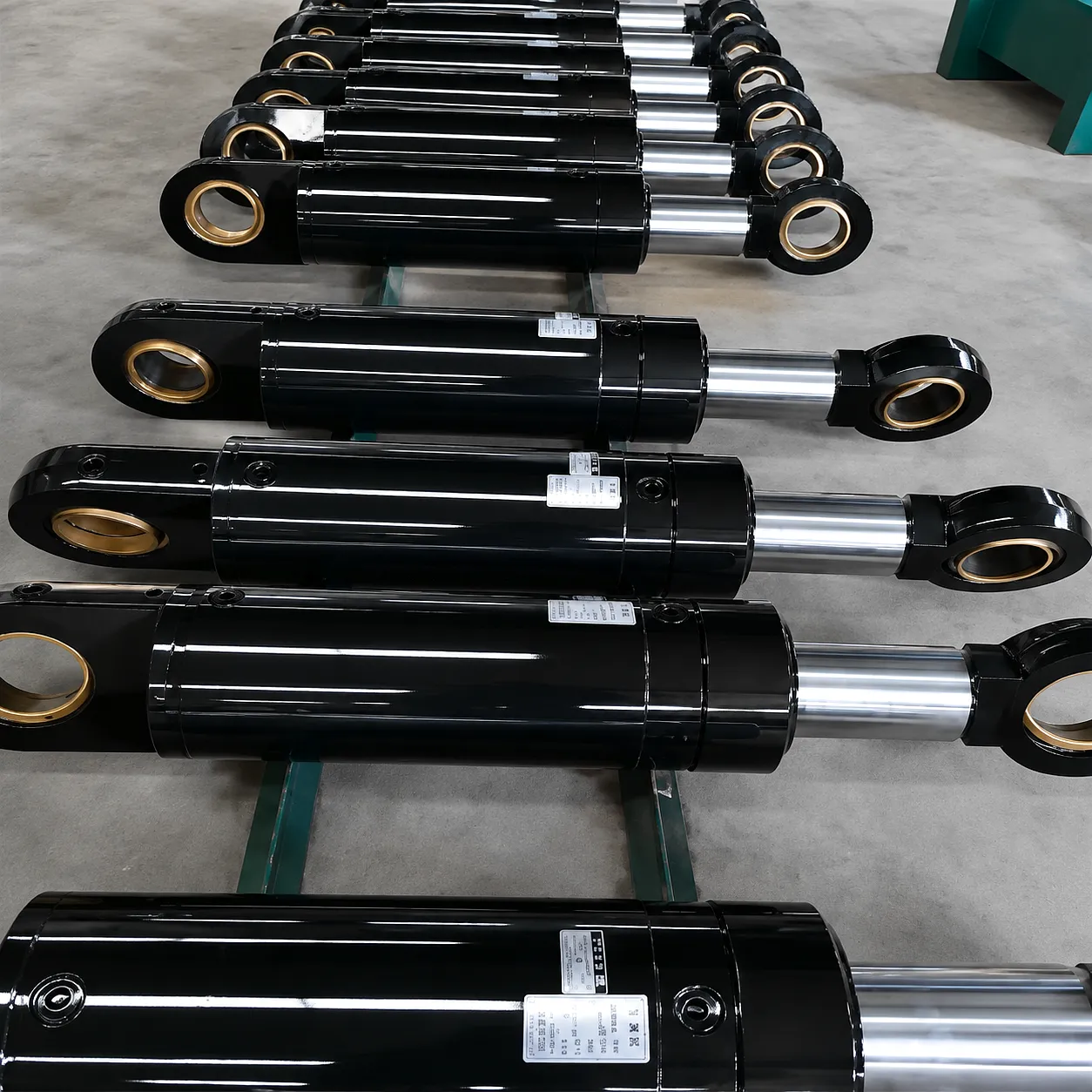 The piston rod is the component most visible in any hydraulic cylinder installation — the polished steel shaft that extends from the cylinder body to whatever load it is moving. It must simultaneously serve as a structural beam resisting combined axial compression, bending, and buckling loads; as a precision shaft running through close-tolerance dynamic seals; and as a corrosion-resistant surface that operates in ambient environments ranging from a controlled hydraulic press shop to an agricultural field in Lincolnshire during a wet November.
Rod material is almost universally a carbon or alloy steel in the 42CrMo4 or EN24T family, selected for high tensile strength (typically 800–1000 N/mm²), good machinability, and compatibility with hard chrome plating. The rod is turned and ground to a diameter tolerance of h6 or f7, achieving surface roundness below 0.003 mm to ensure even contact with the rod seal. The final surface finish is Ra 0.2–0.4 µm, achieved by grinding followed by super-finishing.
Hard chrome plating — typically 0.02–0.05 mm thick — is the traditional corrosion and wear protection on hydraulic rods, providing a Vickers hardness of 850–1000 HV on the surface. For applications where hexavalent chromium must be avoided under UK REACH regulations, alternatives include electroless nickel, ceramic thermal spray (HVOF-applied tungsten carbide), and increasingly, hard chrome equivalent coatings based on trivalent chromium chemistry. Buckling resistance is assessed using Euler’s column formula modified by Rankine’s approach for practical end-fixity conditions — a calculation Ever Power’s engineering team performs on every custom rod specification before sign-off.
Seal Systems: The Chemistry That Keeps Hydraulics Contained
No single category of hydraulic cylinder component generates more service calls than seals. They are the smallest components by mass, the cheapest by unit price, yet the most consequential for system reliability. Understanding seal geometry and material chemistry is essential for any engineer or procurement manager specifying cylinders for UK industrial environments.
Rod Seal (Primary Dynamic)
Prevents hydraulic fluid escaping along the rod to atmosphere. Typically a lip-type seal in polyurethane (PU) or NBR, with a PTFE-fabric running face for high-speed applications. PU offers superior abrasion resistance and is widely preferred in UK agricultural and construction equipment.
Wiper / Scraper Seal
Mounted in the gland, facing outward. Its job is to scrape contamination from the incoming rod surface before it reaches the rod seal. Dust, mud, and metal swarf from industrial floors in Rotherham or Derby are stopped here. Polyurethane and PTFE-composite wipers are standard; heavy-duty double-lipped wipers are used in foundry and mining environments.
Piston Seal (Bidirectional)
Controls bypass flow between the two cylinder chambers. Must seal against pressure from both directions. PTFE-based step-cut seals are preferred for high-speed double-acting cylinders. The geometry of the seal profile determines leakage at rest (static) versus leakage under dynamic stroking conditions — a critical distinction in load-holding circuits.
O-Ring Energisers and Static Seals
Used at end-cap faces, port threads, and tie-rod interfaces. NBR O-rings serve mineral oil systems up to 120°C; FKM (Viton) grades handle phosphate ester and fire-resistant fluids common in UK steel mills and offshore platforms. EPDM variants are selected for water-glycol and high-temperature steam environments.
Featured Product
Hydraulic Cylinders for Combine Harvester Machine
Purpose-engineered for agricultural OEM applications. High-particulate wiper seals, hard-chrome rods rated for outdoor exposure, and tie-rod construction for field-maintainability. Widely used across UK arable operations from East Anglia to the Scottish Borders.
Front Head, Gland, and Rod Bearing: The Gateway Assembly
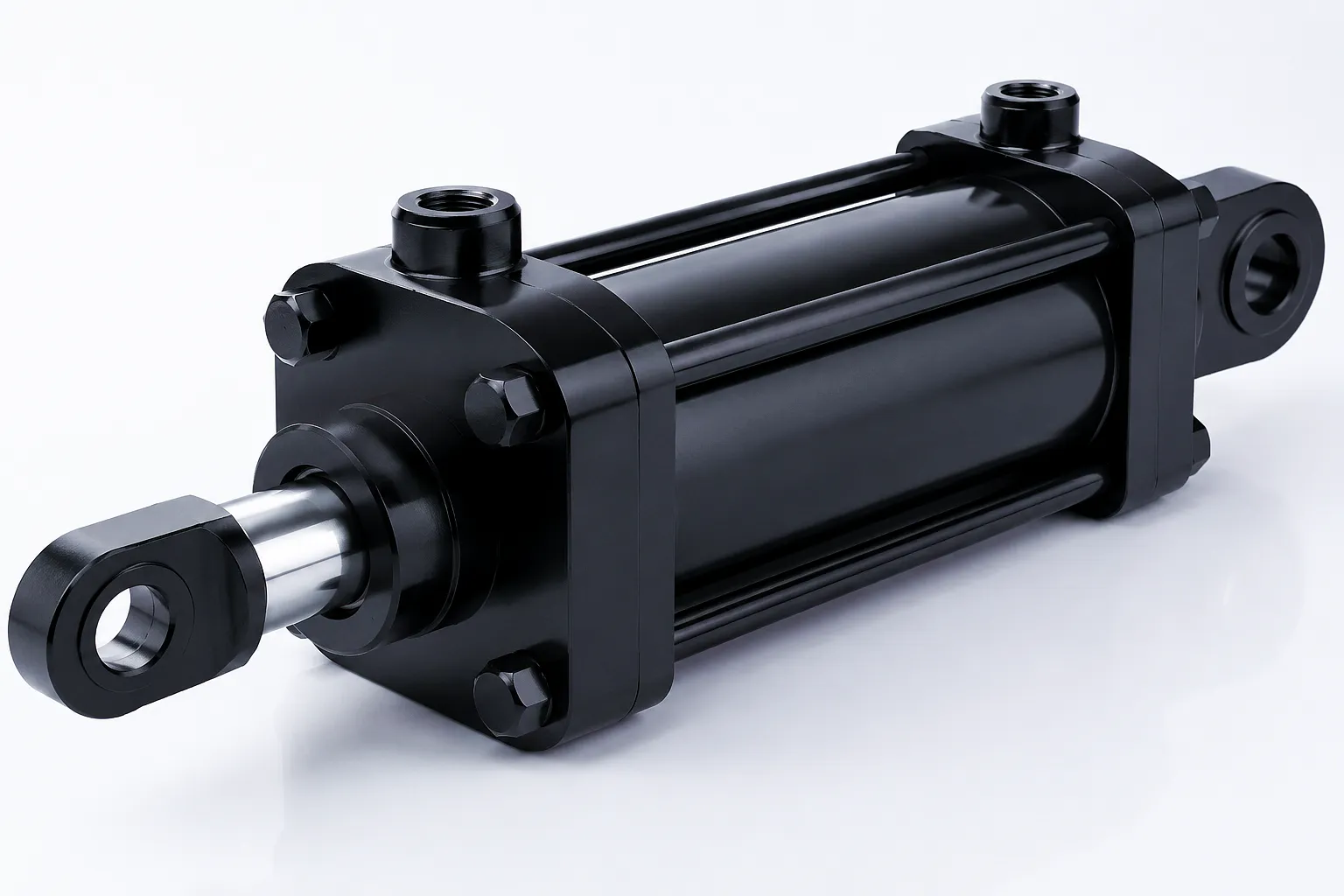
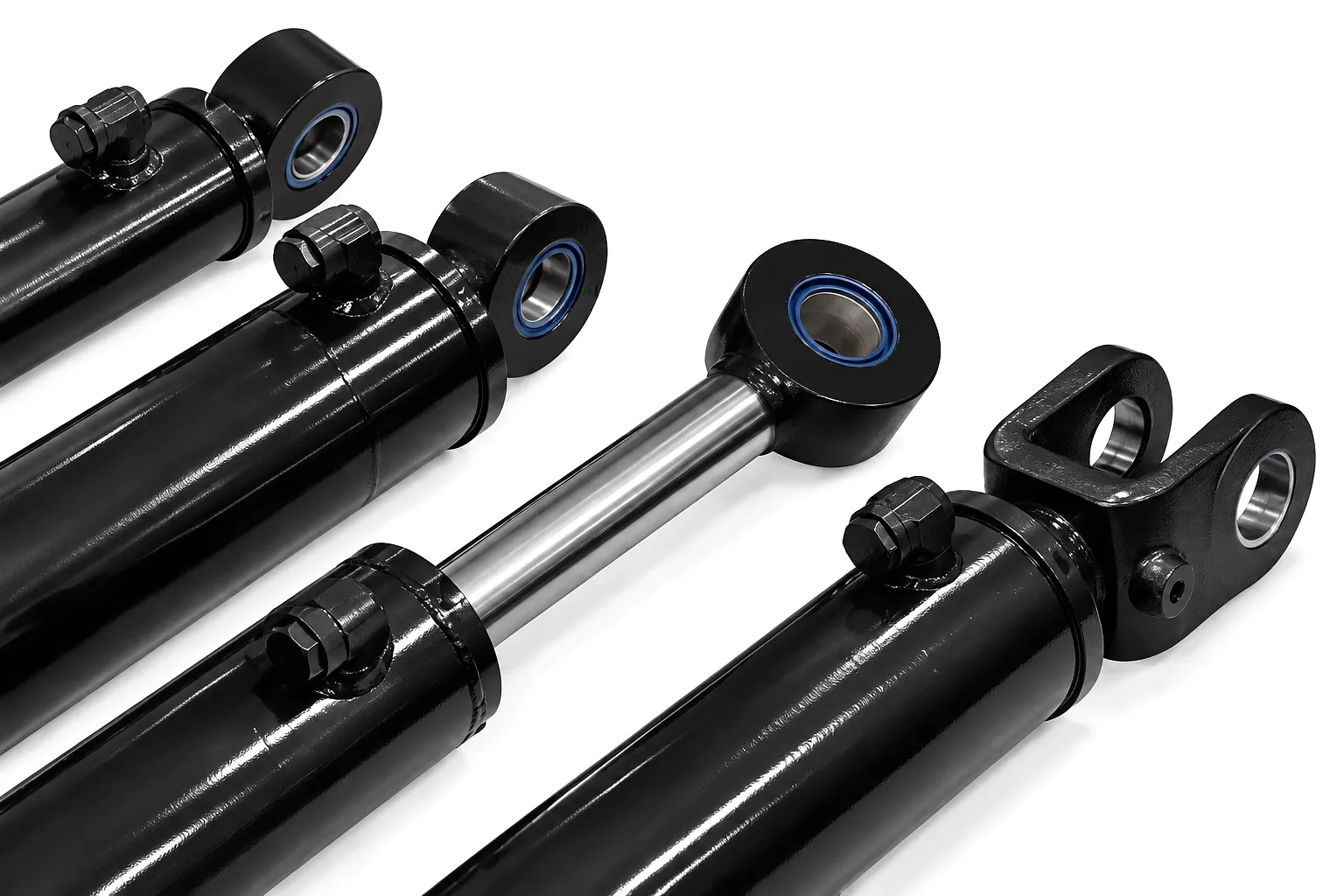 The front head — called the gland head, cap, or front flange depending on the cylinder configuration — is the end closure through which the piston rod passes. It has to simultaneously hold system pressure, guide the rod under lateral load, house the entire rod seal stack, prevent external contamination ingress, and allow the rod to enter and exit the cylinder millions of times without causing measurable seal wear by contact or misalignment.
The gland bore is machined to a very close tolerance relative to the rod diameter — typically H8 or H9 — and carries the rod bearing (guide bush) that centres the rod. This bush is usually cast bronze CuSn8, acetal, or a PTFE-composite sleeve. Bronze bushes are preferred where shock loads are present, such as in compact excavator cylinders operating on demolition sites in Manchester or Birmingham. PTFE composite bushes offer lower friction and are self-lubricating — important where hydraulic oil cannot contaminate the immediate environment, such as in food-processing installations in Cambridgeshire.
Gland Assembly Sequence
Hydraulic Cylinder Technical and Performance Parameters
The following table covers the principal engineering parameters that govern cylinder specification, selection, and procurement. Values shown represent the range typical of standard and heavy-duty industrial cylinders from Ever Power’s manufacturing range. Custom specifications beyond these ranges are available on enquiry.
End Caps, Ports, and Cushioning Valves
Rear / Blind End Cap
The rear end cap seals the closed end of the barrel and carries the cap-end hydraulic port. Its mounting boss — welded, bolted, or formed from the barrel stock — defines the cylinder’s mounting style: clevis, trunnion, flange, or fixed pivot. In double-acting cylinders, the rear port receives pressurised fluid to drive the rod out; in single-acting cylinders it may carry a vent port or return spring. Rear cap geometry directly affects the dead length of the cylinder — the minimum overall length when fully retracted — which is a critical dimension in compact machine designs.
Cushioning Valves and Deceleration Geometry
At end of stroke, a fast-moving piston carries significant kinetic energy that must be dissipated without creating a pressure spike that destroys seals. Cushioning valves — adjustable needle valves built into the cap geometry — trap a small volume of fluid ahead of the piston as it approaches the end, forcing it through a restricted orifice and generating a controlled deceleration force. The cushion sleeve on the piston rod enters the cushion bore in the cap, progressively closing the main port and transferring flow to the adjustable needle. Correct cushion adjustment is critical in high-speed actuators on automated press lines and stamping equipment across UK manufacturing centres.
Application Scenarios: UK Industrial Sectors
Understanding how each cylinder component performs under real industrial conditions is how engineering teams in the UK make confident procurement decisions. The following scenarios describe how component choices directly affect service life, maintenance intervals, and total cost of ownership.
Agricultural Machinery — Yorkshire & East Anglia
Combine harvesters, bale handlers, and tillage equipment require cylinders that tolerate severe external contamination, prolonged static load holding, and wide temperature swings from pre-dawn to midday. Double-lipped wipers, PU rod seals, and tie-rod construction that allows field seal replacement are standard. See our Hydraulic Cylinders for Combine Harvester Machine — designed and tested for these exact conditions.
Steel and Metal Processing — Sheffield & Rotherham
Rolling mills, forge presses, and metal-shearing equipment in South Yorkshire generate extreme cyclic pressure loads with significant heat and mill scale contamination. FKM seals, phosphate-ester compatible seal compounds, and 700-bar-rated barrel walls are typical here. Hard-chrome HVOF rods resist scale ingestion. Cylinders may operate 24/7 for weeks between planned maintenance windows, making seal life a direct production cost driver.
Lifting Platforms and Scissor Lifts — Birmingham & Midlands
Telescopic hydraulic cylinders for lifting platforms demand precise synchronisation between stages, excellent load-holding under static weight, and smooth extension without stick-slip. PTFE-lined piston stages and polished stage bores are critical. Our Custom Double Acting Telescopic Hydraulic Cylinders for Lifting Platform serve warehousing and logistics operations across the Midlands with three-stage configurations and integrated load-lock valves.
Marine and Offshore — Aberdeen & Humber Estuary
Subsea and deck-mounted cylinders on vessels servicing North Sea installations face continuous salt spray, immersion risk, and aggressive cyclic loading from wave motion. 316L stainless barrel tubes, electroless nickel-plated end caps, FKM seal compounds, and cathodic protection-compatible coatings are specified as standard. Wiper seal IP rating and ingress protection at the gland are formally assessed before every marine cylinder delivery.
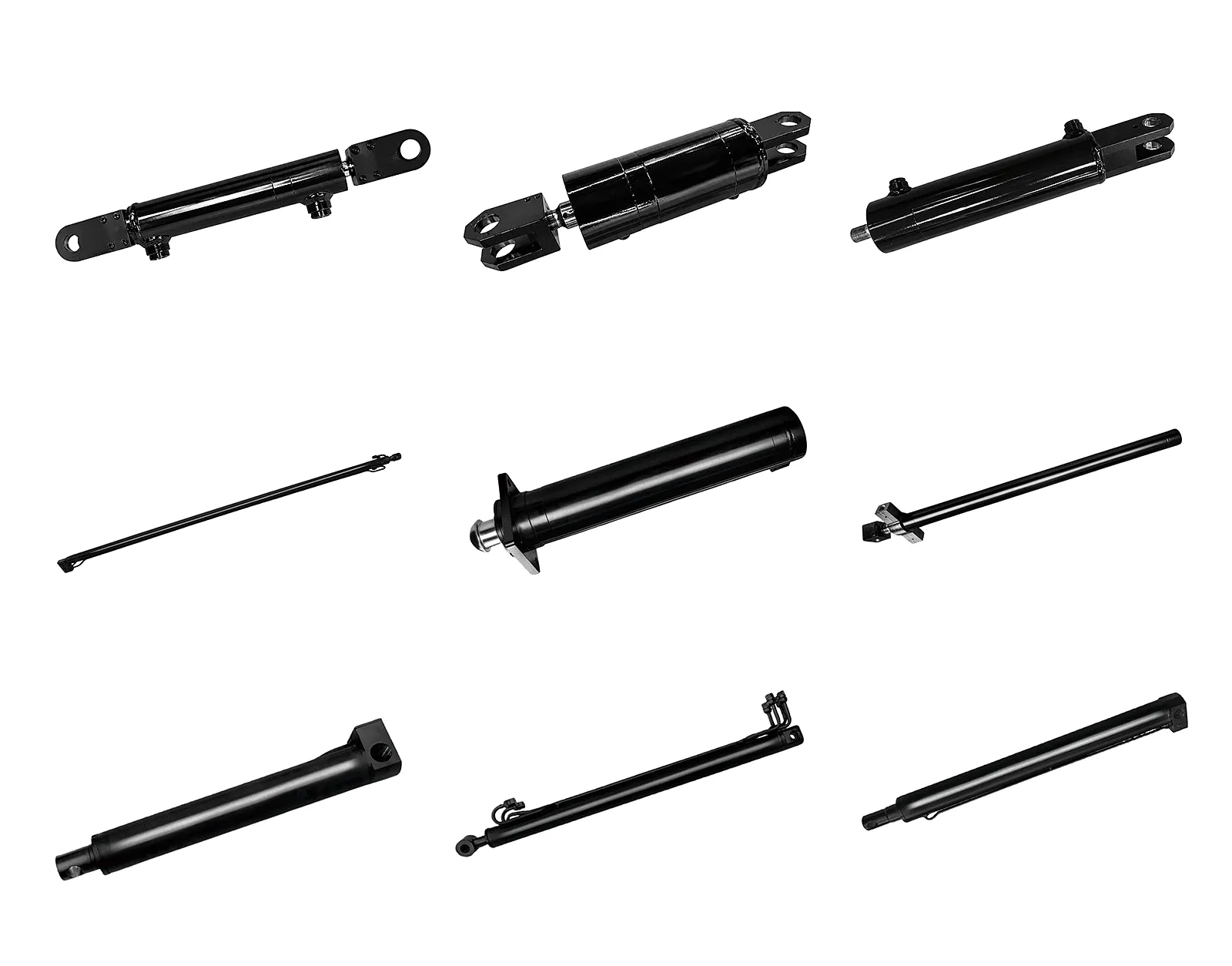
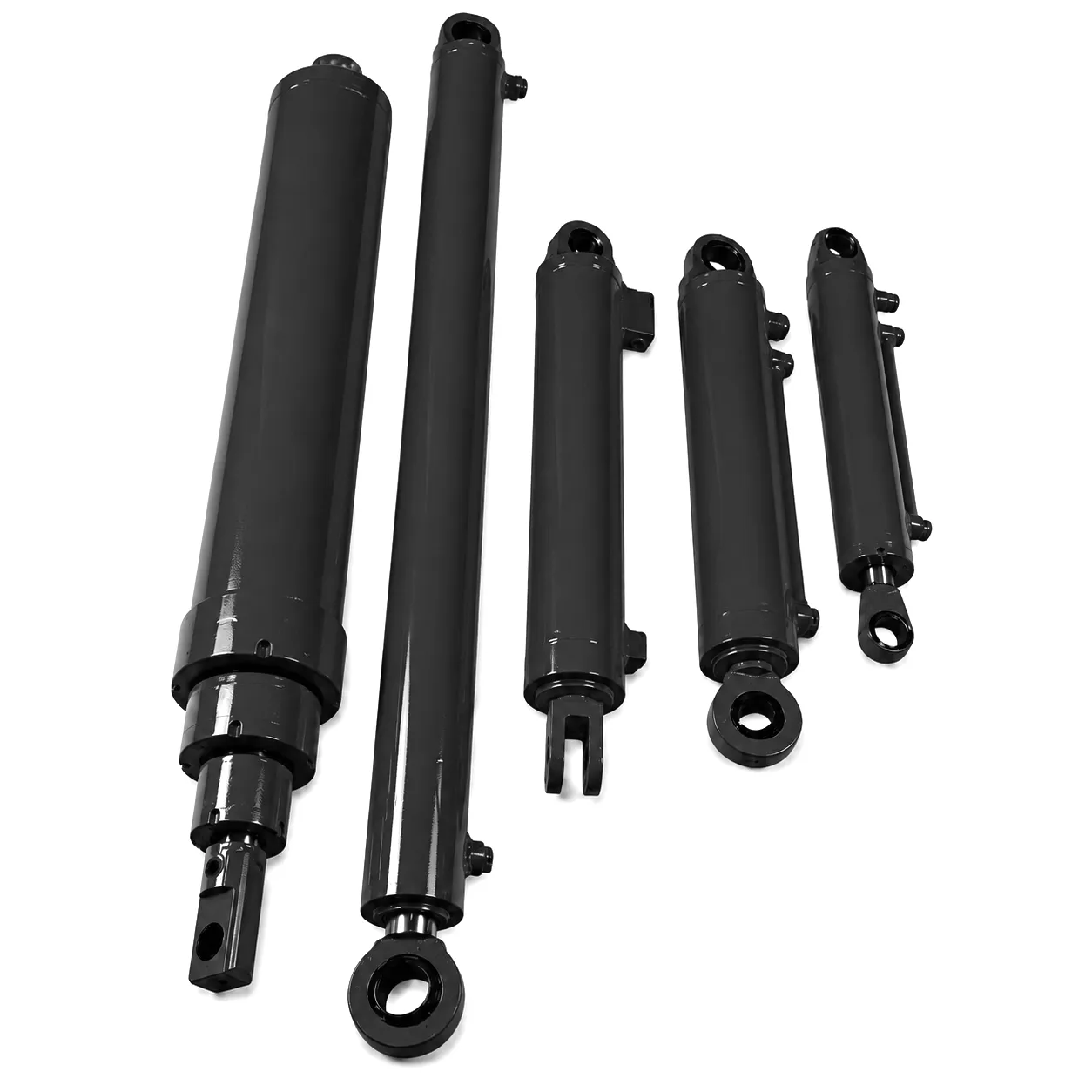
Ever Power hydraulic cylinder range — standard and custom configurations available for UK and global supply
Manufacturing Capability
Ever Power: Precision Manufacturing and Deep Customisation
Ever Power operates a vertically integrated hydraulic cylinder manufacturing facility encompassing honing lines, CNC turning centres, hard chrome plating, seal assembly, and a pressure testing bay capable of certifying cylinders to 1.5× rated working pressure. Every cylinder that leaves our facility carries dimensional inspection records, pressure test reports, and a batch-traceable material certificate against the steel mill heat number. For UK buyers requiring BS EN ISO 9001 quality system documentation, third-party witnessed testing, or ATEX-compliant designs for hazardous areas, our engineering team handles all documentation as part of the standard supply scope.
500+
Custom Configurations Delivered Annually
700 bar
Maximum Working Pressure Certified
Ra 0.2
µm Bore Finish, Controlled by In-Process Measurement
15 days
Lead Time for Standard Custom Specifications
Our customisation capability extends from bore-and-stroke combinations outside standard catalogues, through material substitutions for hazardous-fluid environments, to complete seal compound reformulation for unusual fluid types. UK customers benefit from DDP Incoterms delivery to any mainland GB postcode, with freight routed through our established logistics partners operating out of Felixstowe and Southampton. Expedited airfreight to Birmingham or Manchester airports is available for urgent replacement cylinders — a service that has saved production downtime on more than one occasion for customers operating in the Midlands automotive supply chain.
Customer Success Story: Leeds Steel Fabrication
 A structural steel fabrication operation based in Leeds — supplying pre-fabricated column and beam assemblies to construction contractors across the North of England — was experiencing seal failures on their hydraulic clamping cylinders at intervals of four to six months. The cylinders were mounted horizontally in their clamping jigs and subjected to side-loading from the weight of workpieces spanning two metres of unsupported steel section. Contamination from grinding dust was bypassing the factory-fitted wipers.
Ever Power’s engineering team redesigned the gland assembly: upgraded to a double-lipped polyurethane wiper with a stainless steel scraper plate, extended the rod bearing length from 1× to 1.8× bore diameter to reduce bearing pressure under side-load, and switched the piston seal to a step-cut PTFE design capable of handling the elevated pressure spikes from work-piece impact. Seal life extended from an average of five months to over twenty-two months on the first set of replacement cylinders. The Leeds site has since standardised on Ever Power cylinders for all sixteen clamping stations across two production halls, with a scheduled annual seal kit service maintaining continuity.
What UK Engineers Say About Ever Power Cylinders
★★★★★
“We specified custom bore cylinders with HVOF-coated rods for our steel mill press line in Scunthorpe. Ever Power hit every dimension on the first batch — bore tolerances, rod finish, port positions — and the FKM seals have held up perfectly through six months of continuous double-shift operation. Lead time was fourteen days from drawing approval to our dock, which nobody else quoted under six weeks.”
Hydraulic Systems Engineer — Steel Mill, Scunthorpe
★★★★★
“Our combine harvester cylinders were failing at the wiper seal every season — a combination of dust, chaff, and sitting retracted over winter. Ever Power redesigned the wiper to a double-lipped PU compound and fitted a stainless scraper behind it. We ran the entire harvest season in Lincolnshire without a single seal change. The cost saving in downtime alone paid for the upgraded cylinders several times over.”
Senior Maintenance Technician — Agricultural Contractor, Lincolnshire
★★★★★
“We needed a telescopic cylinder for a bespoke scissor lift platform going into a Birmingham automotive body shop — tight collapsed height, 280 mm bore, three-stage. Ever Power’s team ran the buckling calculation, sized the stage diameters, and delivered certified drawings within two working days of our RFQ. The cylinder went into the machine with zero fitment issues and has been in daily production use for eight months without any hydraulic issues.”
Design Engineer — Industrial Lift OEM, Birmingham
Sıkça Sorulan Sorular
Ready to Source Precision Hydraulic Cylinders?
UK delivery · Custom engineering · 2-day quotation · ISO 9001 documentation
Contact Ever Power — Get a Quote
[email protected] · Ever Power Hydraulic Cylinders
gzl tarafından düzenlendi
 Turkish
  English
  Italian
  Portuguese
  Dutch
Dutch  Swedish
  Danish
  Finnish
  Polish
  Hindi
Hindi  Kazakh
  Ukrainian
  Romanian
  Spanish
  German
  Russian
  Korean
  Japanese
  Vietnamese
  Thai
Thai  Indonesian
  Malay
Malay  French
  Greek
Greek