
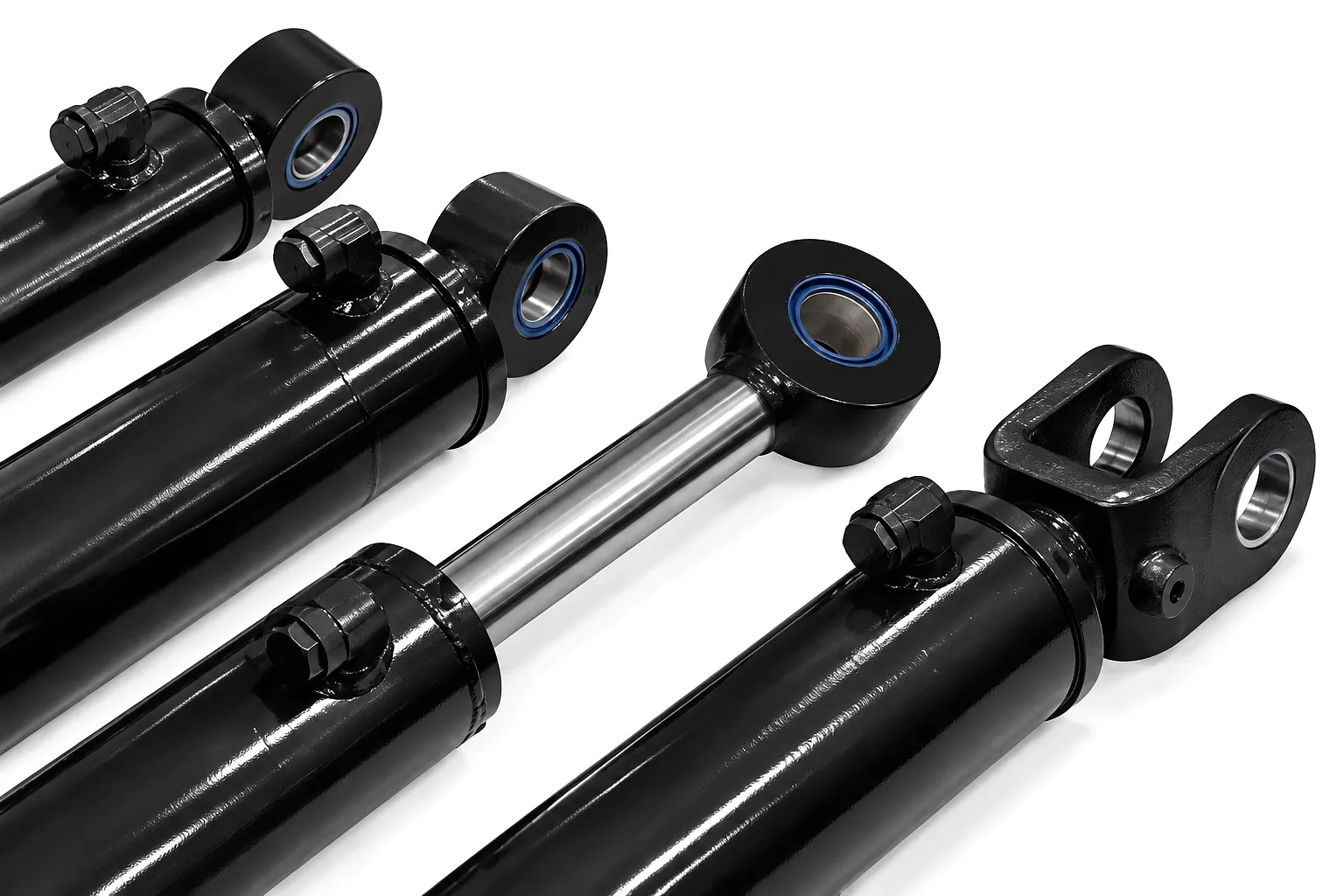
 Hydraulic cylinders are the backbone of power transmission across every segment of British industry — from the steel fabrication plants of Sheffield to the agricultural machinery workshops scattered across the East Midlands. Yet one fundamental specification decision shapes how every cylinder performs on the job: whether it operates on a single-acting principle or a double-acting principle. This distinction touches not merely the mechanical design of the actuator itself, but cascades outward into system efficiency, energy consumption, maintenance intervals, and ultimately the total cost of ownership over the asset’s operational life.
Engineers and procurement teams across the UK consistently encounter this choice when specifying new hydraulic systems or retrofitting existing equipment. The stakes are real: selecting the wrong cylinder type for an application can cause premature seal failure, inconsistent force delivery, or dangerous load-drop incidents. This article draws on deep technical expertise in hydraulic actuator design to give you a complete, grounded comparison — covering operating principles, material construction, performance parameters, real application scenarios, and buying guidance specific to the UK industrial market.
How Single-Acting Hydraulic Cylinders Work
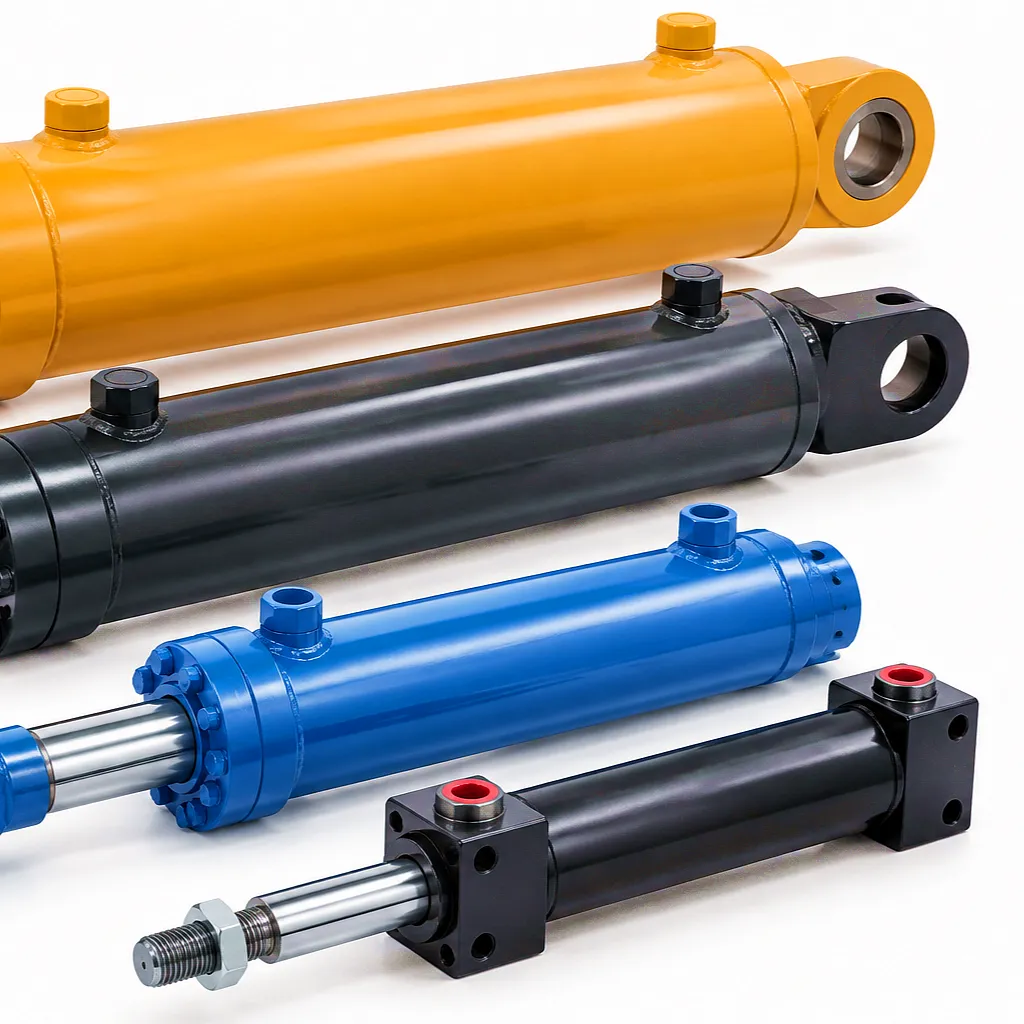 A single-acting hydraulic cylinder converts hydraulic pressure into linear mechanical force in one direction only. Hydraulic fluid is admitted under pressure to one side of the piston — almost always the cap end — driving the piston rod outward during the power stroke. When the hydraulic supply pressure is relieved, an internal return mechanism, typically a coil spring or the weight of the load itself, pushes the piston rod back to its retracted position. The hydraulic fluid displaced on the return stroke simply vents back to the reservoir through the same port it entered.
This elegant simplicity is the defining commercial and technical advantage of single-acting designs. The circuit requires only a single hydraulic line and a simpler directional control valve arrangement, reducing both installation costs and potential leak points. Single-acting cylinders are naturally suited to applications where the load itself provides the return force — clamping fixtures, stamping presses, lift platforms that descend under gravity, and agricultural implements such as plough depth adjustment rams. In the Birmingham manufacturing corridor, where legacy press-brake and riveting machinery demands reliable, repeatable clamping force, single-acting actuators remain the preferred choice precisely because of this circuit simplicity and the inherent fail-safe behaviour of spring return designs.
How Double-Acting Hydraulic Cylinders Work
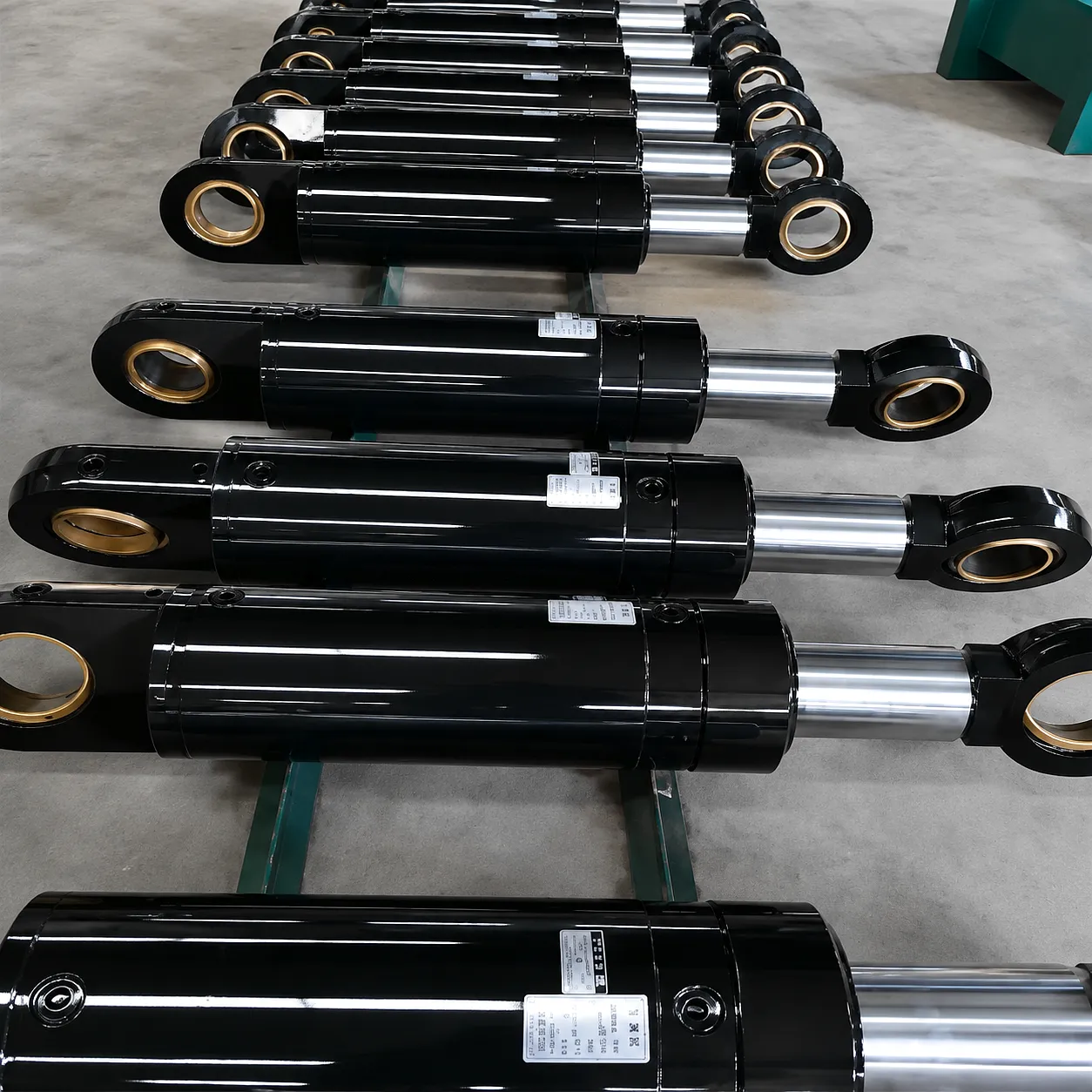 A double-acting hydraulic cylinder applies hydraulic pressure to both sides of the piston alternately. Two separate hydraulic ports connect to the cap end and the rod end of the cylinder barrel. When hydraulic fluid is directed into the cap-end port, the piston extends with full bore-area force. When fluid is redirected to the rod-end port and the cap end is opened to the return line, hydraulic pressure acts on the annular piston area to retract the rod with controlled power. Both the extension stroke and the retraction stroke are positively powered and precisely controllable.
This bi-directional power delivery is what makes double-acting cylinders indispensable in applications requiring controlled force in both directions. Excavator booms, crane jibs, injection moulding platens, and combine harvester header height controls all depend on the ability to push and pull with quantifiable, repeatable force. The rod-end retraction force is lower than the extension force because the effective piston area is reduced by the cross-sectional area of the rod — this differential is critical for engineers calculating retraction force margins in machine design. In Sheffield’s heavy fabrication facilities, where automated welding positioners must hold and rotate large weldments with absolute precision, double-acting cylinders are essentially mandatory.
Core Materials Used in Manufacturing Hydraulic Cylinders
Cylinder Barrel — Seamless Steel Tube
The barrel is precision-honed from cold-drawn seamless steel tube, typically EN 10305-4 specification in UK-compliant builds. Interior surface roughness is controlled to Ra 0.2–0.4 µm to minimise seal wear and optimise oil film formation. For corrosive offshore or agricultural environments, stainless steel (316L) or chrome-plated bores are specified.
Piston Rod — Hard Chrome Plated Steel
Piston rods are machined from CK45 or EN8 medium-carbon steel, then hard chrome plated to 20–25 µm depth and ground to h6 tolerance. The chrome layer provides a surface hardness of 850–1000 HV, delivering exceptional wear resistance and corrosion protection. For food-processing or chemical plants, electroless nickel or HVOF thermal spray coatings are available alternatives.
Seals — Polyurethane and PTFE Composites
Rod seals and piston seals are typically polyurethane (PU) for high dynamic loads, while PTFE-backed guide rings control lateral forces. At elevated temperatures or in hydraulic fire-resistant fluid (HF) systems, Viton (FKM) seals replace standard PU components. Correct seal compound selection is often the single most important factor in achieving designed service intervals in UK manufacturing environments.
End Caps & Glands — Ductile Iron or Steel Forgings
Cap ends and rod gland housings are machined from ductile cast iron GGG-40 or EN19 alloy steel forgings depending on pressure rating. Tie-rod cylinders use precision-ground steel rods with hydraulic nuts, while welded cylinders use continuous weld seams pressure-tested to 1.5× working pressure. Both designs are achievable in BS/ISO standards for UK market compliance.
Product Advantages: Single-Acting vs Double-Acting
Single-Acting Cylinder Advantages
- Simplified hydraulic circuitry requiring only one supply line, dramatically reducing the number of fittings and potential leak points throughout the system.
- Lower component cost and reduced system complexity make installation faster and commissioning more straightforward for maintenance engineers.
- Spring-return designs provide an inherent fail-safe mechanism — the actuator returns to its home position automatically on hydraulic power loss, critical in safety-sensitive press and clamping applications.
- Reduced heat generation because the hydraulic pump only pressurises fluid during the active power stroke, improving thermal efficiency in continuously cycling applications.
- Compact and lightweight design with fewer internal components, reducing overall system weight — important in mobile agricultural equipment operating across UK farmland.
Double-Acting Cylinder Advantages
- Full powered force delivery in both extension and retraction directions, enabling precise position control and force management throughout the entire stroke range.
- Substantially faster retraction speeds compared to spring-return designs, reducing cycle times in automated manufacturing and press operations.
- Ability to sustain continuous holding force in both directions without the spring fatigue issues that limit single-acting service life in high-frequency cycling applications.
- Superior control resolution when paired with proportional directional valves, enabling servo-hydraulic positioning to sub-millimetre accuracy in precision fabrication equipment.
- No spring element to fatigue, corrode, or break, making double-acting designs inherently more durable in demanding environments such as quarrying, marine, and offshore oil applications around the UK coastline.
Featured Hydraulic Cylinder Products
Technical Performance Parameter Table
Standard production range — custom specifications available on request
| Parameter | Single-Acting | Double-Acting | Unit / Notes |
|---|---|---|---|
| Bore Diameter Range | 20 – 500 | 20 – 800 | mm |
| Çalışma Basıncı | Up to 200 | Up to 350 | bar (standard); higher on request |
| Max Stroke Length | Up to 3,000 | Up to 8,000 | mm (telescopic available) |
| Extension Force (max) | ~3,900 | ~17,600 | kN (varies by bore & pressure) |
| Retraction Force | Spring-dependent | Fully hydraulic — rod area | kN (typically 60–75% of extension) |
| Operating Temperature | -20 to +80 | -30 to +120 | °C (seal compound dependent) |
| Hydraulic Ports | 1 (cap end) | 2 (cap & rod end) | BSP / SAE / Metric options |
| Rod Surface Hardness | 850 – 1000 | 850 – 1000 | HV (hard chrome plated) |
| Varil Malzemesi | ST52 / EN10305-4 | ST52 / EN10305-4 / SS316 | Custom alloy available |
| Test Pressure | 1.5× working pressure | 1.5× working pressure | Bar (ISO 10100 compliant) |
| Mounting Options | Flange, foot, clevis, pin | Flange, foot, clevis, pin, trunnion | ISO 6020/6022 compliant |
Industrial Application Scenarios Across the UK
Single-Acting
Agricultural Machinery — Yorkshire & Lincolnshire Arable Farmland
Single-acting cylinders dominate plough beam depth control, grain hopper door actuation, and header height adjustment on combine harvesters operating across the large arable farms of Yorkshire and Lincolnshire. The load — soil resistance or gravity — provides return force, so one hydraulic line per cylinder is sufficient, keeping trailer-mounted hydraulic kits simple and servicing costs low for agricultural contractors operating far from workshop facilities.
Double-Acting
Steel Fabrication & Heavy Press Operations — Sheffield Manufacturing Quarter
Sheffield’s renowned steel processing and fabrication sector relies extensively on double-acting hydraulic cylinders in large-tonnage press brakes, forging hammers, and plate straightening equipment. The need to apply precise forming force on the downstroke and then controlled lift force on retraction, without allowing the ram to free-fall, makes double-acting actuation essential. Position feedback integrated with proportional valves enables tolerances that meet BS EN ISO 9013 cutting quality standards demanded by the aerospace and defence sub-supply chains centred in this region.
Double-Acting
Construction Equipment & Excavators — Infrastructure Projects Across Birmingham
Major infrastructure regeneration projects across Birmingham — from HS2 enabling works to city centre redevelopment — deploy large fleets of excavators, crawler cranes, and demolition shears whose boom, stick, and bucket circuits all rely on double-acting cylinders. The cylinders must deliver repeatable force cycles for tens of thousands of hours under heavy contamination conditions. Hardened chrome rods, wiper seal assemblies with scraper lips, and extended rod-gland service intervals are standard specification requirements for plant hire fleets operating in Birmingham’s construction environment.
Single & Double-Acting
Lifting Platforms & Dock Levellers — Logistics Hubs in Coventry & Milton Keynes
Dock levellers and vehicle-mounted hydraulic tail lifts across the Coventry and Milton Keynes distribution corridor — serving the UK’s central logistics spine — use both cylinder types depending on load rating and duty cycle. Single-acting telescopic cylinders handle gravity-return dock leveller lips, while double-acting units power the main platform where controlled descent speed is required. Our Custom Double Acting Telescopic Hydraulic Cylinders for Lifting Platforms are purpose-built for exactly these demanding continuous-duty logistics applications.
Single-Acting
Automotive Body Pressing & Stamping — West Midlands Tier-1 Suppliers
West Midlands Tier-1 and Tier-2 automotive suppliers producing body panels for Jaguar Land Rover and other OEMs rely on single-acting clamping cylinders in die-change fixtures and blank-holding rings. The spring return ensures panels are released reliably at the end of each forming cycle regardless of electrical or hydraulic system failures, preventing costly tooling damage and press downtime. High cycle life of 3–5 million cycles is achievable with correctly specified PU seal kits.
Double-Acting
Marine Hatch Covers & Steering Gear — Port of Southampton & Humber Ports
Ship hatch cover actuators, rudder quadrant rams, and deck crane luffing cylinders at UK ports including Southampton and the Humber estuary complex demand double-acting cylinders built to Lloyd’s Register or Bureau Veritas class rules. Stainless steel barrels, corrosion-resistant coating systems complying with Norsok M-501, and fire-safe HFC-type hydraulic fluids are standard for marine duty. Double-acting designs allow hatch covers to be safely opened against the wind load and closed under powered control, with neither stroke left to chance or gravity.
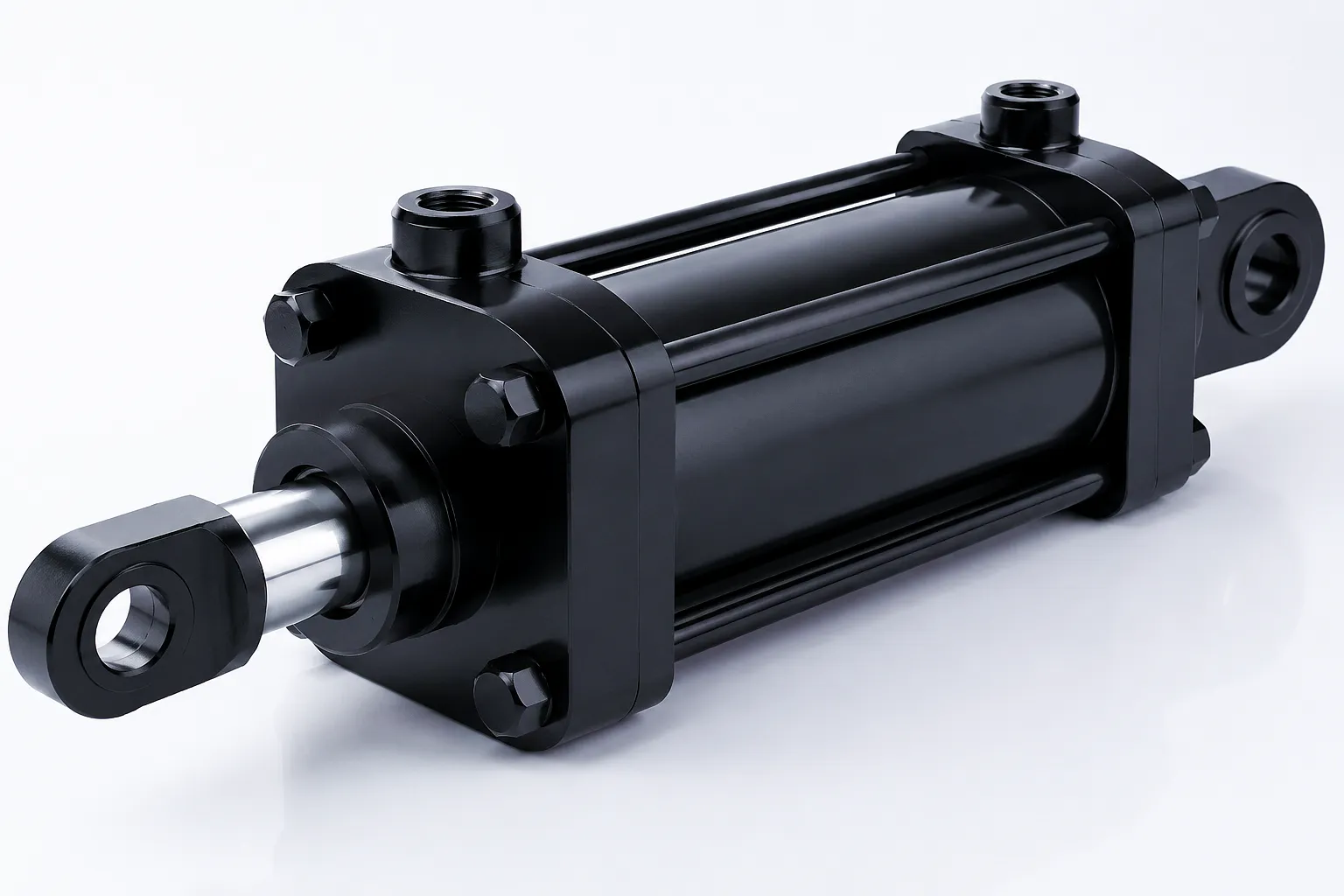
Ever Power: Precision Manufacturing & Full Customisation Capability
Ever Power operates advanced manufacturing facilities equipped with CNC honing lines, deep-hole boring centres, and automated seal assembly stations that collectively enable us to produce both single-acting and double-acting hydraulic cylinders to any customer-specified geometry, pressure rating, or material requirement. Our engineering team does not simply catalogue-select — we design from first principles, running finite element analysis (FEA) on end-cap and tie-rod geometry where pressures exceed 250 bar, and hydraulic circuit modelling when customers require dynamic performance data alongside hardware.
For UK customers, our supply chain is structured to meet the lead-time expectations of British industry. Standard bore and stroke combinations ship within 3–5 working days from finished goods inventory. Custom cylinders with specified rod diameter, porting arrangement, mounting style, and special surface treatment are manufactured and dispatched within 15–25 working days, including hydrostatic test certification, material traceability certificates, and dimensional inspection reports that satisfy incoming inspection requirements at UKAS-accredited UK manufacturers.
Our customisation capability spans bore sizes from 20 mm to 800 mm, strokes to 8,000 mm, working pressures to 350 bar, and all standard international mounting configurations. We hold ISO 9001:2015 certification and manufacture to BS EN ISO 6020/6022 cylinder dimensional standards as required for seamless integration into UK-designed hydraulic systems. Whether your application requires a compact single-acting spring-return unit for a clamping fixture in a Derby aerospace component plant or a 500-bar rated double-acting cylinder for a North Sea subsea testing rig, Ever Power’s engineering and production teams will deliver to specification.
✔ Bore Range
20 mm to 800 mm — standard and non-standard bores available
✔ Pressure Rating
Standard to 350 bar; special designs to 700 bar for subsea
✔ Certification
ISO 9001:2015 | Lloyd’s Register | CE Marking for PSSR 2000
✔ UK Lead Time
Standard: 3–5 working days | Custom: 15–25 working days
Customer Success Story: Rotherham Steel Tube Fabricator
Case Study — Rotherham, South Yorkshire
Heavy-Wall Tube Mandrel Press — Replacing Aging Single-Acting Cylinders with Double-Acting Units
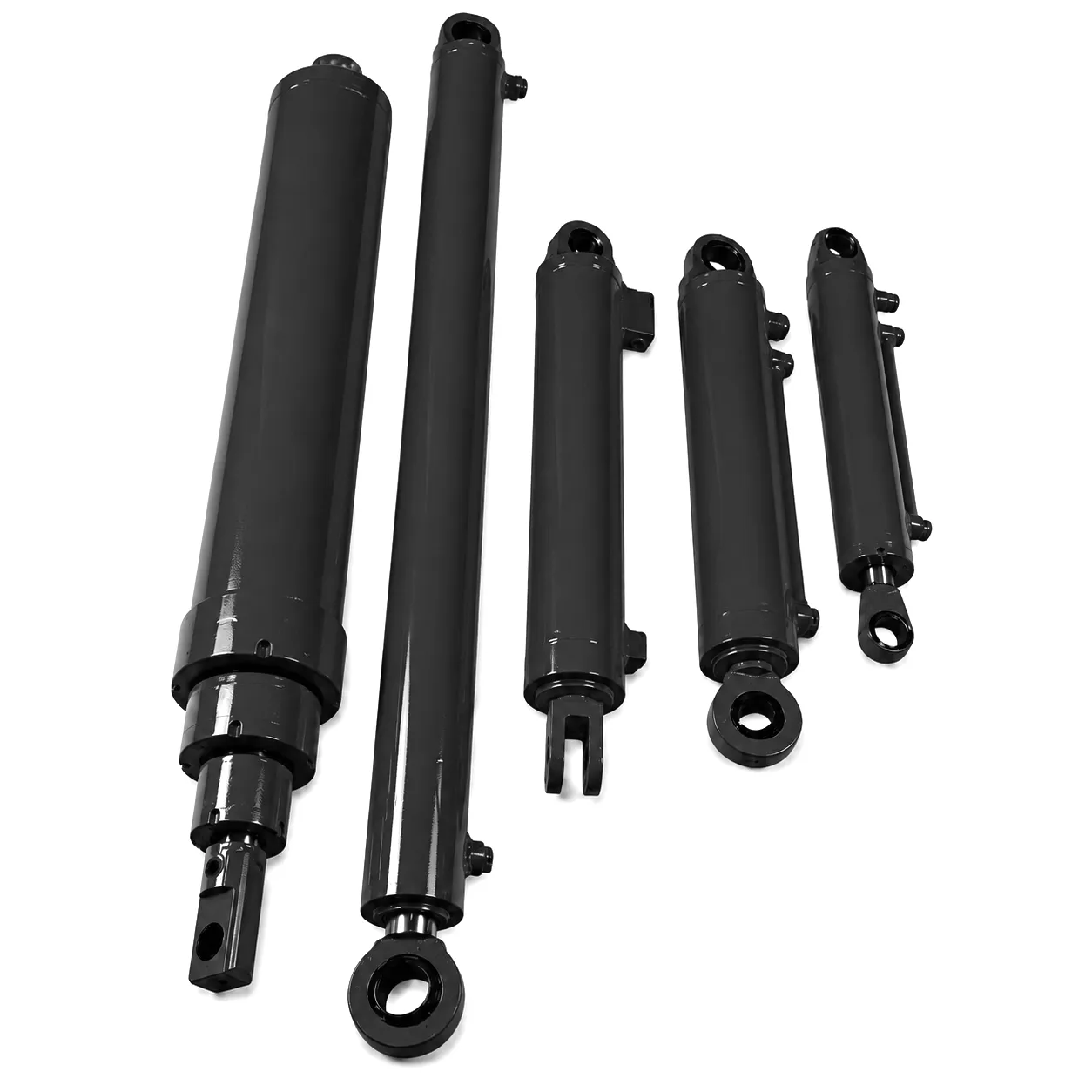 A Rotherham-based manufacturer of heavy-wall structural steel tube for the civil engineering sector was experiencing consistent production bottlenecks on their mandrel press line. The existing single-acting cylinders, originally specified for simpler material grades, were struggling to deliver adequate retraction force when processing thick-wall EN 10219-2 grade tubes. Spring-return force margins had been calculated incorrectly for the increased wall thickness of newer product ranges, resulting in incomplete retraction, mandrel sticking incidents, and costly unplanned downtime averaging 4.2 hours per week.
The production engineering team contacted Ever Power with a detailed application brief covering press tonnage, mandrel geometry, required retraction force at maximum tube wall thickness, stroke length, and space envelope constraints. Ever Power’s engineering team proposed a like-for-like physical replacement using 160 mm bore double-acting cylinders with 280 bar working pressure rating, 1,200 mm stroke, and BSP port connections matching the existing hydraulic circuit. The rod-end retraction force of the new units was calculated at 4.8× the spring-return force of the replaced cylinders — decisively sufficient for all planned tube specifications.
Following a two-day installation and commissioning window managed during a planned maintenance shutdown, the press line returned to production with zero mandrel sticking incidents over the subsequent six-month monitoring period. Cycle time per tube improved by 18 seconds due to faster powered retraction, translating to approximately 340 additional tube lengths per shift. The customer subsequently specified Ever Power double-acting cylinders for two further press lines at the same facility and one sister plant in Middlesbrough.
Customer Reviews
★★★★★
“We’d been fighting mandrel sticking for the better part of two years and assumed it was a process problem. Ever Power’s engineers identified it as a retraction force deficit within a day of reviewing our application data. The 160 mm double-acting cylinders they supplied have not put a foot wrong in six months of three-shift production. The dimensional quality of the rods and the barrel honing are outstanding — clearly machined by people who understand what a cylinder has to endure in a press environment.”
— Production Engineering Manager, Structural Steel Tube Manufacturer, Rotherham
★★★★★
“Our dock leveller fleet at the Coventry distribution centre runs continuous three-shift cycles, and the previous cylinder supplier’s units were sealing out at roughly 14 months. Ever Power’s custom single-acting telescopic units with upgraded PU rod seals and wiper seals have now run 22 months without a single leak call. The price point was competitive and the lead time for custom-length units was only 18 working days — well within what we needed for our refurbishment schedule.”
— Head of Engineering, 3PL Logistics Operator, Coventry
★★★★★
“As a plant hire company serving Birmingham’s construction boom, we need hydraulic cylinders that tolerate contaminated fluid, high ambient dust, and intermittent maintenance schedules. We’ve been running Ever Power double-acting boom cylinders on two tracked excavators for 14 months. The chrome rod finish shows minimal scoring despite rough site conditions and the seals remain oil-tight. When we needed a non-standard rod-end thread to match a competitor’s yoke, Ever Power machined to our drawing without additional cost on a 20-working-day delivery. That level of custom service is genuinely rare at the prices they’re quoting.”
— Fleet Maintenance Director, Plant Hire Company, Birmingham
Sıkça Sorulan Sorular
Ready to Source the Right Hydraulic Cylinder for Your Application?
Ever Power’s engineering team is ready to review your specifications and provide a detailed proposal. Custom designs, fast UK delivery, full test certification.
GET YOUR QUOTE — [email protected]
Also explore: Custom Telescopic Hydraulic Cylinders for Lifting Platforms
edit by gzl | © Ever Power — boom-cylinders.com | B2B Hydraulic Cylinder Manufacturer & Supplier
 Turkish
  English
  Italian
  Portuguese
  Dutch
Dutch  Swedish
  Danish
  Finnish
  Polish
  Hindi
Hindi  Kazakh
  Ukrainian
  Romanian
  Spanish
  German
  Russian
  Korean
  Japanese
  Vietnamese
  Thai
Thai  Indonesian
  Malay
Malay  French
  Greek
Greek