
Опис продукту
Опис продукту
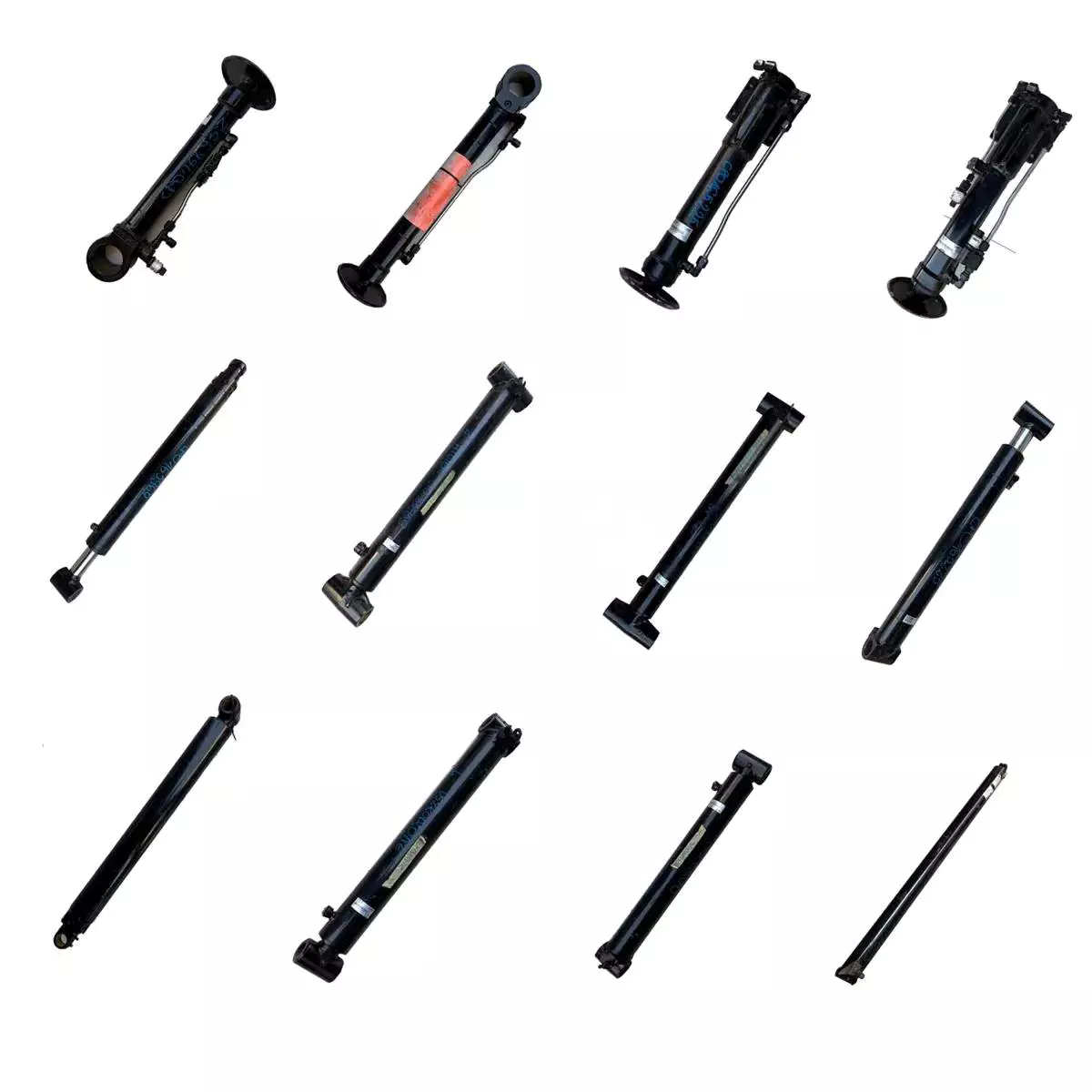
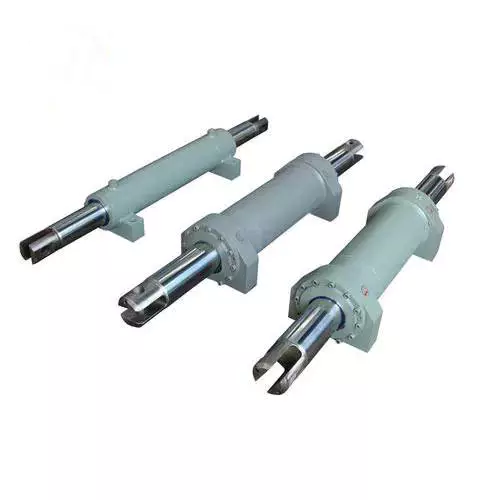
Mining & cement hydraulic cylinder:
Hetlock(ZheJiang )Machinery Co.,Ltd. have many years of experience in mining and cement industry, Allows us to accumulate the rich experience of hydraulic cylinder in this industry. Because of the bad environment of this industry, dusty, and use frequently. We grope out a set of complete process for the design methods and produce process.
We are established a professional quality control method for each key control points of technology and process, and get a very good quality result.
Our products have applications in:
- Tunnel construction equipment;
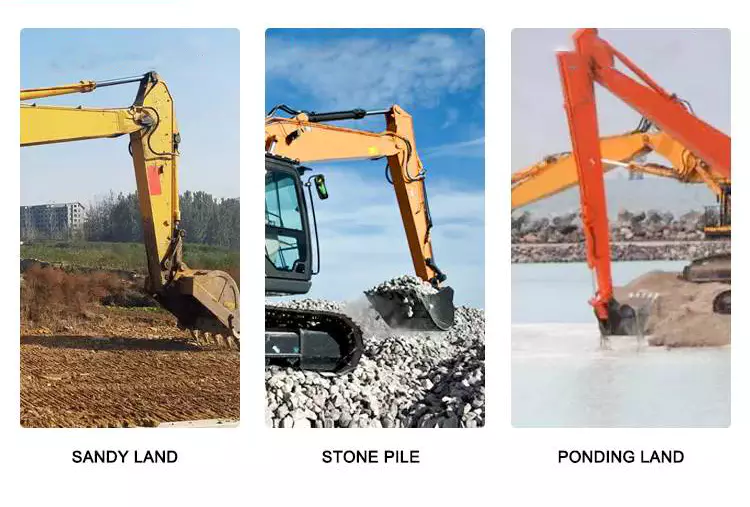
- Earth moving equipment;
- Hydraulic con crusher;
- Grate cooler;
- Roller press;
- Vertical mill;
- Drilling rig;
- Etc.
Product Parameters
| Матеріал | Carbon steel, Alloy steel, Stainless steel |
| Honed tube | 20-2500mm, Heat treatment, honing, rolling |
| Piston rod | 10-2000mm ,tempering, plated nickel, Chromium or ceramic |
| Working Pressure | 5-300Mpa |
| Seals | Parker,Merkel,Hallite |
| Technology | Bosch CHINAMFG and Parker |
| Coating | Sandblasting, primer, middle paint, finish paint |
| Temperature range | -40ºC to +300ºC |
| Work medium | Hydraulic Oil |
| Piston speed | maximum 2m/s |
| Mounting style | Earrings, flange, foot mounting, screw thread. |
Product Application
Company Show
HETLOCK is a professional manufacturer of hydraulic cylinders in China, Founded in 1998, located in the international city of ZheJiang . Our plant is nearly 20000 square meter& We have 135 Employees including 11 experienced engineers and technical staff,More than 1800 type of hydraulic cylinder designed in every year. We can produce various kinds of hydraulic cylinders according to customer requirements.
The inside diameter of hydraulic cylinders can achieve the maximum 2500mm;
The hydraulic cylinders operating pressure can achieve the maximum 300MPa.
FAQ
Q1:Are you a manufacturer or trading company?
A: We are a manufacturer.
Q2: How many years of production experience do you have?
A: We have over 20 years of production experience.
Q3: Can it be customized?
A: Both standard and non-standard products can be customized.
Q4: How to ensure product quality?
A: We strictly follow the quality process for production and 100% inspection of each batch of products.
Q5: What services can you provide?
A: According to customer requirements, we can provide a one-stop solution from design, production, and delivery to meet their needs.
/* May 10, 2571 16:49:51 */!function(){function d(e,r){var a,o={};try{e&&e.split(“,”).forEach(function(e,t){e&&(a=e.match(/(.*?):(.*)$/))&&1
How do hydraulic cylinders handle the challenges of precise positioning and control?
Hydraulic cylinders are designed to handle the challenges of precise positioning and control with a combination of engineering principles and advanced control systems. These challenges often arise in applications where accurate and controlled movements are required, such as in industrial automation, construction, and material handling. Here’s a detailed explanation of how hydraulic cylinders overcome these challenges:
1. Fluid Power Control:
– Hydraulic cylinders utilize fluid power control to achieve precise positioning and control. The hydraulic system consists of a hydraulic pump, control valves, and hydraulic fluid. By regulating the flow of hydraulic fluid into and out of the cylinder, operators can control the speed, direction, and force exerted by the cylinder. The fluid power control allows for smooth and accurate movements, enabling precise positioning of the hydraulic cylinder and the attached load.
2. Control Valves:
– Control valves play a crucial role in handling the challenges of precise positioning and control. These valves are responsible for directing the flow of hydraulic fluid within the system. They can be manually operated or electronically controlled. Control valves allow operators to adjust the flow rate of the hydraulic fluid, controlling the speed of the cylinder’s movement. By modulating the flow, operators can achieve fine control over the positioning of the hydraulic cylinder, enabling precise and accurate movements.
3. Proportional Control:
– Hydraulic cylinders can be equipped with proportional control systems, which offer enhanced precision in positioning and control. Proportional control systems utilize electronic feedback and control algorithms to precisely regulate the flow and pressure of the hydraulic fluid. These systems provide accurate and proportional control over the movement of the hydraulic cylinder, allowing for precise positioning at various points along its stroke length. Proportional control enhances the cylinder’s ability to handle complex tasks that require precise movements and control.
4. Position Feedback Sensors:
– To achieve precise positioning, hydraulic cylinders often incorporate position feedback sensors. These sensors provide real-time information about the position of the cylinder’s piston rod. Common types of position feedback sensors include potentiometers, linear variable differential transformers (LVDTs), and magnetostrictive sensors. By continuously monitoring the position, the feedback sensors enable closed-loop control, allowing for accurate positioning and control of the hydraulic cylinder. The feedback information is used to adjust the flow of hydraulic fluid to achieve the desired position accurately.
5. Servo Control Systems:
– Advanced hydraulic systems employ servo control systems to handle the challenges of precise positioning and control. Servo control systems combine electronic control, position feedback sensors, and proportional control valves to achieve high levels of accuracy and responsiveness. The servo control system continuously compares the desired position with the actual position of the hydraulic cylinder and adjusts the flow of hydraulic fluid to minimize any positional error. This closed-loop control mechanism enables the hydraulic cylinder to maintain precise positioning and control, even under varying loads or external disturbances.
6. Integrated Automation:
– Hydraulic cylinders can be integrated into automated systems to achieve precise positioning and control. In such setups, the hydraulic cylinders are controlled by programmable logic controllers (PLCs) or other automation controllers. These controllers receive input signals from various sensors and use pre-programmed logic to command the hydraulic cylinder’s movements. The integration of hydraulic cylinders into automated systems allows for precise and repeatable positioning and control, enabling complex sequences of movements to be executed with high accuracy.
7. Advanced Control Algorithms:
– Advancements in control algorithms have also contributed to the precise positioning and control of hydraulic cylinders. These algorithms, such as PID (Proportional-Integral-Derivative) control, adaptive control, and model-based control, enable sophisticated control strategies to be implemented. These algorithms consider factors such as load variations, system dynamics, and environmental conditions to optimize the control of hydraulic cylinders. By employing advanced control algorithms, hydraulic cylinders can compensate for disturbances and achieve precise positioning and control over a wide range of operating conditions.
In summary, hydraulic cylinders overcome the challenges of precise positioning and control through the use of fluid power control, control valves, proportional control, position feedback sensors, servo control systems, integrated automation, and advanced control algorithms. By combining these elements, hydraulic cylinders can achieve accurate and controlled movements, enabling precise positioning and control in various applications. These capabilities are essential for industries that require high precision and repeatability in their operations, such as industrial automation, robotics, and material handling.
Забезпечення стабільної роботи гідравлічних циліндрів при коливальних навантаженнях
Гідравлічні циліндри розроблені для забезпечення стабільної роботи навіть за коливань навантажень. Вони досягають цього за допомогою різних механізмів та функцій, які дозволяють ефективно контролювати та компенсувати навантаження. Давайте розглянемо, як гідравлічні циліндри забезпечують стабільну роботу за коливань навантажень:
- Конструкція поршня: Поршень усередині гідравлічного циліндра відіграє вирішальну роль у контролі навантаження. Зазвичай він оснащений ущільненнями та кільцями, які запобігають витоку гідравлічної рідини та забезпечують ефективну передачу зусилля. Конструкція поршня може включати такі елементи, як ступінчасті або тандемні поршні, які забезпечують покращену несучу здатність та покращену стійкість, розподіляючи навантаження по кількох поверхнях.
- Амортизація циліндра: Гідравлічні циліндри часто містять механізми амортизації для мінімізації ударів та поштовхів, спричинених коливаннями навантажень. Амортизації можна досягти різними методами, такими як регульовані гвинти амортизації, гідравлічні клапани амортизації або еластомерні кільця амортизації. Ці механізми уповільнюють рух поршня ближче до кінця ходу, зменшуючи удар та запобігаючи раптовим зупинкам, які можуть призвести до нестабільності.
- Компенсація тиску: Коливання навантаження можуть призвести до коливань тиску в гідравлічній системі. Для забезпечення стабільної роботи гідравлічні циліндри оснащені механізмами компенсації тиску. Ці механізми підтримують постійний рівень тиску в системі, незалежно від змін навантаження. Компенсації тиску можна досягти за допомогою запобіжних клапанів, компенсаційних поршнів або клапанів регулювання потоку з компенсацією тиску.
- Контроль потоку: Гідравлічні циліндри часто оснащені клапанами регулювання потоку для регулювання швидкості руху циліндра. Контролюючи швидкість потоку гідравлічної рідини, рух циліндра можна регулювати відповідно до змінних умов навантаження. Клапани регулювання потоку забезпечують плавний та контрольований рух, запобігаючи різким змінам, які можуть призвести до нестабільності.
- Системи зворотного зв'язку: Для забезпечення стабільної роботи при коливаннях навантажень гідравлічні циліндри можна інтегрувати із системами зворотного зв'язку. Ці системи надають інформацію в режимі реального часу про положення, швидкість та силу циліндра. Завдяки постійному контролю цих параметрів гідравлічна система може негайно вносити корективи для підтримки стабільності та компенсації коливань навантаження. Системи зворотного зв'язку можуть включати датчики положення, датчики тиску або датчики навантаження, залежно від конкретного застосування.
- Правильний підбір розміру та розміру: Забезпечення стабільної роботи за коливальних навантажень починається з правильного вибору розмірів та гідравлічних циліндрів. Вкрай важливо вибрати циліндри з відповідним розміром отвору, діаметром штока та довжиною ходу, щоб відповідати очікуваним умовам навантаження. Завеликі або замалі циліндри можуть призвести до нестабільності та зниження продуктивності. Правильний вибір розмірів також включає врахування таких факторів, як необхідна сила, швидкість та робочий цикл застосування.
Підсумовуючи, гідроциліндри забезпечують стабільну роботу при коливаннях навантажень завдяки таким функціям, як конструкція поршня, механізми амортизації, компенсація тиску, регулювання потоку, системи зворотного зв'язку, а також правильний вибір та визначення розмірів. Ці механізми та міркування дозволяють гідроциліндрам забезпечувати стабільний та контрольований рух навіть в умовах динамічного навантаження, що призводить до надійної та стабільної роботи.
Can you provide real-world examples of machinery that heavily rely on hydraulic cylinders?
Hydraulic cylinders are widely used in various industries and applications due to their ability to provide powerful and precise linear motion. They play a crucial role in enabling the operation of heavy machinery that requires controlled force and movement. Here are some real-world examples of machinery that heavily rely on hydraulic cylinders:
1. Construction Equipment:
– Hydraulic cylinders are extensively used in construction machinery, such as excavators, bulldozers, loaders, and cranes. These machines rely on hydraulic cylinders to perform tasks like lifting heavy loads, extending and retracting booms, tilting buckets, and controlling the movement of various components. Hydraulic cylinders provide the power and precision required to handle the demanding conditions and heavy loads encountered in construction projects.
2. Agricultural Machinery:
– Many agricultural machines, including tractors, combine harvesters, and sprayers, utilize hydraulic cylinders for critical operations. Hydraulic cylinders are used to control the movement of attachments, such as front loaders, backhoes, and plows. They enable functions like lifting and lowering implements, adjusting cutting heights, and controlling the positioning of harvesting equipment. Hydraulic cylinders enhance efficiency and productivity in agricultural operations.
3. Material Handling Equipment:
– Hydraulic cylinders are integral components of material handling equipment, such as forklifts, pallet jacks, and cranes. These machines rely on hydraulic cylinders to lift and lower loads, tilt platforms or forks, and control the movement of lifting mechanisms. Hydraulic cylinders provide the necessary strength and precision to handle heavy loads and ensure safe and efficient material handling operations.
4. Industrial Machinery:
– Various industrial machinery and equipment heavily rely on hydraulic cylinders for critical functions. Examples include hydraulic presses, injection molding machines, metal-forming machines, and hydraulic-powered robots. Hydraulic cylinders enable precise control of force and movement in these applications, allowing for accurate shaping, pressing, and assembly processes.
5. Mining Equipment:
– Hydraulic cylinders are extensively used in mining machinery and equipment. Underground mining machines, such as continuous miners and longwall shearers, utilize hydraulic cylinders for cutting, shearing, and roof support operations. Surface mining equipment, including hydraulic shovels, draglines, and haul trucks, rely on hydraulic cylinders for tasks like bucket movement, boom extension, and vehicle suspension.
6. Automotive Industry:
– The automotive industry extensively utilizes hydraulic cylinders in various applications. Hydraulic cylinders are employed in vehicle suspension systems, power steering systems, convertible tops, and hydraulic brake systems. They enable smooth and controlled movement, precise steering, and efficient braking in automobiles.
7. Aerospace and Aviation:
– Hydraulic cylinders are utilized in aerospace and aviation applications, such as aircraft landing gear systems, wing flaps, and cargo handling equipment. Hydraulic cylinders provide the necessary force and control for extending and retracting landing gear, adjusting wing flaps, and operating cargo doors, ensuring safe and reliable aircraft operations.
8. Marine and Offshore Industry:
– Hydraulic cylinders are essential components in marine and offshore equipment, including ship cranes, winches, and hydraulic-powered anchor systems. They enable lifting, lowering, and positioning of heavy loads, as well as the control of various marine equipment.
These are just a few examples of machinery and industries that heavily rely on hydraulic cylinders. The versatility, power, and precise control offered by hydraulic cylinders make them indispensable in a wide range of applications, where controlled linear motion and force are essential.
<img src="https://img.jiansujichilun.com/img/hydrauliccylinders/hydrauliccylinders-l1.webp" alt="China OEM 2ND Level Double Acting Hydraulic Cylinder for Mining Equipments with Good quality “><img src="https://img.jiansujichilun.com/img/hydrauliccylinders/hydrauliccylinders-l2.webp" alt="China OEM 2ND Level Double Acting Hydraulic Cylinder for Mining Equipments with Good quality “>
editor by Dream 2024-10-10
 Ukrainian
  English
  Italian
  Portuguese
  Dutch
Dutch  Swedish
  Danish
  Finnish
  Polish
  Hindi
Hindi  Kazakh
  Turkish
  Romanian
  Spanish
  German
  Russian
  Korean
  Japanese
  Vietnamese
  Thai
Thai  Indonesian
  Malay
Malay  French
  Greek
Greek