
Опис продукту
HYDRAULIC CYLINDER
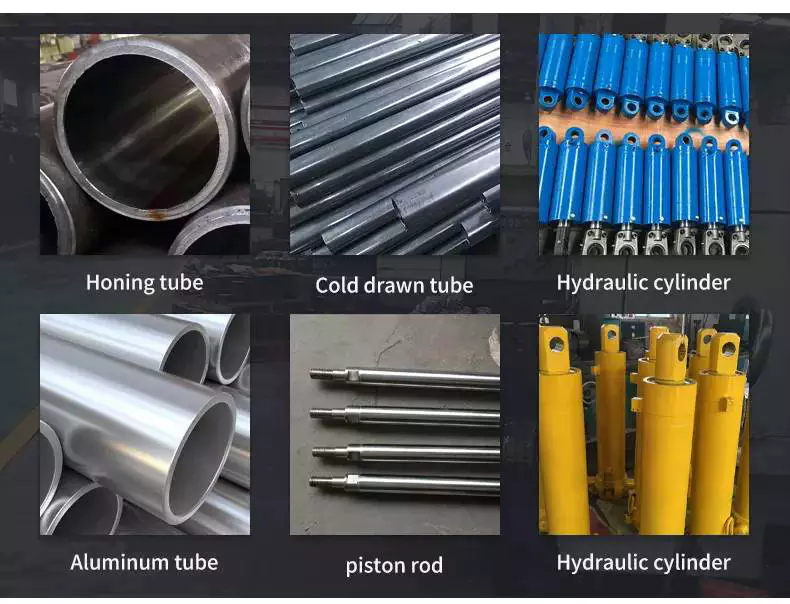
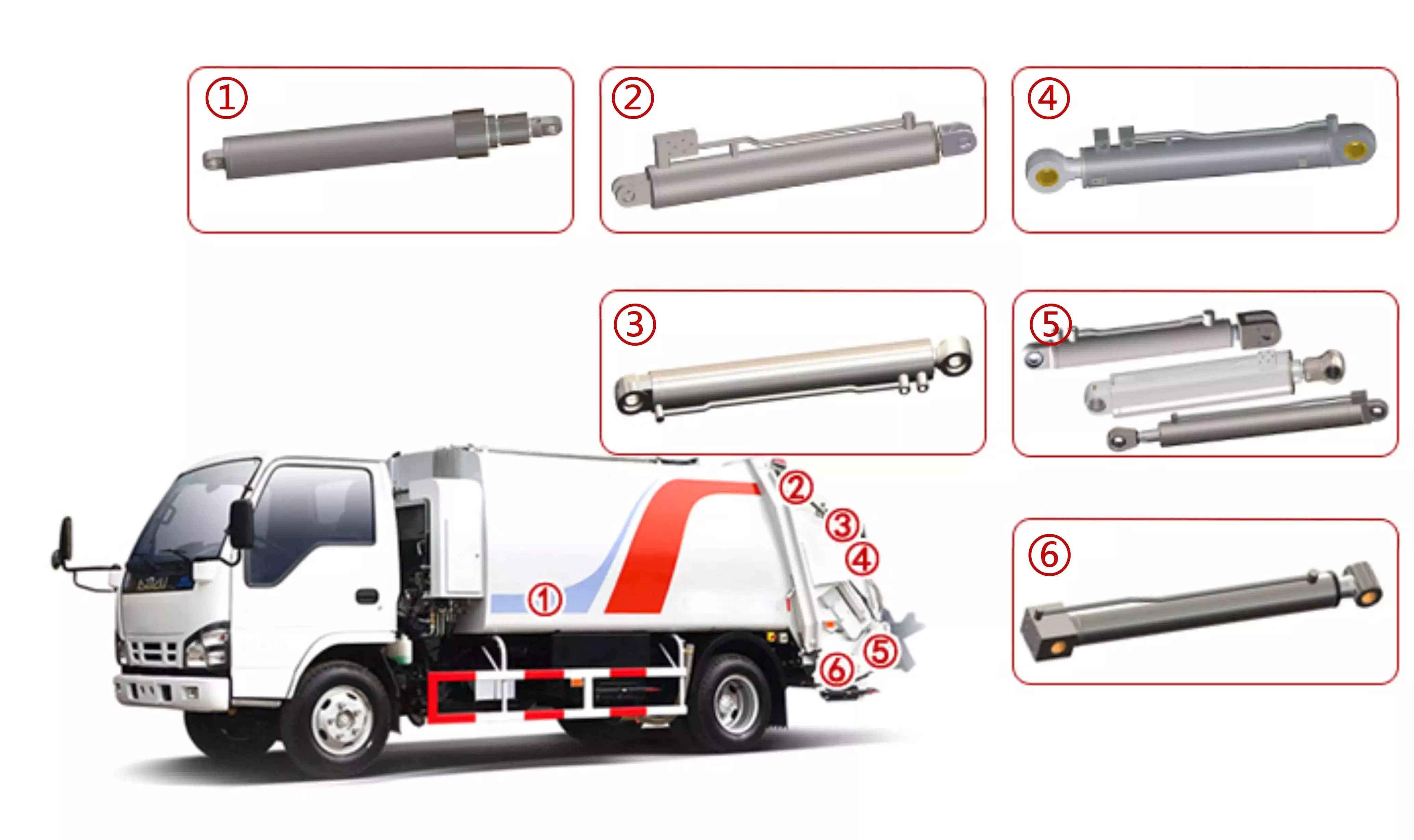
Widely used in equipment for Construction, Coal&mine, Agriculture , Aerial work table and Environmental sanitation etc.
| Features | customized hydraulic cylinder |
| Діаметр отвору | 2′-50’/50-1500mm |
| Rod Diameter | 1′ – 60’/25 -1000 mm |
| Wall Thickness | 0.1′-4’/3-100 mm |
| Max Stroke | 366’/9280 mm |
| Max Pressure | 9600 psi/600 bar |
| Test Pressure | 14500 psi/1000 bar |
| Матеріал | 20#,40#,45#,16Mn,27SiMn,etc |
| Seal Kits | Hallite, Parker, NOK, DICHTOMATIK, Trelleborg, Merkel |
| Dimensional Accuracy | H7-H11 |
| Bore Roughness | Ra 0.4-1.6mm |
| Coating | hard chrome |
| Purpose | engineering, Coal &mining, agricultural machinery, environmental sanitation |
| OEM/ODM | Yes |
| Мінімальна кількість замовлення | 1 Piece |
| Certificates | ISO9001,CE, CCS |
Q1. Are you a manufacturer?
Yes, we have manufactured hydraulic cylinders for over 30 years. They are widely used in Engineers, Coal&mine, Agriculture and Environmental Sanitation etc.
Q2. Do your products come with a warranty?
Yes, we have 1 year warranty.
Q3. Can we customize our products from you?
Yes, actually 70% of our products are customized for our clients. You just need to let us know your demand (specifications &drawing is better), and we shall realize them for you.
Q4. How do you deliver the products?
By sea, by plane, or by couriers.
Q5. How many days the samples can be finished, And how about the mass production?
Generally 5-7days for samples making. The lead time of mass production will depend on quality, production art and so on. Generally 35days.
| Сертифікація: | CE, ISO9001 |
|---|---|
| Тиск: | High Pressure |
| Робоча температура: | -40~120 |
| Акторський шлях: | Подвійна дія |
| Метод роботи: | Пряма поїздка |
| Structure: | Piston Type |
| Налаштування: | Доступно |
|
|---|
How do hydraulic cylinders contribute to the overall cost-effectiveness of industrial processes?
Hydraulic cylinders play a crucial role in enhancing the overall cost-effectiveness of industrial processes. They offer several advantages and contribute to increased productivity, improved efficiency, reduced maintenance costs, and enhanced operational performance. Here’s a detailed explanation of how hydraulic cylinders contribute to the cost-effectiveness of industrial processes:
1. High Power Density:
– Hydraulic cylinders provide a high power-to-weight ratio, allowing them to generate substantial force in a compact design. This power density enables the use of smaller and lighter equipment, reducing material and manufacturing costs, and increasing the efficiency of industrial processes.
2. Precise Force and Position Control:
– Hydraulic cylinders offer precise force and position control, allowing for accurate movement and positioning of machinery or workpieces. This level of control enhances process efficiency, reduces material waste, and improves overall product quality. Precise force control also minimizes the risk of equipment damage, further reducing maintenance and repair costs.
3. High Load Handling Capacity:
– Hydraulic cylinders are known for their ability to handle high loads. They can exert significant force, making them suitable for heavy-duty industrial applications. By efficiently handling heavy loads, hydraulic cylinders contribute to increased productivity and throughput, reducing the need for additional equipment and streamlining industrial processes.
4. Flexibility and Versatility:
– Hydraulic cylinders offer a high degree of flexibility and versatility in industrial processes. They can be easily integrated into various types of machinery and equipment, allowing for diverse applications. This adaptability reduces the need for specialized equipment, resulting in cost savings and increased operational efficiency.
5. Energy Efficiency:
– Hydraulic systems, including hydraulic cylinders, can be designed to operate with high energy efficiency. By utilizing efficient hydraulic circuit designs, advanced control systems, and energy recovery mechanisms, hydraulic cylinders minimize energy waste and reduce operational costs. Energy-efficient hydraulic systems also contribute to a more sustainable and environmentally friendly industrial operation.
6. Durability and Longevity:
– Hydraulic cylinders are built to withstand demanding industrial environments and heavy usage. They are constructed with robust materials and undergo stringent quality control measures to ensure durability and longevity. Their ability to withstand harsh conditions and repetitive motion reduces the need for frequent replacements, minimizing downtime and maintenance costs.
7. Reduced Maintenance Requirements:
– Hydraulic cylinders require relatively low maintenance compared to other types of actuators. Properly designed hydraulic systems with efficient filtration and contamination control mechanisms can prevent damage to the cylinders and extend their service life. Reduced maintenance requirements result in lower downtime, decreased labor costs, and improved cost-effectiveness of industrial processes.
8. System Integration and Automation:
– Hydraulic cylinders can be seamlessly integrated into automated industrial processes. By incorporating hydraulic cylinders into automated systems, tasks can be performed with precision and repeatability, reducing human error and optimizing efficiency. Automation also allows for continuous operation, increasing productivity and overall cost-effectiveness.
9. Cost-Effective Replacement:
– In situations where hydraulic cylinders require replacement or repair, the cost-effectiveness of the process is still maintained. Hydraulic cylinders are typically modular in design, allowing for easy replacement of individual components or complete units. This modularity reduces downtime and associated costs, as only the affected components need to be replaced, rather than the entire system.
In summary, hydraulic cylinders contribute to the overall cost-effectiveness of industrial processes through their high power density, precise control capabilities, high load handling capacity, flexibility, energy efficiency, durability, reduced maintenance requirements, system integration, and cost-effective replacement options. Their ability to enhance productivity, efficiency, and operational performance while minimizing maintenance and downtime costs makes hydraulic cylinders a valuable component in various industrial applications.
Utilizing Hydraulic Cylinders in Conjunction with Alternative Energy Sources
Hydraulic cylinders can indeed be used in conjunction with alternative energy sources. The versatile nature of hydraulic systems allows them to be integrated with various alternative energy technologies to enhance efficiency, control, and power generation. Let’s explore some examples of how hydraulic cylinders can be utilized alongside alternative energy sources:
- Hydraulic Energy Storage: Hydraulic cylinders can be employed in energy storage systems that utilize alternative energy sources such as renewable sources (e.g., solar or wind) or waste energy recovery. These systems convert excess energy into hydraulic potential energy by pumping fluid into a high-pressure accumulator. When the energy is needed, the pressurized fluid is released, driving the hydraulic cylinder and generating mechanical power.
- Wave and Tidal Energy Conversion: Hydraulic cylinders can be utilized in wave and tidal energy conversion systems. These systems harness the power of ocean waves or tidal currents and convert it into usable energy. Hydraulic cylinders, along with associated pumps and valves, can be used to capture and control the energy from the waves or tides, driving the cylinders and generating mechanical power or producing electricity.
- Hydroelectric Power Generation: Hydraulic cylinders play a crucial role in traditional hydroelectric power generation. However, alternative approaches such as small-scale or micro-hydropower systems can also benefit from hydraulic cylinders. These systems utilize natural or man-made water flows to drive turbines connected to hydraulic cylinders, which then convert the hydraulic energy into mechanical power or electricity.
- Hydraulic Actuation in Wind Turbines: Hydraulic cylinders can be employed in wind turbines to enhance performance and control. For example, hydraulic pitch control systems use hydraulic cylinders to adjust the pitch angle of wind turbine blades, optimizing their aerodynamic performance based on wind conditions. This allows for efficient power generation and protection against excessive wind loads.
- Geothermal Energy Extraction: Geothermal energy extraction involves utilizing the natural heat from the Earth’s interior to generate power. Hydraulic cylinders can be utilized in geothermal systems to control and regulate fluid flow, allowing for efficient extraction and utilization of geothermal energy. They can also be used in geothermal heat pumps for heating and cooling applications.
In summary, hydraulic cylinders can be effectively utilized in conjunction with alternative energy sources to enhance energy storage, power generation, and control. Whether it’s through hydraulic energy storage systems, wave and tidal energy conversion, hydroelectric power generation, hydraulic actuation in wind turbines, or geothermal energy extraction, hydraulic cylinders offer versatile and efficient solutions for harnessing and utilizing alternative energy sources.
Як гідравлічні циліндри враховують зміни довжини ходу та вимоги до зусилля?
Гідравлічні циліндри розроблені з урахуванням різної довжини ходу та вимог до зусилля, забезпечуючи гнучкість та адаптивність до різних застосувань. Їх можна адаптувати до конкретних потреб, враховуючи такі фактори, як діаметр поршня, діаметр штока, гідравлічний тиск та конструкція циліндра. Ось детальне пояснення того, як гідравлічні циліндри враховують різну довжину ходу та вимоги до зусилля:
1. Розмір та конструкція циліндра:
– Гідравлічні циліндри бувають різних розмірів і конструкцій, щоб задовольнити різні довжини ходу та вимоги до зусилля. Діаметр циліндра, площа поршня та діаметр штока є ключовими факторами, що визначають вихідне зусилля. Більші діаметри циліндрів і площі поршня можуть створювати більшу силу, тоді як менші діаметри підходять для застосувань, що потребують меншого зусилля. Вибираючи відповідний розмір і конструкцію циліндра, можна ефективно врахувати довжину ходу та вимоги до зусилля.
2. Конфігурації поршня та штока:
– Гідравлічні циліндри можуть бути сконструйовані з різною конфігурацією поршня та штока для врахування варіацій довжини ходу. Циліндри односторонньої дії мають один поршень і можуть забезпечувати хід в одному напрямку. Циліндри двосторонньої дії мають поршень з обох боків, що дозволяє здійснювати хід в обох напрямках. Телескопічні циліндри складаються з кількох ступенів, які можуть висуватися та втягуватися, забезпечуючи більшу довжину ходу порівняно зі стандартними циліндрами. Вибравши відповідну конфігурацію поршня та штока, можна досягти бажаної довжини ходу.
3. Гідравлічний тиск і витрата:
– Гідравлічний тиск і витрата, що подаються до циліндра, відіграють вирішальну роль у врахуванні змін у необхідних зусиллях. Збільшення гідравлічного тиску збільшує вихідне зусилля циліндра, дозволяючи йому справлятися з вищими вимогами до зусилля. Регулюючи тиск і витрату за допомогою гідравлічних клапанів і насосів, вихідне зусилля можна контролювати та узгоджувати з конкретними вимогами застосування.
4. Налаштування та пошиття на замовлення:
– Гідравлічні циліндри можна налаштувати та адаптувати до конкретних вимог щодо довжини ходу та зусилля. Виробники пропонують широкий асортимент розмірів циліндрів, довжин ходу та допустимих зусиль на вибір. Крім того, можна виготовити циліндри на замовлення, які відповідають унікальним вимогам щодо довжини ходу та зусилля. Тісно співпрацюючи з виробниками гідравлічних циліндрів, можна отримати циліндри, які точно відповідають необхідним вимогам щодо довжини ходу та зусилля.
5. Кілька циліндрів та синхронізація:
– У випадках, коли потрібне велике зусилля або більша довжина ходу, можна використовувати кілька гідравлічних циліндрів разом. Синхронізуючи рух кількох циліндрів через гідравлічну систему, можна ефективно збільшити довжину ходу та вихідне зусилля. Синхронізації можна досягти за допомогою механічних з'єднань, електронних елементів керування або гідравлічних схем, що забезпечує скоординований рух та розподіл зусилля між циліндрами.
6. Контроль навантаження та тиску:
– Гідравлічні системи можуть включати механізми регулювання навантаження та тиску для врахування змін у вимогах до зусилля. Системи регулювання навантаження контролюють необхідне навантаження та відповідно регулюють гідравлічний тиск, забезпечуючи, щоб циліндр забезпечував необхідне зусилля без застосування надмірних зусиль. Клапани регулювання тиску регулюють тиск у гідравлічній системі, що дозволяє точно контролювати та регулювати вихідне зусилля залежно від потреб застосування.
7. Міркування безпеки:
– Під час врахування змін довжини ходу та вимог до зусилля важливо враховувати фактори безпеки. Гідравлічні циліндри слід вибирати та проектувати з відповідним запасом міцності для роботи з неочікуваними навантаженнями або змінами умов експлуатації. Для запобігання пошкодженням або виходам з ладу в ситуаціях перевищення меж зусилля можуть бути вбудовані запобіжні механізми, такі як клапани захисту від перевантаження та запобіжні клапани.
Враховуючи такі фактори, як розмір і конструкція циліндра, конфігурації поршня та штока, гідравлічний тиск і витрата, варіанти налаштування, синхронізацію, вимірювання навантаження, контроль тиску та міркування безпеки, гідравлічні циліндри можуть ефективно враховувати зміни довжини ходу та вимоги до зусилля. Ця гнучкість дозволяє адаптувати гідравлічні циліндри до конкретних вимог широкого спектру застосувань, забезпечуючи оптимальну продуктивність та ефективність.


editor by CX 2023-10-27
 Ukrainian
  English
  Italian
  Portuguese
  Dutch
Dutch  Swedish
  Danish
  Finnish
  Polish
  Hindi
Hindi  Kazakh
  Turkish
  Romanian
  Spanish
  German
  Russian
  Korean
  Japanese
  Vietnamese
  Thai
Thai  Indonesian
  Malay
Malay  French
  Greek
Greek