
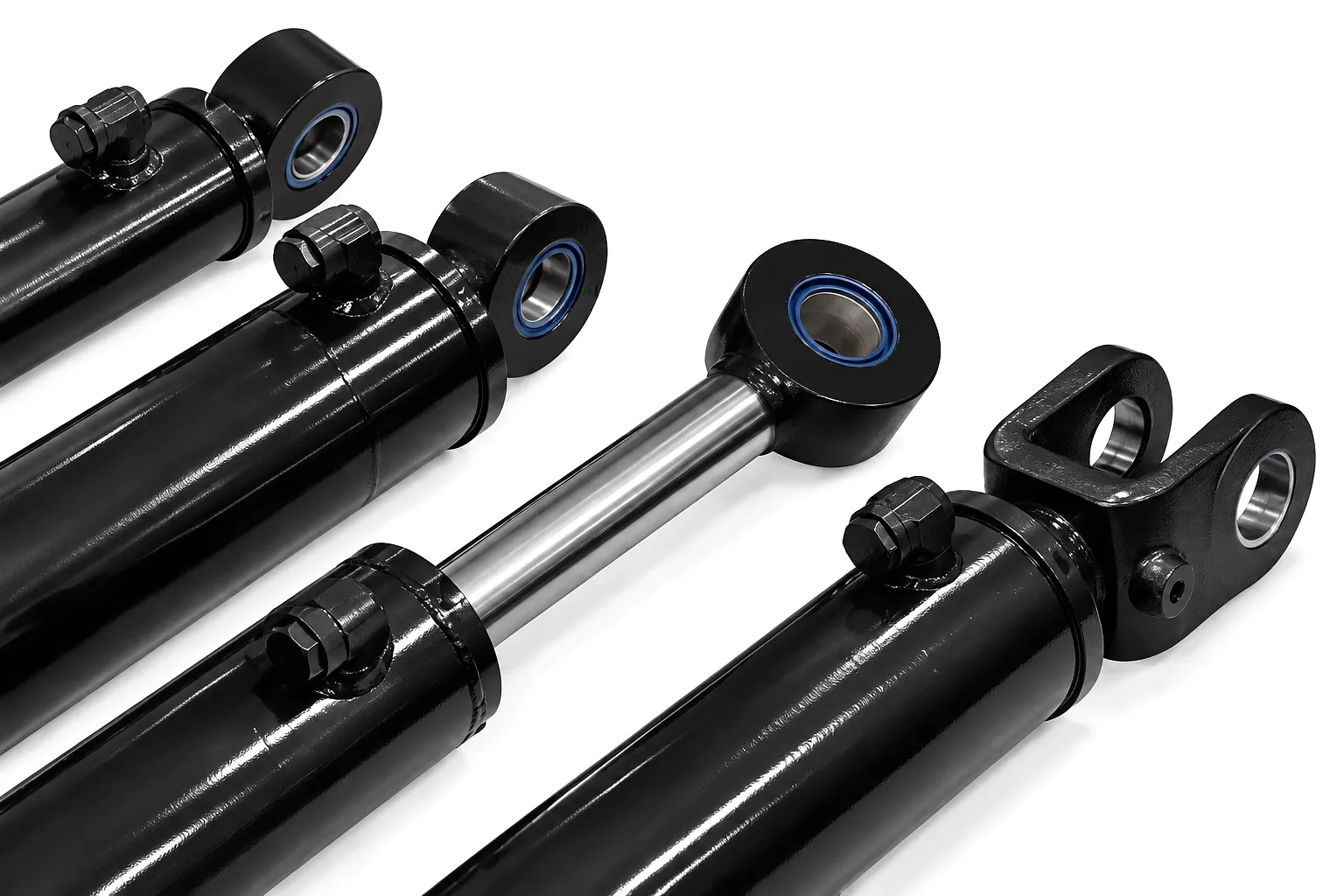
 In the broad landscape of hydraulic actuation, most cylinder designs are deliberately asymmetric — the rod extends with more force than it retracts, because that suits the majority of push-dominant tasks. But there is a category of industrial machinery where this imbalance becomes a serious engineering liability. Clamping systems that must grip and release with identical precision. Testing rigs where load symmetry is non-negotiable. Automated production lines in Birmingham and Sheffield where repeatability is measured in microns, not millimetres. For every one of these applications, the double-rod hydraulic cylinder exists as the only credible solution. With a piston rod extending from both ends of the cylinder barrel, this design creates genuinely equal effective areas on both sides of the piston — translating hydraulic pressure into identical thrust forces regardless of direction. That single structural feature opens up capabilities no standard single-rod cylinder can match.
How a Double-Rod Hydraulic Cylinder Actually Works
The fundamental operating principle of a double-rod cylinder diverges from conventional single-rod units at the most basic structural level. A conventional cylinder has one rod protruding from one end cap; the piston’s annular area on the rod side is smaller than the full bore area on the blind side, which means extension and retraction strokes produce different forces at the same pressure. A double-rod cylinder eliminates this imbalance entirely by mounting a rod of equal diameter through both end caps. The piston divides the barrel into two chambers — cap end and rod end — but with rods of identical cross-sectional area protruding from each side, the effective hydraulic area on both faces of the piston becomes mathematically equal. Apply 200 bar of hydraulic pressure to either port, and the output force is identical. Apply the same flow rate to either port, and the velocity of the stroke is identical. This symmetry is not a side effect; it is the entire engineering objective of the design.
Within the cylinder body, hydraulic fluid enters through one port, pressurises the corresponding chamber, and acts against the piston face to generate linear motion. Fluid displaced from the opposite chamber exits through the second port and returns to the reservoir or enters a regenerative circuit. Because both rods are mechanically linked to the piston as a single solid assembly, any external load applied to either rod end is transmitted directly through the piston and resisted by the pressurised fluid in the opposing chamber. The sealing arrangement at each end cap incorporates dynamic rod seals, static gland seals, and wiper rings — all working in concert to prevent leakage while accommodating the full range of rod travel. What makes double-rod cylinders particularly valuable to engineers in precision-manufacturing sectors is the mechanical feedback path: the rod protruding from the non-working end can be used to mount a linear position transducer, giving closed-loop control systems an exceptionally clean feedback signal without complex external brackets.
Core Materials That Define Long-Term Reliability
Nòng trụ
Honed Steel Tube
ST52 cold-drawn seamless steel, honed to Ra 0.4 µm internally. Provides the smooth bore surface essential for dynamic seal longevity and consistent piston movement. Some specialist grades use 27MnCrB5 for high-pressure bore applications exceeding 350 bar.
Thanh piston
Hard Chrome CK45
CK45 induction-hardened steel with 20–25 µm hard chrome plating on all rod surfaces. Chrome hardness of 900–1,000 HV delivers outstanding wear resistance against dynamic seals. For corrosive UK coastal and chemical-plant environments, stainless steel 316L or Nickasil-coated rods are specified to prevent chloride-induced pitting.
Piston & End Caps
Ductile Iron / Steel
Pistons are machined from nodular cast iron GGG50 or forged carbon steel 42CrMo4. End caps — both rod-side and blind — are forged steel or precision-cast iron, with thread engagement calculated to EN ISO standards. Tie-rod designs allow individual end cap replacement in the field, which significantly reduces maintenance costs for Sheffield-based heavy plant operators.
Sealing System
Polyurethane & PTFE
Dynamic piston seals in PTFE-bronze composite or polyurethane deliver low friction and high extrusion resistance. Rod seals use a two-lip polyurethane profile. Wiper rings — critical in dirty UK outdoor environments — are manufactured from NBR or PTFE to prevent contaminant ingress. Seal kits are supplied with each cylinder and can be specified for temperature ranges from -40°C to +200°C.
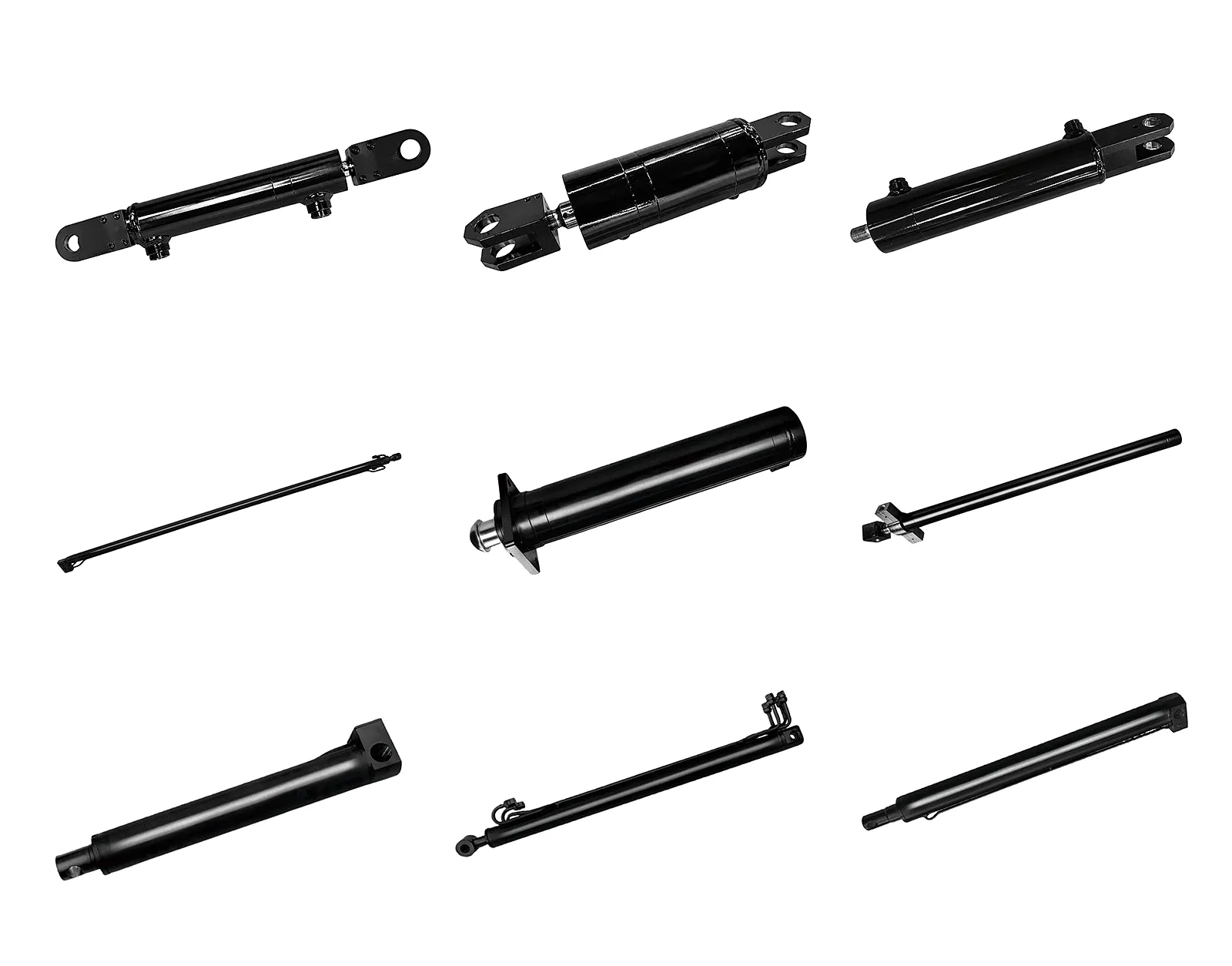
Ever Power hydraulic cylinder product range — custom-engineered for global industrial applications
Core Technical Advantages of Double-Rod Cylinder Design
Symmetrical Force Output
Equal piston area on both sides means that at any given pressure, the cylinder delivers exactly the same thrust force whether extending or retracting. This is fundamentally impossible with a conventional single-rod cylinder where the rod’s cross-sectional area reduces the effective piston area on the return stroke. For clamping, pressing, and tensioning applications in Birmingham automotive plants, this symmetry eliminates the need for flow compensators or pressure regulators to balance asymmetric forces — reducing system complexity and potential failure points.
Identical Stroke Velocity
Since the same volume of fluid must fill and vacate identical chamber volumes on each stroke, the piston velocity is the same in both directions at a given flow rate. This predictable, symmetric motion profile dramatically simplifies PLC programming in automated UK production lines. Machine tool manufacturers in Coventry and Derby specify double-rod cylinders precisely because equal velocity in both directions allows simpler timing logic and eliminates the asymmetric deceleration that causes positioning errors in high-cycle applications where thousands of strokes per shift are normal.
Integrated Position Feedback
The rear rod — protruding from what would be the blind end in a conventional cylinder — serves as a mechanical extension point for linear encoders, magnetostrictive sensors, or LVDT transducers. Unlike external mounting arrangements that introduce alignment uncertainty, the transducer and rod share the same centreline, producing a feedback signal free of mechanical cross-talk. This feature is invaluable for servo-hydraulic test rigs, metal forming presses in Sheffield, and any application where positional accuracy needs to be verified by an independent measurement path rather than inferred from valve command signals alone.
Reduced Lateral Bending Load
With rods emerging from both ends, the cylinder assembly is inherently more rigid under lateral loading than a comparable single-rod unit. The second rod acts as a mechanical guide when side forces are present — a situation common in conveyor clamping systems, sheet metal transfer mechanisms, and robotic end-of-arm tooling. The result is substantially reduced bending moment on the seal glands, extended seal life, and reduced tendency for the barrel bore to develop ovality near the end cap area — a common failure mode in high-cycle single-rod cylinders subjected to off-axis loading.
Product Technical & Performance Parameters
| Tham số | Phạm vi tiêu chuẩn | Mở rộng / Tùy chỉnh | Notes |
|---|---|---|---|
| Đường kính lỗ | 32 mm – 200 mm | Up to 320 mm | ISO 6020/1 and ISO 6022 compliant |
| Rod Diameter (each) | 20 mm – 160 mm | Custom per bore ratio | Both rods equal diameter; 1:1.4 bore-to-rod ratio typical |
| Operating Pressure | Up to 250 bar | Up to 400 bar | Test pressure 1.5× working pressure per DIN EN ISO 10100 |
| Độ dài hành trình | 50 mm – 3,000 mm | Lên đến 6.000 mm | Long-stroke designs include anti-rotation rod keys |
| Force Output (equal, both directions) | 5 kN – 1,200 kN | Up to 3,200 kN | Force = Pressure × (Bore Area – Rod Area) |
| Vật liệu thùng | ST52 cold-drawn steel | 316L stainless, 27MnCrB5 | Honed to Ra 0.4 µm for seal compatibility |
| Xử lý bề mặt thanh | Hard chrome 20–25 µm | HVOF, Nickasil, ceramic | Chrome hardness: 900–1,000 HV Vickers |
| Nhiệt độ hoạt động | -20°C đến +80°C | -40°C to +200°C | Seal compound selected per temperature specification |
| Mounting Options | Flange, trunnion, foot | Custom bracket, clevis, pivot | Both rod ends available for load connection |
| Position Sensor Compatibility | Magnetostrictive, LVDT | Optical encoder, Hall effect | Rear rod bracket supplied for external transducer mount |
| Fluid Compatibility | Mineral oil ISO VG 32–68 | HFD, vegetable ester, water-glycol | Fire-resistant fluids available per UK ATEX requirements |
Industrial Application Scenarios Across the UK
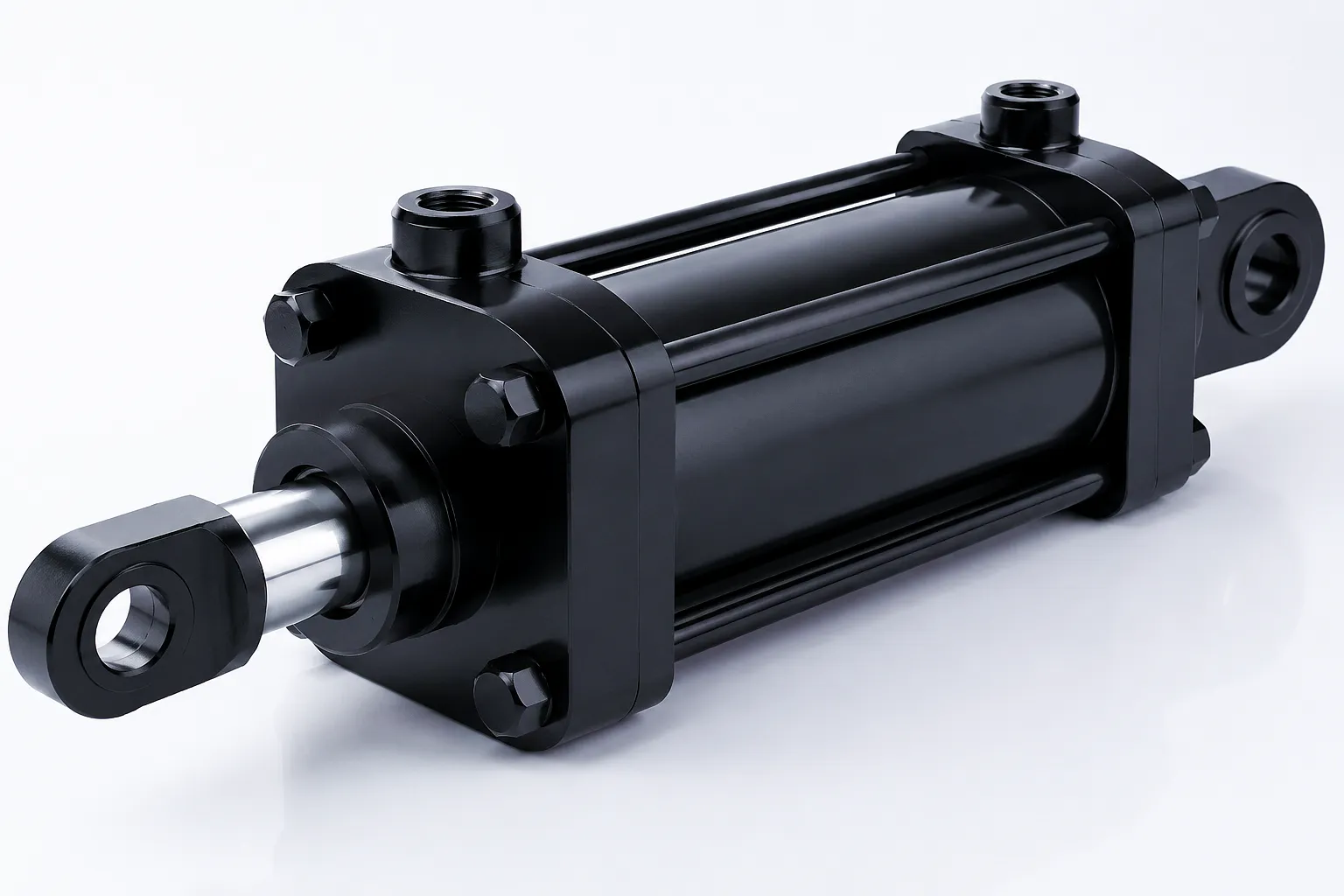
Ever Power: Manufacturing Capability & Customisation Services
Customisation Capability
Ever Power operates a vertically-integrated manufacturing facility where every bore, rod, seal groove, and end cap thread is produced to a customer-issued drawing, not a catalogue standard. The engineering team works directly with UK procurement engineers and OEM designers to translate performance requirements — force, velocity, envelope, fluid, duty cycle — into a verified cylinder specification. Lead times for standard custom builds run to 10–14 working days ex-works, with expedited scheduling available for breakdown replacement situations that affect production continuity.
Precision Manufacturing Process
The production sequence for every double-rod cylinder at Ever Power begins with dimensional verification of the honed barrel ID against a certified bore gauge, followed by CNC turning and thread form measurement on both rod blanks simultaneously — ensuring diameter match is within 0.01 mm before assembly. Piston and seal assembly is performed in a clean-area bay to prevent particulate contamination of dynamic seal faces. Every completed cylinder undergoes a hydrostatic pressure test at 1.5 times the rated working pressure, followed by a dynamic function test at rated flow to verify force and velocity characteristics before despatch.
Supply Chain & UK Logistics
Ever Power maintains stocks of part-finished cylinder barrels across a broad bore range, allowing rapid completion to individual rod and stroke specifications without waiting for raw material procurement. International shipping to UK ports — Felixstowe, Southampton, Tilbury — operates through established freight partnerships with typical transit times of 8–12 days for standard FCL/LCL consignments. Documentation packs include material certificates, dimensional inspection reports, pressure test certificates, and CE-marked declarations of conformity for machinery directive compliance — meeting the standard required by UK health and safety procurement teams.
Customer Success Story: Sheffield Forgemaster Tooling Division
Case Study — Sheffield, South Yorkshire | Heavy Forging Industry
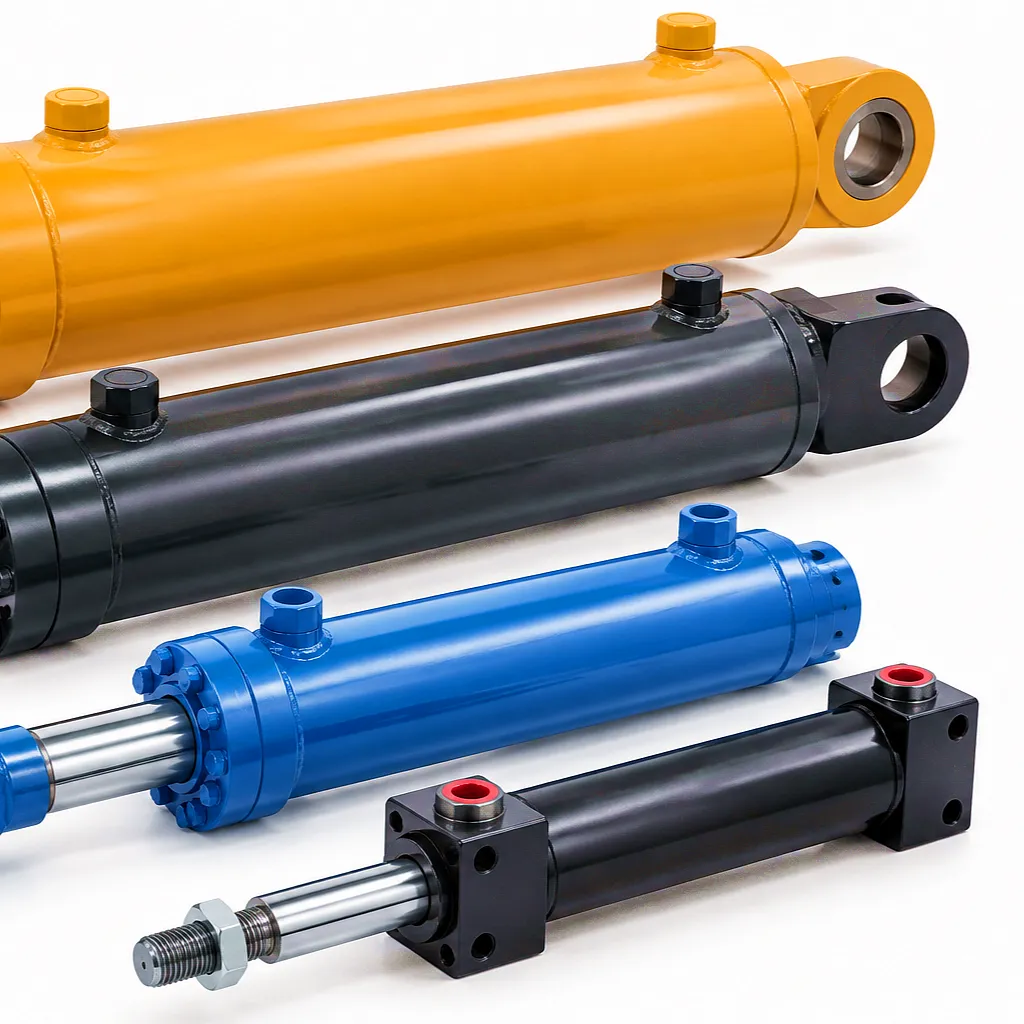 A specialist tooling division at a large Sheffield forging operation had been running a hydraulic die-change system that relied on conventional single-rod cylinders to translate large forging dies laterally between the press and the die storage carousel. The original specification used differential flow circuits to compensate for the force and velocity asymmetry between the in and out strokes — a solution that worked adequately at low temperature but caused repeated positioning errors when the hydraulic fluid warmed during a production run. The cylinders’ oil temperature range went from a cold start at approximately 12°C in winter to 65°C after three hours at full production, and the differential circuit could not maintain a consistent stroke velocity across that range. The die would overshoot its end position by varying amounts, occasionally damaging the alignment pins.
The engineering team approached Ever Power after a recommendation from a hydraulics distributor in the South Yorkshire industrial supply network. Following a technical review of the die-change geometry and load data, Ever Power specified a pair of 100 mm bore / 63 mm diameter double-rod cylinders with 1,800 mm stroke, rated to 280 bar, and fitted with magnetostrictive position sensors mounted on the rear rod. The complete cylinder assemblies were manufactured, pressure-tested, and shipped within 16 working days. The end-to-end replacement programme — including installation and hydraulic circuit simplification — was completed over a single planned weekend maintenance window.
Post-installation monitoring over a six-month production period recorded zero misalignment events. The simplified hydraulic circuit — no longer requiring differential compensation — reduced system pressure drop by approximately 12 bar, with a corresponding reduction in pump drive energy consumption. The tooling division subsequently standardised on Ever Power double-rod cylinders for all four of their automated die-change systems across the site, consolidating on a single cylinder supplier to simplify seal stock management.
What Our UK Customers Say
★★★★★
“We specified the double-rod units for our fatigue test frame rebuild on the recommendation of our hydraulics engineer, and the performance has been outstanding. The force symmetry we’re achieving in fully-reversed load cycles is well within our test protocol tolerance — something we genuinely couldn’t achieve with our previous single-rod arrangement even with a proportional valve in circuit.”
— Senior Test Engineer, Aerospace Structures Laboratory, Derby
★★★★★
“Ever Power’s customisation process was exactly what we needed — they took our envelope drawing and operating pressure, and came back with a cylinder that hit every dimensional and performance point. The hard chrome quality on both rods is noticeably better than what we’d been buying from our previous European supplier, and the pressure test certificates arrived with the delivery, which made our incoming inspection process straightforward.”
— Procurement Engineer, Press & Die Tooling Manufacturer, Birmingham
★★★★★
“The die-change cylinders have been running for nine months now without a single seal issue or position fault. Before the Ever Power units went in, we were pulling the old cylinders for reseal every six to eight months. The rear rod position sensor mounting bracket they included made our encoder installation clean and repeatable — a small detail, but one that saved our automation team real time during commissioning.”
— Maintenance Manager, Forging Operations Division, Sheffield
Câu hỏi thường gặp
Ever Power — Precision Hydraulic Cylinders for Global Industry
Ready to specify your double-rod hydraulic cylinder?
📧 Contact Ever Power — [email protected]
chỉnh sửa bởi gzl
 Vietnamese
  English
  Italian
  Portuguese
  Dutch
Dutch  Swedish
  Danish
  Finnish
  Polish
  Hindi
Hindi  Kazakh
  Turkish
  Ukrainian
  Romanian
  Spanish
  German
  Russian
  Korean
  Japanese
  Thai
Thai  Indonesian
  Malay
Malay  French
  Greek
Greek