
Produktbeskrivelse
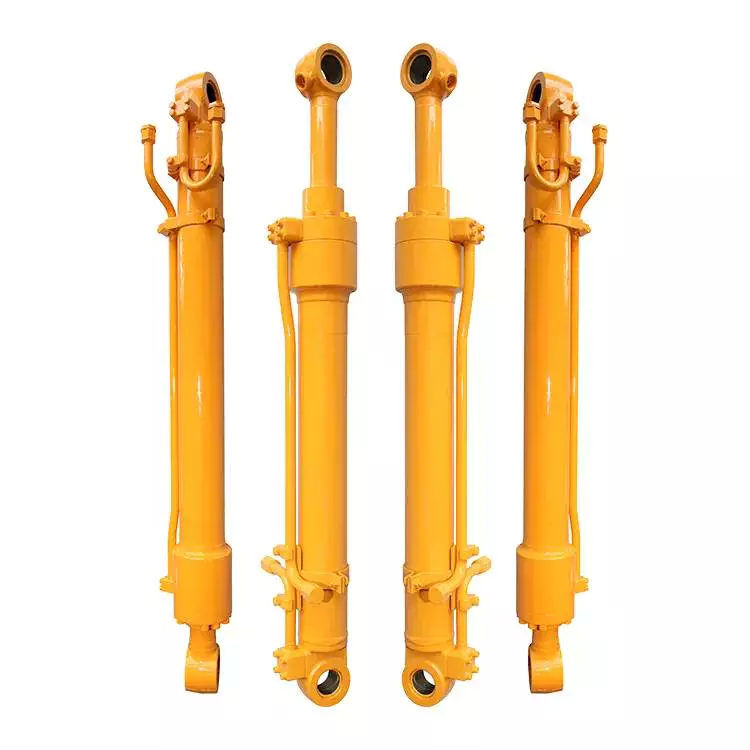
1.All cylinder in this series use carbon streel for both front/rear cover.
2.strong structure.
3.Medium carbon steel S45C is used for the piston rod,with hard chromate plated then polished to mirror class . lt has very high rigidity and resistance to erosion and corrosion.
4.The cylinder is mode by honed carbon steel tube.
5.Adjustable cushions and bleeding holes at both ends.
Specifikation
| Cylinder bore | 32,40,50,63,80,100,125,150,200,250,300 |
| Tatal Stroke | 10~1000 |
| Maximum use pressure | 350kgf/cm |
| Minimum use pressure | 3kgf/cm |
| Actuation oil | ISO Vg68 |
| Speed range | 8~400 mm/s |
| Operating temperature range | -10~+200ºC |
How to order
| Broe | Φ32,Φ40,Φ50,Φ63,Φ80,Φ100,Φ125,Φ150 |
| Semsomh device(magnetic) | with magnetic,without magnetic |
| Slagtilfælde | 20~2000mm |
| Mounting accessories |
basic type,Front flange mounting,front foot mounting, center trunnion mounting,single swivel mounting,double swivel mounting |
| Rod accessories | i type rod clevis,y type rod clevis |
| Oil port location | custom made |
Contact us to support customization
Packaging & Delivery
About Us
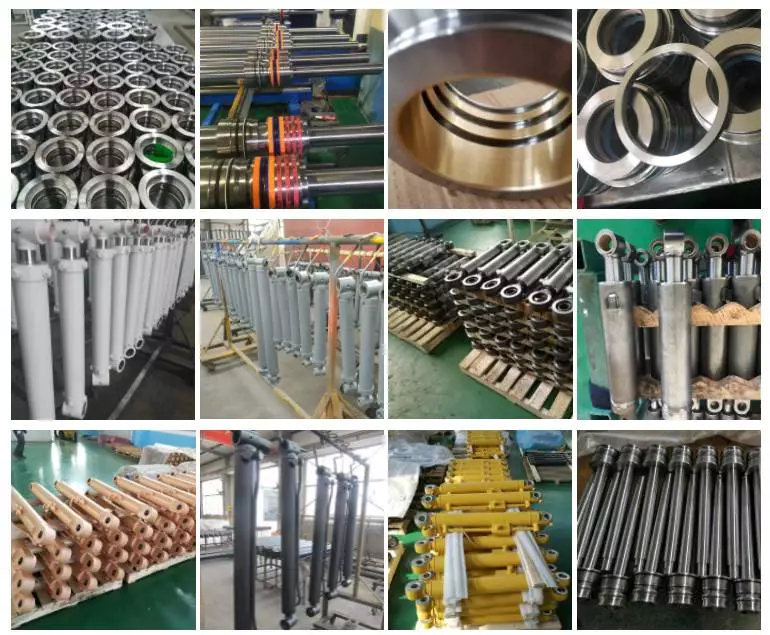
Youjiaxin is an experienced manufacturer specializes in CNC machining, CNC turning, stamping and laser cutting parts with different materials and many finished surface.
We are in the business of providing value-added services to assist you in completing your projects. The high quality and reliability of our service has enabled us to maintain long-standing relationships with our clients in various industries.
Rich experience, engineering expertise and high performance equipment help us in offering our customers top quality products.
If you have any question, please kindly refer to the FAQs below or contact us directly.
FAQ
- Do you accept OEM manufacturing?
Yes! We do accept OEM manufacturing. so we can provide the best price as well as the first class service. - Could we get small quantity samples?
Yes! We understand the quality test is important and we are glad to make the sample for you. The MOQ could be 1pcs. - Can you provide free sample? How long can we expect to get the sample?
Sample can be free of charge if deposit for future order received. samples need 5-10days if need custom make . standard can be ship out in 2 days. - How long is the production time?
Normally about 30 days. - What is the warranty?
1year against B/L date.
| Certification: | ISO9001 |
|---|---|
| Pressure: | High Pressure |
| Work Temperature: | High Temperature |
| Acting Way: | Double Acting |
| Working Method: | Straight Trip |
| Adjusted Form: | Regulated Type |
| Samples: |
US$ 200/Piece
1 Piece(Min.Order) | |
|---|
| Customization: |
Available
|
|
|---|
Kan hydrauliske cylindre eftermonteres på eksisterende udstyr for forbedret funktionalitet?
Ja, hydrauliske cylindre kan eftermonteres på eksisterende udstyr for at forbedre funktionalitet og ydeevne. Eftermontering af hydrauliske cylindre på eksisterende maskiner eller udstyr giver flere fordele, herunder øget effekt, forbedret kontrol, forbedret præcision og alsidighed. Her er en detaljeret forklaring af, hvordan hydrauliske cylindre kan eftermonteres på eksisterende udstyr for at forbedre funktionaliteten:
1. Øget effekt:
– Eftermontering af hydrauliske cylindre giver mulighed for at tilføje hydraulisk kraft til eksisterende udstyr. Ved at integrere hydrauliske cylindre kan udstyret generere højere kræfter og håndtere tungere belastninger. Denne øgede effekt gør det muligt for udstyret at udføre opgaver, der tidligere var udfordrende eller umulige. For eksempel kan en eftermonteret hydraulisk cylinder på en kran forbedre dens løftekapacitet og gøre det muligt for den at håndtere tungere belastninger mere effektivt.
2. Forbedret kontrol:
– Hydrauliske cylindre giver præcis kontrol over udstyrets bevægelse og positionering. Ved at eftermontere hydrauliske cylindre får operatørerne bedre kontrol over hastighed, kraft og bevægelsesretning. Tilføjelsen af hydrauliske styreventiler og en hydraulisk kraftenhed muliggør finjustering af udstyrets drift. Forbedret kontrol muliggør en mere sikker og effektiv drift, hvilket reducerer risikoen for skader og forbedrer den samlede produktivitet.
3. Forbedret præcision:
– Eftermontering af hydrauliske cylindre på eksisterende udstyr kan forbedre præcision og nøjagtighed betydeligt. Hydrauliske systemer tilbyder præcis kontrol over bevægelse, hvilket muliggør jævn og kontrolleret bevægelse. Denne forbedrede præcision er fordelagtig i applikationer, hvor præcis positionering eller gentagne bevægelser er påkrævet. For eksempel kan eftermontering af hydrauliske cylindre på en robotarm forbedre dens nøjagtighed og repeterbarhed, hvilket gør den mere velegnet til opgaver, der kræver høj præcision.
4. Alsidighed og tilpasningsevne:
– Eftermontering af hydrauliske cylindre kan øge alsidigheden og tilpasningsevnen af eksisterende udstyr. Hydrauliske systemer kan nemt integreres med forskellige typer maskiner, hvilket muliggør udnyttelse af hydraulisk kraft på tværs af forskellige applikationer. De hydrauliske komponenters modulære natur letter eftermonteringsprocessen og gør det muligt for udstyret at udføre en bredere vifte af opgaver. Denne alsidighed er især fordelagtig i brancher, hvor udstyr skal tilpasses skiftende driftskrav.
5. Eftermonteringssæt og tilpasning:
– Producenter tilbyder ofte eftermonteringssæt, der inkluderer alle de nødvendige komponenter til integration af hydrauliske cylindre i eksisterende udstyr. Disse sæt består typisk af hydrauliske cylindre, monteringsbeslag, slanger, fittings, reguleringsventiler og andet nødvendigt tilbehør. Eftermonteringssæt forenkler eftermonteringsprocessen og sikrer kompatibilitet mellem de hydrauliske komponenter og det eksisterende udstyr. Derudover kan producenter tilbyde tilpasningsmuligheder for at skræddersy eftermonteringsløsningen til specifikt udstyr og applikationsbehov.
6. Omkostningseffektiv løsning:
– Eftermontering af hydrauliske cylindre på eksisterende udstyr kan være en omkostningseffektiv løsning sammenlignet med at købe nyt maskineri. Ved at udnytte det eksisterende udstyrs strukturelle rammeværk og mekaniske komponenter kan de samlede omkostninger ved opgradering reduceres. Eftermontering minimerer også nedetid, da udstyret ikke behøver at blive fuldstændigt udskiftet. Desuden kan den forbedrede funktionalitet og ydeevne, der følger af eftermonteringen, føre til øget produktivitet og omkostningsbesparelser på lang sigt.
7. Professionel installation og ekspertise:
– Eftermontering af hydrauliske cylindre på eksisterende udstyr kræver ofte professionel installation og ekspertise. Samarbejde med erfarne integratorer eller producenter af hydrauliske systemer sikrer korrekt installation, kompatibilitet og optimal ydeevne af eftermonteringsløsningen. Disse fagfolk kan vurdere det eksisterende udstyr, anbefale passende hydrauliske komponenter og udføre eftermonteringsprocessen effektivt. Deres viden og ekspertise bidrager til en vellykket integration af hydrauliske cylindre og den samlede forbedring af udstyrets funktionalitet.
Kort sagt kan hydrauliske cylindre eftermonteres på eksisterende udstyr for at forbedre funktionaliteten. Denne eftermonteringsproces tilbyder fordele såsom øget effekt, forbedret kontrol, forbedret præcision, alsidighed, omkostningseffektivitet og adgang til eftermonteringssæt og tilpasningsmuligheder. Ved at eftermontere hydrauliske cylindre kan eksisterende udstyr opgraderes for at imødekomme skiftende driftsbehov, forlænge dets levetid og forbedre den samlede ydeevne.
Customization of Hydraulic Cylinders for Marine and Offshore Applications
Yes, hydraulic cylinders can be customized for use in marine and offshore applications. These environments present unique challenges, such as exposure to corrosive saltwater, high humidity, and extreme operating conditions. Customization allows hydraulic cylinders to meet the specific requirements and withstand the harsh conditions encountered in marine and offshore settings. Let’s delve into the details of how hydraulic cylinders can be customized for marine and offshore applications:
- Corrosion Resistance: Marine and offshore environments expose hydraulic cylinders to corrosive elements, such as saltwater. To mitigate corrosion, hydraulic cylinders can be customized with materials and surface treatments that provide enhanced corrosion resistance. For example, cylinders can be constructed from stainless steel or coated with protective layers like chrome plating or specialized coatings to withstand the corrosive effects of saltwater.
- Sealing and Environmental Protection: Hydraulic cylinders for marine and offshore applications require robust sealing systems to prevent water ingress and protect internal components. Customized sealing solutions, such as high-quality seals, wipers, and gaskets, can be employed to ensure effective sealing and resistance to water, debris, and contaminants. Additionally, hydraulic cylinders can be designed with protective features like bellows or boots to shield vulnerable areas from environmental elements.
- High-Pressure and Shock Resistance: Marine and offshore operations may involve high-pressure hydraulic systems and encounters with dynamic loads or shocks. Customized hydraulic cylinders can be engineered to withstand these demanding conditions. They can be designed with reinforced construction, thicker walls, and specialized components to handle high-pressure applications and absorb shock loads, ensuring reliable performance and durability.
- Temperature and Fluid Compatibility: Marine and offshore applications can expose hydraulic cylinders to extreme temperature variations and specific fluid requirements. Customization allows the selection of materials, seals, and fluids compatible with the anticipated temperature range and the specific fluid being used. Hydraulic cylinders can be tailored to maintain optimal performance and reliability under challenging temperature conditions and with the designated fluid type.
- Mounting and Integration: Customized hydraulic cylinders can be designed to facilitate easy integration and mounting within marine and offshore machinery. Mounting options can be tailored to suit the available space and structural requirements of the equipment. Additionally, customized hydraulic cylinder designs can incorporate features for easy maintenance, accessibility, and connection to the hydraulic system, ensuring convenient installation and serviceability in marine and offshore applications.
In summary, hydraulic cylinders can be customized to meet the unique demands of marine and offshore applications. Customization enables the integration of corrosion-resistant materials, robust sealing systems, high-pressure and shock-resistant designs, temperature and fluid compatibility, as well as optimized mounting and integration features. By tailoring hydraulic cylinders to the specific requirements of marine and offshore environments, reliable performance, extended service life, and efficient operation can be achieved in these challenging operating conditions.
What are the common signs of wear or leakage that indicate hydraulic cylinder issues?
Hydraulic cylinders are critical components in hydraulic systems, and wear or leakage can lead to performance issues and potential system failures. It is important to be aware of the common signs that indicate hydraulic cylinder problems. Here’s a detailed explanation of the common signs of wear or leakage that indicate hydraulic cylinder issues:
1. Fluid Leakage:
– Fluid leakage is one of the most obvious signs of hydraulic cylinder problems. If you notice hydraulic fluid leaking from the cylinder, it indicates a seal failure or damage to the cylinder. Leaking fluid may be visible around the rod, piston, or cylinder body. It is important to address fluid leakage promptly as it can lead to a loss of system efficiency, contamination of the surrounding environment, and potential damage to other system components.
2. Reduced Performance:
– Wear or internal damage to the hydraulic cylinder can result in reduced performance. You may notice a decrease in the cylinder’s force output, slower operation, or difficulty in extending or retracting the cylinder. Reduced performance can be indicative of worn seals, damaged piston or rod, internal leakage, or contamination within the cylinder. Any noticeable decrease in the cylinder’s performance should be inspected and addressed to prevent further damage or system inefficiencies.
3. Abnormal Noise or Vibrations:
– Unusual noise or vibrations during the operation of a hydraulic cylinder can indicate internal wear or damage. Excessive noise, knocking sounds, or vibrations that are not typical for the system may suggest problems such as worn bearings, misalignment, or loose internal components. These signs should be investigated to identify the source of the issue and take appropriate corrective measures.
4. Excessive Heat:
– Overheating of the hydraulic cylinder is another sign of potential issues. If the cylinder feels excessively hot to the touch during normal operation, it may indicate problems such as internal leakage, fluid contamination, or inadequate lubrication. Excessive heat can lead to accelerated wear, reduced efficiency, and overall system malfunctions. Monitoring the temperature of the hydraulic cylinder is important to detect and address potential problems.
5. External Damage:
– Physical damage to the hydraulic cylinder, such as dents, scratches, or bent rods, can contribute to wear and leakage issues. External damage can compromise the integrity of the cylinder, leading to fluid leakage, misalignment, or inefficient operation. Regular inspection of the cylinder’s external condition is essential to identify any visible signs of damage and take appropriate actions.
6. Seal Failure:
– Hydraulic cylinder seals are critical components that prevent fluid leakage and maintain system integrity. Signs of seal failure include fluid leakage, reduced performance, and increased friction during cylinder operation. Damaged or worn seals should be replaced promptly to prevent further deterioration of the cylinder’s performance and potential damage to other system components.
7. Contamination:
– Contamination within the hydraulic cylinder can cause wear, damage to seals, and overall system inefficiencies. Signs of contamination include the presence of foreign particles, debris, or sludge in the hydraulic fluid or visible damage to seals and other internal components. Regular fluid analysis and maintenance practices should be implemented to prevent contamination and address any signs of contamination promptly.
8. Irregular Seal Wear:
– Hydraulic cylinder seals can wear over time due to friction, pressure, and operating conditions. Irregular seal wear patterns, such as uneven wear or excessive wear in specific areas, may indicate misalignment or improper installation. Monitoring the condition of the seals during regular maintenance can help identify potential issues and prevent premature seal failure.
It is important to address these common signs of wear or leakage promptly to prevent further damage, ensure the optimal performance of hydraulic cylinders, and maintain the overall efficiency and reliability of the hydraulic system. Regular inspection, maintenance, and timely repairs or replacements of damaged components are key to mitigating hydraulic cylinder issues and maximizing system longevity.

editor by CX 2023-10-31
 Danish
  English
  Italian
  Portuguese
  Dutch
Dutch  Swedish
  Finnish
  Polish
  Hindi
Hindi  Kazakh
  Turkish
  Ukrainian
  Romanian
  Spanish
  German
  Russian
  Korean
  Japanese
  Vietnamese
  Thai
Thai  Indonesian
  Malay
Malay  French
  Greek
Greek