
Produktbeskrivelse
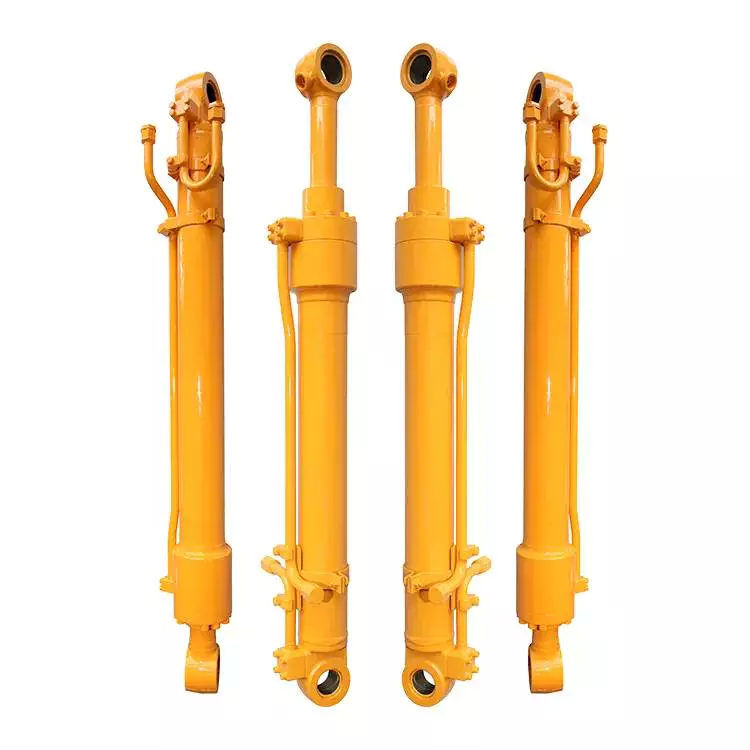
HYDRAULIC CYLINDER
Widely used in equipment for Construction, Coal&mine, Agriculture , Aerial work table and Environmental sanitation etc.
| Features | customized hydraulic cylinder |
| Bore Diameter | 2′-50’/50-1500mm |
| Rod Diameter | 1′ – 60’/25 -1000 mm |
| Wall Thickness | 0.1′-4’/3-100 mm |
| Max Stroke | 366’/9280 mm |
| Max Pressure | 9600 psi/600 bar |
| Test Pressure | 14500 psi/1000 bar |
| Materiale | 20#,40#,45#,16Mn,27SiMn,etc |
| Seal Kits | Hallite, Parker, NOK, DICHTOMATIK, Trelleborg, Merkel |
| Dimensional Accuracy | H7-H11 |
| Bore Roughness | Ra 0.4-1.6mm |
| Coating | hard chrome |
| Purpose | engineering, Coal &mining, agricultural machinery, environmental sanitation |
| OEM/ODM | Yes |
| MOQ | 1 Piece |
| Certificates | ISO9001,CE, CCS |
Q1. Are you a manufacturer?
Yes, we have manufactured hydraulic cylinders for over 30 years. They are widely used in Engineers, Coal&mine, Agriculture and Environmental Sanitation etc.
Q2. Do your products come with a warranty?
Yes, we have 1 year warranty.
Q3. Can we customize our products from you?
Yes, actually 70% of our products are customized for our clients. You just need to let us know your demand (specifications &drawing is better), and we shall realize them for you.
Q4. How do you deliver the products?
By sea, by plane, or by couriers.
Q5. How many days the samples can be finished, And how about the mass production?
Generally 5-7days for samples making. The lead time of mass production will depend on quality, production art and so on. Generally 35days.
| Certification: | CE, ISO9001 |
|---|---|
| Pressure: | High Pressure |
| Acting Way: | Double Acting |
| Working Method: | Straight Trip |
| Structure: | Piston Type |
| Material: | Carbon Steel |
| Customization: | Available |
|
|---|
Kan hydrauliske cylindre eftermonteres på eksisterende udstyr for forbedret funktionalitet?
Ja, hydrauliske cylindre kan eftermonteres på eksisterende udstyr for at forbedre funktionalitet og ydeevne. Eftermontering af hydrauliske cylindre på eksisterende maskiner eller udstyr giver flere fordele, herunder øget effekt, forbedret kontrol, forbedret præcision og alsidighed. Her er en detaljeret forklaring af, hvordan hydrauliske cylindre kan eftermonteres på eksisterende udstyr for at forbedre funktionaliteten:
1. Øget effekt:
– Eftermontering af hydrauliske cylindre giver mulighed for at tilføje hydraulisk kraft til eksisterende udstyr. Ved at integrere hydrauliske cylindre kan udstyret generere højere kræfter og håndtere tungere belastninger. Denne øgede effekt gør det muligt for udstyret at udføre opgaver, der tidligere var udfordrende eller umulige. For eksempel kan en eftermonteret hydraulisk cylinder på en kran forbedre dens løftekapacitet og gøre det muligt for den at håndtere tungere belastninger mere effektivt.
2. Forbedret kontrol:
– Hydrauliske cylindre giver præcis kontrol over udstyrets bevægelse og positionering. Ved at eftermontere hydrauliske cylindre får operatørerne bedre kontrol over hastighed, kraft og bevægelsesretning. Tilføjelsen af hydrauliske styreventiler og en hydraulisk kraftenhed muliggør finjustering af udstyrets drift. Forbedret kontrol muliggør en mere sikker og effektiv drift, hvilket reducerer risikoen for skader og forbedrer den samlede produktivitet.
3. Forbedret præcision:
– Eftermontering af hydrauliske cylindre på eksisterende udstyr kan forbedre præcision og nøjagtighed betydeligt. Hydrauliske systemer tilbyder præcis kontrol over bevægelse, hvilket muliggør jævn og kontrolleret bevægelse. Denne forbedrede præcision er fordelagtig i applikationer, hvor præcis positionering eller gentagne bevægelser er påkrævet. For eksempel kan eftermontering af hydrauliske cylindre på en robotarm forbedre dens nøjagtighed og repeterbarhed, hvilket gør den mere velegnet til opgaver, der kræver høj præcision.
4. Alsidighed og tilpasningsevne:
– Eftermontering af hydrauliske cylindre kan øge alsidigheden og tilpasningsevnen af eksisterende udstyr. Hydrauliske systemer kan nemt integreres med forskellige typer maskiner, hvilket muliggør udnyttelse af hydraulisk kraft på tværs af forskellige applikationer. De hydrauliske komponenters modulære natur letter eftermonteringsprocessen og gør det muligt for udstyret at udføre en bredere vifte af opgaver. Denne alsidighed er især fordelagtig i brancher, hvor udstyr skal tilpasses skiftende driftskrav.
5. Eftermonteringssæt og tilpasning:
– Producenter tilbyder ofte eftermonteringssæt, der inkluderer alle de nødvendige komponenter til integration af hydrauliske cylindre i eksisterende udstyr. Disse sæt består typisk af hydrauliske cylindre, monteringsbeslag, slanger, fittings, reguleringsventiler og andet nødvendigt tilbehør. Eftermonteringssæt forenkler eftermonteringsprocessen og sikrer kompatibilitet mellem de hydrauliske komponenter og det eksisterende udstyr. Derudover kan producenter tilbyde tilpasningsmuligheder for at skræddersy eftermonteringsløsningen til specifikt udstyr og applikationsbehov.
6. Omkostningseffektiv løsning:
– Eftermontering af hydrauliske cylindre på eksisterende udstyr kan være en omkostningseffektiv løsning sammenlignet med at købe nyt maskineri. Ved at udnytte det eksisterende udstyrs strukturelle rammeværk og mekaniske komponenter kan de samlede omkostninger ved opgradering reduceres. Eftermontering minimerer også nedetid, da udstyret ikke behøver at blive fuldstændigt udskiftet. Desuden kan den forbedrede funktionalitet og ydeevne, der følger af eftermonteringen, føre til øget produktivitet og omkostningsbesparelser på lang sigt.
7. Professionel installation og ekspertise:
– Eftermontering af hydrauliske cylindre på eksisterende udstyr kræver ofte professionel installation og ekspertise. Samarbejde med erfarne integratorer eller producenter af hydrauliske systemer sikrer korrekt installation, kompatibilitet og optimal ydeevne af eftermonteringsløsningen. Disse fagfolk kan vurdere det eksisterende udstyr, anbefale passende hydrauliske komponenter og udføre eftermonteringsprocessen effektivt. Deres viden og ekspertise bidrager til en vellykket integration af hydrauliske cylindre og den samlede forbedring af udstyrets funktionalitet.
Kort sagt kan hydrauliske cylindre eftermonteres på eksisterende udstyr for at forbedre funktionaliteten. Denne eftermonteringsproces tilbyder fordele såsom øget effekt, forbedret kontrol, forbedret præcision, alsidighed, omkostningseffektivitet og adgang til eftermonteringssæt og tilpasningsmuligheder. Ved at eftermontere hydrauliske cylindre kan eksisterende udstyr opgraderes for at imødekomme skiftende driftsbehov, forlænge dets levetid og forbedre den samlede ydeevne.
Can you provide real-world examples of machinery that heavily rely on hydraulic cylinders?
Hydraulic cylinders are widely used in various industries and applications due to their ability to provide powerful and precise linear motion. They play a crucial role in enabling the operation of heavy machinery that requires controlled force and movement. Here are some real-world examples of machinery that heavily rely on hydraulic cylinders:
1. Construction Equipment:
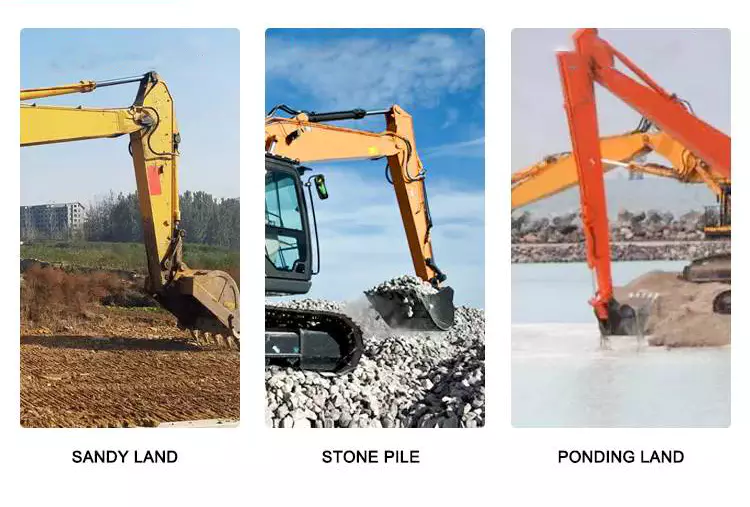
– Hydraulic cylinders are extensively used in construction machinery, such as excavators, bulldozers, loaders, and cranes. These machines rely on hydraulic cylinders to perform tasks like lifting heavy loads, extending and retracting booms, tilting buckets, and controlling the movement of various components. Hydraulic cylinders provide the power and precision required to handle the demanding conditions and heavy loads encountered in construction projects.
2. Agricultural Machinery:
– Many agricultural machines, including tractors, combine harvesters, and sprayers, utilize hydraulic cylinders for critical operations. Hydraulic cylinders are used to control the movement of attachments, such as front loaders, backhoes, and plows. They enable functions like lifting and lowering implements, adjusting cutting heights, and controlling the positioning of harvesting equipment. Hydraulic cylinders enhance efficiency and productivity in agricultural operations.
3. Material Handling Equipment:
– Hydraulic cylinders are integral components of material handling equipment, such as forklifts, pallet jacks, and cranes. These machines rely on hydraulic cylinders to lift and lower loads, tilt platforms or forks, and control the movement of lifting mechanisms. Hydraulic cylinders provide the necessary strength and precision to handle heavy loads and ensure safe and efficient material handling operations.
4. Industrial Machinery:
– Various industrial machinery and equipment heavily rely on hydraulic cylinders for critical functions. Examples include hydraulic presses, injection molding machines, metal-forming machines, and hydraulic-powered robots. Hydraulic cylinders enable precise control of force and movement in these applications, allowing for accurate shaping, pressing, and assembly processes.
5. Mining Equipment:
– Hydraulic cylinders are extensively used in mining machinery and equipment. Underground mining machines, such as continuous miners and longwall shearers, utilize hydraulic cylinders for cutting, shearing, and roof support operations. Surface mining equipment, including hydraulic shovels, draglines, and haul trucks, rely on hydraulic cylinders for tasks like bucket movement, boom extension, and vehicle suspension.
6. Automotive Industry:
– The automotive industry extensively utilizes hydraulic cylinders in various applications. Hydraulic cylinders are employed in vehicle suspension systems, power steering systems, convertible tops, and hydraulic brake systems. They enable smooth and controlled movement, precise steering, and efficient braking in automobiles.
7. Aerospace and Aviation:
– Hydraulic cylinders are utilized in aerospace and aviation applications, such as aircraft landing gear systems, wing flaps, and cargo handling equipment. Hydraulic cylinders provide the necessary force and control for extending and retracting landing gear, adjusting wing flaps, and operating cargo doors, ensuring safe and reliable aircraft operations.
8. Marine and Offshore Industry:
– Hydraulic cylinders are essential components in marine and offshore equipment, including ship cranes, winches, and hydraulic-powered anchor systems. They enable lifting, lowering, and positioning of heavy loads, as well as the control of various marine equipment.
These are just a few examples of machinery and industries that heavily rely on hydraulic cylinders. The versatility, power, and precise control offered by hydraulic cylinders make them indispensable in a wide range of applications, where controlled linear motion and force are essential.
What is a hydraulic cylinder and how does it function in various applications?
A hydraulic cylinder is a mechanical actuator that converts hydraulic energy into linear force and motion. It plays a critical role in various applications where controlled and powerful linear motion is required. Hydraulic cylinders are commonly used in industries such as construction, manufacturing, agriculture, and transportation. Here’s a detailed explanation of what a hydraulic cylinder is and how it functions:
Definition and Components:
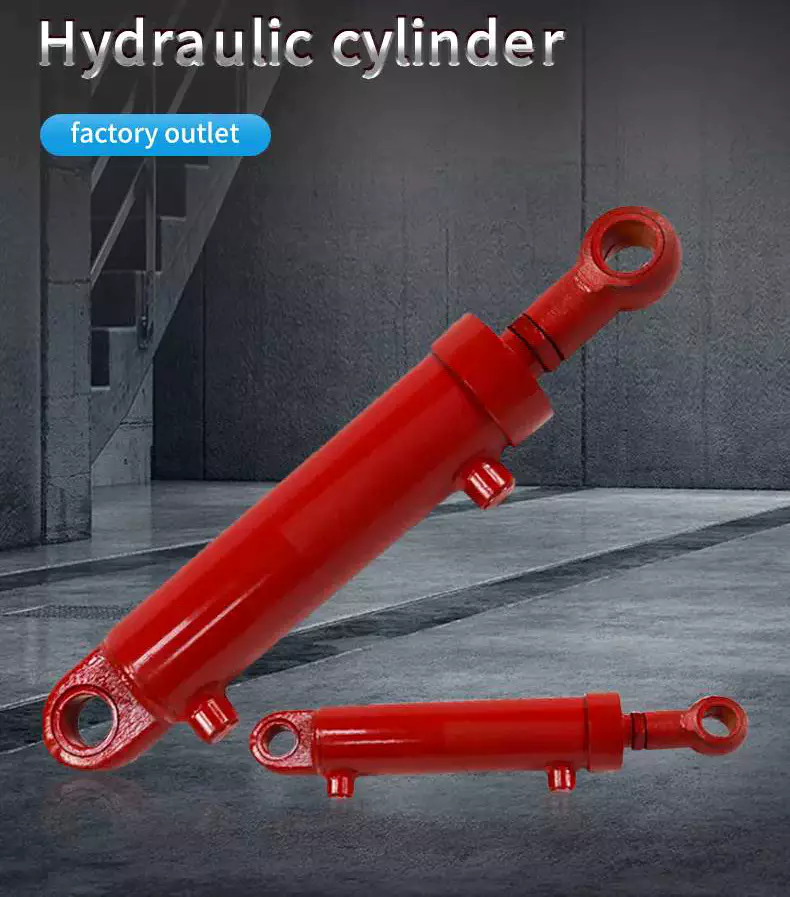
– A hydraulic cylinder consists of a cylindrical barrel, a piston, a piston rod, and various seals. The barrel is a hollow tube that houses the piston and allows for fluid flow. The piston divides the cylinder into two chambers: the rod side and the cap side. The piston rod extends from the piston and provides a connection point for external loads. Seals are used to prevent fluid leakage and maintain hydraulic pressure within the cylinder.
Function:
– The function of a hydraulic cylinder is to convert the pressure and flow of hydraulic fluid into linear force and motion. The hydraulic fluid, typically oil, is pressurized and directed into one of the chambers of the cylinder. As the fluid enters the chamber, it applies pressure on the piston, causing it to move in a linear direction. This linear motion of the piston is transferred to the piston rod, creating a pushing or pulling force.
Working Principle:
– The working principle of a hydraulic cylinder is based on Pascal’s law, which states that pressure exerted on a fluid in a confined space is transmitted equally in all directions. In a hydraulic cylinder, when hydraulic fluid is pumped into one side of the cylinder, it creates pressure on the piston. The pressure is transmitted through the fluid to the other side of the piston, resulting in a balanced force across the piston and piston rod. This force generates linear motion in the direction determined by the fluid input.
Applications:
– Hydraulic cylinders find extensive use in a wide range of applications due to their ability to generate high forces and precise control of linear motion. Some common applications include:
1. Construction Equipment: Hydraulic cylinders are used in excavators, loaders, bulldozers, and cranes for lifting, pushing, and digging tasks.
2. Manufacturing Machinery: Hydraulic cylinders are employed in presses, machine tools, and material handling equipment for pressing, clamping, and lifting operations.
3. Agricultural Machinery: Hydraulic cylinders are used in tractors, harvesters, and irrigation systems for tasks like steering, lifting, and controlling attachments.
4. Transportation: Hydraulic cylinders are utilized in vehicles such as dump trucks, garbage trucks, and forklifts for tilting, lifting, and tipping operations.
5. Aerospace and Defense: Hydraulic cylinders are employed in aircraft landing gear, missile systems, and hydraulic actuators for control surfaces.
6. Marine and Offshore: Hydraulic cylinders are used in ship steering systems, cranes, and offshore drilling equipment for various lifting and positioning tasks.
In these applications, hydraulic cylinders offer advantages such as high force capability, precise control, compact size, and durability. They provide efficient and reliable linear motion, contributing to enhanced productivity and functionality in a wide range of industries.
Overall, hydraulic cylinders are integral components in various applications where controlled and powerful linear motion is required. Their ability to convert hydraulic energy into mechanical force makes them invaluable in numerous industries, enabling the operation of heavy machinery, precise positioning, and efficient load handling.


editor by CX 2023-10-27
 Danish
  English
  Italian
  Portuguese
  Dutch
Dutch  Swedish
  Finnish
  Polish
  Hindi
Hindi  Kazakh
  Turkish
  Ukrainian
  Romanian
  Spanish
  German
  Russian
  Korean
  Japanese
  Vietnamese
  Thai
Thai  Indonesian
  Malay
Malay  French
  Greek
Greek