
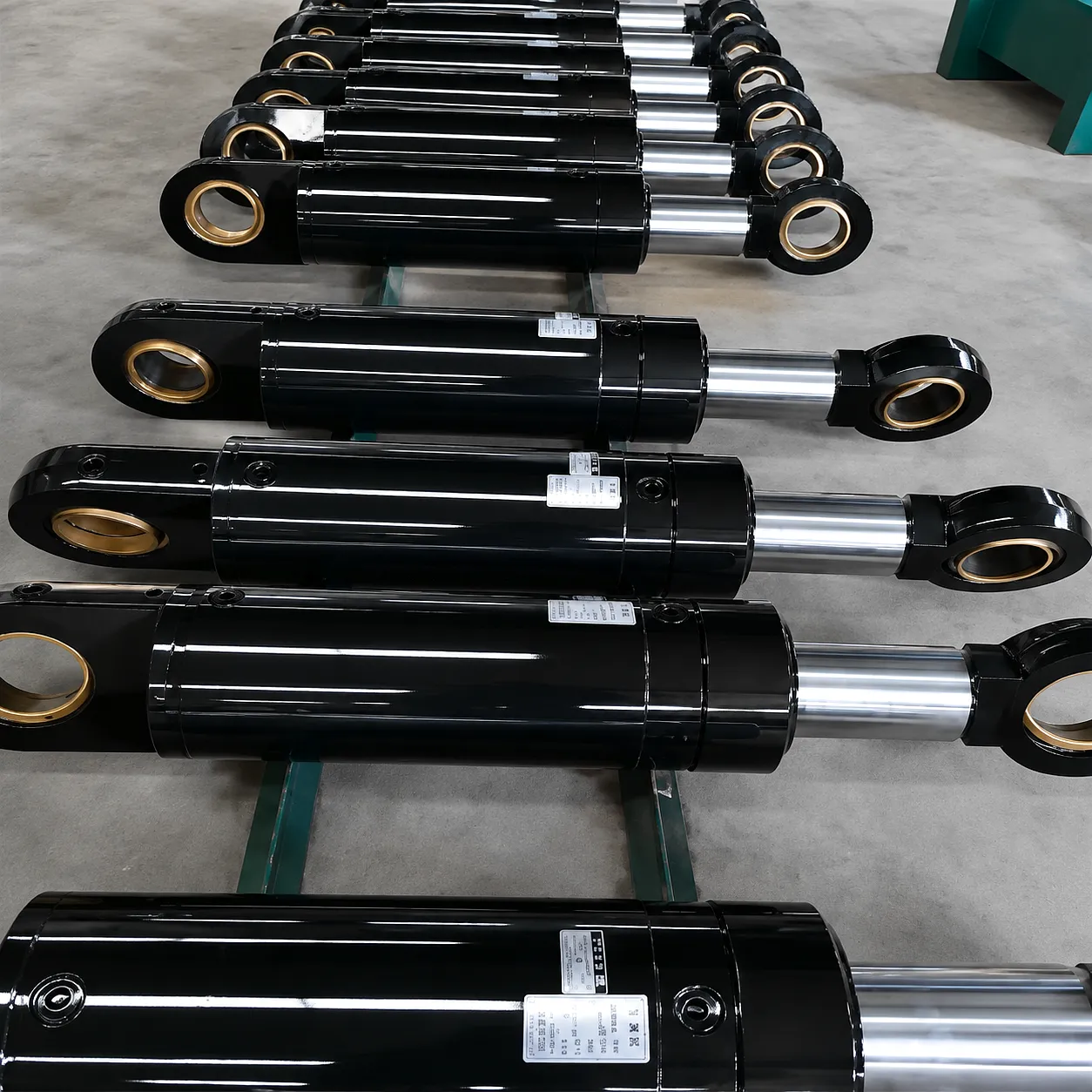
 Every hydraulic cylinder carries two pressure figures that define its entire operational envelope: the working pressure, which is the continuous system pressure the cylinder is designed to sustain during normal duty cycles, and the maximum pressure, which is the absolute upper threshold the cylinder may briefly encounter without sustaining permanent damage. For plant engineers in Birmingham’s metal-forming sector, hydraulic system designers in Sheffield’s tooling facilities, and procurement managers sourcing for offshore infrastructure projects along the North Sea coast, understanding the precise distinction between these two values is not an academic exercise — it is the difference between a reliable production line and a catastrophic seal failure that shuts down operations for days. Too many purchasing decisions in the UK manufacturing sector are made by referencing only the maximum pressure rating listed in a supplier’s datasheet, without appreciating that running a hydraulic cylinder continuously at or near its maximum pressure accelerates seal degradation, promotes cylinder bore wear, and dramatically shortens service intervals. This guide breaks down both ratings in full technical detail, explains how they interact with cylinder design variables such as bore diameter, rod diameter, and wall thickness, and gives you the engineering framework to make informed sourcing and specification decisions.
What Working Pressure Actually Means in Hydraulic Cylinder Engineering
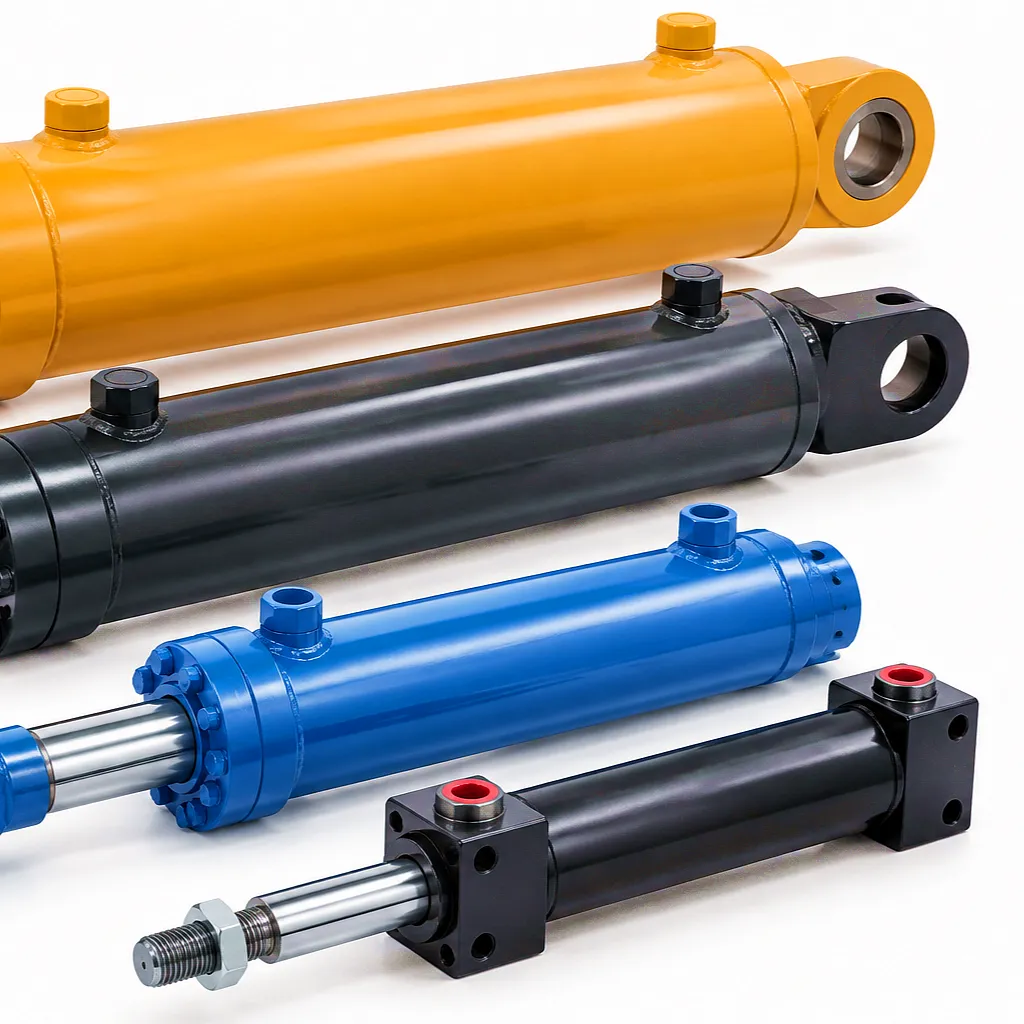
Working pressure — often denoted as nominal operating pressure or rated pressure in ISO and BS EN standards — is the continuous, sustained pressure level at which a hydraulic cylinder is engineered to perform throughout its designed service life. It is not simply the pressure at which the cylinder can physically tolerate without bursting; rather, it is the pressure envelope within which every component — the cylinder barrel, end caps, piston seals, rod seals, and cushioning elements — will function at their designed efficiency without accelerated degradation. For double-acting hydraulic cylinders used in pressing operations across the West Midlands automotive supply chain, a typical working pressure figure sits in the range of 160 bar to 250 bar, depending on bore size and application duty cycle. When specifying a cylinder for continuous operation in a transfer press line or a hydraulic bending machine, engineers must ensure the hydraulic power unit is set to maintain system pressure well within this working pressure rating. This protects seal integrity, extends piston rod chrome plating life, and prevents micro-fractures in the barrel material from progressing into structural failures. The working pressure figure is the one that should appear in your maintenance schedules and your relief valve calibration settings — not the maximum pressure figure, which serves an entirely different engineering purpose.
Maximum Pressure: The Safety Ceiling, Not the Operating Target
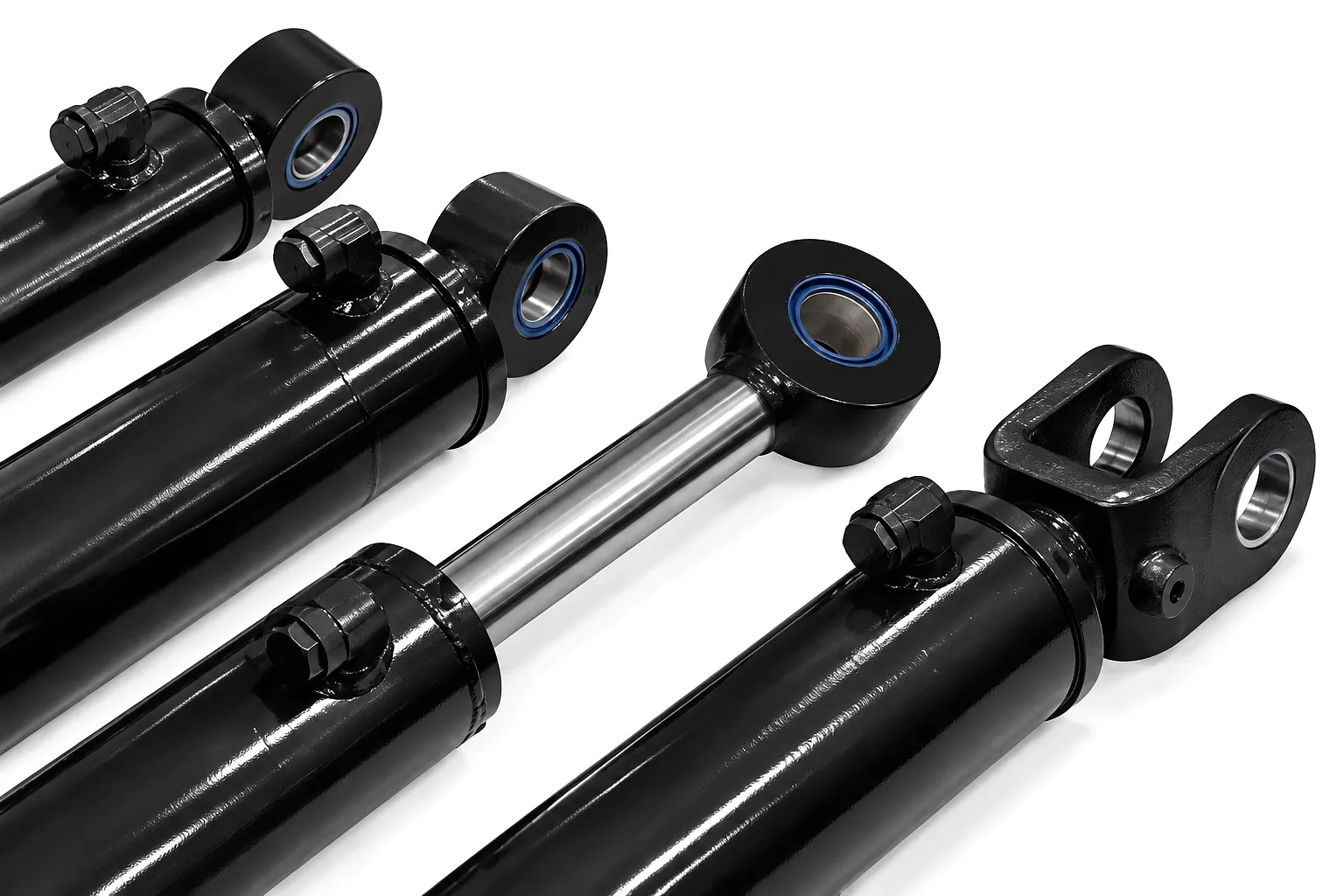 Maximum pressure — sometimes called peak pressure or proof pressure — represents the highest instantaneous pressure a hydraulic cylinder can withstand without permanent deformation, seal extrusion, or catastrophic seal failure. It is derived from the cylinder’s burst pressure rating, which is typically four times the working pressure in compliance with ISO 6020-2 and the relevant clauses of BS EN 982 (the British Standard governing safety requirements for hydraulic fluid power systems). Understanding that maximum pressure is a transient ceiling, not a target, is critical. In hydraulic systems serving industrial presses in Coventry or large agricultural machinery manufacturing plants in Lincolnshire, pressure spikes caused by load-induced pressure intensification, hydraulic hammer, or unloader valve response lag can momentarily push system pressure beyond the nominal working pressure. The cylinder’s maximum pressure rating ensures it absorbs these spikes without failing. However, if these spikes are frequent, the system designer must investigate the hydraulic circuit design rather than relying on the cylinder’s maximum pressure rating as a buffer. Repeated excursions beyond working pressure fatigue the piston rod seal lip, introduce fretting at rod guide interfaces, and cause dynamic seal elements to take a compression set that eventually leads to bypass leakage — all of which accelerate maintenance intervals and increase total cost of ownership significantly for UK plant operations.
Engineering Rule of Thumb: Maximum pressure is typically 1.5× the working pressure for standard industrial cylinders and up to 4× the working pressure for the proof-test pressure used during factory acceptance testing. Never configure relief valves above the cylinder’s working pressure rating.
How Hydraulic Cylinders Generate and Contain Pressure: Working Principle
A hydraulic cylinder converts fluid pressure energy into linear mechanical force through the fundamental relationship defined by Pascal’s Law: force equals pressure multiplied by the effective piston area (F = P × A). When hydraulic oil is directed into the cap-end port, pressure acts uniformly across the full bore area of the piston face, generating the extension force. When fluid is directed into the rod-end port, pressure acts on the annular area of the piston face (bore area minus rod cross-sectional area), generating the retraction force. This is why rod-end retraction forces are always lower than cap-end extension forces for the same system pressure — a critical point often overlooked when sizing cylinders for symmetrical duty applications such as clamping fixtures in automated machining centres across the East Midlands.
The cylinder barrel contains this pressurised fluid and transmits the reaction forces through the end caps to the mounting interface. Barrel wall thickness is calculated using the Lamé equation for thick-walled pressure vessels, where the ratio of outer diameter to inner diameter (bore) determines the hoop stress experienced at the inner bore surface under working pressure. This is why larger bore cylinders operating at equivalent pressure ratings require proportionally thicker barrel walls — and why simply up-sizing a cylinder bore without recalculating the barrel wall specification can create a dangerously under-rated vessel in disguise.
Core Materials That Define Pressure Performance
Cylinder Barrel: St52 seamless cold-drawn steel tubing (equivalent to S355 per BS EN 10025) is the industry standard for working pressures up to 350 bar. For high-pressure speciality applications — such as offshore hydraulic systems used in the North Sea sector — 20MnV6 or 34CrMo4 alloy steel tubing provides yield strength exceeding 700 MPa, enabling wall thickness reduction while maintaining burst safety factors above 4:1.
Piston Rod: CK45 (EN8 equivalent) or 42CrMo4 (EN19) steel, induction hardened to a surface hardness of 58–64 HRC and hard chrome plated to 15–25 μm minimum thickness. The chrome plating provides the corrosion resistance and low-friction surface essential for seal longevity. For coastal and marine environments common in ports along the Thames Estuary and the Humber Estuary, nickel-chrome or stainless steel (316L) rod material is specified.
Seals: Polyurethane (PU) rod seals for dynamic sealing up to 350 bar, PTFE-backed lip seals for piston sealing in high-cycling applications, and NBR (nitrile) for static sealing interfaces. For elevated temperature environments — such as those found in steel foundry hydraulic systems in Sheffield — FKM (Viton) seal compounds rated to 200°C are substituted.
End Caps & Ports: Ductile iron (EN-GJS-400-15) or mild steel fabrications, machined to BS EN 9001 tolerances. Port threads conform to ISO 228 (BSP parallel) or ISO 6149 (metric O-ring face seal) to match the vast majority of UK-market hydraulic fittings and hose assemblies.
Technical Advantages of Correctly Rated Hydraulic Cylinders
Extended Seal Service Life
Operating within working pressure thresholds keeps dynamic seal stress well below the extrusion threshold, extending seal service intervals from the industry-average 3,000 hours to upwards of 8,000+ hours in clean, temperature-controlled environments.
Predictable Force Output
Cylinders operating within their rated working pressure deliver consistent, calculable extension and retraction forces, enabling accurate press-force control in automotive body panel stamping and metal fabrication applications across the West Midlands.
Reduced Unplanned Downtime
Correctly rated hydraulic cylinders reduce the frequency of seal replacement and barrel inspection intervals, directly cutting maintenance labour costs and unplanned production stoppages in high-throughput manufacturing environments.
PSSR 2000 Compliance
Cylinders correctly specified within their working pressure ratings comply with the UK’s Pressure Systems Safety Regulations 2000 (PSSR 2000), protecting UK manufacturers from regulatory liability and insurance invalidation arising from over-pressured hydraulic systems.
Hydraulic Cylinder Pressure Ratings & Technical Performance Data
The following table covers the key technical parameters across Ever Power’s standard hydraulic cylinder range. All figures are stated for systems using ISO VG 46 mineral hydraulic oil at 40°C operating temperature. Customised specifications for higher-pressure or specialised applications are available on request — contact the Ever Power engineering team for project-specific calculations.
| Parameter | Standard Series | Medium Duty | Heavy Duty | High Pressure |
|---|---|---|---|---|
| Betriebsdruck (bar) | up to 160 | 160 – 250 | 250 – 350 | 350 – 500 |
| Maximum (Peak) Pressure (bar) | 240 | 375 | 525 | 750 |
| Bore Diameter Range (mm) | 25 – 100 | 63 – 200 | 100 – 320 | 50 – 160 |
| Rod Diameter Range (mm) | 16 – 63 | 40 – 140 | 63 – 220 | 36 – 110 |
| Stroke Range (mm) | up to 1,000 | up to 2,500 | up to 6,000 | up to 3,000 |
| Barrel Material | St52 / S355 | St52 / 20MnV6 | 20MnV6 / 34CrMo4 | 34CrMo4 / 42CrMo4 |
| Oberflächenbehandlung der Stange | Hard Chrome 15–25 μm | Hard Chrome 20–30 μm | Hard Chrome 25–35 μm | Ni-Cr / 316L Option |
| Dichtungsmaterial | PU / NBR | PU / PTFE | PU / PTFE / FKM | FKM / PTFE |
| Operating Temperature (°C) | -20 to +80 | -30 to +100 | -30 to +120 | -40 to +200 |
| Proof Test Pressure (×WP) | 1.5× | 1.5× | 1.5× | 1.5× |
| Standard Compliance | ISO 6020-1 | ISO 6020-2 | ISO 6022 | Custom / BS EN 982 |
Industrial Application Scenarios Where Pressure Ratings Are Critical
Combine Harvester Hydraulic Systems
Agricultural machinery operating across the farmlands of East Anglia, the Fens, and Lincolnshire places unique demands on hydraulic cylinders. Combine harvesters experience highly variable load cycles — from the relatively light load of header height adjustment to the shock-load conditions of uneven terrain operation. The cylinders controlling header tilt, reel height, and straw chopper adjustment must be rated for working pressures compatible with the tractor hydraulic system (typically 180–210 bar) while tolerating pressure spikes generated by sudden terrain changes. Ever Power supplies purpose-engineered Hydraulic Cylinders for Combine Harvester Machines with seal packages optimised for the fine-particle contamination environments typical of UK grain harvesting seasons.
Lifting Platform & Material Handling: Sheffield & Leeds
Scissor lifts, mast-type personnel platforms, and loading dock levellers throughout the steel service centres and warehousing logistics hubs of Sheffield and Leeds depend on telescopic hydraulic cylinders capable of operating at consistent working pressure through millions of cycles. For these applications, both single-stage and multi-stage telescopic designs must be pressure-rated to account for the maximum static load (parked at full extension with rated payload) as well as the dynamic pressure excursions generated during powered extension against uneven payloads. Ever Power’s Custom Double Acting Telescopic Hydraulic Cylinders for Lifting Platforms are manufactured with individual stage pressure calculations to ensure no single stage operates outside its rated working pressure envelope.
Hydraulic Press Tooling: Birmingham Automotive Supply Chain
Transfer presses, blanking presses, and deep-draw forming presses serving the West Midlands automotive supply chain require hydraulic cylinders that deliver absolute force repeatability at working pressures typically between 200 bar and 320 bar. Any variation in working pressure — caused by seal bypass, control valve hysteresis, or thermal drift in system viscosity — directly affects panel dimensional accuracy and tooling die life. Specifying cylinders whose working pressure rating exceeds the system relief valve setting by at least 20% ensures the cylinder never operates as the weakest element in the circuit, protecting both the tooling investment and the dimensional quality targets required by OEM quality programmes such as IATF 16949.
Excavator & Civil Engineering Plant: UK Infrastructure Projects
Hydraulic excavators operating on infrastructure projects — from HS2 groundworks in the Midlands corridor to coastal sea defence works along the Yorkshire coast — represent some of the most demanding hydraulic cylinder operating environments. Boom, stick, and bucket cylinders experience complex combined loading with simultaneous bending moments and high axial thrust loads. These cylinders must be rated for maximum pressure absorption of instantaneous shock loads generated when the bucket contacts hard ground strata, while their continuous working pressure rating governs the system pump and control valve selection. Cylinders in this class operate at working pressures of 310–380 bar, with maximum pressure ratings exceeding 500 bar to accommodate transient overloads.
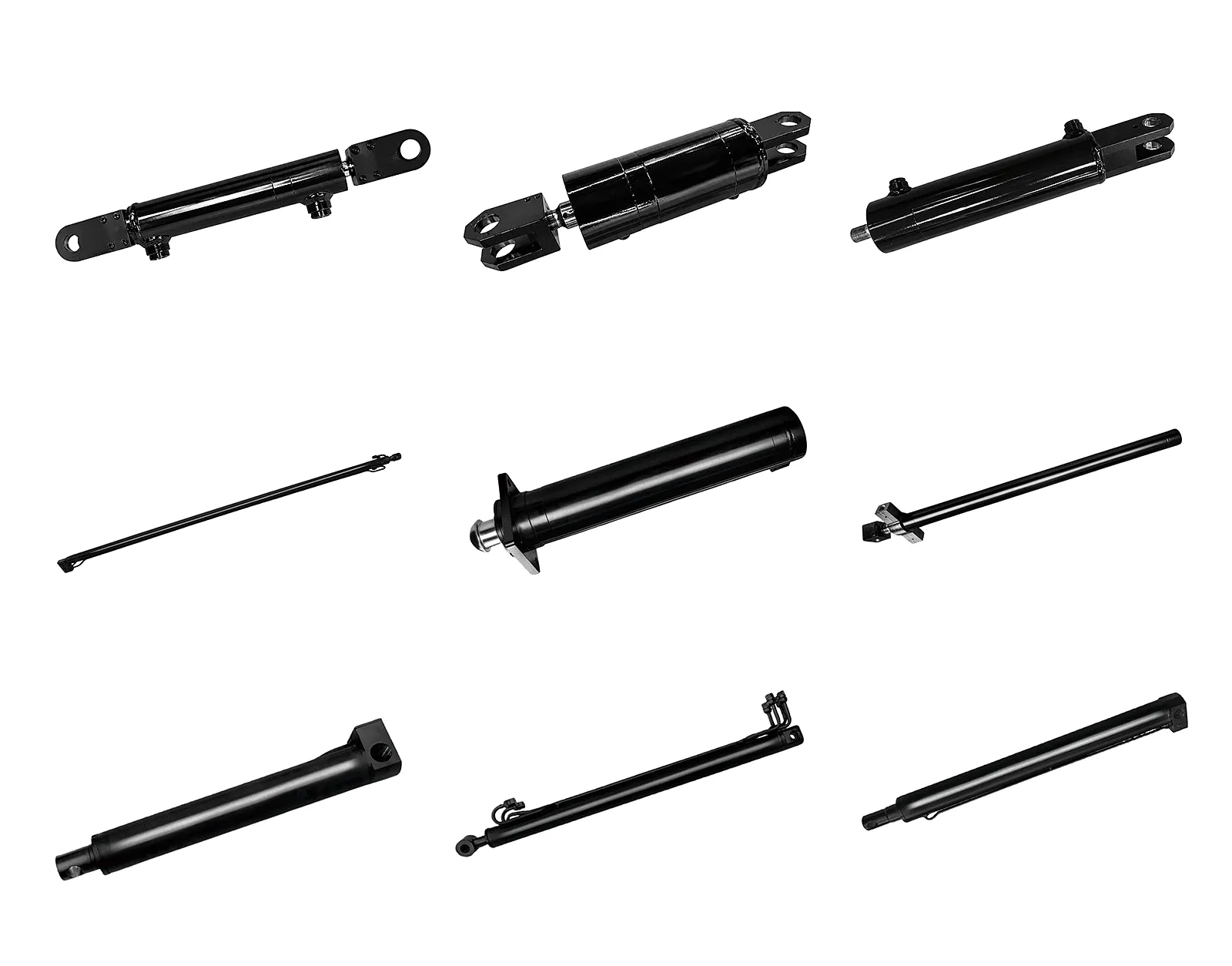
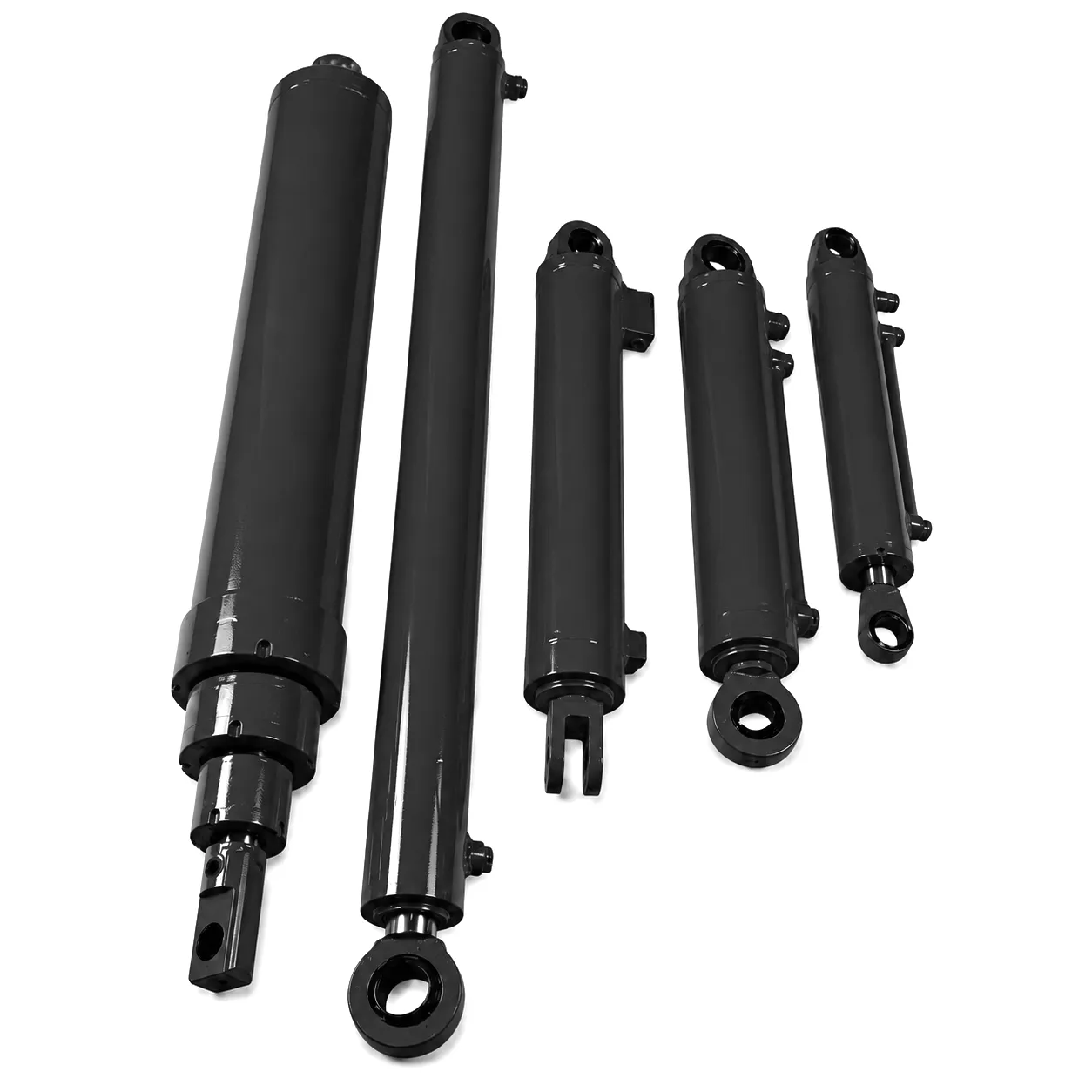
Ever Power’s hydraulic cylinder product range — engineered for the full spectrum of UK industrial working pressure requirements.
Ever Power: Custom Hydraulic Cylinder Manufacturing for UK Industry
Ever Power operates a purpose-built hydraulic cylinder manufacturing facility equipped with precision CNC turning centres, deep-hole honing machines, and dedicated surface treatment lines for hard chrome and nickel-chrome rod plating. Every cylinder produced at the Ever Power facility undergoes 100% hydraulic proof testing at 1.5 times working pressure, with all test certificates and material traceability documentation provided as standard — meeting the documentation requirements expected by UK engineering contractors and the offshore sector.
What distinguishes Ever Power from catalogue hydraulic cylinder suppliers is the genuine depth of customisation capability. The engineering team handles non-standard bore-and-rod combinations, asymmetric end cap geometries for OEM integration, custom mounting interface designs conforming to customer-supplied drawings, and application-specific seal compound selections validated for the customer’s hydraulic fluid specification. For UK customers requiring CE marking compliance and documentation conforming to the Machinery Directive 2006/42/EC (as retained in UK law post-Brexit), Ever Power provides full technical file support and Declaration of Incorporation documentation.
Logistics to the United Kingdom are handled through established freight forwarding partners with regular consolidation services to UK ports including Felixstowe, Southampton, and the Port of Immingham — giving procurement managers in Yorkshire and the Humber region competitive lead times for both standard and custom-engineered cylinders.
Customer Success: Sheffield Steel Processing — Hydraulic Press Modernisation
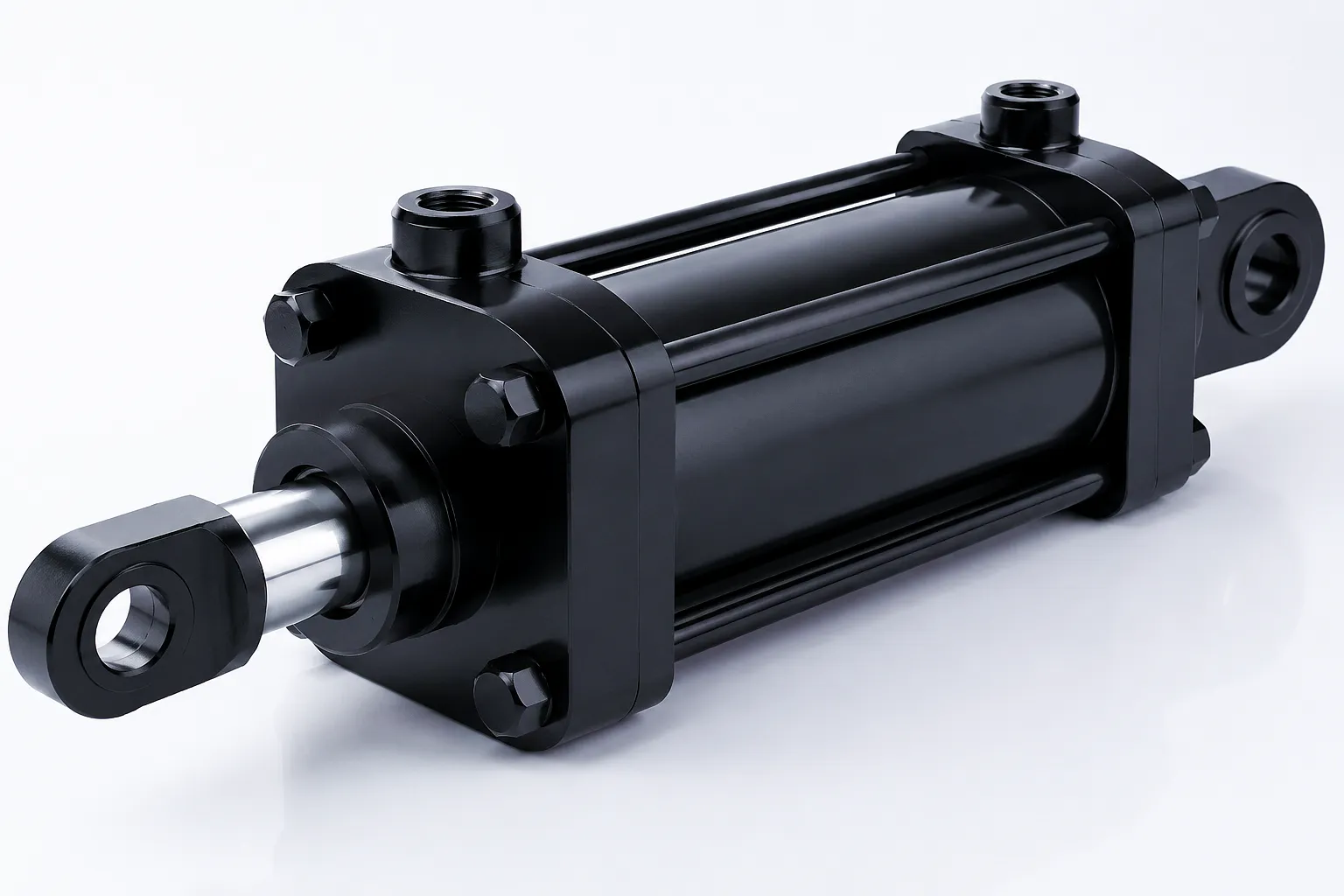 A Sheffield-based steel service centre — operating a fleet of hydraulic press brakes and plate shearing machines serving the North of England structural steel fabrication sector — approached Ever Power with a persistent and costly problem. Three of their existing press brake cylinders were experiencing seal failure at intervals of just 900–1,100 operating hours, requiring complete cylinder pull-down and reseal operations that cost the business an estimated £8,400 per event in combined parts, labour, and lost production time.
After reviewing the hydraulic circuit documentation and the existing cylinder specifications, the Ever Power engineering team identified that the cylinders had been specified with a nominal working pressure rating of 200 bar — but the hydraulic power units supplying those presses had relief valves calibrated to 240 bar. This 40-bar overpressure meant the cylinders were routinely operating beyond their working pressure ratings, operating inside the maximum pressure zone during every full-force press cycle. The seals were simply being fatigued far beyond their design envelope on every stroke.
Ever Power supplied replacement cylinders specified to a 280 bar working pressure rating, using a 42CrMo4 barrel material and PTFE-backed piston seal packs rated for continuous duty at 350 bar. The hydraulic power unit relief valves were recalibrated to 240 bar — now within the safe continuous working pressure of the new cylinders. Fourteen months and approximately 4,200 operating hours after installation, the Sheffield facility reported zero seal failures and estimated cumulative maintenance savings of approximately £26,000 compared with their previous 14-month maintenance cost profile for those three presses.
What Our UK Clients Say
“We had three years of premature seal failures before Ever Power’s engineers actually looked at our hydraulic circuit properly and identified the overpressure issue. The replacement cylinders they specified have now exceeded all our previous service life records. The pressure rating matching process they applied is something no previous supplier had offered us — it’s made a genuine difference to our maintenance budget.”
— Plant Maintenance Manager, Steel Service Centre, Sheffield, South Yorkshire
“For our lifting platform contracts across Birmingham and the surrounding region, we needed cylinders that could handle the full rated load at working pressure without the kind of rod creep we’d seen with our previous supplier’s product. Ever Power’s custom telescopic cylinders have performed without a single issue through two full winter seasons. The documentation package they provide for our CE compliance records is thorough and professional.”
— Technical Director, Platform Lift Systems Integrator, Birmingham, West Midlands
“We operate agricultural machinery in some of the hardest conditions Lincolnshire and the Fens can throw at you. The hydraulic cylinders Ever Power supplied for our combine harvester header assemblies have handled the pressure spikes from rough-ground harvesting without a single seal issue through a full season. The FKM seal option they recommended for our high-ambient-temperature summer conditions was exactly the right call.”
— Fleet Engineer, Agricultural Machinery Contractor, Spalding, Lincolnshire
Häufig gestellte Fragen
What is the difference between working pressure and maximum pressure in a hydraulic cylinder, and how does it affect my UK industrial plant’s maintenance schedule?
Working pressure is the continuous, rated system pressure your hydraulic cylinder is designed to sustain through its entire service life without accelerated seal wear or barrel fatigue. Maximum pressure is the transient ceiling — the highest pressure spike the cylinder can absorb briefly without permanent damage. For UK plant maintenance scheduling purposes, your cylinder service intervals (seal replacement, rod inspection, barrel honing assessment) should be based entirely on the working pressure rating. If your system regularly generates pressure spikes that exceed working pressure and approach maximum pressure, your maintenance team should be investigating the hydraulic circuit design — particularly relief valve settings, accumulator sizing, and deceleration valve performance — rather than simply reducing service intervals. Over-reliance on maximum pressure ratings as an operating buffer is one of the most common causes of premature hydraulic cylinder failure in UK manufacturing environments.
How much does a custom-rated hydraulic cylinder cost from a UK-supplying manufacturer like Ever Power, and what factors affect the price of a high-pressure cylinder?
The cost of a custom hydraulic cylinder from Ever Power depends on bore diameter, stroke length, working pressure rating, material specification, end cap geometry, and seal compound selection. A standard medium-duty cylinder (bore 80–100 mm, stroke up to 1,000 mm, 250 bar working pressure, ISO-standard mounting) typically falls in the range that represents a fraction of the cost of an unplanned production stoppage caused by a seal failure on a mismatched cylinder. High-pressure units (350–500 bar working pressure) using alloy steel barrels and FKM seals carry higher material costs but deliver total cost of ownership advantages through extended service intervals. Contact Ever Power at [email protected] with your bore, stroke, working pressure, and application details for a specific project quotation.
Which hydraulic cylinder working pressure rating is correct for a heavy-duty lifting platform operating across warehouse distribution centres in Birmingham and the West Midlands?
For scissor lifts and mast-type lifting platforms used in warehouse and logistics environments in Birmingham and across the West Midlands, hydraulic cylinders are typically specified in the 160–250 bar working pressure range, depending on the platform’s rated payload capacity and the hydraulic power unit pump pressure setting. The critical design check is ensuring the cylinder’s cap-end extension force — calculated as working pressure multiplied by the full bore area — exceeds the maximum static load (platform self-weight plus rated payload) with an appropriate safety margin, while the cylinder’s working pressure rating remains at least 15–20% above the hydraulic power unit’s relief valve setting. Ever Power can provide full cylinder sizing calculations for specific lift geometry and payload requirements upon receipt of your application data.
Where can I find a reliable hydraulic cylinder supplier in the UK who can deliver custom-pressure-rated cylinders quickly and provide full PSSR 2000 compliance documentation?
Ever Power supplies custom-rated hydraulic cylinders to UK industrial customers with full pressure test certification, material traceability documentation, and Declaration of Incorporation documentation suitable for PSSR 2000 written schemes of examination. Logistics to the UK are routed through freight partners serving the major UK port terminals at Felixstowe, Southampton, and Immingham, ensuring competitive delivery lead times to customers across England, Scotland, and Wales. For urgent requirements, Ever Power’s team can discuss expedited production scheduling and airfreight options for critical plant maintenance situations. Contact [email protected] with your specification and required delivery window.
How do I correctly calculate the proof test pressure and maximum pressure rating for a hydraulic cylinder I am specifying for an agricultural machinery application in Lincolnshire or the East of England?
For agricultural machinery hydraulic cylinders operating across Lincolnshire, East Anglia, and the broader East of England farming sector, the proof test pressure is standardly calculated as 1.5 times the rated working pressure, in compliance with ISO 6020. For example, a cylinder rated at 210 bar working pressure should be proof tested at 315 bar. The maximum pressure rating — the transient spike ceiling — is typically set at 1.5 times working pressure for standard-duty cylinders and up to 2.0 times working pressure for heavy-duty agricultural applications. When specifying cylinders for combine harvester header hydraulics, factor in the shock loads generated by header bouncing over irregular stubble terrain, as these can generate instantaneous pressure peaks 30–40% above the steady-state system pressure registered at the power take-off-driven hydraulic pump outlet.
EVER POWER · HYDRAULIC CYLINDERS
Ready to specify the right hydraulic cylinder pressure rating for your application?
Talk to the Ever Power engineering team about your working pressure requirements, application environment, and bore-and-stroke specification. We provide a full technical review and quotation with no obligation.
Get a Quote: [email protected]
bearbeitet von gzl
 German
  English
  Italian
  Portuguese
  Dutch
Dutch  Swedish
  Danish
  Finnish
  Polish
  Hindi
Hindi  Kazakh
  Turkish
  Ukrainian
  Romanian
  Spanish
  Russian
  Korean
  Japanese
  Vietnamese
  Thai
Thai  Indonesian
  Malay
Malay  French
  Greek
Greek