
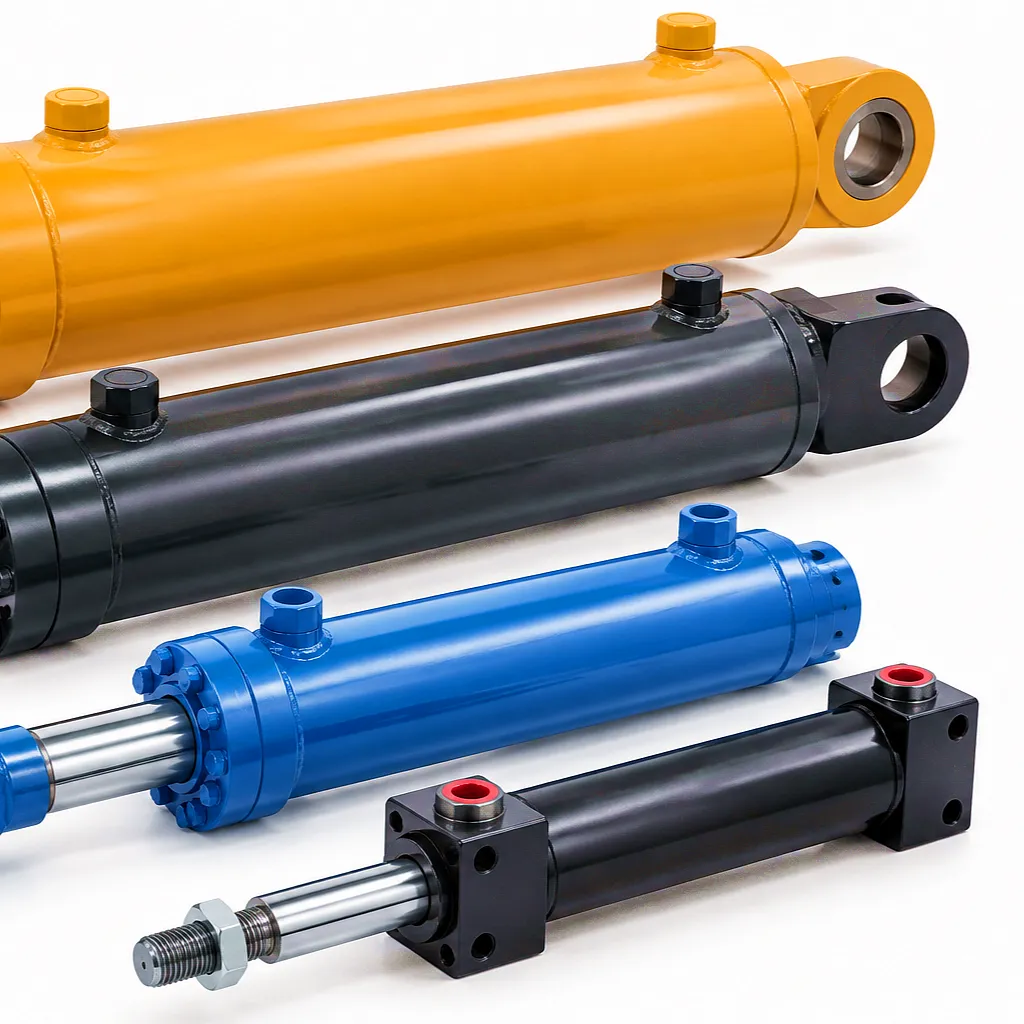
 Walk around any construction site in Birmingham or Sheffield and the excavator is the workhorse you cannot miss. That articulated arm swings, digs, curls and dumps with quiet mechanical authority — but the force behind every movement comes from three distinct hydraulic cylinders tucked inside the boom, arm and bucket linkages. These are not interchangeable components. Each one operates under a different geometry, absorbs different stress patterns and demands different internal engineering to survive the punishing cycles of a working machine. Yet in procurement catalogues they are often lumped together simply as “excavator hydraulic cylinders,” which is where misspecification begins and operational headaches follow.
The Boom Cylinder: Lifting the Entire Arm Structure
The boom cylinder mounts between the excavator’s upper house and the boom arm itself. When hydraulic oil enters the cap-end port, the piston extends, pushing the entire boom assembly upward against gravity and payload. It operates primarily in compression under vertical loading — which means the rod must resist buckling across long strokes while simultaneously handling the lateral bending moments induced by an offset bucket load. On a 20-tonne machine, a pair of boom cylinders may each carry peak loads exceeding 250 kN.
Boom cylinders typically feature the largest bore diameter of the three cylinder types on an excavator — ranging from 100 mm to 180 mm depending on machine class. The rod diameter is proportionally heavy to resist Euler-column buckling under compressive loading. High-strength chrome-plated rods (42CrMo4 or equivalent EN 10083-3 steel) are standard, with chrome thickness of 25–40 µm and a surface hardness of 56–62 HRC. Internally, the cylinder tube is honed to an Ra 0.4 µm finish to maximise seal life across the expected 5,000-hour service interval.
Because boom cylinders lift the machine’s full working attachment dead-weight on every cycle, they see far more cumulative fatigue loading than the arm or bucket cylinders. In UK construction environments — where machines routinely work in clay-heavy sites across the Midlands or in the rock-dense ground conditions of South Yorkshire — the boom cylinder faces particularly abrasive rod wiper contamination. Specifying a triple-lip wiper seal system with a dedicated scraper ring is not optional on these applications; it is the baseline that separates a cylinder delivering 4,000 hours from one delivering 18 months before its first reseal. Material selection for the piston guide rings is equally consequential: filled PTFE or high-modulus nylon guide rings prevent metal-to-metal contact in the event of lateral overload, protecting the bore finish and enabling a rebuilt service rather than a full cylinder replacement.
The Arm Cylinder: Controlling Reach and Curl Force
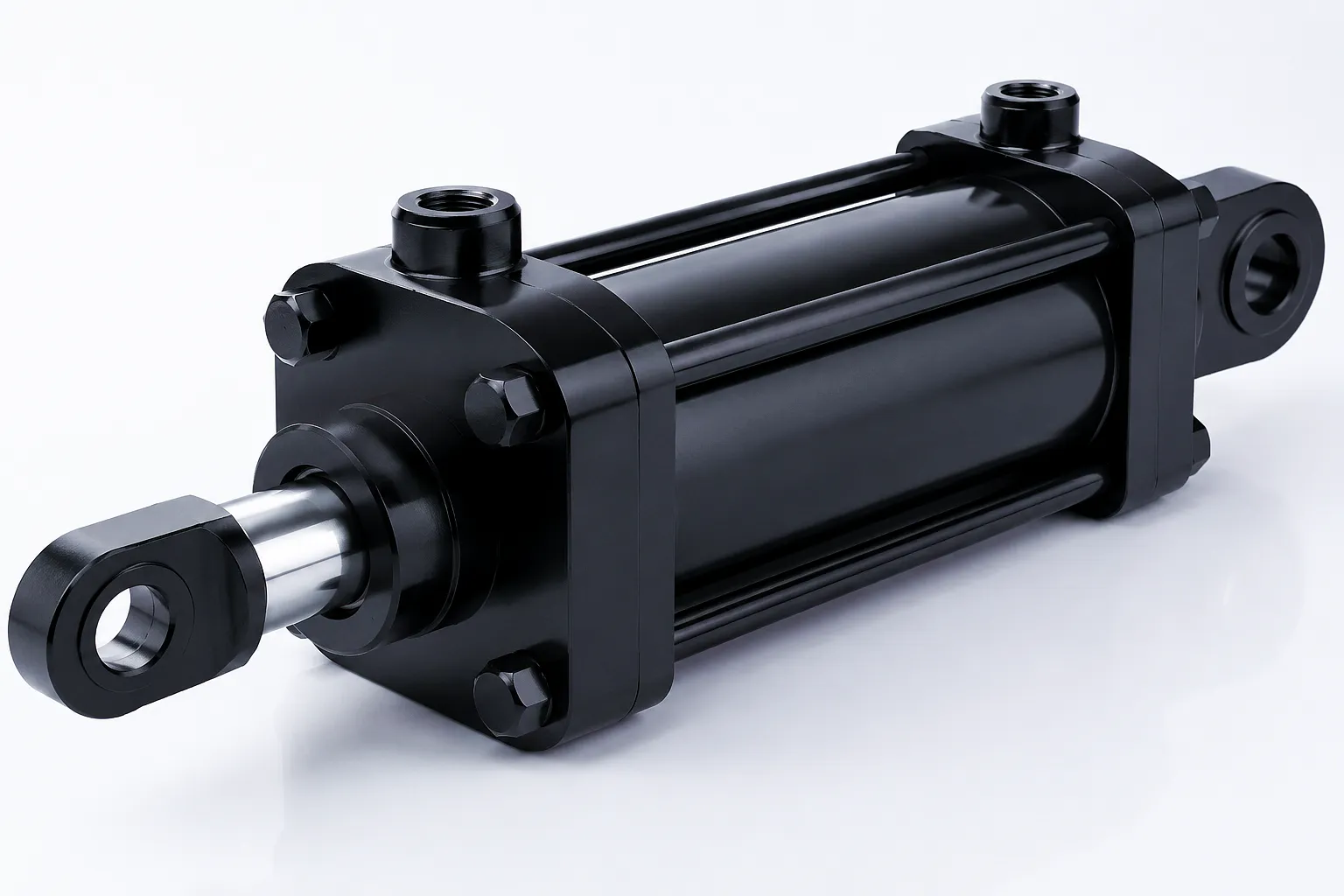
The arm cylinder — sometimes called the stick cylinder or dipper cylinder — connects the boom head to the arm (or stick) and controls how far the arm swings inward and outward from the machine. It handles the primary digging force: as the operator curls the arm inward, the arm cylinder retracts and the bucket edge is pulled through the ground, generating the breakout force that determines excavation productivity.
Unlike the boom cylinder, which operates primarily under one directional load, the arm cylinder regularly switches between tension and compression as the arm swings through its arc. This bi-directional loading subjects both the cap-end and rod-end seals to full system pressure alternately — a demand that requires balanced seal design and equal attention to both port-end wear surfaces. The cycle rate is also higher than the boom cylinder, as the operator may stroke the arm multiple times per digging pass.
Arm cylinders have a longer stroke-to-bore ratio than boom cylinders because the arm must sweep a wide arc. This longer rod — sometimes 1,200 mm to 1,800 mm on a mid-class machine — demands a high slenderness ratio without compromising buckling resistance. The solution used by precision manufacturers is an induction-hardened rod core (340–380 HB) with an electroplated chrome surface, combined with hard chrome or increasingly composite ceramic-chrome coatings that extend corrosion resistance without adding significant mass.
In demolition applications — a significant sector around Manchester’s ongoing urban renewal projects and London’s infrastructure redevelopment — arm cylinders face additional risk from debris impact on the extended rod. Protective bellows covers are standard issue in these environments, and the specification of rod material moves up to CK45 or 40Cr variants with enhanced impact toughness. The hydraulic port thread standard in UK-supplied machines follows BSP (British Standard Pipe) convention for the most part, though newer OEM imports frequently arrive with SAE O-ring face seal (ORFS) ports. A quality arm cylinder supplier will accommodate both without surcharge on minimum volumes.
For applications requiring rotary motion alongside linear arm actuation — common in specialised demolition heads and rotating sorters — consider pairing the arm cylinder with a Hydraulic Rotary Actuator Steering Cylinder to achieve full three-axis attachment control from a single hydraulic circuit.
The Bucket Cylinder: Precise Curl Force at the Cutting Edge
The bucket cylinder sits between the arm and the bucket linkage and controls the curl and dump motion of the attachment. Of the three cylinders, it has the smallest bore diameter but may operate at the highest internal pressure in ratio — particularly during hard-material penetration when the bucket is forced into rock or compacted hardcore. On many 15–30-tonne excavators, bucket cylinders operate at system pressures between 280 and 350 bar during peak digging cycles.
The geometry of the bucket linkage means that the cylinder’s mounting pins are subjected to significant side-load variation as the bucket rotates through its full curl arc. This generates an off-centre load on the rod-eye bearing that, over thousands of cycles, accelerates wear in poorly designed pin-boss arrangements. Forged rod-eye ends with bronze or sintered-iron bushings — replaced on schedule during maintenance — are the correct specification for high-utilisation machines.
The bucket cylinder also experiences the most contamination ingress of the three positions because it sits low on the machine, closest to the working face. In groundwork projects across Leeds and the West Yorkshire construction corridor, where excavators routinely dig through clay, sand and gravel mixes, the rod wiper seal on the bucket cylinder can become heavily laden with abrasive particles within a single shift. Extended-lip polyurethane wiper seals outperform standard nitrile alternatives in these conditions by a substantial margin.
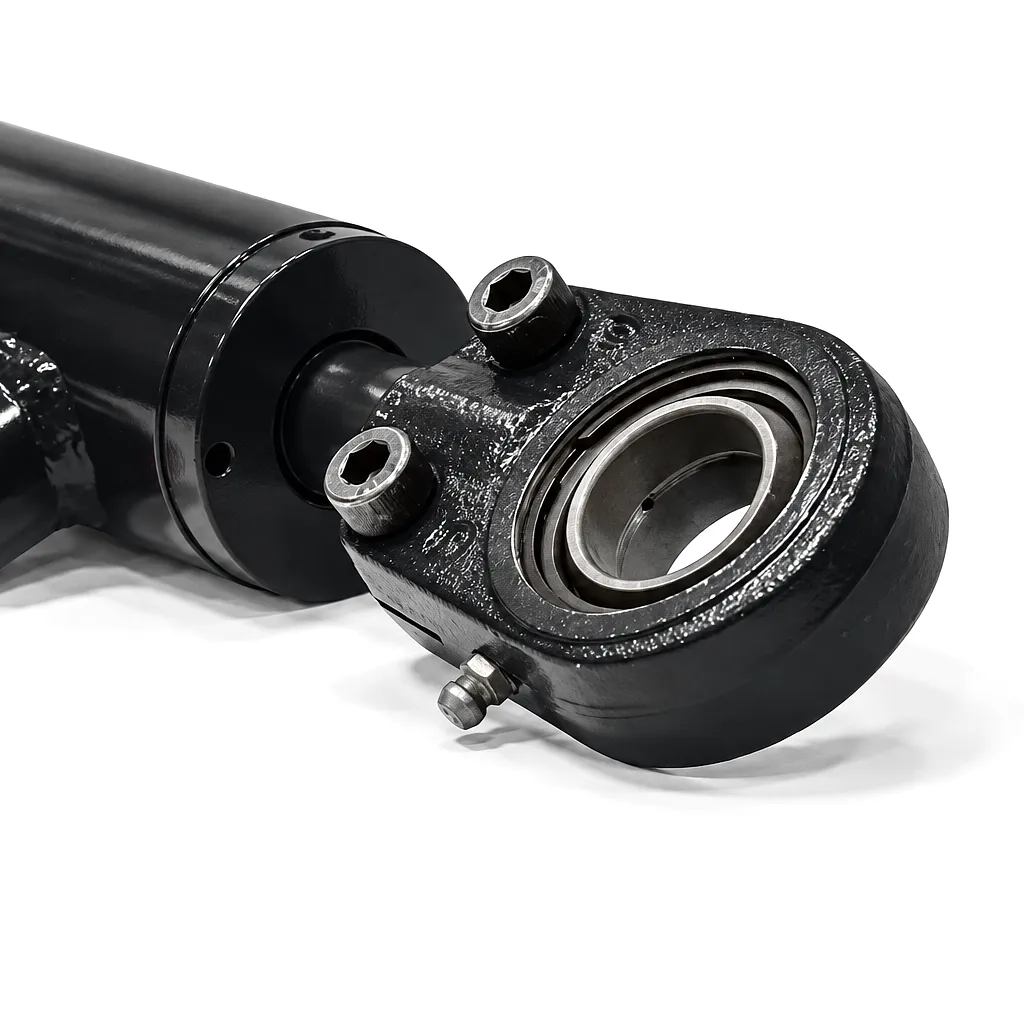
- Smallest bore of the three cylinders
- Highest pressure-to-bore ratio
- Maximum contamination exposure
- Critical for bucket breakout force
- Rod-eye side-loading demands forged ends
- Shortest stroke, highest cycle frequency
Technical Comparison: Boom vs Arm vs Bucket Cylinder
Ever Power Hydraulic Cylinder Range
Industrial Application Scenarios Across UK Construction and Heavy Industry
Major road and rail projects around Birmingham and Coventry rely on 20–35-tonne excavators whose boom and arm cylinders are cycled tens of thousands of times per week. The mixed ground conditions — switching between clay overburden and sandstone bedrock — demand cylinders with high-tolerance bore finishes and seals rated for abrasive contamination. Replacement cycles in this sector typically target 3,000-hour intervals to avoid unplanned downtime on time-penalised contracts.
Scrap yards and steel-processing facilities in the Sheffield-Rotherham corridor deploy purpose-built material handlers where bucket cylinders work against dense, irregular ferrous scrap. These cylinders face extreme side-loading from asymmetric loads in the grab attachment, combined with heat exposure from processed metal. Cylinders in this sector need rod seals rated to 120°C continuous, reinforced guide bands, and chrome rods polished to maximum corrosion resistance. Unscheduled downtime costs in this environment can exceed £2,000 per hour of lost throughput.
Port machinery around the Mersey and Humber estuary operates in a saltwater spray environment that dramatically accelerates chromium oxide breakdown on unprotected rod surfaces. All three cylinder types used in this sector — whether on pontoon-mounted excavators or mobile harbour cranes — need enhanced corrosion protection beyond standard hard chrome. Electroless nickel underlaying beneath hard chrome, or full stainless steel rod alternatives, are common specifications for marine-adjacent deployments. Seal material moves to hydrogenated nitrile (HNBR) to resist ozone and UV degradation from extended open-air exposure.
Urban demolition work in London’s redevelopment zones and Manchester’s ongoing regeneration projects puts the arm cylinder under exceptional stress. Long-reach configurations — common on residential block demolition — extend the arm cylinder’s stroke to its maximum and increase the bending moment at the rod-end bearing. In these configurations, the arm cylinder’s rod length can exceed 1,600 mm and must be individually engineered for slenderness ratio compliance. Bellows protection, reinforced rod-end seals, and schedule-based greasing of the pin bosses are standard practice on compliant urban demolition fleets.
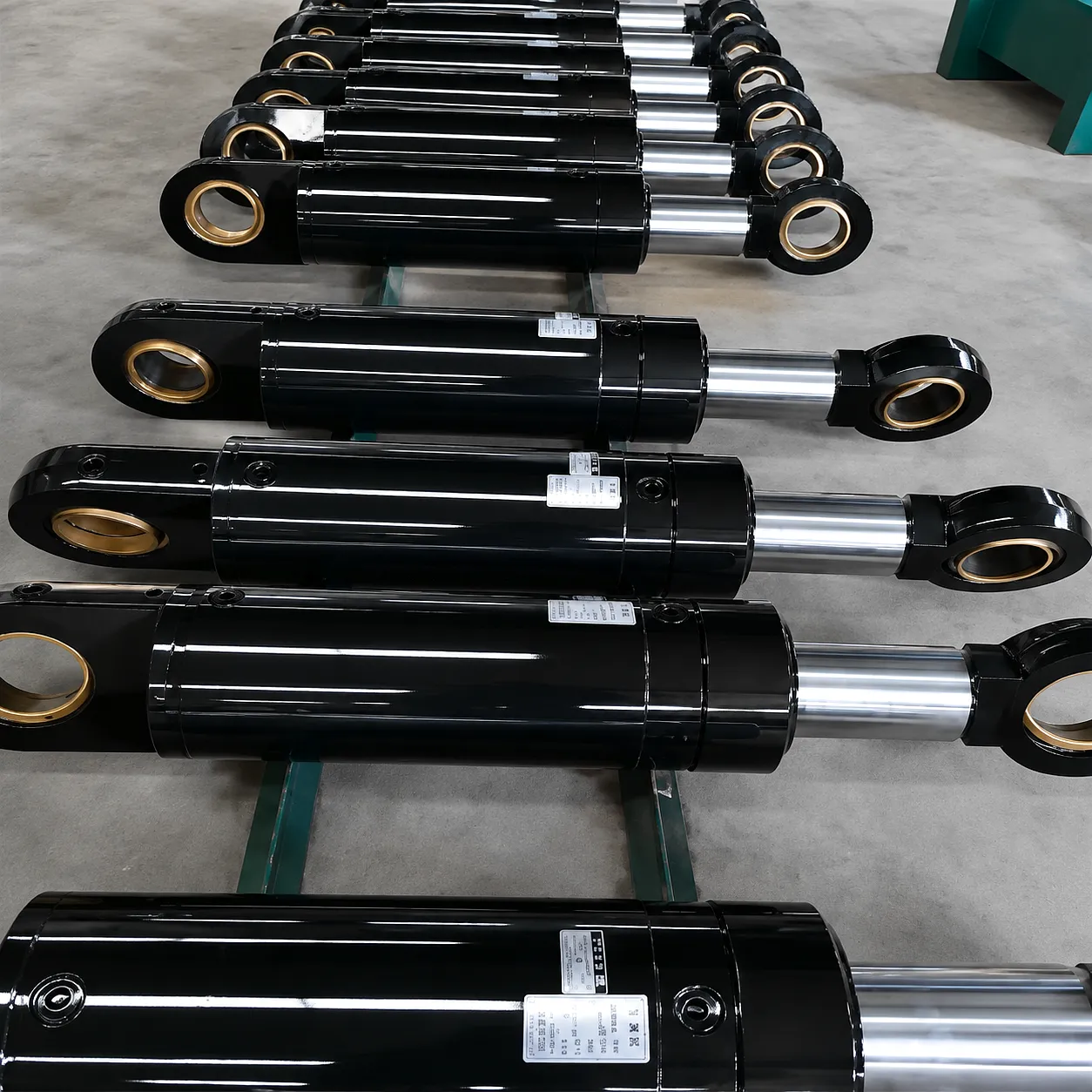
Material Science Behind Excavator Hydraulic Cylinders
Cold-drawn and precision-honed seamless steel tube to EN 10305-1 standard (equivalent to DIN 2391). Yield strength of 355 MPa minimum, with wall thickness calculated to provide a safety factor of at least 3x over maximum working pressure. Internal honing to Ra 0.4 µm ensures optimal seal bedding and minimises stick-slip. Hydraulic cylinders used in UK OEM supply chains typically carry CE-conformance certification under the Machinery Directive.
Turned, ground and polished (TGP) to h6 tolerance. 42CrMo4 alloy steel (to EN 10083-3) after quench and temper achieves 900 MPa tensile strength, suitable for the highest-stress boom cylinder applications. CK45 (carbon steel) after induction hardening is cost-effective for bucket cylinder rods where the lower slenderness ratio reduces the buckling risk. Chrome plating by hard chrome electrodeposition or ceramic composite spray, followed by grinding to final tolerance.
Rod seals in standard excavator cylinders are PU (polyurethane) for their high wear resistance and strong extrusion resistance up to 300 bar. HNBR is used where ozone, UV or elevated temperature resistance is required — particularly in marine and foundry environments. PTFE-backed seals for the piston offer low friction and excellent chemical compatibility, reducing parasitic losses in the hydraulic system and improving cycle efficiency. Seal kits supplied by Ever Power match the original material specifications precisely, with full traceability on compound batch data.
Rod-end gland heads are precision-machined from ductile iron (GGG-40 or equivalent) or cast steel for higher-pressure applications. The gland houses the rod seal, wiper seal and guide ring in a precisely dimensioned cavity, with the annular gland-nut thread engaging the cylinder tube via a buttress or acme thread form. Clevis and pin-boss ends on excavator cylinders are typically forged from S355J2 structural steel, heat-treated to improve fatigue performance, with bores reamed to H8 tolerance for standard pin fits.
When replacing all three cylinder types during a full machine rebuild, integrating a matched Custom Hydraulic Power Unit ensures system pressure, flow rate and relief valve settings are precisely calibrated to the new cylinder specifications — extending the service life of the complete hydraulic circuit and eliminating the pressure mismatches that accelerate seal wear in mismatched component rebuilds.
Ever Power: Precision Manufacturing and Custom Cylinder Solutions
Ever Power operates purpose-built hydraulic cylinder manufacturing facilities equipped with CNC deep-bore honing machines, automated rod chrome plating lines and precision assembly cells working to ±0.01 mm tolerances. Every cylinder — whether a direct OEM replacement boom cylinder for a Komatsu PC200 or a fully bespoke arm cylinder for a custom material handler — passes through a 100% end-of-line pressure test at 1.5 times working pressure, with full stroke verification and leak-down documentation provided with each unit.
The customisation capability at Ever Power spans bore diameters from 40 mm to 500 mm, stroke lengths up to 6,000 mm and operating pressures to 500 bar for ultra-high-pressure specialist applications. This range means that UK customers — from independent plant repair workshops in Birmingham to OEM engineering companies tendering on Network Rail frameworks — can source boom, arm and bucket cylinders to any drawing or performance specification without being forced into catalogue compromises.
Logistics support includes DDP (Delivered Duty Paid) shipping to UK addresses, compliant with post-Brexit customs requirements, with full UKCA/CE documentation available on request. Standard lead times for catalogue replacement cylinders run 7–14 working days. Custom-engineered cylinders are typically quoted within 48 hours and delivered in 3–6 weeks depending on specification complexity.
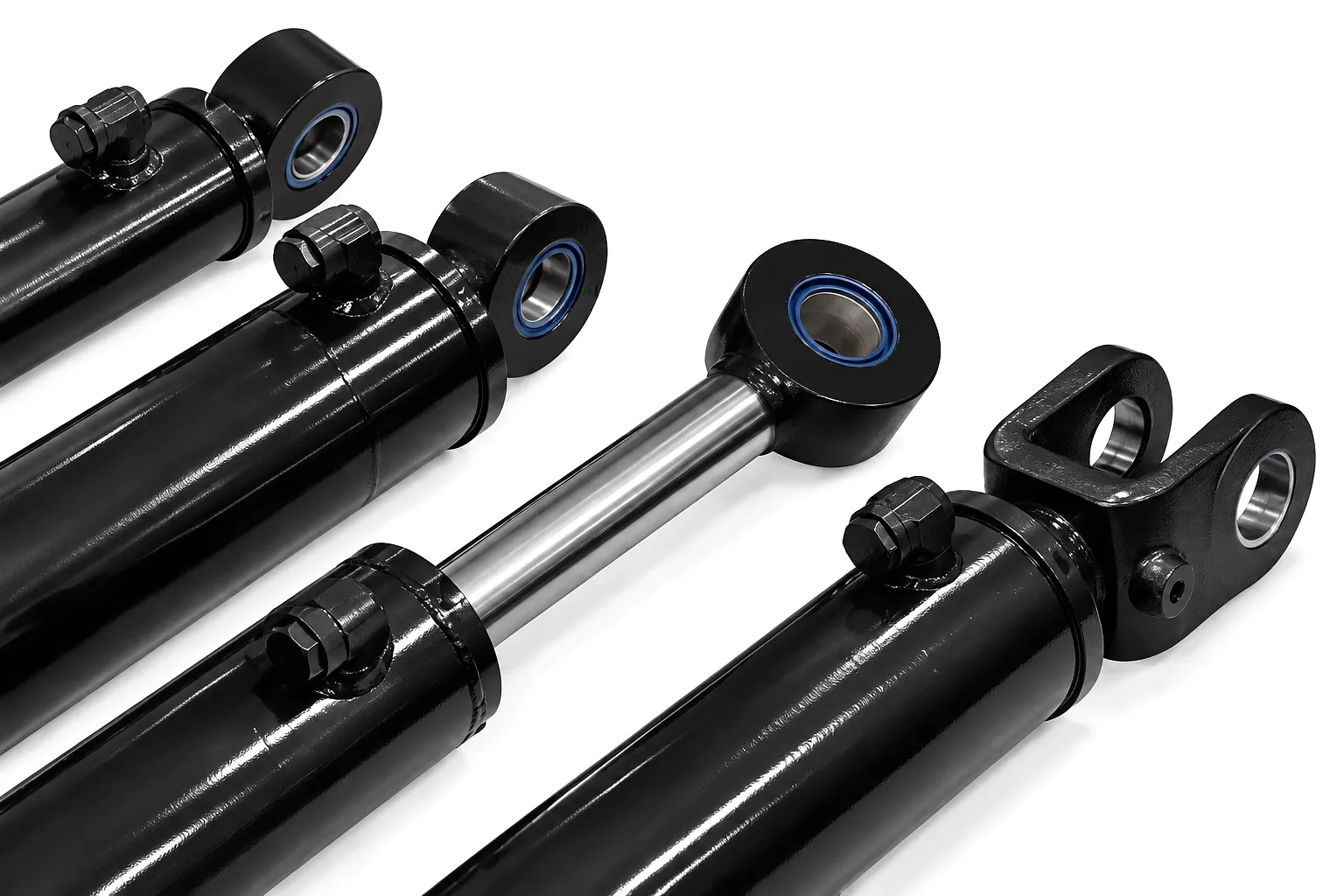
Customer Success Story: Sheffield Demolition Contractor Eliminates Mid-Season Cylinder Failures
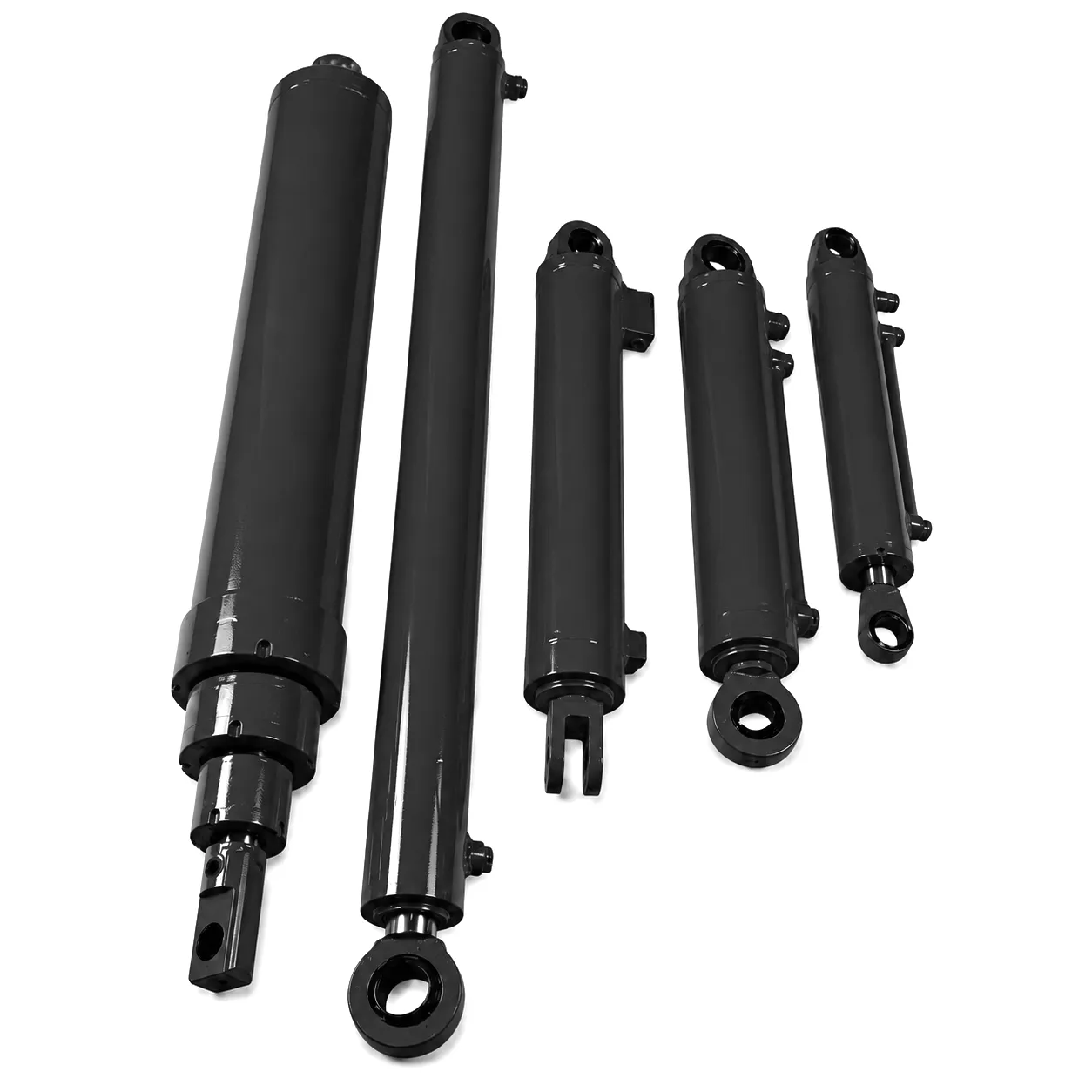 Northern Structures Demolition Ltd had operated in the Sheffield urban demolition market for over fifteen years, but a series of contract wins in 2023 — including a significant industrial clearance project on the site of a former steel processing plant in Rotherham — pushed their fleet utilisation to over 80 hours per machine per week. Under this intensity, their previous cylinder supplier’s components were failing at the rod seal within 1,400 to 1,800 hours — well short of the 3,000-hour target. The arm cylinders on their two long-reach machines were particularly problematic, with rod-end gland leaks appearing within the first three months of the Rotherham contract. Each failure meant a minimum half-day of downtime, recovery to a local service centre, and lost productivity that the contract penalty structure made financially painful.
The fleet manager contacted Ever Power after finding the boom-cylinders.com product range through an online search and cross-referencing it with recommendations from a plant hire contact in Birmingham. Ever Power’s technical team reviewed the long-reach arm cylinder drawings — both OEM-style replacements and the custom extended-reach variant the company ran on their 30-tonne long-reach — and proposed an upgraded specification: 42CrMo4 rod steel replacing the original CK45, a ceramic composite chrome coating to 40 µm thickness, and a triple-lip PU rod seal set with a dedicated metal scraper ring to handle the concrete dust and brick debris generated during the Rotherham clearance work.
The initial batch of eight cylinders — four arm, two boom and two bucket — was delivered DDP to the company’s Sheffield yard within eleven working days of the order. After the first 2,200 hours of operation across the Rotherham project, zero seal failures were recorded. The company subsequently placed a standing supply agreement for all 24 cylinders in their annual replacement schedule, saving an estimated £18,000 per year in downtime recovery costs compared to the previous supplier arrangement.
What UK Customers Say About Ever Power Cylinders
“We replaced both arm cylinders on our long-reach PC300 with Ever Power units after two consecutive early failures from our previous supplier. The ceramic chrome coating makes a visible difference — after 2,200 hours working on the Rotherham site, there’s no sign of rod wear at all. The technical support team walked us through the seal specification differences before we ordered. That kind of detailed engagement is rare at this price point.”
“Ever Power customised a set of boom cylinders for our purpose-built material handler — non-standard bore, non-standard clevis spacing, and BSP ports instead of SAE. Every dimension came back exactly to drawing, pressure tested at 1.5x and fully documented. Lead time was 18 working days for fully bespoke cylinders, which is exceptional. We’ve placed three orders since and will continue to use them for all our custom rebuild work.”
“Operating near the Humber estuary means our cylinder rods corrode faster than anything the OEM catalogues are designed for. Ever Power recommended HNBR seals and an electroless nickel undercoat beneath the hard chrome as standard on our order. The difference in corrosion resistance after eighteen months of saltwater exposure has been transformative — we’re now on track for 4,000-hour service life where we previously saw failures at 2,200 hours.”
Usein kysytyt kysymykset
Answers to common questions from UK plant operators, OEM buyers, and repair workshops
The boom cylinder is designed primarily to resist compressive loading as it lifts the entire arm assembly and attachment weight against gravity, while the arm cylinder handles bi-directional loading and generates the primary digging breakout force as it curls inward through the working arc. The boom cylinder typically has a larger bore diameter and shorter stroke-to-bore ratio, whereas the arm cylinder has a longer stroke and must be engineered to prevent Euler buckling across its extended rod length. Both cylinders are precision-honed to Ra 0.4 µm bore finish, but the boom cylinder generally requires a heavier rod section and a triple-lip seal arrangement to manage the sustained vertical compressive load characteristic of UK site conditions.
Pricing for a direct OEM-replacement arm cylinder on a 20–30-tonne excavator typically ranges from £800 to £2,500 depending on bore diameter, stroke length, rod material specification and seal package. Custom-engineered cylinders with upgraded specifications — such as ceramic composite chrome rods or HNBR seals for marine environments — carry a cost premium that is generally recovered within two to three service cycles through reduced seal replacement frequency. Ever Power provides formal quotations within 48 hours via email to [email protected]. Include the excavator make, model, serial number and the cylinder position (boom, arm or bucket) for the fastest response.
At sustained oil temperatures above 80°C, standard polyurethane rod seals begin to lose dimensional stability and extrusion resistance. For bucket cylinders in Sheffield steel scrap processing — where heat from recently processed metal can raise local hydraulic oil temperatures significantly above the system reservoir temperature — the recommended seal material is HNBR (hydrogenated nitrile butadiene rubber), rated for continuous operation to 150°C with superior resistance to high-pressure extrusion. The piston seal in this environment should be specified as a fabric-reinforced PTFE composite to handle both the elevated temperature and the aggressive pressure cycling from impact loading on irregular scrap material.
Ever Power supplies all three excavator cylinder types — boom, arm and bucket — to custom dimensions across the full range of bore sizes from 40 mm to 500 mm, with DDP delivery to any UK address and full CE/UKCA documentation. For custom material handler builds, the recommendation is to submit a CAD drawing or a dimensional sketch with the key parameters: bore, rod diameter, stroke, operating pressure, mount style (clevis, flange, trunnion), port type (BSP or SAE) and the intended application environment. The technical team will return a quote within 48 hours, and production for custom-engineered cylinders typically completes within three to six weeks from order confirmation.
A failing boom cylinder typically presents as drift — the loaded boom slowly dropping under gravity with no operator input — which indicates internal bypass across the piston seal or external leakage past the rod seal. An arm cylinder failure often shows as sluggish or inconsistent arm curl response, sometimes accompanied by a groaning noise during the power stroke, which can indicate cavitation in a seal that is bypassing internally. A bucket cylinder reaching the end of its seal life generally shows the most visible external leakage because of its low-mounted position. Regular inspection should include rod surface examination for pitting, scoring or chrome flaking (use a finger-tip run along the rod surface), and an oil sample check from the hydraulic system to detect metal particulate that signals internal seal or guide ring wear. On UK sites, most contract excavators should have cylinders inspected for visual leakage and rod condition at every 500-hour service interval.
For standard OEM-equivalent boom cylinders, Ever Power’s lead time to Manchester is typically 7 to 14 working days from order confirmation, with DDP shipping included in the quoted price. Custom boom cylinders — non-standard bore, extended stroke, or upgraded material specification — are quoted within 48 hours and generally produced in 15 to 25 working days depending on specification complexity and current production loading. Every delivery includes a pressure test certificate documenting the test pressure (1.5× working pressure), stroke verification record, material compliance data for the cylinder tube and rod steel, and CE/UKCA conformity documentation where applicable. Fleet orders of five or more cylinders qualify for a standing order discount — contact [email protected] with fleet details for a tailored pricing structure.
Send your excavator make, model and cylinder position to Ever Power’s technical sales team. Quotes returned within 48 hours. DDP delivery to all UK addresses.
© Ever Power Hydraulic Cylinders | boom-cylinders.com | [email protected] | Serving UK industrial markets including Birmingham, Sheffield, Manchester, Leeds, London, Hull and beyond | edit by gzl
 Finnish
  English
  Italian
  Portuguese
  Dutch
Dutch  Swedish
  Danish
  Polish
  Hindi
Hindi  Kazakh
  Turkish
  Ukrainian
  Romanian
  Spanish
  German
  Russian
  Korean
  Japanese
  Vietnamese
  Thai
Thai  Indonesian
  Malay
Malay  French
  Greek
Greek