
 When a plant engineer in Birmingham sits down to specify the actuation system for a new hydraulic press, or a project team in Sheffield evaluates upgrades to a heavy-duty stamping line, one question consistently surfaces before anything else: should the system use a hydraulic cylinder or an electric linear actuator? Both technologies convert stored energy into controlled linear motion. Both have spent decades earning their place on factory floors. Yet the gap between them — in terms of force output, environmental tolerance, control precision, and total cost of ownership — is wider than many buyers initially appreciate. Getting this decision wrong means either paying a premium for capability you never use, or discovering mid-project that the selected technology cannot meet the duty cycle your application demands. This article strips away the marketing language and delivers the technical framework you need to make a confident, defensible choice for heavy industrial settings.
Understanding the Fundamentals: How Each Technology Works
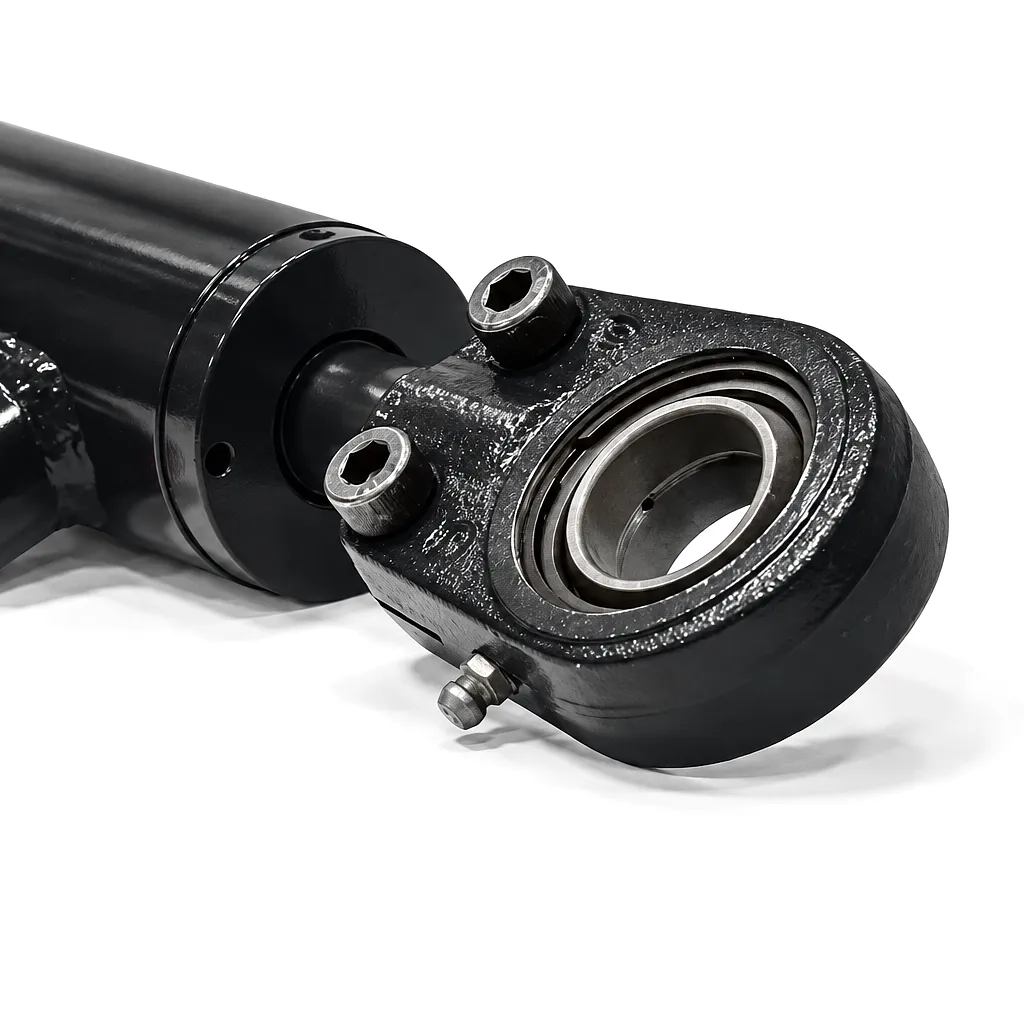
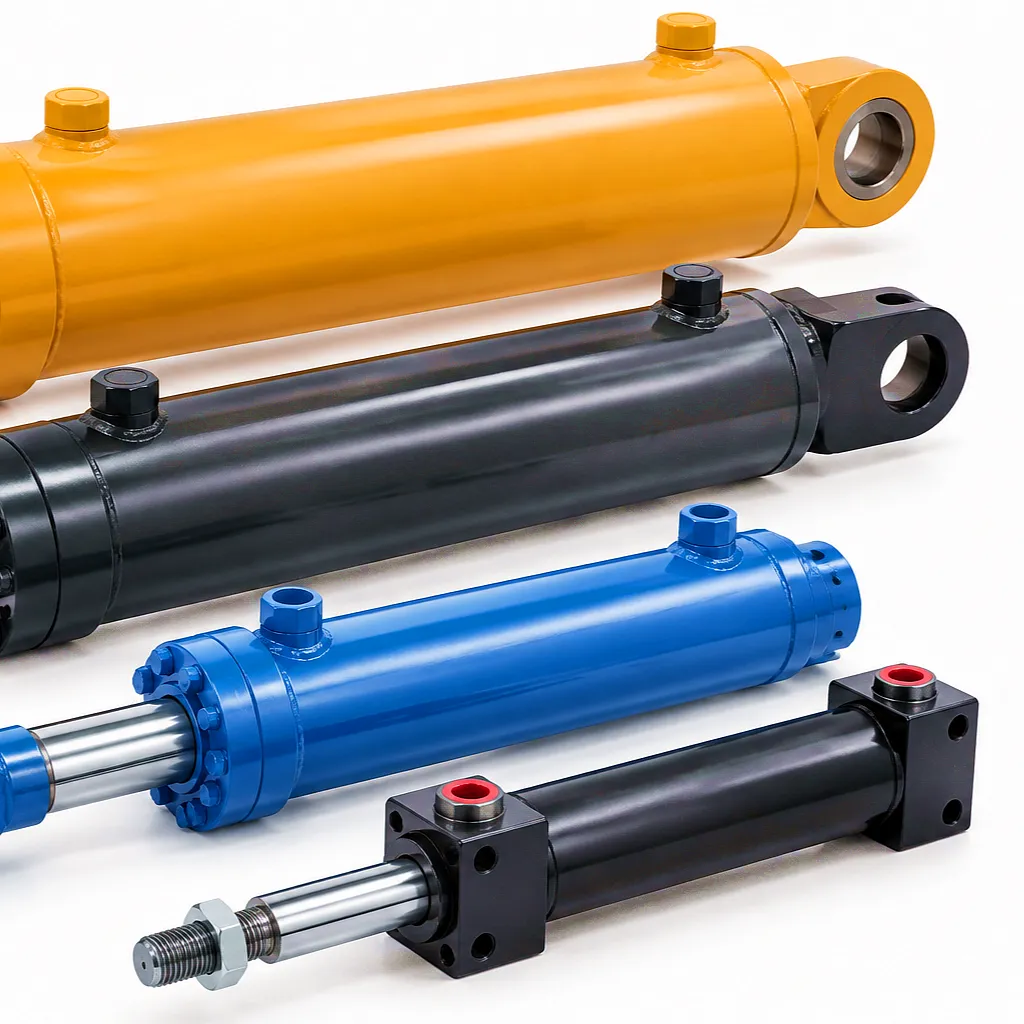
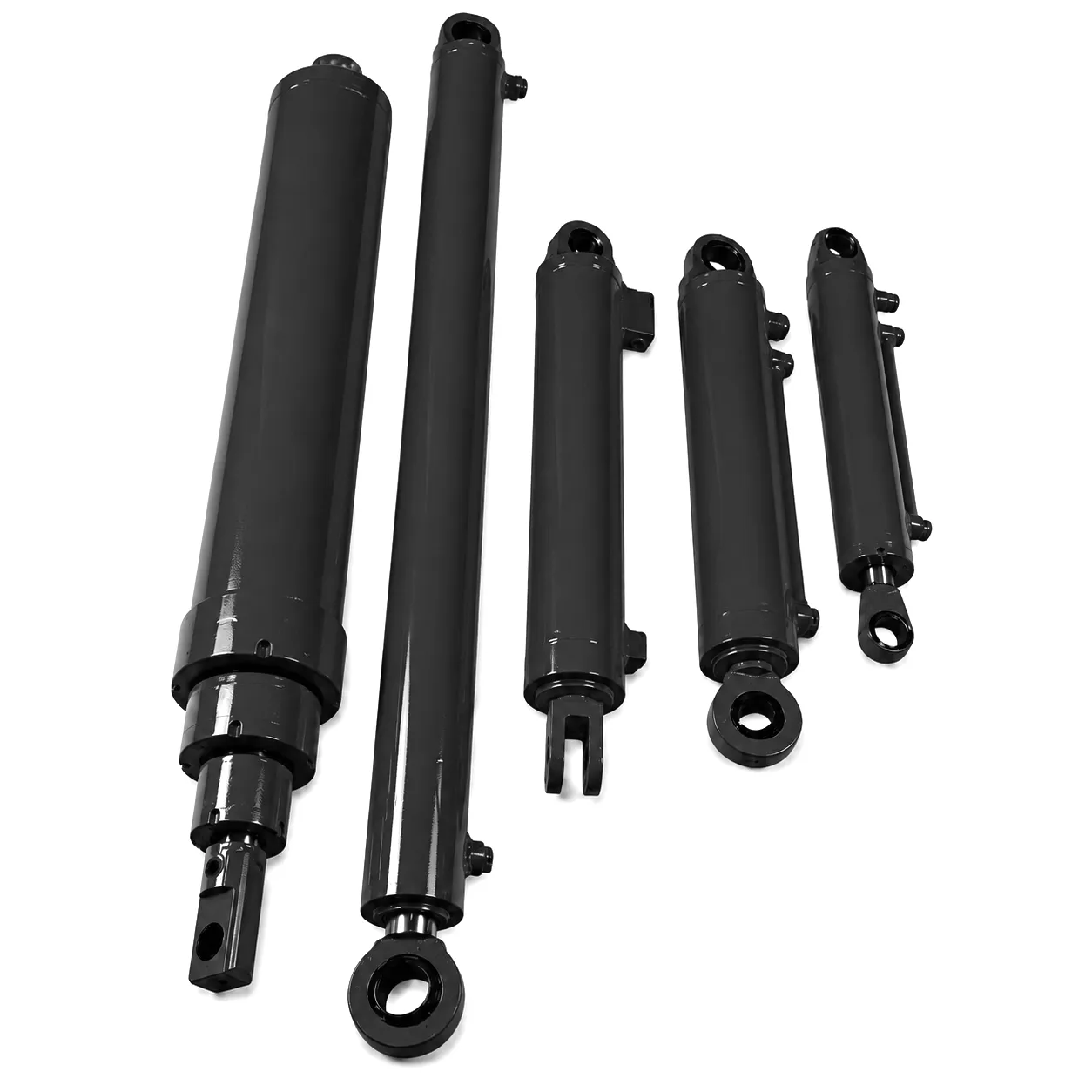
A hydraulic cylinder operates through the conversion of pressurised fluid energy into mechanical linear force. Hydraulic fluid — typically mineral oil, though water-glycol and synthetic fire-resistant fluids are used in hazardous environments — is pumped into one or both chambers of a steel barrel. The differential pressure acting on the piston’s cross-sectional area generates an axial force governed by the fundamental relationship F = P × A, where F is force in Newtons, P is gauge pressure in Pascals, and A is the effective piston area in square metres. In a double-acting cylinder design, the extend stroke is powered by pressure applied to the full-bore (cap-end) side, while the retract stroke uses the annular (rod-end) area. Sealing systems — comprising rod seals, piston seals, wiper rings, and guide bands — maintain the pressure differential while controlling internal and external leakage. Depending on bore diameter, stroke length, and operating pressure, a single hydraulic cylinder can generate forces spanning from a few kilonewtons to well beyond 10 MN, making it the default choice across industries where brute mechanical power is non-negotiable.
An electric linear actuator transforms rotary motor output into linear displacement using a mechanical transmission — most commonly a ball screw, lead screw, or in high-force variants, a roller screw. The motor (typically a servo or stepper unit) drives the screw shaft, which threads through a nut attached to the output rod, converting rotation into translation. Feedback from an encoder or resolver provides closed-loop position data to the controller, enabling sub-millimetre or even micrometre repeatability in precision applications. Force output depends on the motor’s torque, the screw’s lead (pitch), and the mechanical efficiency of the transmission; electric actuators rarely exceed 100–150 kN in standard catalogue configurations, though purpose-built roller-screw units can approach 300–400 kN. Power consumption scales directly with load, idle-state energy draw is minimal, and — critically for UK facilities pursuing ISO 50001 energy management certification — consumption is measurable in real time at the drive level without additional instrumentation.
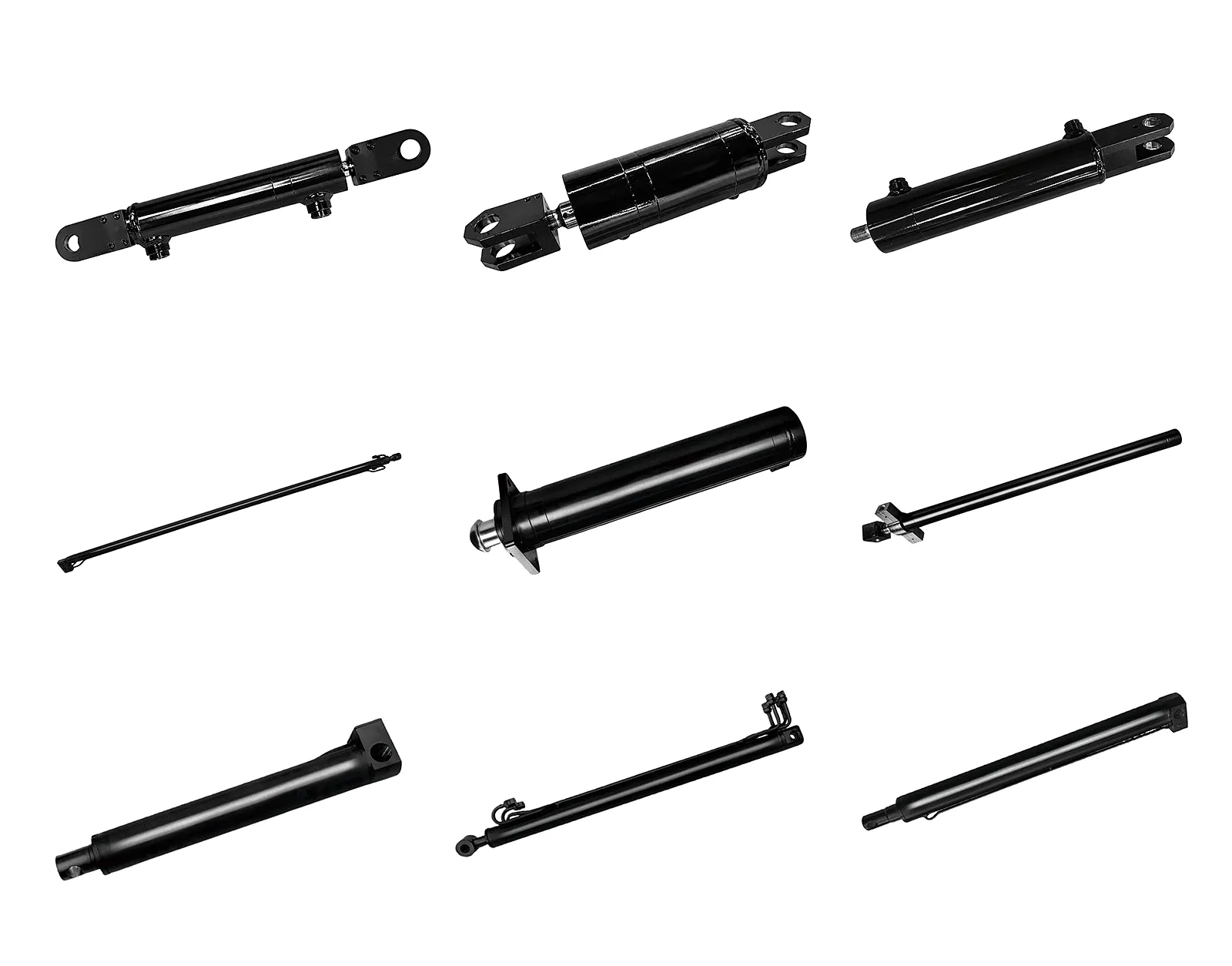
Ever Power — Custom hydraulic cylinder solutions for global heavy industry
Force Density, Stroke Capability, and Load Holding: Where Hydraulics Pull Ahead
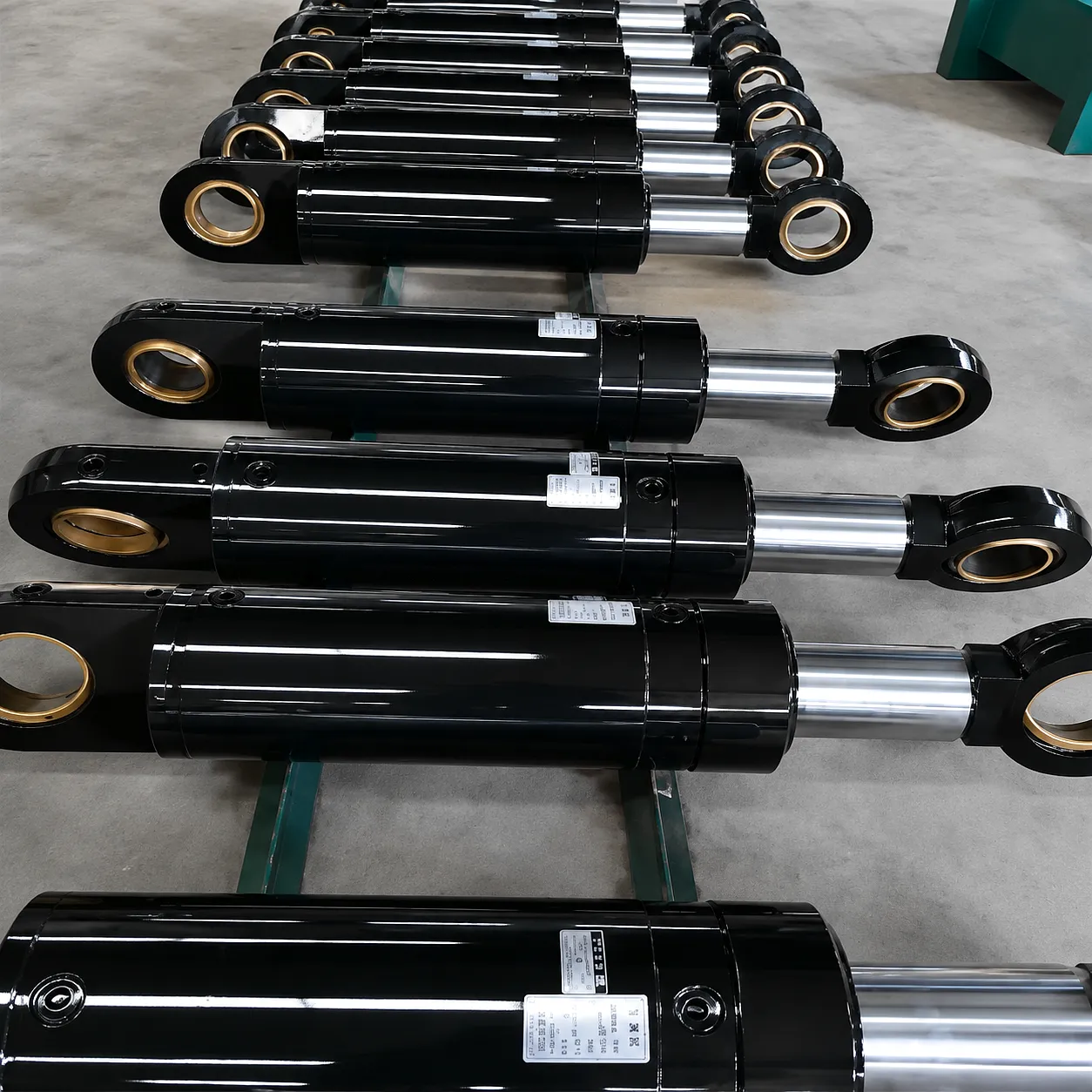 Force-to-weight ratio is the metric where hydraulic cylinders achieve a level of performance that no commercially available electric linear actuator currently matches. A hydraulic cylinder with a 200mm bore operating at 250 bar (25 MPa) develops an extension force of approximately 785 kN from a package that weighs perhaps 80–120 kg, depending on stroke and material specification. Achieving equivalent force from an electric roller-screw actuator demands a substantially heavier, longer, and costlier assembly. For overhead cranes in the West Midlands foundry belt, for the primary shear blades in Sheffield’s steel service centres, or for the clamp cylinders on heavy press brakes serving the Midlands tooling industry, this power density advantage is not academic — it directly determines whether a retrofit fits the existing structural envelope without expensive civil modifications.
Stroke length flexibility gives hydraulic cylinders a further edge in heavy plant. Telescopic hydraulic cylinders — multi-stage designs where successive tubes nest inside each other — can achieve deployed lengths several times the collapsed dimension. This geometry is physically impossible to replicate with a lead-screw or ball-screw actuator of comparable rated load without compromising column-load buckling resistance. Tipper bodies, refuse compactors, and the raising mechanisms of bridge cranes in British port facilities rely on this exact capability daily. The hydraulic cylinder’s ability to hold its extended position under full load without electrical power consumption — because a closed valve simply traps incompressible fluid — is another practical advantage in safety-critical holding applications.
Precision Control, Repeatability, and Programmability: Where Electric Actuators Lead
Where an application calls for sub-millimetre positioning accuracy, multi-point programmable stops, real-time force profiling, or integration with Industry 4.0 data acquisition systems, the electric linear actuator generally outperforms an equivalently sized hydraulic cylinder without additional proportional valve hardware. A servo-driven ball-screw actuator can achieve bidirectional repeatability of ±0.02 mm as standard, with some specialist units reaching ±0.005 mm. Achieving equivalent accuracy with a hydraulic cylinder requires the addition of a servo proportional valve, a linear encoder on the cylinder rod, a high-bandwidth controller, and careful management of fluid temperature and compressibility — all of which add cost, complexity, and calibration burden. For UK automotive assembly lines, precision test rigs at aerospace MRO facilities, and the semiconductor packaging equipment sector growing in Scotland’s tech corridor, these precision characteristics are non-negotiable, and the electric actuator is the rational choice when maximum force requirements stay within its capability envelope.
Programmability is another dimension where electric systems hold a clear structural advantage. Velocity profiles, acceleration ramps, dwell times, and force limits can all be configured entirely in software through the drive’s parameterisation interface, without changing any mechanical hardware. Over-the-air firmware updates and remote diagnostics through OPC-UA or EtherCAT reduce maintenance engineer travel to site — a consideration that matters for remote installations in the UK’s offshore energy or upland wind sectors. Hydraulic systems can achieve comparable programmability, but the path runs through servo valve selection, hydraulic power unit sizing, and manifold design — a longer, more expensive engineering journey that is only justifiable when the force demands exceed what any electric actuator can deliver.
Hydraulic Cylinder vs Electric Linear Actuator — Technical Performance Parameter Comparison
| Parametri | Hydraulinen sylinteri | Electric Linear Actuator | Preferred For |
|---|---|---|---|
| Maximum Force Output | Up to 10 MN+ | Typically ≤ 400 kN | Hydraulic for heavy plant |
| Positioning Accuracy | ±0.1 – 0.5 mm (with encoder) | ±0.005 – 0.05 mm | Electric for precision |
| Power Density (force/mass) | Excellent (industry-leading) | Moderate to Good | Hydraulic for space-constrained heavy duty |
| Static Load Holding | Zero power (passive valve) | Motor energised (brake option) | Hydraulic for safety-critical holds |
| Operating Temperature Range | -40°C to +120°C (fluid dependent) | -20°C to +80°C (standard) | Hydraulic for extreme environments |
| Stroke Length Range | 50 mm to 12,000 mm+ (telescopic) | 10 mm to ~3,000 mm | Hydraulic for very long strokes |
| Energy Efficiency (duty cycle) | 50–70% (system level) | 80–95% (system level) | Electric for ESG / energy targets |
| Maintenance Complexity | Moderate (seals, fluid, filters) | Low to Moderate (lubrication, drive) | Electric in clean environments |
| Environmental Contamination Risk | Oil leak risk (managed with sealing) | Negligible (sealed unit) | Electric for food / pharma |
| Shock Load Tolerance | Excellent (fluid absorbs peaks) | Limited (screw/nut damage risk) | Hydraulic for impact-loaded plant |
| Cylinder Bore Range | 25 mm to 800 mm+ | N/A (screw OD: 16–200 mm) | Application-specific |
| Operating Pressure | Up to 350 bar (35 MPa) | N/A | — |
| Typical Cylinder Material | St52 / E355 steel barrel; 45# chrome rod | Aluminium / Steel housing; hardened screw | — |
Core Materials in Heavy-Duty Hydraulic Cylinder Construction
Cold-drawn or honed seamless steel tube manufactured to EN 10305-1 or DIN 2391. Yield strength of 355 MPa provides the burst and fatigue resistance needed for continuous duty at 200–350 bar. Internal honing to Ra 0.2–0.4 µm ensures seal longevity across millions of cycles.
The piston rod bears direct compressive and tensile loads during every stroke cycle. Material 45# carbon steel is induction-hardened to HRC 50–60 and then hard-chrome plated (HCr) to 20–25 µm or alternatively finished with HVOF (High-Velocity Oxygen Fuel) tungsten carbide coating where corrosive environments — such as marine or coastal UK installations — demand it.
The sealing system defines leak-free service life. High-performance polyurethane (PU) rod seals handle pressures to 400 bar with excellent abrasion resistance. PTFE-based guide strips manage lateral load while minimising friction and stick-slip. FKM (Viton®) O-rings are specified for high-temperature or fire-resistant-fluid applications above 80°C.
Cylinder heads and cap ends are produced from forged or ductile iron (GGG-40) or steel castings, machined to tight tolerances. Mounting configurations — including clevis, trunnion, flange, and spherical eye — are standardised to DIN 24554 or ISO 6020/6022, ensuring interchangeability with existing machine frames across UK manufacturing facilities.
Featured Products — Hydraulic Cylinders for Aerial Work Platforms
1458mm stroke, designed for aerial work vehicle folding boom angle control. Precision-honed barrel, chrome-plated rod, and certified welded construction for demanding work-at-height applications in construction and utilities sectors across the UK.
555mm stroke, engineered for aerial platform primary boom angular positioning. Compact geometry without compromising force output, supporting safe load capacity at extended heights. Available with custom mounting configurations to match OEM platform specifications.
Industrial Application Scenarios: Where Hydraulic Cylinders Dominate
Sheffield’s renowned steel industry relies heavily on hydraulic cylinders for bar shears, billet pushers, rolling mill entry guides, and coil-car clamps. Operating pressures of 200–350 bar, continuous duty cycles, and ambient temperatures ranging from near-freezing in winter to 60°C+ near furnace lines make electric actuators largely unsuitable. Hydraulic cylinders with mineral-oil working fluid, high-temperature FKM seals, and stainless rod coatings are the standard specification across the city’s long-product steel mills, forges, and plate processing facilities. Reliability under these conditions, combined with the ability to size force output to very precise load requirements, makes the hydraulic cylinder the de facto standard that no competing technology has displaced in this sector.
Boom-type aerial work platforms (AWPs) — from scissor lifts to articulating knuckle-boom machines — rely entirely on hydraulic cylinders for all primary motion: boom lift, boom extend, platform level, outrigger deployment, and oscillating axle stabilisation. The ability to hold heavy platform and payload loads without powered actuation through simple check valve technology is a fundamental safety requirement under PUWER and LOLER regulations governing work-at-height equipment in the UK. Hydraulic cylinders used in AWP boom angle control, such as those designed for folding and primary boom applications, must pass stringent fatigue testing and carry certifications aligned with EN 280 (mobile elevating work platforms) standards.
Subsea and topside hydraulic cylinders serving Aberdeen’s oil and gas sector face arguably the most demanding conditions any actuator encounters: saltwater spray, hydrogen sulphide exposure, wave-induced shock loading, and temperature cycling from -20°C to +80°C across a single operational shift. The combination of high force density (critical for riser tensioner and subsea manifold actuator sizing), inherent shock absorption through fluid compressibility, and the availability of fire-resistant fluid options (HWCF, HWBF) ensures that hydraulic cylinders remain the dominant actuation technology offshore. HVOF tungsten carbide rod coatings have largely replaced hard chrome in North Sea applications, driven by REACH regulations on hexavalent chromium and the superior corrosion performance demonstrated in accelerated saltwater spray testing.
Birmingham’s automotive component manufacturing base — centred on Tier 1 and Tier 2 suppliers to Jaguar Land Rover and the broader Midlands vehicle manufacturing cluster — makes extensive use of hydraulic cylinders in transfer press die clamping, blankholder actuation, and hydraulic overload protection systems. Press forces from 400 tonnes to 2,500 tonnes are achieved through carefully engineered cylinder arrays integrated into press ram and bolster designs. The inherent overload compliance of a hydraulic system — where exceeding the set relief pressure causes the circuit to bypass rather than catastrophically fail — provides a critical machine protection function that electric actuators cannot replicate without sophisticated external force-limiting hardware.
Ground improvement equipment, tunnel boring machines, bridge hydraulic jacks, and lock gate actuators across UK canal and river navigation infrastructure all depend on hydraulic cylinders. HS2 construction plant, Tideway tunnel segments, and Crossrail station excavation equipment have all incorporated large-bore hydraulic cylinders where force requirements, continuous duty demands, and the absence of reliable grid electrical supply ruled out electric actuators. Stroke lengths from 500mm for bridge bearing replacement jacks to 4,000mm for pipe-jacking cylinders exemplify the breadth of infrastructure application. Where self-weight of the lifted structure exceeds the mass of any electric actuator stack that could theoretically substitute it, hydraulic cylinders remain the only viable solution.
Hydraulic cylinders power baler rams, trommel feed gates, compactor plates, and skip-loader arms across the UK’s expanding materials recovery infrastructure. The working environment — abrasive dust, paper fibres, glass fragments, and the mechanical shock of dense waste compaction — creates a hostile setting where electric linear actuators with exposed screw assemblies accumulate contamination rapidly. Purpose-designed cylinders with extended wiper rings, labyrinth seal systems, and heavily chromed or ceramic-coated rods are specified for refuse applications. The sheer compaction forces involved — 400–1,200 kN in commercial baler applications — place these applications firmly in hydraulic territory for the foreseeable future.
Decision Framework: How to Choose Between a Hydraulic Cylinder and a Linear Actuator
Rather than treating this as a binary technology competition, experienced engineers approach the choice by mapping application requirements against capability boundaries. The following matrix captures the key decision parameters that determine which technology delivers the best outcome across the full lifecycle of a UK industrial installation — accounting not just for capital cost and performance, but for total cost of ownership, maintenance infrastructure, regulatory compliance, and future upgrade flexibility.
| Decision Parameter | Choose Hydraulic Cylinder | Choose Electric Actuator |
|---|---|---|
| Required force exceeds 150 kN | ✔ Strong choice | ✘ Typically not feasible |
| Positioning accuracy ≤ ±0.05 mm required | Possible with servo valve | ✔ Native capability |
| Stroke length > 3,000 mm needed | ✔ Telescopic options available | ✘ Buckling limits practical length |
| Ambient temperature > +80°C | ✔ With correct fluid & seals | ✘ Motor insulation risk |
| Shock / impact loading expected | ✔ Fluid absorbs impulse | ✘ Screw damage risk |
| Zero fluid contamination required | ⚠ Managed with sealing | ✔ Preferred |
| Energy efficiency > 85% target | ⚠ HPU losses apply | ✔ 80–95% achievable |
| Remote diagnostic / IoT integration | ⚠ Add-on sensors needed | ✔ Native drive data |
| Static load hold without power | ✔ Check valve holds load | ✘ Requires motor brake |
Ever Power Custom Hydraulic Cylinders — Precision Manufacturing & Global Supply
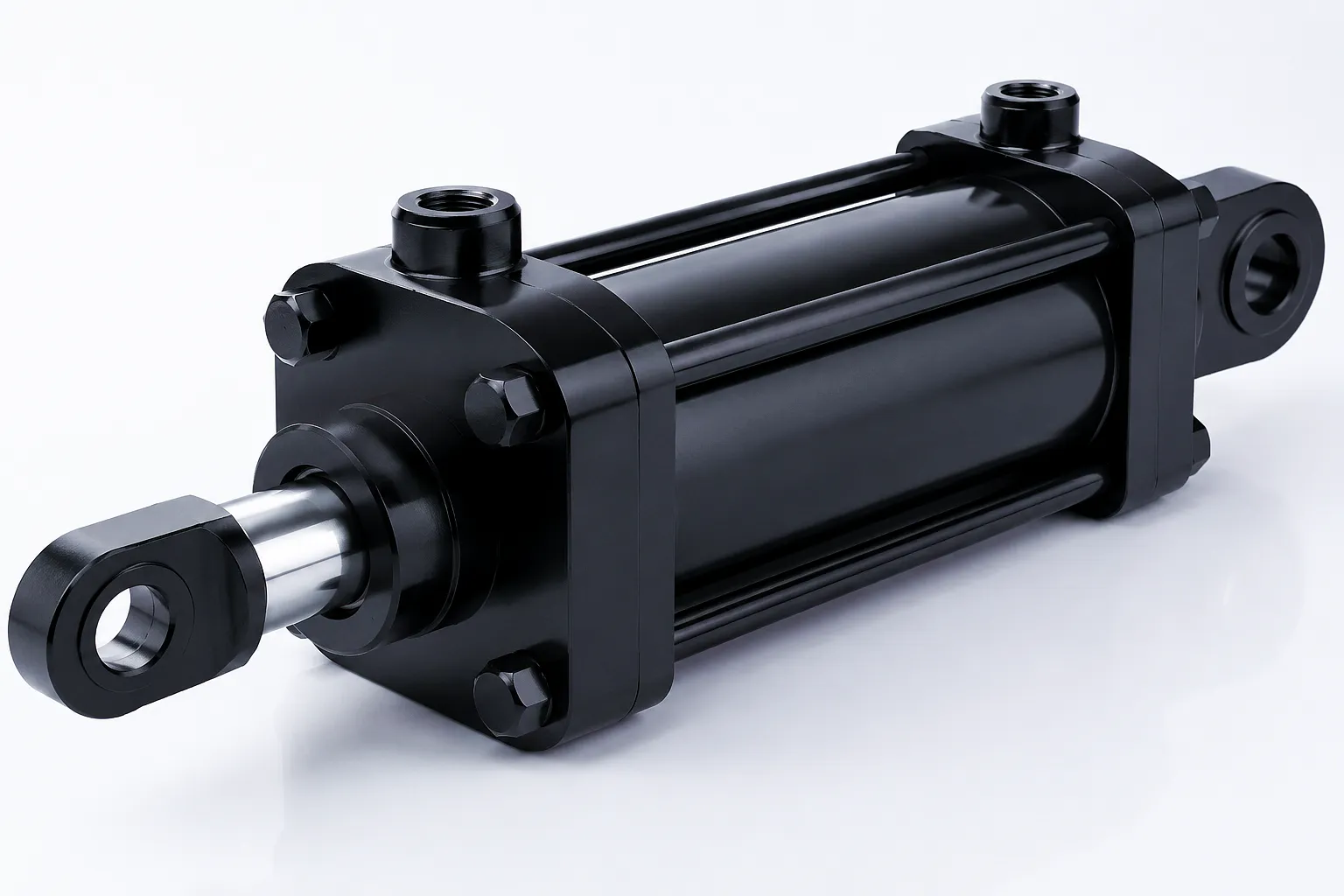
Ever Power operates a vertically integrated hydraulic cylinder manufacturing facility where every stage of production — from raw steel tube procurement and barrel honing to rod chrome plating, seal assembly, and pressure-test certification — is performed under one roof and governed by an ISO 9001:2015 quality management system. This integration eliminates the supplier variability that plagues sourcing from trading companies, ensuring that the cylinder you order to replace a machine-critical unit after 10 years of service carries precisely the same bore tolerance, seal specification, and surface finish as the original. For UK buyers managing spare-parts supply chains across multi-site manufacturing operations, this consistency is a meaningful procurement advantage that reduces engineering risk and downtime cost.
Ever Power’s customisation capability spans bore diameters from 25mm to 500mm, stroke lengths from 50mm to 8,000mm, operating pressures to 350 bar, and a full range of mounting configurations including clevis, trunnion, foot-mount, and spherical-eye designs. Non-standard port sizes, internal or external position sensors, special seal materials for aggressive fluid environments, and surface treatments beyond standard hard chrome — including HVOF WC, electroless nickel, and PTFE impregnated coatings — are all available. Technical drawings are reviewed by qualified engineers, prototypes are pressure-tested and fatigue-cycled before production release, and first-article inspection reports are provided as standard on initial orders.
Customer Success Story: Sheffield Steel Fabricator Eliminates Actuator Failures Across Three Press Lines
A Sheffield-based structural steel fabricator operating three 600-tonne hydraulic press-brake lines was experiencing repeated seal failures and uncontrolled external leakage on the existing OEM-supplied clamp cylinders. The root cause analysis identified inadequate chrome plating thickness on the piston rods — just 8 µm, well below the 18–25 µm range specified in the original design — combined with a seal compound that degraded in the facility’s high-ambient-temperature summer conditions. Each cylinder replacement required a four-hour press shutdown and consumed two maintenance engineers, generating an average of 11 unplanned production stoppages annually across the three lines — representing over £180,000 per year in lost throughput and emergency maintenance cost at the facility’s internal accounting rates.
The engineering team approached Ever Power for a direct-replacement solution that addressed the documented failure modes without requiring mechanical modifications to the press frames. Ever Power’s application engineers reviewed the original drawings and proposed a redesigned cylinder incorporating 45# rod steel induction-hardened to HRC 58, hard-chrome plated to 22 µm with a Vickers hardness of 900 HV, and a premium FKM/PTFE composite seal set rated to 120°C continuous duty. Bore tolerance was held to H7/g6 — tighter than the original specification — using a CNC-controlled honing process that ensures consistent oil film retention without excessive clearance.
The replacement cylinders were installed during a scheduled weekend maintenance window, with no modification to the hydraulic circuitry or mounting arrangements. Over the subsequent 14 months of continuous production operation, the three press lines recorded two minor maintenance interventions — both planned — and zero unplanned seal-related stoppages. The fabricator’s maintenance manager calculated a net positive return on the upgrade investment within the first seven months of operation, and a framework supply agreement with Ever Power was established for routine replacements across the wider machine estate.
Asiakasarvostelut
“The rod surface finish and chrome thickness on Ever Power’s replacement units are noticeably superior to what we had previously. We specified FKM seals for our high-temperature press environment, and their engineers knew exactly what compound grade we needed without us having to specify it ourselves. Fourteen months in, not a single leak. That’s the first time we’ve gone that long without a seal call-out on that press line.”
“We needed a non-standard bore and stroke combination that our local UK suppliers said would take 16 weeks to source. Ever Power quoted us within 24 hours and delivered certified test-report documentation alongside the units. The dimensional accuracy was within tolerance on every cylinder. Their technical team answered our questions directly and professionally — something you don’t always get when dealing across time zones.”
“We operate mobile elevated work platforms across multiple UK construction sites and the boom angle cylinders we sourced from Ever Power have held up under conditions I wouldn’t have expected from any supplier at this price point. The HVOF coating we specified for our coastal sites has shown no corrosion at 18 months. I’ll be specifying Ever Power for our next fleet refurbishment cycle without hesitation.”
Usein kysytyt kysymykset
Addressing common questions from UK industrial engineers and procurement teams
How do I know whether a hydraulic cylinder or an electric linear actuator is right for my heavy industrial application in the UK? +
The decision comes down to force requirement, precision target, and environmental conditions. If your application demands forces above 150 kN, operates in high-temperature or shock-loaded environments, or requires static load holding without electrical power, a hydraulic cylinder is almost always the right solution. If precision below ±0.1 mm and energy efficiency above 85% are the primary drivers — and maximum force stays within 100–150 kN — an electric actuator may serve better. Many UK plants in Sheffield and Birmingham use hydraulic cylinders precisely because their force demands rule out electric alternatives entirely.
What is the typical price or cost difference between a custom hydraulic cylinder and an equivalent electric linear actuator for a UK heavy press application? +
For forces above 200 kN, a hydraulic cylinder is consistently less expensive than an equivalent-force electric actuator because roller-screw units at that load rating carry significant cost premiums and still require a servo drive, encoder, and controller. A custom hydraulic cylinder in the 150–300 kN range from Ever Power typically quotes at a fraction of an equivalent roller-screw electric actuator’s system cost — though exact pricing depends on bore, stroke, sealing specification, and surface treatment. Contact [email protected] with your application specifications for a detailed quotation.
Where can I find a reliable UK-friendly hydraulic cylinder supplier who can quote custom bore and stroke sizes for my manufacturing plant? +
Ever Power supplies custom hydraulic cylinders to UK buyers through a direct export model, handling all export documentation, pressure test certification, and freight forwarding to UK ports. Technical quotations are typically returned within one to two business days. Email [email protected] with your bore diameter, stroke, operating pressure, fluid type, seal material requirement, and mounting configuration, and our engineers will return a detailed technical proposal and commercial offer.
Which type of actuator is better for boom cylinder applications on aerial work platforms operating under UK LOLER regulations? +
Hydraulic cylinders are universally preferred for AWP boom actuation under LOLER (Lifting Operations and Lifting Equipment Regulations 1998) because they can hold the extended boom and platform load passively through a counterbalance or check valve, without requiring any electrical power. An electric actuator holding a loaded boom at height requires a motor brake — a mechanically and electrically more complex solution with more failure modes. Our range includes boom angle cylinders specifically engineered for aerial platform duty, available in custom stroke lengths to match any OEM frame specification.
How long does it typically take to get a custom hydraulic cylinder delivered to a factory in Birmingham or Sheffield when ordering from Ever Power? +
Lead times for custom hydraulic cylinders from Ever Power vary depending on bore diameter, stroke, and the complexity of any special surface treatment or sealing specification. Standard-range bore/stroke combinations typically ship within three to four weeks from order confirmation. Non-standard configurations requiring special material procurement or bespoke machining typically run five to seven weeks. Air freight is available for urgent orders where downtime cost justifies the premium, delivering to Birmingham or Sheffield within two to three working days of dispatch.
What should I check when comparing quotes from different hydraulic cylinder suppliers to ensure I am getting the right quality for a safety-critical UK industrial application? +
Request the following from any supplier you are evaluating: chrome plating thickness specification and hardness (should be 18–25 µm, 850–950 HV minimum), bore surface finish Ra value (should be Ra 0.2–0.4 µm for honed cylinders), seal brand and compound specification, material certificates for barrel tube and rod steel, and a pressure test protocol — including test pressure, hold duration, and leak acceptance criteria. A supplier who cannot provide all of these without hesitation is not appropriate for safety-critical UK industrial use. Ever Power provides all of the above as part of its standard quality documentation package.
Ever Power engineers are available to review your application requirements and return a detailed technical proposal. No generic catalogue — your bore, your stroke, your specification.
© Ever Power Industrial Hydraulics · Hydraulic Cylinder Specialists · Serving UK Industrial Markets
gzl:n muokkaama
 Finnish
  English
  Italian
  Portuguese
  Dutch
Dutch  Swedish
  Danish
  Polish
  Hindi
Hindi  Kazakh
  Turkish
  Ukrainian
  Romanian
  Spanish
  German
  Russian
  Korean
  Japanese
  Vietnamese
  Thai
Thai  Indonesian
  Malay
Malay  French
  Greek
Greek