
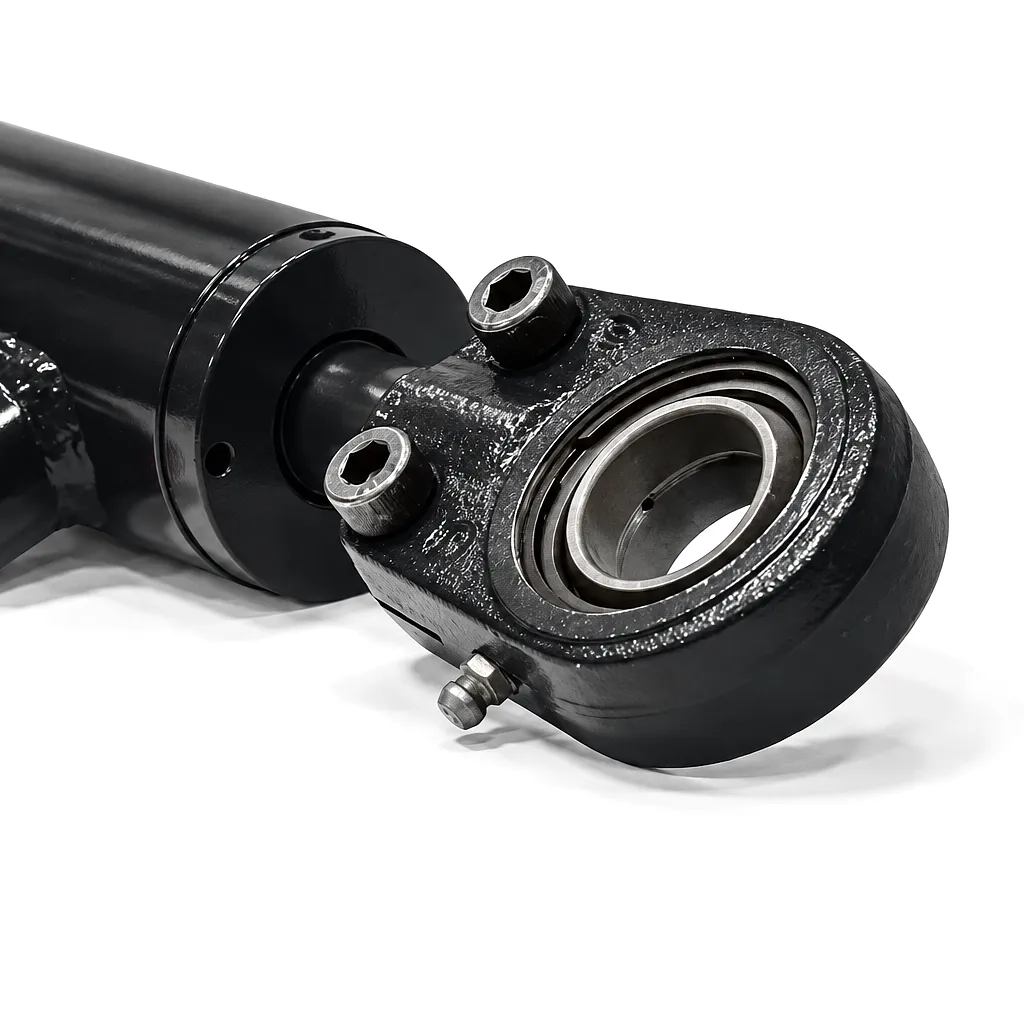
 Every plant manager who has watched a production line go down because of a failed hydraulic cylinder knows the pit-of-the-stomach feeling that follows. The question that comes immediately after — “do we order OEM or go aftermarket to get back up faster?” — is deceptively complicated. Surface-level, it looks like a simple price comparison. In practice, it is a layered engineering, financial, and operational risk calculation that carries consequences well beyond the component cost printed on an invoice.
Defining OEM and Aftermarket in the Context of Hydraulic Cylinders
The term OEM — Original Equipment Manufacturer — refers to hydraulic cylinders produced either by the machine builder themselves or by a specialist supplier working to that builder’s exact engineering drawings, tolerances, and material specifications. When you order an OEM hydraulic cylinder, you are sourcing a component that was designed in concert with the machine it serves. The bore dimensions, stroke length, mounting geometry, seal compound, chrome layer thickness, and pressure ratings are all validated against the complete system, not in isolation.
Aftermarket hydraulic cylinders, by contrast, are produced by third-party manufacturers who reverse-engineer or approximate the original specification. Quality within this category spans an enormous range. At one end sit precision aftermarket suppliers — often ISO 9001-certified operations who use comparable materials and rigorous dimensional inspection — delivering components that perform comparably to OEM in many applications. At the other end sit low-cost catalogue replacements built to loose tolerances with cheaper sealing materials and minimal metallurgical investment, components that look right in a photograph but behave differently under sustained hydraulic load.
This distinction matters enormously in regulated industries. UK HSE (Health and Safety Executive) guidelines on pressure systems and lifting equipment maintenance require documented evidence of component suitability. An aftermarket cylinder that lacks material certifications, pressure-test records, or traceable dimensional inspection data can create compliance gaps that expose operators to enforcement action — a risk entirely separate from whether the part works in the short term.
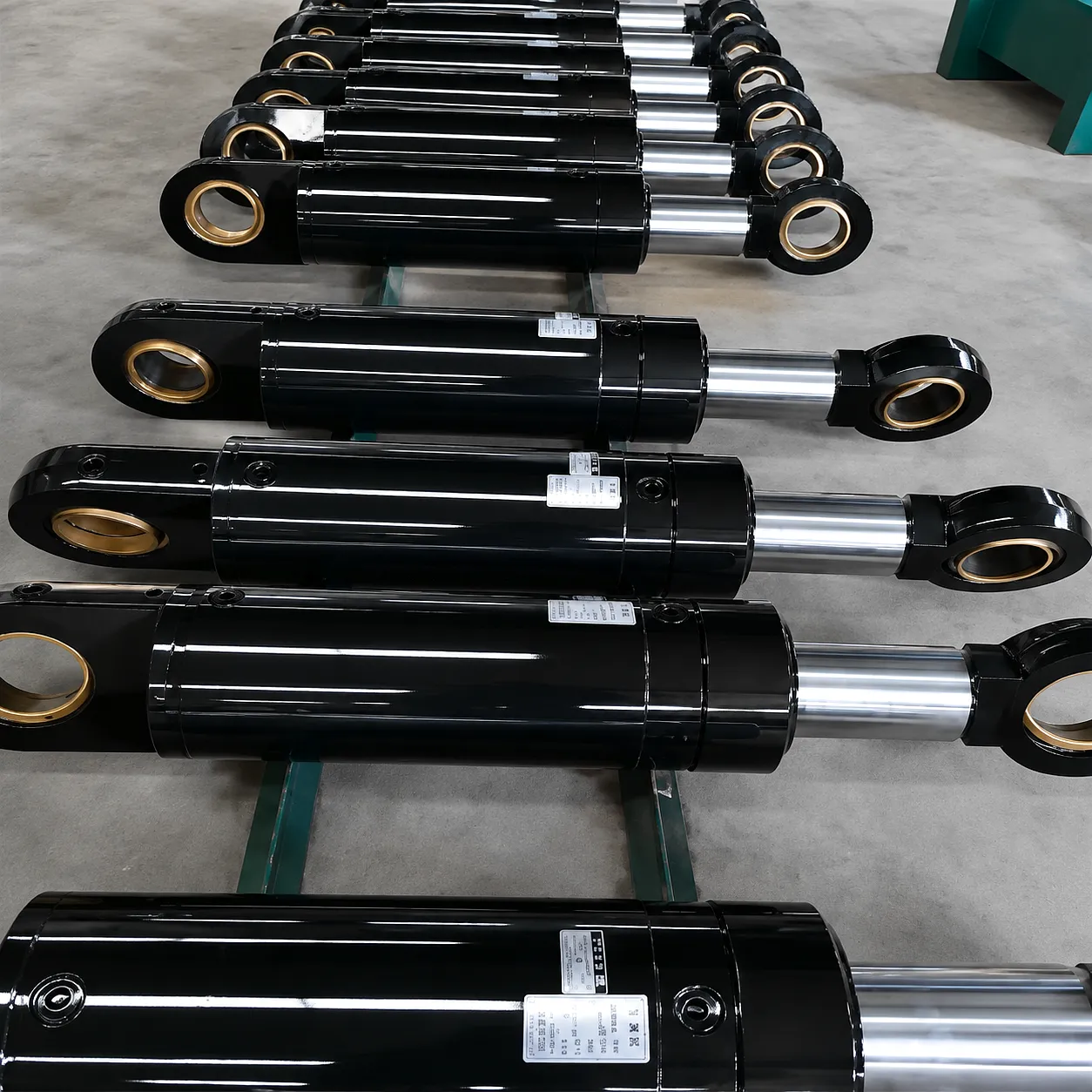
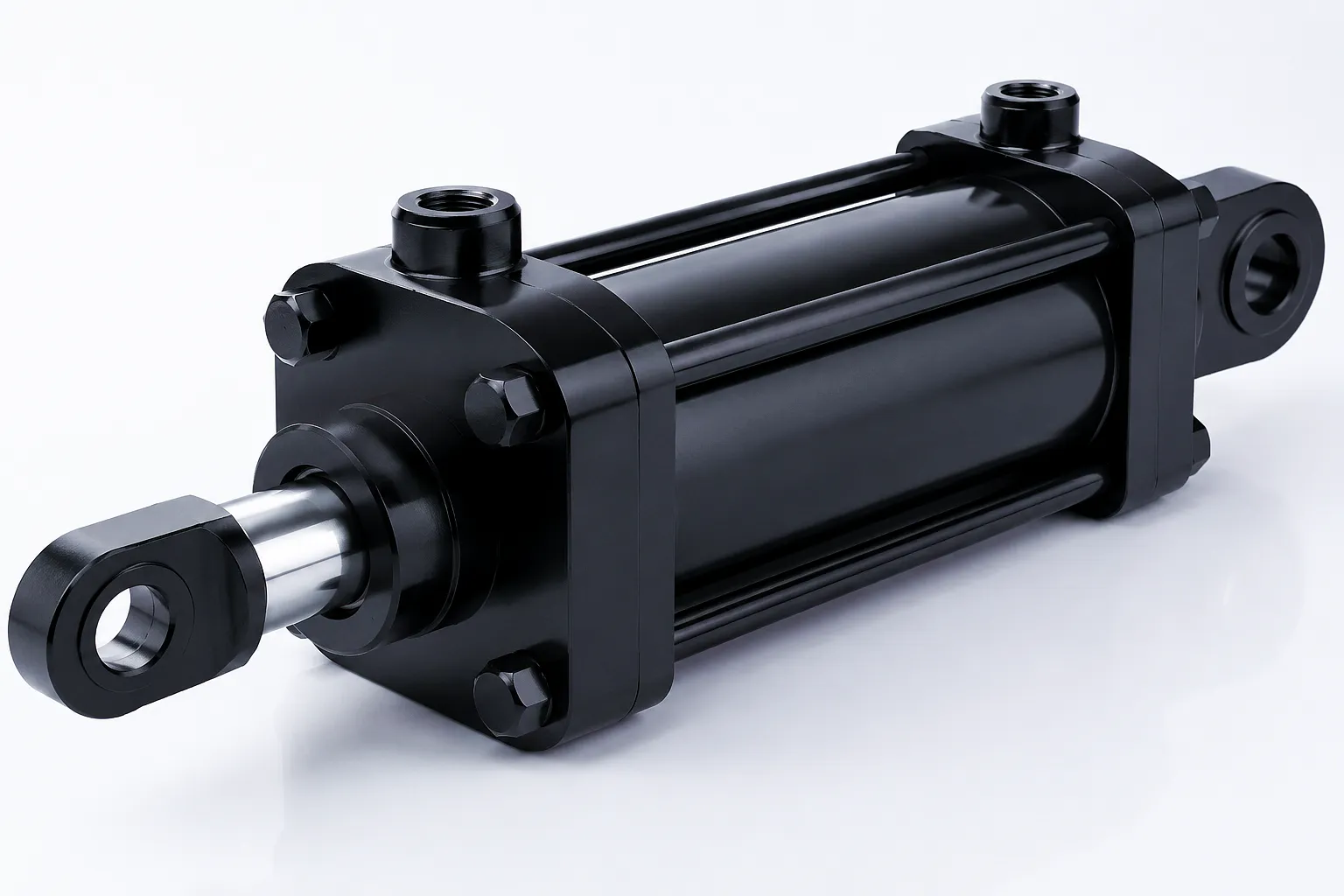
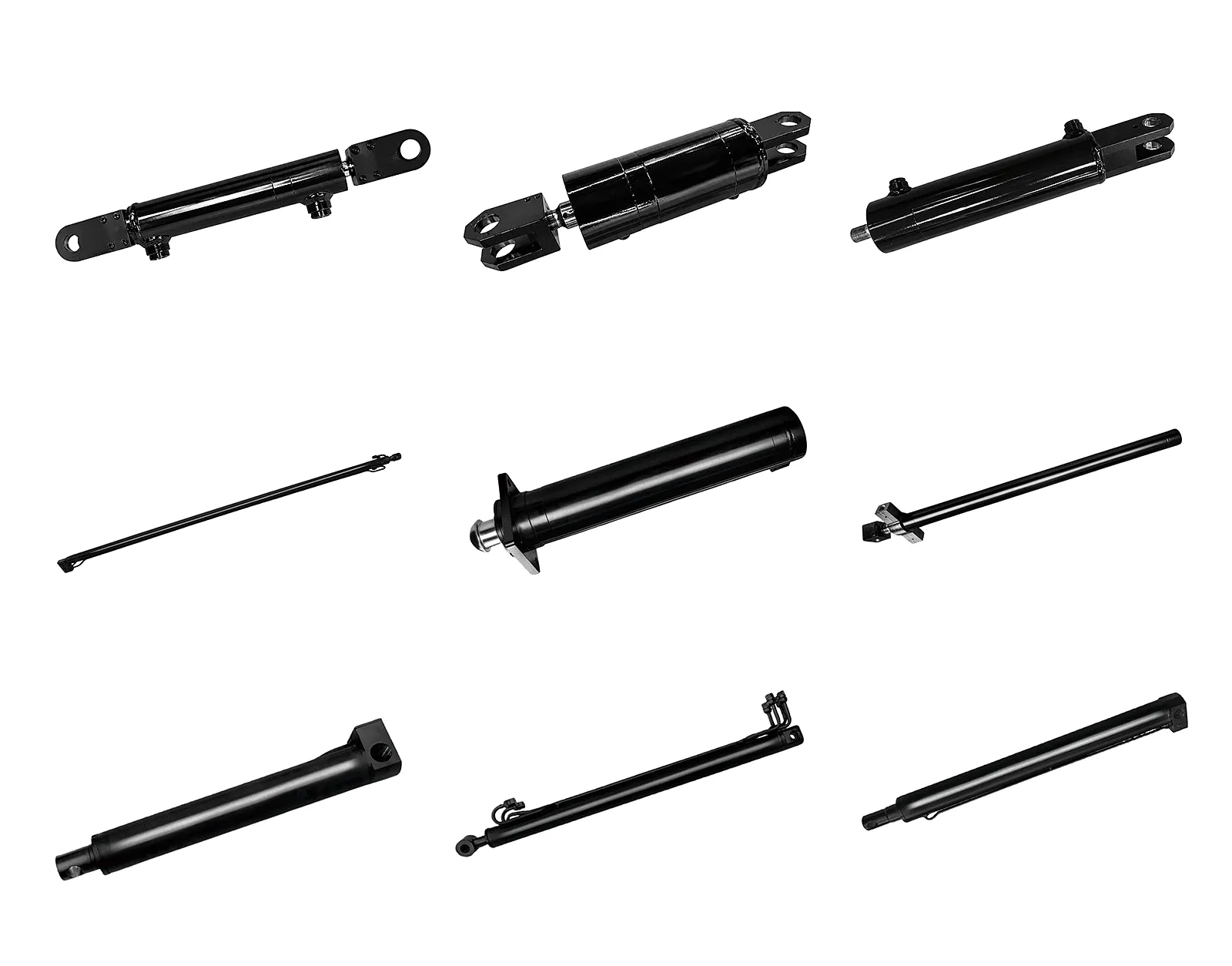
Folding Boom Angle Cylinder
1458mm stroke, engineered for aerial work vehicles. Full OEM-grade traceability and precision honing to H8 bore tolerance.
Aerial Platform Main Boom Angle Cylinder
555mm stroke, designed for main boom articulation systems. Rated for demanding UK aerial platform operating cycles and conditions.
Risk Profile: Where OEM and Aftermarket Hydraulic Cylinders Diverge
Risk in hydraulic cylinder replacement is rarely catastrophic and immediate — it tends to be cumulative and insidious. A poorly specified aftermarket hydraulic cylinder may function acceptably under normal operating conditions for months before seal degradation, bore wear, or chrome layer delamination surfaces as a field failure. By that point, a Birmingham automotive press operator or a Sheffield structural steel fabricator may have logged hundreds of production hours on a component that was slowly deteriorating, raising the question of whether secondary damage to seating faces, hydraulic manifolds, or connected mechanical linkages has occurred.
Seal Compound Mismatch
Aftermarket seals may use NBR where OEM specifies FKM (Viton). In high-temperature or chemically aggressive environments, this leads to premature swelling and hydraulic fluid bypass — a failure mode that is slow to diagnose and expensive to rectify.
Chrome Layer Thickness Variance
OEM rod chrome specification typically sits between 0.020mm and 0.035mm hard chrome plating. Budget aftermarket suppliers may plate to half that thickness, reducing wear life by 40–60% in abrasive outdoor environments such as those found in UK agricultural or civil engineering applications.
Compliance Documentation Gap
UK PSSR 2000 (Pressure Systems Safety Regulations) requires that components in regulated pressure systems carry material certification. Low-cost aftermarket hydraulic cylinders commonly arrive without mill certificates or pressure-test records, leaving the end user holding a compliance liability.
The risk calculus also changes substantially depending on the application criticality. A hydraulic cylinder on an agricultural baler in Lincolnshire has a very different failure consequence profile than one on a cherry picker or an aerial work platform operating near live infrastructure. In safety-critical lifting and access applications — regulated under LOLER (Lifting Operations and Lifting Equipment Regulations 1998) — using a replacement hydraulic cylinder that cannot be traced to a verified test specification creates regulatory exposure that no procurement saving can offset. This is the risk dimension that aftermarket catalogues rarely address in their marketing.
Material Specifications: The Hidden Differentiator in Hydraulic Cylinder Quality
Most procurement conversations focus on dimensional specification — bore diameter, stroke length, mounting centres — because these are the measurements that appear on engineering drawings and are relatively easy to verify with basic hand tools on arrival. Material specification, by contrast, is almost impossible to audit without laboratory analysis, and it is precisely here that the gap between OEM and low-tier aftermarket hydraulic cylinders is widest and most consequential over a component’s service life.
Sylinterin tynnyri
Cold-Drawn ST52 Seamless Steel
Honed to Ra 0.4 µm internal surface finish. Consistent wall thickness critical for uniform pressure distribution. OEM grades carry EN 10210 certification.
Männänvarsi
42CrMo4 Alloy Steel, Hard Chrome Plated
Chrome layer: 0.020–0.035mm, hardness 850–1000 HV. Ground and superfinished to Ra 0.2 µm. Induction hardening optional for high-side-load applications.
Sealing System
Hallite / Parker FKM Compound
Operating range: -30°C to +200°C. Chemically compatible with mineral oil, bio-hydraulic fluid, and water-glycol. Essential for UK outdoor plant where temperature swings are severe.
End Caps & Mounts
GGG50 Nodular Cast Iron / Forged Steel
Machined to ISO 3320 port thread standards. Weld-on, flanged, or trunnion configurations. Certified tensile and yield strength data available on request.
Cost Analysis: Unit Price Is Only the Beginning
The aftermarket purchase price advantage is real and can be substantial — a hydraulic cylinder available as OEM at £1,800 might be sourced aftermarket for £700 to £1,100. For a plant with a tight maintenance budget, that differential looks compelling in a spreadsheet. The problem is that a standard procurement spreadsheet captures unit cost and nothing else. A complete total cost of ownership (TCO) model for hydraulic cylinder replacement needs to account for at least four additional cost categories that the initial purchase price completely ignores.
| Cost Category | OEM Cylinder | Premium Aftermarket | Budget Aftermarket |
|---|---|---|---|
| Unit Purchase Price (indicative) | £1,500–£2,200 | £900–£1,300 | £400–£750 |
| Expected Service Life (typical hydraulic application) | 5–8 years | 3–6 years | 1–3 years |
| Seal Failure Frequency | Low (1–2 per lifecycle) | Moderate (2–4 per lifecycle) | High (4–8+ per lifecycle) |
| Average Unplanned Downtime Cost per Failure (UK MFG) | £800–£2,000 | £800–£2,000 | £800–£2,000 |
| Compliance Documentation Included | ✓ Full traceability | △ Varies by supplier | ✗ Rarely included |
| Pressure Test Certification | ✓ 1.5x rated pressure | △ Often available | ✗ Rarely available |
| Estimated 5-Year TCO (medium-duty press cylinder) | £2,100–£3,400 | £2,600–£5,200 | £4,800–£9,000+ |
TCO estimates include unit cost, seal replacement labour (£65–£95/hr UK avg), one unplanned failure event per replacement cycle, and disposal. Figures are indicative and vary by application and region.
Lead Time Reality: When Speed Matters More Than Price
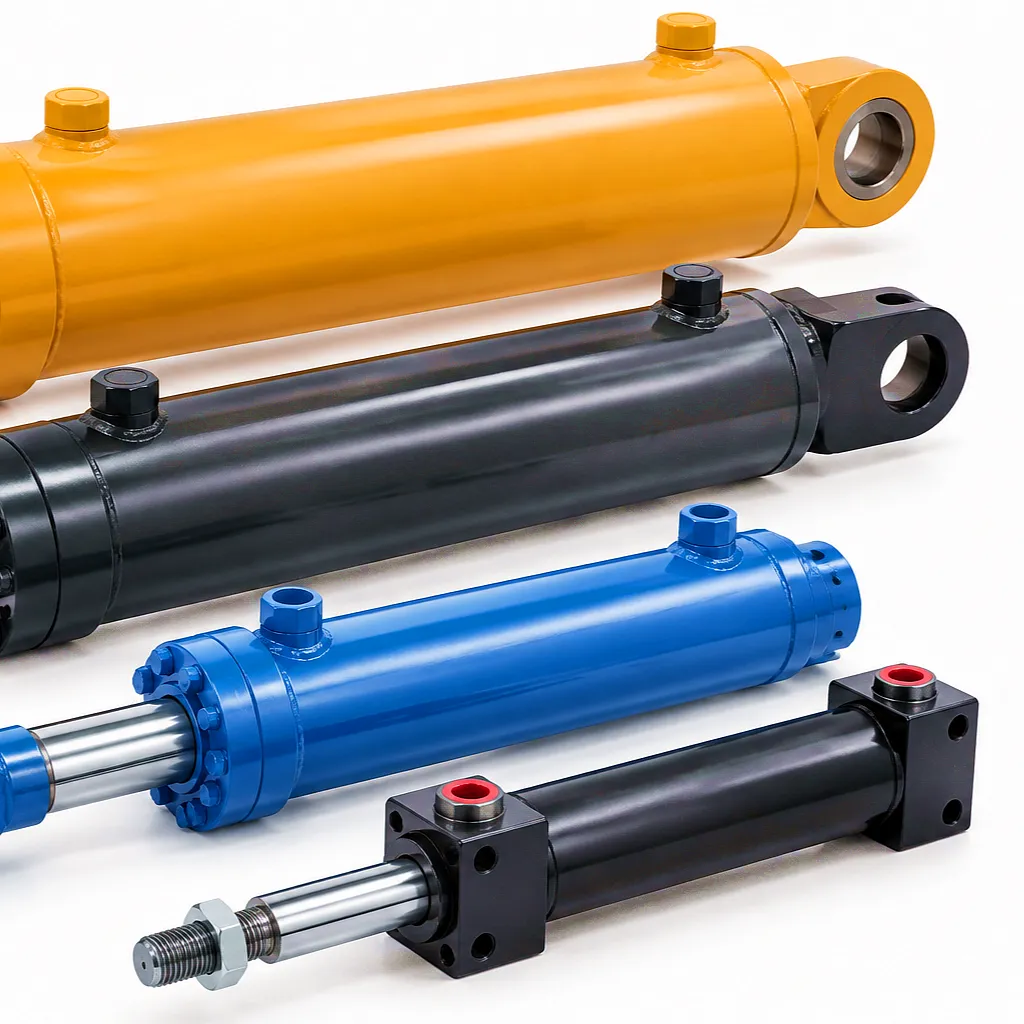 Lead time is the dimension of this comparison that changes most dramatically depending on context, and it is the one that procurement guides least often address with specificity. The conventional assumption — that aftermarket hydraulic cylinders are always faster to source than OEM — is only partly true, and in several common scenarios it is outright wrong. Understanding this requires separating standard-bore catalogue cylinders from non-standard or purpose-engineered designs, because the sourcing dynamics for each category are almost opposite.
For standard metric bore cylinders — 40mm, 50mm, 63mm, 80mm, 100mm — aftermarket catalogues genuinely can deliver ex-stock from UK distribution centres within 24 to 72 hours. Several well-stocked industrial distributors operating from Birmingham, Coventry, and Manchester maintain substantial inventories of common ISO 6020-2 and ISO 6022 format cylinders. This speed advantage is real and matters acutely when a production line is down and every hour of delay has a direct cost.
The dynamic inverts sharply for non-standard bore sizes, long strokes, unusual mounting configurations, or cylinders that incorporate integrated sensors, special coatings, or non-metric thread specifications. In these cases — which represent a large proportion of the cylinder population on specialised industrial plant — OEM lead times from a properly tooled specialist like Ever Power are often comparable to or faster than aftermarket alternatives. The aftermarket supplier must fabricate to order in any case, and without access to the original engineering drawings, they must also invest time in reverse engineering or dimensional verification before production can begin.
Standard Bore, Ex-Stock
1–3 days
Aftermarket advantage: genuine, applies to ISO standard configurations from UK stock locations.
Semi-Custom, Made to Order
3–6 weeks
OEM and premium specialist suppliers comparable. Ever Power targets 15–20 working days for most custom bore/stroke combinations.
Fully Engineered Special
6–14 weeks
Both OEM and aftermarket require full engineering review. Ever Power provides preliminary DXF approval within 72 hours of enquiry receipt.
Industrial Application Scenarios: OEM or Aftermarket — Choosing Correctly by Context
The decision framework changes substantially depending on the application, the failure consequence, and the regulatory environment. These four scenarios illustrate how that framework applies in practice across UK industry.
🚘 Automotive Body Press — Birmingham, West Midlands
Stamping presses operating on multi-shift patterns in Birmingham’s automotive supply chain require hydraulic cylinders with tight bore tolerances to maintain consistent panel dimensional accuracy. Aftermarket cylinders with bore variation beyond ±0.02mm introduce forming inaccuracies that cascade into quality rejects. OEM or equivalent-grade precision aftermarket is the correct specification. The cost of a single quality escape dwarfs any procurement saving on the replacement cylinder.
🏗 Aerial Work Platform — Construction Sites, UK-Wide
Hydraulic cylinders on boom lifts and scissor platforms operating under LOLER are subject to thorough examination regimes. Replacement hydraulic cylinders must carry documentation demonstrating suitability for the original rated working load. A budget aftermarket cylinder without pressure-test certification or material traceability fails this requirement and prevents the machine from passing examination. Ever Power supplies full documentation packages as standard for all aerial platform hydraulic cylinder orders destined for UK use.
🌿 Agricultural Baler — Lincolnshire and East Midlands Arable Farms
Round balers and straw balers operate seasonally but intensively during harvest windows. A hydraulic cylinder failure during a July or August harvest in Lincolnshire has a very different consequence than the same failure in January. Sensible procurement strategy for this sector combines an OEM or high-quality aftermarket primary replacement installed before the season with a lower-cost catalogued spare held on-farm for emergency mid-harvest use. The emergency spare does not need OEM-grade longevity — it needs to get the machine through the remaining season.
⚖ Steel Fabrication Press — Sheffield, South Yorkshire
Sheffield’s structural steel and specialist alloy fabrication sector operates some of the highest pressure hydraulic forming equipment in UK manufacturing. Cylinders in these applications regularly operate at 350–400 bar working pressure, with cyclic loading that generates significant fatigue stress on barrel welds and rod-to-piston connections. Material certification to EN 10204 3.1 or 3.2 is not optional — it is contractually required by the machine builders and their insurers. Aftermarket sourcing that cannot provide this certification level is simply not eligible, regardless of price.
Hydraulic Cylinder Technical Performance Parameters
The table below summarises the key technical parameters that should appear in any competent hydraulic cylinder specification, whether OEM or aftermarket. Procurement teams should use this as a minimum verification checklist when evaluating replacement cylinder quotes. Any supplier unable to provide documented values for each parameter should be treated with significant caution, regardless of where they fall on the OEM/aftermarket spectrum.
| Parametri | Specification / Range | Standard / Reference |
|---|---|---|
| Reiän halkaisija-alue | 25mm – 500mm (custom up to 800mm) | ISO 6020-1 / ISO 6022 |
| Stroke Range | 50mm – 8,000mm (engineered) | Application-defined |
| Nimellinen käyttöpaine | 160 – 400 bar (standard range) | ISO 4413 |
| Test Pressure | 1.5× rated working pressure (minimum) | ISO 10100 |
| Barrel Internal Surface Finish | Ra ≤ 0.4 µm (honed) | ISO 286-1 |
| Rod Surface Finish | Ra ≤ 0.2 µm (ground and superfinished) | ISO 286-1 |
| Kromikerroksen paksuus | 0.020 – 0.035mm hard chrome (OEM grade) | ISO 6158 |
| Chrome Hardness | 850 – 1000 HV | ISO 6507 |
| Operating Temperature Range | -30°C to +100°C (FKM seals: -20°C to +200°C) | Seal compound-dependent |
| Tynnyrin materiaali | ST52.3 / E355 seamless cold-drawn tube | EN 10210 / DIN 2391 |
| Piston Rod Material | 42CrMo4 / Ck45 (application-selected) | EN 10083 |
| Mounting Configurations | Clevis, flange, trunnion, foot, earring, tie-rod | ISO 8132 |
| Material Certification Level | EN 10204 2.2, 3.1 or 3.2 (application-specified) | EN 10204 |
Customer Success Story · Sheffield, South Yorkshire
How a Sheffield Structural Steel Fabricator Eliminated Unplanned Downtime by Switching to Ever Power OEM-Grade Hydraulic Cylinders
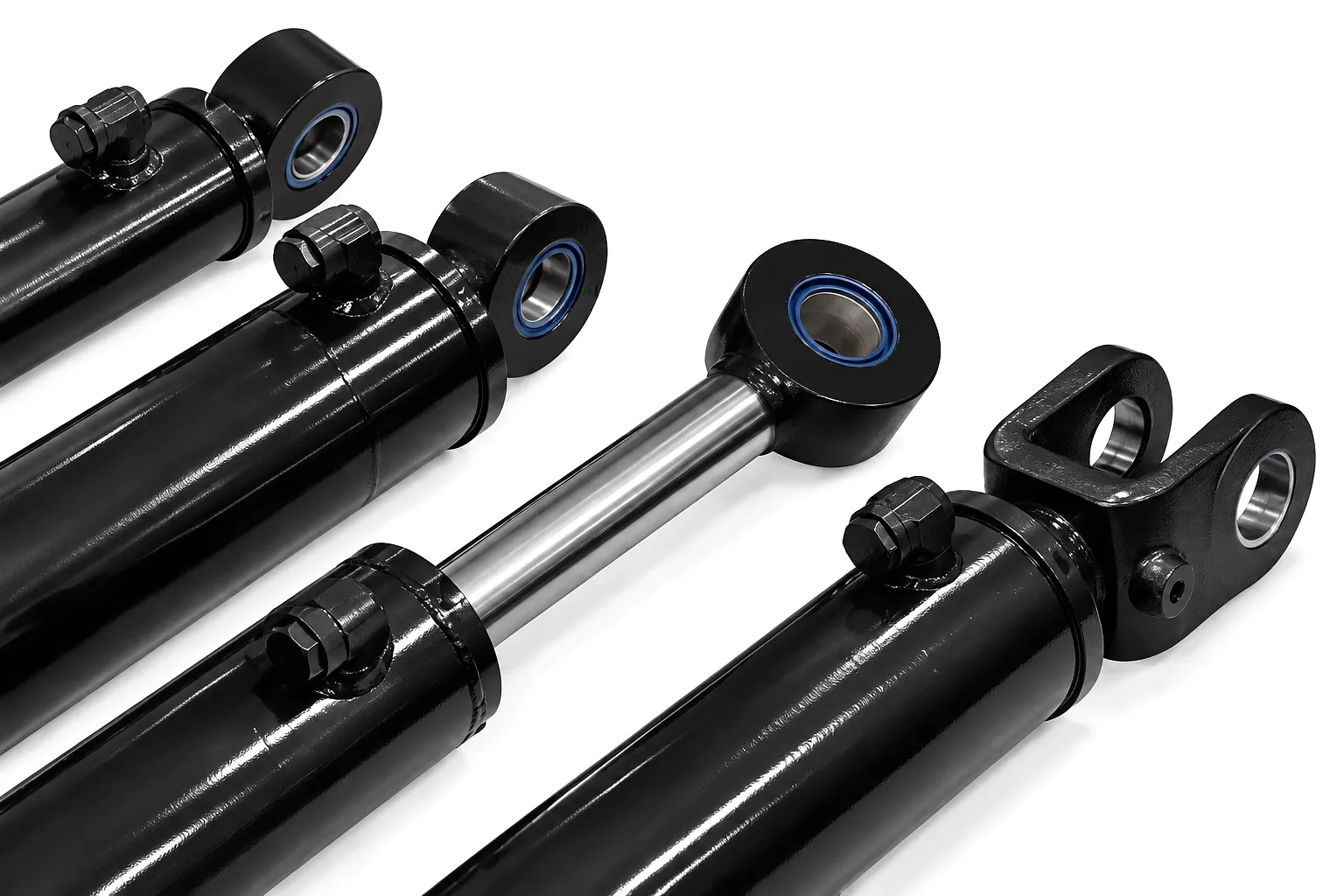 Meridian Steel Components Ltd, a mid-sized structural fabrication business operating three hydraulic press lines from their facility near Meadowhall in Sheffield, had been managing a persistent maintenance problem for eighteen months. Their three main forming presses — each running a pair of 160mm bore, 800mm stroke tie-rod hydraulic cylinders at 280 bar working pressure — were experiencing seal failures on a frequency that their maintenance manager described as “once every fourteen weeks on average across the fleet.” The cylinders had been sourced from a UK-based aftermarket distributor at approximately £680 each, which had appeared cost-effective at time of purchase.
The true cost, once the maintenance team began tracking failure data properly, was far higher. Each seal failure required a planned four-hour press outage for replacement, plus an additional 90 minutes of hydraulic fluid cleaning and system recommissioning. At an estimated production value of £420 per hour on that press line, a single seal failure event was costing Meridian approximately £2,100 in lost output, before the cost of seals, labour, and fluid disposal. Across six failures per year, the maintenance problem was responsible for over £12,600 in annual production losses — equivalent to sourcing eighteen replacement aftermarket cylinders at the original purchase price, just in lost production.
Following a direct enquiry to Ever Power in March 2024, the engineering team identified the root cause within the first technical exchange: the aftermarket cylinders were using NBR-70 seals in a press that ran a synthetic ester-based hydraulic fluid at fluid temperatures reaching 82°C under heavy loading. The seal compound was fundamentally incompatible with the operating chemistry. Ever Power engineered a direct replacement cylinder to the same dimensional specification, specifying FKM V80 seal compound throughout and upgrading the rod chrome layer from the original 0.018mm to 0.028mm to address the accelerated bore wear pattern also evident in the failed components.
Six cylinders were delivered to Sheffield within 22 working days of order confirmation, complete with EN 10204 3.1 material certificates, CMM dimensional reports, and full hydrostatic test records at 420 bar (1.5× the 280 bar rated pressure). Fitted across the three press lines in June 2024, the cylinders have completed over 14 months of continuous three-shift production without a single seal failure at time of writing. The maintenance manager’s assessment was direct: the saving on seal replacement alone had recovered the price premium over aftermarket alternatives within seven months. The production reliability gain was, in his words, “not really quantifiable in a spreadsheet — it changes how you plan your entire week.”
What UK Customers Say About Ever Power Hydraulic Cylinders
“The dimensional accuracy on the cylinders we received was genuinely impressive — every rod diameter was within 0.003mm across the entire batch. For our CNC press application, that kind of consistency is what separates a good supplier from a great one. We have not had a single warranty claim in two years of running Ever Power cylinders.”
— Procurement Manager, Precision Press Components Ltd, Birmingham
“We operate a fleet of 34 boom lifts across construction sites in the North West. When we switched our replacement hydraulic cylinder supplier to Ever Power, the first thing we noticed was the documentation quality — every cylinder came with a full 3.1 cert, test record, and dimensional report, which makes our LOLER thorough examination records genuinely complete for the first time. The cylinders themselves have been excellent.”
— Fleet Maintenance Director, Elevation Access Ltd, Manchester
“We run a mixed fleet of agricultural and civil engineering machinery and have been sourcing non-standard cylinders from Ever Power for three seasons. The customisation capability is genuinely differentiating — they handled a 340mm bore, 2,400mm stroke cylinder for a specialist excavator attachment that no UK aftermarket supplier could quote on. Lead time was 19 working days, quality was OEM-comparable, price was very competitive.”
— Technical Director, Broadfield Plant & Equipment, Lincolnshire
Why OEM-Grade Hydraulic Cylinder Specification Delivers Measurable Long-Term Advantage
The case for OEM-grade specification is not purely about avoiding failure — it is equally about what consistent, precision-grade hydraulic cylinders contribute to operational performance over a full maintenance cycle. Across ever power’s UK customer base, the following advantages are consistently identified as the most commercially significant in total-cost-of-ownership reviews conducted at 12-month and 24-month intervals after cylinder replacement.
📈
Extended Mean Time Between Failures
OEM-grade cylinders operating in comparable conditions consistently achieve 2.5 to 3.8 times the seal replacement interval of budget aftermarket equivalents. This directly reduces maintenance labour cost and planned downtime frequency.
📋
Full Regulatory Compliance From Day One
Ever Power documentation packages satisfy UK PSSR 2000, LOLER 1998, and PED 2014/68/EU requirements as supplied. No additional testing or certification procurement required from the customer’s side.
🛠
Dimensional Interchangeability Guaranteed
CMM-verified bore, rod, and mounting dimensions on every cylinder ensure fit without modification. Eliminates the adaptation cost and installation delay that budget aftermarket cylinders occasionally impose when machined to loose tolerance.
🔒
Reduced Secondary Damage Risk
Precision bore finish and controlled seal compression ratios eliminate the micro-scoring that propagates from poorly finished aftermarket barrels into adjacent hydraulic manifold and valve components over time, preventing cascade maintenance costs.
🔗
Supply Chain Predictability
Ever Power maintains production data and tooling for all previously supplied cylinders, enabling rapid repeat orders — typically within 10–14 working days — without re-engineering from scratch. Budget aftermarket suppliers frequently discontinue tooling between orders, forcing redesign on each re-purchase.
Making the Decision: A Practical Framework for UK Procurement Teams
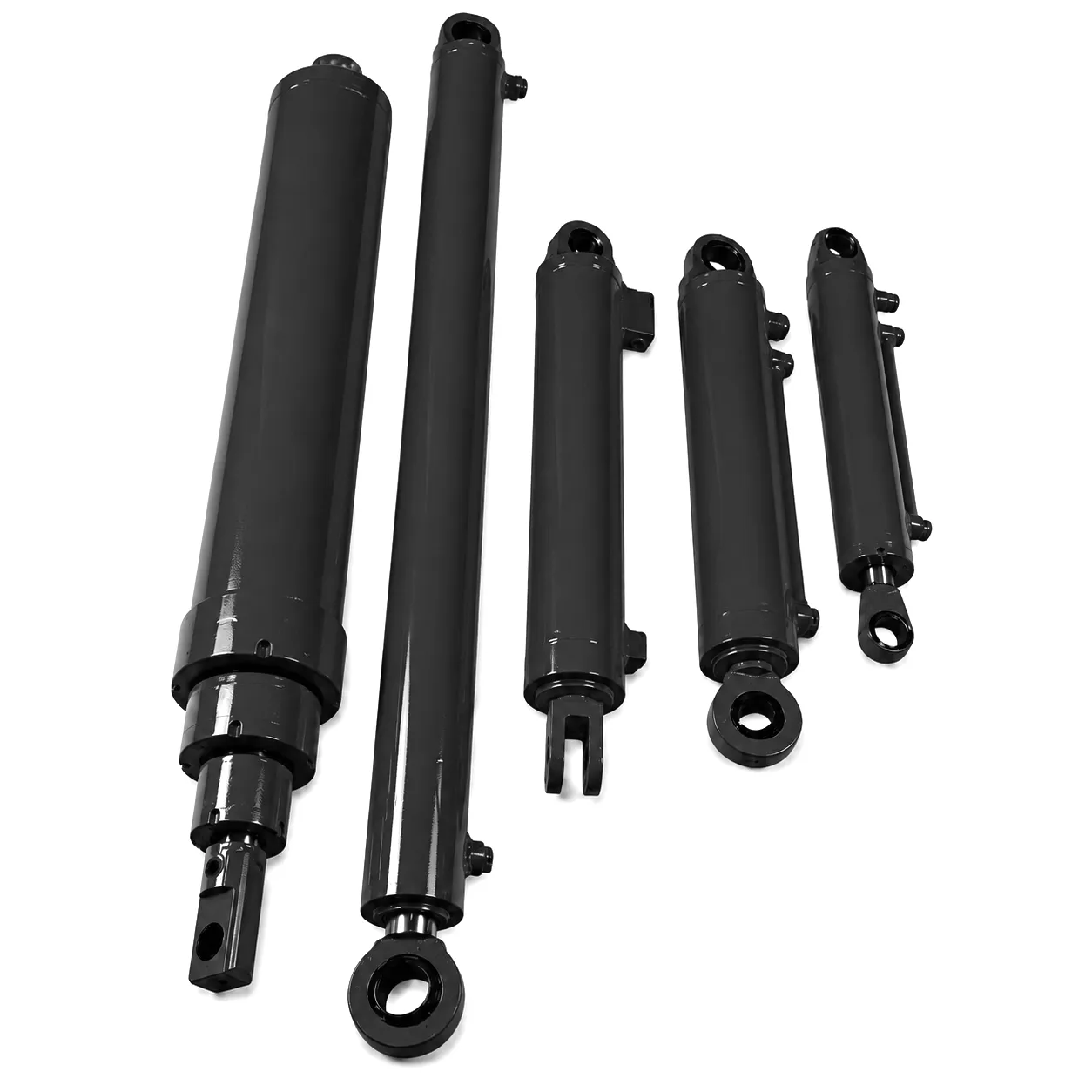
The OEM versus aftermarket hydraulic cylinder decision is not a binary one with a universal right answer. It is a risk-adjusted cost decision that should be taken at the individual application level, with full visibility of the total cost drivers described in this analysis. The framework that works consistently across UK manufacturing is straightforward: assess application criticality, regulatory environment, and documentation requirements first. If any of these point to OEM-grade, that choice should not be compromised by unit purchase price. If the application is non-critical, non-regulated, and uses standard ISO bore dimensions, a well-documented premium aftermarket source offers a genuine cost saving with manageable risk.
Ever Power sits in the segment that resolves the apparent trade-off between these options: OEM-grade precision and full traceability documentation, delivered at lead times and price points that are competitive with premium aftermarket alternatives. For UK procurement teams who need to close that gap, the conversation starts with a direct enquiry.
Usein kysytyt kysymykset
Questions commonly asked by UK plant engineers, fleet managers, and procurement teams.
How much does it typically cost to replace a hydraulic cylinder on an aerial work platform in the UK, and is it cheaper to go aftermarket?▼
Hydraulic cylinder replacement costs for aerial work platforms in the UK vary considerably depending on bore size, stroke, and application. A standard 80mm bore boom lift cylinder supplied aftermarket typically costs £450–£850, while OEM-grade equivalents from a supplier like Ever Power run £900–£1,400 — but include the EN 10204 3.1 material certification and hydrostatic test records required for LOLER compliance. When the cost of compliance documentation, the risk of early failure, and the production consequence of an out-of-service aerial platform are factored in, the aftermarket cost advantage frequently disappears within the first 18 months of service.
Which hydraulic cylinder supplier in the UK can provide EN 10204 3.1 material certification and full pressure test records as standard?▼
Ever Power supplies EN 10204 3.1 mill certificates, CMM dimensional inspection reports, and hydrostatic pressure test records (tested at 1.5× rated working pressure) as standard on all UK-destined hydraulic cylinder orders. This documentation package satisfies the requirements of UK PSSR 2000, LOLER 1998, and PED 2014/68/EU without the customer needing to arrange additional third-party testing. For applications requiring EN 10204 3.2 (independent inspector witness), this can be arranged on request at the quotation stage.
What is the typical lead time for a custom hydraulic cylinder order from a specialist supplier to Sheffield or Birmingham in the UK?▼
For custom hydraulic cylinders, Ever Power targets 15–22 working days from order confirmation to despatch, covering most non-standard bore and stroke combinations. DXF engineering review and preliminary approval typically completes within 72 hours of enquiry submission. Delivery to Sheffield or Birmingham from the Ever Power facility by standard airfreight and road freight runs 5–7 working days, putting total door-to-door time at approximately 3–4 weeks for custom orders. Expedited production slots are available for breakdown emergencies — contact the sales team directly at [email protected] for availability.
Where can I get a quote for OEM replacement hydraulic cylinders for heavy plant operating under UK HSE regulations, and what information do I need to provide?▼
Contact Ever Power directly at [email protected]. To generate an accurate quotation for a regulated application, it helps to provide: bore diameter and stroke length, working pressure and test pressure requirement, mounting configuration (clevis, flange, trunnion, etc.), seal compound requirement if known, material certification level required (EN 10204 2.2, 3.1, or 3.2), and application description. If you have access to the original engineering drawing or a failed cylinder to measure, that information accelerates the process significantly. For standard ISO bore sizes, indicative pricing can often be provided within 24 hours of enquiry.
How do I know if an aftermarket hydraulic cylinder is safe to use in a UK lifting application, and what are the legal requirements?▼
Under LOLER 1998, any hydraulic cylinder used in a lifting application must be demonstrably suitable for the rated working load. The most defensible way to satisfy this requirement is material certification confirming the barrel and rod material’s mechanical properties, plus a pressure test record at a minimum of 1.5× the rated working pressure. A competent aftermarket supplier can provide both. A budget aftermarket supplier who cannot provide either is not a compliant source for a regulated UK lifting application, regardless of the dimensional fit. The HSE takes a risk-based view of component substitution in lifting equipment and has issued prohibition notices in cases where replacement components lacked traceable certification.
What are the risks of using budget aftermarket hydraulic cylinders in a high-cycle industrial press application in Birmingham or Sheffield?▼
In high-cycle press applications — where a hydraulic cylinder may complete 50,000 to 200,000 full strokes per year — the service life differential between OEM-grade and budget aftermarket cylinders is at its most pronounced. Risks include: seal compound incompatibility with the hydraulic fluid specified by the press builder; bore surface finish inadequate to prevent accelerated seal wear under high cyclic loading; chrome layer delamination from poorly controlled electroplating processes causing scoring of mating seal lips; and dimensional drift in end-cap castings that alters port alignment and creates turbulent flow conditions. Any of these failure modes triggers unplanned downtime at a point that cannot be predicted, which is the highest-cost maintenance scenario for any production facility operating to customer delivery commitments.
Ever Power · Precision Hydraulic Cylinders for UK Industry
Birmingham · Sheffield · Manchester · Aberdeen · Nationwide Delivery
gzl:n muokkaama
 Finnish
  English
  Italian
  Portuguese
  Dutch
Dutch  Swedish
  Danish
  Polish
  Hindi
Hindi  Kazakh
  Turkish
  Ukrainian
  Romanian
  Spanish
  German
  Russian
  Korean
  Japanese
  Vietnamese
  Thai
Thai  Indonesian
  Malay
Malay  French
  Greek
Greek