
Description du produit
Description du produit
1. To guarantee stable and reliable quality by advanced machining technology and Reasonable design scheme.
2. the material with better mechanical property to guarantee stronger lifting capacity.
3. Ensure the best product performance by world famous seal kits.
4. Highly improved anti-corrosion and wear resisting property with high-end chrome plating production line.
5.Stroke 900mm-12000mm, up to 8 stages.
6.1. working pressure up to 3500psi.
7. lifting capacity can be 120ton by reasonable lifting way.
8. lifting capacity can be about 300 ton for special mine Hydraulic cylinders.
9.All stage Diameter:
214/191/169/149/129/110/91/72/(53)
(226)/202/179/157/137/118/99/80/63
221/196/172/150/129/110/91/72/(53)
206/182/160/140/120/100/80/63/(46)
Front End Cylinder With Eye
Product details:
Packing and shipping:
FC series is a front-end mounted telescopic cylinder, with top eye mounting and bottom double pin mounting. It is specially designed for those vehicles with a front sloping tipping body.
Suitable to fulfill all tipping requirements for any market, including heavy duty applications, even at the close-to-the-limit climate conditions, offering the most practical and robust front-end tipping cylinder that has ever been made.
Flexible choice load capacity: Minimum 24ton, Maximum 280ton;
Installment Introduction
1.The specifications for all the install screw and self- locking is M16(DIN931.Q8.8)
2.The specifications for grommet is M1730MM.
3.The biggest gap between support and cylinder is 2mm.
4.Make sure the hydraulic cylinder vertically ,up and down 2 parallel shafts when installed.
5.The installation should be greater than the center
distance between the closed hydraulic cylinder
center distance 20mm-30mm.
Six advantages for hydraulic
More secure
Faster unloding speed.
The lifting frequency higher
A stronger ability to adapt to the environment
Lighter
Lift more
| Certification: | GS, RoHS, CE, ISO9001 |
|---|---|
| Pressure: | High Pressure |
| Work Temperature: | High Temperature |
| Acting Way: | Double Acting |
| Working Method: | Straight Trip |
| Structure: | Piston Cylinder |
| Samples: |
US$ 1100/Piece
1 Piece(Min.Order) | |
|---|
| Customization: |
Available
|
|
|---|
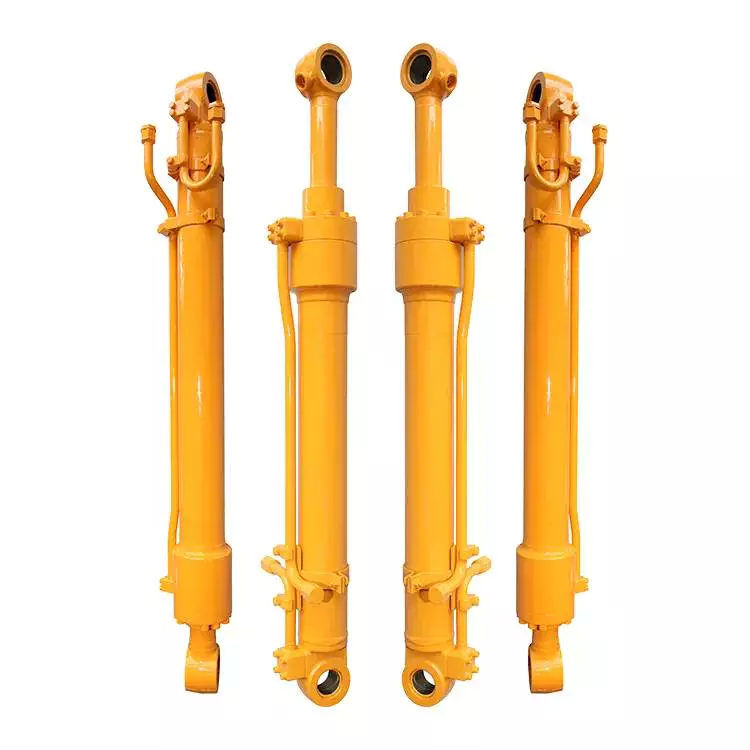
Est-il possible d'installer des vérins hydrauliques sur des équipements existants pour en améliorer le fonctionnement ?
Oui, il est possible d'installer des vérins hydrauliques sur des équipements existants afin d'en améliorer la fonctionnalité et les performances. Cette installation offre plusieurs avantages, notamment une puissance accrue, un meilleur contrôle, une précision améliorée et une plus grande polyvalence. Voici une explication détaillée de la procédure d'installation de vérins hydrauliques sur des équipements existants pour en optimiser la fonctionnalité :
1. Puissance accrue :
L'ajout de vérins hydrauliques permet d'accroître la puissance hydraulique des équipements existants. Grâce à ces vérins, l'équipement peut générer des forces supérieures et supporter des charges plus importantes. Cette puissance accrue lui permet d'accomplir des tâches auparavant difficiles, voire impossibles. Par exemple, l'ajout d'un vérin hydraulique sur une grue peut augmenter sa capacité de levage et lui permettre de manipuler des charges plus lourdes avec une plus grande efficacité.
2. Contrôle amélioré :
Les vérins hydrauliques permettent un contrôle précis du mouvement et du positionnement des équipements. Leur installation offre aux opérateurs un meilleur contrôle de la vitesse, de la force et de la direction du mouvement. L'ajout de distributeurs hydrauliques et d'une centrale hydraulique permet un réglage fin du fonctionnement de l'équipement. Ce contrôle amélioré garantit un fonctionnement plus sûr et plus efficace, réduisant les risques de dommages et améliorant la productivité globale.
3. Précision accrue :
L'installation de vérins hydrauliques sur des équipements existants permet d'améliorer considérablement leur précision. Les systèmes hydrauliques offrent un contrôle précis des mouvements, garantissant ainsi des déplacements fluides et maîtrisés. Cette précision accrue est particulièrement avantageuse pour les applications exigeant un positionnement précis ou des mouvements répétitifs. Par exemple, l'ajout de vérins hydrauliques à un bras robotisé peut optimiser sa précision et sa répétabilité, le rendant ainsi plus adapté aux tâches nécessitant une grande précision.
4. Polyvalence et adaptabilité :
La modernisation des équipements existants grâce à des vérins hydrauliques accroît leur polyvalence et leur adaptabilité. Les systèmes hydrauliques s'intègrent facilement à différents types de machines, permettant ainsi d'exploiter la puissance hydraulique dans diverses applications. La modularité des composants hydrauliques facilite la modernisation et permet aux équipements d'effectuer un plus large éventail de tâches. Cette polyvalence est particulièrement avantageuse dans les secteurs où les équipements doivent s'adapter à l'évolution des besoins opérationnels.
5. Kits de modernisation et personnalisation :
Les fabricants proposent souvent des kits de modernisation comprenant tous les composants nécessaires à l'intégration de vérins hydrauliques sur les équipements existants. Ces kits incluent généralement des vérins hydrauliques, des supports de montage, des flexibles, des raccords, des distributeurs et autres accessoires requis. Ils simplifient la modernisation et garantissent la compatibilité entre les composants hydrauliques et l'équipement existant. De plus, les fabricants peuvent proposer des options de personnalisation afin d'adapter la solution de modernisation aux besoins spécifiques de chaque équipement et application.
6. Solution rentable :
L'adaptation de vérins hydrauliques à des équipements existants peut s'avérer une solution rentable par rapport à l'achat de machines neuves. En tirant parti de la structure et des composants mécaniques de l'équipement existant, le coût global de la modernisation peut être réduit. Cette solution minimise également les temps d'arrêt, car l'équipement n'a pas besoin d'être entièrement remplacé. De plus, l'amélioration des fonctionnalités et des performances résultant de cette adaptation peut se traduire par une productivité accrue et des économies à long terme.
7. Installation professionnelle et expertise :
L'installation de vérins hydrauliques sur des équipements existants requiert souvent l'expertise de professionnels. Collaborer avec des intégrateurs ou des fabricants de systèmes hydrauliques expérimentés garantit une installation correcte, la compatibilité des composants et des performances optimales de la solution. Ces experts sont en mesure d'évaluer l'équipement existant, de recommander les composants hydrauliques adaptés et de mener à bien le processus de modernisation. Leur savoir-faire contribue à l'intégration réussie des vérins hydrauliques et à l'amélioration globale du fonctionnement de l'équipement.
En résumé, il est tout à fait possible d'installer des vérins hydrauliques sur des équipements existants afin d'en améliorer le fonctionnement. Cette modernisation offre de nombreux avantages : puissance accrue, contrôle amélioré, précision renforcée, polyvalence, rentabilité et accès à des kits de modernisation et des options de personnalisation. Grâce à l'installation de vérins hydrauliques, les équipements existants peuvent être mis à niveau pour répondre à l'évolution des besoins opérationnels, prolonger leur durée de vie et optimiser leurs performances globales.
Utilizing Hydraulic Cylinders in Conjunction with Alternative Energy Sources
Hydraulic cylinders can indeed be used in conjunction with alternative energy sources. The versatile nature of hydraulic systems allows them to be integrated with various alternative energy technologies to enhance efficiency, control, and power generation. Let’s explore some examples of how hydraulic cylinders can be utilized alongside alternative energy sources:
- Hydraulic Energy Storage: Hydraulic cylinders can be employed in energy storage systems that utilize alternative energy sources such as renewable sources (e.g., solar or wind) or waste energy recovery. These systems convert excess energy into hydraulic potential energy by pumping fluid into a high-pressure accumulator. When the energy is needed, the pressurized fluid is released, driving the hydraulic cylinder and generating mechanical power.
- Wave and Tidal Energy Conversion: Hydraulic cylinders can be utilized in wave and tidal energy conversion systems. These systems harness the power of ocean waves or tidal currents and convert it into usable energy. Hydraulic cylinders, along with associated pumps and valves, can be used to capture and control the energy from the waves or tides, driving the cylinders and generating mechanical power or producing electricity.
- Hydroelectric Power Generation: Hydraulic cylinders play a crucial role in traditional hydroelectric power generation. However, alternative approaches such as small-scale or micro-hydropower systems can also benefit from hydraulic cylinders. These systems utilize natural or man-made water flows to drive turbines connected to hydraulic cylinders, which then convert the hydraulic energy into mechanical power or electricity.
- Hydraulic Actuation in Wind Turbines: Hydraulic cylinders can be employed in wind turbines to enhance performance and control. For example, hydraulic pitch control systems use hydraulic cylinders to adjust the pitch angle of wind turbine blades, optimizing their aerodynamic performance based on wind conditions. This allows for efficient power generation and protection against excessive wind loads.
- Geothermal Energy Extraction: Geothermal energy extraction involves utilizing the natural heat from the Earth’s interior to generate power. Hydraulic cylinders can be utilized in geothermal systems to control and regulate fluid flow, allowing for efficient extraction and utilization of geothermal energy. They can also be used in geothermal heat pumps for heating and cooling applications.
In summary, hydraulic cylinders can be effectively utilized in conjunction with alternative energy sources to enhance energy storage, power generation, and control. Whether it’s through hydraulic energy storage systems, wave and tidal energy conversion, hydroelectric power generation, hydraulic actuation in wind turbines, or geothermal energy extraction, hydraulic cylinders offer versatile and efficient solutions for harnessing and utilizing alternative energy sources.
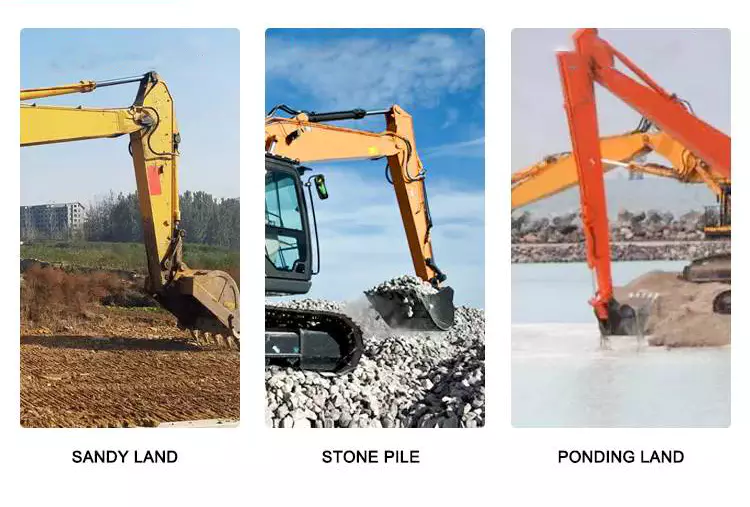
Can you provide real-world examples of machinery that heavily rely on hydraulic cylinders?
Hydraulic cylinders are widely used in various industries and applications due to their ability to provide powerful and precise linear motion. They play a crucial role in enabling the operation of heavy machinery that requires controlled force and movement. Here are some real-world examples of machinery that heavily rely on hydraulic cylinders:
1. Construction Equipment:
– Hydraulic cylinders are extensively used in construction machinery, such as excavators, bulldozers, loaders, and cranes. These machines rely on hydraulic cylinders to perform tasks like lifting heavy loads, extending and retracting booms, tilting buckets, and controlling the movement of various components. Hydraulic cylinders provide the power and precision required to handle the demanding conditions and heavy loads encountered in construction projects.
2. Agricultural Machinery:
– Many agricultural machines, including tractors, combine harvesters, and sprayers, utilize hydraulic cylinders for critical operations. Hydraulic cylinders are used to control the movement of attachments, such as front loaders, backhoes, and plows. They enable functions like lifting and lowering implements, adjusting cutting heights, and controlling the positioning of harvesting equipment. Hydraulic cylinders enhance efficiency and productivity in agricultural operations.
3. Material Handling Equipment:
– Hydraulic cylinders are integral components of material handling equipment, such as forklifts, pallet jacks, and cranes. These machines rely on hydraulic cylinders to lift and lower loads, tilt platforms or forks, and control the movement of lifting mechanisms. Hydraulic cylinders provide the necessary strength and precision to handle heavy loads and ensure safe and efficient material handling operations.
4. Industrial Machinery:
– Various industrial machinery and equipment heavily rely on hydraulic cylinders for critical functions. Examples include hydraulic presses, injection molding machines, metal-forming machines, and hydraulic-powered robots. Hydraulic cylinders enable precise control of force and movement in these applications, allowing for accurate shaping, pressing, and assembly processes.
5. Mining Equipment:
– Hydraulic cylinders are extensively used in mining machinery and equipment. Underground mining machines, such as continuous miners and longwall shearers, utilize hydraulic cylinders for cutting, shearing, and roof support operations. Surface mining equipment, including hydraulic shovels, draglines, and haul trucks, rely on hydraulic cylinders for tasks like bucket movement, boom extension, and vehicle suspension.
6. Automotive Industry:
– The automotive industry extensively utilizes hydraulic cylinders in various applications. Hydraulic cylinders are employed in vehicle suspension systems, power steering systems, convertible tops, and hydraulic brake systems. They enable smooth and controlled movement, precise steering, and efficient braking in automobiles.
7. Aerospace and Aviation:
– Hydraulic cylinders are utilized in aerospace and aviation applications, such as aircraft landing gear systems, wing flaps, and cargo handling equipment. Hydraulic cylinders provide the necessary force and control for extending and retracting landing gear, adjusting wing flaps, and operating cargo doors, ensuring safe and reliable aircraft operations.
8. Marine and Offshore Industry:
– Hydraulic cylinders are essential components in marine and offshore equipment, including ship cranes, winches, and hydraulic-powered anchor systems. They enable lifting, lowering, and positioning of heavy loads, as well as the control of various marine equipment.
These are just a few examples of machinery and industries that heavily rely on hydraulic cylinders. The versatility, power, and precise control offered by hydraulic cylinders make them indispensable in a wide range of applications, where controlled linear motion and force are essential.


editor by CX 2023-10-20
 French
  English
  Italian
  Portuguese
  Dutch
Dutch  Swedish
  Danish
  Finnish
  Polish
  Hindi
Hindi  Kazakh
  Turkish
  Ukrainian
  Romanian
  Spanish
  German
  Russian
  Korean
  Japanese
  Vietnamese
  Thai
Thai  Indonesian
  Malay
Malay  Greek
Greek