
Productbeschrijving
Productbeschrijving
1. To guarantee stable and reliable quality by advanced machining technology and Reasonable design scheme.
2. the material with better mechanical property to guarantee stronger lifting capacity.
3. Ensure the best product performance by world famous seal kits.
4. Highly improved anti-corrosion and wear resisting property with high-end chrome plating production line.
5.Stroke 900mm-12000mm, up to 8 stages.
6.1. working pressure up to 3500psi.
7. lifting capacity can be 120ton by reasonable lifting way.
8. lifting capacity can be about 300 ton for special mine Hydraulic cylinders.
9.All stage Diameter:
214/191/169/149/129/110/91/72/(53)
(226)/202/179/157/137/118/99/80/63
221/196/172/150/129/110/91/72/(53)
206/182/160/140/120/100/80/63/(46)
Front End Cylinder With Eye
Product details:
Packing and shipping:
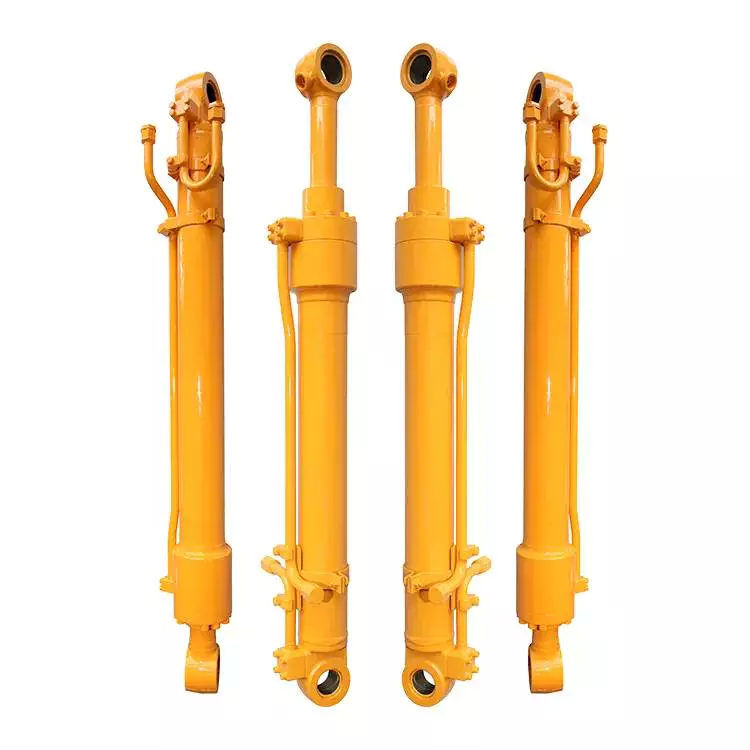
FC series is a front-end mounted telescopic cylinder, with top eye mounting and bottom double pin mounting. It is specially designed for those vehicles with a front sloping tipping body.
Suitable to fulfill all tipping requirements for any market, including heavy duty applications, even at the close-to-the-limit climate conditions, offering the most practical and robust front-end tipping cylinder that has ever been made.
Flexible choice load capacity: Minimum 24ton, Maximum 280ton;
Installment Introduction
1.The specifications for all the install screw and self- locking is M16(DIN931.Q8.8)
2.The specifications for grommet is M1730MM.
3.The biggest gap between support and cylinder is 2mm.
4.Make sure the hydraulic cylinder vertically ,up and down 2 parallel shafts when installed.
5.The installation should be greater than the center
distance between the closed hydraulic cylinder
center distance 20mm-30mm.
Six advantages for hydraulic
More secure
Faster unloding speed.
The lifting frequency higher
A stronger ability to adapt to the environment
Lighter
Lift more
| Certification: | GS, RoHS, CE, ISO9001 |
|---|---|
| Pressure: | High Pressure |
| Work Temperature: | High Temperature |
| Acting Way: | Double Acting |
| Working Method: | Straight Trip |
| Structure: | Piston Cylinder |
| Samples: |
US$ 1100/Piece
1 Piece(Min.Order) | |
|---|
| Customization: |
Available
|
|
|---|
Kunnen hydraulische cilinders achteraf op bestaande apparatuur worden gemonteerd om de functionaliteit te verbeteren?
Ja, hydraulische cilinders kunnen achteraf op bestaande apparatuur worden gemonteerd om de functionaliteit en prestaties te verbeteren. Het achteraf monteren van hydraulische cilinders op bestaande machines of apparatuur biedt verschillende voordelen, waaronder meer vermogen, betere controle, verhoogde precisie en veelzijdigheid. Hieronder vindt u een gedetailleerde uitleg over hoe hydraulische cilinders achteraf op bestaande apparatuur kunnen worden gemonteerd voor verbeterde functionaliteit:
1. Verhoogd vermogen:
– Door hydraulische cilinders achteraf in te bouwen, kan hydraulisch vermogen aan bestaande apparatuur worden toegevoegd. Dankzij de integratie van hydraulische cilinders kan de apparatuur hogere krachten genereren en zwaardere lasten tillen. Dit verhoogde vermogen stelt de apparatuur in staat taken uit te voeren die voorheen moeilijk of onmogelijk waren. Zo kan een achteraf ingebouwde hydraulische cilinder op een kraan het hefvermogen vergroten en ervoor zorgen dat de kraan zwaardere lasten efficiënter kan tillen.
2. Verbeterde controle:
– Hydraulische cilinders bieden nauwkeurige controle over de beweging en positionering van apparatuur. Door hydraulische cilinders achteraf in te bouwen, krijgen operators betere controle over de snelheid, kracht en richting van de beweging. De toevoeging van hydraulische regelkleppen en een hydraulische krachtbron maakt een fijnafstelling van de werking van de apparatuur mogelijk. Verbeterde controle zorgt voor een veiligere en efficiëntere werking, vermindert het risico op schade en verhoogt de algehele productiviteit.
3. Verbeterde precisie:
– Het achteraf inbouwen van hydraulische cilinders op bestaande apparatuur kan de precisie en nauwkeurigheid aanzienlijk verbeteren. Hydraulische systemen bieden nauwkeurige controle over bewegingen, waardoor soepele en gecontroleerde bewegingen mogelijk zijn. Deze verbeterde precisie is gunstig in toepassingen waar precieze positionering of repetitieve bewegingen vereist zijn. Zo kan het achteraf inbouwen van hydraulische cilinders op een robotarm de nauwkeurigheid en herhaalbaarheid ervan verbeteren, waardoor deze beter geschikt wordt voor taken die een hoge precisie vereisen.
4. Veelzijdigheid en aanpassingsvermogen:
– Het achteraf inbouwen van hydraulische cilinders kan de veelzijdigheid en aanpasbaarheid van bestaande apparatuur vergroten. Hydraulische systemen kunnen eenvoudig worden geïntegreerd met diverse soorten machines, waardoor hydraulische energie voor verschillende toepassingen kan worden ingezet. Het modulaire karakter van hydraulische componenten vereenvoudigt het retrofitproces, waardoor de apparatuur een breder scala aan taken kan uitvoeren. Deze veelzijdigheid is met name voordelig in sectoren waar apparatuur zich moet aanpassen aan veranderende operationele eisen.
5. Retrofitkits en maatwerk:
Fabrikanten leveren vaak retrofitkits die alle benodigde componenten bevatten voor de integratie van hydraulische cilinders in bestaande apparatuur. Deze kits bestaan doorgaans uit hydraulische cilinders, montagebeugels, slangen, koppelingen, regelkleppen en andere benodigde accessoires. Retrofitkits vereenvoudigen het retrofitproces en garanderen compatibiliteit tussen de hydraulische componenten en de bestaande apparatuur. Daarnaast bieden fabrikanten vaak maatwerkopties om de retrofitoplossing af te stemmen op specifieke apparatuur en toepassingsbehoeften.
6. Kosteneffectieve oplossing:
– Het achteraf inbouwen van hydraulische cilinders in bestaande apparatuur kan een kosteneffectieve oplossing zijn in vergelijking met de aanschaf van nieuwe machines. Door gebruik te maken van de bestaande constructie en mechanische componenten van de apparatuur, kunnen de totale kosten van de upgrade worden verlaagd. Retrofitting minimaliseert ook de stilstandtijd, omdat de apparatuur niet volledig hoeft te worden vervangen. Bovendien kunnen de verbeterde functionaliteit en prestaties als gevolg van de retrofit leiden tot een hogere productiviteit en kostenbesparingen op de lange termijn.
7. Professionele installatie en expertise:
– Het achteraf inbouwen van hydraulische cilinders in bestaande apparatuur vereist vaak professionele installatie en expertise. Samenwerking met ervaren systeemintegratoren of fabrikanten van hydraulische systemen garandeert een correcte installatie, compatibiliteit en optimale prestaties van de retrofitoplossing. Deze professionals kunnen de bestaande apparatuur beoordelen, geschikte hydraulische componenten aanbevelen en het retrofitproces efficiënt uitvoeren. Hun kennis en expertise dragen bij aan de succesvolle integratie van hydraulische cilinders en de algehele verbetering van de functionaliteit van de apparatuur.
Samenvattend kunnen hydraulische cilinders inderdaad achteraf op bestaande apparatuur worden gemonteerd om de functionaliteit te verbeteren. Dit retrofitproces biedt voordelen zoals meer vermogen, betere controle, verhoogde precisie, veelzijdigheid, kosteneffectiviteit en de beschikbaarheid van retrofitkits en aanpassingsmogelijkheden. Door hydraulische cilinders achteraf te monteren, kan bestaande apparatuur worden geüpgraded om te voldoen aan veranderende operationele behoeften, de levensduur te verlengen en de algehele prestaties te verbeteren.
Utilizing Hydraulic Cylinders in Conjunction with Alternative Energy Sources
Hydraulic cylinders can indeed be used in conjunction with alternative energy sources. The versatile nature of hydraulic systems allows them to be integrated with various alternative energy technologies to enhance efficiency, control, and power generation. Let’s explore some examples of how hydraulic cylinders can be utilized alongside alternative energy sources:
- Hydraulic Energy Storage: Hydraulic cylinders can be employed in energy storage systems that utilize alternative energy sources such as renewable sources (e.g., solar or wind) or waste energy recovery. These systems convert excess energy into hydraulic potential energy by pumping fluid into a high-pressure accumulator. When the energy is needed, the pressurized fluid is released, driving the hydraulic cylinder and generating mechanical power.
- Wave and Tidal Energy Conversion: Hydraulic cylinders can be utilized in wave and tidal energy conversion systems. These systems harness the power of ocean waves or tidal currents and convert it into usable energy. Hydraulic cylinders, along with associated pumps and valves, can be used to capture and control the energy from the waves or tides, driving the cylinders and generating mechanical power or producing electricity.
- Hydroelectric Power Generation: Hydraulic cylinders play a crucial role in traditional hydroelectric power generation. However, alternative approaches such as small-scale or micro-hydropower systems can also benefit from hydraulic cylinders. These systems utilize natural or man-made water flows to drive turbines connected to hydraulic cylinders, which then convert the hydraulic energy into mechanical power or electricity.
- Hydraulic Actuation in Wind Turbines: Hydraulic cylinders can be employed in wind turbines to enhance performance and control. For example, hydraulic pitch control systems use hydraulic cylinders to adjust the pitch angle of wind turbine blades, optimizing their aerodynamic performance based on wind conditions. This allows for efficient power generation and protection against excessive wind loads.
- Geothermal Energy Extraction: Geothermal energy extraction involves utilizing the natural heat from the Earth’s interior to generate power. Hydraulic cylinders can be utilized in geothermal systems to control and regulate fluid flow, allowing for efficient extraction and utilization of geothermal energy. They can also be used in geothermal heat pumps for heating and cooling applications.
In summary, hydraulic cylinders can be effectively utilized in conjunction with alternative energy sources to enhance energy storage, power generation, and control. Whether it’s through hydraulic energy storage systems, wave and tidal energy conversion, hydroelectric power generation, hydraulic actuation in wind turbines, or geothermal energy extraction, hydraulic cylinders offer versatile and efficient solutions for harnessing and utilizing alternative energy sources.
Can you provide real-world examples of machinery that heavily rely on hydraulic cylinders?
Hydraulic cylinders are widely used in various industries and applications due to their ability to provide powerful and precise linear motion. They play a crucial role in enabling the operation of heavy machinery that requires controlled force and movement. Here are some real-world examples of machinery that heavily rely on hydraulic cylinders:
1. Construction Equipment:
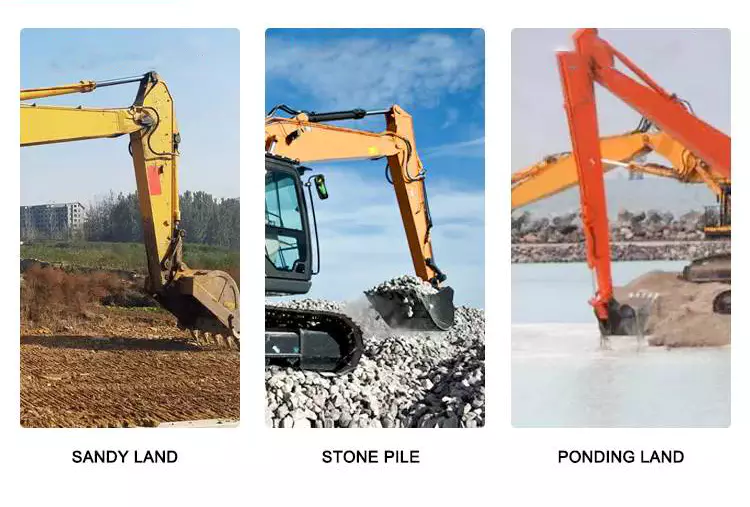
– Hydraulic cylinders are extensively used in construction machinery, such as excavators, bulldozers, loaders, and cranes. These machines rely on hydraulic cylinders to perform tasks like lifting heavy loads, extending and retracting booms, tilting buckets, and controlling the movement of various components. Hydraulic cylinders provide the power and precision required to handle the demanding conditions and heavy loads encountered in construction projects.
2. Agricultural Machinery:
– Many agricultural machines, including tractors, combine harvesters, and sprayers, utilize hydraulic cylinders for critical operations. Hydraulic cylinders are used to control the movement of attachments, such as front loaders, backhoes, and plows. They enable functions like lifting and lowering implements, adjusting cutting heights, and controlling the positioning of harvesting equipment. Hydraulic cylinders enhance efficiency and productivity in agricultural operations.
3. Material Handling Equipment:
– Hydraulic cylinders are integral components of material handling equipment, such as forklifts, pallet jacks, and cranes. These machines rely on hydraulic cylinders to lift and lower loads, tilt platforms or forks, and control the movement of lifting mechanisms. Hydraulic cylinders provide the necessary strength and precision to handle heavy loads and ensure safe and efficient material handling operations.
4. Industrial Machinery:
– Various industrial machinery and equipment heavily rely on hydraulic cylinders for critical functions. Examples include hydraulic presses, injection molding machines, metal-forming machines, and hydraulic-powered robots. Hydraulic cylinders enable precise control of force and movement in these applications, allowing for accurate shaping, pressing, and assembly processes.
5. Mining Equipment:
– Hydraulic cylinders are extensively used in mining machinery and equipment. Underground mining machines, such as continuous miners and longwall shearers, utilize hydraulic cylinders for cutting, shearing, and roof support operations. Surface mining equipment, including hydraulic shovels, draglines, and haul trucks, rely on hydraulic cylinders for tasks like bucket movement, boom extension, and vehicle suspension.
6. Automotive Industry:
– The automotive industry extensively utilizes hydraulic cylinders in various applications. Hydraulic cylinders are employed in vehicle suspension systems, power steering systems, convertible tops, and hydraulic brake systems. They enable smooth and controlled movement, precise steering, and efficient braking in automobiles.
7. Aerospace and Aviation:
– Hydraulic cylinders are utilized in aerospace and aviation applications, such as aircraft landing gear systems, wing flaps, and cargo handling equipment. Hydraulic cylinders provide the necessary force and control for extending and retracting landing gear, adjusting wing flaps, and operating cargo doors, ensuring safe and reliable aircraft operations.
8. Marine and Offshore Industry:
– Hydraulic cylinders are essential components in marine and offshore equipment, including ship cranes, winches, and hydraulic-powered anchor systems. They enable lifting, lowering, and positioning of heavy loads, as well as the control of various marine equipment.
These are just a few examples of machinery and industries that heavily rely on hydraulic cylinders. The versatility, power, and precise control offered by hydraulic cylinders make them indispensable in a wide range of applications, where controlled linear motion and force are essential.


editor by CX 2023-10-20
 Dutch
Dutch  English
  Italian
  Portuguese
  Swedish
  Danish
  Finnish
  Polish
  Hindi
Hindi  Kazakh
  Turkish
  Ukrainian
  Romanian
  Spanish
  German
  Russian
  Korean
  Japanese
  Vietnamese
  Thai
Thai  Indonesian
  Malay
Malay  French
  Greek
Greek