
Description du produit
| Type: | Delivery cylinder |
| Standard: | As drawing |
| Material steel: | 45#, 16Mn(Q345B), 25Mn, 27SiMn, SY720, ZNP460 |
| Straightness /thickness/ roundness rate: | As agreement |
| Chrome-plated: | Area and thickness as request |
| Shape: | Round |
| Package: | Wooden case, as customer’s request |
| Usage: | Engineering machinery, mining machinery, construction machinery, metallurgy, water conservancy projects and other industries |
| Warranty: | 12 months |
| Capacity: | 1000 pcs /month |
| Trademark: | CSDLS, neutral, or as request |
| Remarks: | Concrete pump spare parts |
| Partial Model List for delivery cylinder | ||
| Brand/product | Cylinder diameter(mm) | Length(mm) |
| For SANY | Φ200 | 1446 |
| 1546 | ||
| 1570 | ||
| 1746 | ||
| 1946 | ||
| 2246 | ||
| Φ230 | 1746 | |
| 1756 | ||
| 2146 | ||
| Φ260 | 2045 | |
| 2090 | ||
| 2145 | ||
| 2245 | ||
| 2345 | ||
| For ZOOMLION | Φ200 | 1800 with round flange |
| 1800 with prismatic flange | ||
| 1862 with round flange | ||
| 1960 with prismatic flange | ||
| 2012 | ||
| 2306 | ||
| Φ230 | 1750 | |
| 1800 with round flange | ||
| 1800 with prismatic flange | ||
| 2250 with round flange | ||
| 2250 with prismatic flange | ||
| Φ260 | 2250 with round flange | |
| 2250 with prismatic flange | ||
| For FOTON | Φ230 | 2174 |
| Φ260 | 2264 | |
| For XCMG | Φ260 | 2142 |
| 2342 | ||
| For Filling Pump | Φ100 | 910 |
| Φ150 | 1330 | |
| Φ200 | 680 | |
| Φ250 | 2220 | |
| Φ300 | 2320 | |
| Φ300 | 2355 | |
| Φ300 | 2755 | |
| Φ300 | 3354 | |
| Φ400 | 2830 | |
| Φ400 | 3460 | |
| Φ560 | 3960 |
/* January 22, 2571 19:08:37 */!function(){function s(e,r){var a,o={};try{e&&e.split(“,”).forEach(function(e,t){e&&(a=e.match(/(.*?):(.*)$/))&&1
| After-sales Service: | Yes |
|---|---|
| Warranty: | 12 Months |
| Type: | Concrete Delivery Cylinder |
| Usage: | Mining |
| Package: | as Request |
| Capacity: | 1, 000PCS/Month |
| Samples: | US$ 590/Piece 1 Piece(Min.Order) | |
|---|
| Customization: | Available |
|
|---|
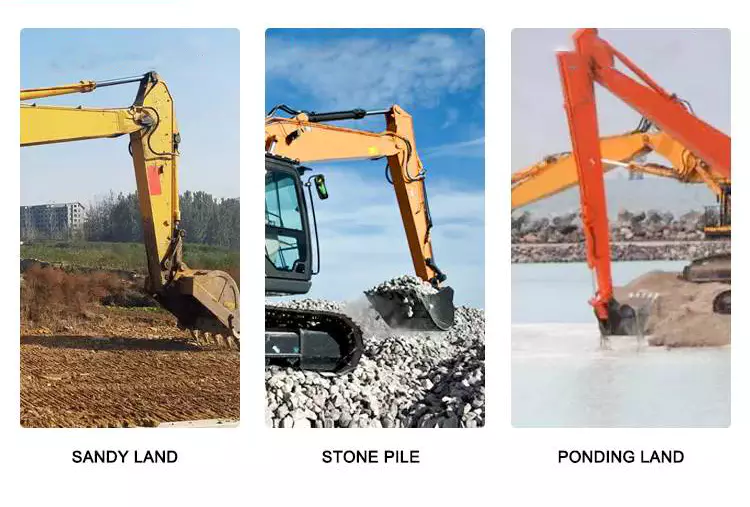
What advancements in hydraulic cylinder technology have improved sealing and reliability?
Advancements in hydraulic cylinder technology have continuously contributed to improving sealing and reliability in hydraulic systems. These advancements aim to address common challenges such as leakage, wear, and failure of seals, ensuring optimal performance and longevity. Here are several key advancements that have significantly improved sealing and reliability in hydraulic cylinders:
1. High-Performance Sealing Materials:
– The development of advanced sealing materials has greatly improved the sealing capabilities of hydraulic cylinders. Traditional sealing materials like rubber have been replaced or enhanced with high-performance materials such as polyurethane, PTFE (polytetrafluoroethylene), and various composite materials. These materials offer superior resistance to wear, temperature, and chemical degradation, resulting in improved sealing performance and extended seal life.
2. Enhanced Seal Designs:
– Advancements in seal designs have focused on improving sealing efficiency and reliability. Innovative seal profiles, such as lip seals, wipers, and scrapers, have been developed to optimize fluid retention and prevent contamination. These designs provide better sealing performance, minimizing the risk of fluid leakage and maintaining system integrity. Additionally, improved seal geometries and manufacturing techniques ensure tighter tolerances, reducing the potential for seal failure due to misalignment or extrusion.
3. Integrated Seal and Bearing Systems:
– Hydraulic cylinders now incorporate integrated seal and bearing systems, where the sealing elements also serve as bearing surfaces. This design approach reduces the number of components and potential failure points, improving overall reliability. By integrating seals and bearings, the risk of seal damage or displacement due to excessive loads or misalignment is minimized, resulting in enhanced sealing performance and increased reliability.
4. Advanced Coatings and Surface Treatments:
– The application of advanced coatings and surface treatments to hydraulic cylinder components has significantly improved sealing and reliability. Coatings such as chrome plating or ceramic coatings enhance surface hardness, wear resistance, and corrosion resistance. These surface treatments provide a smoother and more durable surface for seals to operate against, reducing friction and improving sealing performance. Moreover, specialized coatings can also provide self-lubricating properties, reducing the need for additional lubrication and enhancing reliability.
5. Sealing System Monitoring and Diagnostic Technologies:
– The integration of monitoring and diagnostic technologies in hydraulic systems has revolutionized seal performance and reliability. Sensors and monitoring systems can detect and alert operators to potential seal failures or leaks before they escalate. Real-time monitoring of pressure, temperature, and seal performance parameters allows for proactive maintenance and early intervention, preventing costly downtime and ensuring optimal sealing and reliability.
6. Computational Modeling and Simulation:
– Computational modeling and simulation techniques have played a significant role in advancing hydraulic cylinder sealing and reliability. These tools enable engineers to analyze and optimize seal designs, fluid flow dynamics, and contact stresses. By simulating various operating conditions, potential issues such as seal extrusion, wear, or leakage can be identified and mitigated early in the design phase, resulting in improved sealing performance and enhanced reliability.
7. Systematic Maintenance Practices:
– Advances in hydraulic cylinder technology have also emphasized the importance of systematic maintenance practices to ensure sealing and overall system reliability. Regular inspection, lubrication, and replacement of seals, as well as routine system flushing and filtration, help prevent premature seal failure and optimize sealing performance. Implementing preventive maintenance schedules and adhering to recommended service intervals contribute to extended seal life and enhanced reliability.
In summary, advancements in hydraulic cylinder technology have led to significant improvements in sealing and reliability. High-performance sealing materials, enhanced seal designs, integrated seal and bearing systems, advanced coatings and surface treatments, sealing system monitoring and diagnostics, computational modeling and simulation, and systematic maintenance practices have all played key roles in achieving optimal sealing performance and increased reliability. These advancements have resulted in more efficient and dependable hydraulic systems, minimizing leakage, wear, and failure of seals, and ultimately improving the overall performance and longevity of hydraulic cylinders in diverse applications.
Can you provide real-world examples of machinery that heavily rely on hydraulic cylinders?
Hydraulic cylinders are widely used in various industries and applications due to their ability to provide powerful and precise linear motion. They play a crucial role in enabling the operation of heavy machinery that requires controlled force and movement. Here are some real-world examples of machinery that heavily rely on hydraulic cylinders:
1. Construction Equipment:
– Hydraulic cylinders are extensively used in construction machinery, such as excavators, bulldozers, loaders, and cranes. These machines rely on hydraulic cylinders to perform tasks like lifting heavy loads, extending and retracting booms, tilting buckets, and controlling the movement of various components. Hydraulic cylinders provide the power and precision required to handle the demanding conditions and heavy loads encountered in construction projects.
2. Agricultural Machinery:
– Many agricultural machines, including tractors, combine harvesters, and sprayers, utilize hydraulic cylinders for critical operations. Hydraulic cylinders are used to control the movement of attachments, such as front loaders, backhoes, and plows. They enable functions like lifting and lowering implements, adjusting cutting heights, and controlling the positioning of harvesting equipment. Hydraulic cylinders enhance efficiency and productivity in agricultural operations.
3. Material Handling Equipment:
– Hydraulic cylinders are integral components of material handling equipment, such as forklifts, pallet jacks, and cranes. These machines rely on hydraulic cylinders to lift and lower loads, tilt platforms or forks, and control the movement of lifting mechanisms. Hydraulic cylinders provide the necessary strength and precision to handle heavy loads and ensure safe and efficient material handling operations.
4. Industrial Machinery:
– Various industrial machinery and equipment heavily rely on hydraulic cylinders for critical functions. Examples include hydraulic presses, injection molding machines, metal-forming machines, and hydraulic-powered robots. Hydraulic cylinders enable precise control of force and movement in these applications, allowing for accurate shaping, pressing, and assembly processes.
5. Mining Equipment:
– Hydraulic cylinders are extensively used in mining machinery and equipment. Underground mining machines, such as continuous miners and longwall shearers, utilize hydraulic cylinders for cutting, shearing, and roof support operations. Surface mining equipment, including hydraulic shovels, draglines, and haul trucks, rely on hydraulic cylinders for tasks like bucket movement, boom extension, and vehicle suspension.
6. Automotive Industry:
– The automotive industry extensively utilizes hydraulic cylinders in various applications. Hydraulic cylinders are employed in vehicle suspension systems, power steering systems, convertible tops, and hydraulic brake systems. They enable smooth and controlled movement, precise steering, and efficient braking in automobiles.
7. Aerospace and Aviation:
– Hydraulic cylinders are utilized in aerospace and aviation applications, such as aircraft landing gear systems, wing flaps, and cargo handling equipment. Hydraulic cylinders provide the necessary force and control for extending and retracting landing gear, adjusting wing flaps, and operating cargo doors, ensuring safe and reliable aircraft operations.
8. Marine and Offshore Industry:
– Hydraulic cylinders are essential components in marine and offshore equipment, including ship cranes, winches, and hydraulic-powered anchor systems. They enable lifting, lowering, and positioning of heavy loads, as well as the control of various marine equipment.
These are just a few examples of machinery and industries that heavily rely on hydraulic cylinders. The versatility, power, and precise control offered by hydraulic cylinders make them indispensable in a wide range of applications, where controlled linear motion and force are essential.
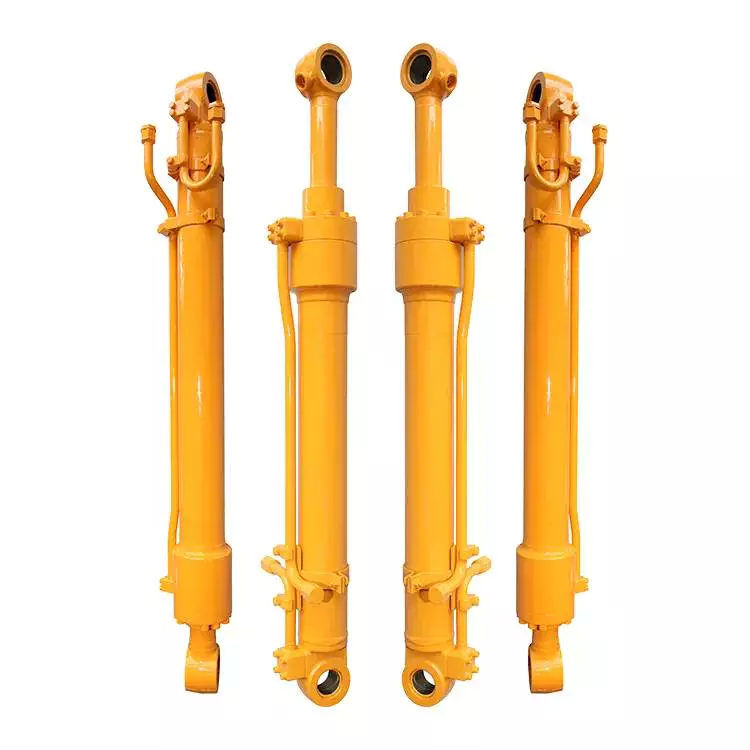
Quelles sont les pratiques de maintenance essentielles pour prolonger la durée de vie des vérins hydrauliques ?
L'entretien des vérins hydrauliques est essentiel pour prolonger leur durée de vie et garantir des performances optimales. Un entretien régulier permet de prévenir l'usure prématurée, les dommages et les pannes, réduisant ainsi les temps d'arrêt et les coûts. Voici quelques pratiques d'entretien essentielles à adopter pour prolonger la durée de vie des vérins hydrauliques :
1. Inspections régulières :
Effectuez des inspections visuelles régulières des vérins hydrauliques afin de déceler tout signe de dommage, de fuite ou d'usure. Inspectez le corps du vérin, la tige de piston, les joints et les points de fixation. Recherchez les fuites de fluide, la rouille, les bosses ou toute usure anormale. La détection précoce des problèmes permet d'effectuer les réparations ou les remplacements nécessaires en temps opportun, évitant ainsi d'autres dommages et prolongeant la durée de vie du vérin.
2. Propreté :
Maintenez un environnement propre autour des vérins hydrauliques afin d'éviter toute contamination du système. La poussière, la saleté et les débris peuvent endommager les joints et autres composants internes, entraînant une usure prématurée et une baisse de performance. Nettoyez régulièrement le vérin et ses alentours pour minimiser les risques de contamination.
3. Lubrification adéquate :
Une lubrification adéquate est essentielle au bon fonctionnement et à la longévité des vérins hydrauliques. Respectez les intervalles de lubrification préconisés par le fabricant et utilisez le lubrifiant approprié. Lubrifiez les pièces mobiles du vérin, notamment la tige de piston, afin de réduire les frottements et l'usure.
4. Entretien des joints :
Les joints d'étanchéité jouent un rôle essentiel dans la prévention des fuites d'huile hydraulique et le maintien des performances du vérin. Inspectez et remplacez rapidement les joints usés ou endommagés. Assurez-vous que les joints sont correctement installés et lubrifiés. Nettoyez régulièrement les gorges des joints afin d'éliminer tout débris susceptible de compromettre leur étanchéité.
5. Contrôles de pression :
Contrôlez régulièrement la pression du système hydraulique afin de vous assurer qu'elle se situe dans la plage de fonctionnement recommandée. Une pression excessive peut endommager le vérin et ses composants, entraînant une usure prématurée. Surveillez les niveaux de pression et effectuez les ajustements nécessaires pour éviter toute surcharge du vérin.
6. Entretien des vannes de régulation :
– Entretenir et inspecter les distributeurs qui régulent le débit et la direction du fluide hydraulique. S’assurer de leur bon fonctionnement et de l’absence de contraintes excessives ou de surpressions dans le vérin. Nettoyer ou remplacer les distributeurs endommagés ou défectueux.
7. Alignement des cylindres :
Un alignement correct des vérins hydrauliques est essentiel à leur longévité. Un mauvais alignement peut engendrer des contraintes latérales excessives, provoquant une usure irrégulière et des dommages potentiels. Assurez-vous que le vérin est correctement aligné avec les autres composants et que les points de fixation sont bien serrés.
8. Prévention des surcharges :
Évitez de soumettre les vérins hydrauliques à des charges supérieures à leur capacité nominale. Une surcharge peut entraîner des dommages internes, une défaillance des joints et une réduction de leur durée de vie. Assurez-vous que la charge requise est compatible avec les capacités du vérin et envisagez l'utilisation de dispositifs de sécurité tels que des systèmes de protection contre les surcharges, le cas échéant.
9. Formation et sensibilisation des opérateurs :
– Dispenser une formation adéquate aux opérateurs d'équipement sur l'utilisation et la manipulation correctes des vérins hydrauliques. Les opérateurs doivent connaître les limites des vérins, les procédures d'utilisation sécuritaires et l'importance d'un entretien régulier. Promouvoir une culture de maintenance préventive et inciter les opérateurs à signaler rapidement tout problème potentiel.
10. Documentation et tenue des registres :
– Conserver une documentation détaillée de toutes les interventions de maintenance, y compris les inspections, les réparations et les remplacements. Tenir un registre des échéances de lubrification, des contrôles de pression et de toute intervention de maintenance effectuée sur les vérins hydrauliques. Cette documentation permet de suivre l'historique des vérins, d'identifier les problèmes récurrents et de planifier efficacement la maintenance future.
En respectant ces pratiques d'entretien, la durée de vie des vérins hydrauliques peut être prolongée, garantissant ainsi leur fiabilité et réduisant les risques de pannes inattendues. Des inspections régulières, la propreté, une lubrification adéquate, l'entretien des joints, les contrôles de pression, la maintenance des distributeurs, l'alignement des vérins, la prévention des surcharges, la formation des opérateurs et la documentation contribuent à la longévité et au fonctionnement optimal des vérins hydrauliques.


editor by Dream 2024-05-15
 French
  English
  Italian
  Portuguese
  Dutch
Dutch  Swedish
  Danish
  Finnish
  Polish
  Hindi
Hindi  Kazakh
  Turkish
  Ukrainian
  Romanian
  Spanish
  German
  Russian
  Korean
  Japanese
  Vietnamese
  Thai
Thai  Indonesian
  Malay
Malay  Greek
Greek