
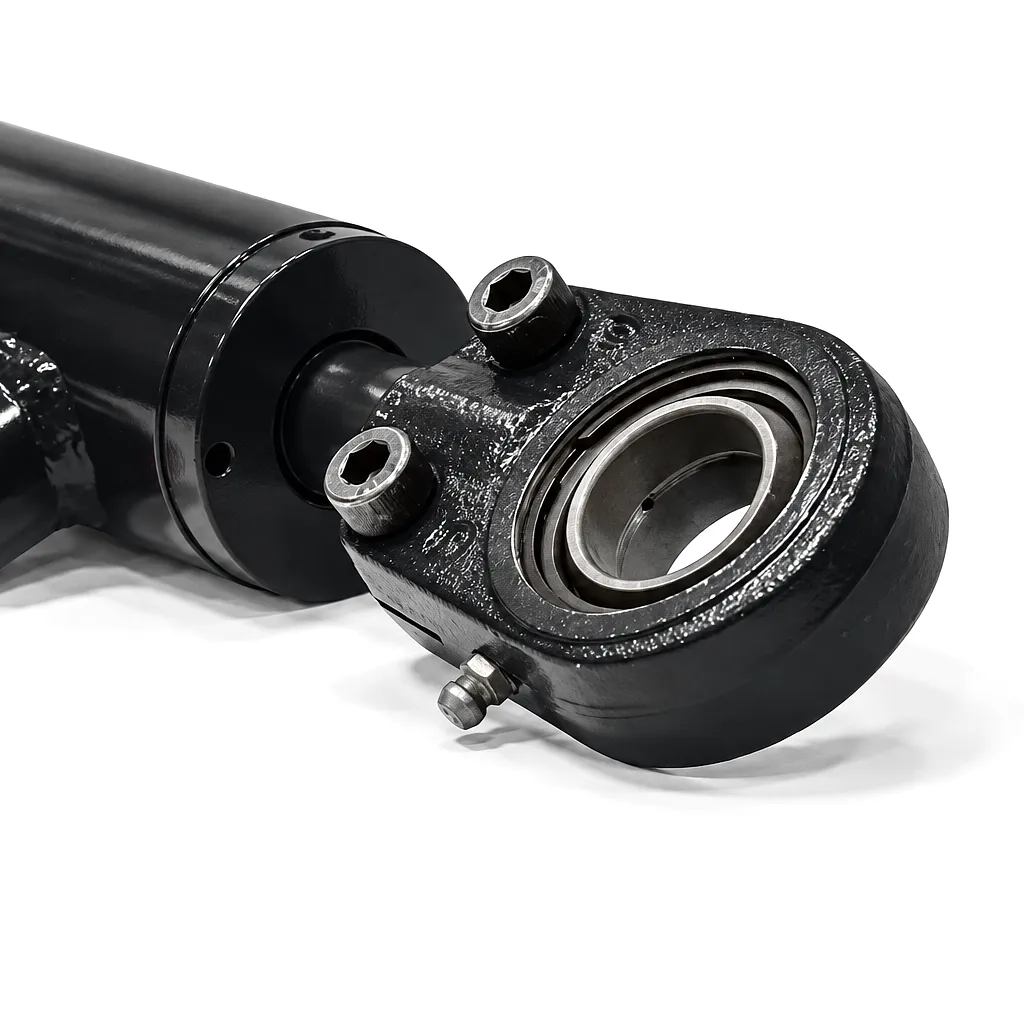
 When engineers across the UK are specifying hydraulic actuators for heavy-duty industrial machinery, the 4-inch bore hydraulic cylinder sits at a particularly compelling intersection of force output, compactness, and versatility. With a bore diameter of 101.6 mm, this size class generates working forces that comfortably handle loads exceeding 30 tonnes at standard operating pressures, making it indispensable in pressing, lifting, clamping, and material-handling applications that define modern British manufacturing. From the steelworks of Sheffield to the fabrication shops clustered around the West Midlands, engineers specify this bore size because it hits a productivity sweet spot that smaller actuators simply cannot reach.
How a 4-Inch Bore Hydraulic Cylinder Works
Pascal’s Law in Action
The operating principle is elegantly straightforward: hydraulic fluid is pumped under pressure into one end of the cylinder body, acting upon the full face of the piston. Because a 4-inch bore yields a piston area of approximately 12.57 square inches (81.07 cm²), a modest system pressure of 2,000 PSI translates directly into approximately 25,140 pounds — over 11.4 tonnes — of linear push force. When the same pressure acts on the rod-side annular area during retraction, the effective force is reduced proportionally but remains substantial, typically between 75% and 85% of the extend force depending on rod diameter. This asymmetry is critically important in double-acting applications where both extend and retract forces must be sized to match load requirements. Hydraulic fluid displacement also determines cylinder speed: with a 4-inch bore and a flow rate of 5 gallons per minute, extension speed works out to approximately 5.9 inches per second — a figure that plant engineers in UK manufacturing can translate directly into production cycle times.
Single-Acting vs Double-Acting
Within the 4-inch bore class, engineers choose between single-acting and double-acting configurations. Single-acting cylinders use hydraulic pressure to extend the rod and rely on gravity, spring return, or a mechanical load to retract — a practical, cost-effective choice for vertical lifting or stamping where the return stroke happens naturally. Double-acting cylinders use pressurised fluid to drive both directions of travel, offering precise bi-directional control that is essential in applications like horizontal clamping fixtures in Birmingham’s automotive pressing facilities or the tooling carriages found in Sheffield steel-rolling machinery. Internally, the cylinder tube is finish-honed to a surface roughness of Ra 0.4 µm or better, ensuring that the piston seal maintains effective contact across the full stroke without imposing excessive friction losses. The rod is precision-ground and hard-chrome plated, providing the corrosion resistance and surface hardness that are non-negotiable in UK factory environments where coolant mist, swarf, and atmospheric moisture are constant considerations.
Sealing Technology
Sealing systems in the 4-inch bore range must handle significant pressure forces across a relatively large circumference. Ever Power engineers typically specify polyurethane or PTFE-compound piston seals rated to operating temperatures between -30 °C and +130 °C, with optional Viton (FKM) seals available for high-temperature or chemical-exposure environments. Rod seals use a multi-lip configuration that first wipes the rod clean of particulates, then provides the primary hydraulic seal, before a final dust wiper prevents ingress of external contamination. This layered sealing approach is what allows a 4-inch bore hydraulic cylinder to maintain consistent performance and minimal internal leakage across multi-million-cycle service lives — a reliability standard that plant maintenance engineers across the Midlands and Yorkshire rightly expect from industrial-grade actuators operating inside continuous-process machinery.
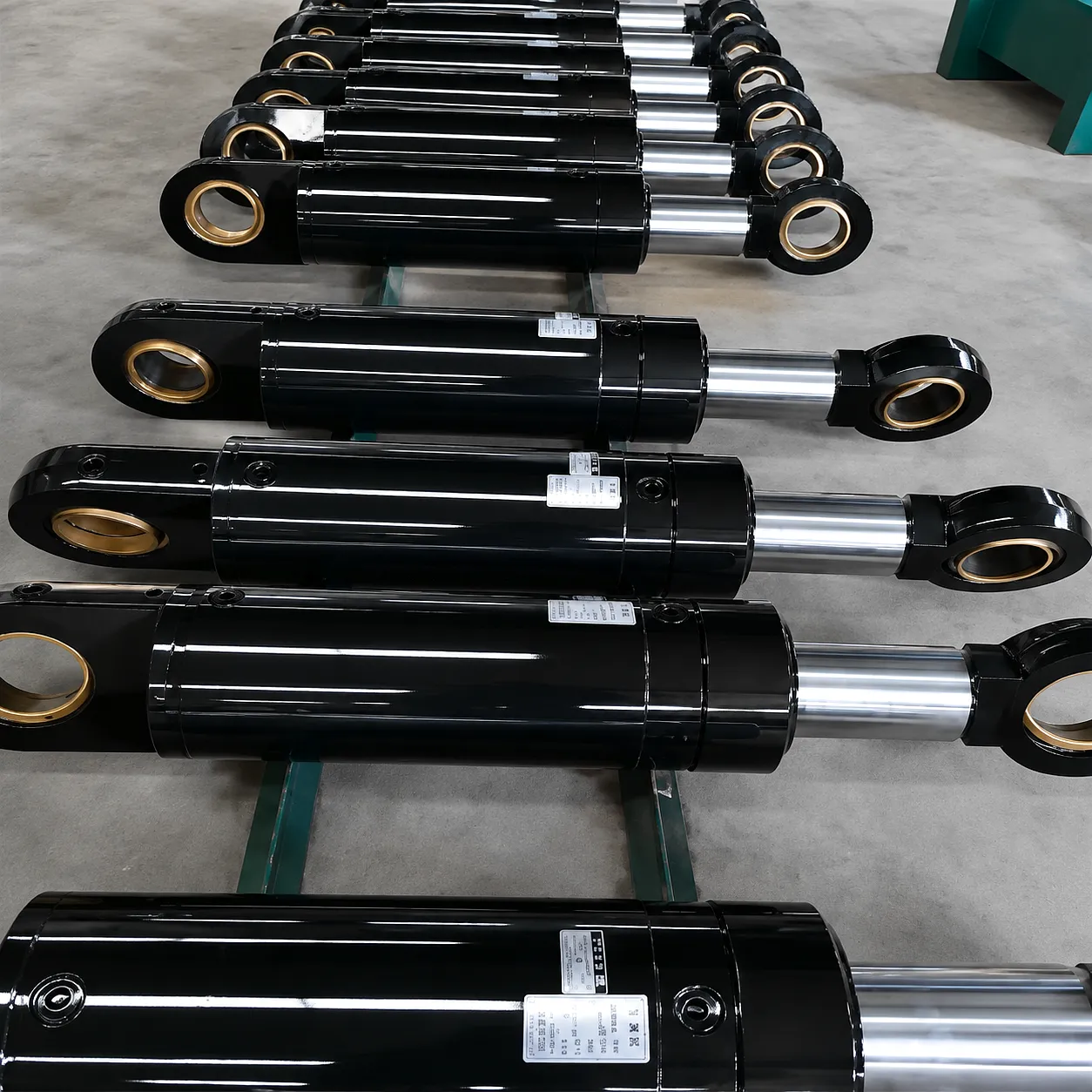
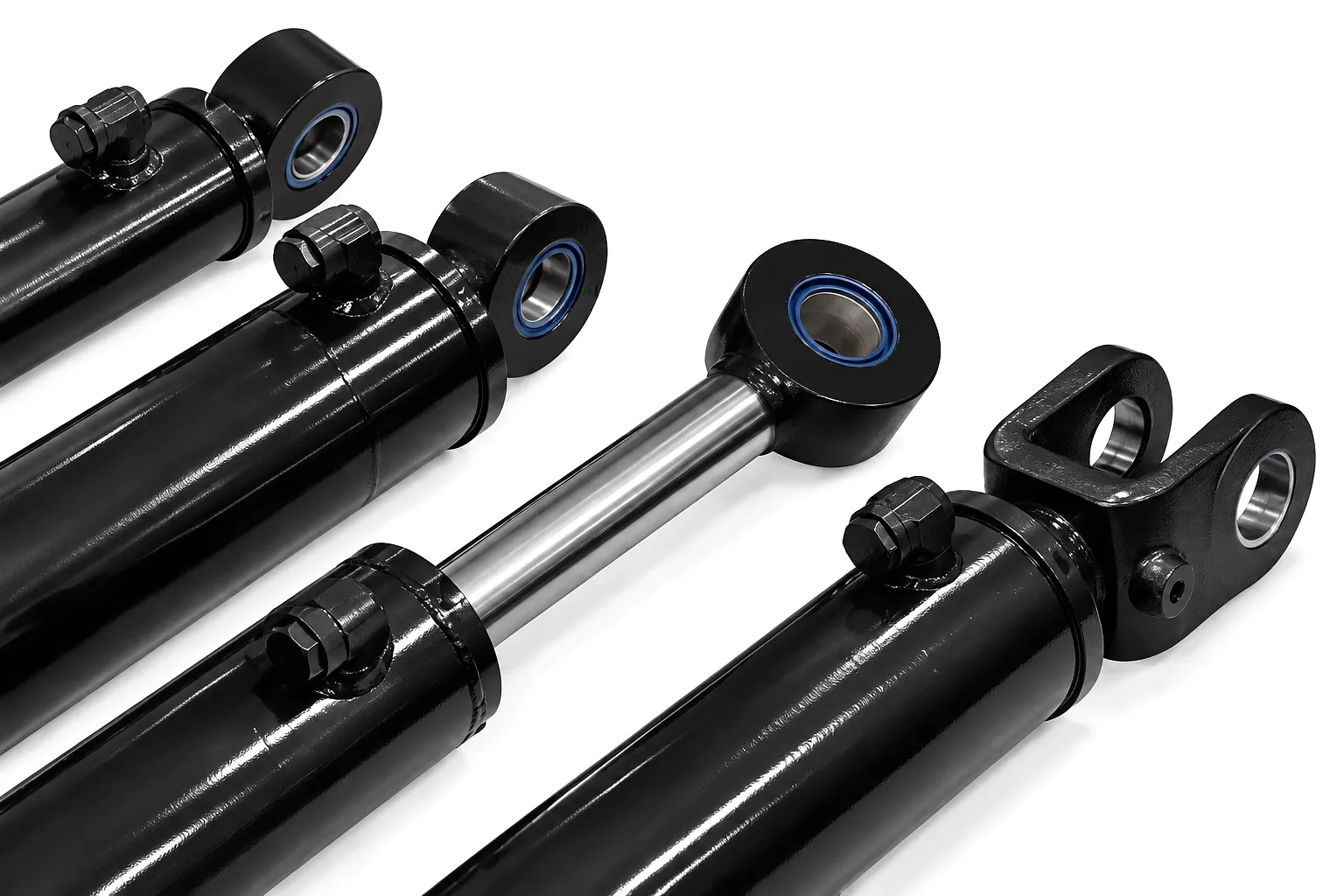
Core Materials in 4-Inch Bore Hydraulic Cylinder Construction
The engineering performance of a 4-inch bore hydraulic cylinder is only as good as its material stack. Every component from tube to rod to end caps must be selected with an understanding of the mechanical stresses involved. At 3,000 PSI, the hoop stress in the cylinder wall of a 4-inch bore tube is substantial, and choosing an undersized material grade creates a latent failure risk that plant engineers in safety-conscious British industries cannot accept. Ever Power sources materials to documented mill certificates, maintaining traceability records that meet the requirements of UK industrial procurement standards.
Cylinder Tube
Cold-drawn seamless steel (ASTM A519 Grade 1026 or equivalent ST52 DIN). Wall thickness calculated to meet minimum 4:1 safety factor at rated working pressure. Internal bore honed to Ra 0.4 µm for optimal seal longevity.
ピストンロッド
High-tensile carbon steel (1045 or 4140 CrMo) ground to h6 or f7 tolerance, then hard-chrome plated to 0.02–0.05 mm thickness with HRC 70+ surface hardness. Optional ceramic or nickel-chrome plating for extreme corrosion environments.
エンドキャップとフランジ
Ductile iron (GGG-40) for standard duty; carbon steel (S355/A36) or stainless steel (316L) for demanding environments. Machined to tight tolerances and thread-locked or welded in accordance with design pressure requirements.
Seals & Wear Rings
Polyurethane (PU) piston and rod seals as standard. NBR, FKM (Viton), or PTFE-compound alternatives for specific fluid compatibility or temperature range. Filled PTFE wear rings for low-friction lateral load support.
4-Inch Bore Hydraulic Cylinder — Technical & Performance Parameters
The table below consolidates the key performance and dimensional parameters that procurement engineers, plant maintenance teams, and OEM designers should verify before specifying a 4-inch bore hydraulic cylinder. Where ranges are shown, specific values are selected during the application engineering stage. Ever Power’s technical team provides full design-file support for UK customers requiring integration drawings, seal compatibility data sheets, or pressure-test certification documents.
Why the 4-Inch Bore Hydraulic Cylinder Outperforms Alternatives
When design engineers compare the 4-inch bore hydraulic cylinder against both smaller bore options and pneumatic actuators, several clear performance advantages emerge. These are not simply theoretical benefits — they are characteristics that plant operators across UK industry observe and measure in everyday production conditions, from automated pressing lines in Coventry to material-handling rigs serving the North Sea supply chain out of Aberdeen.
Superior Force Density
Hydraulic actuators of this bore size generate force densities that pneumatic cylinders of equivalent size cannot approach. At 2,500 PSI, a 4-inch bore hydraulic cylinder produces over 31,000 pounds of push force from a package that fits inside a 150 mm envelope — a compactness ratio that makes machine integration straightforward even in retrofit situations where envelope constraints are tight. This force density advantage is why structural steel fabricators in Sheffield prefer hydraulic clamping over pneumatic alternatives when tolerances are critical.
Flexible Stroke Customisation
Unlike standard pneumatic actuators that come in fixed stroke increments, hydraulic cylinders in this class can be manufactured to any stroke length required by the application. A hydraulic press manufacturer in Wolverhampton might need a 14.375-inch stroke to match a specific tool clearance; a marine hatch-actuator builder near Newcastle might need a 96-inch stroke in a heavy-wall stainless body. Ever Power’s production facility can accommodate both — and every variant without minimum-order constraints that typically burden smaller UK businesses dealing with European or North American suppliers.
Long Service Life
When properly integrated into a hydraulic system with clean, filtered fluid and correct operating pressures, a well-made 4-inch bore hydraulic cylinder can achieve service intervals measured in years rather than months. The precision honing of the tube bore, combined with high-quality multi-lip sealing packages, means that internal leakage rates remain negligible for multi-million-cycle service lives. For a plant maintenance manager in Leeds responsible for managing a fleet of pressing machines, this reliability directly translates into reduced downtime costs and predictable maintenance budgets — a major operational advantage in today’s UK manufacturing environment.
Precise Position Control
Hydraulic systems are effectively incompressible, which means a 4-inch bore hydraulic cylinder can be held in any position along its stroke with exceptional stiffness. Pair the cylinder with a proportional control valve and a position transducer, and sub-millimetre positional accuracy becomes achievable even under fluctuating loads. This property is exploited in precision forging presses, machine-tool clamping systems, and heavy-duty tilting platforms — applications where the positional compliance inherent in pneumatic systems would introduce unacceptable dimensional variation into manufactured parts.
Industrial Use Cases: Where 4-Inch Bore Hydraulic Cylinders Deliver
The 4-inch bore hydraulic cylinder occupies a force-output range that spans an unusually broad band of UK industrial applications. The following use cases are not exhaustive, but they represent the segments where specification engineers most consistently reach for this bore class — and where Ever Power regularly supports customers with engineered solutions rather than off-the-shelf approximations.
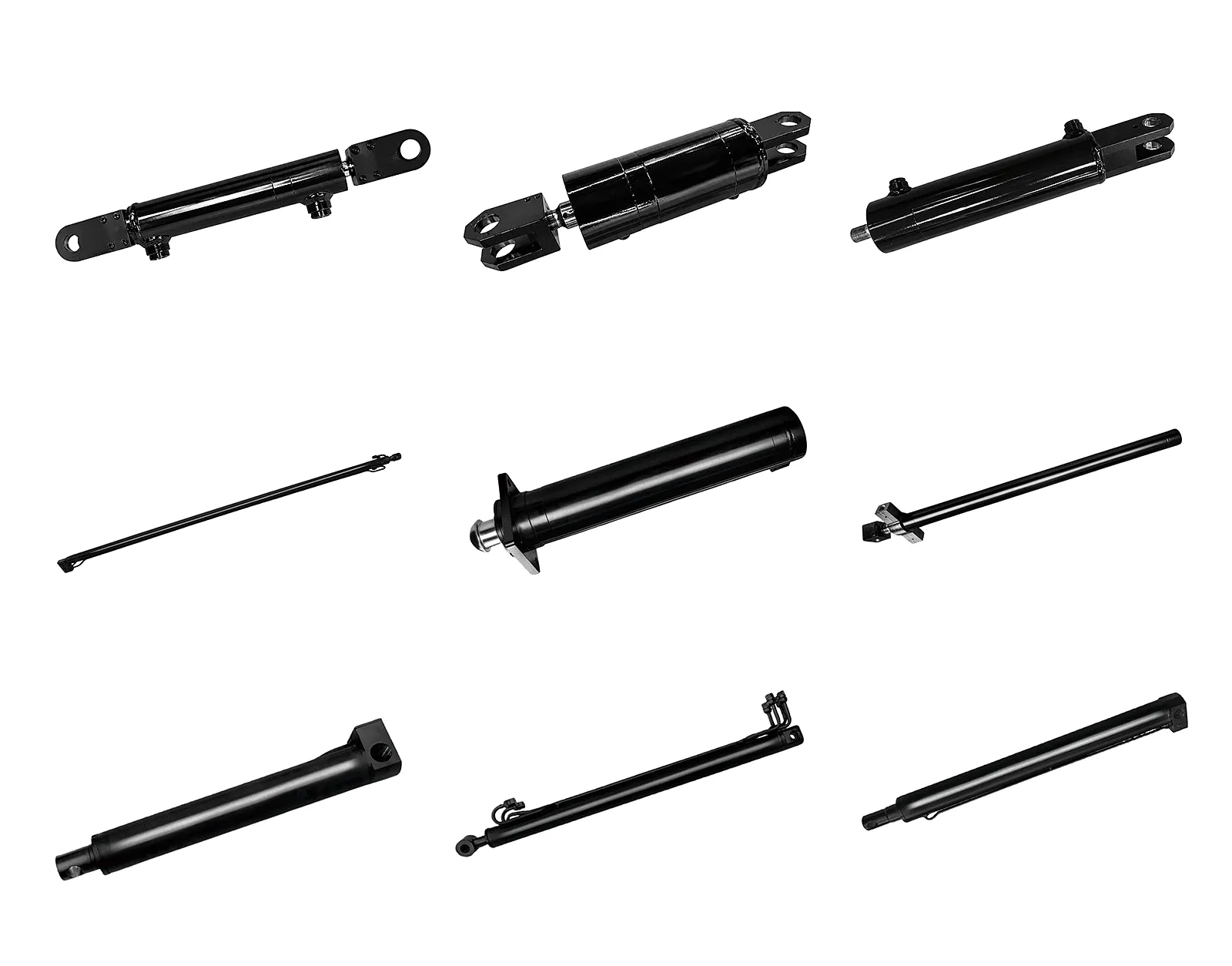
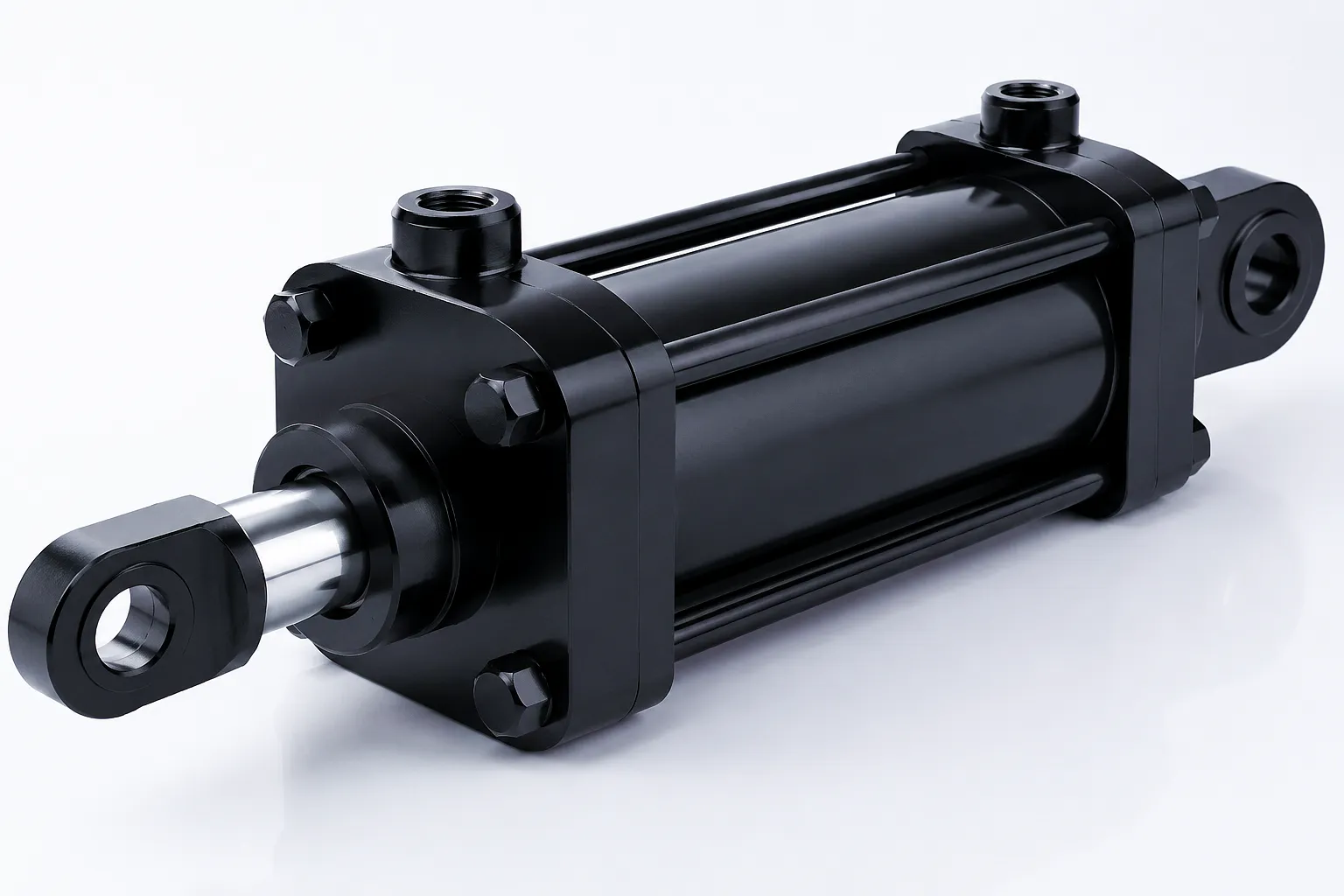
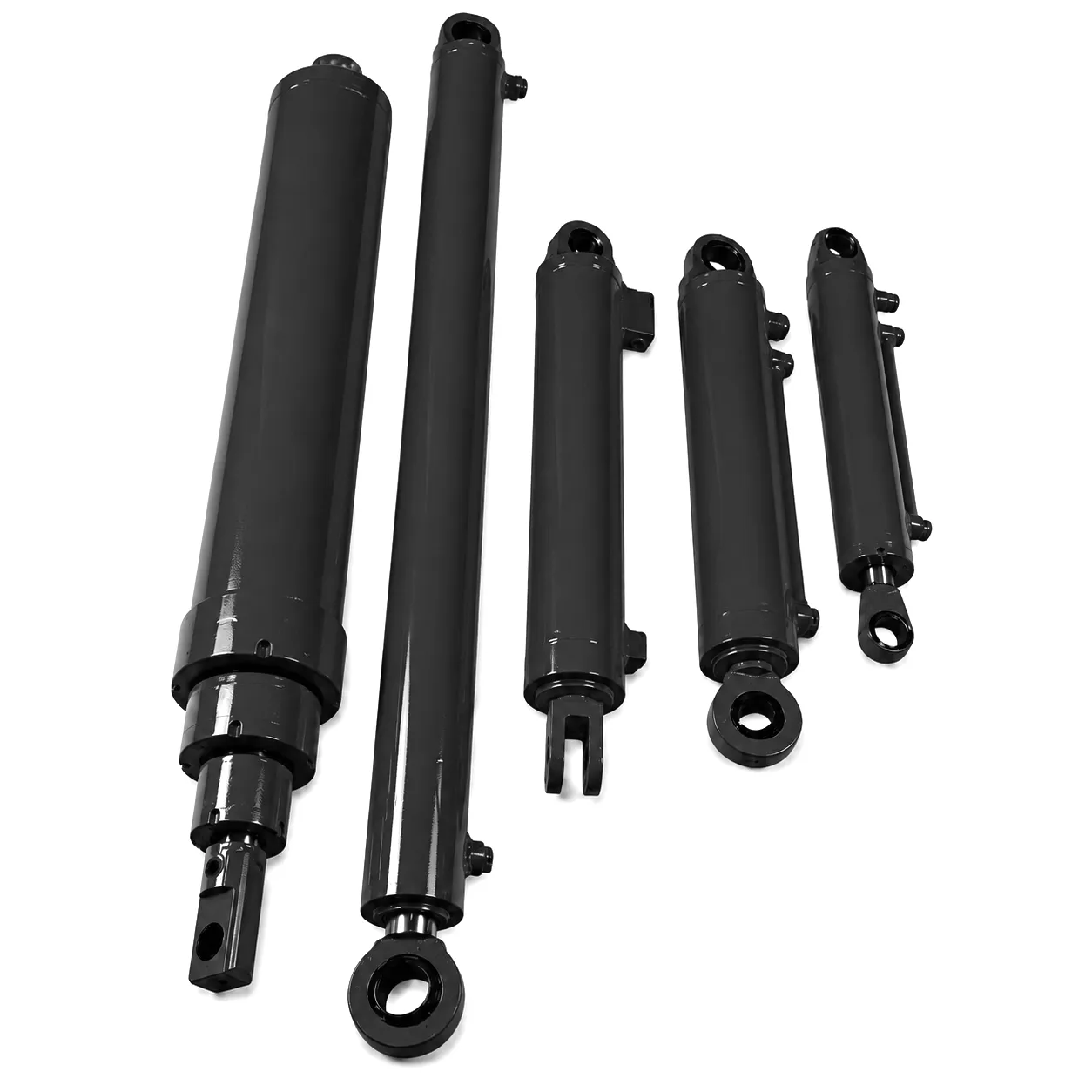
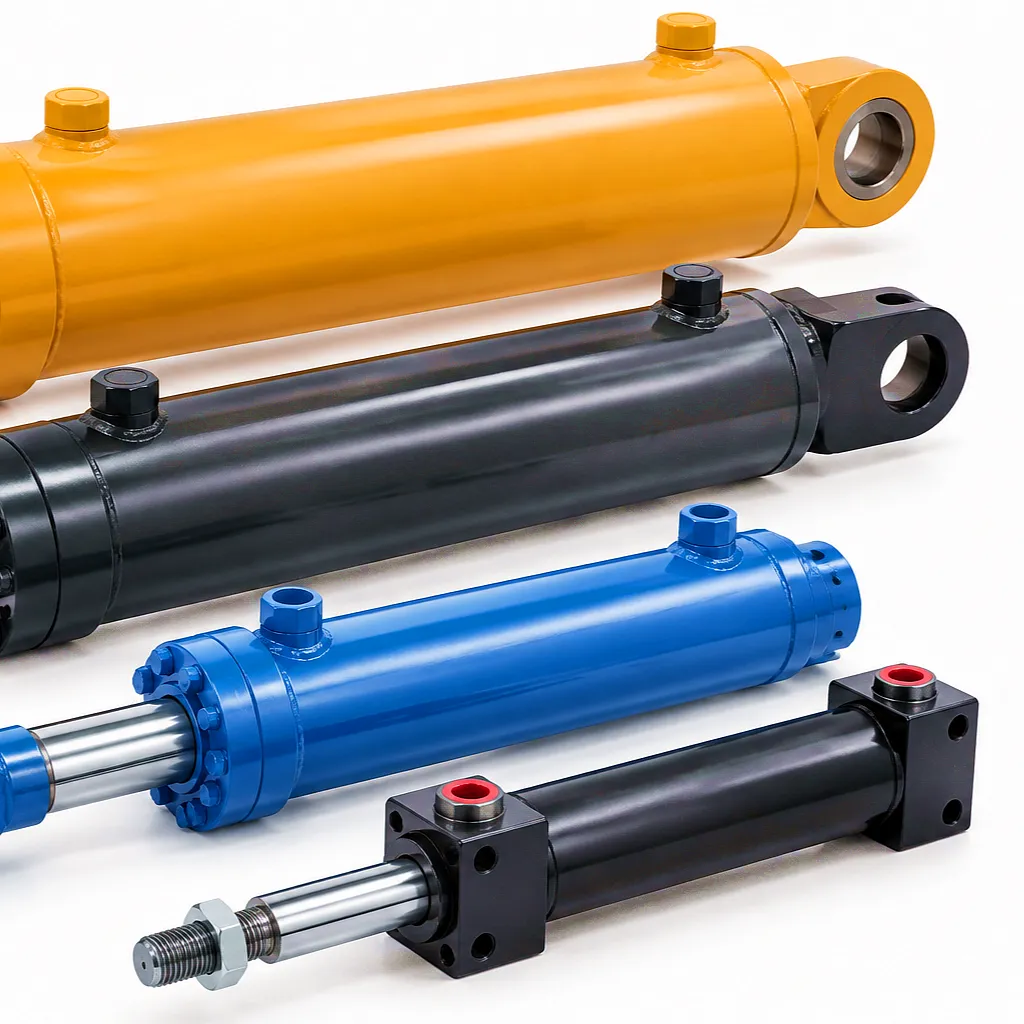
Ever Power — 4-inch bore hydraulic cylinder product range for global B2B supply
Customer Success Story: Sheffield Steel Fabrication
Solving Premature Seal Failure in a 60-Tonne H-Frame Press Line
 Hallam Precision Forgings, a structural steel and forged component manufacturer operating out of Sheffield’s Lower Don Valley, came to Ever Power in late 2023 with a persistent maintenance problem. Their two H-frame presses — each using 4-inch bore hydraulic cylinders as the main press ram — were experiencing rod seal failure at intervals of approximately six months, driving unplanned downtime at a rate that was costing the business an estimated £28,000 per year in lost production and emergency maintenance labour. The incumbent cylinders, sourced from a European catalogue supplier, carried standard NBR seals rated to 80 °C, but the press hydraulic system was running at sustained fluid temperatures of 92–96 °C during high-cycle production shifts — a mismatch that the catalogue supplier had never flagged.
Ever Power’s engineering team reviewed Hallam’s hydraulic circuit data and identified the seal temperature mismatch immediately. The proposed solution was a direct-replacement 4-inch bore hydraulic cylinder dimensionally identical to the outgoing units but built with FKM (Viton) rod and piston seals rated to 130 °C, an upgraded wiper seal to manage the fine metallic contamination present in the press environment, and a slightly harder wear ring compound to cope with the lateral loading pattern the press tooling imposed on the rod. Two replacement cylinders were manufactured and delivered to Sheffield within 11 working days. After installation and a one-month burn-in period, Hallam reported zero seal failures through a full six-month monitoring window — and subsequently placed a standing order for Ever Power to become their exclusive cylinder supplier across all four presses in the facility.
Outcome Summary
What UK Engineers Say About Ever Power
“We’d been fighting seal failures for two years before we tried Ever Power. The FKM upgrade they recommended resolved the issue completely. The cylinders have now run for eight months without a single drop of external leakage. For a press that runs 16 hours a day, that kind of reliability is worth every penny — and the price was competitive with the catalogue supplier we’d been using.”
“Our spec called for a 4-inch bore cylinder with a 94.5-inch stroke, 2.75-inch rod, and trunnion mounting in a non-standard position. No European supplier would touch it without a three-month lead time and significant tooling charges. Ever Power came back within 24 hours with a full dimensional drawing, confirmed the buckling check, and had the cylinders in our yard in under three weeks. The quality was exactly as the drawings specified.”
“We purchase 4-inch bore hydraulic cylinders regularly for our scissor-lift rebuild programme in Birmingham. Ever Power provides consistent quality, full pressure-test certs with every shipment, and competitive pricing that lets us maintain our workshop margins. The BSP port threads are correct and the cushioning adjusters actually work as designed — sounds basic, but it’s not a given with every supplier at this price point.”
Explore Related Hydraulic Cylinder Products
よくある質問
Voice-search friendly answers to the questions UK engineers most commonly ask about 4-inch bore hydraulic cylinders.
Ready to Source Your 4-Inch Bore Hydraulic Cylinder?
Ever Power’s engineering team is ready to support your specification — from standard stock units to fully engineered bespoke solutions for UK industrial applications.
[email protected] · Ever Power Industrial Hydraulics
gzlによる編集
 Japanese
  English
  Italian
  Portuguese
  Dutch
Dutch  Swedish
  Danish
  Finnish
  Polish
  Hindi
Hindi  Kazakh
  Turkish
  Ukrainian
  Romanian
  Spanish
  German
  Russian
  Korean
  Vietnamese
  Thai
Thai  Indonesian
  Malay
Malay  French
  Greek
Greek