
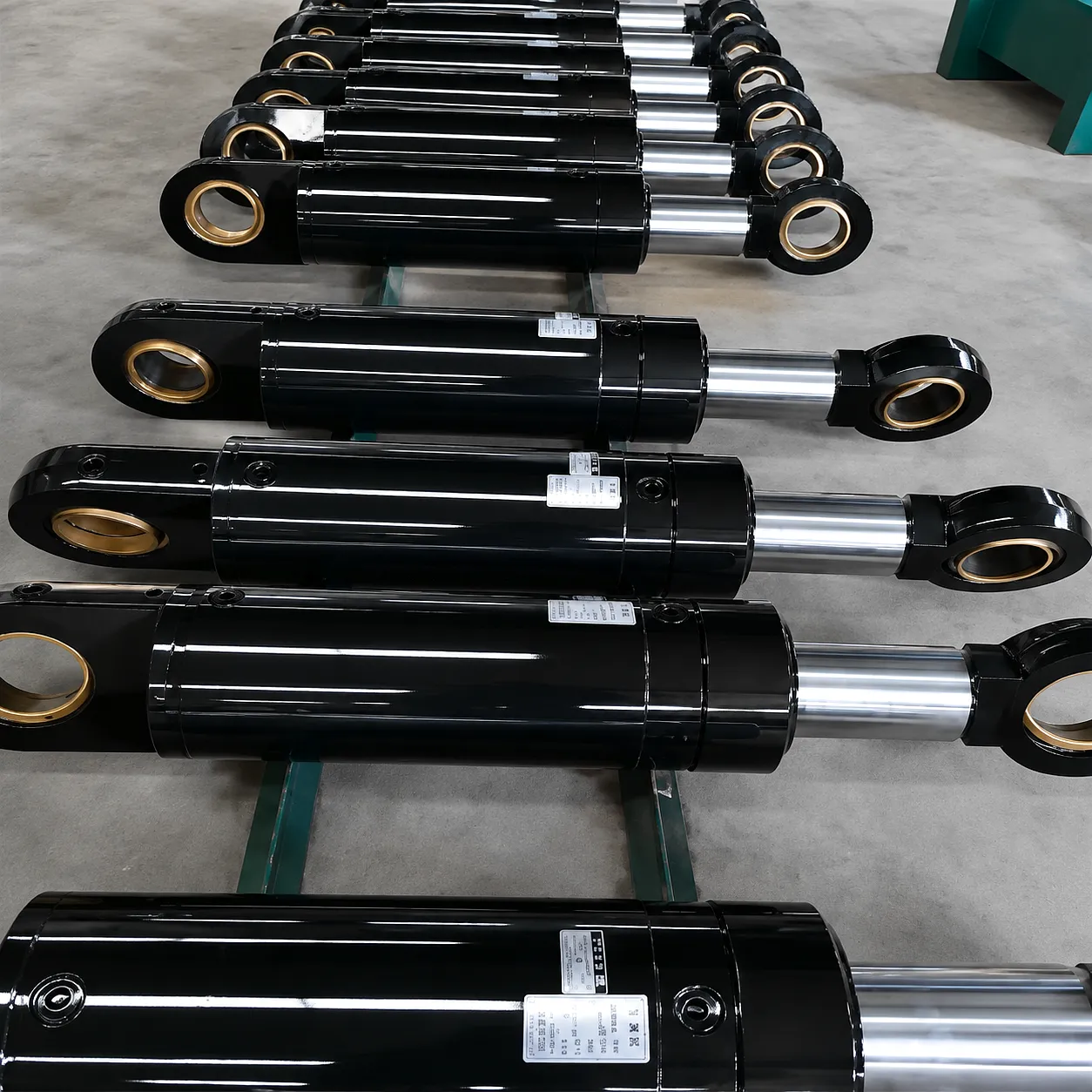
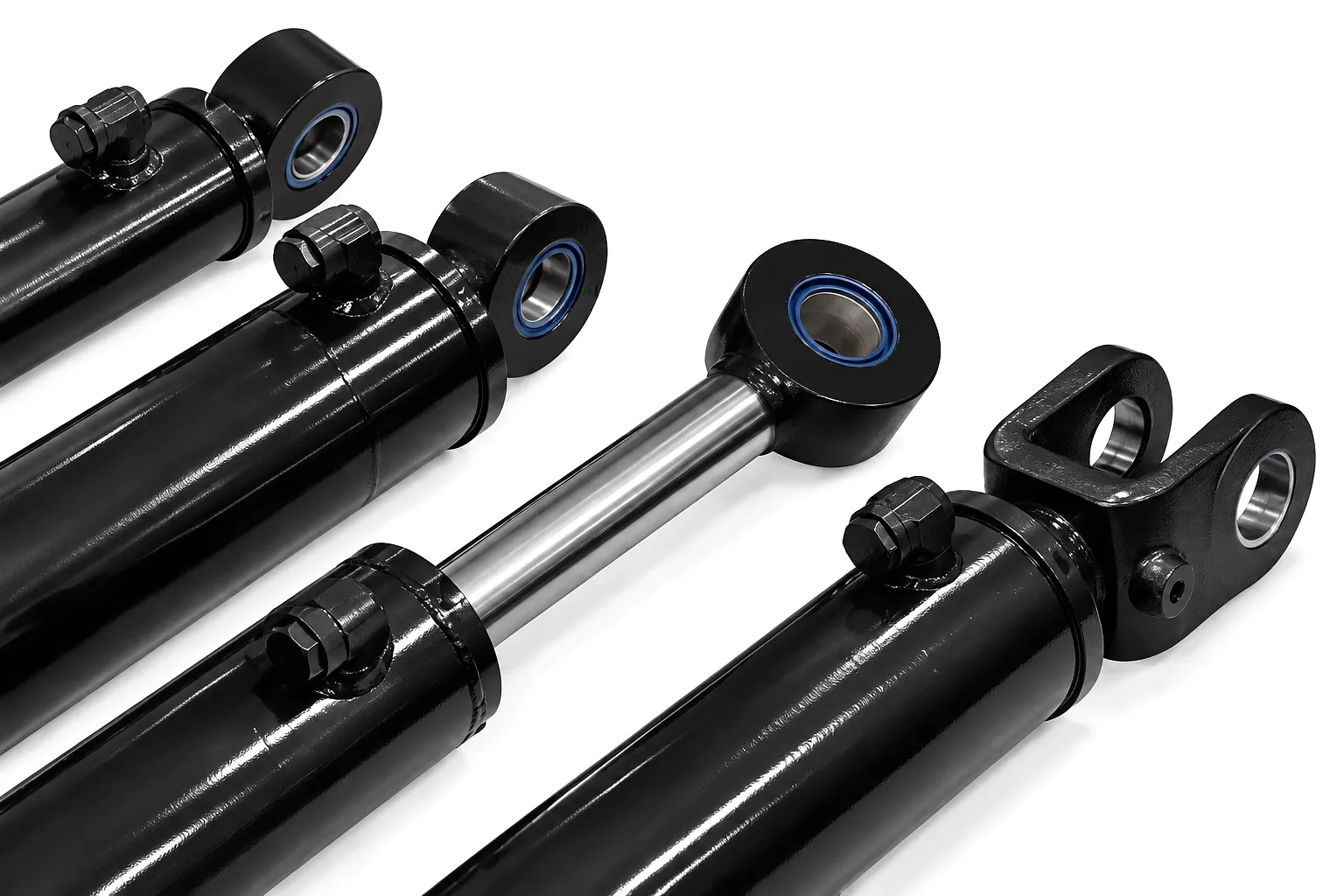
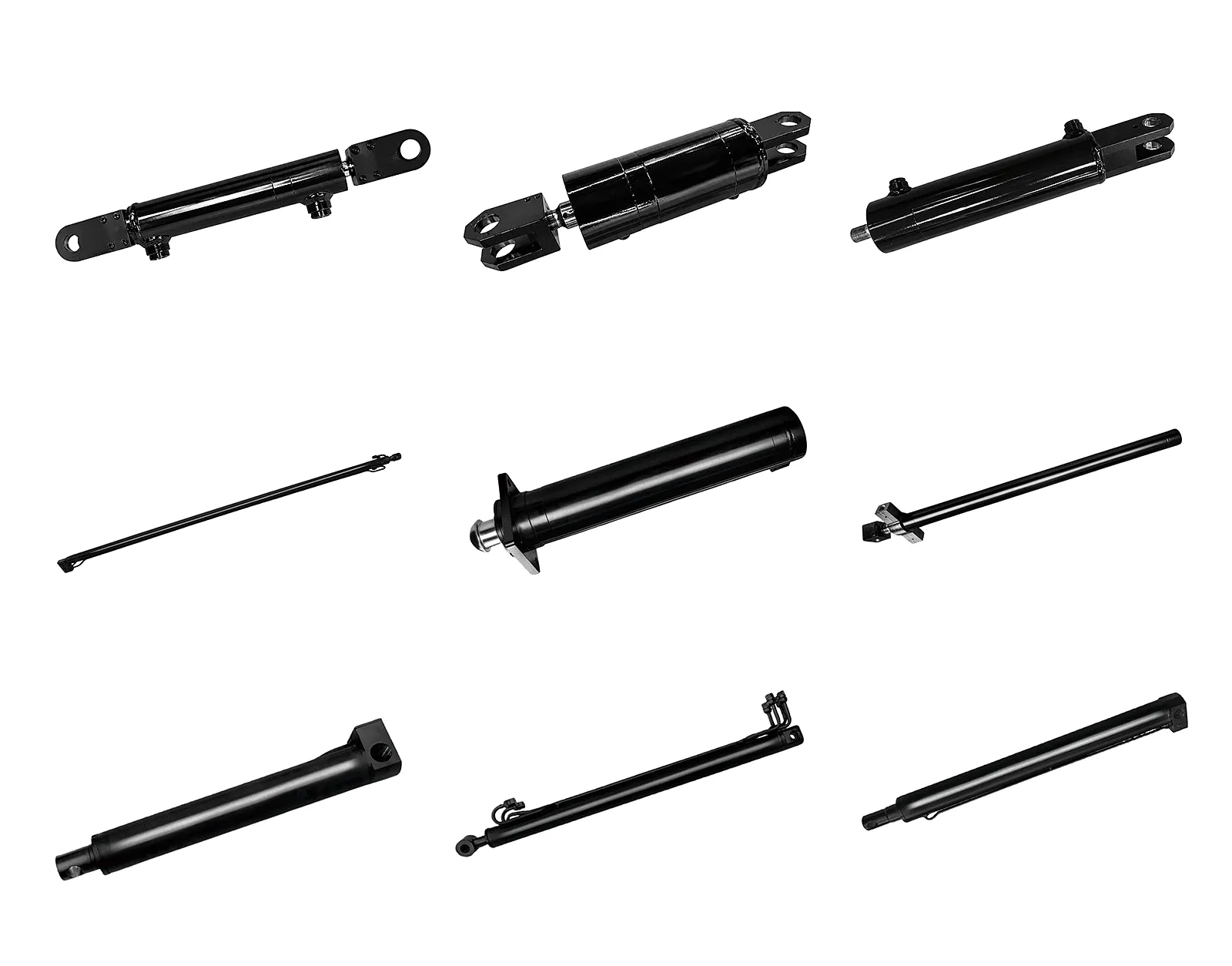
Threaded End Caps: Field-Serviceable Precision for Dynamic Environments
Configuration Type 01 — Detachable / Repairable
Threaded end caps use precision-machined internal or external screw threads to create a mechanical lock between the cap and the cylinder barrel. The thread engages along a helical path, generating compressive pre-load that seats the seal under pressure. A retaining ring or lock nut is often added to resist vibration-induced back-off. The thread geometry — pitch, lead angle, and thread form — is calculated to hold the cap in position under dynamic hydraulic impulse. In the UK mobile hydraulic market, right-hand ACME or metric fine threads are most prevalent, selected to resist the rotational forces generated by piston rod torque during retract and extend cycles.
The barrel end cap pair is typically machined from medium-carbon alloy steel such as 42CrMo4 (European grade EN 1.7225), which delivers tensile strength in the range of 900–1100 MPa after heat treatment — sufficient to absorb peak pressure impulses in the 250–350 bar range. Where weight reduction is a priority — as in aerial work platforms deployed around Birmingham construction sites — Grade 6061-T6 aluminium alloy end caps with hard-anodised thread surfaces offer an effective compromise. Seal grooves are cut to DIN 3760 or ISO 6547 tolerances, accommodating NBR, PTFE, or polyurethane sealing elements depending on fluid type and operating temperature.
The defining advantage of the threaded end cap is complete dismountability without specialist tooling. A technician can replace seals in the field within the working day, eliminating the costly downtime of returning a cylinder to a repair workshop. This characteristic makes threaded designs highly favoured across the UK’s agricultural contracting sector, where harvest schedules leave zero tolerance for multi-day equipment outages. The limitation is thread fatigue under high-cycle loading: in presses or injection-moulding machines operating above 10,000 cycles per day, thread flank wear can accumulate faster than in lower-cycle hydraulic circuits, necessitating periodic torque checks and thread gauging as part of planned maintenance.
Bolted (Flanged) End Caps: Structural Confidence for High-Pressure and High-Tonnage Duty
Configuration Type 02 — Flanged / Bolted Closure
The bolted end cap uses a flanged ring fastened to the cylinder barrel via a circular bolt pattern — typically 4, 6, 8, or 12 high-tensile bolts arranged symmetrically around the bore axis. The bolt clamping force compresses a face seal or O-ring in a precision-machined groove, creating a leak-proof joint that distributes pressure load across the entire flange face. The bolt grade — ISO 8.8 or 10.9 for most industrial applications, 12.9 for critical offshore and nuclear plant installations — determines the allowable pre-load, and torque values are calculated to maintain the joint in compression even under peak pressure spikes. Finite element analysis is routinely applied to bolted end cap designs destined for applications above 400 bar, as at Sheffield’s specialist forging press manufacturers who supply die-forging presses rated beyond 6,000 tonnes.
Bolted end cap flanges are predominantly manufactured in forged EN 10083-3 alloy steel — typically 34CrNiMo6 or 36NiCrMo16 — which delivers the high fatigue resistance demanded by cyclically loaded hydraulic systems. Forged flanges carry significantly fewer internal voids and anisotropic defects than cast alternatives, making them the preferred choice for any installation subject to BS EN 13445 or PED 2014/68/EU pressure equipment directives. The sealing face is ground to Ra 0.8 µm or better to ensure consistent O-ring compression across the entire bolt circle. In corrosive environments — such as coastal infrastructure projects along the North Sea shore or water treatment plants in the Thames Valley — duplex stainless steel (UNS S31803) or nickel-alloy flanges are specified, with bolt material upgraded to A4-80 stainless to eliminate galvanic incompatibility.
Achieves rated working pressures of 420–700 bar in heavy-wall designs, outperforming threaded caps at extreme duty.
Bolts can be removed and seals replaced without extracting the cylinder from its mounting — critical for press-line maintenance in Birmingham automotive plants.
End cap geometry can be adapted for cushion ports, bleed screws, position sensor bosses, and load-holding valve interfaces without altering barrel design.
Natively compatible with CETOP mounting dimensions and ISO 6020/6022 cylinder series — essential for drop-in replacements on existing UK plant.
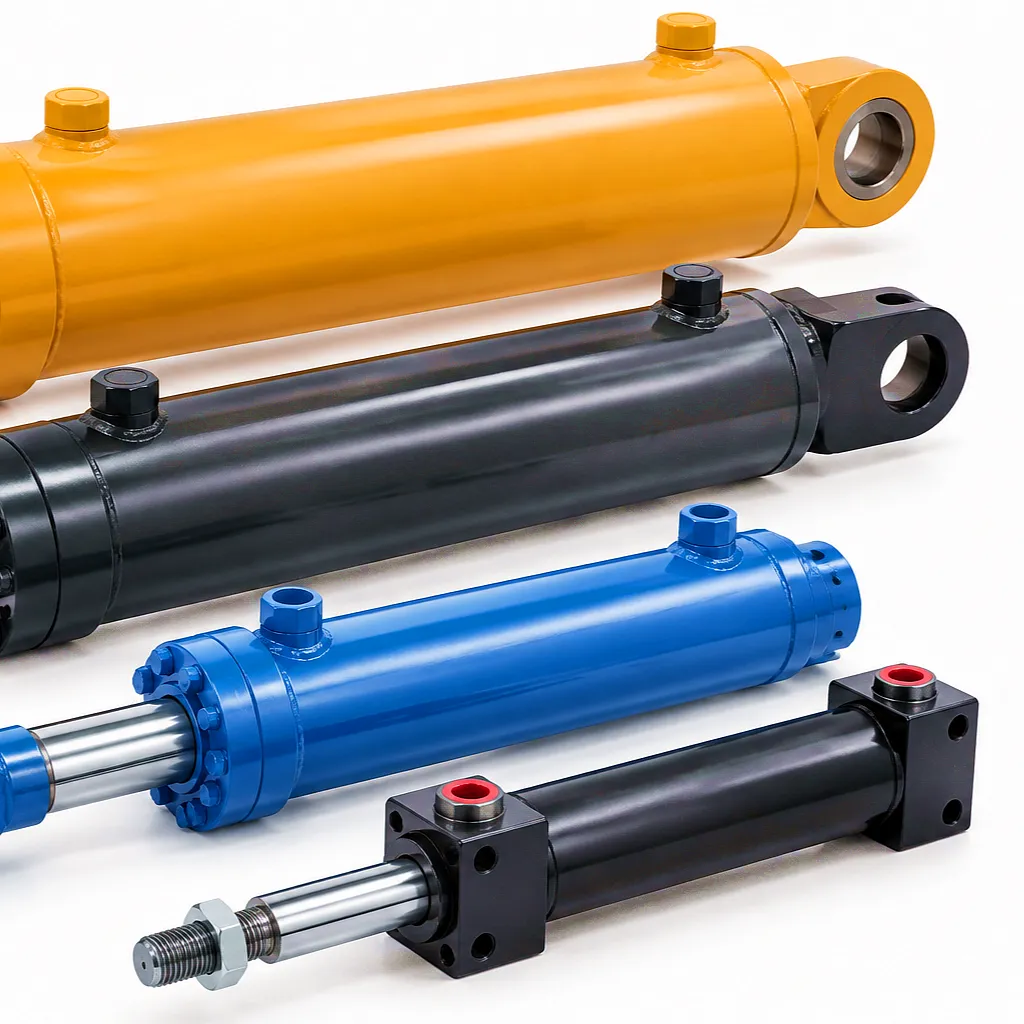
Welded End Caps: Permanent Integrity for Compact, High-Volume, and Hostile Environments
Configuration Type 03 — Permanent Fusion Closure
A welded end cap is fusion-joined to the cylinder barrel through a full-penetration butt or fillet weld, eliminating the thread or flange interface entirely and creating a monolithic pressure vessel. The absence of any mechanical joint removes a potential leak path and reduces overall outer diameter — a decisive engineering advantage in compact installations where envelope constraints prohibit the added diameter of flanged construction.
Welded hydraulic cylinders dominate the boom and stick cylinder market for excavators, where the cylinder must pass through a tight structural-steel pivot assembly. The weld joint — made by MIG, TIG, or submerged arc welding depending on wall thickness — is stress-relieved by post-weld heat treatment (PWHT) to eliminate residual tensile stresses that could initiate fatigue cracking. Non-destructive testing using phased-array ultrasonic (PAUT) or magnetic particle inspection (MPI) validates the fusion zone before hydrostatic proof testing, ensuring the weld meets the structural integrity demands of working life in the field.
In the UK, welded construction is the dominant choice for cylinder OEMs supplying the compact plant and mini-excavator market — machinery that must operate through the narrow access corridors of urban regeneration projects across London, Manchester, and Glasgow city-centre developments. The seal system in a welded cylinder is accessed through the gland nut at the rod end only; the cap end seal, when it fails, typically triggers a factory cylinder exchange, so procurement managers who specify welded cylinders should ensure they have a rapid exchange-supply agreement with their cylinder supplier. This is precisely the kind of responsive service that Ever Power structures into its supply contracts for UK clients.
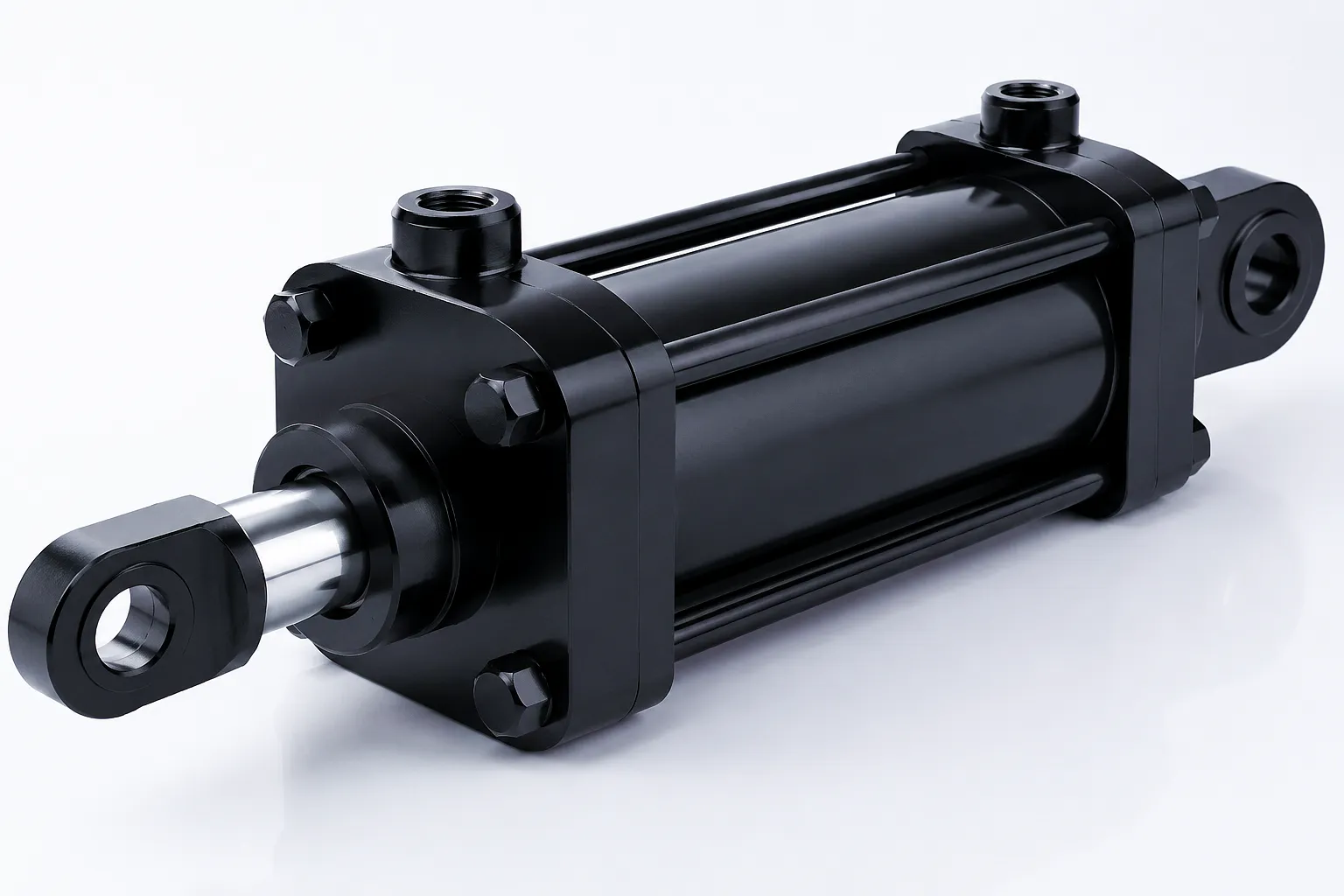
- Barrel: ST52-3 / E355 seamless precision steel tube (EN 10305-1)
- Cap body: S355J2 or 16MnCr5 forged disc — matched yield strength for weld zone compatibility
- Filler wire: ER70S-6 (MIG) or ER309L (for dissimilar-metal stainless variants)
- Surface treatment: nickel-chrome plating on the cap OD in marine-grade units
- Seal material: polyurethane or PTFE-capped energised designs rated to -40 °C for cold-store applications
Technical & Performance Comparison — End Cap Types
All specifications reflect standard Ever Power manufacturing grades; custom ranges available on request.
| パラメータ | Threaded | Bolted / Flanged | Welded |
|---|---|---|---|
| 最大使用圧力 | Up to 350 bar | Up to 700 bar | Up to 500 bar |
| Typical Bore Range | 25 – 200 mm | 50 – 500 mm | 25 – 160 mm |
| End Cap Material (Standard) | 42CrMo4 / Al 6061 | 34CrNiMo6 / S31803 | S355J2 / 16MnCr5 |
| Seal Face Finish (Ra) | Ra 1.6 µm | Ra 0.8 µm | N/A (fused joint) |
| 動作温度 | -30 °C to +120 °C | -40 °C to +150 °C | -40 °C to +130 °C |
| Field Repairability | High | High | Low |
| OD Compactness | Medium | Largest | Smallest |
| Bolt / Thread Class | 6H/6g metric fine | ISO 8.8 / 10.9 / 12.9 | N/A |
| Weld / NDT Standard | N/A | N/A | ISO 5817 / PAUT / MPI |
| Typical Stroke Range | 50 – 2,000 mm | 100 – 6,000 mm | 50 – 2,000 mm |
| Unit Cost (relative) | Low–Medium | Medium–High | Low |
How to Select the Right End Cap Type for Your Application
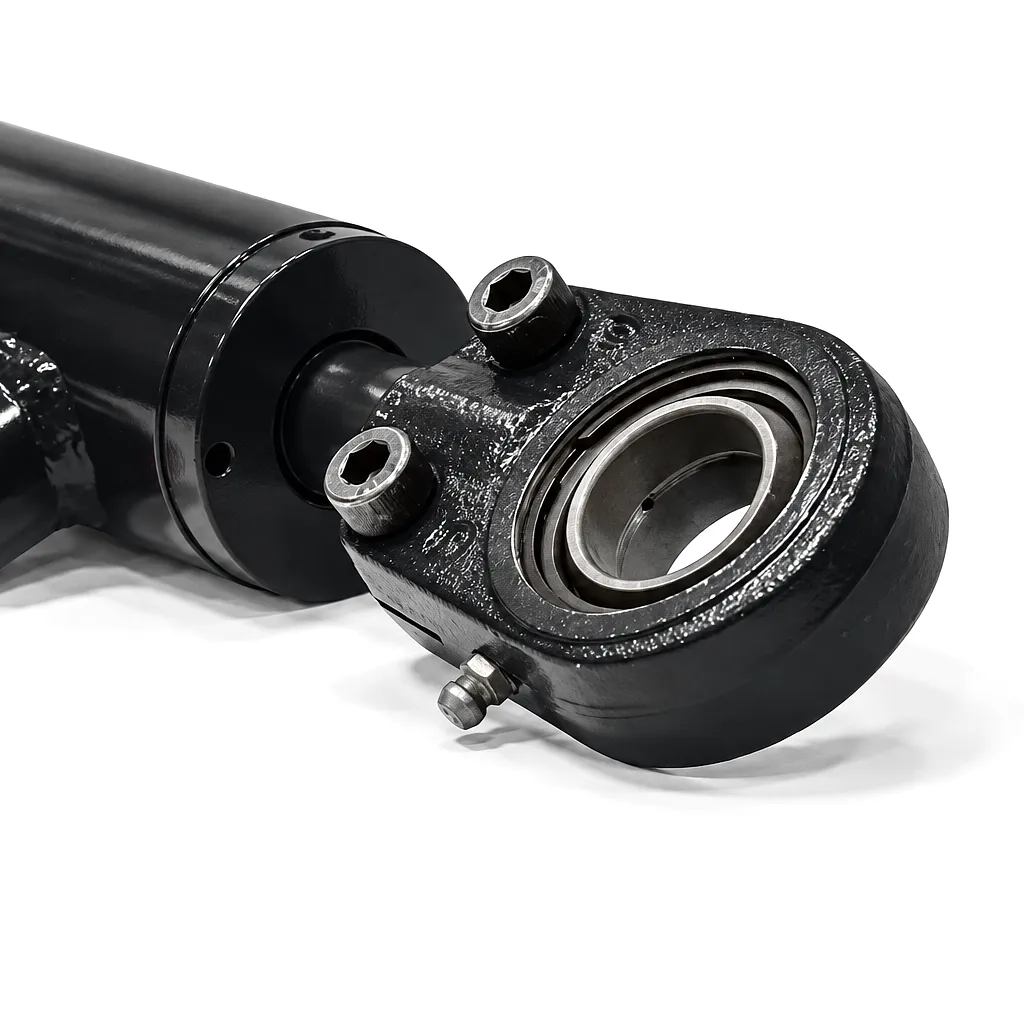 The selection decision is driven by four concurrent criteria: operating pressure, maintenance access philosophy, envelope constraints, and life-cycle cost. Threaded caps reward operations where field maintainability is paramount and pressure remains below 350 bar. Bolted caps justify their premium unit cost in high-pressure systems where in-situ serviceability and integration of ancillary ports are simultaneously required. Welded caps win the compactness and volume-cost argument in high-cycle OEM applications where the cylinder is treated as a service-exchange item.
It is worth noting that hybrid solutions exist. A cylinder can carry a welded cap end and a bolted or threaded rod-end gland — a combination that preserves minimum-OD cap geometry while still permitting rod seal replacement in the field. Ever Power’s engineering team routinely configures such arrangements for UK clients whose maintenance windows allow partial but not full cylinder disassembly.
Ultimately, the 油圧シリンダー end cap is not a minor detail — it is the pressure boundary, the maintenance gateway, and the structural interface rolled into one component. Getting the specification right at the procurement stage saves engineering hours, reduces operational risk, and extends cylinder service life well beyond the baseline design target. The best way to confirm the correct configuration for your specific load, pressure, envelope, and maintenance regime is to bring your application data directly to Ever Power’s application engineering team.
Sheffield Forging Plant Eliminates Cylinder Downtime with Bolted End Cap Redesign
A specialist open-die forging company in Sheffield — supplying flanges, shafts, and discs to the UK’s oil and gas and power generation sectors — had been experiencing recurring hydraulic cylinder failures on the main press manipulator system. The cylinders, rated to 380 bar, were originally fitted with threaded end caps. Thread wear under the high-cycle loading of the manipulator arm (approximately 800 full-stroke cycles per shift, three shifts per day) was generating a slow but measurable loss of pre-load, leading to micro-leakage at the cap face seal and ultimately to catastrophic cap detachment on two occasions within a twelve-month period.
The plant’s engineering director approached Ever Power with full application data: bore 160 mm, stroke 1,400 mm, working pressure 380 bar, operating temperature 75 °C, fluid type HEES biodegradable ester, and a maintenance philosophy that required in-situ seal replacement without crane extraction. Ever Power’s application engineers recommended a 12-bolt flanged end cap configuration using 34CrNiMo6 flanges and ISO grade 10.9 bolts, torqued to a calculated pre-load of 285 N·m — sufficient to maintain joint compression at 1.5× rated pressure. The face seal was upgraded to a dual-lip polyurethane design with anti-extrusion rings rated to 500 bar.
Twelve months after installation, the Sheffield plant reported zero unplanned cylinder stoppages. Planned seal replacement — performed by the in-house maintenance team on the installed cylinder using a standard torque wrench — takes approximately 90 minutes per unit. The engineering director calculated that the redesigned cylinders had saved the plant an estimated £180,000 in unplanned downtime costs in the first year of service, exclusive of the additional productivity gained from eliminating the crane time previously consumed in cylinder extraction and workshop transport.
- Bore: 160 mm
- Stroke: 1,400 mm
- Pressure: 380 bar
- End cap: 12-bolt flange, 34CrNiMo6
- Bolt grade: ISO 10.9, torque 285 N·m
- Seal: dual-lip PU + anti-extrusion ring
- Fluid: HEES ester, 75 °C
What UK Customers Say About Ever Power Cylinders
“We replaced four worn-out threaded-cap cylinders on our press manipulator with Ever Power’s bolted-flange design and the difference in reliability has been night and day. The machining quality on the flange face and seal groove is genuinely exceptional — tighter tolerances than anything we have sourced from European suppliers at twice the price. The fact that our own fitters can re-seal them in the workshop bay without cutting the hydraulic lines has transformed our maintenance planning.”
“We run a fleet of combine harvesters and round balers across Lincolnshire and found Ever Power’s threaded-cap cylinders to be exactly the right choice for our operation. When a seal goes in the middle of harvest, the last thing you want is a cylinder that has to go back to a workshop. Our operators can swap seals on a threaded-cap unit using kit they carry in the cab tool-box. Ever Power’s lead times and the quality of the material trace documentation were better than we expected from an export supplier.”
“Ever Power’s customisation service is genuinely impressive. We needed welded-cap cylinders in duplex stainless with FKM seals, specific port positions for our valve block interface, and EN 10204 3.1 material certs — a specification that most suppliers either couldn’t meet or quoted impractical lead times on. Ever Power delivered prototype units in six weeks with full documentation and both samples passed our internal hydrostatic test programme at 1.5× rated pressure with zero anomalies.”
Common Questions from UK Engineers & Procurement Teams
Ready to Specify Your Hydraulic Cylinder End Cap Solution?
Talk to Ever Power’s application engineering team — specify your bore, pressure, and maintenance requirements, and receive a technical recommendation and competitive price within 48 hours.
© Ever Power Industrial — Hydraulic Cylinder Engineering for Global B2B Markets | [email protected] | edit by gzl
 Japanese
  English
  Italian
  Portuguese
  Dutch
Dutch  Swedish
  Danish
  Finnish
  Polish
  Hindi
Hindi  Kazakh
  Turkish
  Ukrainian
  Romanian
  Spanish
  German
  Russian
  Korean
  Vietnamese
  Thai
Thai  Indonesian
  Malay
Malay  French
  Greek
Greek