
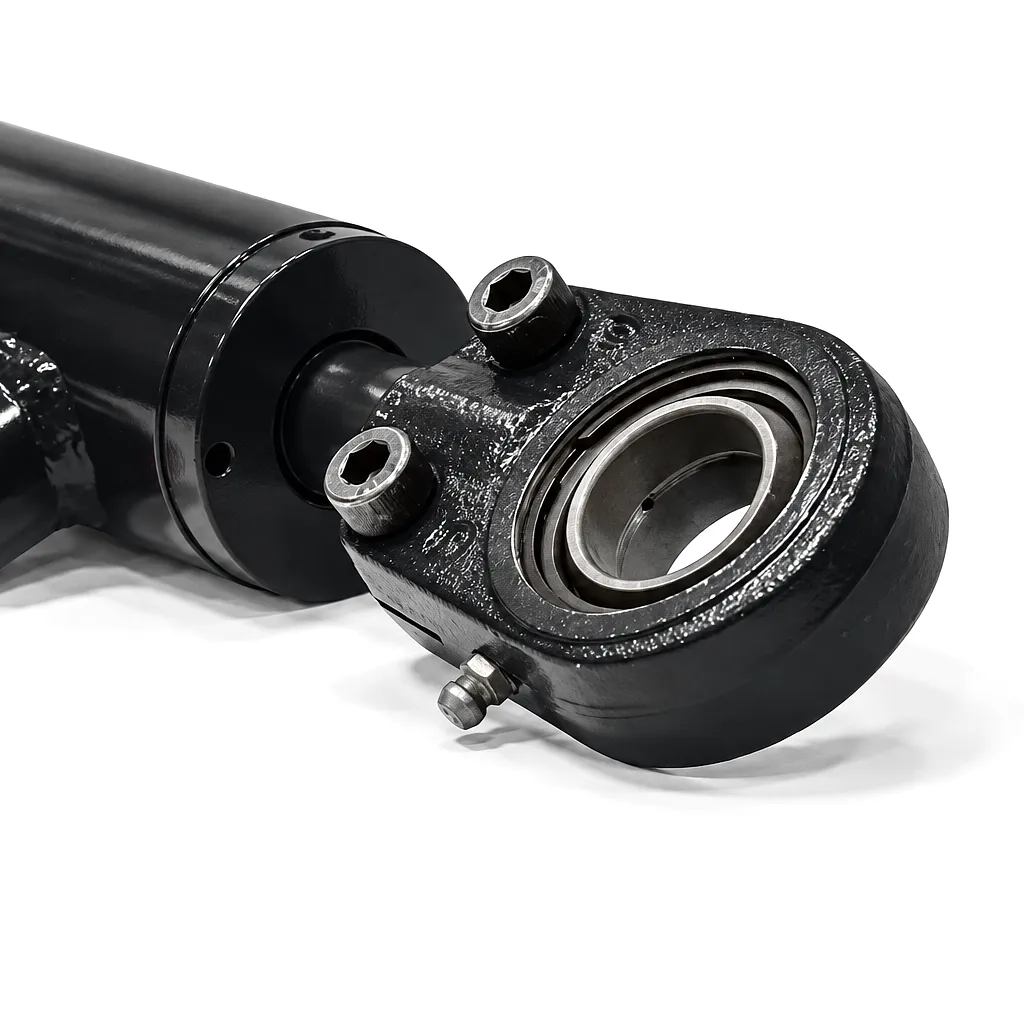
How a Boom Cylinder Actually Works — The Mechanics Behind the Motion
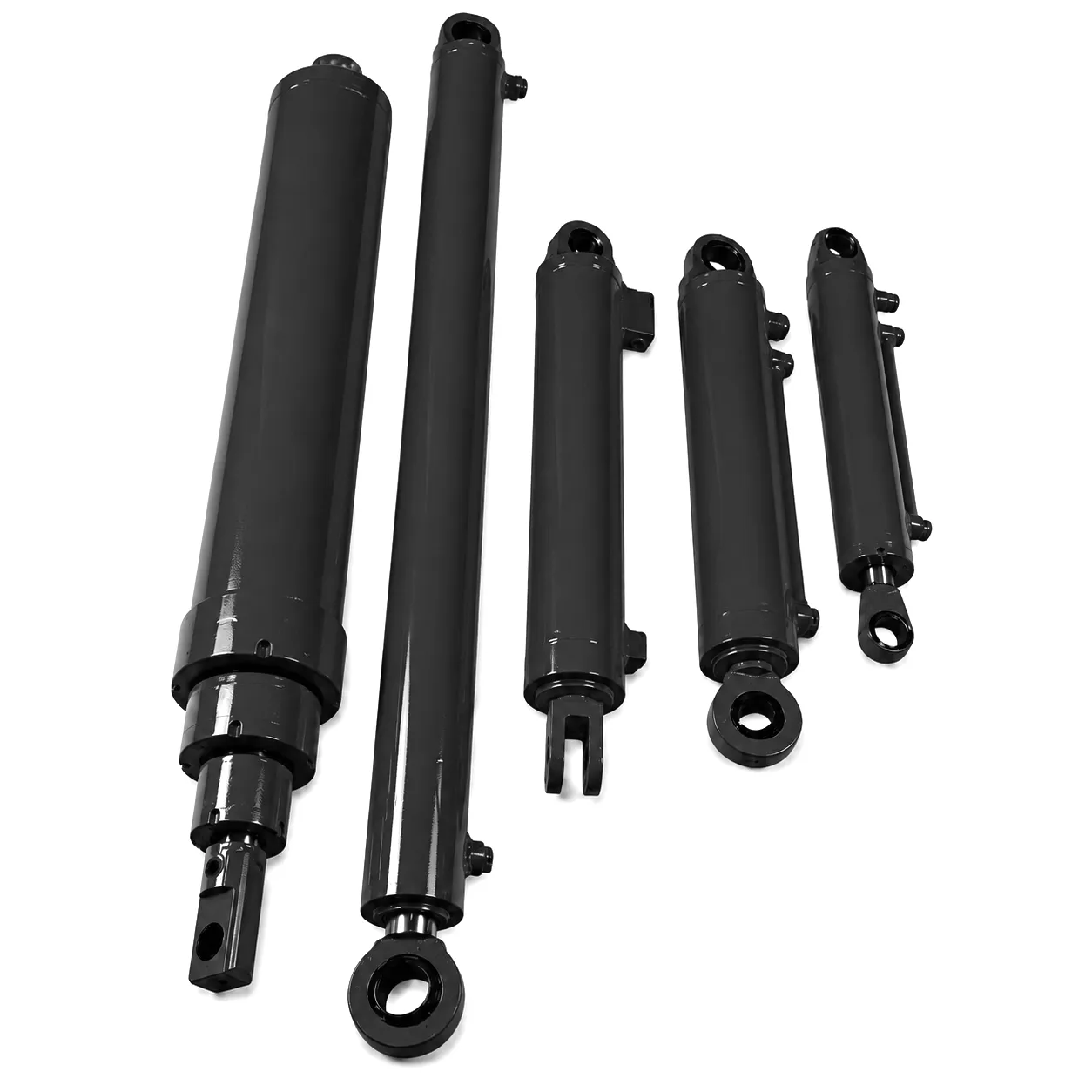
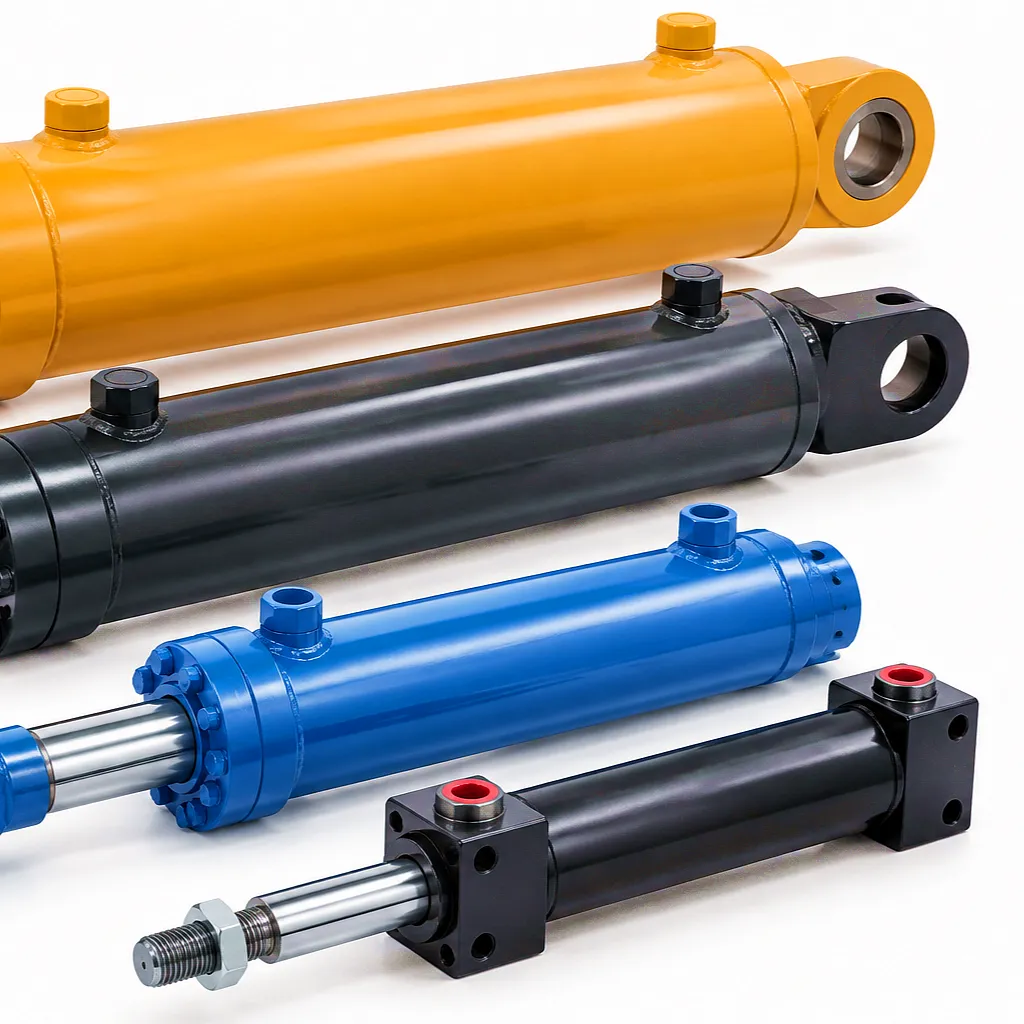 A boom cylinder is a double-acting hydraulic linear actuator designed to extend and retract the primary boom arm of excavators, backhoe loaders, and material-handling cranes. Pressurised hydraulic fluid — typically operating between 200 bar and 350 bar in modern heavy plant — is pumped into either the cap-end or rod-end port, creating differential pressure that drives the piston forward or backward within the barrel. That motion translates directly into boom lift or descent, making the cylinder the mechanical heart of any boom assembly.
What distinguishes a boom cylinder from other actuator types is its combination of high thrust load capacity and side-load tolerance. Unlike standard mid-stroke cylinders in simpler machinery, boom cylinders in an excavator or crane endure simultaneous axial compression, bending moments, and dynamic shock loading — particularly when breaking rock or lifting uneven loads. The piston rod must therefore be engineered not just to withstand axial force but to resist deflection across the full stroke length. Understanding this stress profile is what makes correct specification so critical: an undersized or incorrectly specified replacement boom cylinder will experience accelerated seal wear, rod scoring, and eventually catastrophic barrel damage, often within weeks of installation.
The hydraulic circuit feeding the boom cylinder also plays a role in specification. Many modern UK plant machines use a load-sensing variable-displacement pump system, meaning the cylinder must be compatible with variable flow rates and micro-metering control. Any hydraulic boom cylinder replacement for these systems must be matched to the OEM cushioning specification — both at the cap-end and rod-end — to avoid hydraulic shock and the structural hammer loads that come with it.
The Complete Specification Checklist for Replacement Boom Cylinders
Matching a replacement boom cylinder to an existing machine goes far beyond a bore-and-stroke check. Each specification parameter below represents a genuine failure mode if overlooked — and any one of them, if incorrectly specified, can void a manufacturer’s hydraulic warranty and create a serious HSE compliance issue on UK job sites.
Bore Diameter & Rod Diameter
The bore diameter determines the cylinder’s force output — larger bores generate more thrust for a given system pressure. The rod diameter governs tensile strength and buckling resistance across the stroke length. Both must be matched to OEM spec precisely: even a 2 mm deviation in bore can alter force output by several kilonewtons, affecting boom lift capacity and machine safety ratings. For UK machines working under LOLER (Lifting Operations and Lifting Equipment Regulations 1998), this is a statutory compliance requirement, not merely an engineering preference.
ストローク長
Stroke length defines the full range of boom travel — from maximum retraction to full extension. Fitting a replacement cylinder with a longer stroke than specified can result in the boom over-extending against physical stops, causing barrel-end collisions and structural frame damage. A shorter stroke results in reduced digging or lifting reach. Stroke length must be measured from the OEM drawing or physically from the machine’s existing cylinder, measuring from closed length (retracted eye-to-eye) to extended length, then subtracting to get net stroke. This measurement is non-negotiable.
Working Pressure & Test Pressure Rating
Every replacement boom cylinder must carry a rated working pressure that meets or exceeds the relief valve setting of the host machine’s hydraulic circuit. Most UK heavy plant excavators operate at system pressures between 250 bar and 320 bar, with pilot circuits at lower pressure. The cylinder’s test pressure — typically 1.5 times working pressure — must be verified in the manufacturer’s certificate of conformity. Any cylinder without a hydrostatic test certificate is not compliant with UK PSSR 2000 (Pressure Systems Safety Regulations) and should not be accepted on site.
Mounting Configuration & Eye-to-Eye Dimensions
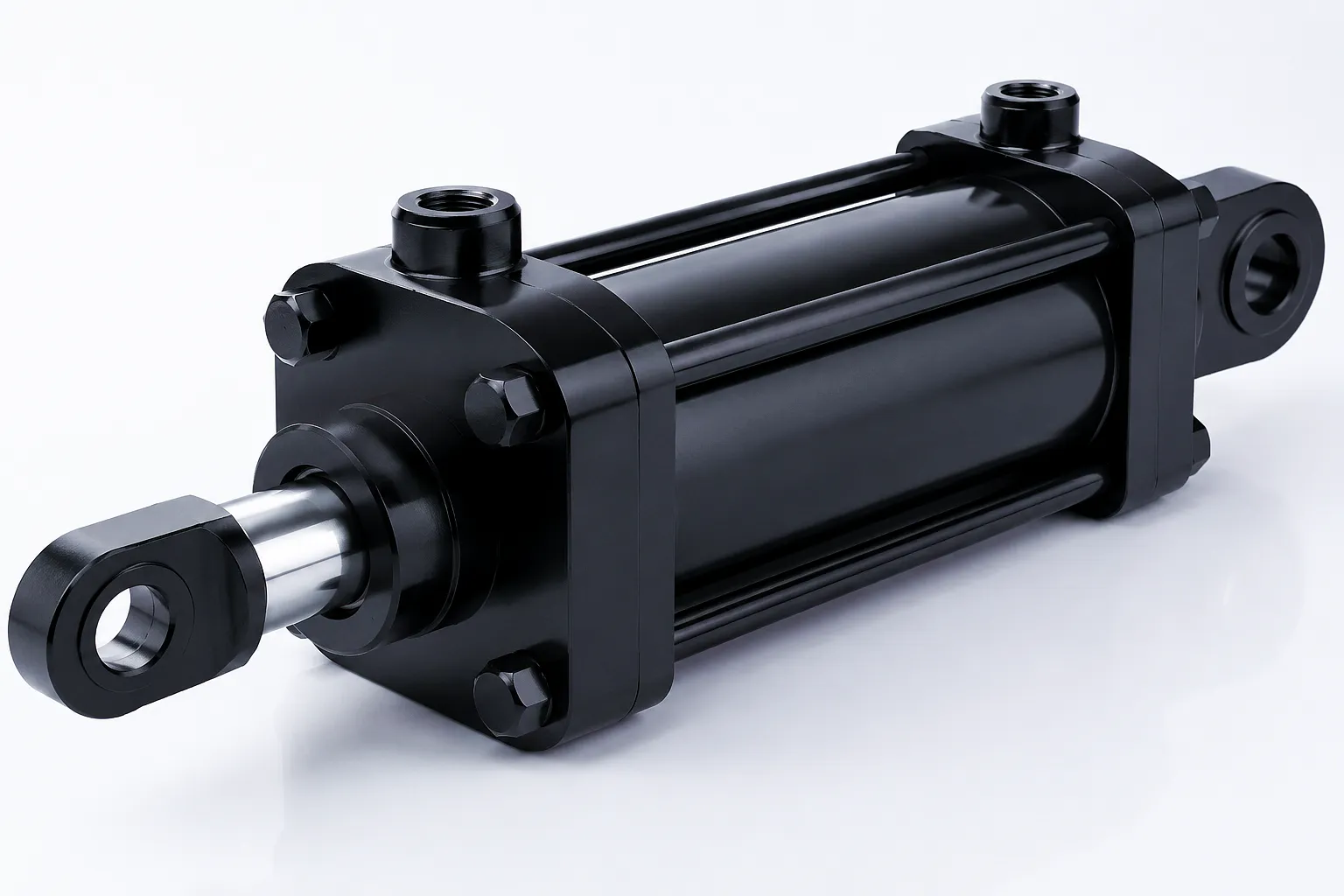
The mounting style — clevis, trunnion, flange, or pin-eye — must replicate the original exactly. For boom cylinders, the most common mounting on UK excavators is a double-pin clevis arrangement at both cap-end and rod-end. Critical dimensions include the pin bore diameter, the clevis width (jaw opening), and the pin-centre-to-pin-centre distance in both fully retracted and fully extended positions. Even a 5 mm discrepancy in clevis width will require bushing modification or create play in the pin joint, accelerating fatigue in the boom structure itself.
Port Size, Thread Type & Port Location
Hydraulic port specifications are a common source of replacement errors. UK and European plant machines typically use BSP (British Standard Pipe) threads, while imported equipment from Japan, South Korea, and the United States may carry SAE, JIC, or NPT porting. The port size must match the existing hose fittings and flow rate requirements — an undersized port creates flow restriction and system overheating. Port location (cap-end versus side-ported, and the angular clock position) must also mirror the original cylinder to allow direct hose connection without additional adapters or loop routing.
Cushioning Specification
End-of-stroke cushioning is particularly important for boom cylinders on UK demolition and excavation equipment where high-frequency, hard-stop cycling is routine. Adjustable cushioning allows the operator to control the deceleration profile at full extension and full retraction, absorbing hydraulic shock and protecting boom pins, bushings, and the cylinder barrel itself. Specifying a replacement without matching the original cushioning type — whether fixed-orifice, adjustable needle, or non-cushioned — will result in increased mechanical noise, structural shock loads, and premature failure at the boom pivot points.
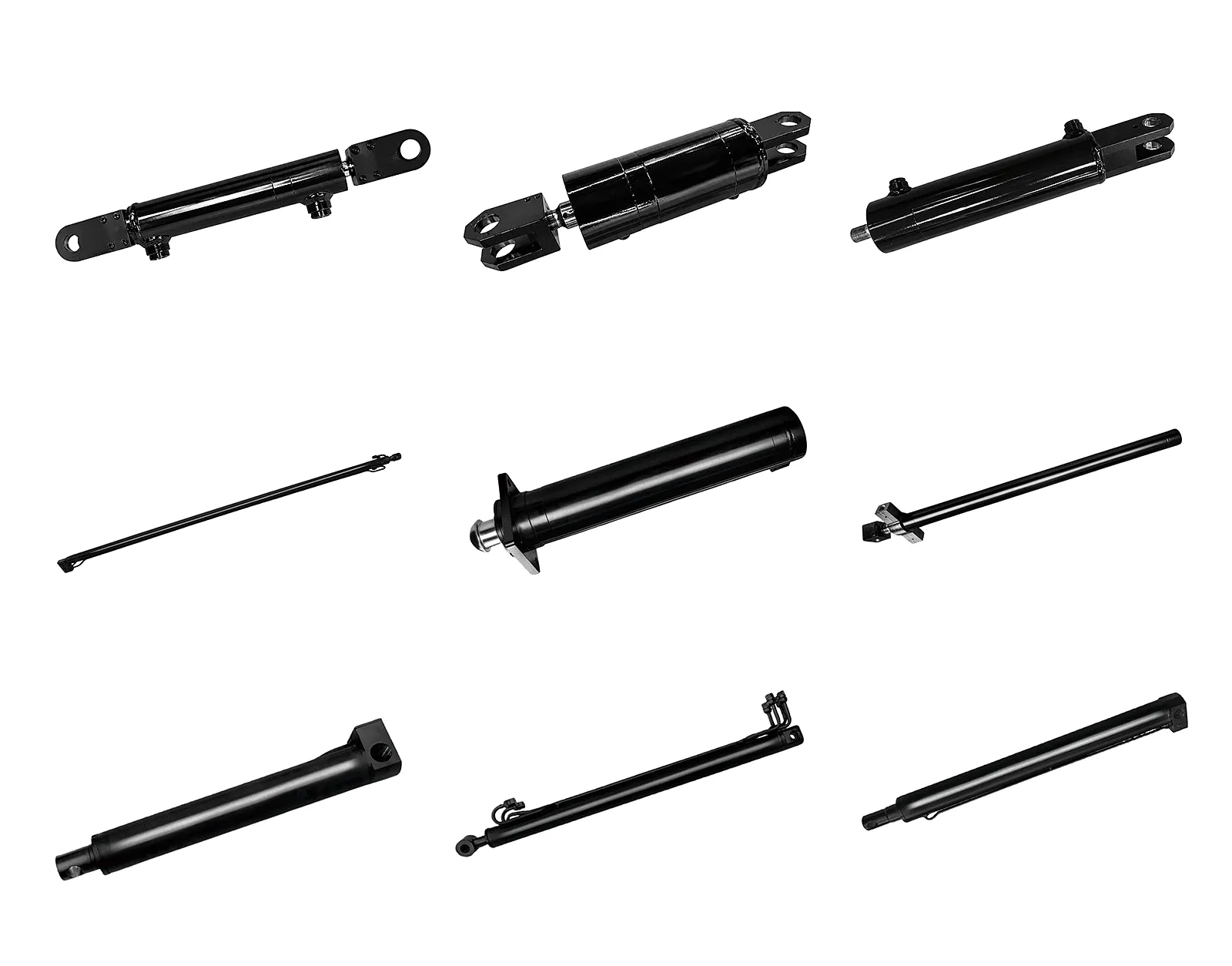
Materials That Determine Long-Term Cylinder Performance
◆ Barrel — Seamless Cold-Drawn Steel
High-quality boom cylinders use seamless cold-drawn steel tubing for the barrel, typically St 52 (equivalent to DIN 2391) or E355 specification. The bore must be honed to Ra 0.4 microns or better to ensure consistent seal contact and low friction actuation. Cylinders with welded or seamed barrel tube are structurally weaker and should be rejected for boom applications in heavy plant service.
◆ Piston Rod — Hard Chrome or Induction-Hardened
The piston rod is the most exposed and wear-prone component. Premium boom cylinders use 42CrMo4 or C45 alloy steel rods with a hard chrome coating of at least 25 microns depth on standard machines, or induction-hardened and ground CK45 rod for extreme-duty applications. The Rockwell hardness of the rod surface should reach HRC 58–62 for chrome-plated versions. Some modern cylinders for UK offshore and marine-adjacent applications use nickel-chrome alloy rod coating for superior corrosion resistance in coastal or tidal environments.
◆ Seals — Polyurethane & PTFE Composite
Seal selection is where many generic replacement boom cylinders fall short. UK operating temperatures range from -15 °C in Scottish winter conditions to over 60 °C internal fluid temperature in sustained heavy-duty summer cycles. Polyurethane (PU) rod seals offer excellent wear resistance at moderate temperatures, while PTFE-composite wiper seals prevent ingress of abrasive grit. For machines operating in muddy Yorkshire fields or fine silica dust from Sheffield steel demolition sites, a double-lip wiper seal with contamination exclusion capability is essential to protect the rod surface and inner seal from accelerated wear.
◆ Piston — Ductile Cast Iron or Steel with Guide Rings
The piston body carries the primary dynamic seal and transmits force between the hydraulic fluid and the rod. In heavy boom cylinder applications, ductile cast iron pistons with precision-turned lands are preferred over standard grey iron, offering better impact resistance under shock loading conditions. The piston must carry wear-compensating PTFE guide rings to prevent metal-to-metal contact with the barrel bore, which would cause catastrophic galling and bypass leakage within a relatively short service cycle.
Technical Performance & Parameter Reference Table — Ever Power Boom Cylinders
| パラメータ | Standard Range | Heavy-Duty / Custom | Unit |
|---|---|---|---|
| 穴径 | 50 – 200 | 200 – 500 | mm |
| ロッドの直径 | 35 – 140 | 140 – 360 | mm |
| ストローク長 | 200 – 2,000 | 2,000 – 8,000 | mm |
| 定格使用圧力 | 160 – 250 | 250 – 420 | bar |
| 試験圧力 | 1.5x working pressure | 1.5x – 2.0x WP | — |
| ロッド表面硬度 | HRC 52 – 58 | HRC 58 – 65 | Rockwell |
| Chrome Plating Thickness | 20 – 30 | 30 – 80 | microns |
| Bore Honing Finish | Ra 0.4 – 0.8 | Ra 0.1 – 0.4 | micron |
| 動作温度 | -20~+80 | -40 to +120 | °C |
| 取り付けタイプ | Pin-Eye, Clevis | Trunnion, Flange, Custom | — |
| シール材 | PU / NBR | PTFE / FKM / HNBR | — |
Industrial Application Scenarios Across UK Sectors
Construction Excavators in Birmingham & the West Midlands
The West Midlands construction sector — anchored in Birmingham’s ongoing urban regeneration and HS2-adjacent civil engineering corridors — represents one of the highest concentrations of tracked excavator operations in the UK. Replacement boom cylinders for machines ranging from 13-tonne mini-excavators to 50-tonne long-reach excavators must be specified to handle the combination of high-frequency digging cycles, urban vibration loads, and stringent on-site safety inspection requirements under the Construction (Design and Management) Regulations 2015. Machines in confined city-centre sites often require non-standard stroke lengths or modified port positions to clear surrounding structural elements. Ever Power supplies directly to Birmingham-based plant hire operators and groundworks contractors with standard and custom boom cylinder solutions.
Agricultural Telehandlers & Front Loaders in Yorkshire & Lincolnshire
Agricultural machinery across Yorkshire’s arable belt and the livestock farms of Lincolnshire relies heavily on telescopic boom handlers and front-end loaders equipped with purpose-built boom cylinders that must endure prolonged outdoor exposure, abrasive silage and slurry environments, and the temperature extremes of British winters. The replacement hydraulic cylinder for a telehandler boom must be specified with heavy-duty wiper seals rated for agricultural contamination resistance, and with zinc or epoxy corrosion protection on external steel surfaces. Farmers and agricultural contractors in this region also demand rapid despatch and on-farm delivery, making supply chain reliability a genuine specification consideration alongside technical performance parameters.
Steel & Metal Processing Cranes in Sheffield & Rotherham
Sheffield’s enduring identity as a steel city is backed by active steel processing, special alloy manufacturing, and heavy lifting operations that depend on hydraulic boom cranes and material-handling gantries. The boom cylinders in these applications face unique thermal cycling demands — ambient temperatures in casting and rolling facilities fluctuate substantially between shifts — alongside the need to handle precision lifting loads where boom positioning accuracy is critical for production quality. Replacement cylinders must carry traceable material certification (BS EN 10204:2004 3.1 mill certificates as minimum) and should be specified with low-speed micro-metering capability so that operators can position suspended loads with precision. We also supply a 油圧式回転アクチュエータステアリングシリンダー for crane slew and directional control applications in Sheffield facilities.
Marine & Port Handling Equipment on the Humber Estuary & Southampton Docks
Port cranes and marine handling equipment operating on the Humber Estuary around Immingham and Hull, as well as container handling machinery at Southampton’s deep-water terminal, represent some of the most demanding service environments for boom cylinders in the UK. Continuous salt-air exposure, wave-induced dynamic loading, and 24-hour operational cycles push cylinder seals, rod coatings, and corrosion protection to their limits. Replacement boom cylinders for marine applications must carry nickel or Kanigen composite chrome rod coatings, marine-grade epoxy external paint systems, and stainless steel port plugs as standard. The entire hydraulic circuit for port equipment benefits from a well-designed カスタム油圧パワーユニット matched specifically to marine-rated cylinder specifications, ensuring pressure stability across variable ambient temperature ranges at tidal locations.
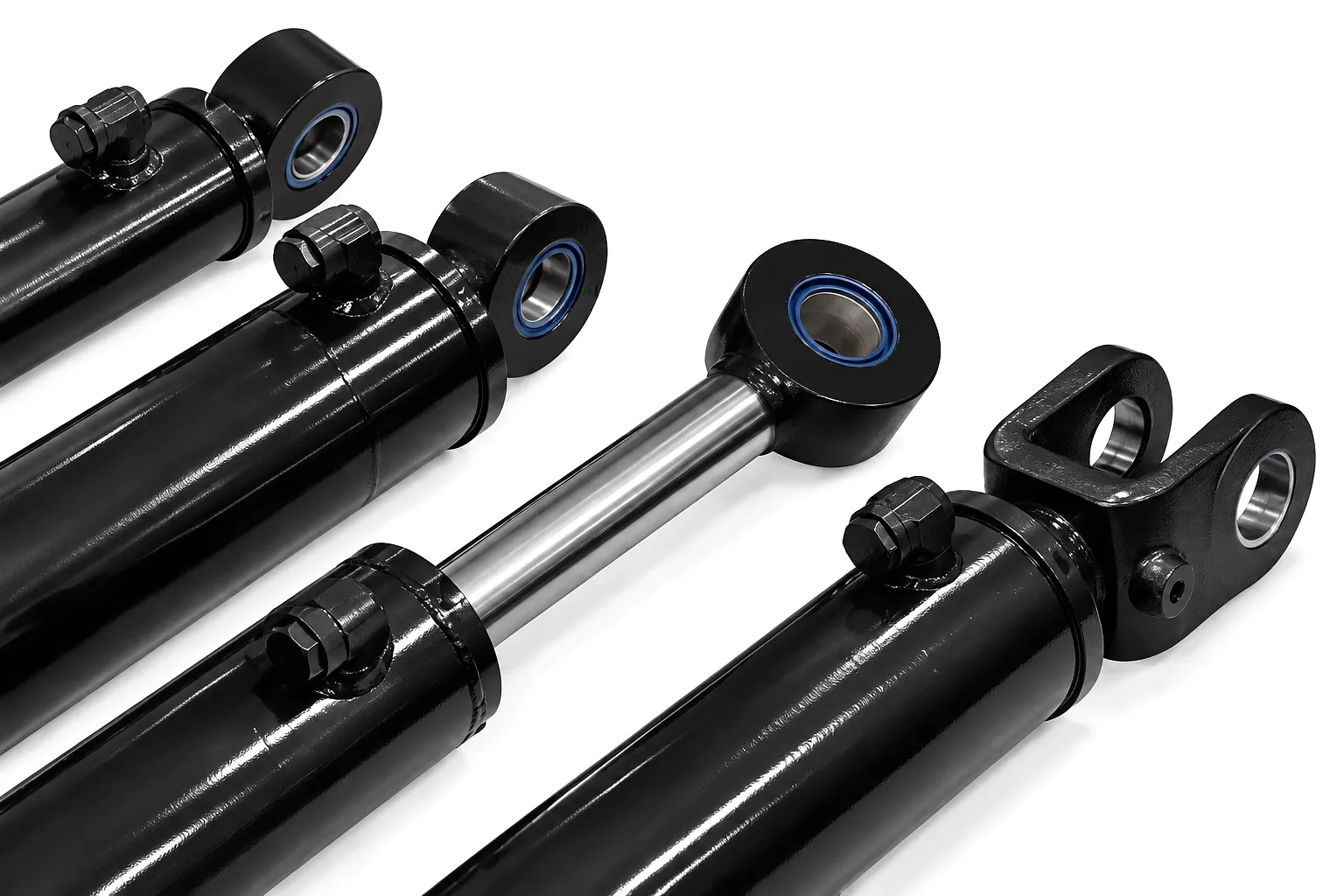
Customer Success Story — Demolition & Groundworks, Leeds
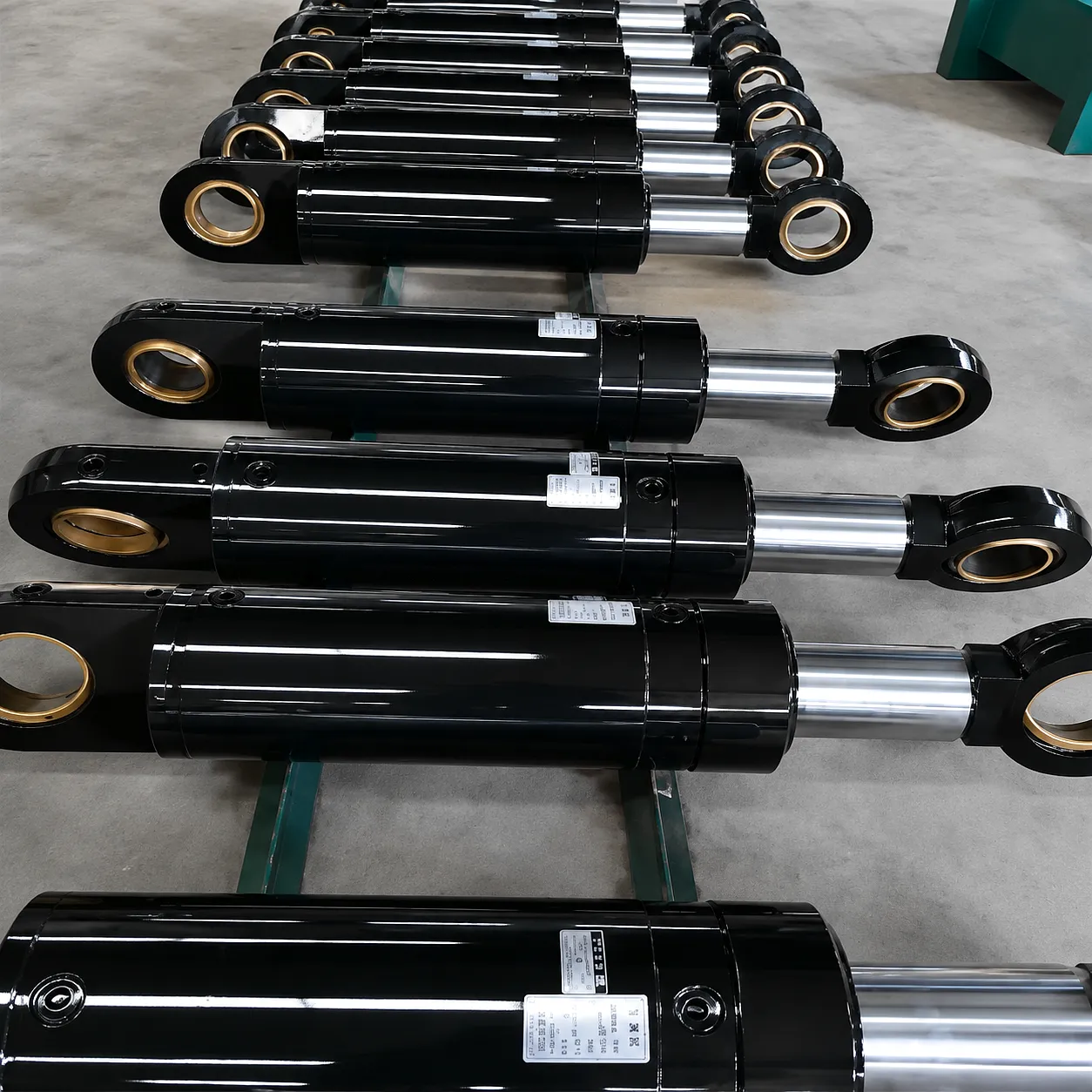
A groundworks and demolition contractor operating out of Leeds, West Yorkshire, came to Ever Power after a persistent problem with a 30-tonne excavator boom cylinder. The original cylinder — a direct-from-dealer OEM replacement — had failed at the rod seal twice within 14 months of installation, both times causing extended machine downtime during live demolition projects in the Leeds city centre. Hydraulic oil weeping from the rod seal was not only an operating cost issue but an environmental liability on a site adjacent to a water management zone.
Ever Power’s engineering team conducted a technical review of the failure pattern and identified that the repeated seal failure was driven by a combination of factors: the machine was operating with a system relief valve set 15 bar above the original cylinder’s rated pressure due to a previous circuit modification, and the original polyurethane rod seal had insufficient thermal stability for the extended duty cycles the machine was running. Our solution was a replacement boom cylinder built to the exact OEM dimensional specification but uprated in two key areas — a higher-grade HNBR seal pack with an extended thermal tolerance, and a 40-micron chrome rod coating replacing the 22-micron original. The result was a cylinder rated to 340 bar rather than the OEM’s 280 bar, with seal chemistry matched to the actual operating environment.
Eighteen months after installation, the cylinder remains in service on the same machine with no seal leakage, no rod scoring, and no unplanned downtime attributable to the cylinder. The contractor has since ordered replacement boom cylinders from Ever Power for three additional machines in the fleet, and has moved all hydraulic cylinder sourcing to Ever Power as a preferred supplier for the Leeds region.
What UK Plant Operators Say About Ever Power Boom Cylinders
“We specified an uprated replacement boom cylinder for our Hitachi ZX350 working on a Manchester ring road project. The cylinder exceeded our system pressure requirements, arrived with full test documentation, and has performed without issue across six months of continuous demolition cycles. The detail in the technical data sheet was exactly what our plant inspector needed for the site compliance file.”
— Plant Engineer, Civil Infrastructure Contractor, Manchester
“Ever Power’s team took the time to understand exactly why our previous boom cylinder failed — they didn’t just send a like-for-like replacement. The upgraded seal pack they recommended for our agricultural telehandler has completely resolved the oil weeping problem we had every winter. Delivery to our farm in Lincolnshire was quicker than I expected and the packaging kept the cylinder in perfect condition.”
— Farm Manager, Arable & Livestock Operation, Lincolnshire
“We source replacement hydraulic cylinders for our crane rebuild operations in Sheffield, and Ever Power is now our go-to supplier for non-standard specifications. The custom bore-and-stroke combination we needed for a 1990s-era Liebherr crane was delivered with full dimensional inspection reports and the 3.1 mill certificates we need for our client’s quality records. Pricing was competitive and the lead time was honestly better than any domestic UK supplier we had tried.”
— Workshop Manager, Crane & Lifting Equipment Rebuild Specialist, Sheffield
Frequently Asked Questions — Buying Replacement Boom Cylinders in the UK
Ready to Source Your Replacement Boom Cylinder?
Tell us your bore, stroke, pressure rating, and application — and Ever Power’s engineering team will have a technical proposal in your inbox within 3 working days. Full LOLER and PSSR documentation included as standard.
gzlによる編集
 Japanese
  English
  Italian
  Portuguese
  Dutch
Dutch  Swedish
  Danish
  Finnish
  Polish
  Hindi
Hindi  Kazakh
  Turkish
  Ukrainian
  Romanian
  Spanish
  German
  Russian
  Korean
  Vietnamese
  Thai
Thai  Indonesian
  Malay
Malay  French
  Greek
Greek