
Өнім сипаттамасы
Өнім сипаттамасы
Product advantage
1. Safer Junfu hydraulic cylinder adopts excellent structural design and new material application, which can withstand the harshest working conditions and continue to work stably without disconnection, ensuring the safety of drivers and vehicles, and creating the most valuable safety for users.
2. faster unloading
Junfu series oil cylinder adopts excellent structural design to improve the unloading speed of the oil cylinder!
3.higher lift frequency
junfu series oil cylinders are suitable for all-weather short barge and high-frequency operations, with stable performance, extremely low failure rate, increasing the number of transfers and reducing downtime!
4. Greater adaptability to the environment
junfu series oil cylinder adopts innovative sealing technology and new material application, which can adapt to the temperature range of -40~110ºC, and can achieve excellent performance in high temperature and low temperature environment operation!
5. lighter
Compared with other products of the same series, CHINAMFG series cylinders reduce the dead weight by 15%~20%, and increase the lifting force by 10%~15%!
6. Greater lifting force
Compared with other products of the same series, the lifting force of CHINAMFG series cylinders is increased by 10%~15%. More lift, more load, more profit! Lighter dead weight, greater lifting force, more lightness!
Detailed Photos
Product Parameters
Type | cylinder dia (mm) | rated pressure (MPA) | stroke (mm) | total length (mm) | weight (kg) |
FEE129-3-3220 | 129 | 22 | 3220 | 1387 | 191 |
FEE129-4-3480 | 129 | 22 | 3480 | 1218 | 178 |
FEE137-3-3830 | 137 | 22 | 3830 | 1640 | 244 |
FEE137-3-4280 | 137 | 22 | 4280 | 1860 | 268 |
FEE137-4-4280 | 137 | 22 | 4280 | 1455 | 236 |
FEE157-4-3830 | 157 | 22 | 3830 | 1350 | 260 |
FEE157-4-4650 | 157 | 22 | 4650 | 1555 | 280 |
FEE157-4-5000 | 157 | 22 | 5000 | 1650 | 300 |
FEE157-5-3830 | 157 | 22 | 3830 | 1170 | 230 |
FEE157-5-4650 | 157 | 22 | 4650 | 1275 | 245 |
FEE179-4-4280 | 179 | 22 | 4280 | 1480 | 235 |
FEE179-4-5390 | 179 | 22 | 5390 | 1755 | 360 |
FEE179-4-6100 | 179 | 22 | 6100 | 1940 | 390 |
FEE179-5-3830 | 179 | 22 | 3830 | 1170 | 265 |
FEE179-5-4650 | 179 | 22 | 4650 | 1282 | 283 |
FEE179-5-5000 | 179 | 22 | 5000 | 1405 | 305 |
FEE179-5-5800 | 179 | 22 | 5800 | 1570 | 350 |
FEE179-5-6300 | 179 | 22 | 6300 | 1655 | 360 |
FEE179-5-7300 | 179 | 22 | 7300 | 1850 | 400 |
FEE191-5-5780 | 191 | 22 | 5780 | 1530 | 273 |
FEE191-5-6500 | 191 | 22 | 6500 | 1670 | 410 |
FEE191-5-6800 | 191 | 22 | 6800 | 1735 | 738 |
FEE191-5-7300 | 191 | 22 | 7300 | 1835 | 458 |
FEE191-54-6100 | 191 | 22 | 6100 | 1955 | 273 |
FEE196-4-6180 | 196 | 22 | 6180 | 1940 | 479 |
FEE196-5-6350 | 196 | 22 | 6350 | 1710 | 450 |
FEE202-4-6100 | 202 | 22 | 6100 | 1935 | 479 |
FEE202-5-6800 | 202 | 22 | 6800 | 1765 | 465 |
FEE202-6-7000 | 202 | 22 | 7000 | 1570 | 440 |
FEE214-5-7300 | 214 | 22 | 7300 | 1900 | 530 |
FEE214-7-7600 | 214 | 22 | 7600 | 1455 | 450 |
FEE240-5-9030 | 240 | 22 | 9030 | 2270 | 820 |
Pipe dia: 202/179/157/137/118/99/80 240/214/191/169/149/129/110/90/70 | |||||
Company Profile
Certifications
Packaging & Shipping
Our Partner
After Sales Service
FAQ
Q1: How about the quality?
Our cylinders can replace HYVA cylinder well, with similar qualityand mounting sizes
Q2: What’s your cylinder’s advantages ?
The cylinders are manufactured by advanced equipments and made under strictly quality control processing.
The steel is tempered and all raw materials are good quality from world famous companies.
Competitive price!
Q3: When your company be established ?
Our company be established in 2002, professional manufacturer of hydraulic cylinders more than 20 years.
We had passed IATF 16949:2016 Quality control system, ISO9001, CE.
Q4: How about the delivery time ?
according to the order quantity.
Q5: How about the cylinder’s quality gurantee ?
One year.
| Certification: | GS, RoHS, CE, ISO9001, IATF16949 |
|---|---|
| Pressure: | High Pressure |
| Work Temperature: | Normal Temperature |
| Samples: | US$ 800/Piece 1 Piece(Min.Order) | Order Sample as the client request |
|---|
| Customization: | Available |
|
|---|
.shipping-cost-tm .tm-status-off{background: none;padding:0;color: #1470cc}
| Shipping Cost: Estimated freight per unit. | about shipping cost and estimated delivery time. |
|---|
| Payment Method: |
|
|---|---|
| Initial Payment Full Payment |
| Currency: | US$ |
|---|
| Return&refunds: | You can apply for a refund up to 30 days after receipt of the products. |
|---|
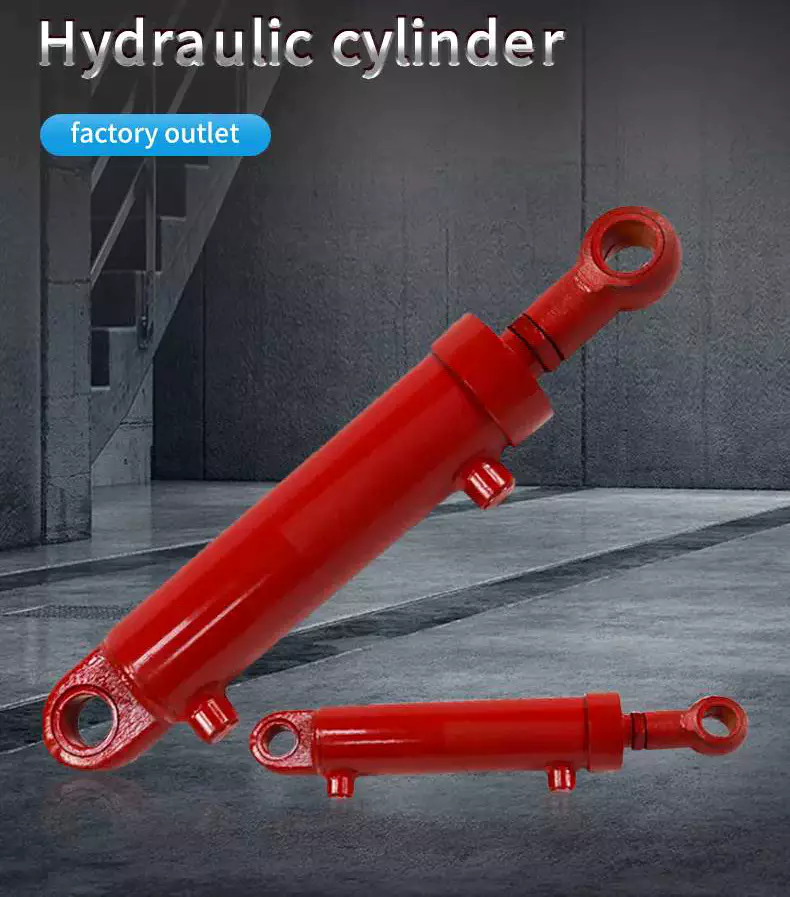
How do hydraulic cylinders ensure smooth and consistent movement in heavy machinery?
Hydraulic cylinders play a vital role in ensuring smooth and consistent movement in heavy machinery. Their design and operation allow for precise control over the motion of heavy loads, resulting in efficient and reliable performance. Here’s a detailed explanation of how hydraulic cylinders contribute to smooth and consistent movement in heavy machinery:
1. Hydraulic Fluid and Pressure:
– Hydraulic cylinders operate by utilizing hydraulic fluid, typically oil, to transmit force and motion. The fluid is pressurized by a hydraulic pump, creating a force that acts on the piston inside the cylinder. The pressure of the hydraulic fluid can be precisely controlled, allowing for smooth and gradual movement of heavy machinery. The fluid’s incompressibility ensures that the force is evenly distributed, resulting in consistent and predictable motion.
2. Piston and Cylinder Design:
– Hydraulic cylinders are designed with precision to ensure smooth movement. The piston and cylinder bore are machined to tight tolerances, reducing friction and minimizing internal leakage. This precise fit between the piston and cylinder walls helps maintain consistent motion without jerks or sudden changes in speed. Additionally, the use of high-quality seals and lubrication further enhances the smooth operation of the cylinder.
3. Control Valves and Flow Control:
– Hydraulic systems incorporate control valves that regulate the flow of hydraulic fluid into and out of the cylinder. These valves allow for precise control over the speed and direction of the cylinder’s movement. By adjusting the flow rate, operators can achieve smooth and controlled motion of heavy machinery, avoiding sudden starts or stops. Flow control valves also enable speed adjustment, ensuring consistent movement even under varying loads or operating conditions.
4. Cushioning and Damping:
– Hydraulic cylinders can be equipped with cushioning mechanisms to absorb shock and minimize impacts during the movement of heavy machinery. Cushioning is achieved by incorporating specialized valves or adjustable orifices in the cylinder, which restrict the flow of hydraulic fluid near the end of the stroke. This gradual deceleration helps prevent sudden jolts or vibrations, maintaining smooth and consistent movement while reducing stress on the machinery and its components.
5. Load Balancing:
– Hydraulic cylinders can be designed and arranged in a system to balance the load and distribute forces evenly. By utilizing multiple cylinders in parallel or series configurations, heavy machinery can achieve balanced movement, preventing uneven stress and ensuring smooth operation. Load balancing also helps minimize the risk of component failure and enhances the overall stability and longevity of the machinery.
6. Feedback and Control Systems:
– Advanced hydraulic systems incorporate feedback sensors and control systems to monitor and adjust the movement of heavy machinery. These sensors provide real-time information about the position, speed, and force exerted by the hydraulic cylinders. The control system processes this data and adjusts the flow of hydraulic fluid accordingly to maintain smooth and consistent movement. By continuously monitoring and regulating the cylinder’s operation, feedback and control systems contribute to precise and reliable motion control.
7. Maintenance and Servicing:
– Regular maintenance and servicing of hydraulic cylinders are essential to ensure their smooth and consistent movement in heavy machinery. Proper lubrication, inspection of seals, and replacement of worn-out components help maintain optimal performance. Preventive maintenance practices, such as filter replacements and fluid analysis, also contribute to the longevity and reliability of hydraulic systems, ensuring consistent movement over time.
In summary, hydraulic cylinders ensure smooth and consistent movement in heavy machinery through the use of hydraulic fluid and pressure, precise piston and cylinder design, control valves and flow control, cushioning and damping mechanisms, load balancing, feedback and control systems, and regular maintenance and servicing. By leveraging these features, hydraulic cylinders provide the necessary force and control to handle heavy loads while maintaining precise and reliable motion, enhancing the overall performance and productivity of heavy machinery in various industrial applications.
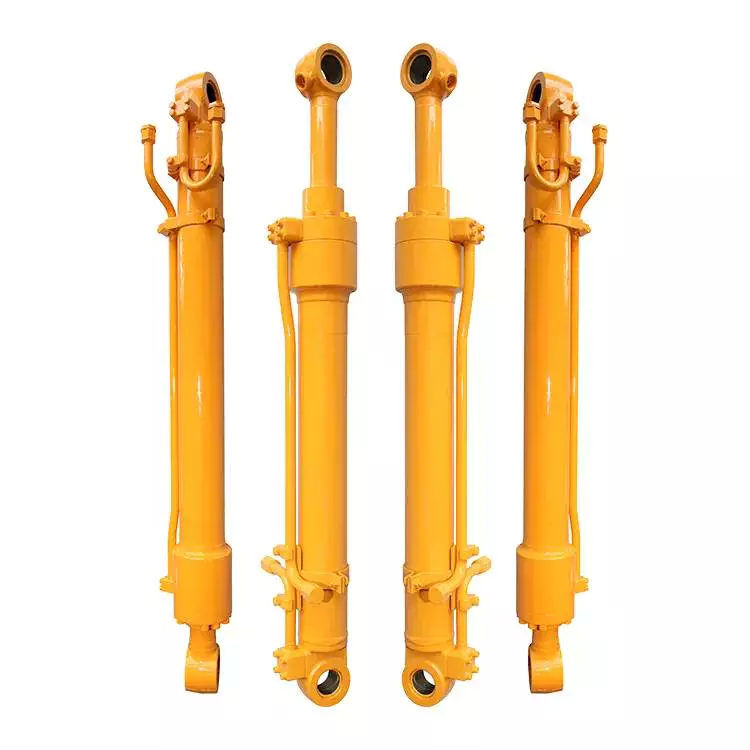
Гидравликалық цилиндрлерді баламалы энергия көздерімен бірге пайдалану
Гидравликалық цилиндрлерді балама энергия көздерімен бірге пайдалануға болады. Гидравликалық жүйелердің жан-жақты сипаты оларды тиімділікті, басқаруды және энергия өндіруді арттыру үшін әртүрлі балама энергия технологияларымен біріктіруге мүмкіндік береді. Гидравликалық цилиндрлерді балама энергия көздерімен бірге қалай пайдалануға болатынының бірнеше мысалын қарастырайық:
- Гидравликалық энергияны сақтау: Гидравликалық цилиндрлерді жаңартылатын көздер (мысалы, күн немесе жел) немесе қалдық энергияны қалпына келтіру сияқты баламалы энергия көздерін пайдаланатын энергия сақтау жүйелерінде қолдануға болады. Бұл жүйелер сұйықтықты жоғары қысымды аккумуляторға айдау арқылы артық энергияны гидравликалық потенциалдық энергияға айналдырады. Энергия қажет болған кезде қысымдағы сұйықтық босатылып, гидравликалық цилиндрді қозғалтып, механикалық қуат өндіреді.
- Толқын және қайту энергиясын түрлендіру: Гидравликалық цилиндрлерді толқын және қайту энергиясын түрлендіру жүйелерінде пайдалануға болады. Бұл жүйелер мұхит толқындарының немесе қайту ағындарының күшін пайдаланады және оны пайдалануға жарамды энергияға айналдырады. Гидравликалық цилиндрлерді, онымен байланысты сорғылар мен клапандармен бірге, толқындардан немесе қайтулардан энергияны ұстап, басқару, цилиндрлерді қозғалту және механикалық қуат өндіру немесе электр энергиясын өндіру үшін пайдалануға болады.
- Гидроэлектр энергиясын өндіру: Гидравликалық цилиндрлер дәстүрлі су электр станцияларында маңызды рөл атқарады. Дегенмен, гидравликалық цилиндрлерден шағын немесе микрогидроэнергетикалық жүйелер сияқты балама тәсілдер де пайда көре алады. Бұл жүйелер гидравликалық цилиндрлерге қосылған турбиналарды іске қосу үшін табиғи немесе жасанды су ағындарын пайдаланады, олар гидравликалық энергияны механикалық қуатқа немесе электр энергиясына айналдырады.
- Жел турбиналарында гидравликалық іске қосу: Гидравликалық цилиндрлерді жел турбиналарында өнімділікті және басқаруды жақсарту үшін пайдалануға болады. Мысалы, гидравликалық қадамды басқару жүйелері жел турбинасының қалақтарының көлбеу бұрышын реттеу үшін гидравликалық цилиндрлерді пайдаланады, бұл олардың аэродинамикалық көрсеткіштерін жел жағдайларына байланысты оңтайландырады. Бұл тиімді электр қуатын өндіруге және шамадан тыс жел жүктемелерінен қорғауға мүмкіндік береді.
- Геотермалдық энергияны өндіру: Геотермалдық энергияны өндіру Жердің ішкі қабатынан табиғи жылуды пайдаланып, энергия өндіруді қамтиды. Гидравликалық цилиндрлерді геотермалдық жүйелерде сұйықтық ағынын басқару және реттеу үшін пайдалануға болады, бұл геотермалдық энергияны тиімді өндіруге және пайдалануға мүмкіндік береді. Оларды жылыту және салқындату үшін геотермалдық жылу сорғыларында да пайдалануға болады.
Қорытындылай келе, гидравликалық цилиндрлерді энергияны сақтауды, электр энергиясын өндіруді және басқаруды жақсарту үшін баламалы энергия көздерімен бірге тиімді пайдалануға болады. Гидравликалық энергия сақтау жүйелері, толқын және қайту энергиясын түрлендіру, гидроэлектроэнергия өндіру, жел турбиналарында гидравликалық іске қосу немесе геотермалдық энергияны алу арқылы болсын, гидравликалық цилиндрлер баламалы энергия көздерін пайдалану және пайдалану үшін жан-жақты және тиімді шешімдер ұсынады.
What safety precautions should be followed when working with hydraulic cylinders?
Working with hydraulic cylinders requires strict adherence to safety precautions to prevent accidents, injuries, and damage to equipment or property. Hydraulic systems operate under high pressures and involve moving parts, which can pose serious hazards if not handled properly. Here’s a detailed explanation of the safety precautions that should be followed when working with hydraulic cylinders:
1. Training and Knowledge:
– Ensure that personnel working with hydraulic cylinders have received adequate training and possess a thorough understanding of hydraulic system operation, maintenance, and safety protocols. Proper training should cover topics such as hydraulic principles, pressure ratings, safe work practices, and emergency procedures. Only trained and authorized personnel should be allowed to handle hydraulic cylinders.
2. Wear Personal Protective Equipment (PPE):
– Always wear appropriate personal protective equipment when working with hydraulic cylinders. This may include safety glasses, gloves, protective clothing, and steel-toed boots. PPE helps protect against potential hazards, such as hydraulic fluid leaks, flying debris, or accidental contact with moving parts.
3. Hydraulic System Inspection:
– Before working with hydraulic cylinders, inspect the entire hydraulic system for any signs of damage, leaks, or loose connections. Check hydraulic hoses, fittings, valves, and cylinders for integrity and secure fastening. If any issues are detected, the system should be repaired or serviced before operation.
4. Relieve Pressure:
– Before performing any maintenance or disassembly on a hydraulic cylinder, it is crucial to relieve the pressure in the system. Follow the manufacturer’s instructions to properly release pressure and ensure that the hydraulic cylinder is depressurized before starting any work. Failure to do so can result in sudden and uncontrolled movement of the cylinder or hydraulic lines, leading to serious injuries.
5. Lockout/Tagout Procedures:
– Implement lockout/tagout procedures to prevent accidental energization of the hydraulic system while maintenance or repair work is being conducted. Lockout/tagout involves isolating the energy source, such as shutting off the hydraulic pump and locking or tagging the controls to prevent unauthorized operation. This procedure ensures that the hydraulic cylinder remains in a safe, non-operational state during maintenance activities.
6. Use Proper Lifting Techniques:
– When working with heavy hydraulic cylinders or components, use proper lifting techniques and equipment to avoid strain or injury. Hydraulic cylinders can be heavy and awkward to handle, so ensure that lifting equipment, such as cranes or hoists, is properly rated and used correctly. Follow safe lifting practices, including securing the load and maintaining a stable lifting posture.
7. Hydraulic Fluid Handling:
– Handle hydraulic fluid with care and follow proper procedures for fluid filling, transfer, and disposal. Avoid contact with the skin or eyes, as hydraulic fluid may be hazardous. Use appropriate containers and equipment to prevent spills or leaks. If any hydraulic fluid comes into contact with the skin or eyes, rinse thoroughly with water and seek medical attention if necessary.
8. Regular Maintenance:
– Perform regular maintenance and inspections on hydraulic cylinders to ensure their safe and reliable operation. This includes checking for leaks, inspecting seals, monitoring fluid levels, and conducting periodic servicing as recommended by the manufacturer. Proper maintenance helps prevent unexpected failures and ensures the continued safe use of hydraulic cylinders.
9. Follow Manufacturer Guidelines:
– Always follow the manufacturer’s guidelines, instructions, and recommendations for the specific hydraulic cylinders and equipment being used. Manufacturers provide important safety information, maintenance schedules, and operational guidelines that should be strictly adhered to for safe and optimal performance.
10. Emergency Preparedness:
– Be prepared for potential emergencies by having appropriate safety equipment, such as fire extinguishers, first aid kits, and emergency eyewash stations, readily available. Establish clear communication channels and emergency response procedures to promptly address any accidents, leaks, or injuries that may occur during hydraulic cylinder operations.
By following these safety precautions, individuals working with hydraulic cylinders can minimize the risk of accidents, injuries, and property damage. It is essential to prioritize safety, maintain awareness of potential hazards, and ensure compliance with relevant safety regulations and industry standards.


editor by CX 2023-11-06
 Kazakh
  English
  Italian
  Portuguese
  Dutch
Dutch  Swedish
  Danish
  Finnish
  Polish
  Hindi
Hindi  Turkish
  Ukrainian
  Romanian
  Spanish
  German
  Russian
  Korean
  Japanese
  Vietnamese
  Thai
Thai  Indonesian
  Malay
Malay  French
  Greek
Greek