
Penerangan Produk
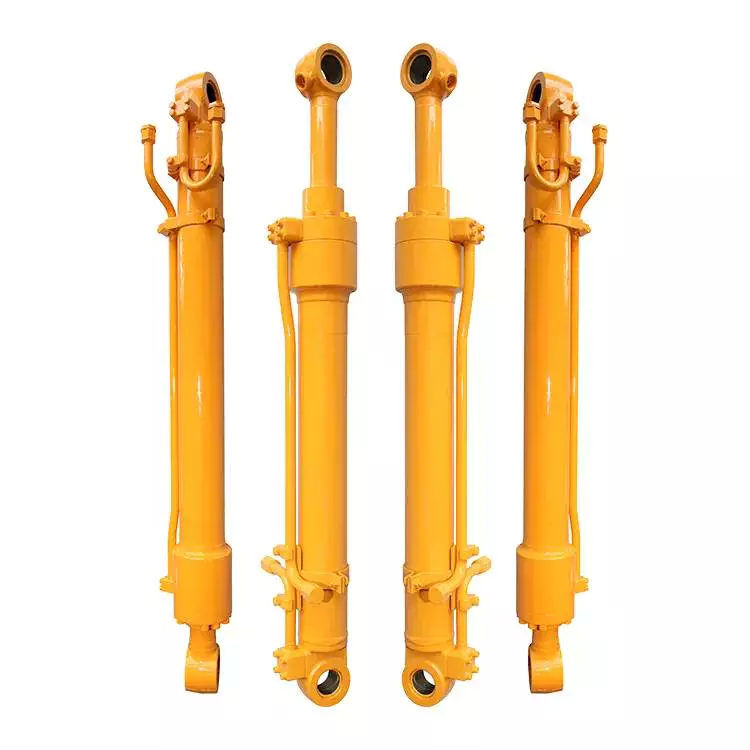
Hydraulic Cylinder for Coal Mining with Competitive Price
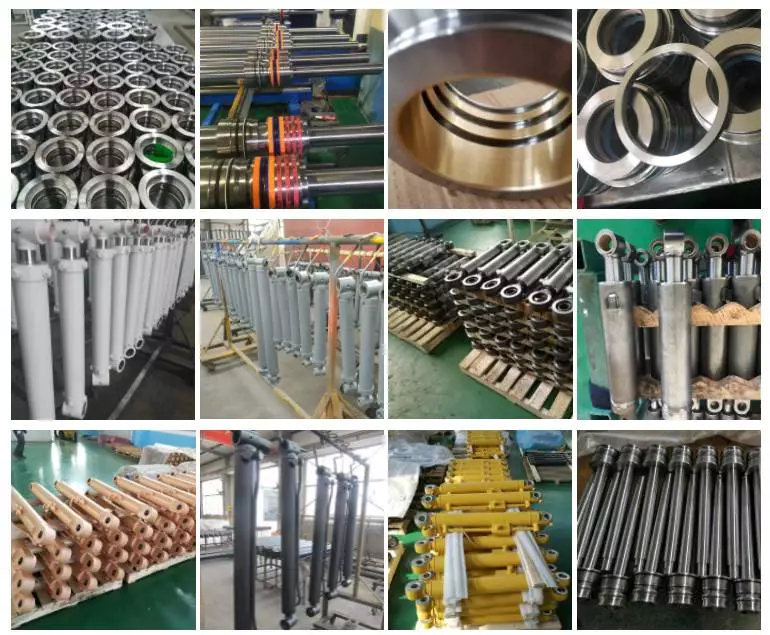
Wantong Hydraulic Co.,LTD is specialized in design, R&D,and manufacturing of hydraulic cylinder/ system with over 20years’ experience, company cover an area of 180,000 square meters, there are 600 employees and 700 sets of equipment, annual output more than 200,000 sets.
History of Wantong:
>Dump truck telescopic hydraulic cylinder was successsfully developed in 2002;
>Began to cooperate with famous brands companies ,Such as CHINAMFG ,SHACMAN in 2005;
>Passed ISO/TS 16949 International Quality management system certification in 2006;
>Began to cooperate with ZMJ,Co.,Ltd in 2009;
>The electroplating production line was completed and had passed the acceptance of environmental impact assessment in 2012;
>Has been raised as a listed Company in 2014;
>Cylinder with 10-stage .22-meter stroke for project was successfully developed in 2015;
>The North American Type Thin-Walltelescopic cylinder was successfully developed in 2015;
>Hydro-Pneumatic Spring and Suspension System was successfully developed in 2016;
| HS Code | 8412210000 |
| Application | Coal mining equipment |
| Material of cylinder tube | Alloy steel |
| Seal | Hallite, NOK, Guarnitec, Parker |
| Coating | All tubes are chrome plated |
| Working pressure | 16Mpa-30Mpa |
| Strok | As customer demand |
| Color | red black blue gray, according to customer’s requirement |
| Mounting Type | Earring-trunnion, double trunnion Etc |
| Package | pallet, plywood case |
| Warranty | Period of 14 months from the date of manufacture.The manufacture date is engraved on the label of every cylinder. |
| Main export market | US, Canada, South Korea, Russia, Australia, Indonesia, Malaysia, Kenya, Philippines, Xihu (West Lake) Dis.via, the United Arab Unites, Singapore |
| Payment terms | T/T, L/C, |
| Delivery time | 20 days after down payment |
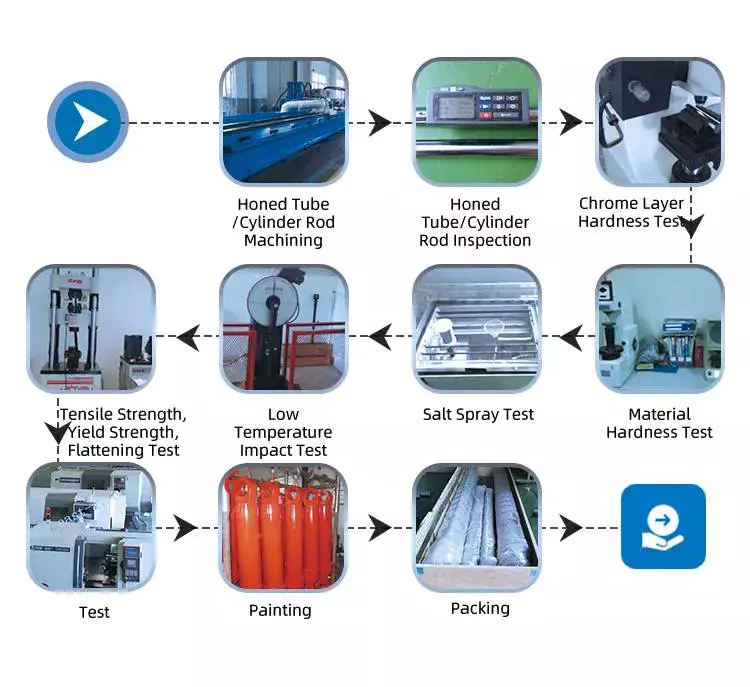
Production Process:
>Each processing under our control, each products, every step under strict quality control;
Exhibitions& Customers:
>We are the supplier of SINOTRUK, CIMC, JAC, SHACMAN, ZMJ and YANKUANG GROUP
manufacturing and refitting company use our telescopic cylinder as first choice.
>We attended each Bauma exhibition, the world trade fair for construction equipment, building material machines, mining machines and earn much more opportunity to extend our business to oversea market.
Quality Control:
1, The mechanical properties and chemical elements of the raw material will be inspected to check whether qualified after entering the warehouse.
2, Chemical composition inspection of raw materials, Test the chemical composition of metallic materials, such as C, Si, Mn, P, S, Cr, Ni and other elements.Mainly for raw materials incoming inspection, by testing whether the material qualified, receiving materials.
3, Metallographic analysis of metal materials is usually the raw materials, such as copper, iron, aluminum, magnesium, zinc, titanium, etc., for the processing of structural parts and finished product evaluation, through the metallographic analysis, You can find a variety of possible reasons for failure analysis in time, Prediction and analysis the characteristics of metallic materials and materials, Study material surface, and internal defects, and to improve and verify the process technology of the material;
4, Salt spray test is a major use of salt spray test equipment created by the artificial simulation of salt spray environmental conditions to assess the corrosion resistance of products or metal materials, environmental testing
5, Mechanical performance testing equipment can meet the requirements of mechanical testing, all the use of computer digital display, so the accuracy is more accurate so that the mechanical properties of each cylinder barrel has been greatly improved.
6, Every workpiece is machined according to the confirmed drawings and will be inspected casually by QC according to a certain proportion.The traceable record shall be clear and traceable.
7, The qualified parts are assembled into 1 cylinder and then the pressure test will be done.
Before and after assembly, the basic dimensions and workmanship will be inspected again.
8, An inspection report will come into being before delivery.
Certificated:
Package:
Guarantee and after sale service:
> Pre-sale service: Keep communicating with the truck manufacturers, including the selection of product model, the design of a hydraulic system, a test of performance and analysis of the accident. Once the problems occur, we will solve them immediately together with truck manufacturers.
>The sale service: Provide training and technical support for users.
> After-sale service: Solve the problem firstly, then analyze responsibility; Replace the system components
immediately if any need.
> 24 hours telephone service hotline.
Soalan Lazim
Q1:Are you a manufacture or a trade company?
Answer:Manufacture, we are the leader manufacturer of hydraulic industry in China with 20 years’ experience and technology accumulation.With strong technical team we could solve any annoyance of you.
Q2:Do you have quality control system?
Answer:Yes,We have Strict Quality Control System from Raw Material to the final finished products to customer .
Q3:Do your products come with a warranty?
Answer:Yes, Period of 14 months from the date of manufacture.The manufacture date is engraved on the label of every cylinder.
Q4: Hydraulic cylinder internal leakage?
Answer:3 main reasons causing internal leakage: Overload, polishing bad controlled, cheap seal kits.As is known to all, vehicles in China are often overloaded, our products all designed to bear the overload power.Advanced equipment could assure the polish processing.And we use the imported/TOP brand seals to meet customers’ requirement.
Q5: Does your telescopic cylinder adopt chrome plating for every stage.
Chrome-plating technology is adopted for every stage of telescopic cylinders.
| Material: | Stainless Steel |
|---|---|
| Usage: | Tunnel Boring |
| Structure: | General Cylinder |
| Power: | Hydraulic |
| Standard: | Standard |
| Pressure Direction: | Single-acting Cylinder |
| Penyesuaian: | Tersedia |
|
|---|
Can hydraulic cylinders be retrofitted onto existing equipment for improved functionality?
Yes, hydraulic cylinders can be retrofitted onto existing equipment to enhance functionality and performance. Retrofitting hydraulic cylinders onto existing machinery or equipment offers several benefits, including increased power, improved control, enhanced precision, and versatility. Here’s a detailed explanation of how hydraulic cylinders can be retrofitted onto existing equipment for improved functionality:
1. Increased Power:
– Retrofitting hydraulic cylinders allows for the addition of hydraulic power to the existing equipment. By integrating hydraulic cylinders, the equipment can generate higher forces and handle heavier loads. This increased power enables the equipment to perform tasks that were previously challenging or impossible. For example, a retrofit hydraulic cylinder on a crane can enhance its lifting capacity and enable it to handle heavier loads more efficiently.
2. Improved Control:
– Hydraulic cylinders provide precise control over the motion and positioning of equipment. By retrofitting hydraulic cylinders, operators gain better control over the speed, force, and direction of movement. The addition of hydraulic control valves and a hydraulic power unit allows for fine-tuning of the equipment’s operation. Improved control facilitates safer and more efficient operation, reducing the risk of damage and improving overall productivity.
3. Enhanced Precision:
– Retrofitting hydraulic cylinders onto existing equipment can significantly improve precision and accuracy. Hydraulic systems offer precise control over movement, enabling smooth and controlled motion. This enhanced precision is beneficial in applications where precise positioning or repetitive movements are required. For instance, retrofitting hydraulic cylinders onto a robotic arm can enhance its accuracy and repeatability, making it more suitable for tasks that demand high precision.
4. Versatility and Adaptability:
– Retrofitting hydraulic cylinders can increase the versatility and adaptability of existing equipment. Hydraulic systems can be easily integrated with various types of machinery, allowing for the utilization of hydraulic power across different applications. The modular nature of hydraulic components facilitates the retrofitting process, enabling the equipment to perform a broader range of tasks. This versatility is particularly advantageous in industries where equipment needs to adapt to changing operational requirements.
5. Retrofit Kits and Customization:
– Manufacturers often provide retrofit kits that include all the necessary components for integrating hydraulic cylinders onto existing equipment. These kits typically consist of hydraulic cylinders, mounting brackets, hoses, fittings, control valves, and other required accessories. Retrofit kits simplify the retrofitting process and ensure compatibility between the hydraulic components and the existing equipment. Additionally, manufacturers can offer customization options to tailor the retrofit solution to specific equipment and application needs.
6. Cost-Effective Solution:
– Retrofitting hydraulic cylinders onto existing equipment can be a cost-effective solution compared to purchasing new machinery. By leveraging the existing equipment’s structural framework and mechanical components, the overall cost of upgrading can be reduced. Retrofitting also minimizes downtime since the equipment does not need to be completely replaced. Furthermore, the improved functionality and performance resulting from the retrofit can lead to increased productivity and cost savings in the long run.
7. Professional Installation and Expertise:
– Retrofitting hydraulic cylinders onto existing equipment often requires professional installation and expertise. Working with experienced hydraulic system integrators or manufacturers ensures proper installation, compatibility, and optimal performance of the retrofit solution. These professionals can assess the existing equipment, recommend suitable hydraulic components, and carry out the retrofitting process efficiently. Their knowledge and expertise contribute to the successful integration of hydraulic cylinders and the overall improvement of equipment functionality.
In summary, hydraulic cylinders can indeed be retrofitted onto existing equipment to improve functionality. This retrofitting process offers advantages such as increased power, improved control, enhanced precision, versatility, cost-effectiveness, and access to retrofit kits and customization options. By retrofitting hydraulic cylinders, existing equipment can be upgraded to meet evolving operational needs, extend its lifespan, and enhance overall performance.
Customization of Hydraulic Cylinders for Marine and Offshore Applications
Yes, hydraulic cylinders can be customized for use in marine and offshore applications. These environments present unique challenges, such as exposure to corrosive saltwater, high humidity, and extreme operating conditions. Customization allows hydraulic cylinders to meet the specific requirements and withstand the harsh conditions encountered in marine and offshore settings. Let’s delve into the details of how hydraulic cylinders can be customized for marine and offshore applications:
- Corrosion Resistance: Marine and offshore environments expose hydraulic cylinders to corrosive elements, such as saltwater. To mitigate corrosion, hydraulic cylinders can be customized with materials and surface treatments that provide enhanced corrosion resistance. For example, cylinders can be constructed from stainless steel or coated with protective layers like chrome plating or specialized coatings to withstand the corrosive effects of saltwater.
- Sealing and Environmental Protection: Hydraulic cylinders for marine and offshore applications require robust sealing systems to prevent water ingress and protect internal components. Customized sealing solutions, such as high-quality seals, wipers, and gaskets, can be employed to ensure effective sealing and resistance to water, debris, and contaminants. Additionally, hydraulic cylinders can be designed with protective features like bellows or boots to shield vulnerable areas from environmental elements.
- High-Pressure and Shock Resistance: Marine and offshore operations may involve high-pressure hydraulic systems and encounters with dynamic loads or shocks. Customized hydraulic cylinders can be engineered to withstand these demanding conditions. They can be designed with reinforced construction, thicker walls, and specialized components to handle high-pressure applications and absorb shock loads, ensuring reliable performance and durability.
- Temperature and Fluid Compatibility: Marine and offshore applications can expose hydraulic cylinders to extreme temperature variations and specific fluid requirements. Customization allows the selection of materials, seals, and fluids compatible with the anticipated temperature range and the specific fluid being used. Hydraulic cylinders can be tailored to maintain optimal performance and reliability under challenging temperature conditions and with the designated fluid type.
- Mounting and Integration: Customized hydraulic cylinders can be designed to facilitate easy integration and mounting within marine and offshore machinery. Mounting options can be tailored to suit the available space and structural requirements of the equipment. Additionally, customized hydraulic cylinder designs can incorporate features for easy maintenance, accessibility, and connection to the hydraulic system, ensuring convenient installation and serviceability in marine and offshore applications.
In summary, hydraulic cylinders can be customized to meet the unique demands of marine and offshore applications. Customization enables the integration of corrosion-resistant materials, robust sealing systems, high-pressure and shock-resistant designs, temperature and fluid compatibility, as well as optimized mounting and integration features. By tailoring hydraulic cylinders to the specific requirements of marine and offshore environments, reliable performance, extended service life, and efficient operation can be achieved in these challenging operating conditions.
Bagaimanakah pengeluar memastikan kualiti dan keserasian silinder hidraulik?
Pengilang menggunakan pelbagai langkah untuk memastikan kualiti dan keserasian silinder hidraulik, memastikan ia memenuhi piawaian industri, keperluan prestasi dan keperluan khusus pelanggan mereka. Berikut ialah penjelasan terperinci tentang kaedah dan amalan yang digunakan oleh pengeluar untuk memastikan kualiti dan keserasian silinder hidraulik:
1. Reka Bentuk dan Kejuruteraan:
– Pengilang menggaji jurutera dan pereka mahir yang mempunyai kepakaran dalam sistem hidraulik dan reka bentuk silinder. Mereka menggunakan perisian dan alatan reka bentuk canggih untuk mencipta silinder hidraulik yang memenuhi spesifikasi dan keperluan prestasi yang dikehendaki. Melalui analisis dan simulasi yang teliti, pengeluar boleh memastikan bahawa silinder direka bentuk untuk berfungsi secara optimum dan memberikan daya, panjang lejang dan kebolehpercayaan yang diperlukan.
2. Pemilihan Bahan:
– Bahan berkualiti tinggi adalah penting untuk ketahanan, prestasi dan keserasian silinder hidraulik. Pengilang memilih bahan seperti keluli atau aloi lain dengan teliti berdasarkan kekuatan, rintangan kakisan dan kesesuaiannya untuk aplikasi hidraulik. Mereka mendapatkan bahan daripada pembekal yang bereputasi dan menjalankan pemeriksaan kualiti untuk memastikan bahan tersebut memenuhi piawaian dan spesifikasi yang diperlukan.
3. Kawalan Kualiti:
– Pengilang melaksanakan proses kawalan kualiti yang mantap sepanjang pengeluaran silinder hidraulik. Ini termasuk pemeriksaan dan ujian yang ketat pada pelbagai peringkat pembuatan, daripada pemeriksaan bahan mentah hingga pemasangan akhir. Kakitangan kawalan kualiti menjalankan pemeriksaan dimensi, pemeriksaan kemasan permukaan dan ujian fungsi untuk mengesahkan bahawa silinder memenuhi toleransi, kriteria prestasi dan keperluan keserasian yang ditetapkan.
4. Pengujian dan Pengesahan:
– Silinder hidraulik menjalani prosedur pengujian dan pengesahan untuk memastikan prestasi, kebolehpercayaan dan keserasiannya. Pengilang menjalankan pelbagai ujian, seperti ujian tekanan, ujian kebocoran, ujian beban dan ujian ketahanan. Ujian ini mensimulasikan keadaan operasi dunia sebenar dan mengesahkan bahawa silinder dapat menahan beban, tekanan dan faktor persekitaran yang dijangkakan. Di samping itu, pengeluar mungkin melakukan ujian keserasian untuk memastikan silinder dapat disepadukan dengan lancar dengan komponen sistem hidraulik yang lain.
5. Pematuhan dengan Piawaian:
– Pengilang mematuhi piawaian dan peraturan industri untuk memastikan kualiti dan keserasian silinder hidraulik. Mereka mematuhi piawaian seperti ISO 9001 untuk sistem pengurusan kualiti dan ISO 6020/2 atau ISO 6022 untuk silinder hidraulik. Pematuhan dengan piawaian ini memastikan proses pembuatan, langkah kawalan kualiti dan prestasi produk memenuhi penanda aras yang diiktiraf di peringkat antarabangsa.
6. Pensijilan dan Akreditasi:
– Pengilang boleh mendapatkan pensijilan dan akreditasi daripada organisasi yang diiktiraf untuk menunjukkan komitmen mereka terhadap kualiti dan keserasian. Pensijilan seperti pensijilan ISO atau pensijilan pihak ketiga memberikan jaminan kepada pelanggan bahawa silinder hidraulik telah menjalani penilaian yang ketat dan memenuhi piawaian kualiti dan keserasian tertentu.
7. Kerjasama Pelanggan:
– Pengilang secara aktif berinteraksi dengan pelanggan untuk memahami keperluan khusus mereka dan memastikan keserasian. Mereka bekerjasama rapat dengan pelanggan untuk mengumpulkan butiran khusus aplikasi, seperti keadaan operasi, keperluan beban dan faktor persekitaran. Pendekatan kolaboratif ini membolehkan pengeluar menyesuaikan silinder hidraulik dan menyediakan penyelesaian yang sepadan dengan keperluan pelanggan, memastikan keserasian dan prestasi optimum.
8. Penambahbaikan Berterusan:
– Pengilang komited terhadap penambahbaikan berterusan dalam proses dan produk mereka. Mereka melabur dalam penyelidikan dan pembangunan untuk menggabungkan teknologi, bahan dan teknik pembuatan terkini. Dengan sentiasa mengikuti perkembangan industri, pengeluar boleh meningkatkan kualiti, prestasi dan keserasian silinder hidraulik mereka dari semasa ke semasa.
Dengan melaksanakan amalan reka bentuk dan kejuruteraan yang berkesan, memilih bahan berkualiti tinggi, menjalankan kawalan kualiti, prosedur pengujian dan pengesahan yang ketat, mematuhi piawaian industri, mendapatkan pensijilan, bekerjasama dengan pelanggan dan melaksanakan penambahbaikan berterusan, pengeluar memastikan kualiti dan keserasian silinder hidraulik. Langkah-langkah ini membantu menghasilkan silinder berprestasi tinggi yang andal dan memenuhi pelbagai keperluan industri dan aplikasi.

editor by CX 2023-10-23
 Malay
Malay  English
  Italian
  Portuguese
  Dutch
Dutch  Swedish
  Danish
  Finnish
  Polish
  Hindi
Hindi  Kazakh
  Turkish
  Ukrainian
  Romanian
  Spanish
  German
  Russian
  Korean
  Japanese
  Vietnamese
  Thai
Thai  Indonesian
  French
  Greek
Greek