
Productbeschrijving
ISO Certified Double Acting Hydraulic Shooting Cylinder for Dual-Plated Injection Molding Machine
Product Parameters:
| Item | Parameters |
| Injection Molding Machine Cylinder includes: | tianjian could provide you: Injection Cylinder Shooting Cylinder Ejection Cylinder Mold Opening and Closing Cylinder Reciprocating Cylinder Clamping Cylinder Actuating Cylinder Auxiliary Open Mold Cylinder Brake cylinder Can be customized according to customer requirements. |
| Working Pressure | 7-45Mpa,customizable |
| Oppervlaktebehandeling van de zuigerstang | HaHard Chrome Plating,Electroplated Milky White Chromium+Hard Chromium,Nickel Plating+Hard Chromium Plating,High-Velocity Oxygen-Fuel CrC NiC,Ceramic Coating,Nitriding,Laser Cladding. |
| Materiaal | Koudgetrokken buis met hoge treksterkte, nauwkeurig geslepen voor een langere levensduur van de afdichting. |
| Montage | Oorbel, flens, klem, voet, draaipunt, aanpasbaar |
| Afdichtingstype | Parker,NOK, Hallite,GAPI or as customer’s requirement |
| Garantie | 18 maanden |
| MOQ | 1pcs |
| Productietijd | Afhankelijk van de bestelhoeveelheid, normaal gesproken 30-40 dagen. |
| Certificering | ISO9001, CE, SGS |
| Kleur | Red,White,Pink,Yellow,Bule,etc,Customizable |
| Verpakking | metalen kist, multiplex kist, karton of naar wens |
| Dienst | OEM & ODM |
| Prijsvoordeel | Concurrerende fabrieksprijs met gegarandeerde kwaliteit. |
| Bedrijfstype | Fabrikant |
Cylinder Detail:
Reciprocating Cylinder
Features:
Quick mold shifting, also called mold shifting cylinder
Specification:
Bore diameter: 63mm~180mm
Rod diameter: 45mm~125mm
Stroke: 1000mm~4000mm
Can be customized according to customer requirements.
Injection Cylinder
Features:
Implement simple glue injection and screw loosening action
Specification:
Bore diameter: 250mm~400mm
Rod diameter: 100mm~200mm
Stroke: 350~1000mm
Can be customized according to customer requirements.
Clamping Cylinder
Features:
Lock the mold
Specification:
Bore diameter: 130mm~200mm
Rod diameter: 80mm~150mm
Stroke:500mm~1000mm
Can be customized according to customer requirements.
Ejection Cylinder
Features:
Eject the product formed in the mold
Specification:
Bore diameter: 90mm~220mm
Rod diameter: 50mm~140mm
Stroke:100mm~600mm
Can be customized according to customer requirements.
Brake Cylinder
Features:
Ensure the normal operation and safety of the braking system.
Specification:
Bore diameter: 50mm~150mm
Rod diameter: 30mm~90mm
Stroke:60mm~130mm
Can be customized according to customer requirements.
Shooting Cylinder
Features:
Drive the shooting station to move
Specification:
Bore diameter: 65mm~140mm
Rod diameter: 35mm~90mm
Stroke: 150mm~1500mm
Can be customized according to customer requirements.
Toepassingen:Industrial Engineering,Injection Molding Machine.
Montagemethode:
Onze fabriek:
Inspectieproces:
| Inspectietype | Inspectienorm |
| Grondstoffeninspectie | Voordat de grondstoffen worden opgeslagen, meet de kwaliteitscontrole (QC) de afmetingen ervan. |
| Procesmateriaalinspectie | Tijdens de productie voeren kwaliteitscontroleurs steekproefsgewijs inspecties uit. Voordat de onderdelen van de hydraulische cilinder naar het volgende proces worden overgebracht, worden ze door de kwaliteitscontroleurs geïnspecteerd. |
| Eindfunctie testen | Alle hydraulische cilinders ondergaan een hydraulische functietest. |
Inspectie van de mechanische eigenschappen van grondstoffen
Process Inspection
Final Testing
Verpakking en levering:
Over ons:
Ons certificaat
ZheJiang Tianjian hydraulische technologie Co., Ltd is Wij zijn gespecialiseerd in de productie van diverse soorten hydraulische cilinders, evenals cilinderbussen, zuigercilinders en andere cilinderaccessoires.
Als zeer gespecialiseerde fabrikant van hydraulische cilinders levert Tianjian oplossingen voor ontwerpoptimalisatie en betrouwbare producten aan vele klanten in binnen- en buitenland. Of het nu gaat om bouwmachines, spoorwegbrugmachines, havenschepen, metaal- en mijnbouwmachines, olie- en lichte industriemachines, speciale voertuigen of andere sectoren, Tianjian kan diverse standaard en niet-standaard ontwerpoptimalisaties voor hydraulische cilinders en producten leveren op basis van de eisen van de gebruiker, en geïntegreerde diensten bieden voor perfectie en kwaliteit.
Indien mogelijk, verzoeken wij u bij contact met ons de onderstaande gegevens te verstrekken.
Boring | Hengel | Hartinfarct | Werkdruk | Montage | Werkomgeving |
|
|
|
|
|
|
Of u kunt ons een schets of foto's sturen, zodat we uw bedoeling precies begrijpen en fouten kunnen voorkomen.
En als u monsters heeft, kunnen we produceren volgens uw monsters nadat u ze naar ons heeft opgestuurd.
U bent van harte welkom in onze fabriek als u tijd heeft.
Uw tevredenheid is onze grootste drijfveer.
Our Main Customers
U kunt nu contact met ons opnemen voor al uw vragen of opmerkingen.
Veelgestelde vragen:
1. Wat doet uw bedrijf?
A: Wij zijn een leverancier van hoogwaardige hydraulische producten, waaronder hydraulische cilinders, hydraulische motoren, hydraulische aggregaten, hydraulische stations en andere hydraulische componenten.
2. Bent u een fabrikant of een handelsonderneming?
A: Wij zijn een fabrikant.
3. Welk certificaat heb je?
A: Al onze fabrieken zijn ISO-gecertificeerd. En onze belangrijkste leveranciers van materialen en onderdelen beschikken over CE-, RoHS-, CSA- en UL-certificaten.
4. Hoe lang is jullie levertijd?
A: De levertijd is afhankelijk van de verschillende producten en de hoeveelheid. Een cilinder heeft doorgaans 45-60 dagen nodig en een motor 30-50 dagen.
5. Kunt u onderdelen maken volgens de specificaties of tekening van de klant?
A: Ja, we kunnen producten voor u produceren volgens uw tekeningen. Onze technici kunnen u ook professionele ondersteuning bieden met technisch advies.
6. Welke betalingsvoorwaarden accepteert u?
A: Wij geven de voorkeur aan T/T via de bank. 30% bij orderbevestiging en 70% vóór verzending. L/C is ook acceptabel voor bedragen boven de 20.000 USD.
7. Wat is uw garantiebeleid?
A: Al onze producten hebben een garantie van 1 jaar vanaf de leveringsdatum tegen materiaal- en fabricagefouten. Deze garantie dekt geen onderdelen die door normaal gebruik versleten zijn of door nalatigheid beschadigd zijn. We willen u er nadrukkelijk op wijzen dat vervuilde hydraulische olie uw hydraulische componenten zeker zal beschadigen. Deze schade valt niet onder de garantie. Daarom raden we u ten zeerste aan om nieuwe, schone olie te gebruiken of ervoor te zorgen dat de systeemolie schoon is wanneer u onze onderdelen gebruikt.
| Certification: | GS, RoHS, CE, ISO9001 |
|---|---|
| Pressure: | High Pressure |
| Work Temperature: | High Temperature |
| Acting Way: | Double Acting |
| Working Method: | Straight Trip |
| Adjusted Form: | Regulated Type |
| Samples: | US$ 400/Set 1 Set(Min.Order) | |
|---|
| Customization: | Available |
|
|---|
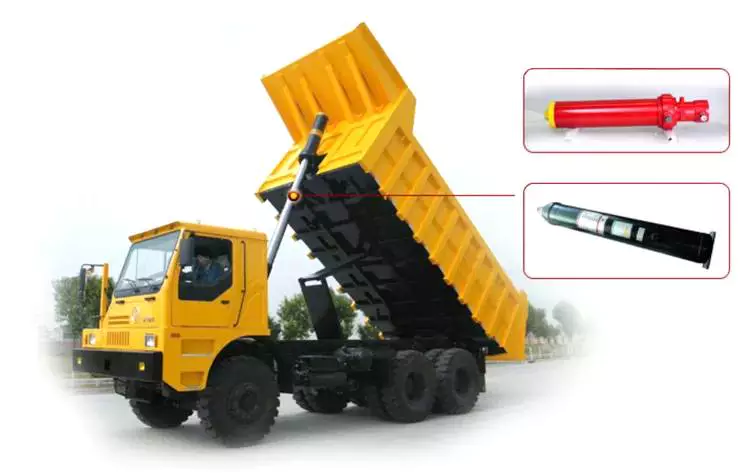
Can hydraulic cylinders be adapted for specialized applications like material handling?
Yes, hydraulic cylinders can be effectively adapted for specialized applications such as material handling. The versatility, power, and precise control offered by hydraulic cylinders make them well-suited for a wide range of material handling tasks. Hydraulic systems, including cylinders, are commonly used in industrial settings to lift, position, push, pull, and manipulate various types of materials. Here’s a detailed explanation of how hydraulic cylinders can be adapted for specialized material handling applications:
1. Lifting and Lowering:
– Hydraulic cylinders are commonly used for lifting and lowering heavy loads in material handling applications. By utilizing the force generated by hydraulic pressure, cylinders can provide the necessary power to lift and hold loads at different elevations. The precise control offered by hydraulic systems allows for accurate positioning of materials, ensuring efficient and safe lifting operations.
2. Pushing and Pulling:
– Hydraulic cylinders are capable of generating substantial pushing and pulling forces, making them ideal for applications that involve moving or manipulating materials. They can be used to push or pull heavy objects, control the movement of conveyors or rollers, or engage mechanisms for material transfer. The ability to exert high forces with precise control enables hydraulic cylinders to efficiently handle a variety of material handling tasks.
3. Tilting and Rotating:
– Hydraulic cylinders can be adapted to provide tilting and rotating functions in material handling equipment. By integrating cylinders into the design, equipment such as forklifts, cranes, or material handling arms can tilt or rotate to facilitate material placement or maneuvering. Hydraulic cylinders offer the required force and control to achieve smooth and controlled tilting or rotating motions, enhancing operational efficiency in material handling processes.
4. Gripping and Clamping:
– Hydraulic cylinders can be utilized to provide gripping and clamping functions for secure material handling. By incorporating specialized gripping or clamping mechanisms with hydraulic actuation, materials of various shapes and sizes can be securely held or clamped during transportation or processing. Hydraulic cylinders enable precise and adjustable gripping or clamping forces, ensuring the safe and reliable handling of materials.
5. Material Compaction and Forming:
– Hydraulic cylinders can be adapted for material compaction and forming applications. For example, in the production of bricks, hydraulic cylinders are used to apply high pressure and force to compact the raw materials into desired shapes. Similarly, in metal forming processes, hydraulic cylinders are employed to exert force on metal sheets or components, enabling precise shaping and forming operations.
6. Conveyor and Sorting Systems:
– Hydraulic cylinders can be integrated into conveyor and sorting systems to facilitate material movement and sorting. By incorporating hydraulic actuators, conveyor belts or sorting mechanisms can be efficiently controlled for optimal material flow and distribution. Hydraulic cylinders provide the necessary force and control to handle varying load capacities and adjust the speed and position of material transfer, improving the overall efficiency of handling and sorting operations.
7. Customized Designs:
– Hydraulic cylinders can be customized and adapted to meet specific requirements of specialized material handling applications. Engineers can design cylinders with unique dimensions, stroke lengths, mounting options, and sealing arrangements to fit into equipment or systems with specific space limitations or operating conditions. Customized hydraulic cylinders ensure optimal performance and compatibility for specialized material handling tasks.
In summary, hydraulic cylinders can be effectively adapted for specialized material handling applications, offering the necessary force, control, and versatility required in various material handling tasks. Whether it involves lifting and lowering, pushing and pulling, tilting and rotating, gripping and clamping, material compaction and forming, or integration into conveyor and sorting systems, hydraulic cylinders provide reliable and efficient solutions. Their adaptability, precise control, and ability to handle heavy loads make hydraulic cylinders a valuable component in optimizing material handling processes across different industries.
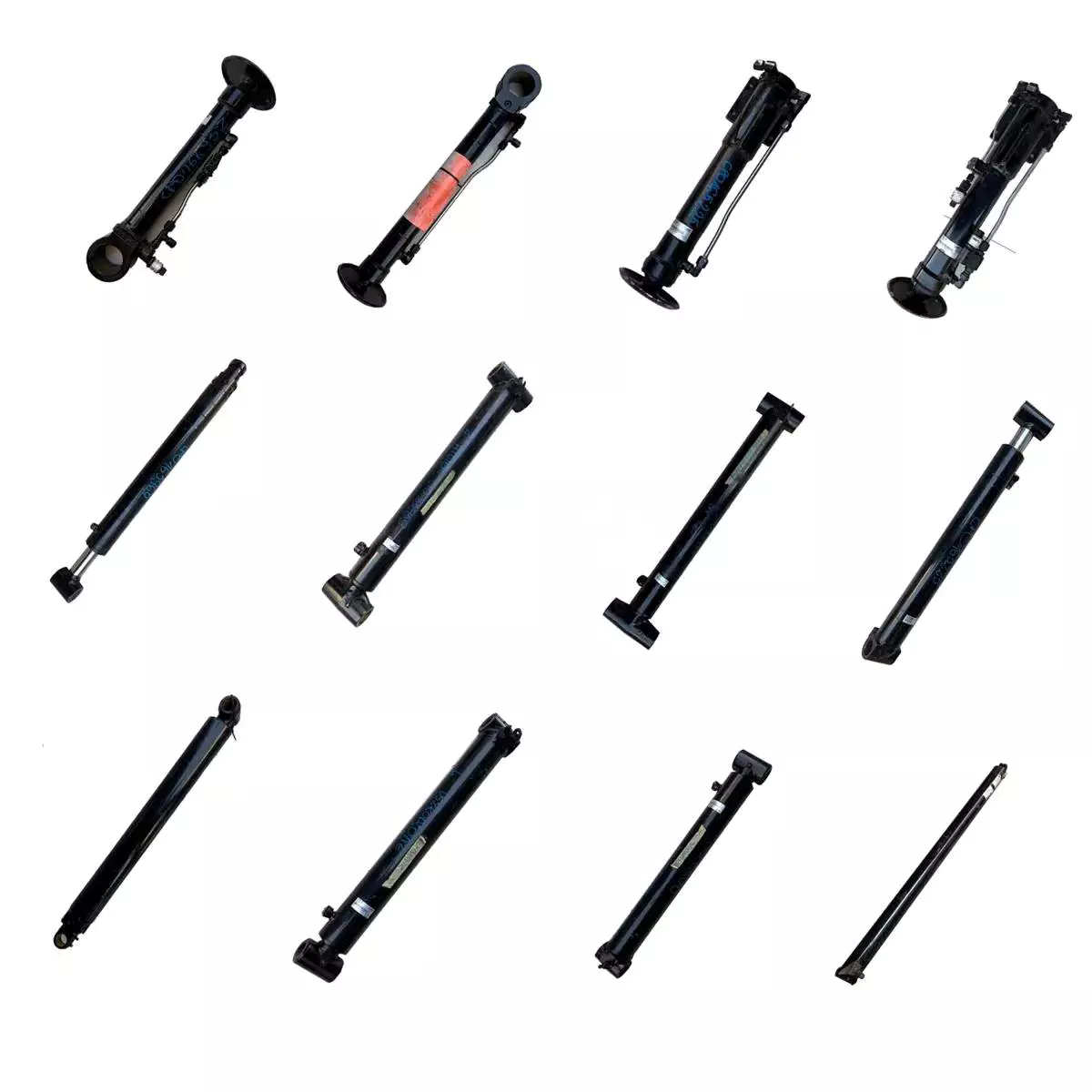
Ensuring Controlled and Safe Force Application in Heavy Machinery with Hydraulic Cylinders
Hydraulic cylinders play a critical role in heavy machinery by ensuring controlled and safe force application. The ability to exert and control high forces is essential for heavy machinery operations, such as lifting, pressing, pushing, or pulling heavy loads. Let’s explore how hydraulic cylinders ensure controlled and safe force application in heavy machinery:
- Force Control: Hydraulic cylinders provide precise force control capabilities. The hydraulic system’s pressure can be adjusted to regulate the force exerted by the cylinder. This control allows operators to apply the necessary force for a specific task while ensuring it remains within safe limits. By accurately controlling the force, hydraulic cylinders help prevent excessive force that could damage the machinery or compromise the safety of the operation.
- Load Balancing: In heavy machinery, multiple hydraulic cylinders are often used in conjunction to distribute and balance the applied force. By using multiple cylinders, the load can be evenly distributed across the machinery, minimizing stress concentrations and ensuring controlled force application. This load balancing approach enhances the stability and safety of the machinery, preventing uneven loading that could lead to structural issues or instability.
- Safety Valves: Hydraulic systems in heavy machinery are equipped with safety valves to protect against excessive force or overloading. Safety valves are designed to release hydraulic fluid from the cylinder when the force exceeds a predetermined threshold. This prevents the force from reaching dangerous levels, safeguarding the machinery and preventing potential accidents or damage. Safety valves provide an additional layer of safety and ensure controlled force application even in unexpected circumstances.
- Pressure Relief Systems: Hydraulic cylinders incorporate pressure relief systems to further enhance safety. These systems are designed to relieve excess pressure in the hydraulic system, which could occur due to factors such as thermal expansion or system malfunctions. By relieving excess pressure, the pressure relief systems prevent sudden and uncontrolled force surges, maintaining safe and controlled force application in heavy machinery.
- Structural Integrity: Hydraulic cylinders are designed to withstand the high forces and loads associated with heavy machinery applications. The cylinders are constructed using robust materials, such as high-strength steel, and undergo rigorous testing to ensure their structural integrity. This ensures that the cylinders can safely handle the forces applied during heavy machinery operations without experiencing failures or deformations that could compromise the safety and controlled force application.
In summary, hydraulic cylinders ensure controlled and safe force application in heavy machinery through force control, load balancing, safety valves, pressure relief systems, and robust structural design. These features and design considerations enable operators to exert the necessary force while maintaining safety and preventing excessive loads or force surges. By incorporating hydraulic cylinders into heavy machinery, manufacturers can achieve controlled force application, enhance operational safety, and protect the machinery from damage or failure.
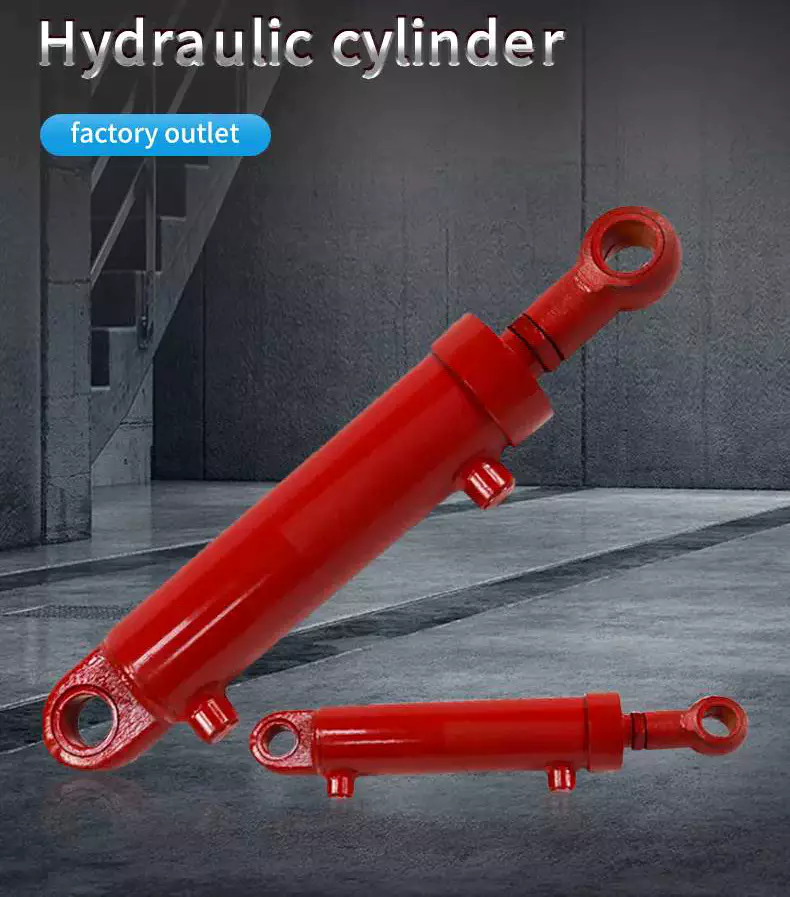
What safety precautions should be followed when working with hydraulic cylinders?
Working with hydraulic cylinders requires strict adherence to safety precautions to prevent accidents, injuries, and damage to equipment or property. Hydraulic systems operate under high pressures and involve moving parts, which can pose serious hazards if not handled properly. Here’s a detailed explanation of the safety precautions that should be followed when working with hydraulic cylinders:
1. Training and Knowledge:
– Ensure that personnel working with hydraulic cylinders have received adequate training and possess a thorough understanding of hydraulic system operation, maintenance, and safety protocols. Proper training should cover topics such as hydraulic principles, pressure ratings, safe work practices, and emergency procedures. Only trained and authorized personnel should be allowed to handle hydraulic cylinders.
2. Wear Personal Protective Equipment (PPE):
– Always wear appropriate personal protective equipment when working with hydraulic cylinders. This may include safety glasses, gloves, protective clothing, and steel-toed boots. PPE helps protect against potential hazards, such as hydraulic fluid leaks, flying debris, or accidental contact with moving parts.
3. Hydraulic System Inspection:
– Before working with hydraulic cylinders, inspect the entire hydraulic system for any signs of damage, leaks, or loose connections. Check hydraulic hoses, fittings, valves, and cylinders for integrity and secure fastening. If any issues are detected, the system should be repaired or serviced before operation.
4. Relieve Pressure:
– Before performing any maintenance or disassembly on a hydraulic cylinder, it is crucial to relieve the pressure in the system. Follow the manufacturer’s instructions to properly release pressure and ensure that the hydraulic cylinder is depressurized before starting any work. Failure to do so can result in sudden and uncontrolled movement of the cylinder or hydraulic lines, leading to serious injuries.
5. Lockout/Tagout Procedures:
– Implement lockout/tagout procedures to prevent accidental energization of the hydraulic system while maintenance or repair work is being conducted. Lockout/tagout involves isolating the energy source, such as shutting off the hydraulic pump and locking or tagging the controls to prevent unauthorized operation. This procedure ensures that the hydraulic cylinder remains in a safe, non-operational state during maintenance activities.
6. Use Proper Lifting Techniques:
– When working with heavy hydraulic cylinders or components, use proper lifting techniques and equipment to avoid strain or injury. Hydraulic cylinders can be heavy and awkward to handle, so ensure that lifting equipment, such as cranes or hoists, is properly rated and used correctly. Follow safe lifting practices, including securing the load and maintaining a stable lifting posture.
7. Hydraulic Fluid Handling:
– Handle hydraulic fluid with care and follow proper procedures for fluid filling, transfer, and disposal. Avoid contact with the skin or eyes, as hydraulic fluid may be hazardous. Use appropriate containers and equipment to prevent spills or leaks. If any hydraulic fluid comes into contact with the skin or eyes, rinse thoroughly with water and seek medical attention if necessary.
8. Regular Maintenance:
– Perform regular maintenance and inspections on hydraulic cylinders to ensure their safe and reliable operation. This includes checking for leaks, inspecting seals, monitoring fluid levels, and conducting periodic servicing as recommended by the manufacturer. Proper maintenance helps prevent unexpected failures and ensures the continued safe use of hydraulic cylinders.
9. Follow Manufacturer Guidelines:
– Always follow the manufacturer’s guidelines, instructions, and recommendations for the specific hydraulic cylinders and equipment being used. Manufacturers provide important safety information, maintenance schedules, and operational guidelines that should be strictly adhered to for safe and optimal performance.
10. Emergency Preparedness:
– Be prepared for potential emergencies by having appropriate safety equipment, such as fire extinguishers, first aid kits, and emergency eyewash stations, readily available. Establish clear communication channels and emergency response procedures to promptly address any accidents, leaks, or injuries that may occur during hydraulic cylinder operations.
By following these safety precautions, individuals working with hydraulic cylinders can minimize the risk of accidents, injuries, and property damage. It is essential to prioritize safety, maintain awareness of potential hazards, and ensure compliance with relevant safety regulations and industry standards.


editor by CX 2023-10-21
 Dutch
Dutch  English
  Italian
  Portuguese
  Swedish
  Danish
  Finnish
  Polish
  Hindi
Hindi  Kazakh
  Turkish
  Ukrainian
  Romanian
  Spanish
  German
  Russian
  Korean
  Japanese
  Vietnamese
  Thai
Thai  Indonesian
  Malay
Malay  French
  Greek
Greek