
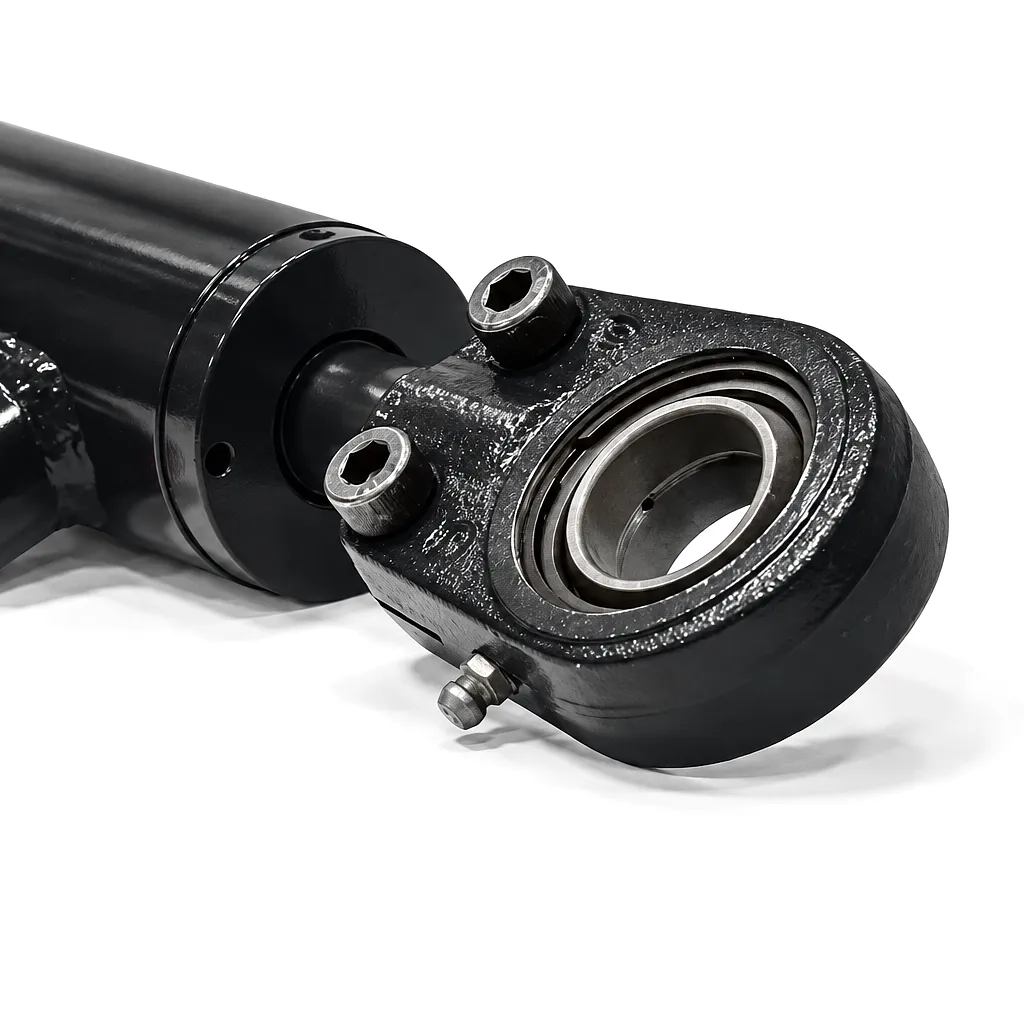
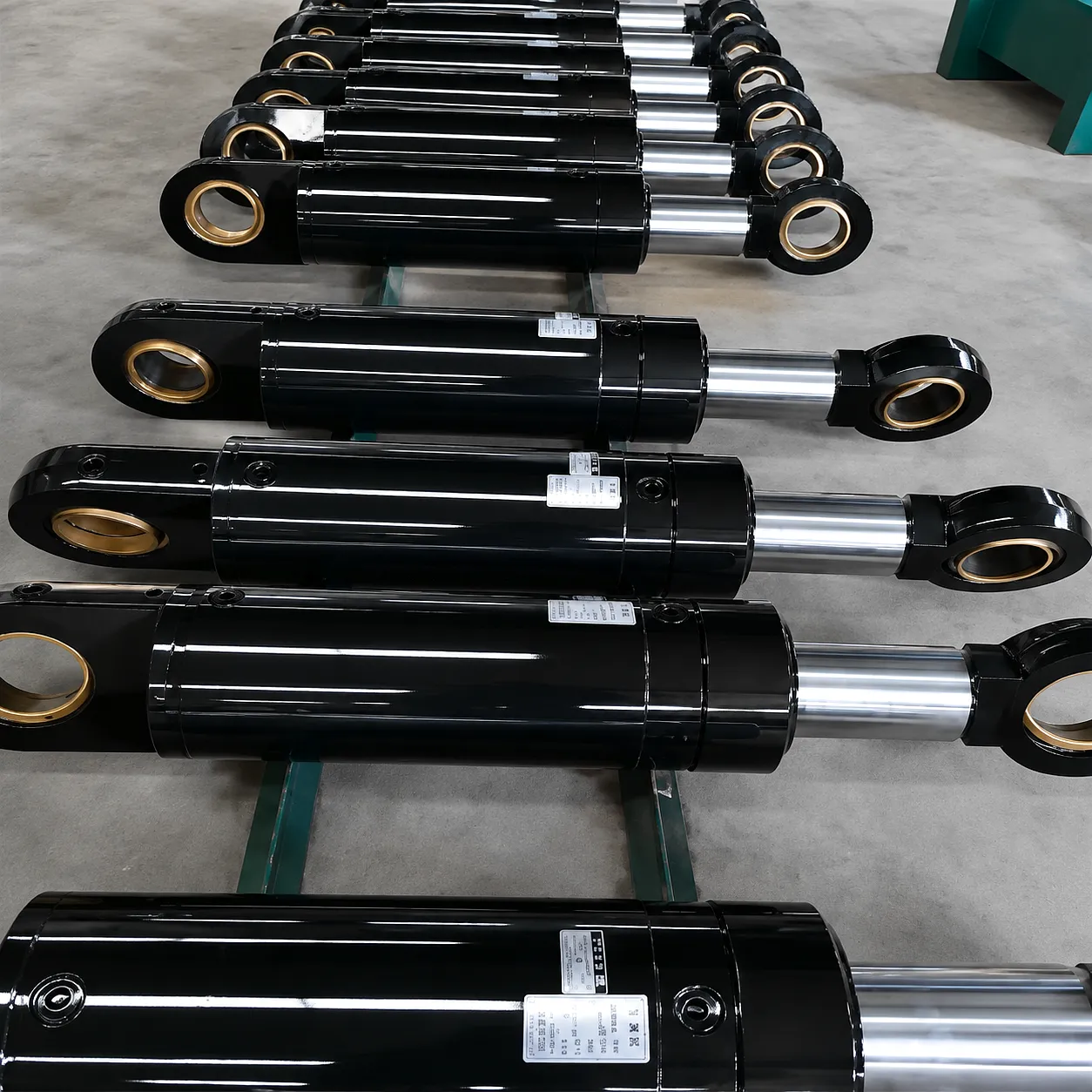
 Hydraulic boom cylinders sit at the mechanical heart of telescopic crane arms, elevated work platforms, reach stackers and agricultural boom machinery. For UK-based engineering firms and OEM integrators, the case for sourcing these components from China has never been more compelling — precision-grade manufacturing, competitive pricing and compressed lead times are now standard expectations rather than exceptional promises. Yet the sourcing journey itself remains a minefield of hidden quality traps, specification mismatches and shipping complexities that can derail even experienced procurement teams. This guide arms you with a structured, end-to-end framework for sourcing custom hydraulic boom cylinders from Chinese manufacturers — covering the technical quality criteria, factory audit protocols, realistic lead time benchmarks and the specific logistics requirements that govern imports into the UK market post-Brexit.
Whether you operate a crane hire fleet in Birmingham, manufacture agricultural machinery in Lincolnshire or build specialist access equipment in Sheffield, the sourcing decisions you make about hydraulic boom cylinders affect your machine’s operational reliability, maintenance cost and ultimately your commercial reputation. Getting those decisions right requires more than browsing Alibaba listings — it demands an understanding of manufacturing processes, material science, pressure certification standards and the contractual levers that protect your business when something goes wrong 10,000 kilometres away.
Why UK Engineers Are Turning to Chinese Hydraulic Cylinder Manufacturers
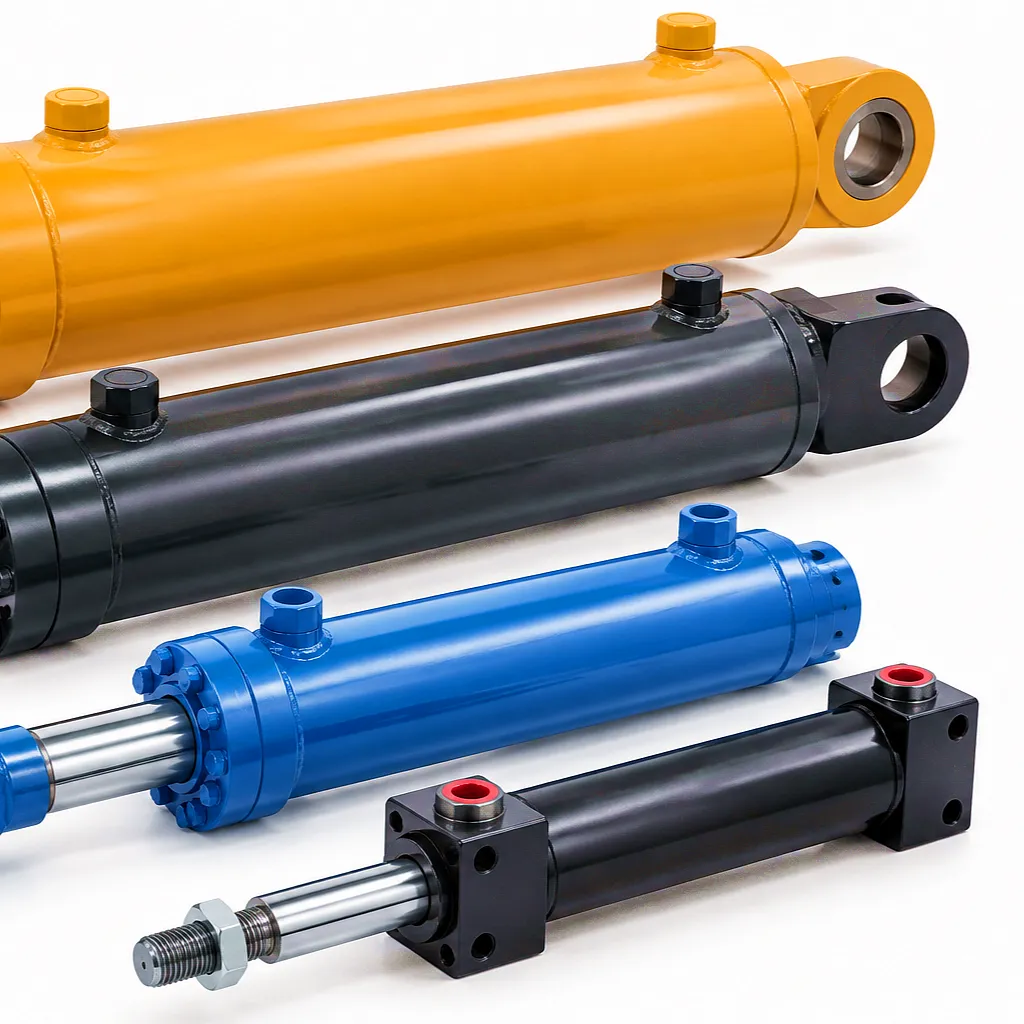 The post-Brexit supply chain reconfiguration, combined with rising European manufacturing costs, has pushed a significant number of UK hydraulic component buyers toward Chinese suppliers — and not just for commodity parts. For engineered-to-order boom cylinders, Chinese manufacturers operating ISO 9001-certified facilities now routinely produce components to SAE J1249, DIN 24554 and BS EN 13135 standards. The cost differential against equivalent German or Italian-produced cylinders can reach 35–55%, even after factoring in shipping, duties and inspection fees. What drove this change? Investment in CNC honing machines, cold-drawn precision tubing and robotic welding cells has elevated the technical capability of leading Chinese hydraulic cylinder factories to a level that would have been unthinkable fifteen years ago. For UK buyers, this means access to bore sizes from 40 mm to 400 mm, operating pressures up to 350 bar and stroke lengths exceeding 3,000 mm — all manufactured to your engineering drawings, certified to your required standards and delivered to your port of choice within competitive lead times.
The Technical Quality Checks Every UK Buyer Must Run Before Placing an Order
Application: Crane OEM Procurement · Access Platform Engineering · Agricultural Machinery Build
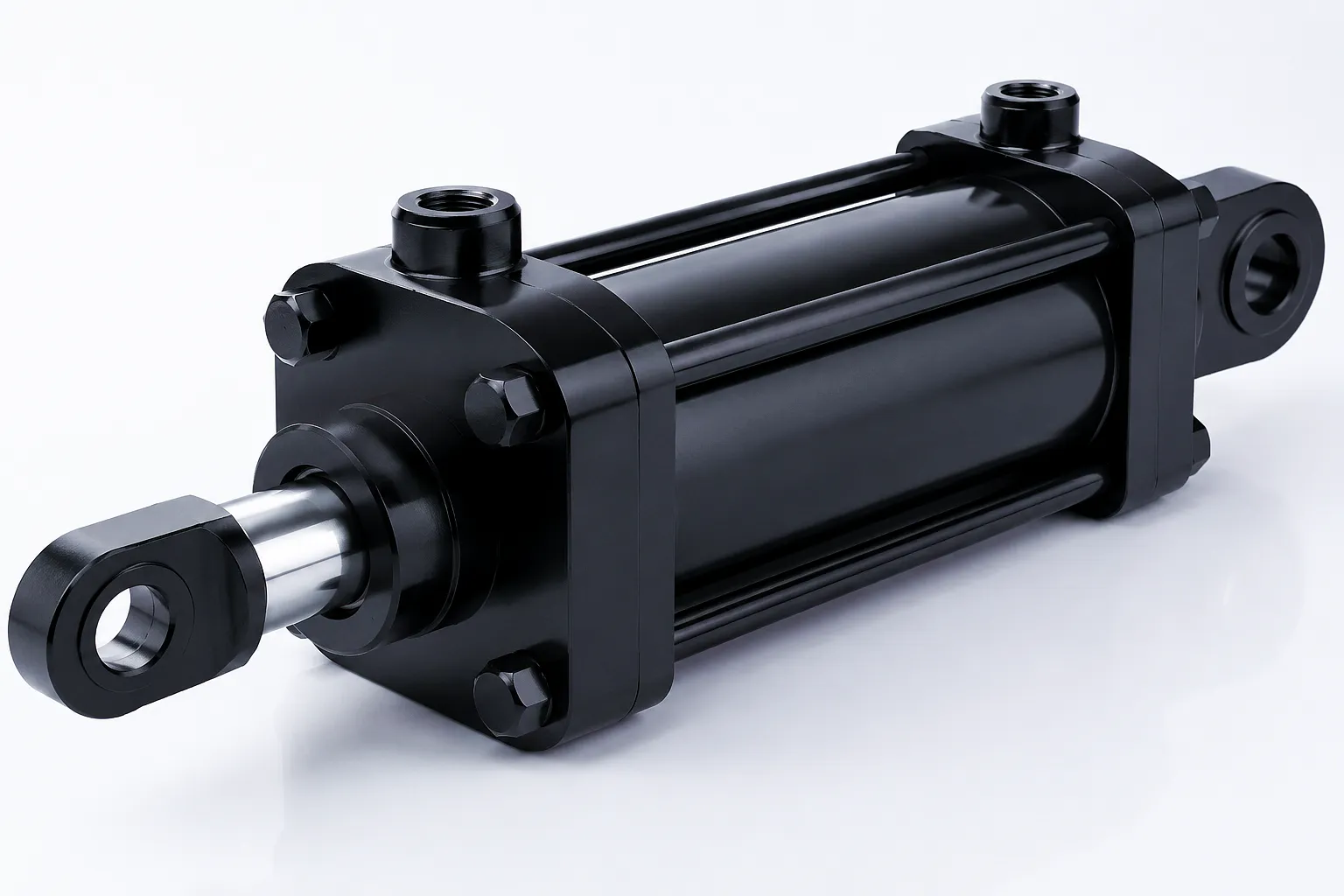
Cylinder Tube Specification
The cylinder barrel must be manufactured from seamless cold-drawn steel tube — specifically ST52 (DIN 1629) or equivalent E355 grade. Wall thickness calculations must conform to your rated working pressure with a minimum safety factor of 3.5:1 at the proof test pressure. Request the material certificate (EN 10204 3.1 or 3.2) and verify the heat number matches the traceable batch. Non-seamless or ERW tube is entirely unacceptable for boom cylinder applications and should be flagged as an automatic disqualifier during factory audit. Inspect bore surface roughness specifications — Ra 0.4 µm or better is the standard for reliable seal life at operating pressures above 200 bar.
Rod Chrome Plating Integrity
The piston rod is arguably the most abuse-prone element of a boom cylinder. Rods must be manufactured from high-tensile steel — CK45 or 42CrMo4 are the accepted grades — hard chrome plated to a minimum depth of 25 µm with a Vickers hardness of HV 850 minimum on the surface. Ask your supplier for a plating thickness report using the Fischer XRF method or electromagnetic induction readings taken at five equidistant points along the rod. Yellowing, pitting, delamination or visible porosity on a sample rod is a direct indicator of inadequate bath chemistry or insufficient pre-treatment, and will result in accelerated corrosion and seal destruction once the cylinder is placed in service outdoors — a particular concern given the UK’s maritime climate.
Seal Pack and Sealing System
The sealing system determines both leak-free service life and maintenance intervals. For boom cylinders operating in elevated work platforms or crane boom applications — common across Birmingham’s and Sheffield’s industrial services sectors — insist on name-brand seals from Hallite, Trelleborg, Parker or NOK. These seal manufacturers provide material traceability, chemical compatibility data sheets and performance curves against temperature and pressure. Polyurethane wipers, PTFE-filled guide rings and nitrile NBR or HNBR primary seals are the accepted combinations for operating temperatures from -20°C to +80°C. Request a complete seal drawing and verify groove tolerances are machined to ISO 6547 standards. Cheap substitute seal packs sourced from unnamed Chinese brands are a false economy that typically reveals itself within the first 500 hours of operation.
Pressure Testing Protocol
Every finished hydraulic boom cylinder must undergo a witnessed static pressure test at 1.5 times rated working pressure, held for a minimum of five minutes with zero visible leakage or permanent deformation. For cylinders destined for lifting equipment — subject to LOLER (Lifting Operations and Lifting Equipment Regulations 1998) in the UK — the test certificate must identify the serial number, test date, test pressure and the name of the examining engineer. If your supplier cannot provide individual serialised test records, this is a disqualifying condition. Where the application involves man-riding or overhead lift, consider commissioning a third-party pre-shipment inspection through Intertek, SGS or Bureau Veritas to provide an independent pressure test witness certificate recognised by UK certifying bodies.
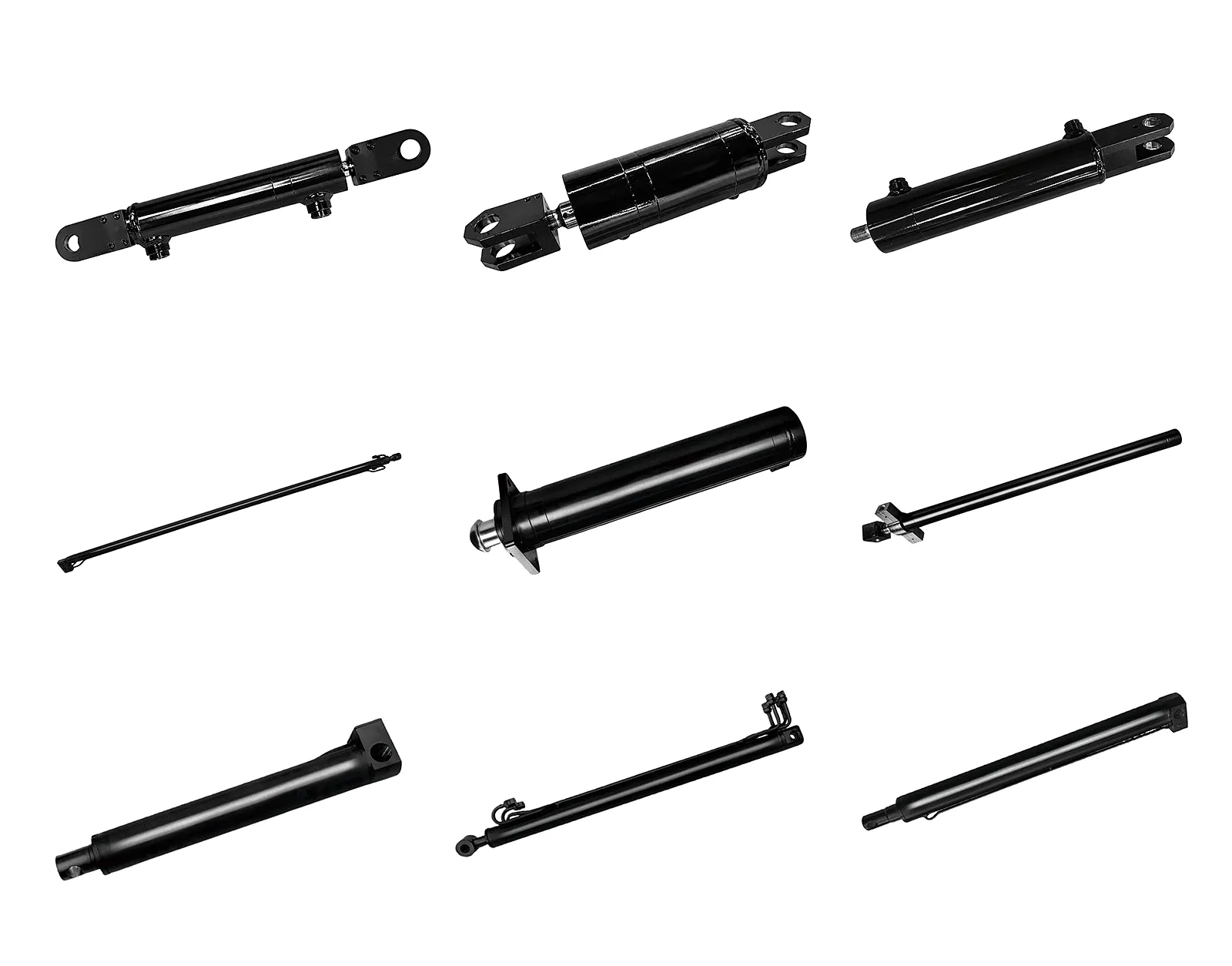
Ever Power · Product Range
How Hydraulic Boom Cylinders Work and the Materials That Make Them Reliable
A hydraulic boom cylinder converts hydraulic fluid pressure into controlled linear mechanical force. Pressurised fluid — typically ISO VG 46 or VG 68 hydraulic oil — enters the cylinder’s cap-end port, acting against the piston face to extend the piston rod and thereby extend the boom arm. Retraction is achieved by directing fluid to the rod-end port, generating force on the annular face of the piston. The ratio of force during extension versus retraction depends on the piston bore diameter and rod diameter, making bore-to-rod ratio a critical design parameter for boom applications where asymmetric loads are common — particularly in marine crane outreach or forestry boom configurations.
In telescopic boom configurations — standard across access platforms sold into the UK construction market from London’s Canary Wharf tower maintenance contracts to Manchester’s ongoing civic infrastructure projects — multiple stage cylinders nest inside one another, each extending in sequence as internal pressure increases beyond the resistance of the preceding stage. The hydraulic control circuit must include a pressure relief valve, a counterbalance (load-holding) valve and — for most UK lifting equipment applications — a velocity fuse that closes automatically in the event of hydraulic hose failure to prevent uncontrolled load drop.
Core Materials at a Glance
Product Technical and Performance Specification Table
Industrial Application Scenarios: Where Boom Cylinders Deliver Critical Performance
Telescopic Crane Boom Extension — Sheffield Heavy Lifting
Crane hire operators across Sheffield’s steel production belt and the surrounding South Yorkshire region use multi-stage hydraulic boom cylinders to power the telescopic boom sections on mobile all-terrain cranes. In these machines, the hydraulic boom cylinder must maintain controlled extension speeds under variable load — often handling structural steel sections up to 60 tonnes. Cylinder bore sizes from 160 mm to 280 mm at pressures of 280–320 bar are typical, with velocity fuses on every stage. For these customers, traceability from raw steel to finished cylinder is non-negotiable, and suppliers like Frame Support Cylinders deliver the combination of strength and precision required.
Agricultural Boom Sprayer Boom Lift — East Anglia Arable Farming
Self-propelled crop sprayers working the flat arable landscapes of Norfolk, Suffolk and Cambridgeshire carry hydraulic boom arms up to 36 metres wide. The lift and fold cylinders controlling these booms must cycle reliably tens of thousands of times per season under constant exposure to agricultural chemicals, mud and moisture. Bore sizes of 60–120 mm at working pressures of 180–220 bar, with polyurethane seals chosen specifically for chemical resistance, serve these applications. UK agricultural machinery importers purchasing directly from Chinese factories need to verify that the seal materials are tested against the specific herbicide formulations in use — an often overlooked but critical specification point that separates technically literate suppliers from catalogue sellers.
Elevated Work Platform Boom — Birmingham Construction and Maintenance
Articulated and telescopic boom-type access platforms — used extensively on Birmingham’s large-scale commercial property refurbishment projects and the city’s ongoing HS2 infrastructure construction — rely on hydraulic boom cylinders for both the primary jib and secondary boom sections. These machines carry personnel and are directly governed by LOLER and PUWER (Provision and Use of Work Equipment Regulations) in the UK. Every cylinder installed in man-riding access equipment must carry CE marking under the Machinery Directive (or UK CA marking post-Brexit), supported by a technical file including material traceability, weld inspection records, pressure test certificates and dimensional inspection reports. Buyers sourcing these components from China must explicitly contract for this documentation as a shipment condition, not an afterthought.
Marine Deck Crane Boom Control — UK Coastal Ports and Offshore Industry
Offshore support vessels and harbour deck cranes operating from UK ports including Aberdeen, Teesside and Grimsby place extreme demands on boom cylinder corrosion resistance. In continuous salt-spray exposure, standard chrome plating without proper surface treatment will begin to corrode within months. Marine-grade boom cylinders require electroless nickel or ceramic-composite chrome alternatives, external stainless steel or HDPE rod guards, and port connection blanking in stainless steel. The hydraulic fluid compatibility must also extend to fire-resistant phosphate ester fluids used on offshore drilling platforms. Specifying these requirements upfront — and verifying compliance with a pre-shipment inspection — is the difference between a component that performs for five years at sea and one that requires replacement within twelve months.
Realistic Lead Times When Sourcing Hydraulic Boom Cylinders from China to the UK
Logistics, UK Customs Clearance and Import Duty: What You Need to Know
Post-Brexit import procedures have added complexity to Chinese hydraulic component imports that did not exist before January 2021. All hydraulic cylinders entering Great Britain from China are now subject to UK Global Tariff rates — currently 2.7% for hydraulic cylinders under commodity code 8412.21.00 — plus 20% import VAT. VAT is recoverable for VAT-registered UK businesses but represents a cash-flow impact that must be factored into your purchase order financing. EORI numbers are mandatory for UK importers, and all shipments must be declared using the UK Customs Declaration Service (CDS) platform, which replaced CHIEF in 2023.
For hydraulic boom cylinders classified as safety-critical components in lifting or man-riding machinery, HMRC may require additional documentary evidence beyond the standard commercial invoice, packing list and bill of lading. CE or UK CA declarations of conformity, test certificates and technical files should be included in the import documentation package as a matter of routine. Working with a freight forwarder that has specific experience in industrial machinery and pressure equipment imports — rather than a general cargo broker — is a practical step that reduces customs query risk significantly. Forwarders operating out of Felixstowe and Southampton with dedicated industrial machinery desks are the most efficient choice for large, heavy hydraulic cylinder shipments arriving in FCL containers.
UK Import Checklist for Hydraulic Boom Cylinders
✅ Packing List with gross/net weights and dimensions
✅ Bill of Lading or Sea Waybill
✅ Certificate of Origin (CO) from CCPIT or Chamber of Commerce
✅ EN 10204 3.1 material certificates
✅ Individual pressure test certificates (serialised)
✅ CE / UK CA Declaration of Conformity (lifting applications)
✅ UK EORI number registered with HMRC
✅ CDS import declaration filed via approved software
✅ Freight forwarder with industrial machinery experience appointed
Cylinder Mounting and Configuration: Matching the Right Design to Your Boom Application
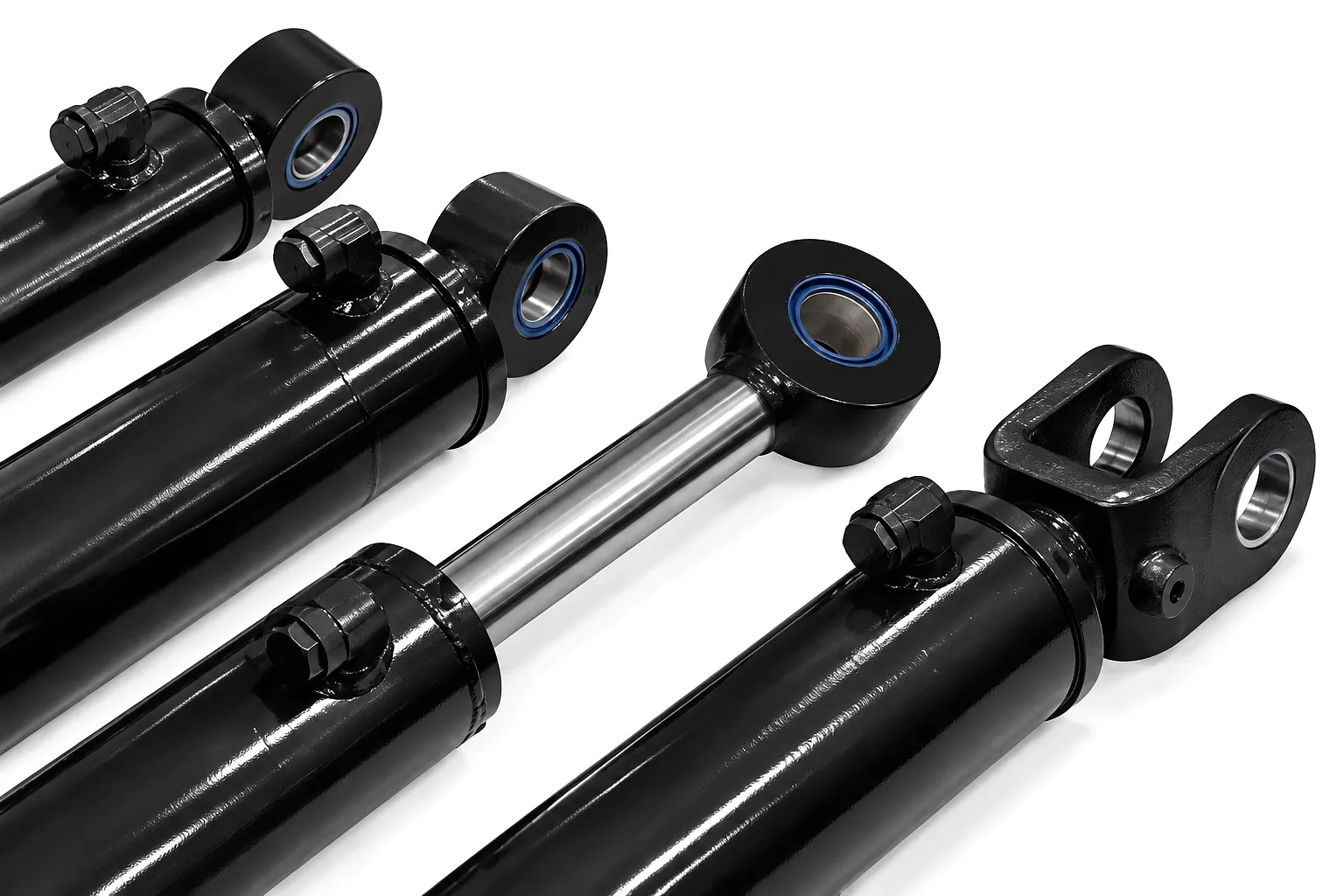
The mounting geometry of a boom cylinder has a direct and often underestimated influence on its structural load paths, seal wear patterns and maintenance accessibility. Clevis-mounted cylinders offer angular articulation that accommodates boom arm angulation without inducing side-loading on the rod — essential for articulated boom lifts and knuckle boom cranes. Flange-mounted cylinders suit applications requiring high axial load concentricity, such as straight-pull boom extension cylinders in telescopic crane jibs. Trunnion mounts distribute load through the cylinder body rather than the end connections, reducing stress concentration at the weld zones — the preferred choice in high-cycle, heavy-duty crane boom applications across the UK’s busy infrastructure maintenance sector. For applications where the boom cylinder must also serve as a structural element of the frame, such as in compact reach-stackers used in UK logistics hubs, an Outrigger Rack Support Cylinder configuration delivers the combined structural and actuating function required with a single compact unit.
When specifying mounting arrangements with a Chinese manufacturer, always provide a 3D model or fully dimensioned 2D drawing of the installation envelope. Verbal or email descriptions of mounting requirements are a primary source of costly manufacturing errors that are only discovered at the point of installation. CAD exchange in STEP or IGES format eliminates interpretation ambiguity and allows the factory’s design team to perform clash detection and minimum clearance verification before committing to tooling.
Manufacturer Profile
Ever Power: Precision Hydraulic Boom Cylinder Manufacturing for the UK and Global Market
Ever Power operates a purpose-built hydraulic cylinder manufacturing facility equipped with CNC deep-hole boring machines, automated honing lines, a dedicated chrome plating shop and robotic MIG/TIG welding cells. With over 15 years of specialist experience in engineered-to-order hydraulic boom cylinders, Ever Power has built a track record supplying OEM integrators and end-user fleet operators in the UK, Germany, Australia and North America — markets where product liability and engineering documentation standards are among the most demanding globally.
The Ever Power design team works directly from customer drawings and engineering specifications — not from catalogue templates. Every custom boom cylinder project begins with a DFM review, tolerance stack-up analysis and seal selection assessment conducted by qualified mechanical engineers. This engineering-led approach to customisation is what allows Ever Power to guarantee functional conformance to customer specifications, not merely dimensional conformance — a distinction that matters enormously in safety-critical lifting equipment applications.
Ever Power Manufacturing Capabilities
Ready to discuss your custom hydraulic boom cylinder requirements? Ever Power’s engineering team responds to technical enquiries within one working day.
Customer Success Story: Newcastle-upon-Tyne Crane Hire — Solving a Critical Cylinder Sourcing Crisis
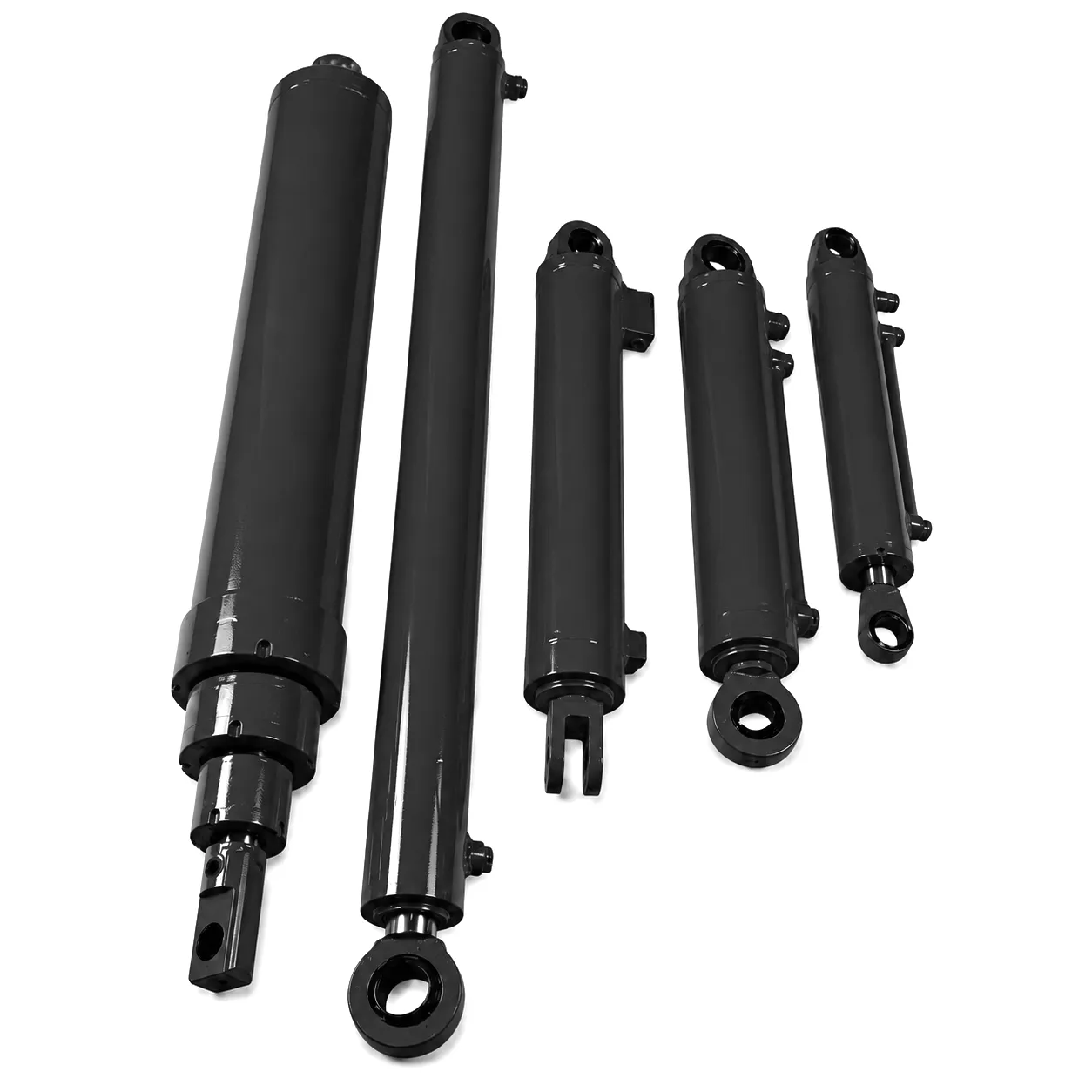 Tyne Valley Lifting Solutions, a mid-sized crane hire and heavy lift specialist operating a fleet of 23 mobile cranes across the North East of England, faced a costly operational problem in early 2023. Three of their all-terrain cranes — Liebherr LTM 1100-5.2 units running at capacity on a major offshore wind infrastructure project at Blyth — required replacement of the second-stage telescopic boom cylinder after premature seal failure caused by an incorrect seal specification supplied by their previous European vendor. With downtime costs running at £4,800 per crane per day and the project contract carrying liquidated damage clauses, the pressure to source replacement cylinders rapidly and to correct specification was acute.
Their procurement manager contacted Ever Power via the website with a detailed technical enquiry on a Thursday afternoon. By the following Monday, Ever Power’s engineering team had reviewed the original cylinder drawing supplied by Tyne Valley, identified the seal specification error (NBR seals had been fitted where HNBR was specified for the hydraulic fluid formulation in use) and submitted a formal quotation with a revised seal specification, pressure test protocol, material certificates and a proposed delivery schedule. Ever Power air-freighted the first replacement cylinder within 38 days of purchase order confirmation — against the four to five month lead time quoted by the original European supplier — allowing Tyne Valley to return the first crane to service and avoid the most costly phase of the liquidated damage exposure.
The full set of three replacement cylinders was delivered within nine weeks, including a pre-shipment inspection by SGS’s Ningbo office that provided Tyne Valley’s insurers with the independent test certificate they required for LOLER re-certification. The total cost of the three custom cylinders, pre-shipment inspection and air freight was 41% below the original European supplier’s quotation for surface ocean freight delivery — a saving that Tyne Valley’s director described as commercially transformational for the business case of switching their cylinder sourcing programme to Ever Power for their entire fleet.
What Our UK Customers Say About Ever Power Hydraulic Boom Cylinders
“The bore tolerance on the cylinders we received from Ever Power was within 0.008 mm of nominal across all three pieces — tighter than the ±0.015 mm we specified. The chrome plating thickness reports showed consistent 28–31 µm readings across the full rod length. For us, running cylinders in man-riding access platforms, that level of manufacturing consistency directly translates into inspection intervals and regulatory confidence. We have now standardised Ever Power as our primary cylinder supplier for the UK market access platform division.”
“We submitted our cylinder drawings on a Wednesday afternoon. Ever Power’s DFM feedback came back the following Friday — and it wasn’t just a dimensions check, they flagged a potential buckling risk on the rod diameter-to-stroke ratio we had specified and recommended a wall thickness increase that we verified with our own FEA. That kind of proactive engineering input from a supplier is genuinely rare. The price for the corrected design came in 38% below our previous German supplier. We’ve since placed three further orders for different boom cylinder variants and the on-time delivery record has been perfect.”
“The customisation capabilities at Ever Power exceeded our expectations. We needed a marine-specification boom cylinder for an offshore support vessel deck crane with electroless nickel plating on the rod rather than standard hard chrome, a stainless steel rod guard, and certification documentation formatted specifically for our Lloyd’s Register class certificate. Ever Power’s team handled all of this without any push-back on the documentation requirements and delivered the complete package — cylinder, cert file, material traceability pack — in time for our vessel’s planned dry-dock window in Aberdeen. The after-sales support has also been excellent; a technical query we raised eight months after delivery was answered with full engineering detail within 24 hours.”
Frequently Asked Questions: Sourcing Hydraulic Boom Cylinders from China to the UK
Answers to the questions UK buyers and plant engineers ask most often about quality, cost and logistics.
Ready to Source Precision Hydraulic Boom Cylinders for Your UK Operation?
Send your engineering drawings, specifications and required delivery schedule to the Ever Power technical team. Receive a full itemised quotation — including UK landed cost estimate — within one working day.
[email protected] · ISO 9001:2015 Certified · CE Documentation Available
 Dutch
Dutch  English
  Italian
  Portuguese
  Swedish
  Danish
  Finnish
  Polish
  Hindi
Hindi  Kazakh
  Turkish
  Ukrainian
  Romanian
  Spanish
  German
  Russian
  Korean
  Japanese
  Vietnamese
  Thai
Thai  Indonesian
  Malay
Malay  French
  Greek
Greek