
Hydraulic Cylinder vs Electric Actuator for Agricultural Machinery: Cost, Force, and Reliability Compared
An in-depth engineering comparison for procurement managers, OEM engineers, and farm equipment designers across the UK market.
🇬🇧 UK Market Focus
⚙️ Engineering Depth
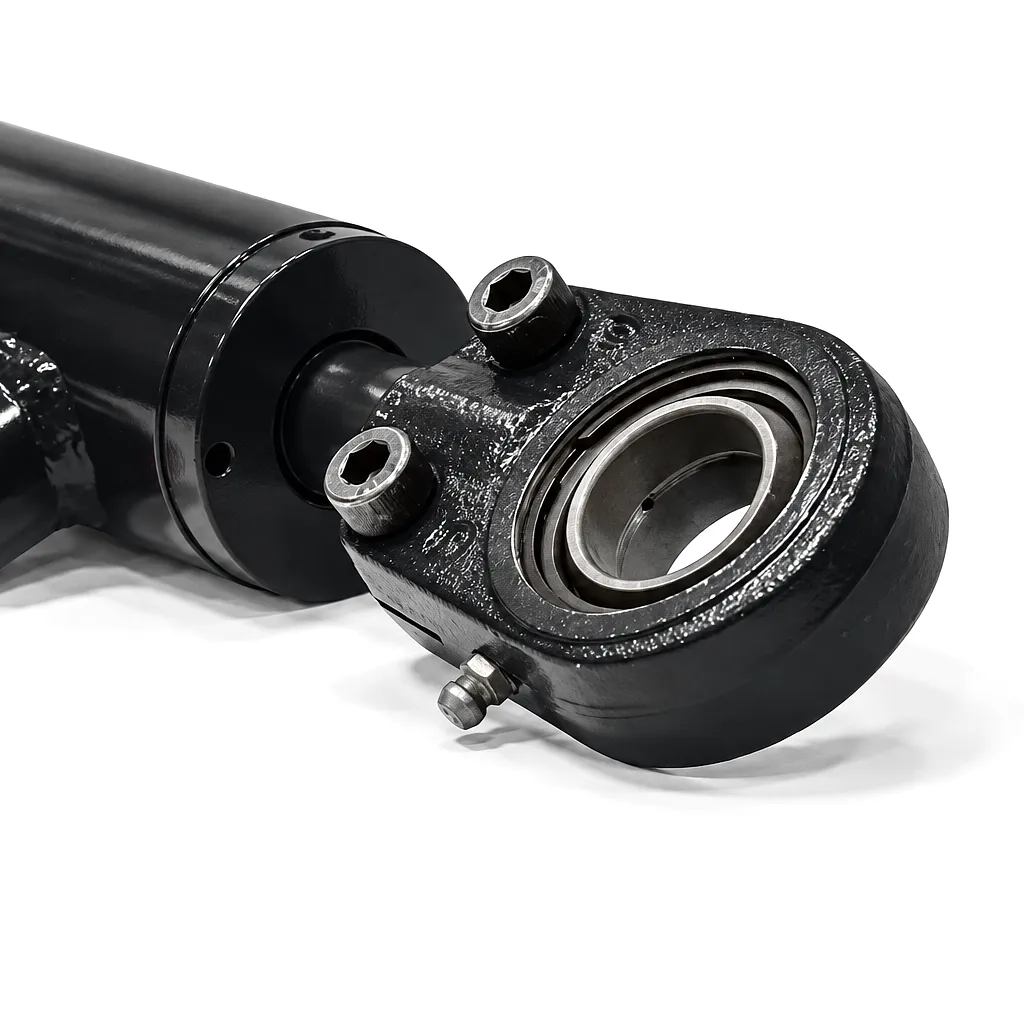 Walk into any agricultural machinery workshop in the UK — whether that is a combine harvester assembly plant near Lincoln, a specialist baler manufacturer in the West Midlands, or a precision seeder company operating out of Yorkshire — and you will find engineers locked in the same debate that has defined farm equipment design for the better part of two decades. How do you move heavy loads, maintain reliable force over long duty cycles, handle mud, dust, and the relentless vibration of field work, while keeping lifetime costs manageable? The two principal technologies competing for this role are the hydraulic cylinder and the electric linear actuator, and the decision between them carries significant consequences for machine performance, serviceability, and total cost of ownership across the entire working life of the equipment.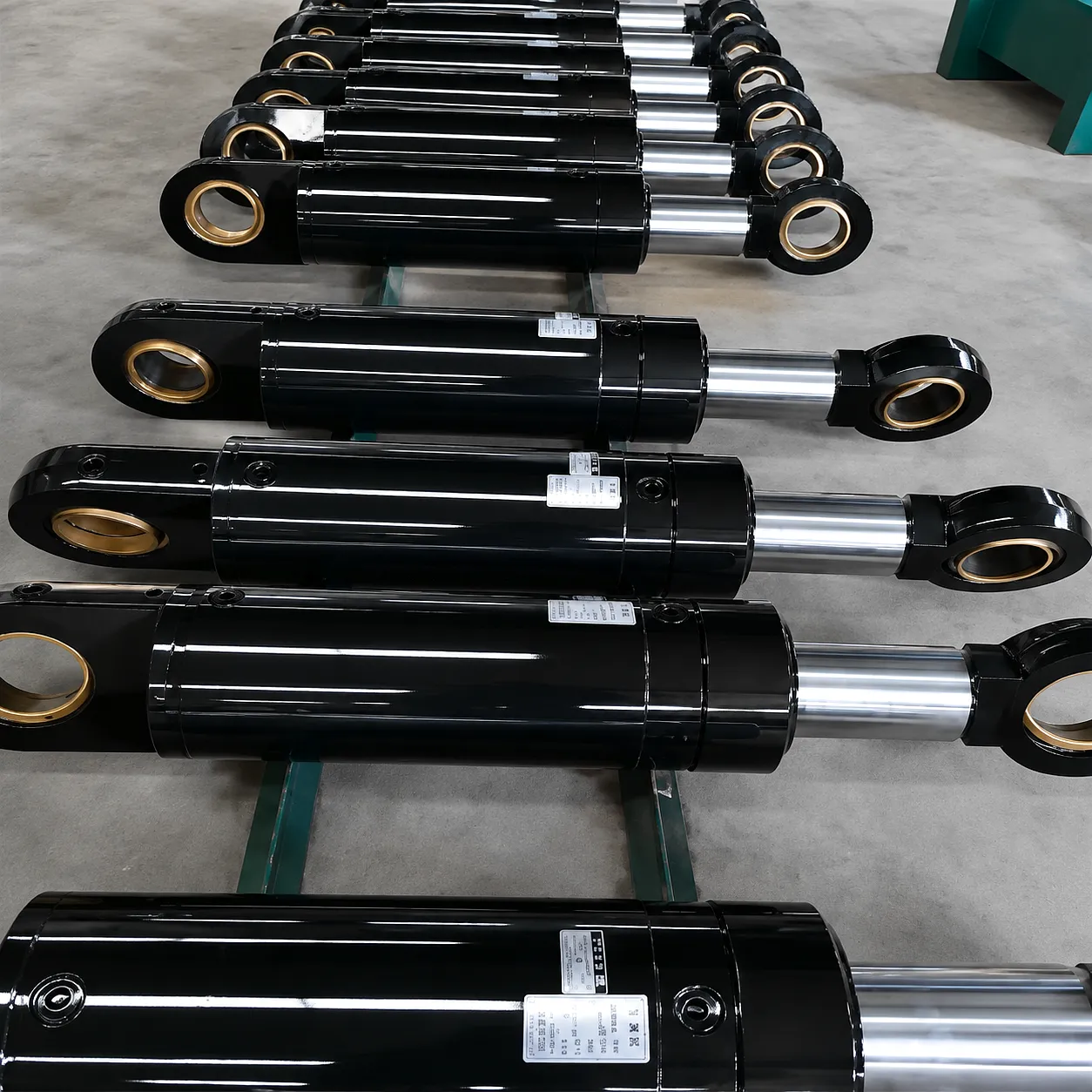
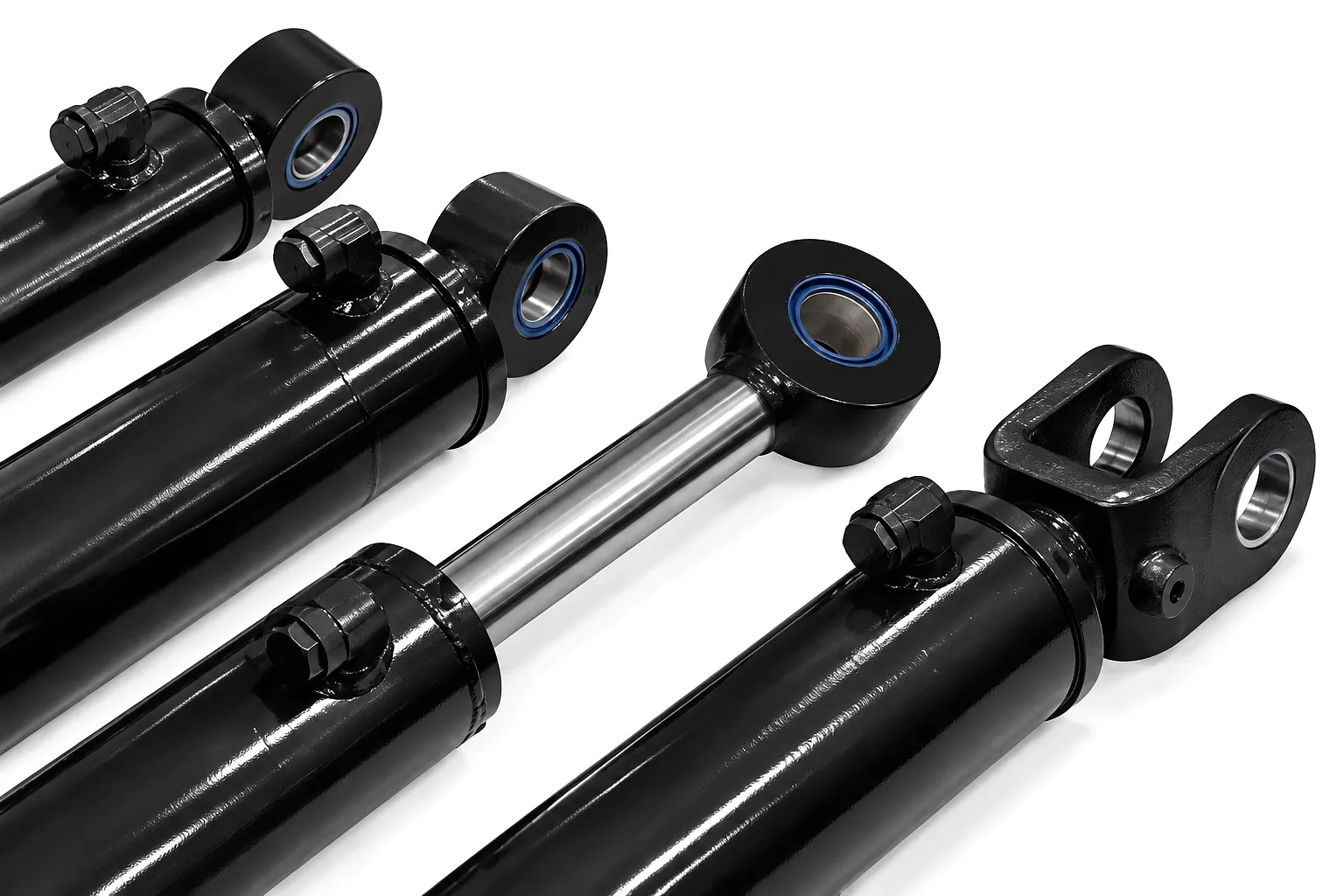
How Each Technology Works in Practice
Hydraulic Cylinder — Working Principle
A hydraulic cylinder converts fluid pressure into linear mechanical force. Pressurised hydraulic oil — typically operating between 150 and 350 bar in agricultural applications — enters a sealed chamber and acts against the cross-sectional area of a piston. The resulting force follows Pascal’s Law: Force equals Pressure multiplied by Area (F = P × A). Because this relationship is purely physical and involves no electromagnetic conversion losses, hydraulic cylinders deliver extraordinarily high force from a relatively compact envelope. A cylinder with a bore diameter of 100 mm operating at 200 bar generates approximately 157 kN of push force — a figure that would require a large electric motor and gearbox assembly to match at comparable physical dimensions and weight.
In agricultural machinery — ploughs, disc harrows, telescopic handlers, bale wrappers, and front-end loaders — the tractor or self-propelled machine already carries a hydraulic pump driven by the PTO or engine. The hydraulic cylinder is therefore a natural load on an existing power infrastructure. There is no separate electrical power management system to engineer, no battery sizing calculation, and no concern about voltage drop across long cable runs on a large machine. The cylinder extends and retracts as the operator commands the control valve, delivering smooth, proportional movement even under extremely high and variable loads. This simplicity of integration is one reason the technology has remained dominant in agricultural heavy-force applications for over sixty years.
Electric Linear Actuator — Working Principle
An electric linear actuator converts rotational motor energy into linear movement, typically through a lead screw, ball screw, or rack-and-pinion mechanism. A DC or brushless AC motor drives the screw, which translates rotation into a pushing or pulling stroke. The force output is limited by the motor torque, the screw lead angle, and mechanical efficiency. A well-designed ball-screw actuator might achieve 90% mechanical efficiency, but a lead-screw unit is often closer to 40–60%. This efficiency gap means that for an equivalent force output, an electric actuator consumes significantly more electrical energy than a hydraulic cylinder consumes in hydraulic power, which matters on battery-powered or generator-dependent machines.
Electric actuators offer genuine advantages in specific scenarios: they can be positioned with high repeatability using encoder feedback, they present no risk of hydraulic fluid contamination, and they can be controlled over a digital bus such as CAN or ISOBUS — a feature increasingly relevant for precision agriculture applications integrating with tractor control systems. However, their force density is considerably lower than hydraulic cylinders, and their performance degrades noticeably in cold conditions. During early-morning field operations in November on the Yorkshire Wolds or the Scottish Borders, where temperatures regularly sit below 3°C, electric actuator motor windings draw higher current, gearbox lubricants thicken, and battery capacity drops — a combination of effects that can materially reduce available force output at precisely the moment when a machine needs to work hardest.
Core Materials and Construction: Built for the British Field
Cold-drawn seamless steel tube to ST52 or EN10305-1 specification. Internal bore honed to Ra 0.2–0.4 µm surface finish ensures long seal life and minimal internal leakage. Hard chrome on the piston rod — minimum 25 µm thickness at 800HV hardness — provides corrosion resistance essential for constant outdoor exposure in UK climate conditions including coastal salt spray environments.
Agricultural hydraulic cylinders must function reliably from -25°C cold-start conditions to +80°C oil temperatures in summer. The seal pack combines polyurethane rod seals, PTFE-backed guide rings, and NBR O-rings as standard, with Viton options available for high-temperature or chemical-exposure environments such as cylinders used in pesticide spray boom equipment.
Forged or machined steel end caps in EN8 or EN24T grade provide structural integrity for side-loading — routine in tillage and harvesting equipment. Clevis, flange, and trunnion mount configurations are all standard, with thread forms available in both ISO metric and UNF inch standards for compatibility with UK and European OEM assembly lines. Two-coat epoxy primer plus polyurethane topcoat provides corrosion protection validated to ISO 9227 salt-spray testing.
The material specification for a hydraulic cylinder destined for a UK farm environment is not the same as one designed for a controlled factory automation task. Salt from coastal fields in Norfolk and Suffolk, clay-laden spray from heavy soils in Shropshire, and the mechanical abrasion of constant contact with crop debris all create a hostile environment that demands robust surface treatments, high-quality dust wiper seals, and paint systems that resist chipping and corrosion across multiple growing seasons. Ever Power subjects every agricultural cylinder specification to environment simulation testing before release to production, ensuring that what works in a controlled quality environment will also survive the uncontrolled reality of a Norfolk arable farm in February.
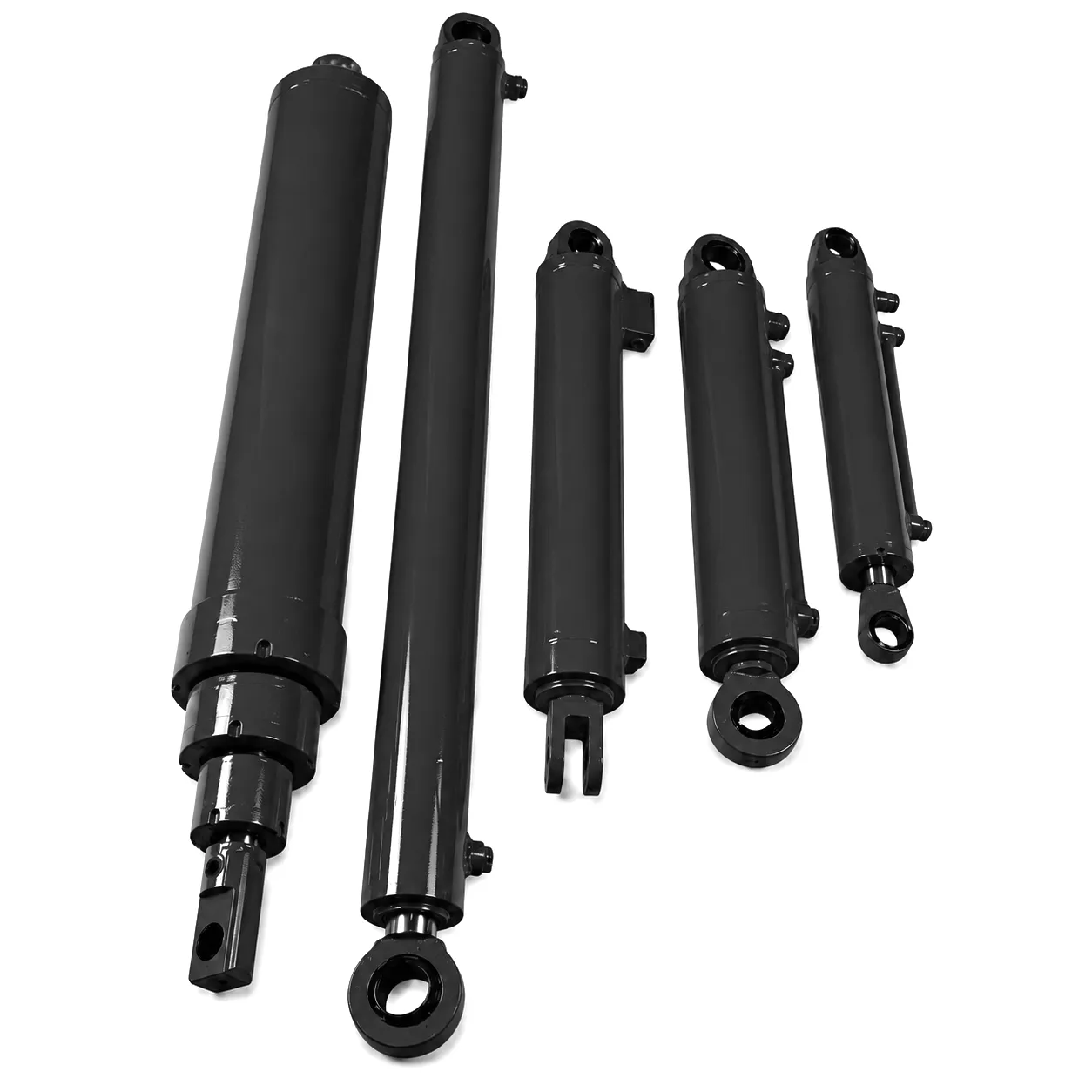
Product Technical and Performance Parameter Comparison
The following table covers key engineering and commercial parameters for hydraulic cylinders versus electric actuators in agricultural machinery. All values reflect mid-range specifications for field-going equipment unless noted.
Core Advantages of Hydraulic Cylinders in Agricultural Equipment
Why engineers across Sheffield, Coventry, Newark, and Aberdeen continue to specify hydraulic cylinders as the primary actuator for demanding field machinery.
A 100 mm bore hydraulic cylinder at 200 bar generates 157 kN push force from a unit roughly 130 mm in diameter and 400 mm long. To generate the same force electrically would require an actuator two to three times larger and heavier. For heavy tillage equipment, large front loaders, and industrial bale handling, this force density advantage is not marginal — it is decisive.
With the correct seal pack, hydraulic cylinders operate reliably from -30°C to +120°C. This range covers every scenario in UK agriculture: frost-hardened ground cultivation in January on the Lincolnshire Wolds, and peak July hay-cutting in the Somerset Levels. No cold-start hesitation, no capacity drop, no degraded speed. Simply consistent output regardless of ambient temperature.
Seal replacement on a hydraulic cylinder requires standard workshop tools, a few hours, and a seal kit costing £20–80. No specialist electronics training, no diagnostic software dongle, no motor rewind. For farms in genuinely remote locations — Highland Perthshire, mid-Wales uplands, the Orkney Islands — this self-sufficiency in maintenance is not a convenience, it is a commercial necessity.
When a cultivator shank strikes a buried stone, hydraulic oil compressibility and system relief valves absorb impact energy that would otherwise transmit directly into structural components. Electric actuator drive mechanisms — lead screws, gearboxes, motor shafts — are vulnerable to the same shock events and can suffer damage requiring specialist repair. In primary tillage applications on UK arable land, stone strikes are not exceptional events — they are part of normal operation.
Bore diameter, stroke length, port thread form, mounting configuration, rod end type, cushioning specification, and surface treatment are all independently specifiable. This flexibility means a hydraulic cylinder can be designed to precisely fit the machine’s geometric constraints rather than forcing the machine designer to accommodate a catalogue item. For OEM product differentiation, this matters enormously.
Lower initial purchase price, lower maintenance cost, longer service life potential, and no electronic control module or battery replacement over a 10–15 year machinery life. The total cost of ownership advantage over electric alternatives compounds significantly as the force requirement increases, because the cost premium for electric actuators at high force ratings grows disproportionately compared with hydraulic alternatives.
Featured Ever Power Hydraulic Cylinder Products
Engineered for demanding aerial work vehicle and industrial boom applications, these cylinders demonstrate the precision and durability that define the Ever Power standard across all product lines.
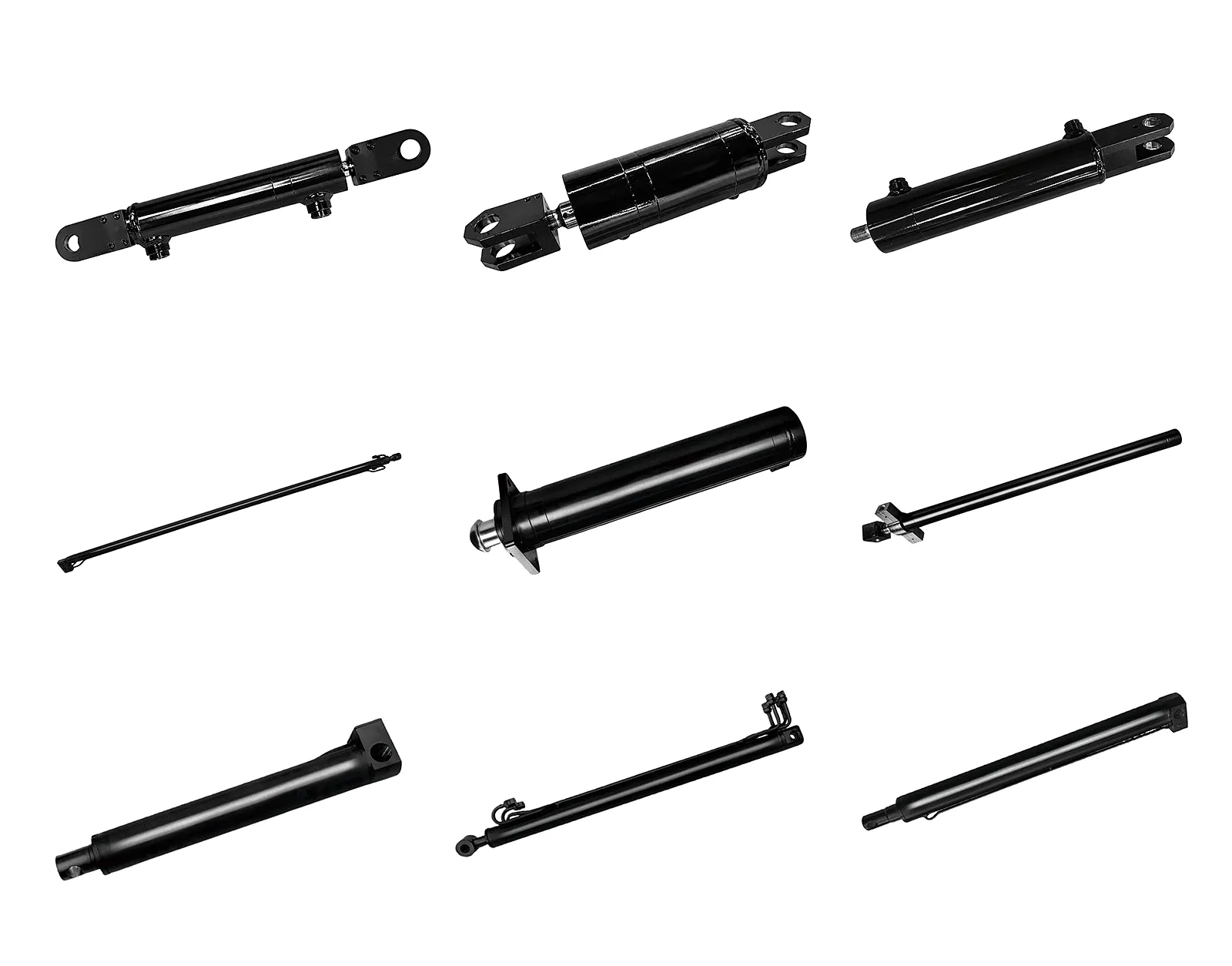
Designed for the folding boom angle control mechanism on aerial work platforms, this cylinder delivers precise angle management through an extended 1,458 mm stroke. The hard-chrome piston rod and precision-honed bore ensure smooth proportional control across thousands of duty cycles in construction, infrastructure inspection, and utility maintenance roles. Cushioning at both ends of stroke protects against end-impact in high-cycle applications.
The main boom angle cylinder controls primary elevation on mobile elevated work platforms. With a 555 mm stroke and heavy-duty end cap construction, it provides the load-holding and smooth proportional response demanded by MEWP safety standards. Seal specifications are validated for continuous outdoor operation across UK climate conditions, including the high humidity and temperature cycling typical of British working environments from autumn through spring.
Industrial Application Scenarios for Hydraulic Cylinders in Agricultural Machinery
The following scenarios reflect real applications across UK agricultural and allied industrial sectors where hydraulic cylinders deliver performance that alternative actuator technologies cannot reliably replicate at comparable cost and reliability.
Modern combine harvesters operating across the expansive arable land of Lincolnshire and Cambridgeshire rely on multiple hydraulic cylinders to manage header height, reel position, feeder house angle, and unloading auger deployment. The forces involved in lifting a 12-metre header — which may weigh 4–6 tonnes — require cylinders operating at pressures above 250 bar with bore sizes typically between 100 and 150 mm. The duty cycle is intensive: cylinders actuate hundreds of times per shift during harvest, tolerating constant vibration from the threshing mechanism, exposure to crop dust and chaff, and temperature cycling from cool morning starts to warm afternoon operating conditions. No electric actuator technology currently available can substitute for hydraulic cylinders in this application at the required force, stroke, and duty cycle combination.
The telescopic handler has become one of the most versatile machines on UK farms, from handling large round bales in Shropshire to placing roof trusses on farm buildings in Devon. Boom extension, lift, and carriage tilt all depend on hydraulic cylinders capable of handling combined loads exceeding 50 kN at full extension. A boom extension cylinder in a 4-metre reach machine may have a stroke of 2,500 mm or more, requiring a telescopic multi-stage cylinder design. This configuration has no viable electric equivalent at the required force and stroke combination. In this application, the hydraulic cylinder is not a preference — it is the only technically credible solution currently available for commercial agriculture.
Heavy cultivators designed for primary tillage on UK arable farms regularly exceed 6 metres working width. Road transport regulations limit machinery width on public highways, requiring outer wings to fold hydraulically for movement between fields and along rural roads. Wing-folding cylinders must move wings weighing 800–2,000 kg through 90 or 180 degrees, overcoming friction, inertia, and wind resistance in exposed field conditions. These cylinders must also lock positively in both working and folded positions using pilot-operated check valves. The force requirement, lock security, and environmental toughness needed for wing-folding duty on UK clay soils — where stick-slip forces at wing hinges can spike unpredictably — makes hydraulic cylinders the firmly established standard across UK and European arable machinery manufacturers.
Round bale wrappers are ubiquitous on UK dairy and livestock farms across the South West, Wales, and Northern Ireland. The cylinder controlling bale table tilt and discharge must handle the full weight of a wrapped bale — typically 400–700 kg — repeatedly through a complete season without seal failure or position drift. The cyclic loading pattern is exacting: extend under full load, hold position, retract, repeat — potentially 60–100 times per day during peak silage season. This duty profile represents precisely the use case where hydraulic cylinders demonstrate a clear durability advantage, particularly in comparison with electric actuator drive mechanisms that tend to accumulate gearbox wear and motor heat under continuous high-load cycling at elevated ambient temperatures.
Ever Power: Precision Manufacture and Custom Hydraulic Cylinder Solutions for UK OEMs
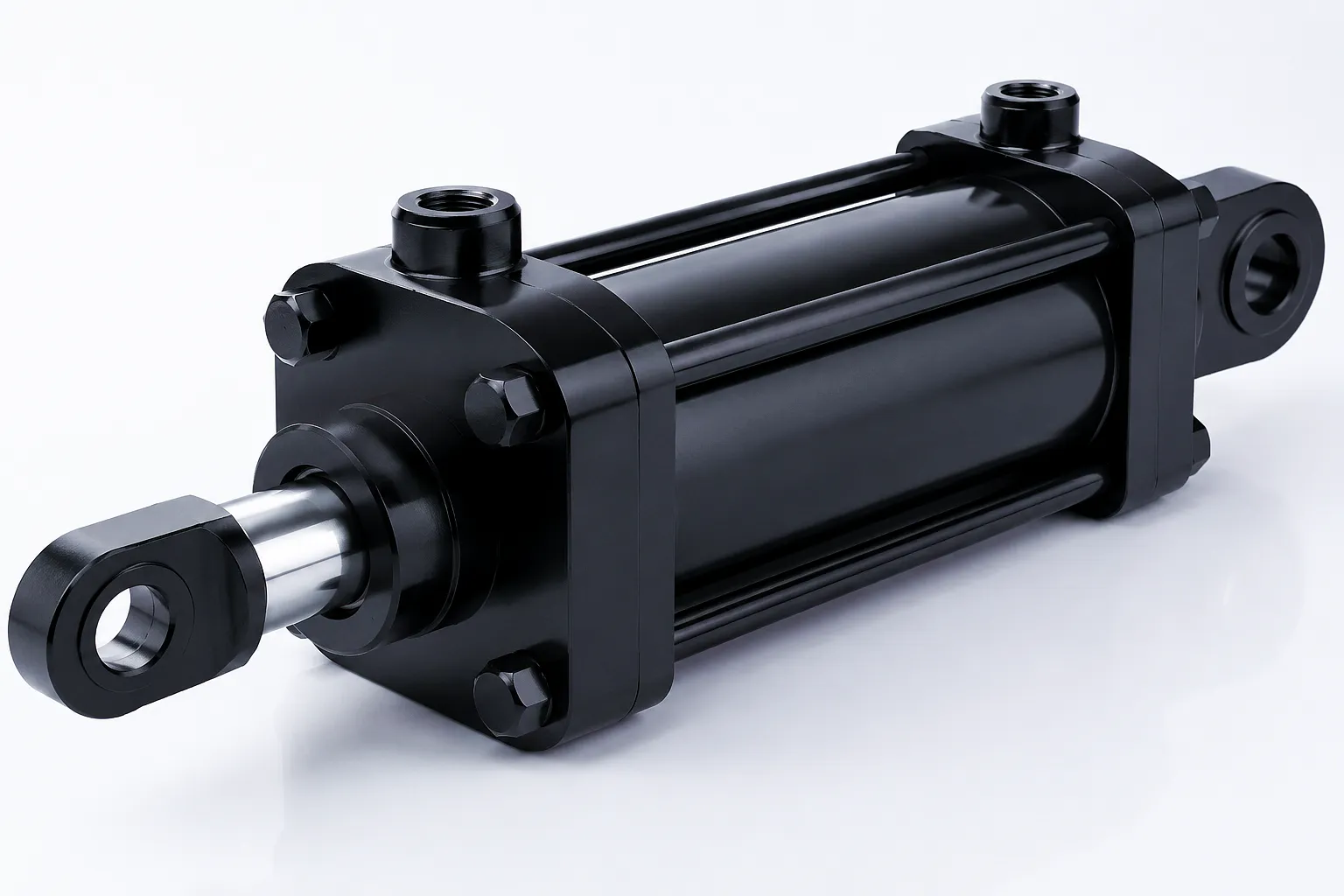
Ever Power operates a vertically integrated manufacturing facility equipped with CNC honing machines, hard-chrome plating lines, seal assembly cleanrooms, and full pressure-test benches capable of testing cylinders to 1.5 times working pressure in accordance with ISO 6020-1 and ISO 6022 standards. In-house control over every manufacturing stage — from raw seamless tube procurement through final quality inspection and document pack assembly — means that every hydraulic cylinder carries traceable quality assurance backed by material certificates, dimensional inspection reports, and pressure test records.
The Ever Power customisation service covers the complete specification range: non-standard bore sizes, extended stroke configurations, special port thread forms for UK and European OEM assembly compatibility, bespoke mounting systems, dual-rod designs, and multi-stage telescopic cylinders for applications requiring long strokes in compact installation envelopes. The engineering team works from customer drawings, 3D model files in STEP or IGES format, or from initial functional specifications where the customer defines force, stroke, and environmental requirements and Ever Power’s engineers develop the optimal cylinder design from first principles.
Supply chain reliability is supported by raw material stockholding sufficient for 90-day production continuity, with delivery logistics to major UK ports — Felixstowe, Southampton, Hull, and Immingham — coordinated through established freight partners. Standard configurations carry 15–25 working day lead times, with express air freight options available for urgent replacement requirements. Understanding that a standing machine during harvest represents direct financial loss, Ever Power maintains a responsive communication structure with all UK accounts.
📩 Get a Custom Quote — [email protected]
True Cost Analysis: 10-Year Total Ownership Comparison
Procurement decisions for agricultural machinery components are rarely made on unit price alone. The total cost of ownership calculation — covering acquisition, installation, maintenance, unplanned repair, and eventual replacement — consistently favours hydraulic cylinders in high-force outdoor applications. The following table presents a structured cost comparison that procurement managers can use to support specification decisions and supplier evaluation processes.
The one category where electric actuators hold a clear edge — position accuracy — is genuinely important in certain precision agriculture applications including seed depth control, variable-rate application systems, and automatic section management. In these applications, a hybrid approach using hydraulic cylinders for primary force generation with electronic position feedback sensors often delivers the best of both technologies. This is an increasingly common specification in high-specification arable equipment manufactured around Peterborough and Spalding, where large precision farming operations require both significant force capacity and millimetre-level positioning repeatability.
Customer Success Story: Sheffield Agricultural Machinery Manufacturer Resolves Cylinder Reliability Crisis
Agricultural Machinery OEM
Round Baler Production
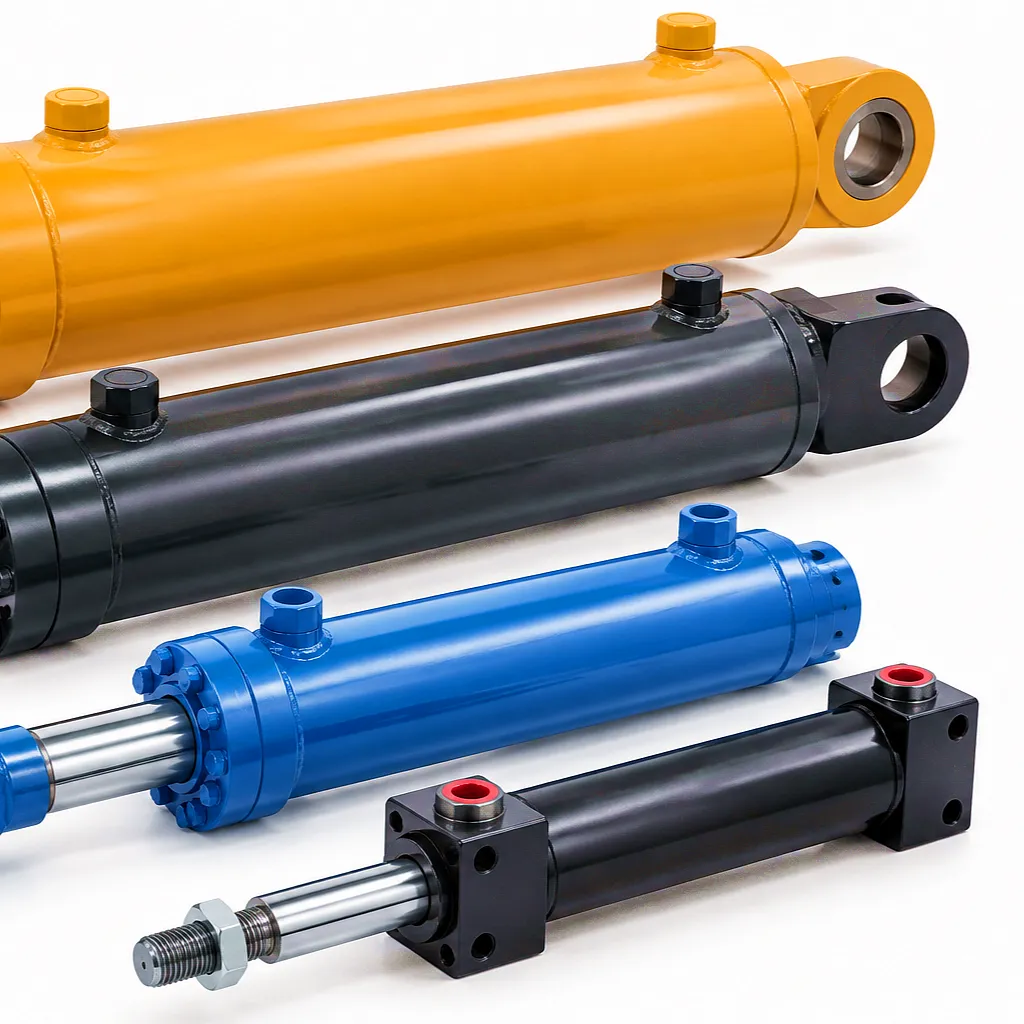 A specialist agricultural machinery manufacturer based in Sheffield — a city with deep roots in precision steel working stretching back generations — had been producing a mid-sized round baler for the UK and Irish livestock market for over eight years. The machine used hydraulic cylinders sourced from a European supplier for the bale chamber door control, bale ejection ram, and net wrap arm actuation. Following a production location change at the European supplier, the company began experiencing premature seal failures. Cylinders that had previously delivered two full seasons before requiring any attention were now failing within six months, with the failures concentrated in the door control cylinder — which opens and closes for every bale formed, representing 80–120 actuations per hour at peak baling rates.
The commercial consequences accumulated quickly. Warranty claims from farming customers were rising, the company’s reputation within the tight-knit UK farm machinery dealer network — where word travels rapidly through events such as LAMMA Show and Grassland & Muck — was under pressure, and the purchasing manager needed a reliable alternative supplier capable of matching exact dimensional specifications while improving seal and chrome rod quality. After reviewing several options, contact was made with Ever Power.
Ever Power’s engineering team received drawings and failed cylinder samples within 48 hours of the initial enquiry. The technical review identified two root causes: insufficient chrome plate thickness (measured at 12–15 µm against the 25 µm minimum required for agricultural field conditions) and a seal groove surface finish marginally outside the Ra 0.8 µm limit specified for the polyurethane rod seal grade. Ever Power proposed a revised specification with 25 µm minimum chrome at 800HV hardness, honed bore to Ra 0.3 µm, and an upgraded Hallite 600 series rod seal pack validated for high-cycle agricultural duty cycles.
A production batch of 120 cylinders was delivered to the Sheffield facility within 22 working days, complete with full material certificates and dimensional inspection records. After two complete seasons covering silage, hay, and straw baling operations across farms from the Scottish Borders to the Welsh Marches, not one warranty claim related to the cylinder components has been recorded. The Sheffield manufacturer has since consolidated all cylinder procurement with Ever Power, extending the relationship to cover three further models in its product range.
Klantenrecensies
“We switched to Ever Power cylinders after persistent seal failures with our previous supplier. The chrome rod specification is visibly better quality — we verified it with our own thickness gauge on delivery — and after two complete baling seasons the door control cylinders show no sign of leakage. That is the kind of reliability our customers expect from a machine we put our name on.”
“The customisation capability sets Ever Power apart from most suppliers we’ve evaluated. We needed a non-standard bore size with a specific port thread to suit our existing manifold design. Their engineering team returned a revised drawing within three working days, and the finished cylinders matched dimensions exactly and passed our full pressure test protocol first time.”
“Lead time reliability is as important to our production planning as component quality. Ever Power’s quoted lead time of 22 working days has been consistently achieved across multiple batches. When we had an urgent requirement during our LAMMA pre-production ramp-up, they moved our order forward without applying a premium. That commercial partnership approach is rare.”
When an Electric Actuator Is the Correct Specification
Technical integrity requires acknowledging the genuine application categories where electric actuators represent the better engineering choice. There are three clear scenarios where any responsible engineer should give electric technology serious consideration rather than defaulting to hydraulics simply because hydraulics dominate the broader market.
Where seed placement depth must be managed to within 2–3 mm across varying soil conditions, and where ISOBUS section-control integration is required for variable rate application, electric actuators with encoder feedback provide superior closed-loop performance. Forces are modest (typically under 3 kN per row unit) and the positioning precision justifies the higher unit cost.
In controlled-environment agriculture — polytunnels in the Lea Valley, large glasshouse complexes in Lincolnshire, hydroponic growing facilities — the absence of hydraulic fluid eliminates contamination risk to crops and growing media. Electric actuators for ventilation, shade screens, and irrigation dosing valves are the correct specification in these environments, and no hydraulic alternative offers a comparable installation advantage.
Gate control systems, small hopper doors, auger divert valves, and seed hopper shutoffs — where forces are consistently below 5 kN and precise remote positioning is required with digital bus integration — are well served by electric actuators. The clean installation, easy control wiring, and lower overall system cost compared to a hydraulic circuit with pump, reservoir, and valve make electric the practical choice at this force level.
Veelgestelde vragen
Long-tail questions answered for UK agricultural machinery buyers, OEM engineers, and farm equipment procurement managers.
Ever Power’s engineering and sales team is available to review your specification, provide technical guidance, and issue a competitive quotation with full material certification. Serving UK OEMs and end-users from procurement through delivery to major UK ports.
📩 Get Your Quote — [email protected]
bewerkt door gzl
 Dutch
Dutch  English
  Italian
  Portuguese
  Swedish
  Danish
  Finnish
  Polish
  Hindi
Hindi  Kazakh
  Turkish
  Ukrainian
  Romanian
  Spanish
  German
  Russian
  Korean
  Japanese
  Vietnamese
  Thai
Thai  Indonesian
  Malay
Malay  French
  Greek
Greek