
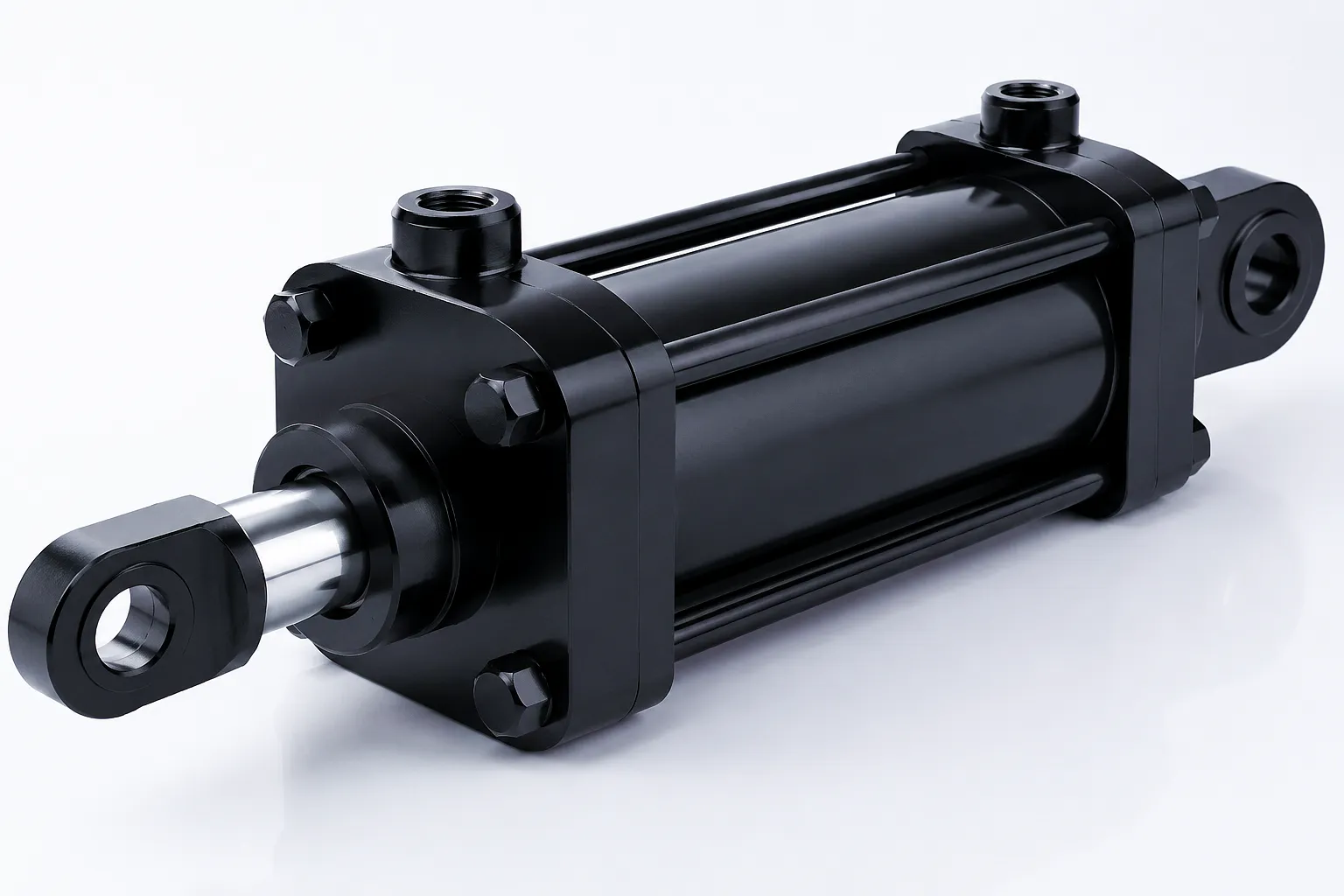
 Walk onto any production floor in Birmingham’s automotive corridor, Sheffield’s steel-processing plants, or a grain-processing facility in Lincolnshire, and you will almost certainly find a hydraulic cylinder buried inside some piece of critical machinery. These components generate the linear force that lifts, clamps, bends, presses, and positions loads measured in tonnes — yet the single most overlooked specification in their procurement is also the one most responsible for premature failure: the duty cycle. Understanding what a hydraulic cylinder’s duty cycle actually means, how engineers calculate it, and how it interacts with materials, seals, and operating temperature is essential knowledge for anyone responsible for specifying or maintaining hydraulic systems in British industry. It is not simply about how hard the cylinder works — it is about the cumulative stress imposed across thousands of operational cycles, and whether the component’s design can absorb and dissipate that stress without accelerating wear to an unacceptable rate.
How Engineers Calculate Hydraulic Cylinder Duty Cycle
The Core Formula
Duty Cycle (%) = (Active Stroke Time / Total Cycle Time) × 100. For a cylinder completing a full extension-and-retraction stroke in 8 seconds, resting for 12 seconds, and then repeating, the duty cycle is (8/20) × 100 = 40%. Most general-purpose cylinders are rated for duty cycles between 25% and 60%. Beyond 60%, manufacturers typically recommend upgraded seals, enhanced bore finishes, active cooling provisions, or purpose-engineered high-duty designs. Getting this calculation wrong at the design stage is one of the most common causes of early cylinder failure in UK processing plants.
Thermal Load and Heat Accumulation
Every stroke generates heat through hydraulic fluid compression, seal friction, and fluid shear within the ports and galleries. At low duty cycles, ambient air dissipates most of this heat during the recovery phase. At higher duty cycles, heat accumulates faster than the system can shed it. Oil viscosity drops — often by 30% to 50% between 40°C and 80°C — which directly reduces the fluid film thickness protecting bore and rod surfaces. Seal elastomers that perform flawlessly at 60°C may begin chemical degradation above 80°C, compressing the lifespan of a nitrile (NBR) seal from tens of millions of cycles to a fraction of that.
Cycle Count vs. Calendar Life
Manufacturers typically rate hydraulic cylinders by total cycle count — commonly expressed as millions of full strokes at rated pressure — rather than calendar years. A cylinder rated for 2 million cycles operating at a 25% duty cycle running 8 hours per day will reach that limit in a very different timeframe from the same unit running a 70% duty cycle on a continuous three-shift production pattern. At 70% duty, the same 2-million-cycle life might be consumed in under two years, compared to five or more years at lower intensity. This is precisely why Sheffield fabrication shops and Birmingham automotive-stamping facilities with extended production shifts need to specify cylinders rated for genuinely high-duty service rather than selecting on bore size and price alone.
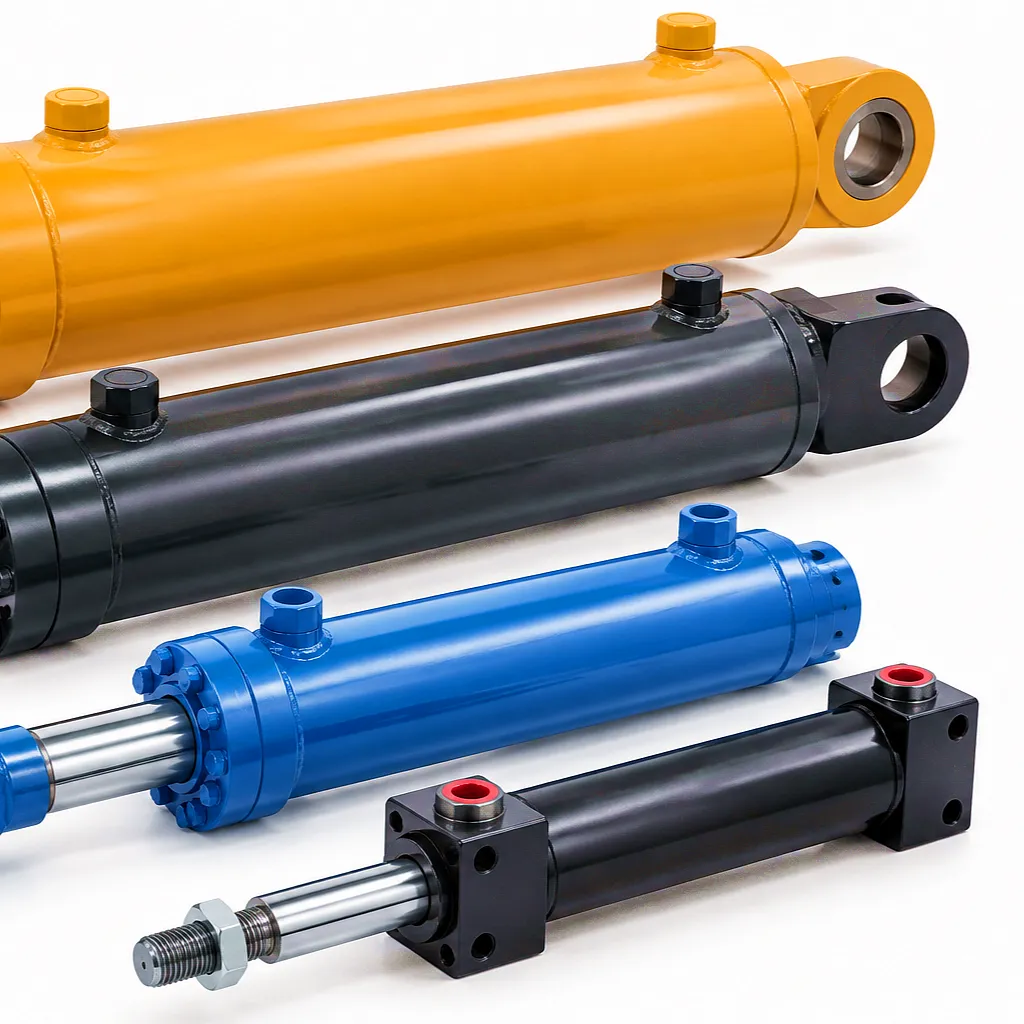
Working Principle: What Physically Happens Inside the Cylinder During a Duty Cycle
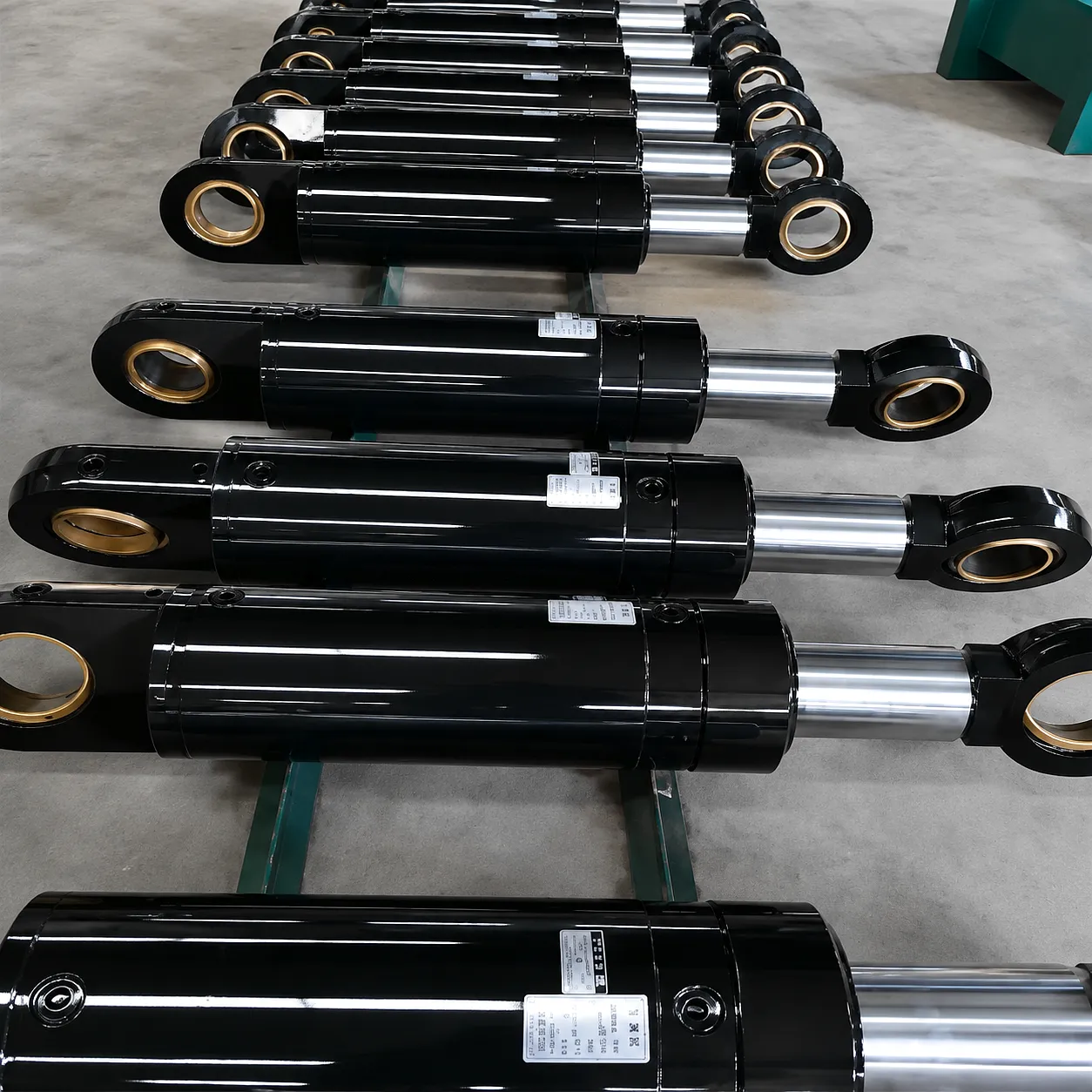 Inside a hydraulic cylinder, pressurised fluid enters through a port and acts on one face of the piston. The pressure differential across the piston — governed by Pascal’s law — converts hydraulic energy into mechanical linear force. During extension, fluid fills the cap-end chamber; during retraction, it fills the rod-end chamber. In a double-acting design, both chambers are actively pressurised and exhausted alternately, meaning the seals on both faces of the piston experience load transitions with every stroke. In a single-acting cylinder, a spring or gravity provides return force, and only the cap-end seal endures repeated pressurisation.
Each pressurisation event causes the piston seals and rod seals to deform elastically, pressing outward against their respective bores. During the rest phase at the end of stroke, the load is held statically — and this static loading is subtly more damaging to seal compound than dynamic stroking at low speeds, because the seal cannot redistribute lubricant across its face. In continuous-duty environments, this mechanism causes a characteristic pattern of seal extrusion into the clearance gap between piston and bore, particularly when operating at the upper end of the rated pressure range.
The rod is the most externally exposed component and the one most sensitive to duty cycle intensity. Chrome-plated rods — the industry standard for most general-purpose UK industrial applications — rely on a continuous fluid film sustained by the rod wiper and primary rod seal. At high duty cycles, this film has less recovery time between strokes. Contamination ingress from workshop atmospheres (particularly in foundry environments in West Midlands or coastal-influenced environments in port-adjacent facilities) compounds the abrasive stress on both the chrome layer and the seal lip. Hard chrome plating thickness of 20–30 µm suits moderate duty applications; high-duty cylinders in aggressive environments should specify nickel-chrome compound plating or induction-hardened steel rods with superior corrosion resistance, rated for salt-spray exposure of 200+ hours to ISO 9227 standards.
FEATURED PRODUCT
Heavy Duty Hydraulic Cylinder — Single Acting Cylinders
Engineered for high duty cycle environments with precision bore finishing and advanced seal packs — ideal for UK press and clamping applications.
Core Materials That Define Duty Cycle Performance
Material selection is the single most consequential design decision for hydraulic cylinders operating at elevated duty cycles.
☸
Barrel / Tube
High-strength cold-drawn seamless steel (CDS) tubing — typically EN10305-1 grade — is the norm for UK-specced industrial cylinders. For high-duty applications where thermal cycling causes dimensional fatigue, honed and plateau-finished bores to Ra 0.2–0.4 µm are specified to extend seal life by reducing asperity contact. Stainless steel grades 304 or 316 are used in food-processing, pharmaceutical, and coastal-industrial environments where corrosion resistance outweighs cost considerations.
☵
Zuigerstang
Ground and polished carbon steel (commonly C45E or 42CrMo4) with a hard chrome layer of 20–35 µm is the standard configuration for general-duty cylinders. Where duty cycles exceed 60% in abrasive or chemically active environments — such as aggregate handling in Yorkshire quarrying or chemical-process plants in Teesside — induction-hardened rods achieving 56–62 HRC surface hardness, or alternatively HVOF-coated (High Velocity Oxy-Fuel) cermet rods, deliver significantly superior wear resistance. Ceramic coatings are increasingly specified for pharmaceutical applications where chromium contamination is a regulatory concern under UK REACH-aligned standards.
🔄
Seal Pack Compounds
Nitrile (NBR) seals cover duty cycles up to moderate intensity in mineral oil environments, rated for continuous service at 80°C. Polyurethane (PU) seals offer dramatically superior wear resistance — often three to five times the cycle life of NBR at equivalent pressures — making them the first choice for high-duty cyclic applications in automotive press lines or construction equipment. PTFE composite seals, often combined with a nitrile energiser, deliver the lowest friction coefficient and are favoured in precision-positioning applications. For extreme temperatures, HNBR or FKM (Viton) seals maintain integrity from −40°C to +200°C, essential for steel-industry hydraulics in Scunthorpe or Rotherham where ambient temperatures fluctuate dramatically between seasons.
⛭
End Caps and Glands
Ductile iron (GGG-40 or SG iron) is the workhorse material for cap and rod gland fabrication in standard cylinders, combining machinability with adequate tensile strength for pressures up to 350 bar. For high-duty cylinders operating at peak pressures above 350 bar — or where dynamic fatigue loads from rapid cycling demand exceptional toughness — low-alloy forged steel (EN 10250-3 grade 34CrNiMo6) is preferred. Aluminium alloy end caps serve lightweight requirements in mobile agricultural machinery or lifting platforms where weight reduction is critical to vehicle load ratings, as seen in the UK’s growing agricultural mechanisation sector across Lincolnshire and East Anglia.
Product Technical and Performance Parameters
| Parameter | Standard Duty | Medium Duty | High Duty |
|---|---|---|---|
| Duty Cycle Rating | Up to 30% | 30% – 60% | 60% – 100% |
| Operating Pressure | Up to 200 bar | Up to 280 bar | Up to 420 bar |
| Diameterbereik van de boring | 25 – 250 mm | 40 – 400 mm | 50 – 500 mm |
| Slaglengte | Up to 1,500 mm | Up to 3,000 mm | Up to 6,000 mm |
| Rod Diameter Range | 16 – 160 mm | 25 – 250 mm | 40 – 320 mm |
| Rod Material (Standard) | C45E, hard chrome 20–25 µm | 42CrMo4, hard chrome 25–35 µm | Induction-hardened / HVOF coated |
| Seal Material | NBR (Nitrile) | Polyurethane (PU) | FKM / HNBR / PTFE composite |
| Bedrijfstemperatuurbereik | -20°C to +80°C | -30°C to +100°C | -40°C to +150°C |
| Bore Finish (Ra) | Ra 0.6 – 0.8 µm | Ra 0.4 – 0.6 µm | Ra 0.2 – 0.4 µm (plateau-honed) |
| Rated Cycle Life (typical) | 0.5 – 1 million cycles | 1 – 3 million cycles | 3 – 10+ million cycles |
| Mounting Options | Clevis, flange, foot | Trunnion, clevis, flange, pivot | Full custom engineered mounts |
Core Product Advantages of High-Duty-Cycle Hydraulic Cylinders
🛠 Precision-Honed Bore Consistency
Plateau-honing to Ra 0.2–0.4 µm creates a surface geometry that retains a micro-reservoir of lubricant while providing bearing plateaux for seal contact. This measurably extends seal life in cyclic applications, particularly in multi-shift environments running three 8-hour shifts common in UK automotive supply chains.
🚩 Enhanced Fatigue Resistance
Pressure-tested to 1.5× rated working pressure and subjected to fatigue cycling protocols before dispatch, high-duty cylinders carry documented mean time between failure (MTBF) data — a critical specification for MRO procurement teams managing planned maintenance windows in continuous-process industries like paper manufacturing or food packaging across the UK Midlands.
🌍 Corrosion Resistance for UK Climates
Zinc-nickel plated or epoxy-coated external surfaces, combined with marine-grade stainless steel hardware on port adaptors and mounting pins, ensure long-term structural integrity in the damp, saline-influenced atmospheres prevalent from coastal Wales to North Sea-adjacent facilities in the Humber estuary region — environments that aggressively attack standard mild steel finishes.
📋 Full Traceability and Certification
Material certificates (EN 10204 3.1 or 3.2), dimensional inspection reports, and hydrostatic test certificates delivered with each cylinder ensure compliance with UK Pressure Equipment (Safety) Regulations 2016 and PSSR 2000 inspection regimes. CE marking (retained under UK Conformity Assessed — UKCA — post-Brexit requirements) is available upon request for machinery directive-covered applications.
Industrial Application Scenarios: Duty Cycle in Real-World UK Settings
Agricultural Machinery — Lincolnshire and Yorkshire
Combine harvesters operating during the UK harvest season — particularly in the arable belts of Lincolnshire, Cambridgeshire, and the East Riding — can subject hydraulic cylinders to duty cycles approaching 80% during peak harvesting hours. Reel-height adjustment, header-tilt, and threshing drum engagement cylinders complete thousands of strokes per field pass. The challenge is compounded by dusty chaff environments that accelerate rod seal wear. Hydraulic Cylinders for Combine Harvester Machines must be specified with multi-lip wipers, extended-temperature seal packs, and bore surface finishes that tolerate ingress conditions — features standard on correctly rated agricultural-duty cylinders.
Automotive Press Lines — Birmingham and Coventry
Metal stamping presses in the West Midlands automotive cluster typically operate at duty cycles of 50%–75% across double and triple shift patterns. Die-clamping cylinders, cushion cylinders, and knockout cylinders in transfer presses may complete 400–600 cycles per hour. At these rates, the cumulative impact of pressure spikes — reaching 2× to 3× nominal during die contact — demands cylinders with pressure-rated end cap thickness calculated to DIN 24334 or ISO 4413 fatigue standards. The oil temperature in recirculated systems can exceed 70°C without adequate reservoir sizing, compounding duty cycle stress on all dynamic seal surfaces.
Steel Processing — Sheffield and Rotherham
In Sheffield’s remaining special steel and forging operations, rolling mill gap adjustment cylinders and press forge tilt cylinders operate at the most demanding end of the duty cycle spectrum. Ambient radiant heat from furnaces and billets can elevate hydraulic fluid temperatures to levels that challenge standard NBR seals within hours. These applications demand cylinders with HNBR or FKM seal packs, active fluid cooling circuits, and rod diameters oversized relative to load — to keep rod stress ratios below the Euler buckling limit even at maximum stroke with thermally softened fluid providing reduced stiffness support.
Lifting Platforms and Dock Levellers — Nationwide Logistics Hubs
Distribution centres across the UK’s logistics golden triangle — centred on the M1/M6 corridor through Northamptonshire and Leicestershire — operate dock levellers and goods-lift platforms at near-continuous duty during peak dispatch periods. Custom Telescopic Hydraulic Cylinders for Lifting Platforms in these environments must maintain positioning accuracy after millions of partial strokes, since levellers rarely complete full bore travel. This partial-stroke operation creates its own wear pattern — a localised polishing zone on the rod and bore at the operating stroke endpoints — that accelerates localised seal wear unless cushioning circuits and end-of-stroke deceleration valves are incorporated into the system design.
Our Hydraulic Cylinder Product Range
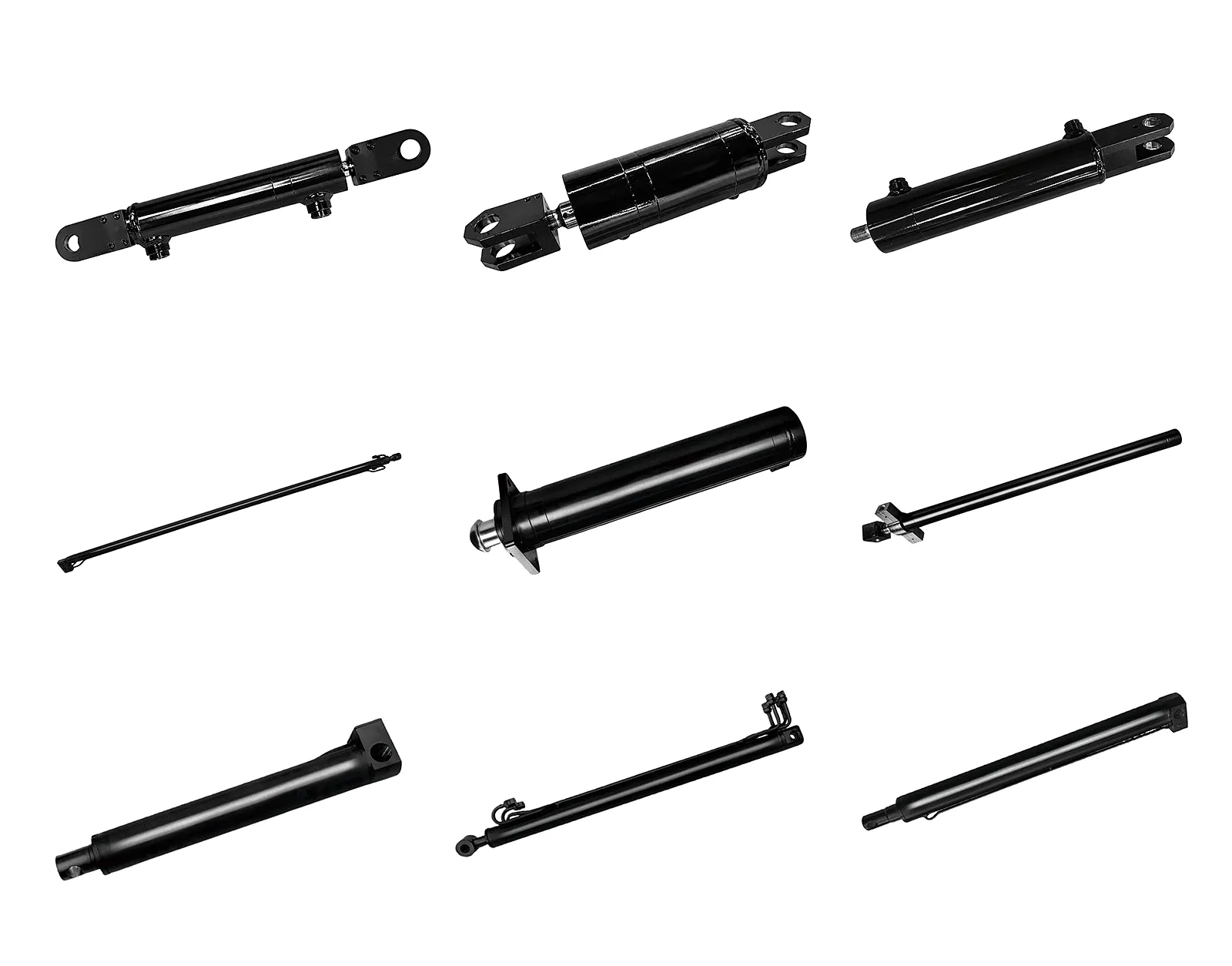
Ever Power: Precision Manufacturing and Custom Hydraulic Cylinder Solutions
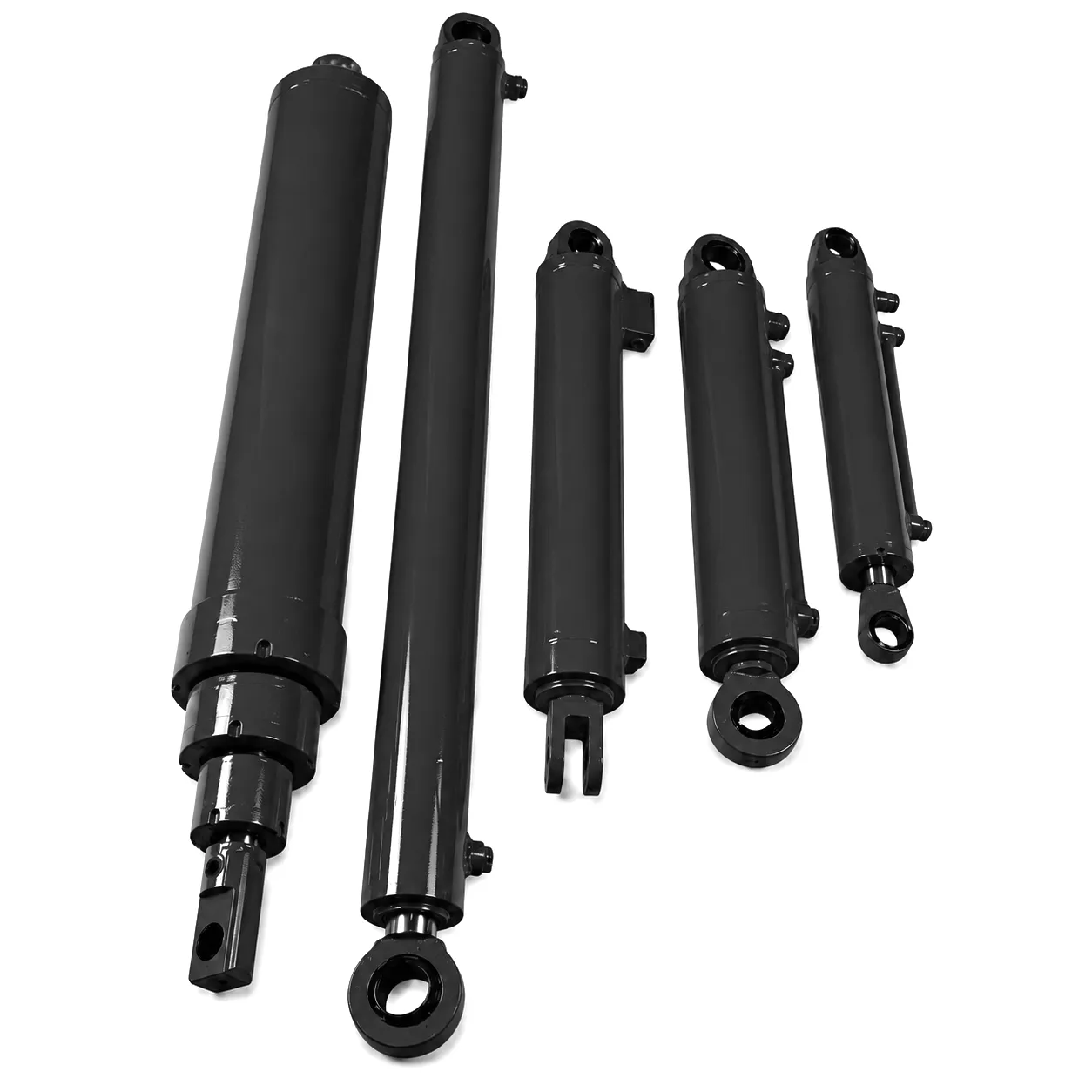 Ever Power has built its reputation in the global hydraulic cylinder market on one core discipline: the ability to engineer and manufacture cylinders that perform reliably at duty cycles that exceed what standard catalogue products can sustain. The manufacturing facility operates precision deep-boring and honing machines capable of achieving bore tolerances to H7 standard with surface finishes to Ra 0.2 µm — not on selected showcase parts, but consistently across production batches. This process discipline is what allows Ever Power’s engineering team to guarantee performance at 70%+ duty cycles where inferior products would show seal failure within 6–12 months of deployment.
Customisation at Ever Power is not a premium add-on — it is the default working mode. When UK distributors and end users present non-standard bore-stroke combinations, unusual mounting configurations required by legacy machine designs in older Sheffield forge facilities or adapted agricultural frames from Lincolnshire contractors, or requests for bi-metallic rod materials for specialist environments, the engineering team produces detailed proposal drawings and FEA stress analysis within five working days. Custom seal specifications, port sizing and positioning, cushioning valve integration, and position transducer mounting provisions can all be accommodated within the standard production workflow without prototype delays.
The supply chain is built for UK procurement timelines. Standard catalogue hydraulic cylinders ship within 7–15 working days; custom-engineered units within 20–35 working days depending on specification complexity. DDP delivery to any UK mainland address is available, with freight routes designed to avoid extended port dwell times. Documentation packages comply with UK Conformity Assessment requirements and include full traceability back to steel mill certificates.
🔎
Engineering Review
FEA analysis and duty cycle verification before manufacture
🔧
Boring en slag op maat
Any combination outside standard catalogue ranges
📋
Full Certification
EN 10204 3.1/3.2, UKCA, pressure test certificates
🚚
DDP UK Delivery
Door-to-door freight management with customs clearance
FEATURED PRODUCT
Custom Double Acting Telescopic Hydraulic Cylinders for Lifting Platforms
Purpose-engineered for high-cycle dock leveller and goods lift applications — precision bore, polyurethane seals, full UKCA documentation.
Customer Success Story: Sheffield Steel Fabricator Resolves Premature Cylinder Failure
14
Months average cylinder life (before)
54
Months and still running (after Ever Power)
68%
Reduction in unplanned downtime events
Hallam Precision Steel, a structural steel fabricator operating a CNC press-brake and hydraulic profiling line in Sheffield’s Attercliffe industrial corridor, was replacing hydraulic cylinders on their beam-clamping assembly every 12–18 months. The cylinders were sourced from a UK distributor stocking general-purpose catalogue units rated to 200 bar with NBR seals. The root-cause analysis, conducted when Hallam’s maintenance engineer calculated the actual duty cycle of the clamping application, revealed the problem: the cylinders were running at 72% duty across two shifts, operating at 220 bar sustained working pressure with ambient temperatures in the press bay regularly exceeding 35°C in summer months.
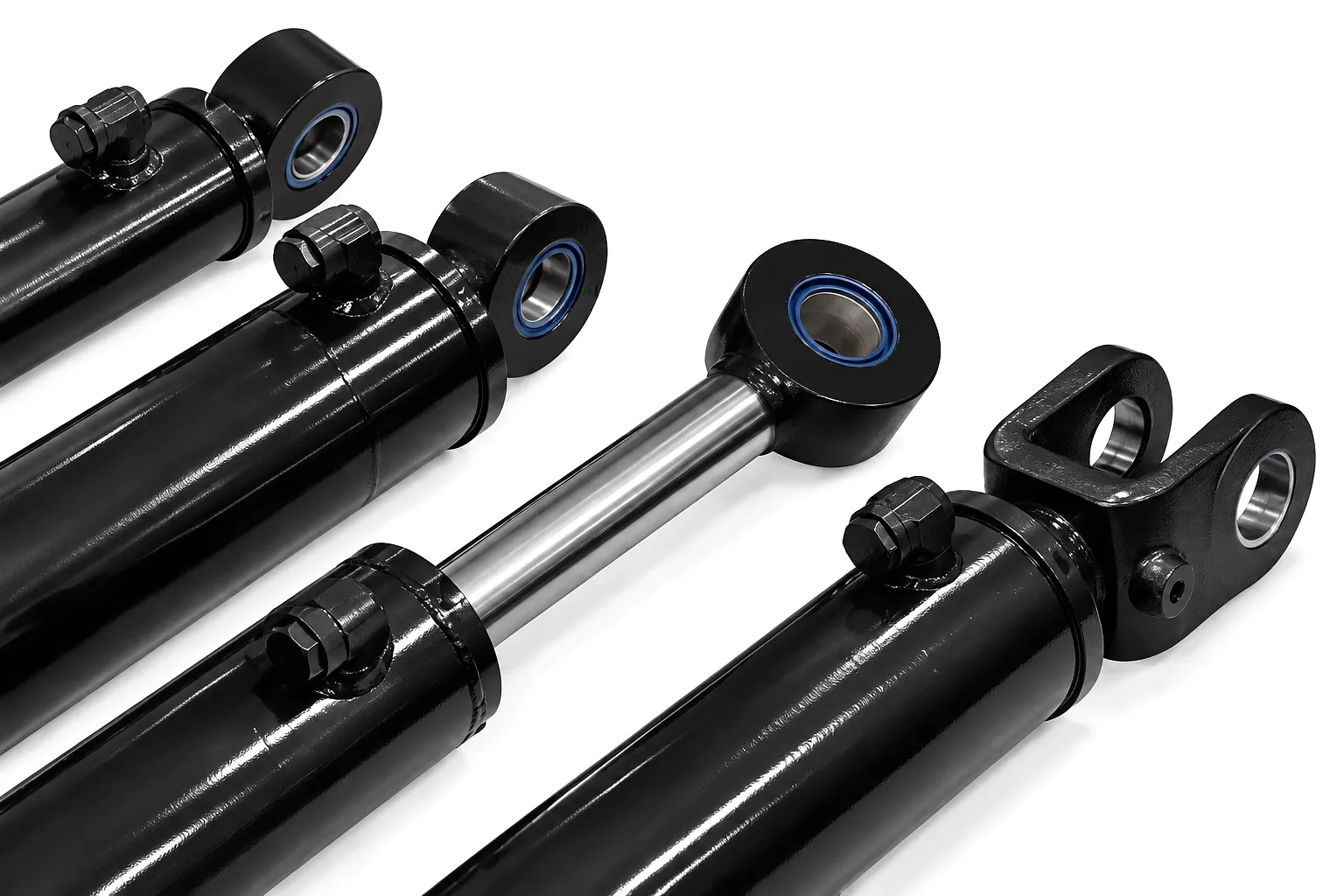 After contact with Ever Power’s technical sales team, a custom specification was developed: 80 mm bore, 42CrMo4 rod with 30 µm hard chrome, plateau-honed bore to Ra 0.3 µm, polyurethane piston and rod seals with PTFE backup rings, and port positions moved to allow fitment of a thermal protection shroud over the cylinder body. Rated to 280 bar working pressure with a duty cycle design target of 80%. The first batch of four custom cylinders was delivered DDP to the Sheffield site within 28 working days. At the time of this case study, those cylinders have been in continuous service for 54 months with no seal replacements and a single port thread re-seal performed during a planned annual shutdown — a maintenance cost reduction of over 70% compared with the previous specification cycle.
“We specified the cylinder bore and stroke, gave Ever Power our duty cycle data and operating temperature logs, and they came back with a detailed engineering proposal within three days. The cylinders have now run through two full production years without a single seal failure. That kind of performance was simply not achievable with what we were buying before.”
— Tom Greaves, Plant Maintenance Manager, Hallam Precision Steel, Sheffield
“Our combine harvester fleet operates through harvest from mid-July into October — sometimes 18 hours a day in Lincolnshire. The hydraulic cylinders Ever Power supplied for our header adjustment system have handled three consecutive harvests without issue. The multi-lip wiper seal they recommended has kept contamination out even in heavy chaff conditions. Delivery was fast and the documentation for our service records was exactly what we needed.”
— James Thorpe, Fleet Director, Thorpe Agricultural Services, Boston, Lincolnshire
“We operate dock levellers across three distribution facilities in Northamptonshire. Our previous cylinder supplier could not give us life data linked to duty cycle — they just sold by bore size. Ever Power gave us projected cycle life figures for each application, specified polyurethane seals for the high-use bays, and the results have been outstanding. Maintenance call-outs on the leveller hydraulics are down dramatically. Very competitive pricing on the customised units as well.”
— Rebecca Sloane, Head of Facilities, Midlands Logistics Solutions Ltd, Daventry
Frequently Asked Questions — Hydraulic Cylinder Duty Cycle
Real questions from UK plant engineers, procurement managers, and OEM design teams.
What exactly does duty cycle mean for a hydraulic cylinder, and how do I calculate it for my press application in Birmingham? ▼
Duty cycle is the percentage of time the cylinder is actively moving under load during a given operational period. You calculate it by dividing the active stroke time by the total cycle time and multiplying by 100. For a Birmingham press application where the cylinder extends under 220 bar for 4 seconds, dwells for 2 seconds, then retracts for 4 seconds, and sits idle for 10 seconds, the duty cycle is (8/20) × 100 = 40%. If your press is running significantly above 50%, you should review whether the cylinder specification — particularly seal material and bore finish — is rated for that intensity. Contacting a specialist like Ever Power with your duty cycle data and pressure logs is the most reliable way to verify your specification.
How does a high duty cycle cause hydraulic cylinder seal failure, and which seal material should I specify for a Sheffield steel plant running three shifts? ▼
Seal failure under high duty cycles is primarily driven by two mechanisms: thermal degradation and mechanical fatigue. At duty cycles above 60%, heat accumulates faster than it dissipates, raising oil temperature and causing elastomer seals to soften, swell, and eventually extrude into clearance gaps. In a Sheffield steel plant running three shifts with radiant furnace heat adding to the ambient load, NBR seals are likely to fail within 12–18 months. For these conditions, HNBR or FKM (Viton) seals maintain integrity up to 150°C and resist chemical attack from hydraulic fluids at elevated temperatures. Combining FKM primary seals with PTFE backup rings and a precision-honed bore to Ra 0.3 µm is the recommended specification for sustained high-duty operation in thermally aggressive steel processing environments.
Where can I find a UK supplier who can give me a price and quote for custom hydraulic cylinders rated for high duty cycle agricultural machinery in Lincolnshire? ▼
Ever Power offers custom hydraulic cylinder specification and quotation services for UK agricultural machinery applications including combine harvesters, balers, and tractor-mounted equipment. You can request a detailed quote by emailing [email protected] with your bore size, stroke length, operating pressure, and duty cycle estimate. For Lincolnshire-based agricultural contractors, DDP delivery is available to site. Lead times for custom agricultural-duty cylinders typically run 20–28 working days from drawing approval, with fast-track options for seasonal urgency.
What is the average cost of replacing a hydraulic cylinder that has failed due to duty cycle overload in a UK automotive manufacturing press line? ▼
The direct replacement cost of a failed press-line hydraulic cylinder varies enormously depending on bore size, stroke, and specification — typically ranging from £200 for small standard units to £2,000–£8,000 for large custom-bore high-pressure designs. However, the indirect costs frequently dwarf the component price: in UK automotive press lines running JIT production for Tier 1 OEM supply, a single unplanned shutdown hour can cost £5,000–£20,000 in lost production, expedited logistics, and contractual penalties. This cost reality makes a robust duty-cycle-matched specification — even at a 30%–50% price premium over catalogue product — economically straightforward to justify in any MRO cost-benefit analysis for Birmingham or Coventry-area stamping operations.
Which type of hydraulic cylinder — single acting or double acting — is better for high duty cycle applications in UK dock levellers and lifting platforms? ▼
Double-acting cylinders are generally preferred for high-duty dock leveller and lifting platform applications because active pressurisation of both chambers provides controlled descent — critical for safety and precision positioning — while also allowing faster cycle times than gravity-return single-acting designs. However, double-acting cylinders have more dynamic seal surfaces under load, meaning material selection is even more critical at elevated duty cycles. For Northamptonshire and Leicestershire distribution centres running high-throughput loading bays, a double-acting design with polyurethane seals, cushioned end stops, and a counterbalance valve circuit will deliver the longest service life. Single-acting cylinders remain viable for lower-frequency lifting applications where load-lowering speed is not time-critical.
How does operating temperature affect hydraulic cylinder lifespan when running at high duty cycles in a UK foundry or forge environment? ▼
Temperature is one of the most damaging variables at high duty cycles. For every 10°C rise above the seal’s rated continuous temperature, elastomer seal life roughly halves — a relationship described by the Arrhenius equation for polymer degradation. In a Rotherham or Scunthorpe forge, where hydraulic circuits may see sustained oil temperatures of 90°C–110°C alongside high cycle rates, the combined thermal and mechanical stress can consume seal life at six to ten times the rate of the same cylinder in a temperate workshop environment. The mitigation strategy involves upgrading to FKM or HNBR seals, specifying a larger hydraulic reservoir to increase thermal mass, adding an oil-to-water heat exchanger rated for the duty, and using phosphate ester or HFD fire-resistant fluid where ignition risk is present near forge hearths.
Ready to Specify the Right Hydraulic Cylinder for Your Duty Cycle?
Send Ever Power your application data — bore, stroke, pressure, duty cycle, and environment — and receive a fully engineered specification with pricing within 3 working days.
📩 Get a Quote: [email protected]
DDP delivery to all UK mainland addresses | UKCA / CE documentation available | Custom lead times from 20 working days
bewerkt door gzl
 Dutch
Dutch  English
  Italian
  Portuguese
  Swedish
  Danish
  Finnish
  Polish
  Hindi
Hindi  Kazakh
  Turkish
  Ukrainian
  Romanian
  Spanish
  German
  Russian
  Korean
  Japanese
  Vietnamese
  Thai
Thai  Indonesian
  Malay
Malay  French
  Greek
Greek