
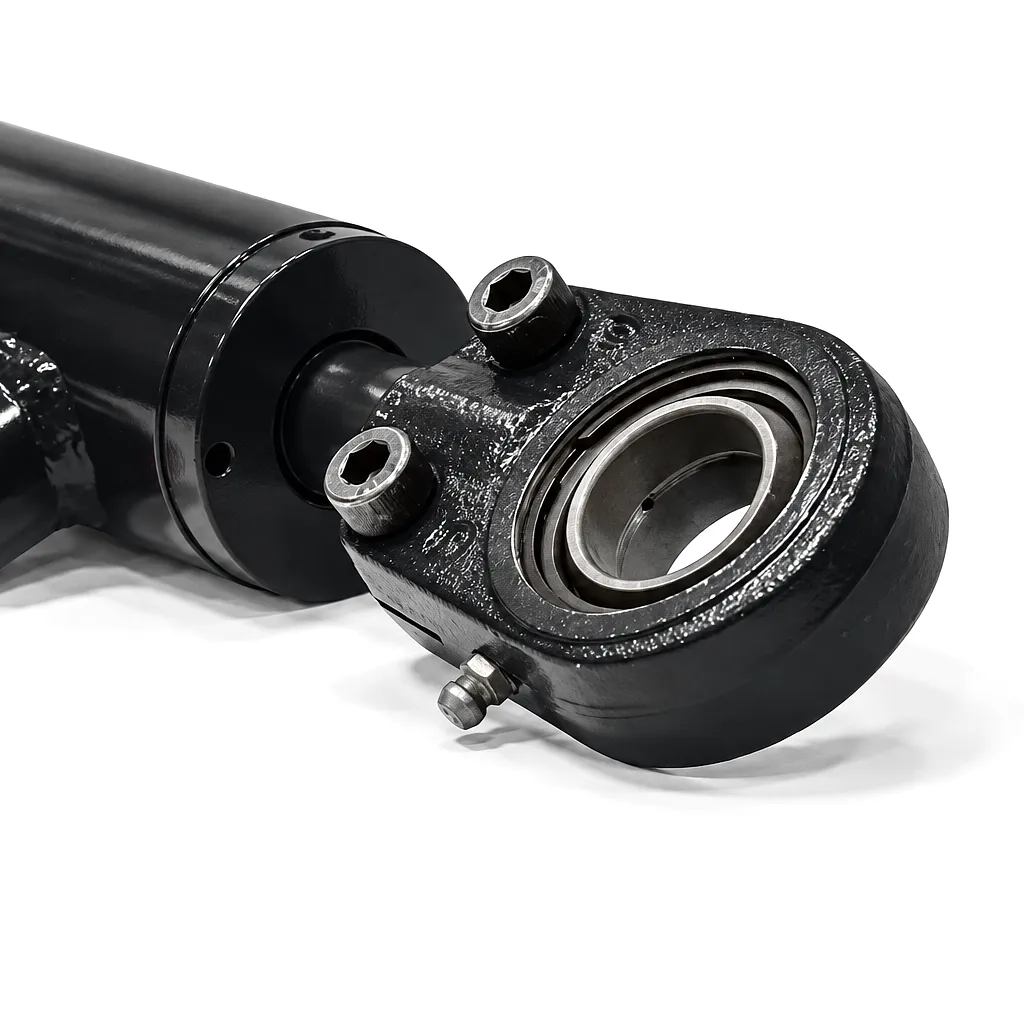
 When a crawler crane lifts hundreds of tonnes on a construction site in Manchester or positions structural steel across a Tyne bridge deck, the hydraulic boom cylinder is doing work that few components in engineering are asked to do. It must extend and retract under enormous axial loads, maintain precise stroke control over many hours of continuous operation, resist fatigue across thousands of cycles, and do all of this in British weather — rain, temperature swings, and the kind of ambient moisture that turns mild steel into a rust problem within months. Boom cylinders are not generic hydraulic actuators bolted into a crane afterthought. They are engineered to exact load ratings, stroke lengths, bore diameters, and mounting configurations that are unique to each crane model, and selecting the wrong specification is not merely a performance issue — it is a safety-critical failure waiting to happen. Understanding what boom cylinders actually do, how their load ratings are calculated, and what criteria matter most when choosing a replacement or upgrade cylinder is essential knowledge for plant engineers, procurement managers, and field service teams across the UK’s heavy lift and construction sectors.
How Boom Cylinders Generate and Manage Force on Crawler Cranes
Hydraulic Principle
A boom cylinder operates on Pascal’s Law: hydraulic fluid under pressure generates a force equal to the working pressure multiplied by the effective piston area. On a crawler crane, the hydraulic pump — typically a variable-displacement axial piston unit running at 350 to 420 bar — delivers pressurised fluid through hardened steel lines to the cylinder’s cap-end or rod-end port. When fluid enters the cap end, it acts on the full bore area of the piston, pushing the rod outward and raising or extending the boom. Retracting the boom routes fluid to the rod-end annular area, which is smaller because the rod itself occupies space, meaning the retract force is always lower than the extend force for the same pressure. This asymmetry is accounted for in every genuine load rating — a fact that is sometimes overlooked by less experienced procurement teams, leading to undersized cylinders that cavitate or blow seals under dynamic retract loads.
Load Rating Mechanics
A boom cylinder’s load rating is not a single number — it is a matrix that accounts for the static lifting force, the dynamic shock load during slewing and load swing, the column load (buckling risk on long-stroke cylinders when the rod is extended), and the thermal load caused by oil temperature rising under sustained high-pressure operation. For a typical 200-tonne crawler crane operating on a UK infrastructure site, the main boom cylinder may be rated at 3,500 kN extend force and 2,200 kN retract force at 400 bar working pressure, with a minimum safety factor of 4:1 on buckling per Euler’s column formula. Ignoring the column load calculation — which depends on stroke length, rod diameter, and end fixing type — is one of the most common causes of rod bending failure on aftermarket cylinders that were selected only by bore and stroke without engineering verification.
Stroke Control
Modern crawler crane boom cylinders incorporate cushioning at both ends of the stroke — a tapered hydraulic metering sleeve that progressively restricts flow as the piston approaches end-of-stroke, preventing the destructive metal-to-metal impact that would otherwise occur when tonnes of moving boom structure reach the mechanical limit. Cushioning geometry is not a commodity detail: the taper angle, sleeve length, and bypass orifice diameter must be matched to the cylinder’s maximum operating speed and the inertia of the boom section it is moving. Cylinders without correctly matched cushioning exhibit pressure spikes that can exceed 600 bar momentarily — enough to rupture seals, fatigue weld joints in the rod, or damage hydraulic fittings. For crawler cranes working on sensitive sites such as railway infrastructure near Birmingham New Street or in proximity to listed buildings, smooth deceleration at end of stroke is both a mechanical necessity and a site safety requirement.
Core Materials That Determine Boom Cylinder Durability
Cylinder Barrel
Cold-drawn seamless steel tube, typically ST52 or E355 (EN 10305-1), honed to Ra 0.4 µm internal finish. Wall thickness calculated to withstand 1.5x working pressure with deformation under 0.01mm. In UK marine or coastal applications, duplex stainless steel (1.4462) is specified to resist chloride-induced pitting.
Piston Rod
Case-hardened and ground 42CrMo4 alloy steel, chrome-plated to 25–35 µm hard chrome thickness then ground to Ra 0.1–0.2 µm. The chrome layer provides the hard, corrosion-resistant surface that seals ride on. For UK outdoor environments, nickel-chrome or ceramic-chrome alternatives with higher Vickers hardness (900–1100 HV) are increasingly specified to resist the salt-laden atmosphere in coastal regions like Plymouth or Aberdeen.
Sealing System
Polyurethane rod seals with PTFE-coated wiper lips resist the abrasion of fine particles common on demolition and construction sites. For high-temperature applications (ambient over 40°C or hydraulic oil above 80°C), Viton (FKM) seals replace standard NBR. Seal kits for boom cylinders on crawler cranes are never universal — bore diameter, pressure rating, and rod surface finish all influence which seal profile performs correctly.
End Caps & Flanges
Forged from S355J2 or 42CrMo4 steel, machined with O-ring face seal (ORFS) or BSP/NPT ports depending on customer system specification. Trunnion pins and clevis mounts are pin-bored to H7 tolerance and case-hardened for wear resistance through thousands of articulation cycles. For UK customers, SAE flange ports are common on newer crane builds but BSP remains prevalent on legacy fleet equipment.
Related Product: Siłownik hydrauliczny obrotowy siłownika układu kierowniczego — engineered for precise angular positioning in crane slewing and steering systems, complementing boom cylinder assemblies in multi-axis crawler crane configurations.
Product Technical & Performance Parameter Table
The table below reflects standard performance envelopes for boom cylinders supplied by Ever Power for crawler crane applications in the 50 to 600 tonne lift-capacity range. Custom specifications beyond these ranges are available on request — stroke lengths up to 6,000 mm and bore diameters up to 450 mm have been manufactured for special-purpose crane applications in UK port and offshore sectors.
| Parametr | Small Crane (50–120 t) | Medium Crane (120–300 t) | Heavy Crane (300–600 t) |
|---|---|---|---|
| Bore Diameter (mm) | 80 – 140 | 140 – 220 | 220 – 380 |
| Rod Diameter (mm) | 56 – 100 | 100 – 160 | 160 – 280 |
| Stroke Length (mm) | 600 – 1,800 | 1,200 – 3,200 | 2,000 – 5,500 |
| Working Pressure (bar) | up to 350 | up to 400 | up to 420 |
| Test Pressure (bar) | 1.5x working | 1.5x working | 1.5x working |
| Extend Force Max (kN) | 175 – 540 | 540 – 1,520 | 1,520 – 4,760 |
| Retract Force Max (kN) | 120 – 400 | 400 – 1,050 | 1,050 – 3,200 |
| Operating Temperature (°C) | -25 to +80 | -25 to +80 | -30 to +90 (special) |
| Rod Material | 42CrMo4 + hard chrome | 42CrMo4 + hard chrome | 42CrMo4 / ceramic chrome |
| Barrel Material | ST52 seamless honed | E355 / ST52 | E355 / duplex SS option |
| System uszczelnień | PU + NBR | PU + NBR / FKM option | PU + FKM / PTFE |
| Chrome Layer Thickness (µm) | 25 – 35 | 25 – 40 | 35 – 50 / ceramic |
| Port Standard | BSP / SAE / ORFS | BSP / SAE / ORFS | BSP / SAE / ORFS / NPT |
| Cushioning | Adjustable both ends | Adjustable both ends | Adjustable / fixed geometry |
| Mounting Options | Clevis, trunnion, flange | Clevis, trunnion, flange | Clevis, trunnion, spherical |
Core Technical Advantages of Ever Power Boom Cylinders
High-Precision Honing
Barrel bore honed to Ra 0.4 µm cylindricity, ensuring seal longevity exceeding 5,000 operating hours under rated load in field conditions. Tighter bore geometry means less seal deformation and lower internal leakage across the service life — a measurable energy efficiency gain on crane fleets working long shifts in Humberside port operations or North Sea support vessel handling.
Verified Buckling Resistance
Every long-stroke cylinder (stroke-to-rod-diameter ratio above 10:1) undergoes full Euler buckling verification with a 4:1 safety factor minimum before order release. Rod diameter selection is never left to approximation — FEA simulation is used on cylinders for crawler cranes above 250 tonnes where dynamic side loading from boom swing can add significant lateral force components to the axial rod load.
Corrosion-Grade Finishing
Chrome plating meets DIN EN ISO 1456 and DIN 50960 standards. For UK export-facing or marine-adjacent applications, nickel undercoat (20 µm Ni + 30 µm Cr) or ceramic-chrome composite coatings are offered. External surface painting uses two-pack epoxy primer followed by polyurethane topcoat, rated to 1,000-hour salt spray (ASTM B117) — essential for crawler cranes based on UK coastal sites or working in the Scottish Highlands where summer midge season and autumn rainfall create aggressive micro-corrosion environments.
Pressure-Tested at 1.5x Rating
Each cylinder undergoes hydraulic pressure testing at 1.5 times nominal working pressure before despatch, with no visible deformation, leakage, or seal extrusion permitted. Test certificates are issued as standard, providing the documentation UK plant engineers and site safety inspectors require under LOLER (Lifting Operations and Lifting Equipment Regulations 1998) when validating replacement cylinders for crane SWL certification.
OEM-Compatible Geometry
Ever Power maintains detailed dimensional records for boom cylinders across major crawler crane OEMs including Liebherr, Manitowoc, Kobelco, Tadano, Terex, and Sennebogen. Replacement cylinders are manufactured to match OEM envelope dimensions, port positions, trunnion pin diameters, and cushioning adjustment locations — so the crane returns to service without modification to hose routing or boom structure. This compatibility covers crane models dating back 25+ years, supporting the large fleet of legacy crawler cranes still operating across UK construction and infrastructure sectors.
LOLER-Compliant Documentation
Every Ever Power boom cylinder for UK customers ships with a full material traceability pack — mill certificates for barrel and rod steel, chrome plate inspection report, dimensional inspection report, pressure test certificate, and product drawing with revision history. This documentation package supports PSSR (Pressure Systems Safety Regulations 2000) compliance requirements and streamlines the insurance and site approval processes that UK crane operators must manage before any critical lift.
Boom Cylinder Selection Tips: What Matters and What Gets Missed
01 — Know Your Actual Working Pressure
Many fleet managers specify boom cylinders based on crane rated capacity without verifying the actual hydraulic system working pressure. A crane rated at 250 tonnes might run the main hoist circuit at 380 bar but supply the boom cylinder circuit at only 320 bar through a pressure-reducing valve. Specifying a cylinder for 380 bar on a 320-bar circuit wastes bore area and adds unnecessary weight. Conversely, if a crane system has been uprated by a previous owner without documentation — not uncommon in the UK secondhand crane market — a cylinder originally designed for 300 bar may be exposed to 370 bar, with predictable consequences for seal and port fitting integrity. Always confirm system pressure from the hydraulic schematic, not the crane capacity plate.
02 — Measure the Mounting Envelope Precisely
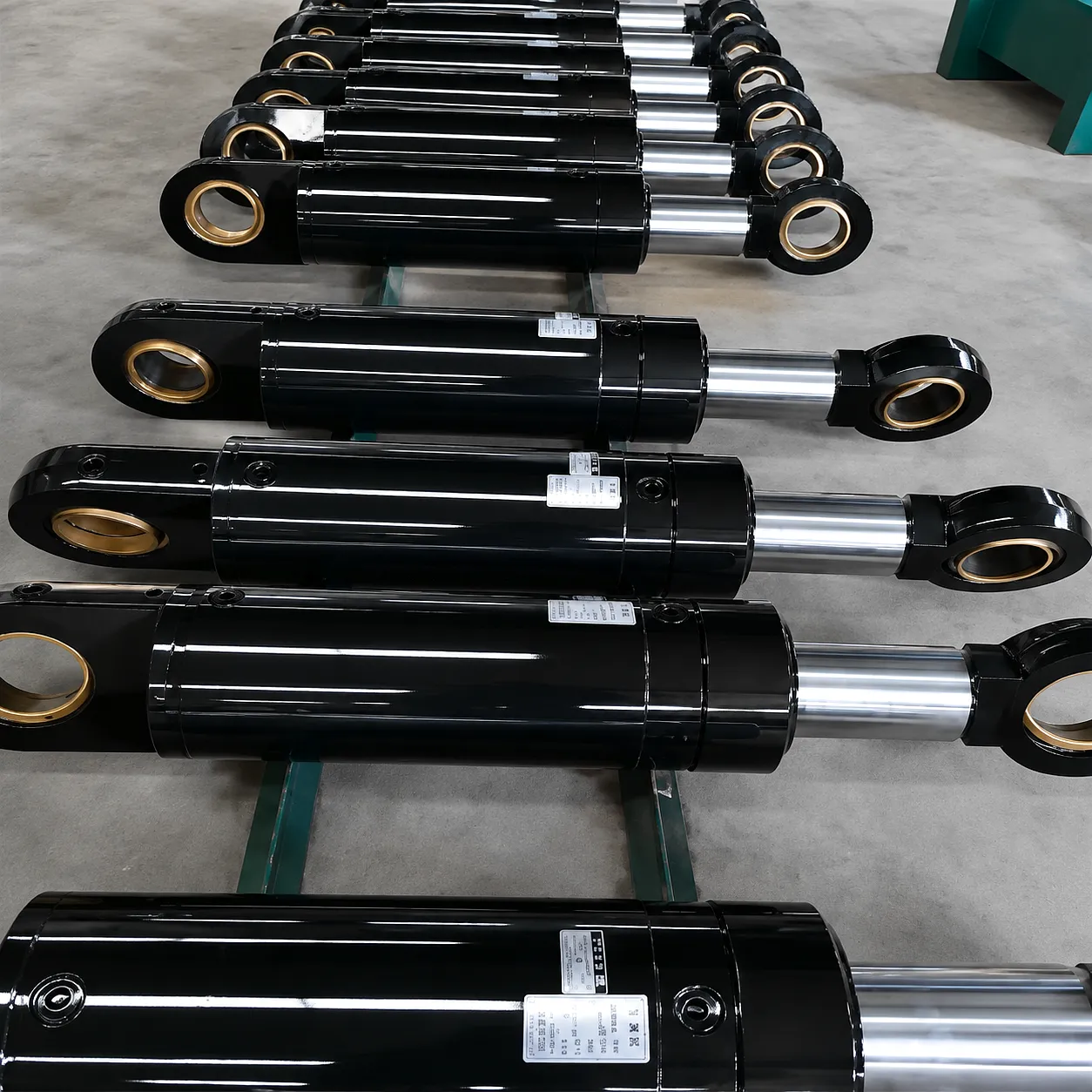
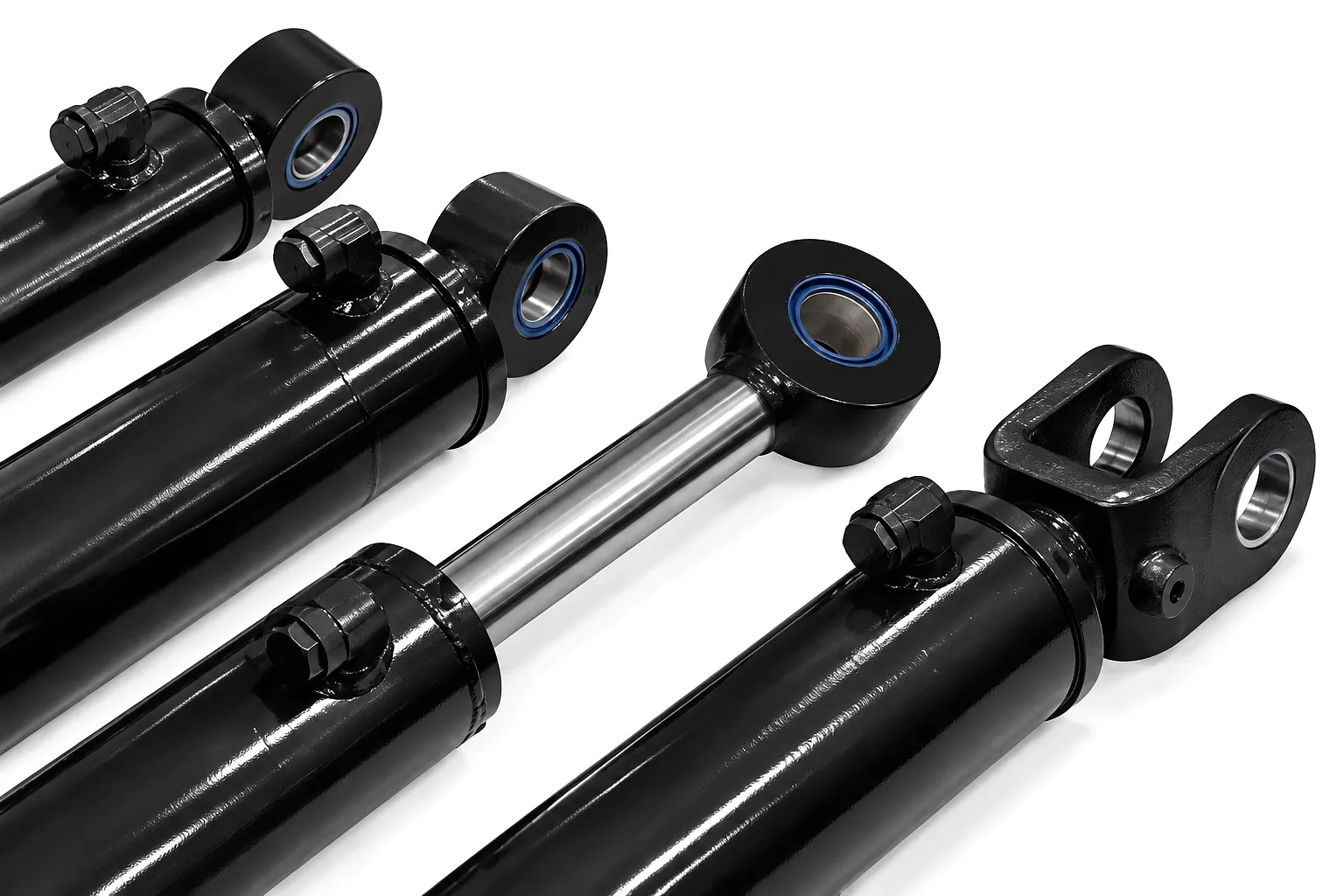
Boom cylinder mounts on crawler cranes are typically clevis-to-clevis or trunnion-to-clevis arrangements with specific centre-to-centre retracted and extended dimensions that are dictated by boom geometry. Even 5 mm of error in retracted length means the boom will not reach its designed minimum angle — a critical issue on cranes where maximum counterweight configuration is load-limited by boom angle. Pin diameter, bore tolerance, and lubricant groove specification in the clevis eye must also match the crane structure’s bronze or composite bush to avoid accelerated wear at the pin joint. Provide complete envelope drawings to Ever Power’s engineering team rather than just bore and stroke dimensions.
03 — Account for Dynamic Load Multipliers
Static load ratings tell only part of the story. A crawler crane slewing at 0.5 rpm with a 200-tonne suspended load introduces dynamic swing forces that the boom cylinder must resist through the hydraulic lock created by counterbalance valves. When those valves open and close, the pressure spike reaching the cylinder can be two to three times the static working pressure for milliseconds at a time. Cylinders must be designed with burst pressure margins — typically 4x working pressure — and port connections must use forged fittings, not cast or welded, to survive these repeated transient loads. On long-duration infrastructure projects like HS2 enabling works or Hinkley Point C construction support, where cranes may cycle continuously for 10-hour shifts, this dynamic fatigue loading is the dominant life-limiting factor for boom cylinders.
04 — Check Fluid Compatibility with Seal Grade
An increasing number of UK construction sites — particularly those operating within SSSI boundaries or near water courses — require fire-resistant or readily biodegradable hydraulic fluids (HEES or HFC types). Standard NBR seals are incompatible with many of these fluids and will swell or degrade within weeks. If you are procuring boom cylinders for a crane that will be operated under an Environmental Management Plan specifying alternative hydraulic fluid, this must be communicated to Ever Power at the enquiry stage so that FKM or EPDM seal kits are specified from the outset. Retrofitting the wrong seal grade after delivery is a preventable cost that the UK crane hire sector encounters regularly.
Industrial Application Scenarios for Boom Cylinders on Crawler Cranes
Nuclear New Build — Somerset & Suffolk
At Hinkley Point C and Sizewell C, crawler cranes in the 500 to 1,000 tonne range lift reactor building modules and containment dome sections. Boom cylinders in these environments must meet nuclear quality assurance requirements, including full traceability of all materials to mill heat numbers, and witnessed pressure testing witnessed by a third-party inspector. Replacement lead times are measured in weeks, making robust cylinders with 2x the standard service life interval critical to project schedule.
Offshore Wind Installation — East Anglia & Dogger Bank
Jack-up vessels and self-propelled heavy lift vessels deploying crawler cranes for offshore wind monopile installation expose boom cylinders to salt spray, high humidity, and temperature cycling that far exceeds typical land-based duty cycles. Boom cylinders used in this sector typically require ceramic-chrome rod coatings, stainless steel port plugs, and epoxy-primed exterior surfaces. The Siłownik hydrauliczny turbiny wiatrowej complements the boom system, controlling blade pitch during installation and commissioning phases where precise angular positioning at height is critical.
Bridge Deck Erection — Sheffield & Northern England
Rail and road bridge deck installation in constrained urban corridors — including viaduct work on the M62, A1 upgrades, and Network Rail projects around Sheffield and Leeds — demands crawler cranes with precise boom angle control to place steel sections within millimetres of target. The boom cylinder’s position directly determines the lift radius at any given counterweight setting, making cushioning quality and positional repeatability more critical than in general construction lift scenarios.
Steel Erection & Industrial Plant — Birmingham & Midlands
The West Midlands manufacturing belt — from Birmingham’s logistics parks to Coventry’s EV battery gigafactories and Staffordshire’s chemical processing plants — maintains a substantial population of crawler cranes for ongoing plant maintenance and capital project execution. These cranes often work with relatively short boom lengths at high loads (high-capacity, low-radius lifts), which places extreme compressive loads on boom cylinders at mid-stroke positions. Cylinder bore sizing must account for these specific loading geometries rather than defaulting to catalogue selections.
Port & Shipyard Heavy Lift — Liverpool & Glasgow
Liverpool’s Freeport and Clydebank’s shipyard redevelopments rely on crawler cranes to shift prefabricated ship sections, port infrastructure modules, and breakwater blocks up to 800 tonnes. In tidal zones and on quayside exposed locations, boom cylinders are subjected to salt-laden wind-driven rain throughout the working day. Epoxy-PVDF coating systems with stainless port plugs and sacrificial anode brackets are standard specification for these environments.
Demolition & Remediation — London & South East
Urban demolition in London — including regeneration schemes at Elephant & Castle, Nine Elms, and along the Thames estuary — uses crawler cranes fitted with demolition accessories including ball weights and hydraulic shears. These attachments create extreme shock loads transmitted back through the boom and into the boom cylinders. Cylinders for demolition-configured crawler cranes should be specified with thicker rod diameters (typically rod-to-bore ratio above 0.65), relief valve protection, and additional port reinforcement at the cylinder body to absorb repeated shock events.
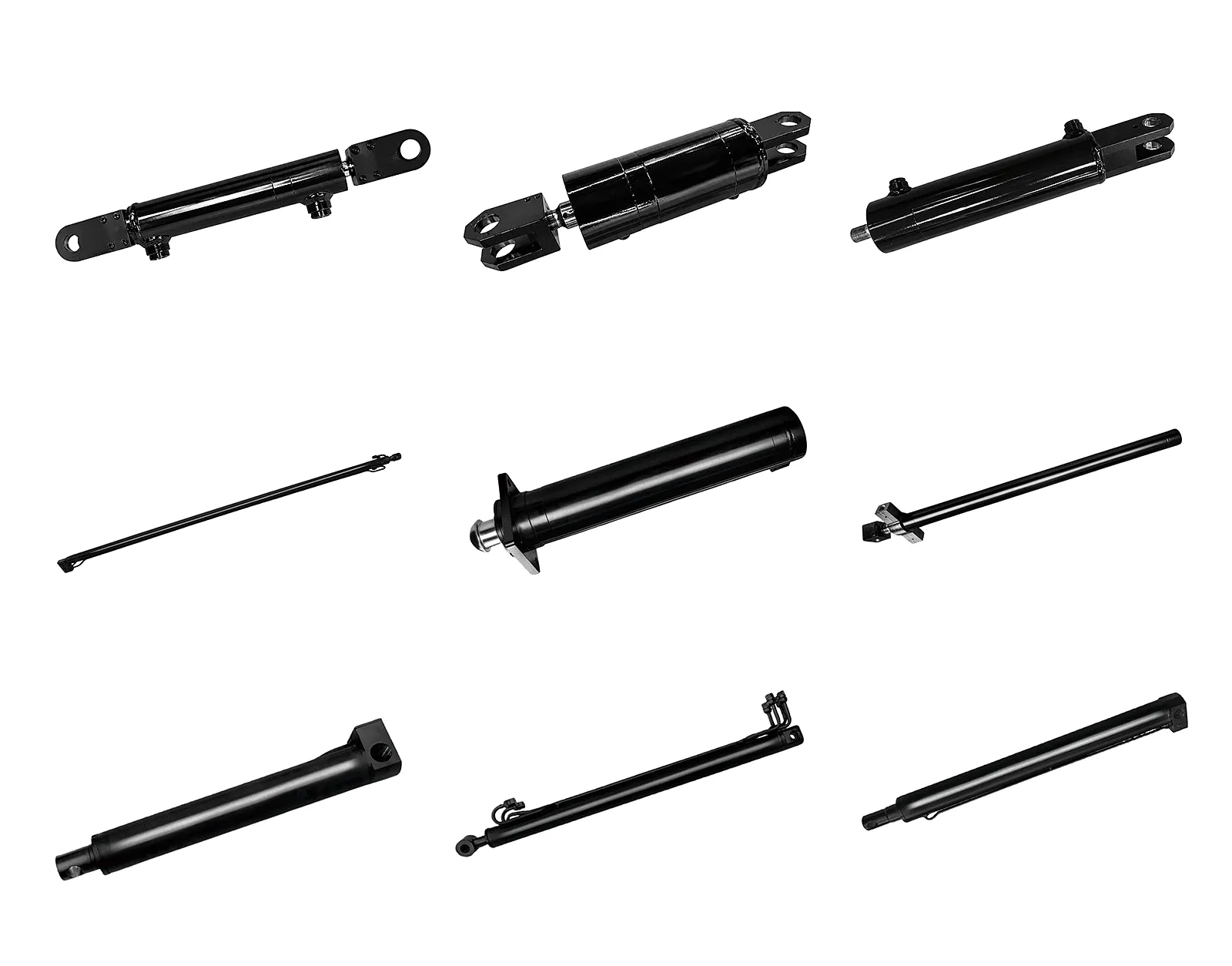
Ever Power Boom Cylinder Product Range — Custom Manufactured for Every Crawler Crane Configuration
Ever Power: Factory Capabilities and Customisation Services
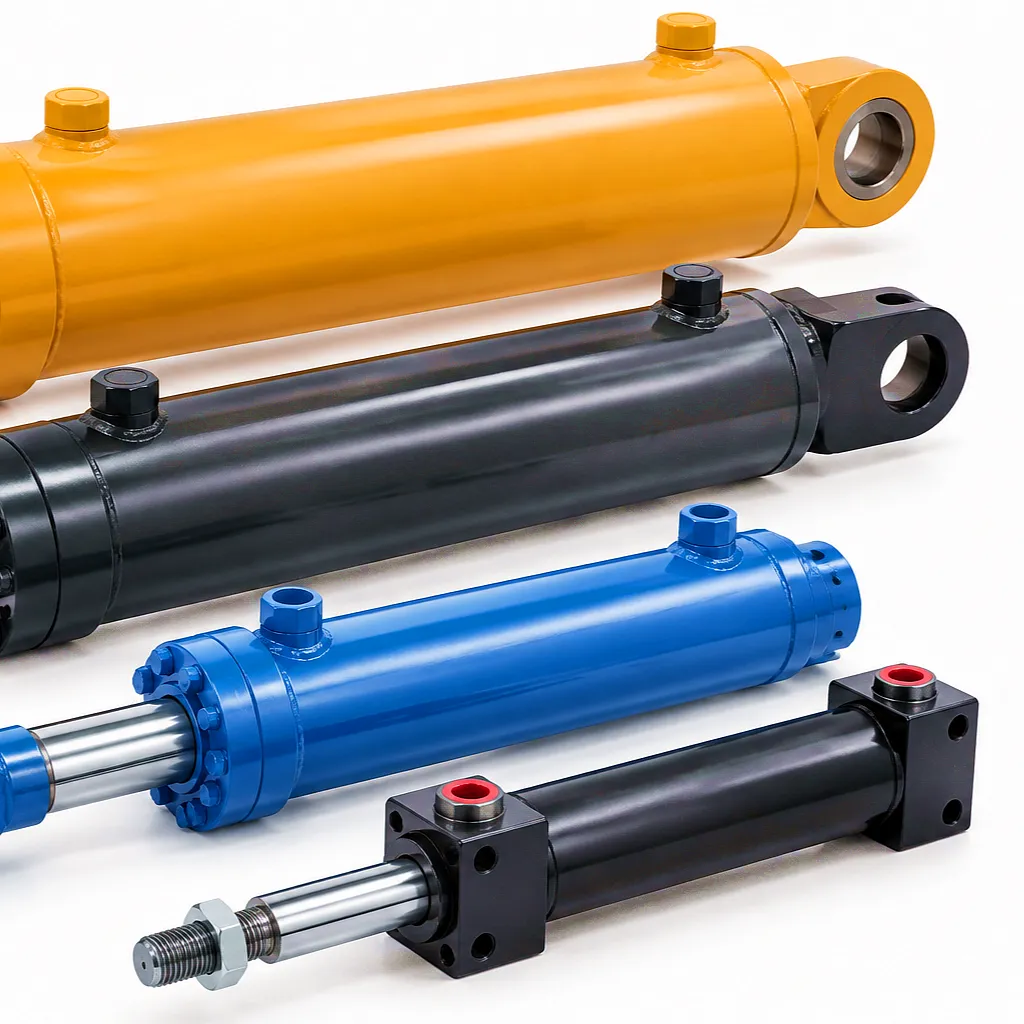
Ever Power operates purpose-built hydraulic cylinder manufacturing facilities with equipment scaled for the demands of heavy crane cylinder production. CNC deep-hole drilling and honing machines handle barrel lengths up to 8,000 mm. Chrome plating tanks accommodate rods up to 6,000 mm in a single uninterrupted plating run, eliminating the join marks and thickness variations that arise when shorter tanks require multiple dip cycles on long rods. Vertical assembly presses with guided alignment fixtures ensure consistent seal fitting across all bore sizes without distortion of the gland or barrel bore.
Full Custom Engineering
From customer-supplied drawings or OEM part numbers, Ever Power’s engineering team produces complete manufacturing drawings, material selection rationale, and FEA summary within 5 working days for most boom cylinder configurations. Non-standard port locations, angled ports, integrated manifold blocks, and position transducer provisions are all within standard customisation scope.
Supply Chain Certainty
Ever Power maintains forward stock of common barrel sizes, chrome-plated rod blanks, and seal kits across the most popular bore diameters used on Liebherr, Manitowoc, and Kobelco crawler cranes. This inventory strategy reduces lead times for repeat orders to 3–6 weeks versus the 16–20 weeks typical of OEM procurement through European distributors, providing a decisive advantage when a UK project crane is unexpectedly out of service.
Inspection & Certification
Third-party inspection by SGS, Bureau Veritas, or Lloyd’s Register is available on request. Full material traceability packs, dimensional inspection reports, pressure test certificates, and paint system inspection reports are produced as standard for all UK crane cylinder orders, ready for submission to site safety and insurance engineering teams.
Request a Custom Boom Cylinder Quote from Ever Power
Share your bore, stroke, working pressure, OEM reference, or existing cylinder dimensions — our team responds within 24 hours.
Customer Success Story: Rapid Cylinder Replacement on a Petrochemical Shutdown in Teesside
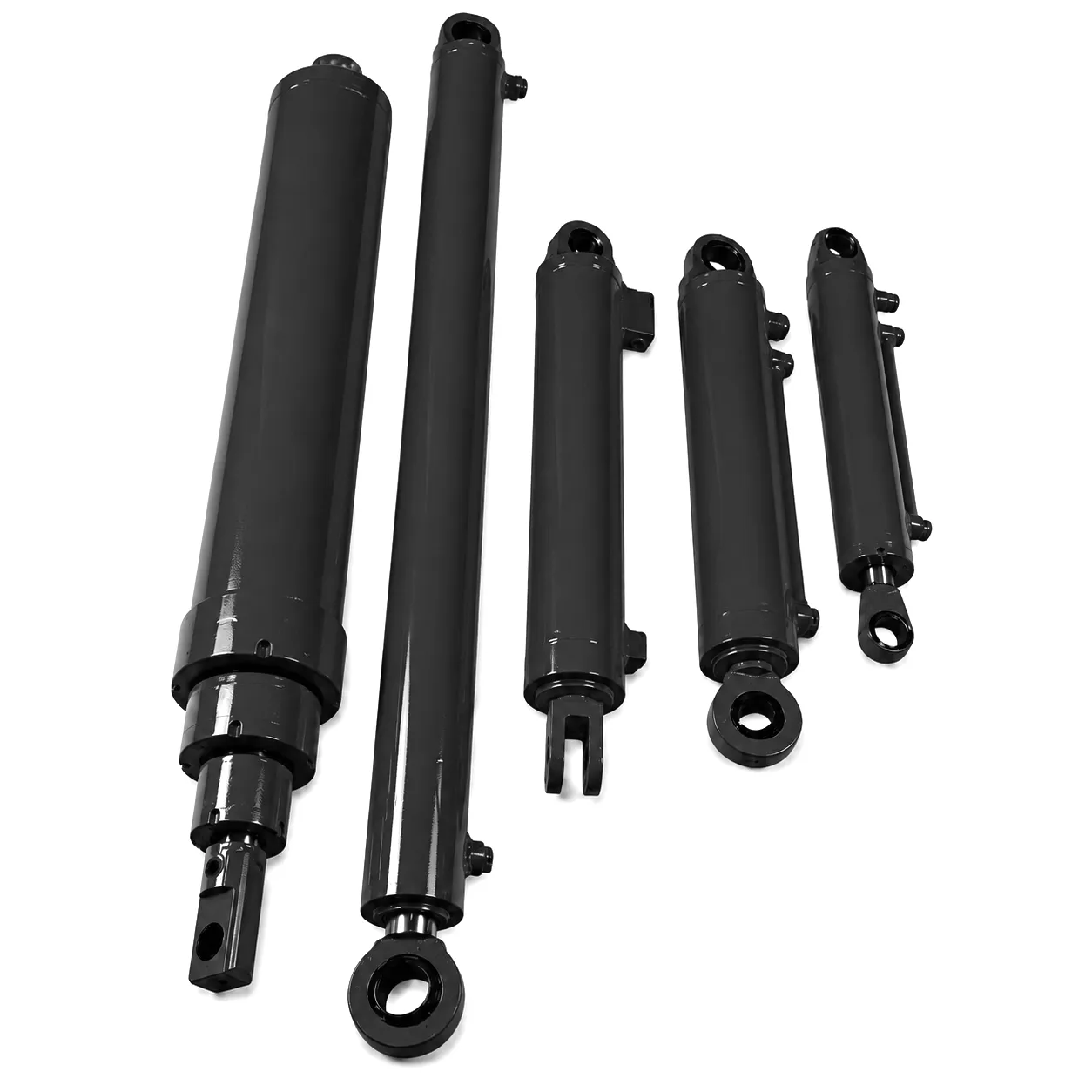
A major crane hire company operating out of Middlesbrough had a Liebherr LR 1300 crawler crane performing a planned maintenance shutdown lift programme at a large petrochemical facility on Teesside. The crane was 17 days into a 26-day programme when the primary boom luffing cylinder developed an internal blow-by across the piston seals at the end of a working shift — evidenced by excessive rod drift under load and rising oil temperature in the cylinder circuit. The crane’s work window was part of a planned outage that cost the client upwards of £200,000 per day in production loss. OEM lead time for a replacement cylinder was quoted at 14 to 16 weeks from the German manufacturing facility.
The Middlesbrough crane team contacted Ever Power after being directed by a former colleague who had previously sourced a replacement jib cylinder through the company. Ever Power’s engineering team confirmed the bore (220 mm), rod (160 mm), stroke (2,640 mm), and clevis geometry from photographs and dimensional measurements taken on site within 90 minutes of the initial call. A replacement cylinder matching all OEM dimensions was confirmed in stock as a blank assembly — barrel bored, rod ground and chrome-plated, end caps machined — requiring only final assembly, seal fitting, and pressure testing.
The completed, tested, and certified replacement boom cylinder was despatched from Ever Power’s facility via air freight to Teesside Airport within 4 days of the initial enquiry. The crane was back in operation on day 6 of the unplanned downtime — saving the facility client an estimated £2.2 million in extended outage costs compared to the OEM lead time scenario. The cylinder has since accumulated over 3,000 operating hours without incident and has been adopted as the specified replacement part on two additional LR 1300 units in the same hire company’s UK fleet.
What UK Customers Say About Ever Power Boom Cylinders
★★★★★
“The replacement boom cylinder Ever Power supplied for our LR 1300 performed flawlessly from day one. Bore concentricity and chrome finish were visually superior to the original, and pressure test certification arrived with the unit — exactly what our client’s safety team needed for LOLER compliance. On a petrochemical site with zero tolerance for cylinder leakage near hot process areas, the seal quality gave us complete confidence.”
— Plant Director, Specialist Crane Hire Company, Middlesbrough
★★★★★
“We specified Ever Power for three Manitowoc 18000 boom cylinder replacements on our fleet working the Humber offshore wind marshalling projects. The custom clevis geometry was matched perfectly to our crane structures — no shimming, no bushing modification required. What impressed us most was that Ever Power’s team caught a discrepancy in our transmitted rod length measurement and flagged it before manufacturing. That kind of attention to detail is exactly what you need when ordering long-lead structural crane components.”
— Fleet Engineering Manager, Heavy Lift Crane Operator, Hull
★★★★★
“Our Kobelco CKE2500G developed a slow weld crack on the original boom cylinder body after 12,000 hours. We obtained dimensional drawings from Ever Power, agreed a full rebuild to upgraded wall thickness specification, and received delivery within 6 weeks — a remarkable turnaround for a 250 mm bore, 3,800 mm stroke unit. The cylinder has now completed another 4,500 hours on our HS2 enabling works crane without a single seal replacement. The ceramic-chrome rod coating was clearly the right choice for the dusty and abrasive conditions on the Chiltern Tunnel approach.”
— Senior Hydraulic Engineer, Civil Infrastructure Contractor, Birmingham
Related Product: Siłownik hydrauliczny obrotowy siłownika układu kierowniczego — used in crane undercarriage and travel systems where precise angular control of crawler tracks is required on sloped or confined site terrain.
Często zadawane pytania
How do I calculate the correct load rating for a boom cylinder on my UK crawler crane?
Load rating calculation requires four inputs: the maximum hydraulic system pressure supplying the cylinder circuit (in bar), the bore diameter for extend force or the annular area for retract force, the anticipated dynamic load multiplier based on crane slewing speed and suspended load inertia, and the Euler buckling safety factor for the stroke and rod diameter combination. Ever Power’s engineering team performs this calculation free of charge for any enquiry with complete dimensional and system pressure data. For UK customers operating under LOLER, the resulting load certificate forms part of the crane’s examination scheme documentation.
What is the typical price or cost of a replacement boom cylinder for a 300-tonne crawler crane in the UK, and where can I get a quote?
Boom cylinder pricing for 300-tonne class crawler cranes varies considerably based on bore diameter (typically 200–260 mm), stroke length (commonly 2,500–4,000 mm), rod coating specification, and documentation requirements. As a general guide, budget-grade aftermarket units without third-party certification start below premium OEM pricing, while a fully documented, pressure-tested, and certified replacement cylinder from Ever Power — including chrome-plated rod to 35 µm, full seal system, and traceability pack — is competitively positioned versus European OEM channel pricing with significantly shorter lead times. Contact [email protected] with your OEM reference or cylinder dimensions for a specific quote within 24 hours.
Which boom cylinder supplier in the UK can deliver a certified replacement unit in under six weeks for a Liebherr LR 1600?
Ever Power maintains pre-machined barrel and rod blanks in bore sizes commonly used on Liebherr LR-series crawler cranes. For the LR 1600, standard boom cylinder bore sizes fall within Ever Power’s stocked range, meaning final assembly, seal fitting, pressure testing, and document preparation can be completed in 3 to 5 weeks from order confirmation — well within the six-week window. Delivery to any UK mainland location is arranged via temperature-controlled freight with the cylinder shipped in a custom timber case with protective end caps and rust-inhibited oil fill.
When should I replace the boom cylinder seals on a crawler crane working on a construction site in Birmingham, and how do I identify early seal failure?
Seal replacement intervals on boom cylinders depend on operating hours, ambient temperature, fluid cleanliness, and rod surface condition. On crawler cranes working continuous shifts in dusty urban environments like Birmingham demolition or regeneration sites, seal life between 2,000 and 4,000 hours is typical for polyurethane rod seals. Early indicators of seal degradation include oil film on the rod surface that persists beyond what wiper seals should clear, rod drift under load (the cylinder fails to hold position under static load without active pressure), rising circuit temperature due to internal bypass, and visible oil contamination on the boom structure below the cylinder gland. Catching these signs early prevents rod scoring, which dramatically shortens subsequent seal life.
Who are the most reliable hydraulic cylinder suppliers for crawler cranes operating in the UK offshore wind and petrochemical sectors?
For UK offshore wind and petrochemical applications, reliable cylinder supply means documented quality — not just competitive pricing. The key differentiators are third-party inspection availability (SGS, Bureau Veritas, Lloyd’s), full material traceability to heat number, pressure testing at 1.5x working pressure as a standard inclusion rather than a premium add-on, and specific corrosion protection packages suited to marine and process-plant environments. Ever Power supplies certified boom cylinders to UK crane operators in both sectors, with third-party inspection coordinated through UK-based agencies to maintain the documentation chain required by major UK energy sector clients’ vendor approval processes.
What documents do I need from a boom cylinder supplier to pass a LOLER thorough examination in the UK after fitting a replacement cylinder?
For a LOLER thorough examination following boom cylinder replacement, the examining engineer will typically require: a declaration of conformity or conformity certificate for the cylinder, the hydraulic pressure test certificate showing test pressure, duration, and result, dimensional inspection report confirming the cylinder meets the specified geometry, material certificates (EN 10204 3.1 or 3.2) for barrel steel and rod steel, and the seal specification record. Ever Power provides this complete documentation package as standard with every cylinder supplied to UK customers, formatted to be immediately usable by the insurance-approved examiner — avoiding the back-and-forth with overseas suppliers that often delays LOLER sign-off and keeps cranes out of service longer than necessary.
Ever Power — Precision Hydraulic Cylinders for Heavy Lift
Ready to specify your next boom cylinder?
Share your bore, stroke, working pressure, and OEM reference. Our engineering team responds within 24 hours with a technical confirmation and competitive quote.
✉ Get a Quote — [email protected]
edytuj przez gzl
 Polish
  English
  Italian
  Portuguese
  Dutch
Dutch  Swedish
  Danish
  Finnish
  Hindi
Hindi  Kazakh
  Turkish
  Ukrainian
  Romanian
  Spanish
  German
  Russian
  Korean
  Japanese
  Vietnamese
  Thai
Thai  Indonesian
  Malay
Malay  French
  Greek
Greek