
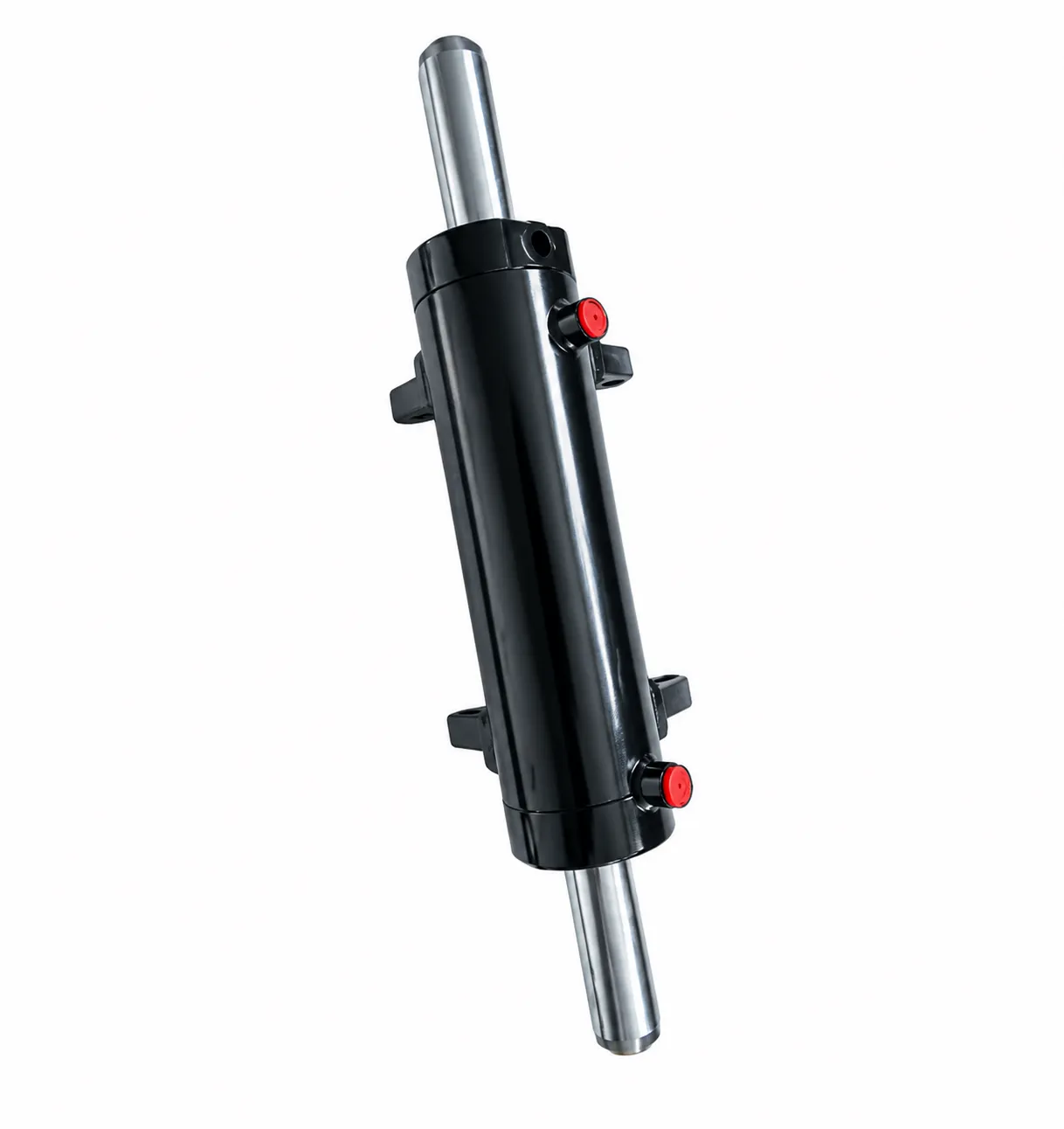
Walk out onto the apron at Heathrow, Manchester, or Birmingham Airport in the early hours of the morning and you will find an entire world of specialised vehicles operating in tight formation around parked aircraft. Aircraft tugs nudge wide-body jets millimetres from stands. Baggage tractors arc around belly-loading positions with millimetre precision. Towbarless pushback units steer using wheel-embedded drive systems that must respond instantly to operator input — regardless of load. What makes all of this controlled, repeatable movement possible is not the vehicle’s engine or its gearbox. It is the compact steering cylinder tucked quietly into the hydraulic circuit, translating fluid pressure into rotational force with the kind of accuracy that a busy apron simply cannot afford to lose. The steering cylinder is, by every meaningful measure, the pivot point of the entire ground support operation.
Airport ground support equipment — commonly abbreviated as GSE — spans a wide range of vehicle types: aircraft tugs (both towbar-style and towbarless), baggage and cargo tractors, catering lifts, fuel bowsers, ground power units, and belt loaders. Almost every wheeled variant relies on hydraulic steering to manage the combination of heavy payloads and low-speed precision demanded by airside operations. The compact steering cylinder is the preferred hydraulic actuator across this category because it packages substantial force output into a physical envelope that must coexist with motors, gearboxes, batteries, and safety systems inside very space-constrained chassis. The UK’s growing freight throughput — particularly at East Midlands Airport, which handles a significant share of overnight express cargo — has put fresh pressure on GSE manufacturers to spec components that deliver higher cycle life without enlarging the vehicle footprint. That tension between performance and size is exactly where the compact steering cylinder proves its value.
Working Principle: How a Steering Cylinder Converts Pressure into Direction
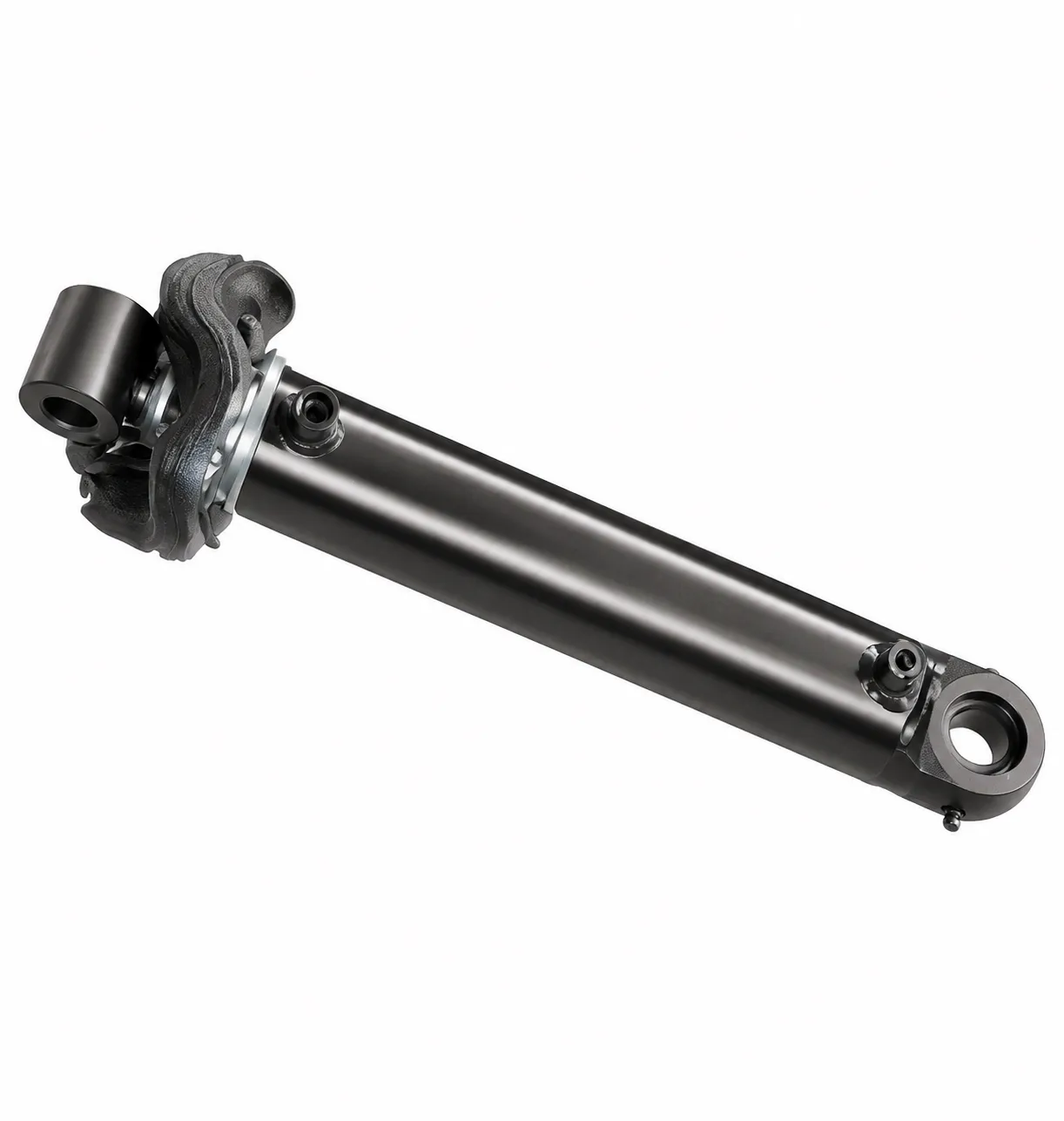
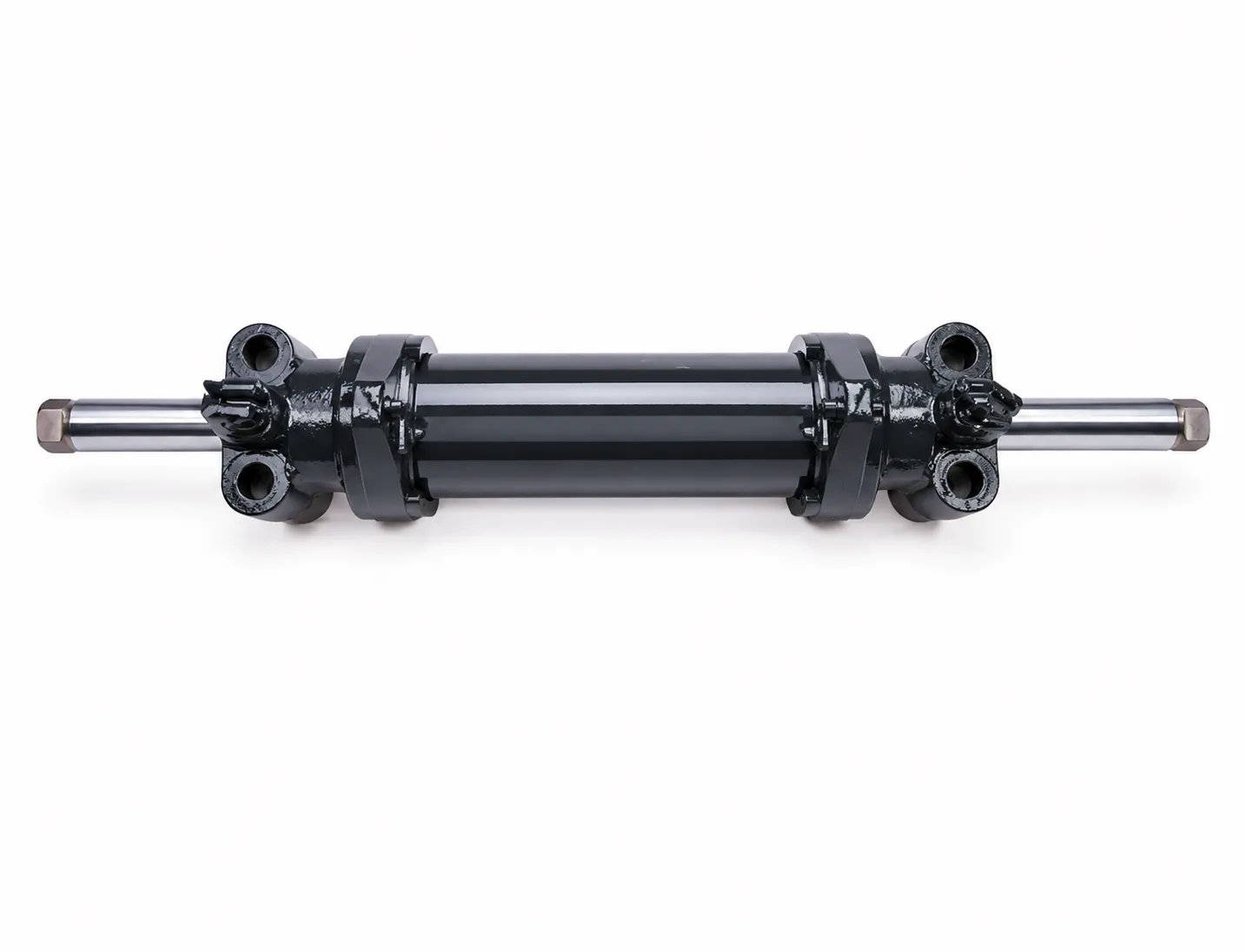
A compact steering cylinder is a double-acting hydraulic linear actuator whose piston rod is connected to a steering linkage or knuckle arm. When the vehicle’s hydraulic pump delivers pressurised fluid — typically from a dedicated steering circuit operating between 100 and 200 bar — to one side of the piston, it pushes the rod in or out, rotating the steered axle through a defined arc. Returning fluid exits via the opposite port back to the reservoir, completing the circuit. The beauty of the double-acting arrangement is that the same cylinder provides positive force in both directions, eliminating the reliance on return springs that wear and fatigue over time. In airport ground support equipment, the steering cylinder is almost always integrated with an orbitrol (or orbital motor) valve, which meters flow to the cylinder in proportion to steering wheel rotation. This gives the driver a direct, proportional feel — critical when guiding a 40-tonne aircraft tug through a gate entrance with perhaps 300 mm of clearance on each side.
For towbarless pushback vehicles, the design is slightly different: the steering cylinder acts not on a conventional axle but on the powered wheel-head that clamps around the aircraft nose gear. In this configuration the cylinder must deliver high torque at low displacement, which demands tight internal sealing, high-grade surface finishes on the bore and rod, and geometry optimised to avoid side-loading. Manufacturers supplying the UK’s tier-one GSE market increasingly call for cylinders that integrate position sensors — LVDTs or magnetostrictive linear encoders — to feed steering angle data back to the vehicle’s electronic control unit in real time.
Core Materials: What Goes Into a High-Cycle Steering Cylinder
Cylinder Barrel
Cold-drawn seamless steel tube in ST52 or equivalent EN10305-1 specification. Inner bore honed to Ra 0.2–0.4 µm for optimal seal performance. Wall thickness calculated to withstand 1.5× burst pressure under continuous dynamic loads, making it suitable for the punishing vibration cycles typical of airside pavements.
Piston Rod
Induction-hardened and hard-chrome plated carbon steel or — for corrosion-critical environments — electroless nickel-plated stainless steel (AISI 316). Hard chrome delivers surface hardness of 800–1000 HV and Ra 0.1–0.2 µm. Some UK GSE OEMs now specify DLC (diamond-like carbon) coated rods to extend service intervals in high-humidity apron conditions.
Seals & Wear Rings
Polyurethane and PTFE-based sealing systems rated for -40°C to +120°C continuous operation. Airports in the Scottish Highlands and northern England regularly see sub-zero overnight temperatures; seal integrity in these conditions directly determines whether steering response is sluggish or crisp when the driver first moves off in a pre-dawn shift.
End Caps & Mountings
Precision-machined from ductile cast iron (GGG50) or high-tensile aluminium alloy 6061-T6 for weight-critical applications. Clevis and trunnion mounting options are machined to ISO 6020-1 tolerances. Aluminium-bodied variants reduce unsprung weight on electric GSE platforms where every kilogram saved extends battery range.
Product Advantages: Why GSE Engineers Choose Compact Steering Cylinders
The preference for compact steering cylinders in airport ground support equipment is not arbitrary — it emerges from a genuine engineering evaluation of alternatives. Electric linear actuators, rack-and-pinion gearboxes, and worm-drive steering boxes have all been trialled in GSE applications, but the hydraulic steering cylinder repeatedly comes out ahead on the criteria that matter most in airside environments: force density, environmental resilience, serviceability, and cost of ownership over a vehicle’s 15–25-year lifespan. Here is how each advantage plays out in practice.
✓ Exceptional Force-to-Size Ratio
A compact steering cylinder with a bore of 60–80 mm operating at 160 bar generates push forces exceeding 45 kN from a body length of under 400 mm. No electric actuator of equivalent volume approaches this output, which is why hydraulic steering remains the standard even as electrification advances into other vehicle systems.
✓ All-Weather Reliability
GSE operates 24 hours a day in all weather. At Manchester Airport, a baggage tractor might go from a -5°C apron in January to a heated baggage hall within minutes. Steering cylinders sealed with modern polyurethane and PTFE compound seals maintain leak-free performance across this range without the sensitivity to condensation and freeze-thaw cycles that can degrade electro-mechanical actuators.
✓ Proportional, Progressive Steering Feel
When paired with an orbitrol valve, a steering cylinder delivers linear proportional response — the wheel turns 10° and the steered axle follows predictably. This characteristic is non-negotiable for aircraft tug operators who must position nose gear over a chalked mark within tolerances of ±50 mm during pushback from a stand.
✓ Low Total Cost of Ownership
Replacement seal kits cost a fraction of a replacement electro-mechanical actuator. A well-built steering cylinder, serviced by a competent hydraulic workshop — and the UK has strong hydraulics service infrastructure through organisations like the British Fluid Power Association — can outlast the vehicle it was fitted to. Planned preventive maintenance intervals of 2,500 operating hours are realistic for airport applications.
✓ Fail-Safe Behaviour
In the event of a hydraulic pressure loss, a double-acting cylinder with pilot-operated check valves locks the steering at its last position rather than collapsing to full lock. This fail-hold behaviour is a mandatory safety requirement for airside vehicle approval under CAA guidelines and UK Civil Aviation Publication CAP 168.
✓ Compatibility with Electrification
As UK airports accelerate their zero-emission ground fleets — a commitment Heathrow has made to carbon-neutral operations — electric GSE retains hydraulic steering driven by electric-motor-driven pumps. The steering cylinder itself does not need to change; only its power source shifts. This makes investment in high-quality steering cylinders a durable decision across the ICE-to-electric transition.
Technical Performance Parameters: Compact Steering Cylinders for GSE Applications
The table below captures the performance envelope typical of Ever Power’s compact steering cylinder range as specified for airport ground support equipment. Custom configurations outside these ranges are available — contact the engineering team for application-specific sizing and validation.
| Parameter | Specification / Range | Notes |
|---|---|---|
| Bore Diameter | 40 – 120 mm | 50–80 mm most common for GSE tug applications |
| Rod Diameter | 25 – 80 mm | Typically 60–70% of bore diameter for buckling resistance |
| Working Pressure | 100 – 250 bar | Burst pressure tested to 1.5× operating pressure per ISO 10100 |
| Maximum Push Force | 12 – 280 kN | Calculated from bore area and system pressure |
| Stroke Length | 50 – 600 mm | Custom stroke lengths machined to ±0.5 mm tolerance |
| Steering Angle Coverage | ± 35° – ± 65° | Geometry engineered to match specific vehicle linkage |
| Operating Temperature | -40°C to +120°C | Extended low-temp seals available for northern UK/Scottish airports |
| Barrel Material | ST52 seamless steel / EN10305-1 | Honed bore Ra 0.2 – 0.4 µm |
| Rod Surface Treatment | Hard chrome / electroless nickel / DLC | Hardness 800–1000 HV; Ra 0.1 – 0.2 µm |
| Seal Material | Polyurethane, NBR, PTFE composites | Viton seals optional for hydraulic fluid compatibility |
| Mounting Options | Clevis, flange, trunnion, spherical bearing | ISO 6020-1 / DIN 24334 compliant dimensions |
| Position Sensing | LVDT / magnetostrictive encoder (optional) | 0.1 mm repeatability; 4–20 mA or CAN output |
| Port Connections | BSP (UK standard) / SAE / Metric | BSP specified for UK OEM and aftermarket supply |
| Cycle Life (design) | 1,000,000+ full-stroke cycles | Based on ISO 10100 fatigue testing protocol |
Industrial Application Scenarios: Where Compact Steering Cylinders Work Hardest
Scenario 1 — Aircraft Pushback Tugs at Major UK Hub Airports
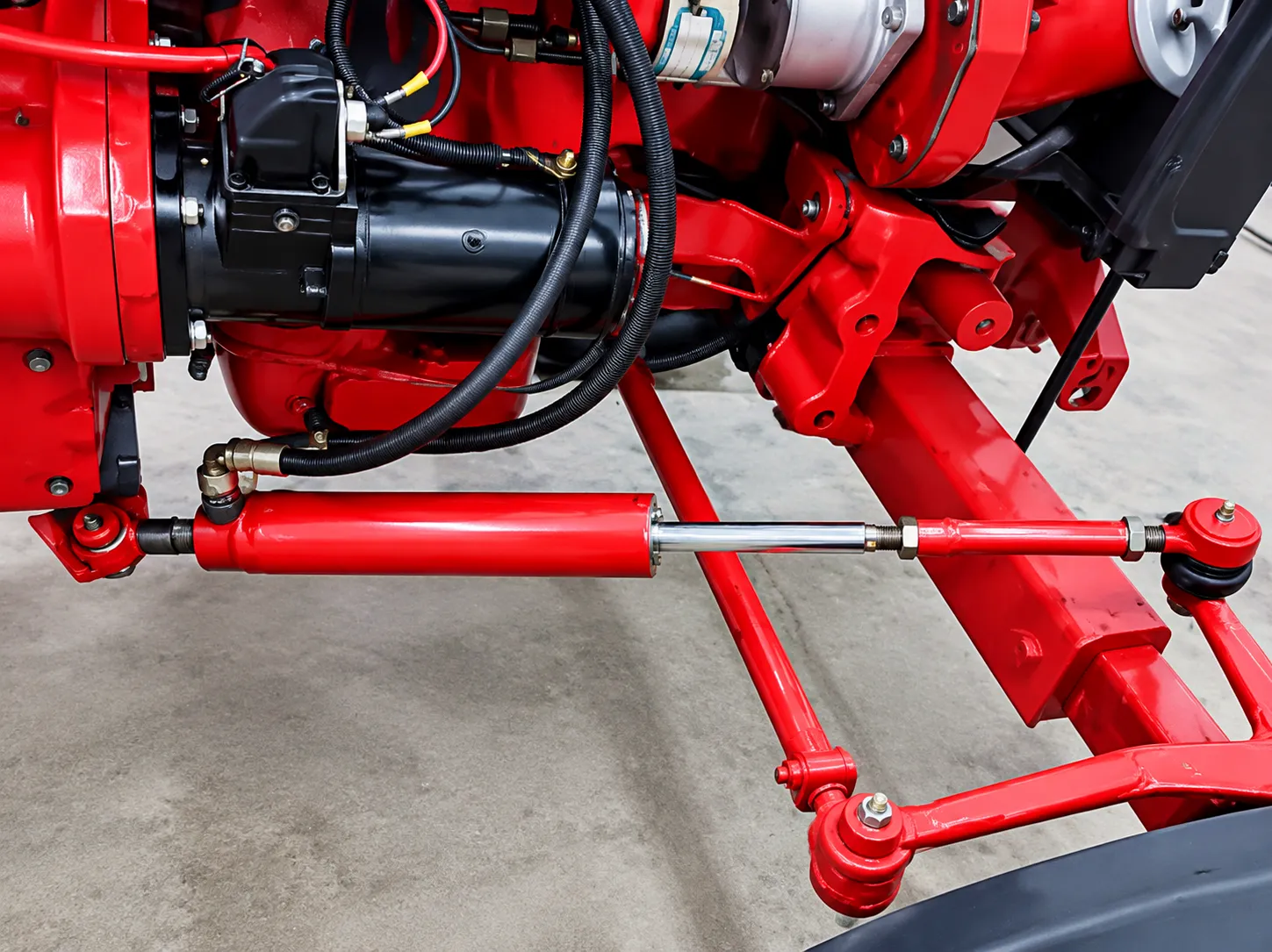
Conventional towbar-type aircraft tugs — including many of the diesel and electric units operated by ground handling companies at Heathrow T2, T5, and Gatwick South Terminal — rely on a steering cylinder acting on a single rear axle. The cylinder must deliver strong, repeatable steering inputs at very low road speeds (typically under 5 km/h during the pushback manoeuvre) while the tug is under significant drawbar tension from the connected aircraft. The steering cylinder in this configuration sees a high number of short, partial-stroke cycles rather than full-stroke movements, which means its sealing system experiences reciprocating motion across a relatively small section of the bore. Ever Power’s wiper seal design minimises contamination ingestion during these partial-stroke duty cycles, extending seal life by an estimated 30% compared to standard lip-seal configurations in the same application.
Scenario 2 — Baggage and Cargo Tractors at Regional UK Airports (Leeds Bradford, East Midlands)
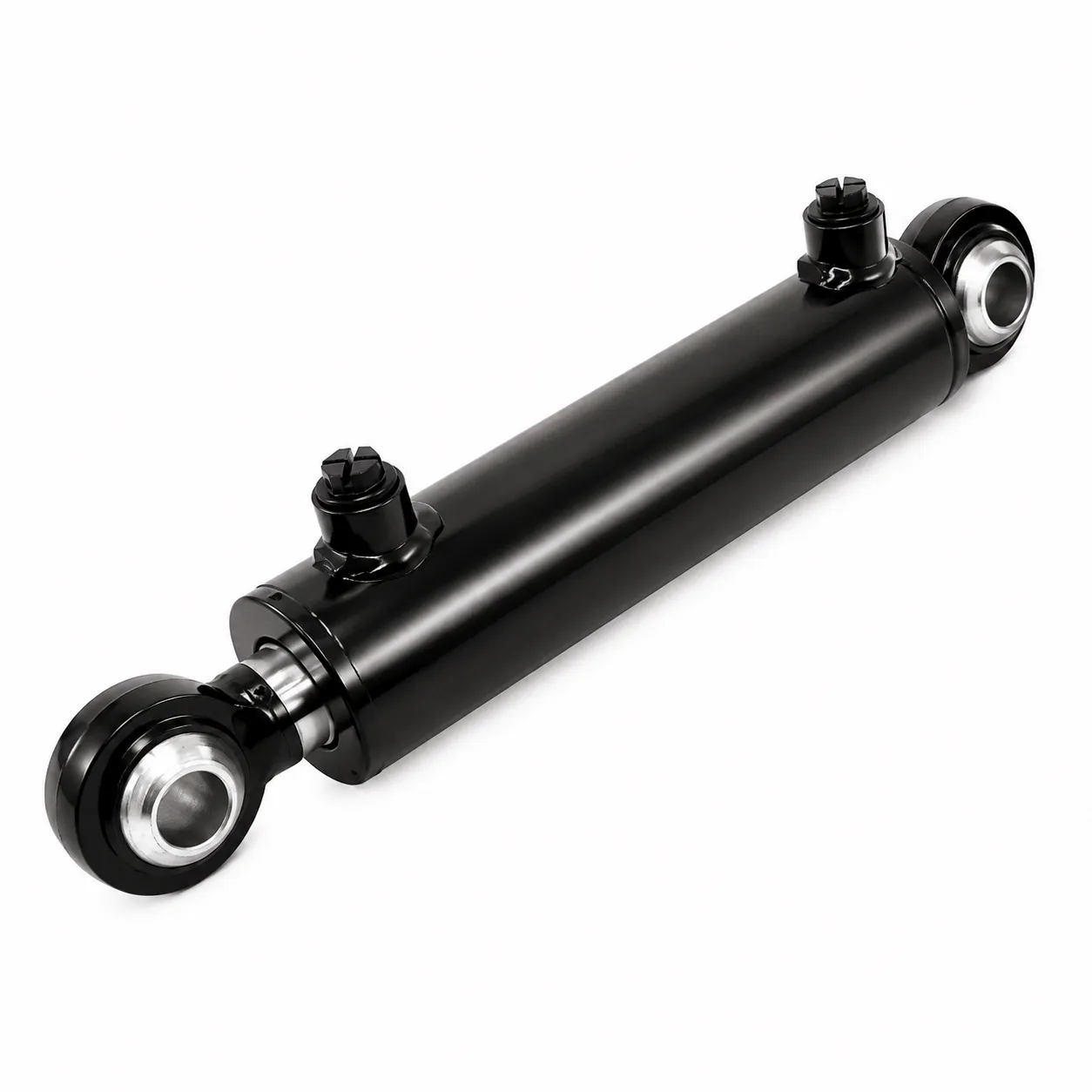
Baggage tractors operating in the apron zones at Leeds Bradford and East Midlands airports pull trains of dollies carrying up to 10 tonnes of freight in a single convoy. The tractor’s steering cylinder must handle not only the tractor’s own turning forces but also the lateral loads imposed by a loaded dolly train on a curved taxiway. This side-loading is one of the most common causes of premature steering cylinder failure in fleet applications. Ever Power addresses this by integrating a spherical plain bearing (Gelenklager) at both end cap and rod end, allowing the cylinder to self-align with off-axis loads without transmitting bending moments into the rod — a practice borrowed from heavy construction equipment design and now increasingly standard in high-cycle GSE applications.
Scenario 3 — Towbarless Pushback Vehicles and Autonomous Taxiing Systems
Towbarless pushback vehicles — such as those used at Heathrow for wide-body operations — place the steering cylinder in an entirely different role. Instead of steering a conventional axle, two or four cylinders angle the powered wheel-heads that grip the aircraft nose gear directly. Each cylinder must deliver extremely precise, low-hysteresis movement because the nose gear position tolerance during a pushback operation is measured in centimetres, not metres. Autonomous taxiing system trials at Gatwick and Edinburgh Airport have pushed accuracy requirements further still, with some closed-loop position control systems requiring repeatable positioning to within ±2 mm. This has driven demand for compact steering cylinders fitted with magnetostrictive linear position transducers as a standard, not optional, feature.
Scenario 4 — Catering Lift Trucks and Passenger Boarding Bridges
Catering vehicles at UK airports carry meal service loads of 3,000–8,000 kg on elevated scissor platforms to aircraft door sill height. These vehicles operate in very restricted apron areas where the vehicle’s ability to place its side-door precisely against an aircraft door — often within 50 mm lateral tolerance — depends entirely on the accuracy of its steering system. The compact steering cylinder used in catering lift trucks must deliver fine, creep-free movement at very low hydraulic flow rates, a characteristic that separates quality cylinders from commodity units. The internal leakage past the piston — typically less than 0.5 cc/min for a well-built cylinder at 150 bar — determines whether the vehicle holds its position during the 20–40 minutes the catering operation takes, or drifts and requires repositioning.
Scenario 5 — Forklift Attachment Hydraulic Cylinders in GSE Cargo Handling
Inside cargo terminal buildings at Stansted, Heathrow World Cargo, and Prestwick’s major overnight freight hub, warehouse forklifts fitted with specialised attachments — rotators, push-pulls, clamps — handle time-critical unit load devices. The hydraulic cylinder controlling each attachment must cycle continuously across a shift lasting 8–12 hours. Two products from Ever Power’s range are directly applicable here. The Mini Forklift Attachment Hydraulic Cylinder is purpose-designed for compact attachment packages on counterbalance forklifts operating in the narrow aisles of ULD storage areas. For medium-duty applications — handling palletised cargo from wide-body freighters — the Medium-Duty Forklift Attachment Hydraulic Cylinder provides the additional force reserve needed for loads up to 3,500 kg without increasing the attachment weight envelope significantly. Both units are manufactured to BSP port standards, aligning with standard UK hydraulic circuit specifications in cargo terminal equipment.
Manufacturing Excellence
Ever Power: Precision Manufacturing and Custom Engineering for Global GSE Suppliers
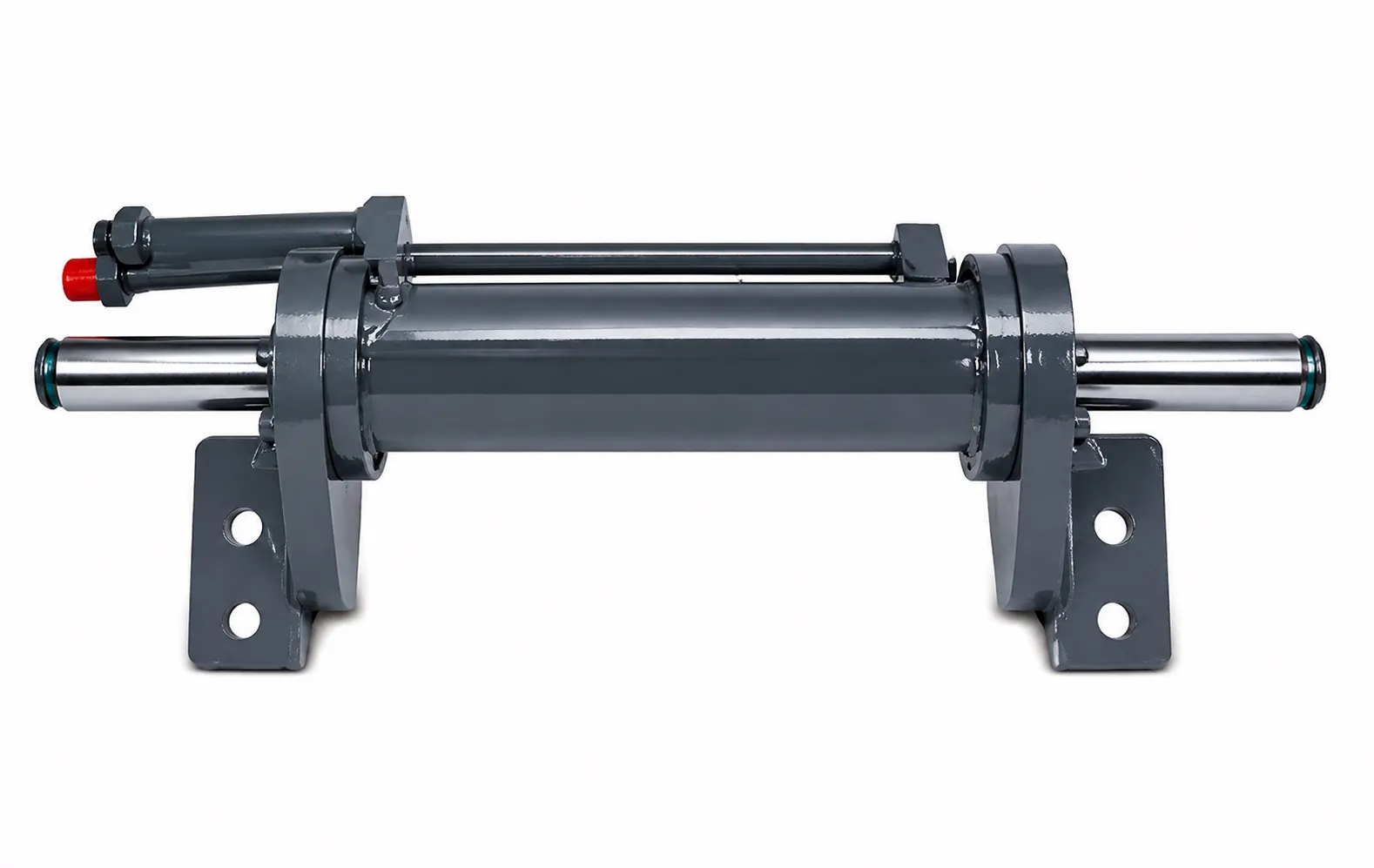
Ever Power operates precision hydraulic cylinder manufacturing facilities equipped with CNC machining centres holding tolerances to ±0.01 mm, dedicated honing lines maintaining bore Ra values to specification across production volumes of hundreds of units, and a testing laboratory capable of fatigue-cycling cylinders to one million strokes under representative load conditions before any unit ships to a customer. This is not a catalogue-order operation. When a GSE manufacturer in Sheffield approaches Ever Power with an aircraft tug steering requirement that doesn’t fit any standard design — unusual stroke, non-standard port arrangement, integrated load cell, dual-cylinder configuration — the engineering team works from customer-supplied drawings to develop a compliant design, providing 3D model data and a dimensional approval drawing within 10 working days of receiving the specification.
Ever Power’s customisation capabilities extend well beyond simple dimensional changes. Rod end geometry, mounting flange patterns, port location and type (BSP for UK supply, SAE for North American OEMs, metric for European customers), seal compound selection for specific hydraulic fluids, surface treatment specifications — all of these are standard variables within Ever Power’s manufacturing process, not special exceptions that add weeks to the lead time. Surface treatments including hard chrome, electroless nickel, and physical vapour deposition coatings are carried out in-house, maintaining quality control over the most critical interface on any hydraulic cylinder. Material traceability documentation — mill certificates, heat treatment records, third-party inspection reports — is available for every production batch and is routinely requested by UK aviation-sector customers whose quality management systems require full supply chain traceability.
For UK GSE manufacturers and fleet operators assessing supply chain resilience post-Brexit, Ever Power provides sea freight and air freight logistics coordination to major UK ports and express airfreight to Birmingham, Heathrow, and Stansted cargo facilities. Standard lead time for custom steering cylinders is 20–35 working days from drawing approval to despatch. Urgent replacement supplies for fleet-down situations can be air-freighted within 5–7 working days. Ever Power’s UK-based agents provide technical pre-sales consultation and post-supply support, reducing the communication friction that sometimes hampers international component procurement.
Manufacturing Highlights
✓ CNC machining to ±0.01 mm
✓ In-house honing to Ra 0.2 µm
✓ 1,000,000+ cycle fatigue testing
✓ BSP ported for UK market
✓ Full material traceability
✓ Air freight available 5–7 days to UK
Customer Success Story
Sheffield Manufacturer Resolves Repeated Steering Failure in Electric Cargo Tractor Fleet
A Sheffield-based GSE manufacturer — one of the UK’s established builders of electric cargo tractors serving regional airports including Doncaster Sheffield (Robin Hood Airport) and Leeds Bradford — found itself facing a recurring steering cylinder warranty issue in its latest-generation electric tractor platform. The platform used a lithium-iron-phosphate battery pack and an electric-motor-driven hydraulic power unit to drive steering and tipping circuits. During the first 18 months of fleet operation, the ground handling company operating the tractors reported eight steering cylinder failures across a 24-vehicle fleet. All failures presented as internal seal degradation causing loss of cylinder holding force.
The manufacturer’s engineering team identified the root cause: the electric HPU on this platform delivered hydraulic fluid at a slightly higher temperature than the diesel-powered HPU it replaced, because the electric motor drove the pump continuously at low speed rather than cycling on and off with engine RPM. The higher average fluid temperature — approximately 75°C sustained versus 55°C peak on the diesel unit — was outside the thermal design envelope of the original cylinder supplier’s standard seal package. The seals were degrading through thermal fatigue rather than mechanical wear.
Ever Power’s engineering team was brought in and proposed a direct-replacement steering cylinder to identical external dimensions but with a Viton (FKM) compound seal kit rated to continuous duty at 100°C and peak exposure at 135°C. The cylinder bore surface finish was upgraded to Ra 0.2 µm (from the original Ra 0.4 µm) to reduce the hydrodynamic friction that contributes to seal heating. The entire re-engineering, prototype manufacture, testing, and delivery of 30 production units took eleven weeks from first contact. Eighteen months after the re-specified cylinders entered service, the Sheffield manufacturer had recorded zero seal-related warranty returns from the updated vehicles. The company subsequently standardised on Ever Power as its steering cylinder supplier across the full vehicle range.
★★★★★
“Ever Power matched our exact dimensional envelope but upgraded the seal specification without adding lead time. The Viton kit has been running in our electric tractor fleet for well over a year with no returns. That’s the kind of engineering response you hope to get from a supplier but rarely do.”
— Chief Engineer, GSE Manufacturer, Sheffield
★★★★★
“We needed 30 replacement cylinders with BSP ports and a non-standard spherical end bearing. Ever Power delivered dimensional approval drawings within a week and production parts in under six weeks. The holding force on these units is noticeably crisper than what we were fitting before.”
— Procurement Manager, Ground Handling Equipment Division, West Yorkshire
★★★★★
“The magnetostrictive position sensor integration was the detail that convinced us to standardise on Ever Power. The CAN output signal is clean, the repeatability is within 1 mm across the full stroke, and the cylinder has passed our full vehicle validation test without a single anomaly. Exactly what we need for a closed-loop steering control system.”
— Systems Integration Engineer, Airport Vehicle OEM, Birmingham
Frequently Asked Questions
Common Questions About Steering Cylinders for Airport Ground Support Equipment
Ever Power — Precision Hydraulic Engineering
Ready to Specify Your Steering Cylinder?
Send your drawings or specification to the Ever Power engineering team and receive budgetary pricing within 48 hours. BSP ports, custom stroke, position sensors — all standard within our manufacturing process.
edit by gzl
 Romanian
  English
  Italian
  Portuguese
  Dutch
Dutch  Swedish
  Danish
  Finnish
  Polish
  Hindi
Hindi  Kazakh
  Turkish
  Ukrainian
  Spanish
  German
  Russian
  Korean
  Japanese
  Vietnamese
  Thai
Thai  Indonesian
  Malay
Malay  French
  Greek
Greek