
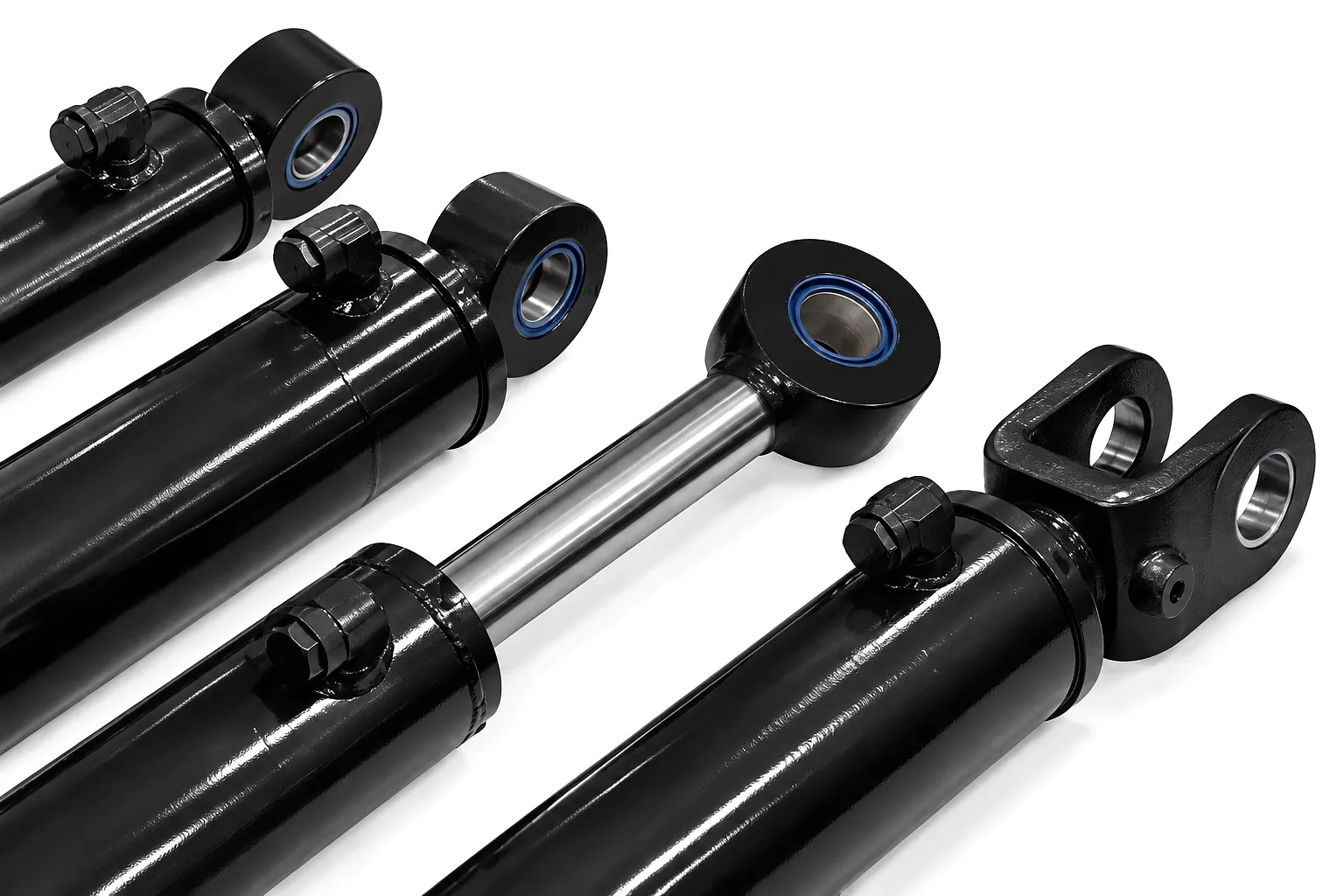
 A hydraulic cylinder is one of the most fundamental actuators in modern mechanical engineering. At its core, it converts hydraulic pressure — generated by a fluid pump — into controlled linear mechanical force and motion. This mechanism underpins an extraordinary range of machinery across the UK’s manufacturing, agriculture, construction, and process industries. From the steel mills of Sheffield to the port facilities along the Humber Estuary, hydraulic cylinders deliver the kind of repeatable, high-force precision that no purely mechanical or pneumatic system can match at comparable scale. Their sealed, fluid-driven design makes them equally suited to clean-room assembly environments and rough-terrain agricultural operations, which explains their near-ubiquitous presence across British industry today.
How a Hydraulic Cylinder Works: The Engineering Behind the Force
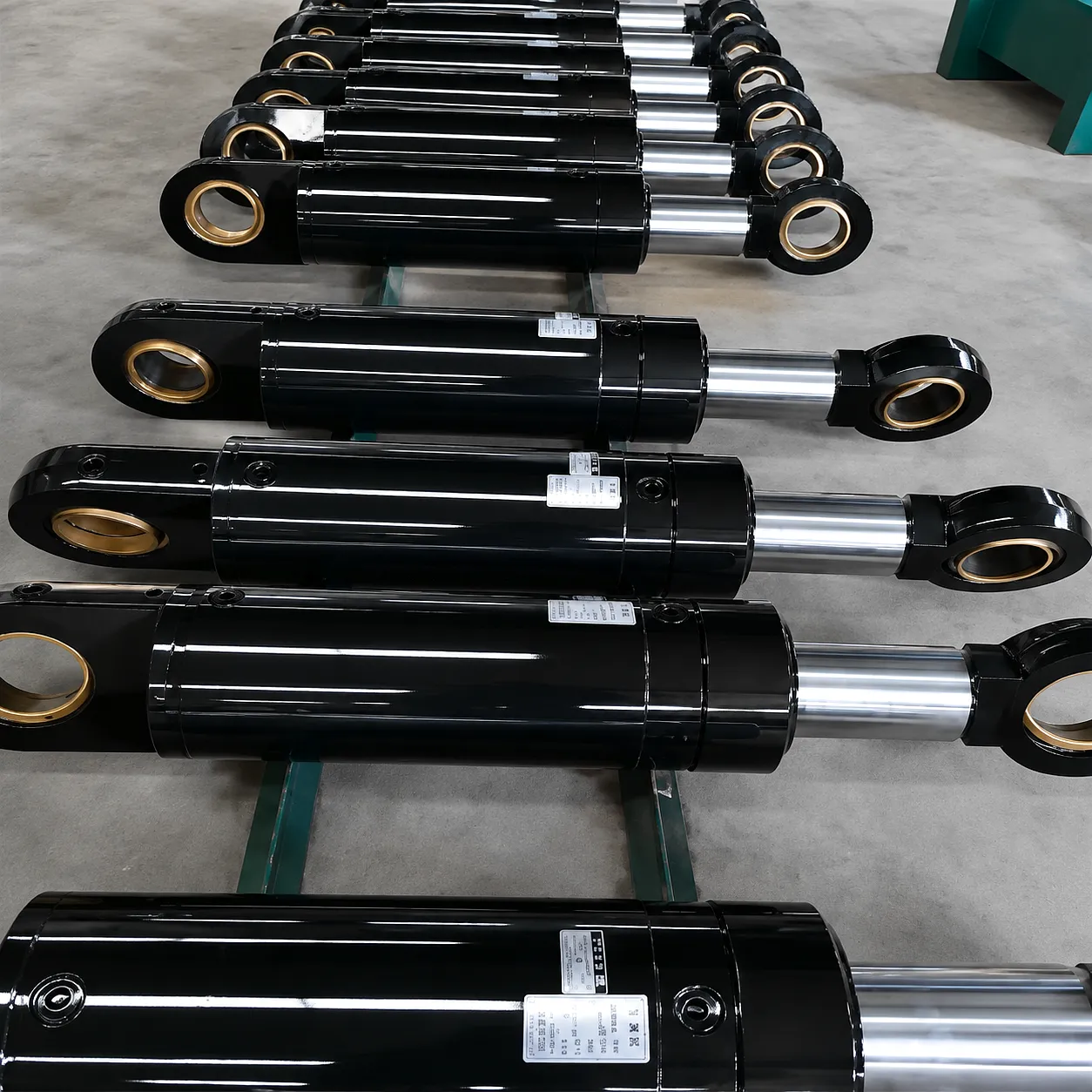 The working principle begins the moment a hydraulic power unit — typically a gear pump or piston pump — pressurises the hydraulic fluid and directs it through control valves into the cylinder’s port. In a double-acting configuration, fluid enters through the cap-end port, pushing the piston rod outward; fluid entering through the rod-end port drives the piston back in the opposite direction. This bidirectional control is what makes double-acting hydraulic cylinders the industry standard for precision motion control in applications such as CNC machining, press brakes, and agricultural implement management.
In single-acting designs, hydraulic pressure drives the cylinder in one direction only — typically extension — while a spring return or gravity retracts the rod. These configurations are prevalent in stamping presses, clamp tooling, and certain lifting jacks where the return stroke carries minimal load. The pressure-to-force conversion follows F = P × A, where F is the output force in Newtons, P is the system pressure in pascals, and A is the effective piston area in square metres. At 200 bar operating pressure — common across UK hydraulic systems — a 100 mm bore cylinder delivers approximately 157 kN of push force, illustrating just how formidable these compact devices truly are.
Core Components of a Hydraulic Cylinder Explained
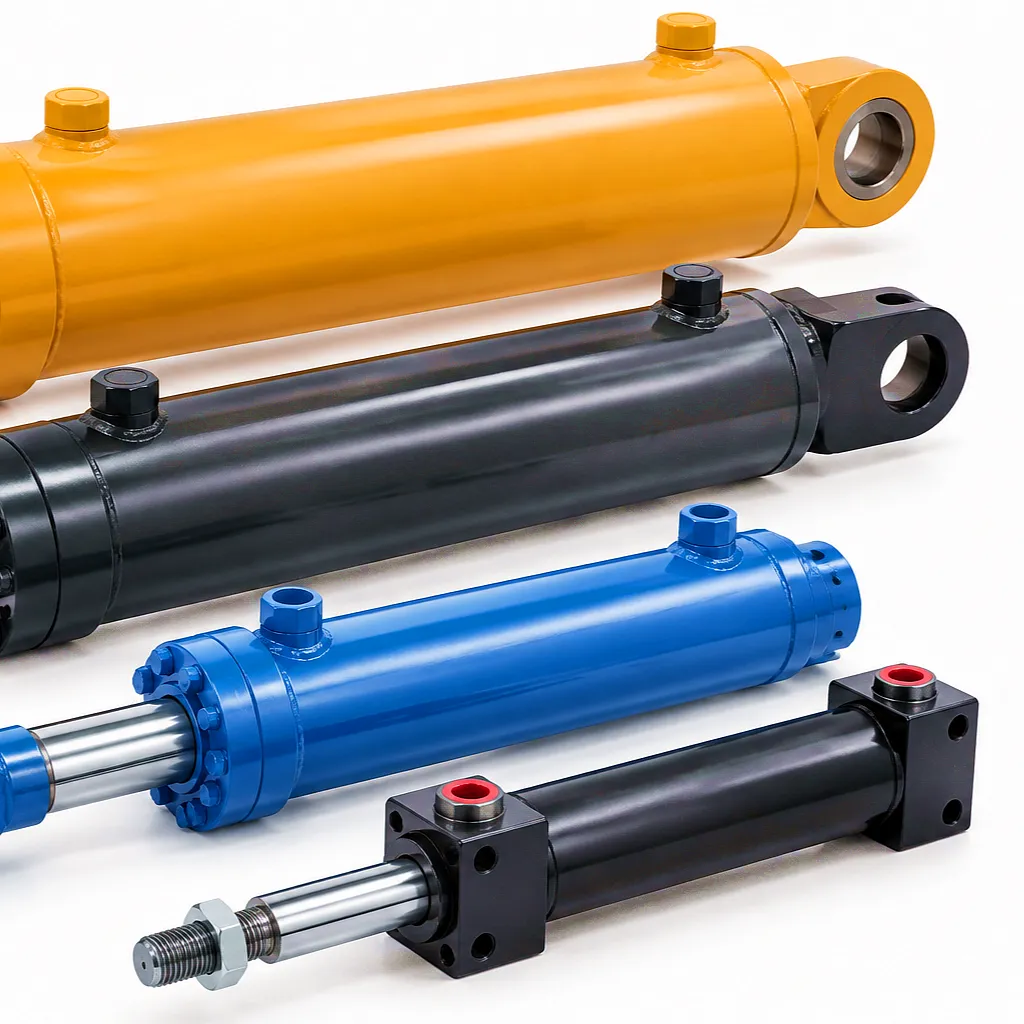
The barrel forms the outer pressure-containing shell of the cylinder and must withstand the full operating pressure without deformation or fatigue. Most UK-specification hydraulic cylinders use cold-drawn seamless steel tube — typically EN 10305-1 grade — honed to achieve an internal surface finish of Ra 0.4 µm or finer. This mirror-smooth bore is critical: even minor surface irregularities accelerate seal wear and introduce micro-leakage pathways that reduce efficiency and create reliability problems in demanding applications such as offshore platform controls and rail infrastructure maintenance. High-end units destined for corrosive marine or chemical processing environments may employ stainless steel barrels or internally chrome-plated carbon steel, further extending service intervals and reducing total cost of ownership.
The piston is a precision-machined disc that slides inside the barrel, dividing it into two fluid chambers. It carries the primary sealing elements — typically polyurethane lip seals or PTFE-backed rings — that prevent cross-chamber fluid bypass. The piston rod extends through the rod-end cap and connects to the external load. For durability, rods are forged or bar-stock machined from C45 or 42CrMo4 alloy steel, heat-treated to achieve surface hardness in the range of 52–58 HRC, then hard chrome plated to a depth of 20–40 µm. This chrome layer provides exceptional corrosion resistance, a low-friction running surface, and the dimensional stability needed to maintain tight bore clearances over tens of millions of operating cycles. In Ever Power’s precision facility, every rod undergoes 100% dimensional verification before assembly, ensuring conformance to tolerances as tight as h6 on the rod diameter.
The cap end (blind end) and rod-end cap close the barrel and anchor the cylinder to its mounting structure. Both are machined from ductile iron or steel and are secured by tie rods, flanges, or threaded retaining rings depending on the application’s pressure rating and the available packaging envelope. The rod gland — integrated into the rod-end cap — houses the rod seal, rod wiper, and wear rings. The wiper is often overlooked but critically important: it prevents abrasive particulate contamination from riding back into the fluid system on the extending rod, protecting pump, valve, and seal life throughout the hydraulic circuit. Premium gland assemblies used in Ever Power cylinders incorporate dual-lip wipers and energised backup rings, enabling rated operation in environments as hostile as open-field agricultural work in the British Midlands, where dust, crop debris, and moisture are unavoidable realities.
Types of Hydraulic Cylinders: Choosing the Right Design
The most common configuration in UK industrial use, double-acting cylinders provide powered motion in both extension and retraction. They offer precise speed and force control in both directions, making them the preferred choice for press brakes, injection moulding machines, industrial manipulators, and agricultural linkage systems. Their bidirectional energy transfer maximises efficiency and reduces the cycle time on repetitive production tasks.
Single-acting cylinders use hydraulic pressure for movement in one direction only. A spring mechanism or external load completes the return stroke. They are simpler, lighter, and less expensive than double-acting equivalents, making them highly effective in clamp tooling, lifting jacks, and sequential press applications where full control of the return stroke is not required. Our Heavy Duty Single Acting Hydraulic Cylinders are purpose-built for demanding UK manufacturing environments.
When long stroke travel is required within a severely constrained collapsed length, telescopic cylinders — sometimes called multi-stage cylinders — are the engineering answer. Multiple nested stages extend sequentially, achieving output strokes two to four times the retracted length. They are central to tipper truck bodies, refuse collection vehicles, and large agricultural spray booms across Britain’s logistics and farming sectors. Our Custom Telescopic Hydraulic Cylinders for Lifting Platforms are available with bespoke stroke and stage configurations to match any lifting requirement.
Differential cylinders are plumbed so that rod-end return oil is directed back to the cap-end port, effectively increasing the extension speed at the cost of available extension force. Tandem cylinders stack two pistons on a common rod to double available force without increasing bore size — a compact solution used in precision presses and heavy stamping equipment where space is limited but force demands are extreme. These advanced configurations represent the kind of engineered customisation that Ever Power’s design team handles as a matter of routine for European and UK industrial clients.
Materials Used in Hydraulic Cylinder Manufacturing
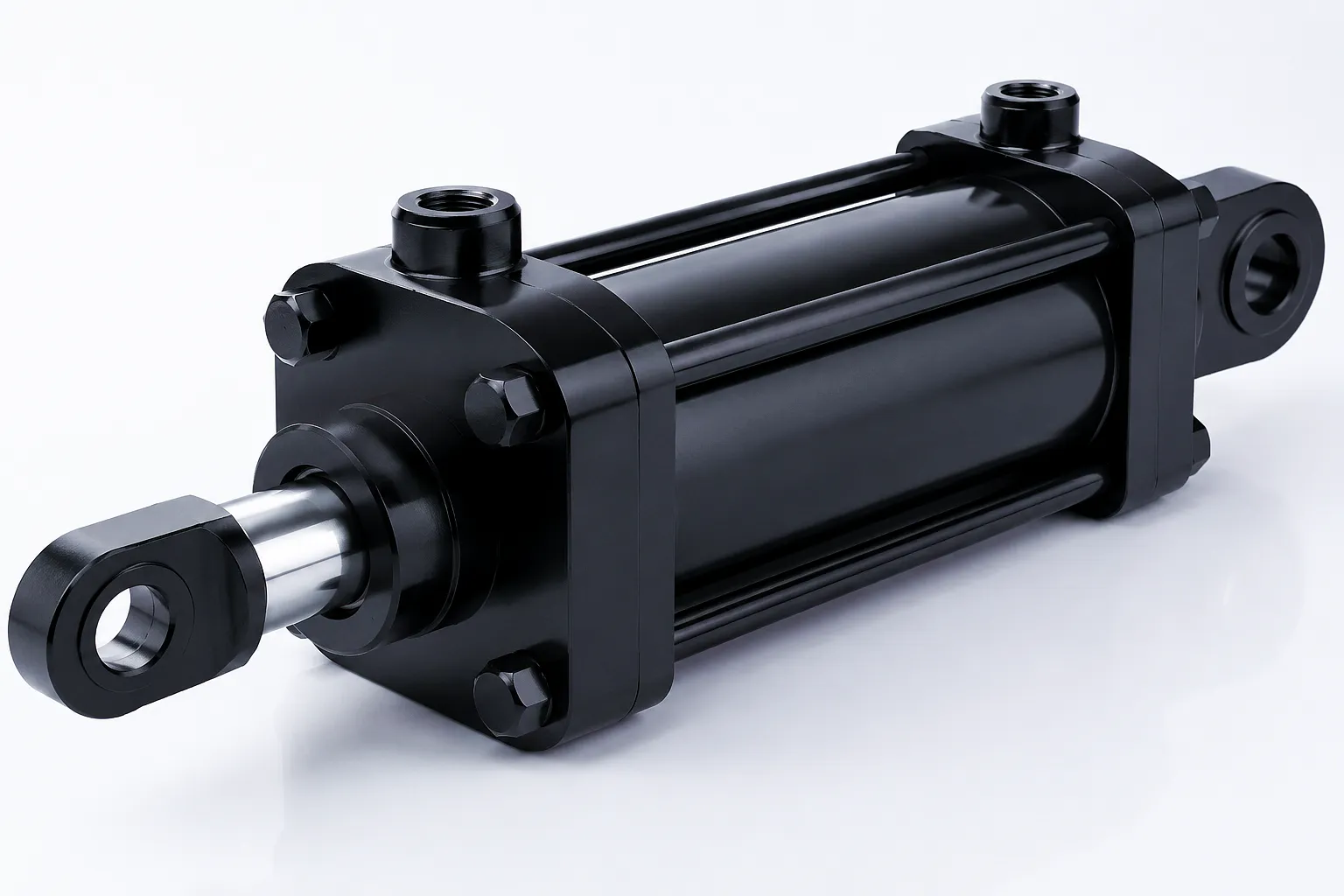
Material selection is a defining factor in the performance life and application suitability of any hydraulic cylinder. The engineering decisions made at the materials specification stage determine how a cylinder handles cyclic pressure loading, thermal expansion, corrosion exposure, and mechanical shock — all of which vary significantly across UK industry sectors. A cylinder deployed on a North Sea support vessel faces entirely different material demands compared with one controlling a conveyor system in a Birmingham automotive plant, even if their operating pressures are nominally identical.
Cold-drawn seamless steel tube to EN 10305-1 (formerly St52 or E355) is the near-universal choice for hydraulic cylinder barrels. Its tightly controlled mechanical properties — yield strength ≥355 MPa, tensile strength 470–630 MPa — provide an excellent pressure-to-weight ratio. For corrosive environments, 316L stainless steel or internally chrome-plated carbon steel are specified. Ever Power offers hard chrome plating, electroless nickel plating, and phosphate coating as corrosion protection options on all barrel diameters.
Piston rods are manufactured from CK45 (medium carbon steel) or 42CrMo4 alloy steel, induction hardened and ground to a surface roughness of Ra 0.2–0.4 µm before hard chrome plating. Chrome plating thickness is typically 20–40 µm, verified by magnetic thickness gauging on every unit. For subsea or wash-down applications, solid 316 stainless or duplex stainless rods are available. The rod diameter-to-stroke ratio is engineered against Euler column buckling criteria to ensure structural integrity at full extension under rated load.
Seal material choice is matched to the hydraulic fluid type, operating temperature range, and dynamic velocity. Polyurethane (PU) seals dominate standard hydraulic oil applications for their outstanding wear resistance. Nitrile rubber (NBR) O-rings are used at static interfaces. PTFE-backed bronze guide rings provide low-friction piston support. For high-temperature or synthetic fluid environments — common in aerospace ground support and process industry applications — FKM (Viton) seals are standard. Ever Power engineers maintain an in-house seal library covering over 400 seal profiles, enabling rapid configuration for virtually any application the UK market demands.
Hydraulic Cylinder Technical Performance Parameters
Industrial Application Scenarios for Hydraulic Cylinders
Hydraulic cylinders appear across virtually every heavy-duty sector of British industry. Their capacity to deliver sustained, controllable force in compact packages — combined with their tolerance for shock loading, vibration, and temperature extremes — makes them the linear actuator of choice wherever performance is non-negotiable.
Modern combine harvesters, bale wrappers, and precision sprayers rely extensively on hydraulic cylinders for header height control, header tilt, feeder house adjustment, and cab suspension. The cylinders operating in these environments must resist aggressive washdown, crop residue contamination, and the significant vibration loads generated across uneven terrain. Our Hydraulic Cylinders for Combine Harvester Machines are engineered specifically for these field conditions, with enhanced wiper seals and corrosion-resistant rod treatments as standard.
Sheffield’s legacy in special steels and advanced metallurgy creates persistent demand for high-force hydraulic cylinders in rolling mills, forging hammers, press lines, and coil handling equipment. These applications demand cylinders capable of operating at pressures between 280 and 350 bar, withstanding peak impact loads far exceeding nominal rating, and maintaining dimensional integrity despite the thermal cycling inherent in hot-metal processing environments. FKM seals and premium chrome-plated rods are specified as standard in Ever Power’s mill-duty cylinder range, which has served clients in the Sheffield industrial corridor since the company’s founding.
The West Midlands automotive sector — centred on Birmingham and extending through Coventry and Solihull — represents one of the UK’s most demanding hydraulic cylinder markets. Body-press tooling, transfer presses, weld fixtures, paint line conveyors, and assembly jigs all incorporate hydraulic cylinders at multiple stations. Cycle times are short, duty cycles are high, and unplanned downtime is extraordinarily costly. Cylinders in these applications are typically specified with ISO 6020/6022 mounting interfaces for direct interchangeability, ensuring that planned-maintenance swaps can be accomplished within a single shift.
The rapid growth of UK e-commerce and distribution infrastructure has dramatically increased demand for hydraulic lifting systems in warehousing and goods handling. Dock levellers, scissor lifts, mezzanine floor systems, and vehicle-mounted tail-lifts all rely on hydraulic cylinders as their primary actuator. Our Custom Double-Acting Telescopic Hydraulic Cylinders for Lifting Platforms are specifically designed for logistics and warehouse lifting applications, combining compact stowed dimensions with generous working strokes and consistent force delivery across the full cycle.
Offshore platforms and support vessels operating out of Aberdeen and Blyth present extreme challenges for hydraulic cylinder engineering. Constant exposure to seawater spray, combined with the high dynamic loads generated by wave motion and crane operations, demands cylinders built to the highest corrosion resistance and fatigue life standards. Stainless steel barrels, Inconel fasteners, and subsea-rated seals are among the material choices specified for these applications. All units are pressure tested to 1.5 times working pressure with a full test certificate issued, supporting UK MCA and Lloyd’s Register certification requirements where applicable.
Excavators, telehandlers, concrete pump booms, and piling rigs rely on hydraulic cylinders for virtually all primary and secondary motion functions. The construction environment subjects cylinders to contaminated return oil, high ambient particulate, temperature cycling, and intermittent shock loading from rock strikes and hard soil engagement. Robust end cap design, high-capacity wipers, and hard chrome rods are baseline specifications for construction plant cylinders. The UK’s ongoing infrastructure investment — particularly in the North of England and the HS2 corridor — continues to drive strong demand for replacement and custom hydraulic cylinders in this sector.
Ever Power Hydraulic Cylinder Range
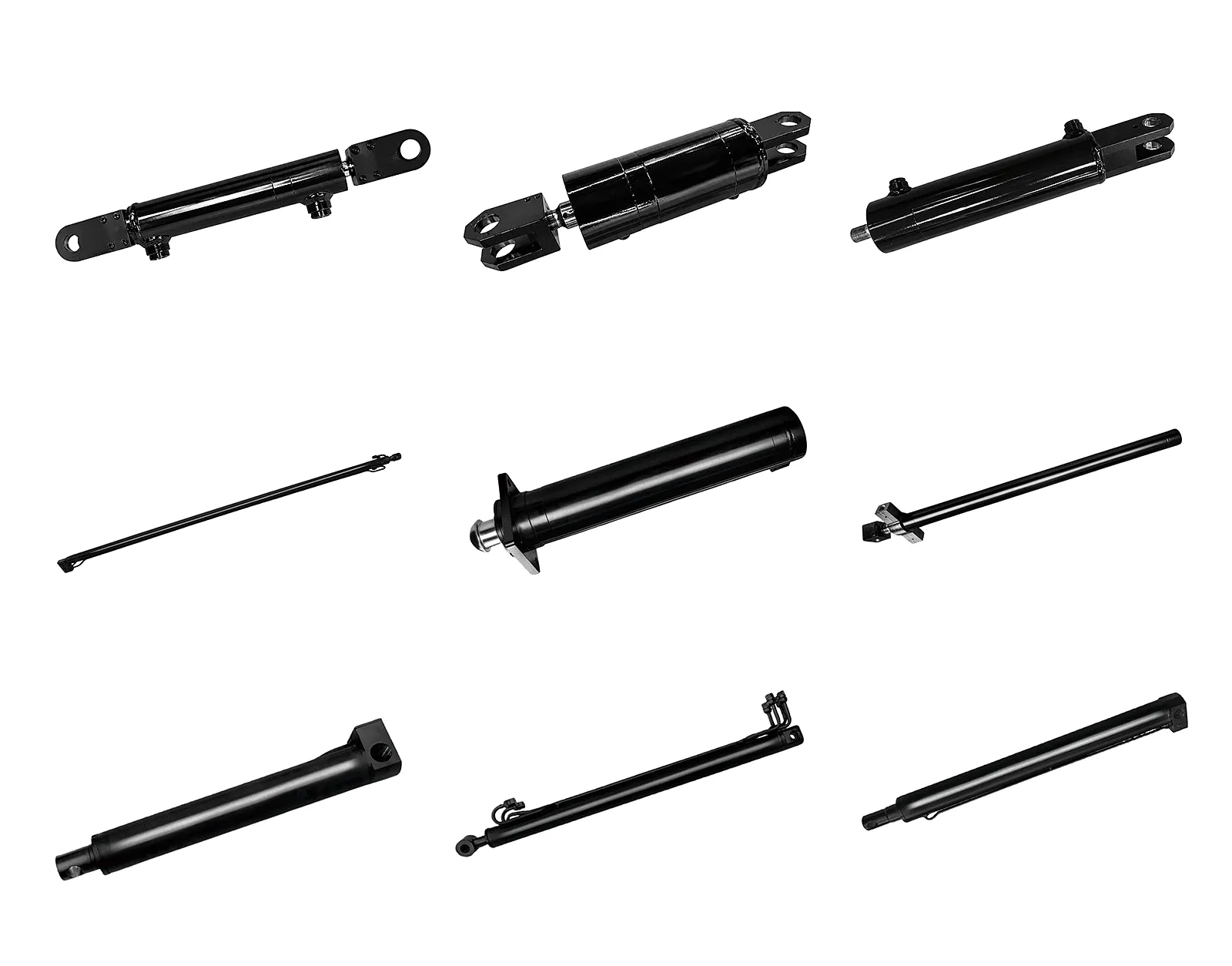
Key Technical Advantages of High-Quality Hydraulic Cylinders
No other linear actuator technology delivers comparable force output relative to physical size and mass. A hydraulic cylinder operating at 250 bar pressure can generate thousands of kilonewtons in a package that weighs a fraction of an equivalent mechanical drive system, making machine design lighter, more compact, and more cost-effective overall.
By varying flow rate through a proportional valve or servo valve, the extension and retraction speed of a hydraulic cylinder can be controlled continuously across the full range from near-zero to maximum rated velocity. This level of fine control is essential in applications such as synchronised multi-cylinder lifting systems, where position errors of even a few millimetres can cause structural loading problems.
When a hydraulic cylinder is isolated by closing its supply valve, the incompressibility of the hydraulic fluid locks the piston in position without any continuous energy draw. This characteristic makes hydraulic cylinders ideal for holding and clamping tasks — such as fixture clamping in machining centres or blade positioning in industrial shears — where position must be maintained for extended periods without risk of drift or energy waste.
System-level pressure relief valves provide inherent overload protection that no mechanical drive system can match as elegantly. When load exceeds the designed operating limit, the relief valve opens and diverts flow, preventing structural damage to the machine or the cylinder itself. This built-in safety behaviour protects both the equipment investment and operator safety in applications where unexpected load spikes occur routinely, such as refuse compactors and forestry machinery operating across the UK’s uneven terrain.
Ever Power: Precision Manufacturing and Custom Hydraulic Cylinder Solutions
Ever Power operates one of Asia’s most capable hydraulic cylinder manufacturing facilities, combining advanced CNC machining infrastructure with a deep engineering team that handles every stage of the production process in-house — from raw material specification and procurement through precision machining, heat treatment, surface finishing, assembly, and pressure testing. This vertically integrated model gives Ever Power a level of quality control and schedule reliability that sourcing from a trading intermediary simply cannot replicate.
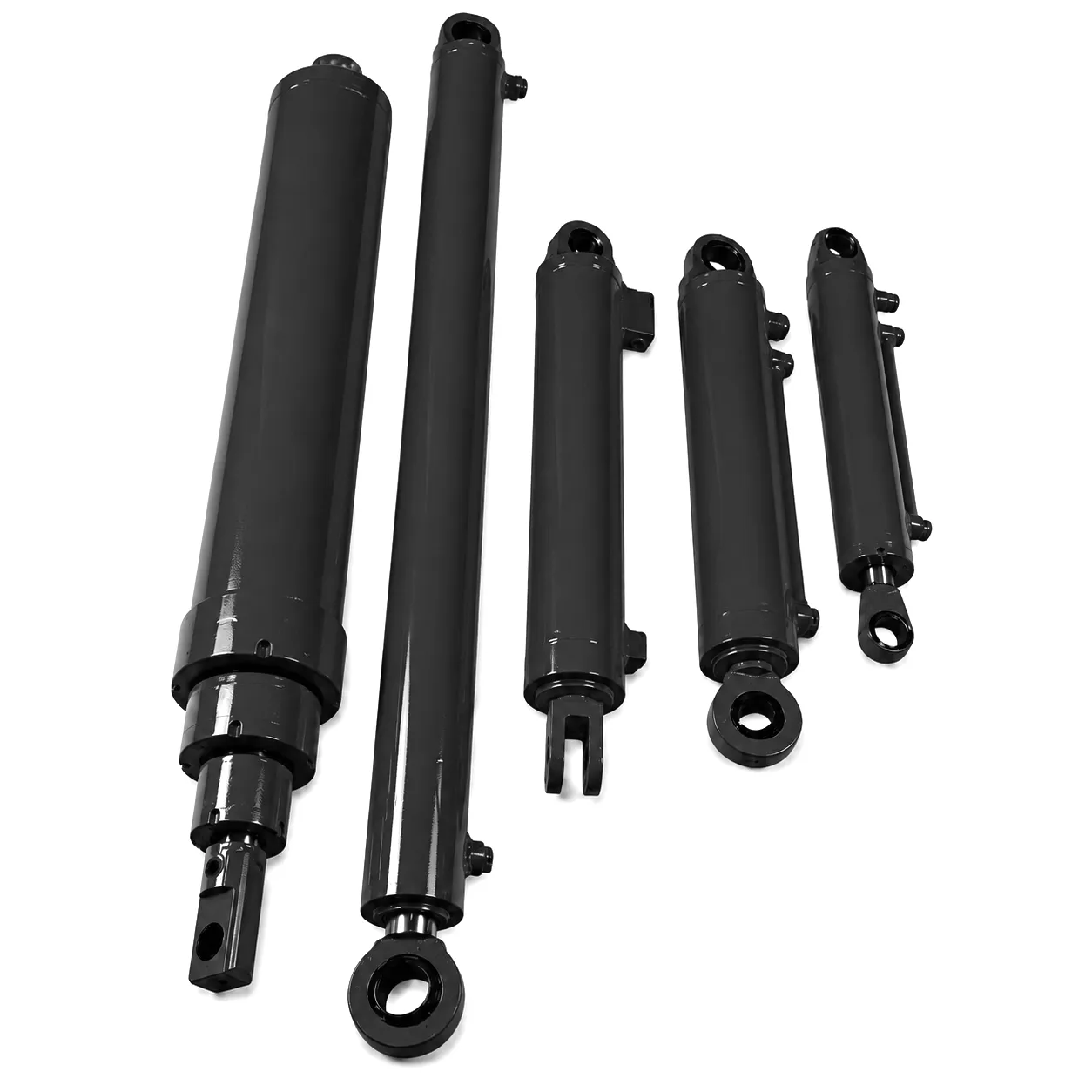
Ever Power’s design and engineering team works closely with UK procurement engineers and OEM design departments to develop cylinders that precisely match application-specific requirements. Custom bore diameters, non-standard stroke lengths, bespoke port positions, specialised mounting geometries, custom cushion arrangements, position sensor integration, and non-standard seal material combinations are all handled in-house. The company maintains a fully equipped prototype workshop capable of producing functional samples within two to three weeks of design freeze, supporting the compressed development timescales that British manufacturing clients increasingly require. From single prototype units through to batch production of several thousand pieces per year, Ever Power’s flexible manufacturing scheduling accommodates the full range of UK industrial demand patterns.
Every hydraulic cylinder leaving the Ever Power facility undergoes a multi-stage inspection protocol: dimensional verification by CMM, bore surface profilometry, 100% pressure testing at 1.5 times working pressure for a minimum sustained hold period, rod chrome plating thickness verification, and functional seal integrity assessment. Material traceability is maintained throughout — each cylinder is accompanied by a production dossier including raw material mill certificates, heat treatment records, and the full pressure test report. For UK clients requiring documentary compliance with BS EN ISO 4413 or specific OEM quality gate requirements, Ever Power’s quality management team provides tailored documentation packages as part of the standard supply process. Shipping is handled via established freight corridors with typical door-to-dock transit times to UK destinations of 18–25 days, supported by dedicated export logistics coordinators.
Send your technical drawing, application requirements, or basic specification to our engineering sales team. We respond within 24 hours on working days.
Customer Success Story: Hydraulic Cylinder Replacement for a Leeds Steel Fabricator
In early 2024, a long-established structural steel fabrication business based in the Hunslet industrial district of Leeds came to Ever Power with a pressing operational problem. Their primary hydraulic press line — a pair of 800-tonne forming presses critical to the production of structural sections for the UK construction market — was experiencing repeated cylinder seal failures on the main actuator units. The existing cylinders, sourced from a European supplier, were failing at their rod seals after an average of only 14 weeks of service due to the combination of scale, metal swarf, and the particularly aggressive cutting fluid mist present in the press hall environment.
Ever Power’s technical team conducted a detailed review of the application environment and the failure mode. The root cause was identified as inadequate wiper seal performance under the specific contamination profile of the Leeds facility. The solution was a set of custom-specified replacement cylinders with dual-stage wiper assemblies — a primary PTFE-tipped wiper followed by a secondary polyurethane scraper ring — combined with a labyrinth exclusion groove machined into the gland face. Rod chrome plating thickness was increased from the standard 25 µm to 40 µm, providing an additional barrier to pitting under metallic particle abrasion. The barrel bore was also honed to Ra 0.2 µm rather than the standard Ra 0.4 µm to reduce the friction loading on the primary rod seal.
The replacement cylinders were delivered to the Leeds facility within four weeks of order placement — a timeline that included full CMM dimensional verification, pressure testing, and the preparation of a complete certification documentation package for the client’s quality records. At the 26-week operational review, both press units were running without incident. The Leeds fabricator reported a total maintenance cost reduction of 64% on the press line compared with the preceding 26-week period, and estimated that the extended cylinder service life would deliver full payback on the higher initial unit cost within the first year of operation. The company has since specified Ever Power cylinders across three additional press stations at the same facility.
What UK Clients Say About Ever Power Hydraulic Cylinders
“The custom dual-wiper specification that Ever Power designed for our press line has completely solved the contamination problem we were fighting for over two years. Eighteen months in and the cylinders are still on their original seals — genuinely impressive for this environment. The technical documentation provided was exactly what our quality team needed.”
“We’ve sourced hydraulic cylinders from Ever Power for our combine harvester service business for three seasons now. The bore consistency and chrome quality on the rods are noticeably better than what we were getting from our previous supplier. Lead times are predictable and the export documentation is always clean — that matters when you’re managing a seasonal restocking window.”
“We needed a non-standard bore size with a particular port configuration that no catalogue supplier could accommodate without a 16-week wait. Ever Power turned around a fully certified sample set in under three weeks and hit every dimension on the drawing. The price was competitive enough that we didn’t need to compromise on material spec, which was the other concern going in.”
Frequently Asked Questions About Hydraulic Cylinders in the UK
Ever Power Group — Custom Hydraulic Cylinder Solutions for UK and Global Industrial Markets
📧 [email protected] | boom-cylinders.com
edit by gzl
 Russian
  English
  Italian
  Portuguese
  Dutch
Dutch  Swedish
  Danish
  Finnish
  Polish
  Hindi
Hindi  Kazakh
  Turkish
  Ukrainian
  Romanian
  Spanish
  German
  Korean
  Japanese
  Vietnamese
  Thai
Thai  Indonesian
  Malay
Malay  French
  Greek
Greek