
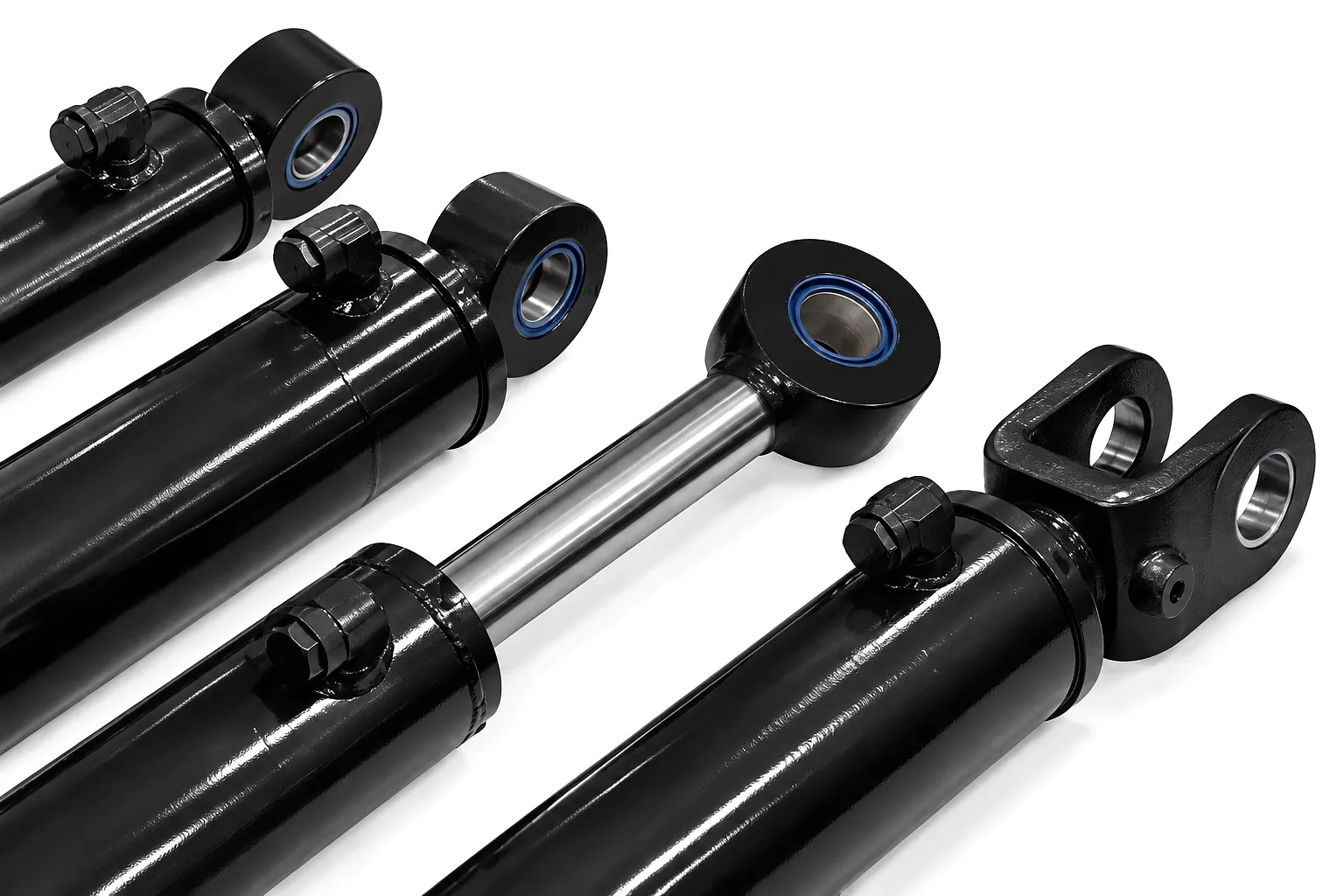
 Choosing between a welded hydraulic cylinder and a tie-rod hydraulic cylinder is rarely a straightforward specification decision — it is a five-year financial commitment that touches maintenance schedules, production uptime, spare-parts inventory, and ultimately the competitiveness of the operation that depends on it. Procurement engineers across the UK understand this well. A hydraulic cylinder specified correctly on day one can run for tens of thousands of hours without issue; one chosen purely on unit price can generate recurring costs that dwarf the original purchase within two service intervals.
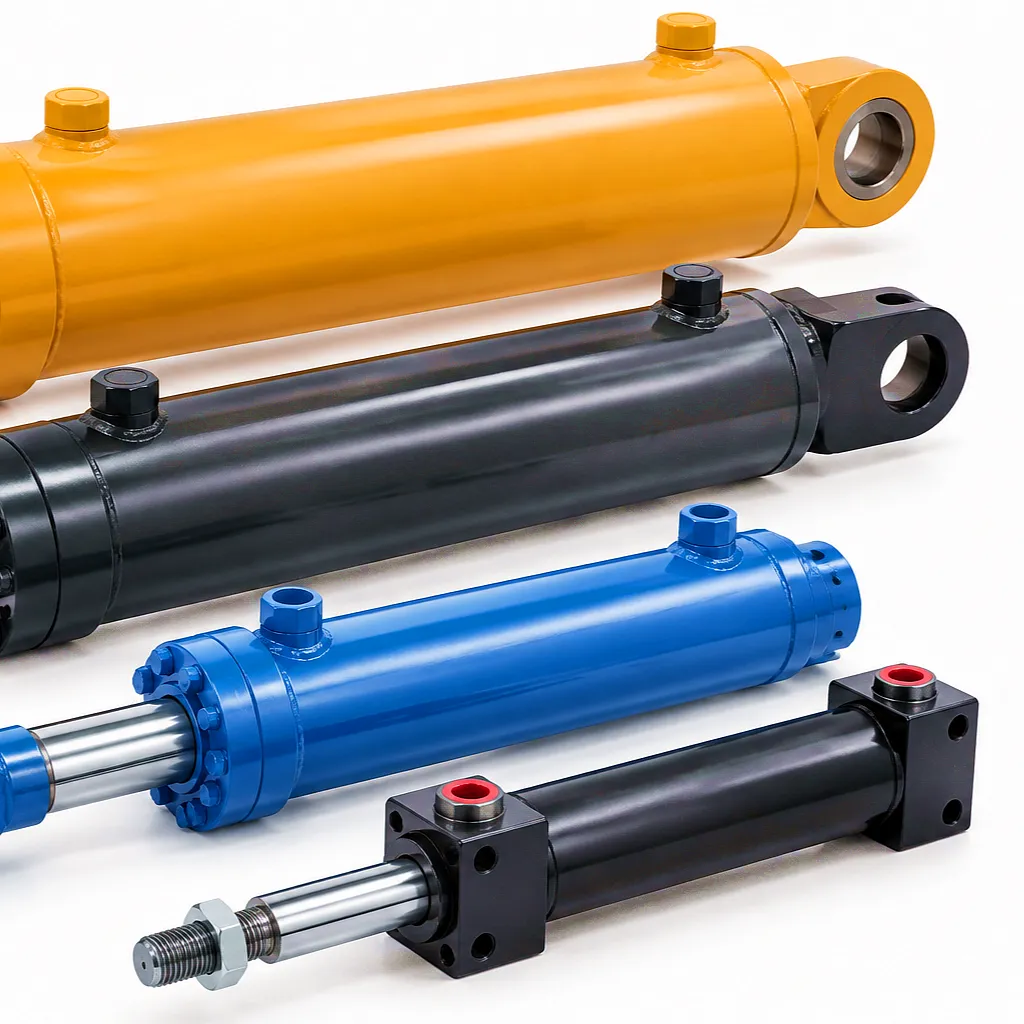
What Actually Differentiates These Two Cylinder Designs
Welded Hydraulic Cylinder
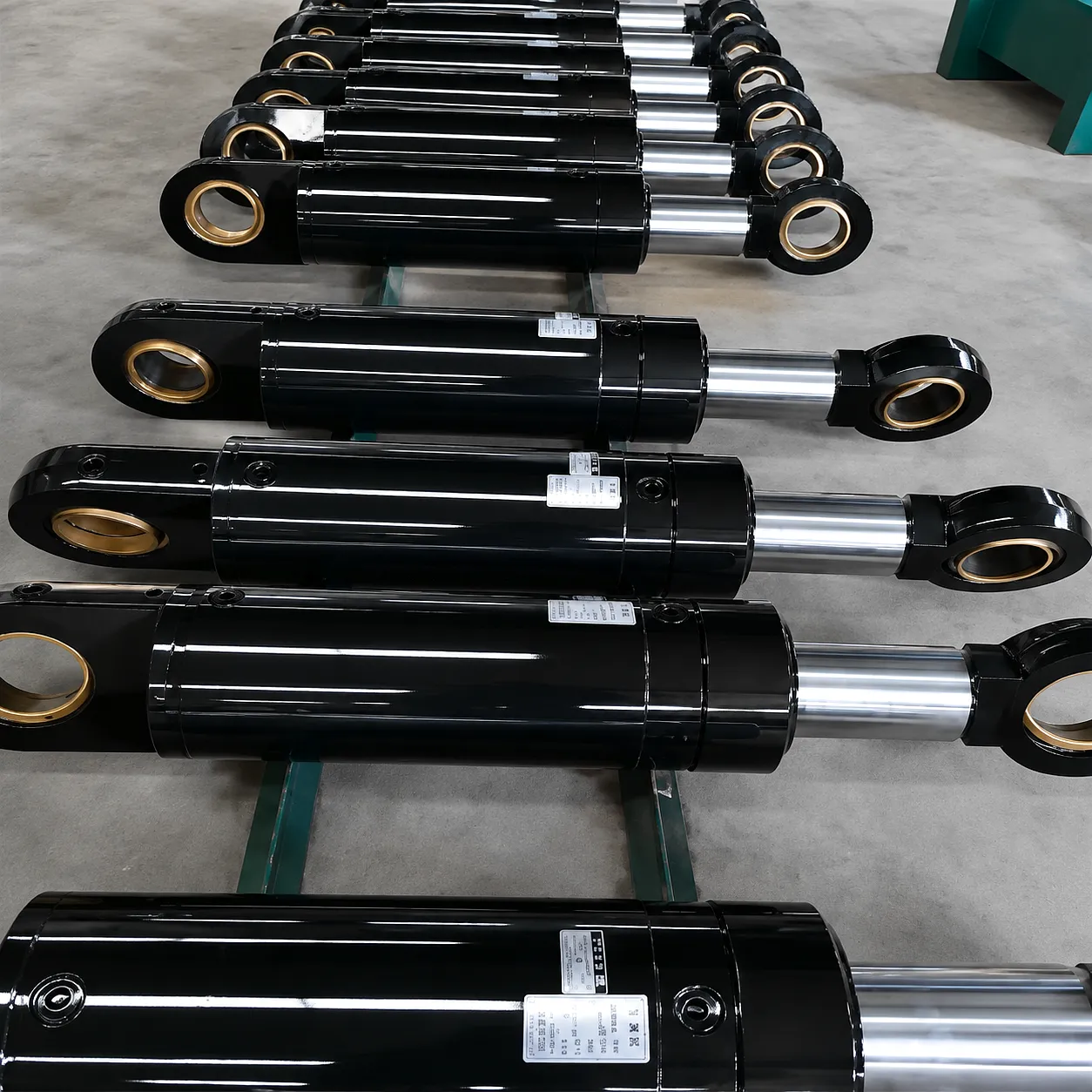
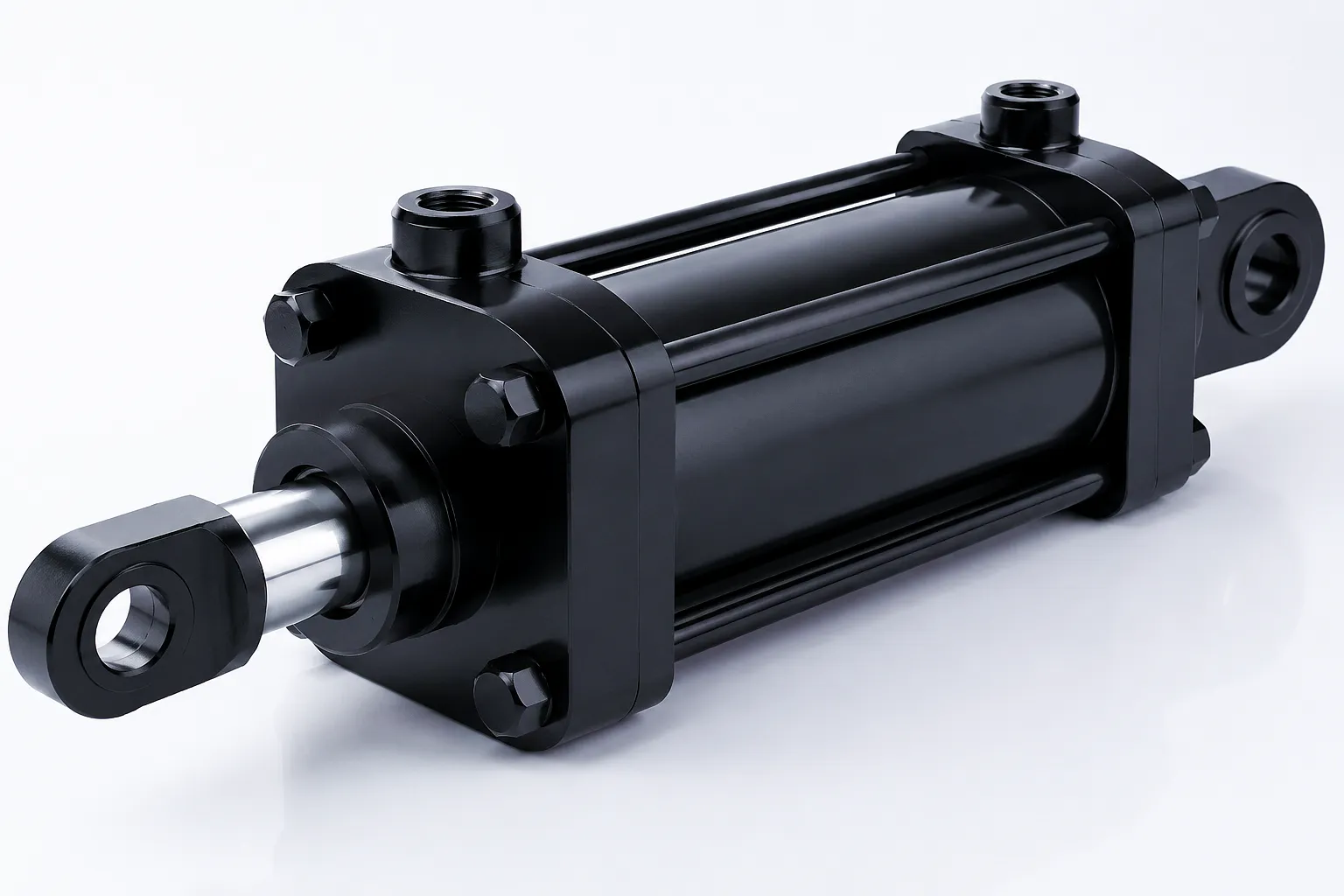
The barrel is permanently bonded to the end caps through circumferential welds or friction welds, creating a monolithic pressure vessel. This eliminates external tie rods and associated hardware entirely. The result is a cylinder with a smaller envelope for equivalent bore size, far superior strength under eccentric loading, and a surface finish that resists contamination ingress in field conditions — properties that matter deeply on aerial work platforms, telescopic handlers, and heavy fabrication machinery across the UK’s manufacturing sector.
Tie-Rod Hydraulic Cylinder
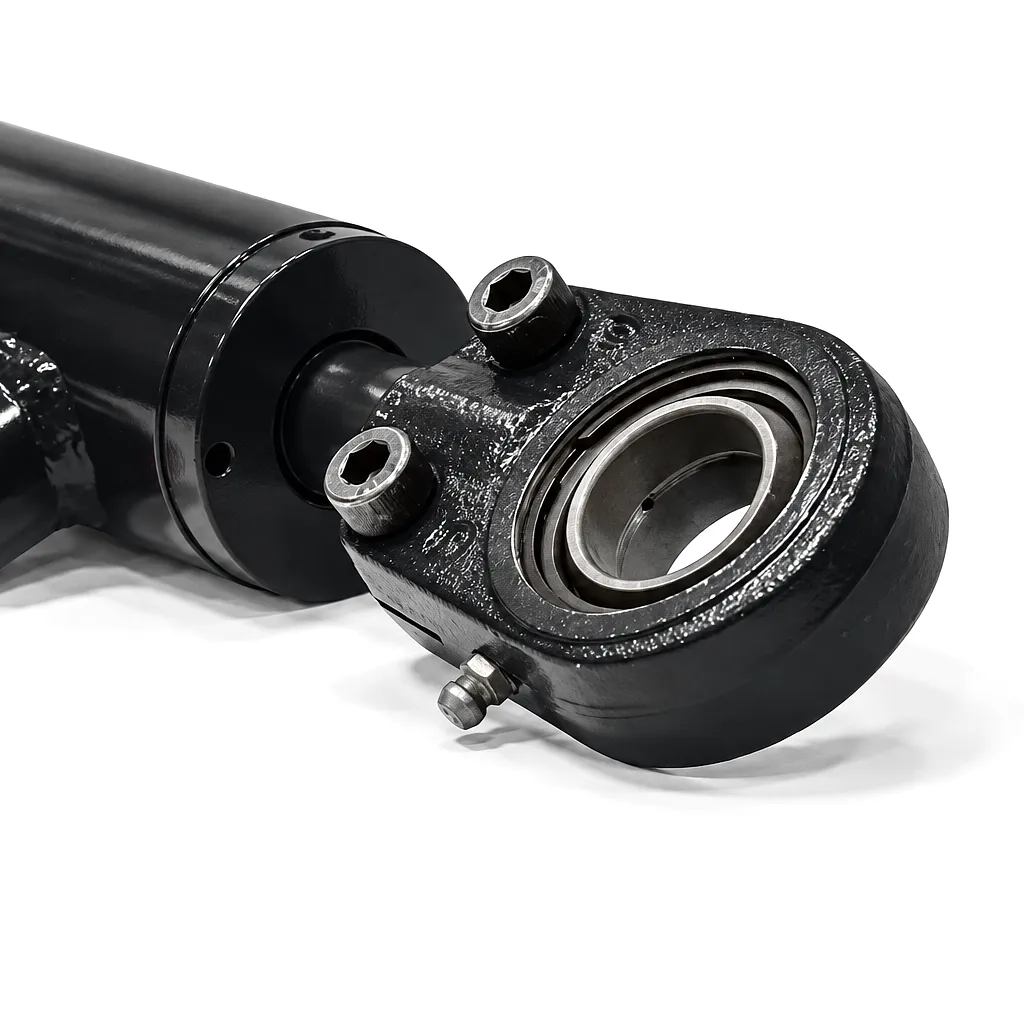
Four to twenty externally threaded steel rods clamp the end caps against the barrel using precision nuts. This design is modular and highly serviceable — seals can be replaced without removing the cylinder from the machine, and the barrel itself can often be reused through multiple rebuild cycles. NFPA and ISO 6020/6022 standards govern these geometries, so cross-sourcing components is practical. For factory-floor hydraulic presses, injection moulding machines, and industrial positioning systems in Yorkshire and the East Midlands, this serviceability carries real operational value.
Core Materials: Where Quality Diverges
Barrel / Tube
Cold-drawn seamless steel tubing (EN 10305-1 or equivalent) is standard for both cylinder types. Welded cylinders benefit from honed inner bores to Ra 0.2–0.4 µm, while premium units destined for high-cycle aerial platforms use induction-hardened liners for wear resistance beyond 2 million cycles — relevant to maintenance teams in Birmingham handling aerial work vehicles on extended contracts.
Piston Rod
Typically high-strength carbon steel (42CrMo4 or equivalent), hard-chrome plated to 20–25 µm for corrosion resistance and wear life. Marine-rated units and those operating in northern coastal regions of the UK often specify electroless nickel or HVOF thermal spray coatings to extend service life in salt-laden atmospheres beyond the lifespan of conventional chrome.
Seals
Polyurethane (PU) piston seals and Nitrile (NBR) or Viton rod seals dominate both types. Welded cylinder seal systems often incorporate bronze-filled PTFE guide rings to manage side-load without metal-to-metal contact — critical for boom angle cylinders that experience combined axial and lateral forces through their full stroke.
End Caps and Mounting
Welded cylinder caps are machined from solid billets of C45 or 34CrMo4 steel and joined by submerged arc or friction welding, then stress-relieved. Tie-rod cylinders use cast or machined iron or steel caps with precision-drilled rod passages. The weld integrity of the former type is the single factor most responsible for its pressure rating advantage, often reaching burst pressures of 600 bar or more in heavy-duty configurations.
Operating Principles and Why They Shape Long-Term Cost
Both cylinder types convert hydraulic fluid pressure into linear mechanical force through the same thermodynamic relationship: Force = Pressure × Area (F = P × A). Pressurised fluid — typically mineral oil at ISO VG 46 or VG 68 viscosity — enters the port and acts on the piston face, generating rod extension force. The fundamental physics is identical; the differences emerge in how each design manages that force at its structural boundaries.
In a welded hydraulic cylinder, the hoop stress generated at operating pressure is absorbed entirely by the monolithic steel barrel wall and the welded end caps. There are no fasteners under cyclic tensile loading, which means there are no fastener fatigue failure modes — a significant advantage in high-cycle applications. The stress path is continuous and predictable, which is why welded designs routinely tolerate working pressures of 350 bar and above without the risk of end-cap separation that can afflict tie-rod assemblies with worn or undertorqued fasteners.
In a tie-rod cylinder, each rod absorbs a portion of the separating force trying to push the end caps apart. The rod pre-tension must be maintained correctly throughout service life; vibration and thermal cycling can cause tie-rod nuts to relax, reducing seal contact pressure and introducing leak paths. This is the root cause of the majority of tie-rod cylinder field failures reported by hydraulic maintenance contractors operating across Sheffield’s heavy manufacturing sites.
Technical Performance Comparison Table
| Parameter | Welded Cylinder | Tie-Rod Cylinder |
|---|---|---|
| Bore Range | 25 mm – 500 mm | 32 mm – 250 mm (NFPA standard) |
| Max Working Pressure | 250 – 400 bar | 100 – 210 bar |
| Stroke Capability | Up to 8,000 mm | Up to 3,000 mm typical |
| Barrel Material | Cold-drawn seamless steel (EN 10305) | Cold-drawn seamless / DOM steel |
| Rod Material | 42CrMo4, hard chrome 20–25 µm | 1045 or 4140 steel, hard chrome |
| Seal System | PU + Viton / PTFE guide rings | NBR / PU, replaceable in-situ |
| Operating Temperature | -40°C to +120°C | -20°C to +80°C (standard seals) |
| Mounting Options | Clevis, flange, foot, cross, spherical | Clevis, flange, foot (NFPA styles) |
| Cycle Life Expectancy | 2,000,000+ cycles (high-grade) | 500,000 – 1,500,000 cycles |
| Serviceability | Workshop rebuild; specialised tooling | In-situ seal change possible |
| IP / Environmental Rating | IP65–IP67 achievable | IP54 typical (rod exposure) |
The 5-Year Total Cost of Ownership: A Realistic Breakdown
Total cost of ownership for a hydraulic cylinder is not simply a matter of multiplying seal kit price by replacement frequency. It encompasses the full economic impact of the cylinder on the system it serves — including lost production during unplanned downtime, engineer time diagnosing faults, rigging costs for cylinder extraction, and logistics costs for sourcing replacement units. For operations across the UK’s manufacturing heartlands, where plant efficiency targets are increasingly tied to contract performance, even a single unplanned cylinder failure can cascade into penalties that make the initial purchase price look trivial.
| Cost Category | Welded Cylinder (5 yr) | Tie-Rod Cylinder (5 yr) |
|---|---|---|
| Initial Purchase (medium bore) | £800 – £2,400 | £350 – £900 |
| Seal Replacements (avg frequency) | 1–2 times over 5 yrs | 2–4 times over 5 yrs |
| Seal Kit Cost per Rebuild | £80 – £220 | £35 – £95 (NFPA standard) |
| Labour / Rebuild Cost | £200 – £450 (workshop) | £60 – £180 (in-situ possible) |
| Downtime per Failure Event | 4–8 hours (planned) 24–72 hrs (unplanned) | 2–4 hours (in-situ) 16–48 hrs (end-cap failure) |
| Unplanned Failure Risk | Low (weld integrity, no fasteners) | Medium (tie-rod nut relaxation) |
| Spare Parts Inventory Cost | Low (longer intervals) | Medium (more frequent restocking) |
| Estimated 5-Year Total Ownership Cost | £1,500 – £3,800 | £1,100 – £4,200* |
*Upper range reflects unplanned end-cap or tie-rod failure scenarios including consequential production downtime costs.
 The key insight from this analysis is the cost convergence risk with tie-rod cylinders. At low pressure, low cycle count, and with disciplined preventative maintenance, they can represent excellent value. But as working pressure rises toward 160–200 bar, cycle counts exceed 300,000 per year, and maintenance scheduling slips — as it often does in busy manufacturing facilities across the East Midlands and the North West — the risk profile shifts sharply. A single catastrophic tie-rod failure that causes machine downtime across a three-shift operation can generate productivity losses in the range of £5,000 to £20,000 in a single incident, completely erasing the initial purchase price advantage.
Featured: Welded Cylinder Applications for Aerial Work Platforms
Industrial Application Scenarios: Where Each Cylinder Type Excels
Aerial Work Platforms and Mobile Elevated Work Equipment (MEWP)
Welded hydraulic cylinders are the industry standard for MEWP boom articulation, primarily because the side-load profile during boom extension and retraction would exceed the structural capacity of standard tie-rod designs operating at 280–350 bar system pressure. Operators across Birmingham’s construction sector and London’s infrastructure renewal projects demand cylinders with certified weld inspection documentation and traceability to material heat numbers. Welded designs also meet the compact envelope requirements of modern narrow-aisle and indoor platforms where space around the cylinder is severely constrained.
Hydraulic Press and Stamping Operations — Birmingham and West Midlands
Tie-rod cylinders dominate horizontal clamp and ejector circuits on injection moulding and stamping presses operating at 100–160 bar, where their in-situ serviceability reduces planned maintenance windows to hours rather than days. Many press shops across the West Midlands run three-shift continuous operations where the ability to replace seals without removing the cylinder from the press tool — using nothing more complex than a seal kit and a torque wrench — represents a genuine operational advantage that outweighs the welded cylinder’s structural superiority at these more moderate pressures.
Marine Deck Machinery and Offshore Equipment — Scottish Yards
Welded cylinders with HVOF-coated rods and salt-fog-tested weld zones are specified for hatch covers, anchor winch tensioners, and crane luffing systems on vessels operating from Scottish shipyards and North Sea supply bases. The sealed construction resists seawater ingress far more effectively than tie-rod designs, where the thread interface between rods and end-cap nuts provides a capillary corrosion path that destroys fastener integrity within two to three seasons without meticulous protection.
Agricultural Machinery — Yorkshire and East Anglian Farms
Combine harvester header lift, baler knotting mechanism cylinders, and sprayer boom folding circuits use welded cylinders rated to 210 bar for their ability to handle the shock loading generated when headers strike uneven terrain. Seasonal maintenance patterns in the UK agricultural sector — driven by the relatively short harvest windows typical of Yorkshire’s cereal belt — mean that cylinders must perform reliably for extended periods without service opportunity. The welded design’s longer mean time between failure justifies the higher unit cost when downtime during harvest can cost £500–£2,000 per day in lost capacity.
Core Advantages of Welded Cylinders Over Tie-Rod Designs
Higher Pressure Capability
Rated operating pressures of 250–400 bar versus the 100–210 bar ceiling of most standard tie-rod configurations — enabling their use in compact high-force systems where bore size must be minimised. This translates to smaller cylinder envelopes delivering equivalent force output, a critical advantage in aerospace GSE, underground mining equipment, and vehicle-mounted hydraulics where packaging space is at a premium.
Resistance to Eccentric and Side Loading
Monolithic end-cap construction eliminates the bending moment concentration at tie-rod holes that occurs when cylinders are subjected to off-axis forces. This structural advantage is measurable: finite element analysis of comparable bore cylinders shows peak stress at end-cap rod passages in tie-rod designs running 35–60% higher than equivalent stress points in welded designs under identical side-load conditions. In boom articulation applications, this translates directly to longer seal life and reduced rod scoring.
Compact Form Factor
Removing the external tie-rod hardware reduces the cylinder’s outer diameter by 15–25% for equivalent bore sizes. This reduction is meaningful in mobile hydraulic systems where the cylinder must route through confined chassis spaces or articulate within restricted envelopes. Ever Power’s welded cylinder range achieves outer-diameter-to-bore ratios as low as 1.3:1 in medium-bore models, compared to 1.8:1 or higher for equivalent tie-rod units with external rod hardware.
Cleaner Operating Environment
No external rod threads mean fewer contamination traps. On outdoor mobile equipment — such as telehandlers operating in UK agricultural settings where fine silica dust, straw fibres, and fertiliser particulate are present — tie-rod threads accumulate debris that acts as an abrasive paste when the nut is subsequently torqued during service. Welded cylinder barrels, particularly with polished external finishes, present far fewer surfaces where contamination can establish itself and migrate toward the rod seal.
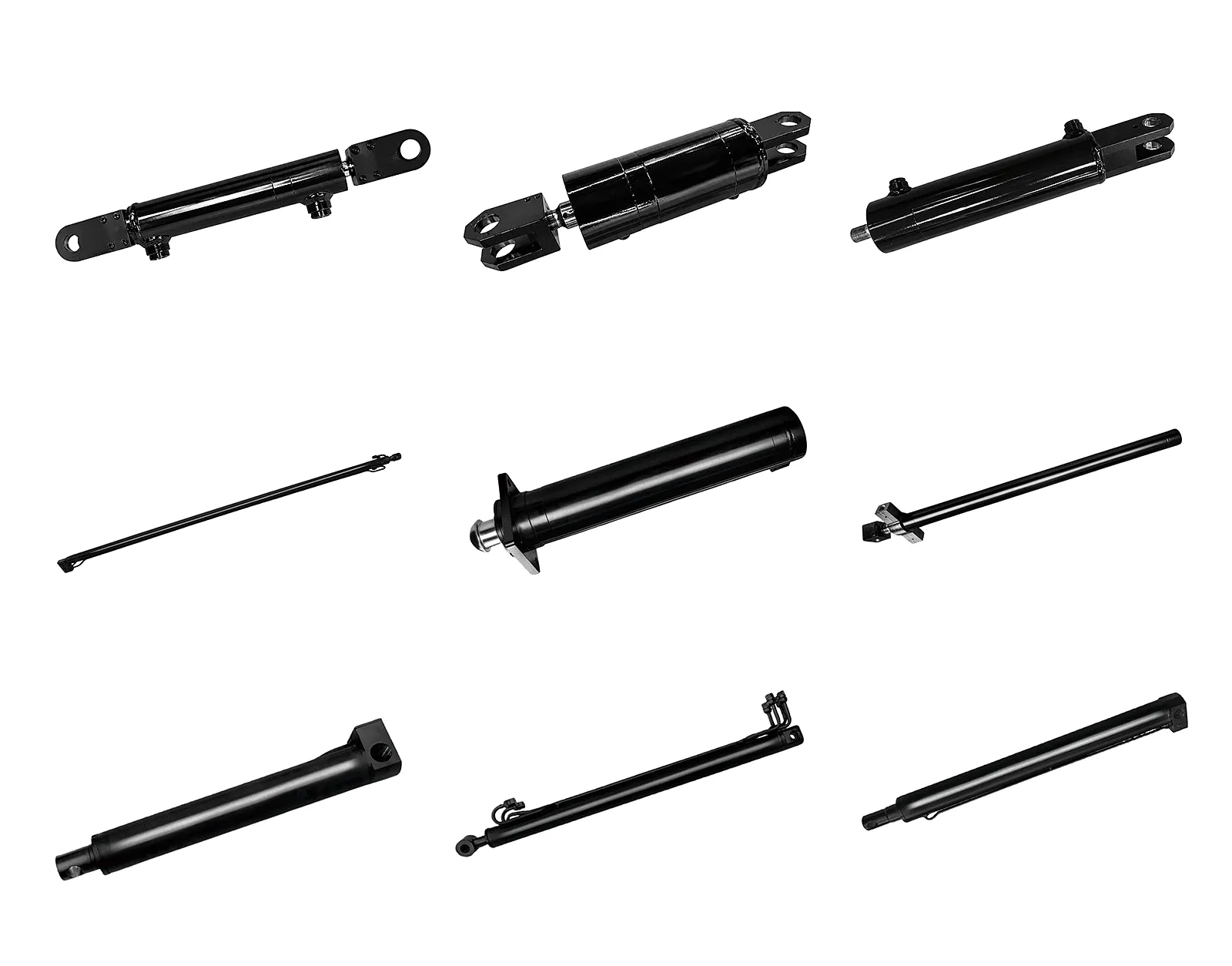
Ever Power Hydraulic Cylinder Product Range — Custom welded and tie-rod solutions for global B2B markets
Customer Success: Sheffield Structural Fabrication — MEWP Fleet Overhaul
Case Study
Meridian Steel Structures Ltd
Sheffield, South Yorkshire · Structural Steel Fabrication · Est. 1987
14 units
Cylinders supplied
£24,000
Estimated downtime savings Year 1
18 månader
In service, zero failures
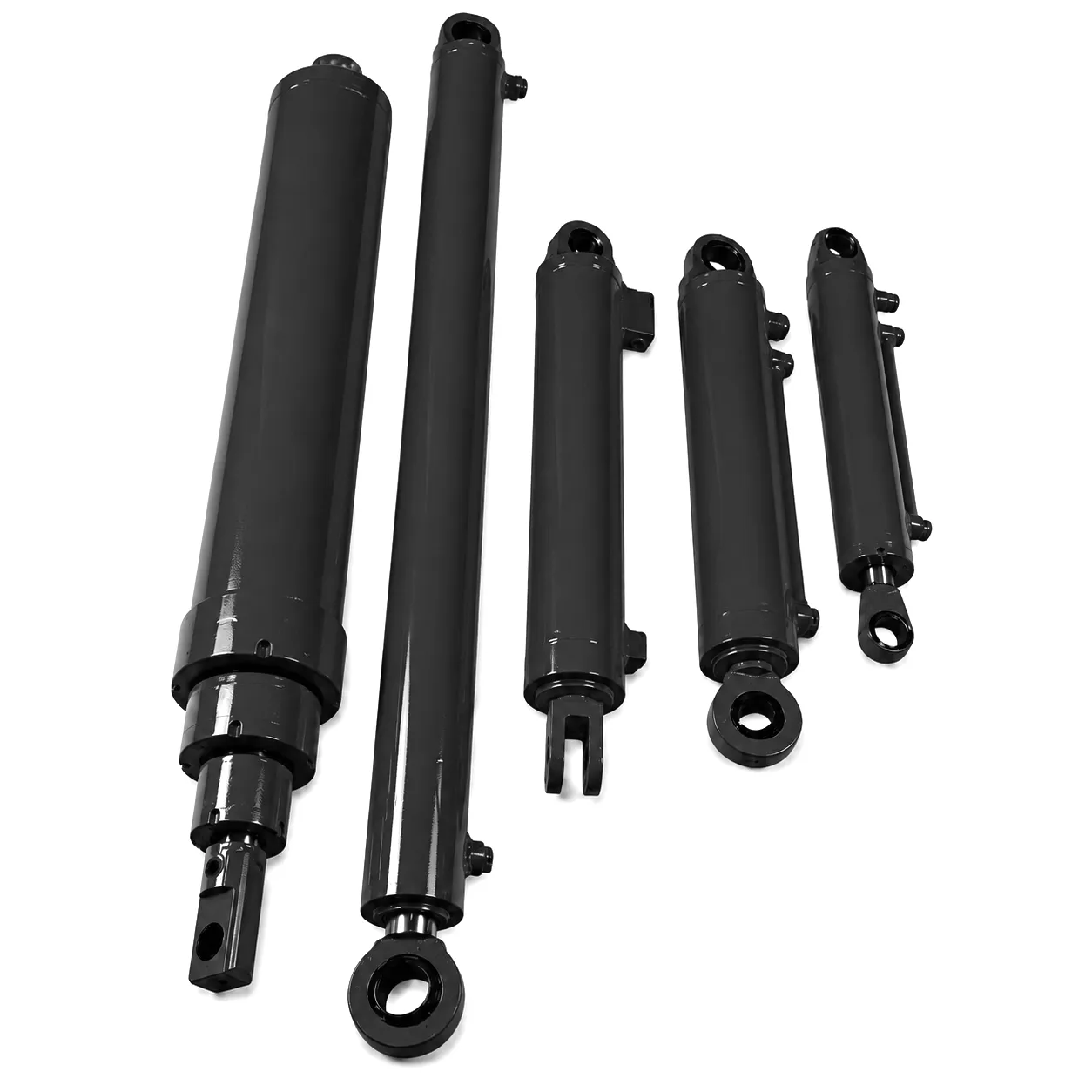
Meridian Steel Structures operates a fleet of seven articulating boom MEWPs and four straight-mast platforms across its 3.4-hectare fabrication site in Sheffield’s Lower Don Valley. In 2024, their plant manager, David Hargreaves, was dealing with recurring seal failures on the existing tie-rod boom angle cylinders — an average of three failure incidents per year across the fleet, each costing between £3,800 and £6,200 in direct repair costs plus lost production on the bay’s two 40-tonne overhead cranes that shared access routes with the affected platforms.
After reviewing their maintenance data, the team concluded that the root cause was tie-rod nut relaxation driven by thermal cycling in the Sheffield workshop environment, where ambient temperatures varied from near-zero in winter mornings to over 45°C near the welding bays. Ever Power supplied 14 custom welded hydraulic cylinders — matching bore, stroke, and mounting dimensions to the OEM specification — with Viton seals rated to 120°C and stainless-fastened bleed screws to suit the corrosive atmosphere near flux-core welding operations.
Eighteen months on, no cylinder failures have been recorded. The maintenance team has recovered the equivalent of four planned maintenance windows previously consumed by emergency cylinder replacements, and the plant engineering log shows zero unplanned MEWP downtime attributable to hydraulic cylinder issues since the retrofit was completed.
What Our Customers Say
“We’ve run these cylinders hard for eighteen months in conditions that destroyed three sets of OEM tie-rod units in the same period. The weld quality is visibly superior to anything we’d received from previous suppliers — you can see the care in the execution. After our first season of zero failures, we’re in conversations with Ever Power about standardising across two other Sheffield sites.”
David Hargreaves
Plant Manager · Meridian Steel Structures Ltd, Sheffield
“The custom boom angle cylinders Ever Power produced for our articulating platforms match the OEM dimensions exactly — no adaptor brackets, no re-routing of hose runs. The Viton seal specification was the key call; our previous supplier fitted NBR as standard and they’d fail within six months in our thermal cycling environment. Ever Power’s technical team understood that immediately, offered the right spec, and delivered to the committed lead time.”
Karen Whitfield
Maintenance Contracts Manager · Northern Access Solutions Ltd, Leeds
“We ran the total cost analysis ourselves before committing to welded cylinders from Ever Power. The unit price was higher, but even under conservative assumptions about maintenance frequency, the five-year number came out 22% lower than continuing with tie-rod units. What we hadn’t accounted for was the reduction in administrative burden — fewer emergency procurement events, fewer engineering callouts. That qualitative benefit alone was worth the switch.”
James Caldwell
Procurement Director · Caledonian Crane & Access Ltd, Glasgow
Vanliga frågor
Ready to Specify the Right Cylinder for Your Application?
Whether you’re replacing existing cylinders on a MEWP fleet, specifying new units for an OEM build, or evaluating long-term procurement strategy — Ever Power’s engineering team can help you make a data-backed decision. Send us your bore, stroke, pressure, and mounting requirements.
📩 Get a Quote — [email protected]
edit by gzl
 Swedish
  English
  Italian
  Portuguese
  Dutch
Dutch  Danish
  Finnish
  Polish
  Hindi
Hindi  Kazakh
  Turkish
  Ukrainian
  Romanian
  Spanish
  German
  Russian
  Korean
  Japanese
  Vietnamese
  Thai
Thai  Indonesian
  Malay
Malay  French
  Greek
Greek