
Produktbeskrivning
|
Catagory |
Clutch Master Cylinder |
|
Application |
Auto Clutch Systems |
|
OEM No. |
41285167 |
|
Car Model |
Used For IVECO |
|
Position |
Front |
|
Material |
Iron/Aluminum |
|
Sample |
Available |
|
MOQ |
50PCS |
|
Guarantee |
30,000 kms/1 year |
|
Quality |
100% Tested 1 by 1 before shipment |
|
Package |
Neutral Packing & Client’s Brand Packing |
|
Delivery |
7-15 days for small quantity, and about 30 days for large quantity. |
Our company CHINAMFG produces the high quality Auto Parts for Korea and Japanese,Europen and American Cars.
We have more than 15 years experience in produce Brake Cylinder.
We have a great business in Suspension Parts, CV Joints and Water Pump, Fuel Filter, Shock Absorber and so on.
We sell our goods to the USA, Latin American and Middle East. Getting consistent high praise from all the customers.
We welcome all the customer from all over the word!
1. Are you a trading company or factory?
Both. We have a factory locating in Hi-Tech industrial zone, Xihu (West Lake) Dis. District,ZheJiang , and sell our products by ourselves.
2. What kind of certificate of your factory?
We are qualified with IATF 16949.
3. Can you use my package design?
Sure, all you need is to provide us your certificate of trademark registration and authorization paper.
4. What’s your quality guarantee?
Basically,our hydraulic brake assures 12 months or 30.000kms, every client will get our lifelong after-sale service.
5. What’s your min order quantity?
Our MOQ is 50 to 300PCS.
6. How to get your sample?
We need to charge the sample fee, but it will return back once you place an order.
And the freight should be on your side. Or you can tell us the DHL or the TNT Account No.
7. Do you test all your goods before delivery?
Yes sure, we have 100% quality test before delivery.
8. What is your delivery time?
It depends on your order quantity and our stocks.
Usually we can ship within 7-15 days for small quantity, and about 30 days for large quantity.
| After-sales Service: | 1 Year |
|---|---|
| Warranty: | 1 Year |
| Type: | Clutch System |
| Samples: |
US$ 5/Piece
1 Piece(Min.Order) | Order Sample |
|---|
| Customization: |
Available
|
|
|---|
.shipping-cost-tm .tm-status-off{background: none;padding:0;color: #1470cc}
| Shipping Cost:
Estimated freight per unit. |
about shipping cost and estimated delivery time. |
|---|
| Payment Method: |
|
|---|---|
|
Initial Payment Full Payment |
| Currency: | US$ |
|---|
| Return&refunds: | You can apply for a refund up to 30 days after receipt of the products. |
|---|
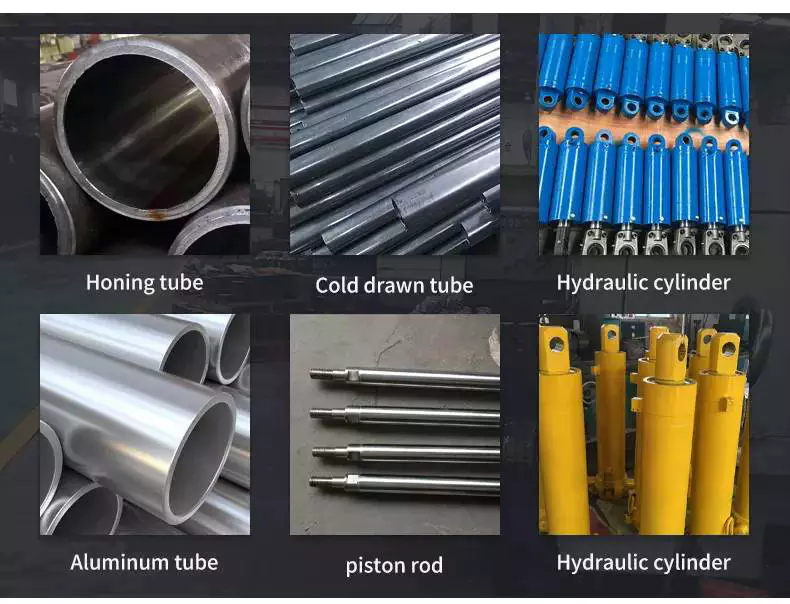
How do hydraulic cylinders contribute to the overall cost-effectiveness of industrial processes?
Hydraulic cylinders play a crucial role in enhancing the overall cost-effectiveness of industrial processes. They offer several advantages and contribute to increased productivity, improved efficiency, reduced maintenance costs, and enhanced operational performance. Here’s a detailed explanation of how hydraulic cylinders contribute to the cost-effectiveness of industrial processes:
1. High Power Density:
– Hydraulic cylinders provide a high power-to-weight ratio, allowing them to generate substantial force in a compact design. This power density enables the use of smaller and lighter equipment, reducing material and manufacturing costs, and increasing the efficiency of industrial processes.
2. Precise Force and Position Control:
– Hydraulic cylinders offer precise force and position control, allowing for accurate movement and positioning of machinery or workpieces. This level of control enhances process efficiency, reduces material waste, and improves overall product quality. Precise force control also minimizes the risk of equipment damage, further reducing maintenance and repair costs.
3. High Load Handling Capacity:
– Hydraulic cylinders are known for their ability to handle high loads. They can exert significant force, making them suitable for heavy-duty industrial applications. By efficiently handling heavy loads, hydraulic cylinders contribute to increased productivity and throughput, reducing the need for additional equipment and streamlining industrial processes.
4. Flexibility and Versatility:
– Hydraulic cylinders offer a high degree of flexibility and versatility in industrial processes. They can be easily integrated into various types of machinery and equipment, allowing for diverse applications. This adaptability reduces the need for specialized equipment, resulting in cost savings and increased operational efficiency.
5. Energy Efficiency:
– Hydraulic systems, including hydraulic cylinders, can be designed to operate with high energy efficiency. By utilizing efficient hydraulic circuit designs, advanced control systems, and energy recovery mechanisms, hydraulic cylinders minimize energy waste and reduce operational costs. Energy-efficient hydraulic systems also contribute to a more sustainable and environmentally friendly industrial operation.
6. Durability and Longevity:
– Hydraulic cylinders are built to withstand demanding industrial environments and heavy usage. They are constructed with robust materials and undergo stringent quality control measures to ensure durability and longevity. Their ability to withstand harsh conditions and repetitive motion reduces the need for frequent replacements, minimizing downtime and maintenance costs.
7. Reduced Maintenance Requirements:
– Hydraulic cylinders require relatively low maintenance compared to other types of actuators. Properly designed hydraulic systems with efficient filtration and contamination control mechanisms can prevent damage to the cylinders and extend their service life. Reduced maintenance requirements result in lower downtime, decreased labor costs, and improved cost-effectiveness of industrial processes.
8. System Integration and Automation:
– Hydraulic cylinders can be seamlessly integrated into automated industrial processes. By incorporating hydraulic cylinders into automated systems, tasks can be performed with precision and repeatability, reducing human error and optimizing efficiency. Automation also allows for continuous operation, increasing productivity and overall cost-effectiveness.
9. Cost-Effective Replacement:
– In situations where hydraulic cylinders require replacement or repair, the cost-effectiveness of the process is still maintained. Hydraulic cylinders are typically modular in design, allowing for easy replacement of individual components or complete units. This modularity reduces downtime and associated costs, as only the affected components need to be replaced, rather than the entire system.
In summary, hydraulic cylinders contribute to the overall cost-effectiveness of industrial processes through their high power density, precise control capabilities, high load handling capacity, flexibility, energy efficiency, durability, reduced maintenance requirements, system integration, and cost-effective replacement options. Their ability to enhance productivity, efficiency, and operational performance while minimizing maintenance and downtime costs makes hydraulic cylinders a valuable component in various industrial applications.
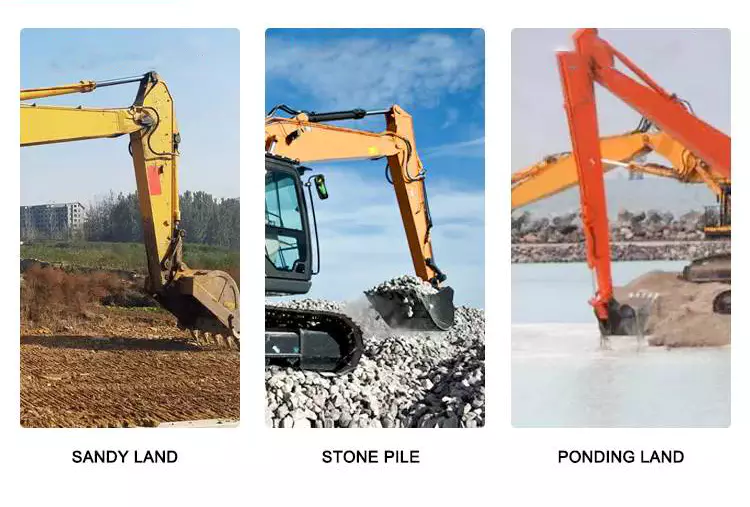
Contribution of Hydraulic Cylinders to the Precision of Robotic and Automation Systems
Hydraulic cylinders play a significant role in enhancing the precision of robotic and automation systems. These systems rely on precise and controlled movements to perform various tasks with accuracy and repeatability. Let’s explore how hydraulic cylinders contribute to the precision of robotic and automation systems:
- Precise Positioning: Hydraulic cylinders enable precise positioning of robotic arms or automation components. They provide accurate control over the linear motion required for tasks such as picking, placing, and assembly. By precisely controlling the extension and retraction of the hydraulic cylinder, the system can achieve the desired position with high accuracy, ensuring precise alignment and consistent results.
- Controlled Motion: Hydraulic cylinders offer controlled and smooth motion, which is crucial for precise operation in robotic and automation systems. The flow of hydraulic fluid can be precisely regulated to control the speed and acceleration of the cylinder’s movement. This precise control allows for gentle and controlled movements, minimizing vibrations, overshooting, or jerky motions that could affect the accuracy of the system.
- Force Control: Hydraulic cylinders provide force control capabilities that contribute to precision in robotic and automation systems. By adjusting the hydraulic pressure, the force exerted by the cylinder can be precisely controlled. This is particularly valuable in applications that require delicate force-sensitive tasks, such as gripping fragile objects or performing precise force feedback during assembly or testing processes.
- Load Handling: Hydraulic cylinders are capable of handling heavy loads, allowing robotic and automation systems to manipulate and transport objects with precision. The high force capabilities of hydraulic cylinders ensure secure and stable handling of loads, minimizing the risk of slippage or imprecise positioning. This is crucial in applications where precise control over heavy objects is required, such as material handling or industrial assembly processes.
- Durability and Reliability: Hydraulic cylinders are known for their durability and reliability in demanding industrial environments. The ability to withstand repeated use, high loads, and harsh conditions ensures consistent performance over time. This reliability contributes to the precision of robotic and automation systems, as any deviation or failure in the cylinder’s movement could lead to inaccuracies or disruptions in the system’s operation.
In summary, hydraulic cylinders make significant contributions to the precision of robotic and automation systems by enabling precise positioning, controlled motion, force control, load handling, and offering durability and reliability. These capabilities ensure accurate and repeatable movements, minimize errors, and enhance the overall precision of the system. By incorporating hydraulic cylinders into robotic and automation systems, manufacturers can achieve higher levels of precision, efficiency, and productivity in various industrial applications.
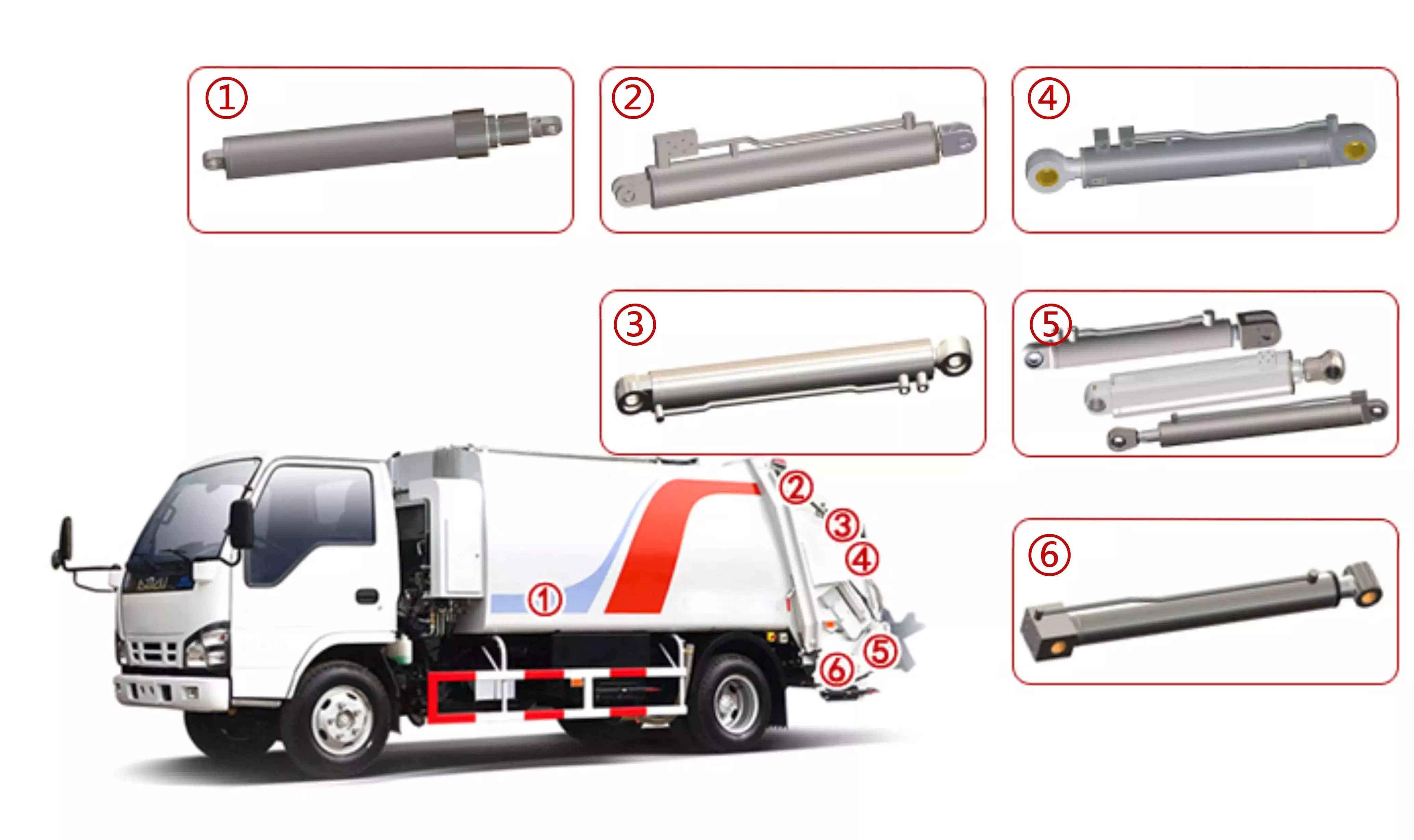
Hur hanterar hydraulcylindrar variationer i slaglängd och kraftkrav?
Hydraulcylindrar är konstruerade för att hantera variationer i slaglängd och kraftkrav, vilket ger flexibilitet och anpassningsbarhet för olika tillämpningar. De kan skräddarsys för att möta specifika behov genom att beakta faktorer som kolvdiameter, stångdiameter, hydraultryck och cylinderdesign. Här är en detaljerad förklaring av hur hydraulcylindrar hanterar variationer i slaglängd och kraftkrav:
1. Cylinderstorlek och design:
– Hydraulcylindrar finns i olika storlekar och utföranden för att tillgodose olika slaglängder och kraftkrav. Cylinderns diameter, kolvyta och stångdiameter är viktiga faktorer som avgör kraftuttaget. Större cylinderdiametrar och kolvytor kan generera större kraft, medan mindre diametrar är lämpliga för applikationer som kräver lägre kraft. Genom att välja lämplig cylinderstorlek och design kan slaglängder och kraftkrav effektivt tillgodoses.
2. Kolv- och stångkonfigurationer:
– Hydraulcylindrar kan utformas med olika kolv- och stångkonfigurationer för att hantera variationer i slaglängd. Enkelverkande cylindrar har en enda kolv och kan ge ett slag i en riktning. Dubbelverkande cylindrar har en kolv på båda sidor, vilket möjliggör slag i båda riktningarna. Teleskopcylindrar består av flera steg som kan förlängas och dras in, vilket ger en längre slaglängd jämfört med standardcylindrar. Genom att välja lämplig kolv- och stångkonfiguration kan önskad slaglängd uppnås.
3. Hydrauliskt tryck och flöde:
– Det hydrauliska trycket och flödeshastigheten som tillförs cylindern spelar en avgörande roll för att hantera variationer i kraftkrav. Att öka det hydrauliska trycket ökar cylinderns kraftuttag, vilket gör att den kan hantera högre kraftkrav. Genom att justera tryck och flödeshastighet via hydraulventiler och pumpar kan kraftuttaget styras och anpassas till applikationens specifika krav.
4. Anpassning och skräddarsydda kläder:
– Hydraulcylindrar kan anpassas och skräddarsys för att möta specifika slaglängds- och kraftkrav. Tillverkare erbjuder ett brett utbud av cylinderstorlekar, slaglängder och kraftkapaciteter att välja mellan. Dessutom kan specialdesignade cylindrar tillverkas för att passa unika applikationer med specifika slaglängds- och kraftkrav. Genom att arbeta nära tillverkare av hydraulcylindrar är det möjligt att få cylindrar som exakt matchar de erforderliga slaglängds- och kraftkraven.
5. Flera cylindrar och synkronisering:
– I applikationer som kräver hög kraft eller längre slaglängder kan flera hydraulcylindrar användas i kombination. Genom att synkronisera rörelsen hos flera cylindrar genom hydraulsystemet kan slaglängden och kraftuttaget ökas effektivt. Synkronisering kan uppnås med hjälp av mekaniska länkar, elektroniska kontroller eller hydrauliska kretsar, vilket säkerställer koordinerad rörelse och kraftfördelning över cylindrarna.
6. Lastavkänning och tryckreglering:
– Hydrauliska system kan innefatta lastkännande och tryckreglerande mekanismer för att hantera variationer i kraftbehov. Lastkännande system övervakar lastbehovet och justerar hydraultrycket därefter, vilket säkerställer att cylindern levererar den erforderliga kraften utan att utöva för stor kraft. Tryckreglerventiler reglerar trycket i hydraulsystemet, vilket möjliggör exakt styrning och justering av kraftutgången baserat på applikationens behov.
7. Säkerhetsaspekter:
– Vid hantering av variationer i slaglängd och kraftkrav är det viktigt att beakta säkerhetsfaktorer. Hydraulcylindrar bör väljas och konstrueras med en lämplig säkerhetsmarginal för att hantera oväntade belastningar eller variationer i driftsförhållanden. Säkerhetsmekanismer som överbelastningsskyddsventiler och tryckavlastningsventiler kan införlivas för att förhindra skador eller fel i situationer där kraftgränserna överskrids.
Genom att beakta faktorer som cylinderstorlek och design, kolv- och stångkonfigurationer, hydrauliskt tryck och flöde, anpassningsalternativ, synkronisering, lastavkänning, tryckreglering och säkerhetsaspekter kan hydraulcylindrar effektivt hantera variationer i slaglängd och kraftkrav. Denna flexibilitet gör att hydraulcylindrar kan skräddarsys för att möta de specifika kraven i en mängd olika applikationer, vilket säkerställer optimal prestanda och effektivitet.


editor by CX 2023-11-01
 Swedish
  English
  Italian
  Portuguese
  Dutch
Dutch  Danish
  Finnish
  Polish
  Hindi
Hindi  Kazakh
  Turkish
  Ukrainian
  Romanian
  Spanish
  German
  Russian
  Korean
  Japanese
  Vietnamese
  Thai
Thai  Indonesian
  Malay
Malay  French
  Greek
Greek