
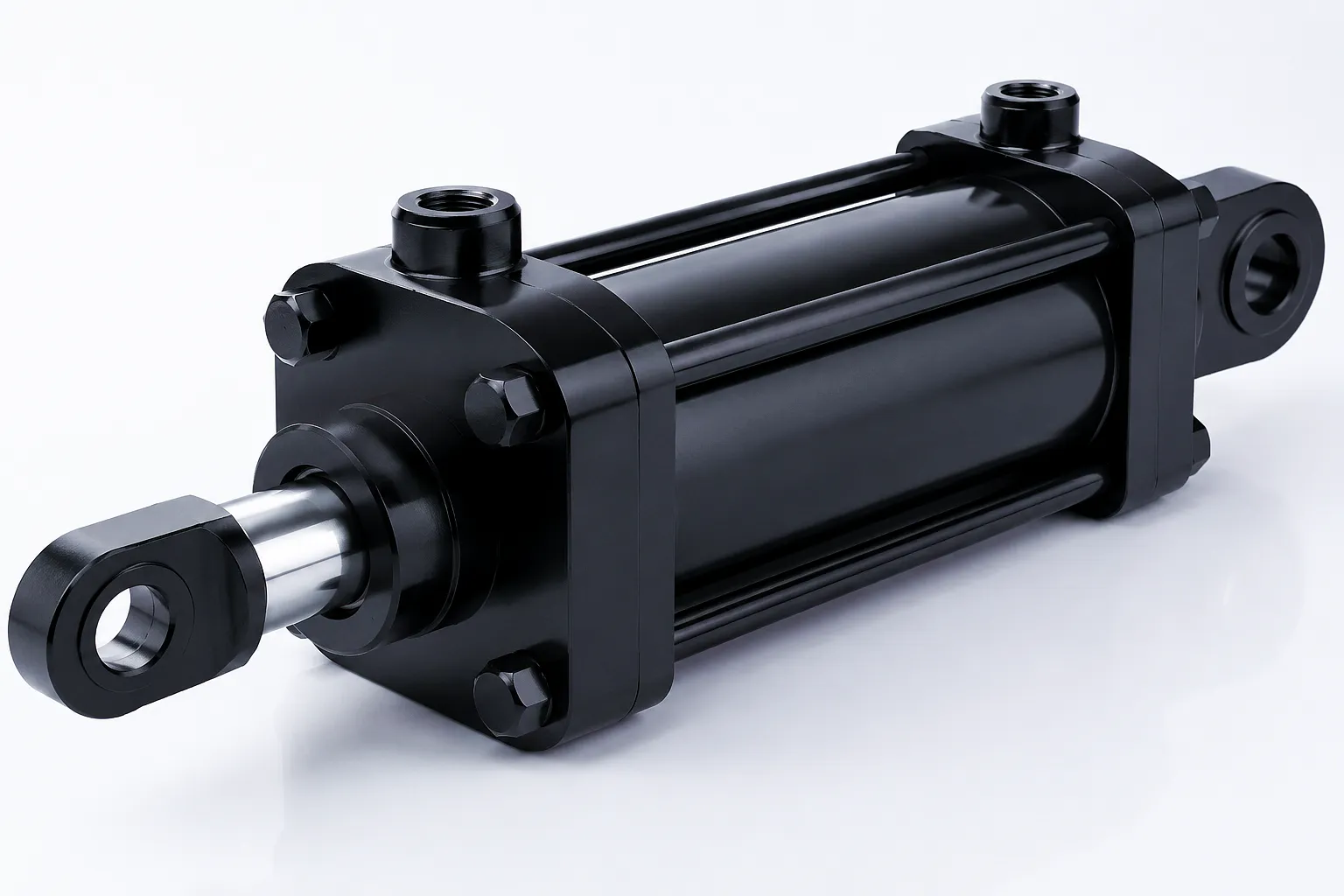
 In the hydraulic systems world, the term “boom cylinder” gets used loosely — and that ambiguity costs engineers dearly at specification time. When a cylinder is destined for an aerial work platform (AWP), the engineering demands diverge from those of a conventional construction boom in ways that go far beyond bore size or stroke length. The two categories share a lineage in telescopic and linear actuation, but they serve different masters: one manages vertical lift for a human occupant, and the other handles material movement under relatively controlled duty cycles. That distinction shapes every design decision from seal selection to corrosion treatment, and it explains why substituting one for the other without detailed analysis is a risk no reputable maintenance team in Birmingham, Sheffield, or across any UK industrial site should accept.
The Core Engineering Divide: Purpose-Built vs. General-Purpose
Designed for construction equipment — excavator arms, telehandler booms, crane jibs — where the primary load is material: earth, concrete, steel. Duty cycles tend to be high-torque, moderate-frequency events. Safety factors are significant but oriented around structural load, not occupant protection. Seals are selected for temperature resistance and cycle longevity under relatively consistent hydraulic pressure.
Purpose-engineered for platforms that carry personnel — scissor lifts, articulated boom platforms, straight-mast cherry pickers. Every design parameter shifts when the load is a human being. Pressure relief, internal safety valves, cylinder lock mechanisms, and surface finish on the rod become non-negotiable rather than desirable extras. UK regulations under PUWER and LOLER demand documented proof of these features, not just manufacturer assurances.
The engineering gap between these two types is not incremental — it is categorical. A contractor in Sheffield running a fleet of 12-metre articulated platforms carries a duty of care that extends to every hydraulic component on those machines. When a boom cylinder fails on an excavator arm, the result may be damaged cargo or equipment downtime. When the functionally equivalent part fails on an aerial work platform, the consequence can be a platform drop with a technician on board. That asymmetry in consequence demands asymmetry in specification, and it is why the two categories have evolved separately despite sharing foundational hydraulic principles.
Working Principle: How Each Cylinder Actually Operates
Both AWP cylinders and standard boom cylinders operate on the fundamental principle of hydraulic linear actuation: pressurised fluid enters one side of a cylinder barrel, pushing a piston that drives a rod outward or inward to produce controlled linear force. The force output is the product of system pressure and piston area (F = P × A), and the stroke defines the travel range. At this foundational level, the physics are identical. The divergence emerges immediately when you examine what surrounds and supports that basic mechanism — the safety architecture layered on top of it.
AWP-specific cylinders incorporate pilot-operated check valves or load-holding valves directly within or immediately adjacent to the cylinder body. These prevent uncontrolled retraction if a hydraulic line ruptures, which is classified as a safety-critical function under EN 280 (the European standard for mobile elevating work platforms). The internal geometry of an AWP cylinder must accommodate these valve seats without compromising bore concentricity, which is a precision machining challenge that standard boom cylinder tooling is not set up to address consistently at volume.
Standard boom cylinders on excavators, crane jibs, or agricultural loaders prioritise maximum force output and structural endurance over the kind of redundant safety layering required for personnel lifting. The hydraulic circuit manages position control at the machine level, not at the cylinder level — meaning a hose failure will result in drift unless external counterbalance valves are fitted separately. This is acceptable when the payload is material but becomes a certification barrier when the payload is a person working at height.
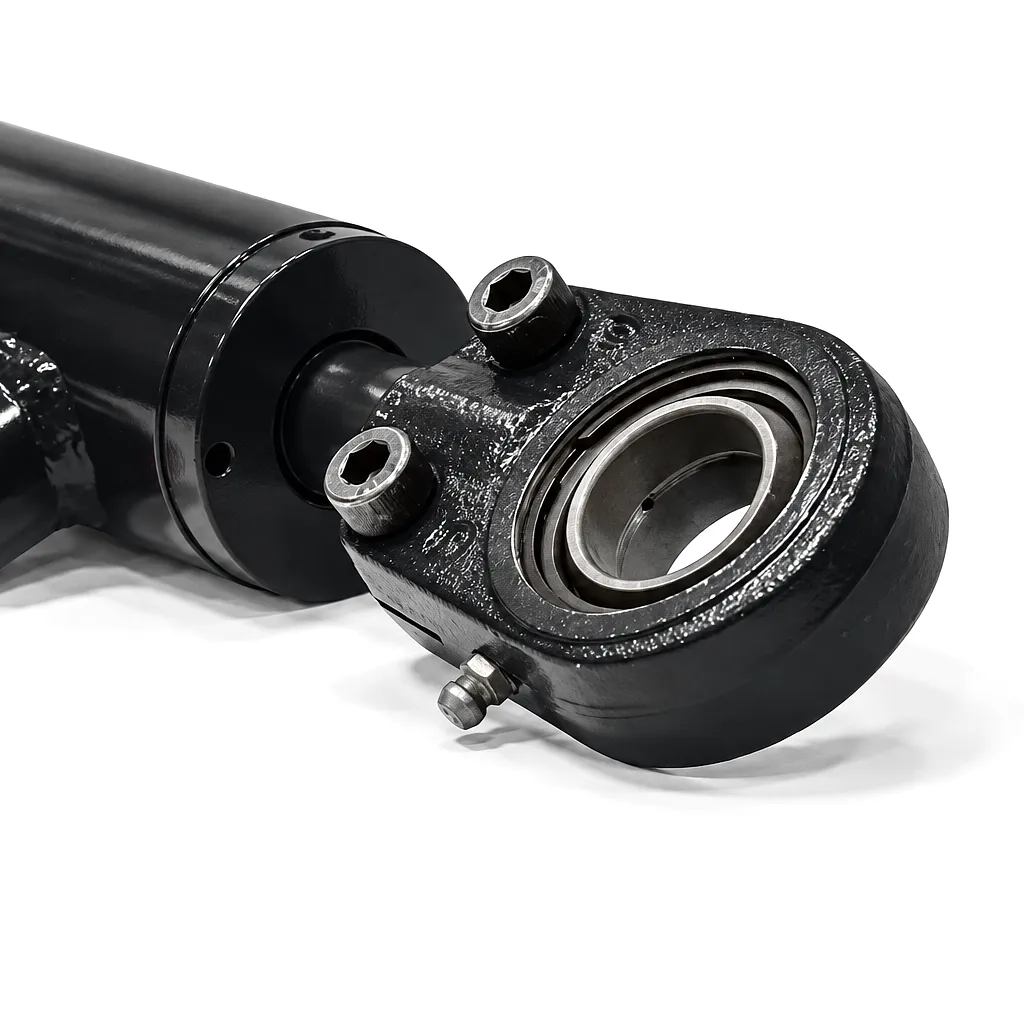
Core Materials: Where the Specification Gap Becomes Physical
Material selection is where the divergence between AWP hydraulic cylinders and standard boom cylinders becomes most tangible. The environments these cylinders inhabit differ significantly: an aerial work platform may operate indoors in a Birmingham automotive assembly hall for most of its life, then be used on an exposed construction site near Sheffield in winter, exposed to road salt, condensation, and wide thermal swings. Standard construction boom cylinders are also exposed to weather, but their operators can tolerate visible rod surface degradation in a way that AWP operators — governed by insurance, LOLER inspection regimes, and site safety rules — simply cannot.
AWP: Precision-ground 45# or 40Cr high-strength steel with hard chrome plating to Ra ≤ 0.4 µm, often with induction hardening to 55–62 HRC. Double chrome or composite nickel-chrome plating for offshore or coastal deployments is common. Standard Boom: Chrome-plated C45 or 42CrMo4 steel; surface finish to Ra 0.8–1.6 µm is typically acceptable. The difference in surface quality directly affects seal life and leak-free operation — critical when a platform is stationary at 18 metres with personnel on board.
AWP: Cold-drawn seamless honed tube — typically ST52/E355 — with internal surface honed to Ra 0.2–0.4 µm. Concentricity tolerance is tighter (≤ 0.02 mm TIR) to accommodate precision seals and integrated valve bodies. Exterior is often zinc-phosphate treated then powder coated. Standard Boom: Honed seamless tube to ST52 is standard, but tolerance bands are wider and surface finish requirements are less demanding. Exterior coating may be paint-only in many OEM applications.
AWP: Polyurethane (PU) rod seals with PTFE-loaded wiper rings; secondary dust-lip seals are standard. Some AWP designs include a double-wiper system with a pressurised purge port for washdown environments. Standard Boom: Nitrile (NBR) or polyurethane rod seals are typical; single-wiper configurations dominate at OEM level. The wider temperature range tolerance of AWP seals (–40 °C to +120 °C vs. –20 °C to +100 °C typical) reflects the diverse deployment environments of rental fleet machines.
Product Advantages of Purpose-Specified AWP Hydraulic Cylinders
Pilot-operated check valves built into the cylinder body prevent platform drop in case of hose failure — a mandatory feature for MEWP compliance under EN 280 and a standard expectation from UK hire fleet operators and their insurers.
Hard chrome rod surfaces finished to Ra ≤ 0.4 µm and barrel honing to Ra 0.2 µm extend seal service life dramatically — field data from UK rental fleets suggest 40–60% longer seal intervals compared to general-purpose cylinders operated in the same duty regime.
AWP cylinders are engineered to maintain seal integrity and actuation precision from –40 °C to +120 °C, making them suitable for outdoor UK operations in winter as well as high-temperature environments such as steel processing facilities and foundries in Sheffield and the West Midlands.
Adjustable end-of-stroke cushioning, built into the cylinder head and base, prevents hydraulic shock at the travel limits. On a platform carrying a technician, this translates to smooth deceleration rather than an abrupt jolt — a comfort and fatigue factor that matters on long-shift indoor maintenance tasks.
Zinc-phosphate conversion coating on barrel exteriors, combined with polyurethane topcoats and stainless steel or zinc-plated fasteners, give AWP cylinders salt-spray resistance exceeding 500 hours (ISO 9227). This is particularly relevant for hire plant operating along UK coastal areas or in winter on gritted road-side construction projects.
AWP cylinders supplied to UK plant operators should come with material certificates (EN 10204 3.1), dimensional inspection records, pressure test certificates at 1.5× working pressure, and valve test data. This documentation chain satisfies LOLER inspection requirements and simplifies the machinery risk assessment process under UK health and safety legislation.
Technical Performance Parameter Comparison Table
| Parameter | AWP-Specific Cylinder | Standard Boom Cylinder |
|---|---|---|
| Arbetstryck | 160 – 280 bar | 200 – 350 bar |
| Borrdiameterområde | 40 – 160 mm | 50 – 250 mm |
| Rod Surface Finish (Ra) | ≤ 0.4 µm (hard chrome) | 0.8 – 1.6 µm (standard chrome) |
| Barrel Honing Finish (Ra) | 0.2 – 0.4 µm | 0.4 – 0.8 µm |
| Driftstemperatur | –40 °C to +120 °C | –20 °C to +100 °C |
| Rod Material & Hardness | 40Cr / 45# steel, 55–62 HRC | C45 / 42CrMo4, 50–58 HRC |
| Safety Valve (Integrated) | Yes — EN 280 mandatory | Optional / external |
| Tätningsmaterial | PU + PTFE wiper (double-lip) | NBR or PU (single-lip) |
| Salt Spray Resistance | > 500 hrs (ISO 9227) | 200 – 400 hrs typical |
| Test Pressure | 1.5× working pressure | 1.25–1.5× working pressure |
| Certification / Standards | EN 280, CE, ISO 4413 | ISO 6020/6022, CE |
| Stroke Range | 200 – 4000 mm | 300 – 6000 mm |
Industrial Application Scenarios Across the UK
Understanding where AWP hydraulic cylinders outperform standard boom cylinders in practice helps procurement teams make defensible specification decisions. The following scenarios reflect real deployment contexts across UK industries.
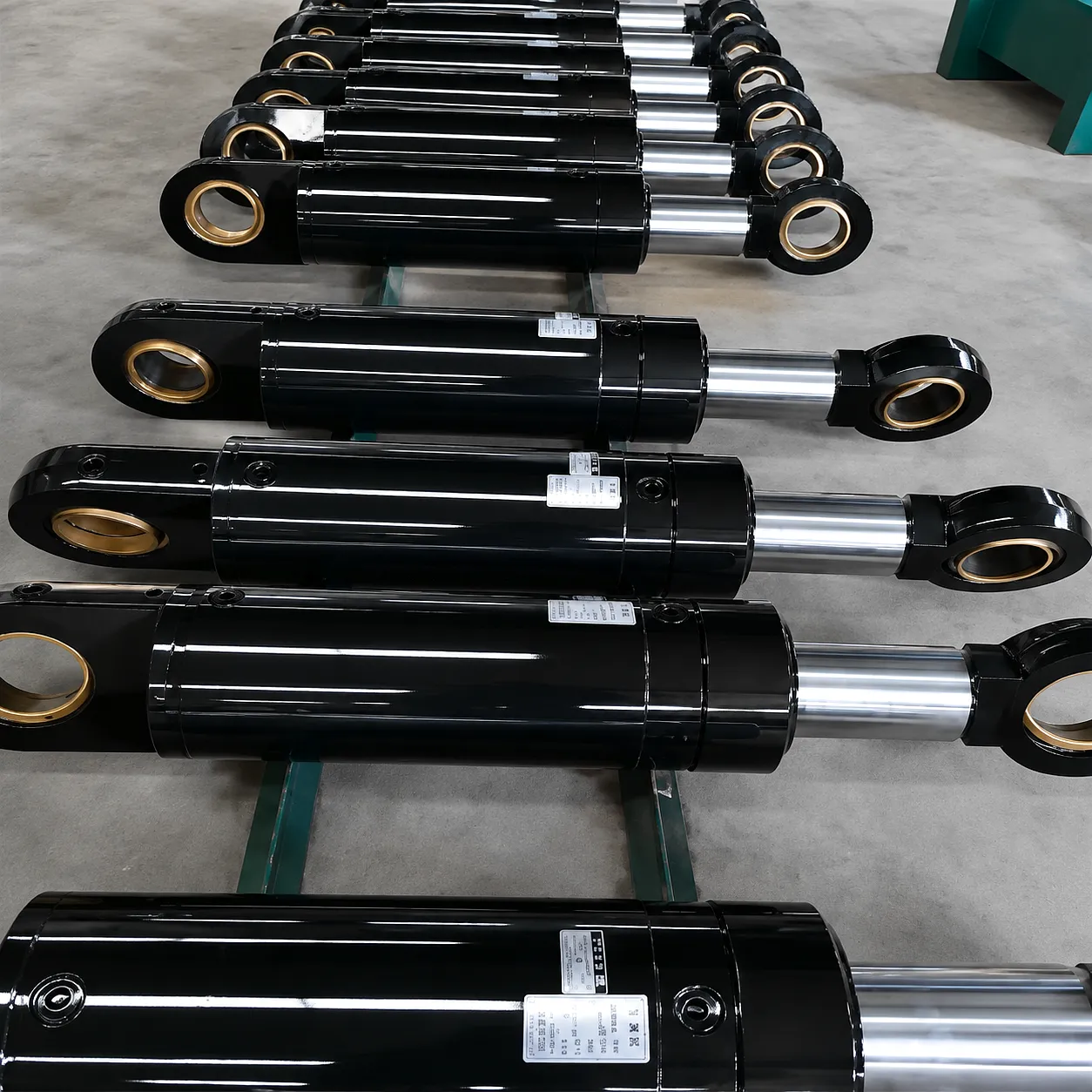
Related Products from Ever Power
Precision rotary actuation for demanding steering and positioning applications — engineered to the same surface finish and seal standards as AWP lift cylinders. Ideal for specialised mobile equipment across UK heavy industry.
AWP-grade sealing and corrosion protection applied to pitch control in offshore and onshore wind turbines — where salt-spray resistance, load-holding valve integration, and precision rod surface finish are equally non-negotiable.
Ever Power Manufacturing: Customisation, Precision & Supply Chain Strength
Ever Power has spent over two decades building a manufacturing capability that sits at the intersection of hydraulic precision and high-mix production flexibility. Our cylinder production facility operates CNC deep-boring machines, precision honing centres, and hard chrome plating lines capable of processing rods from 20 mm to 400 mm in diameter to Ra ≤ 0.2 µm — tolerances that satisfy the most demanding AWP cylinder specifications in the European and UK markets. Every batch of production cylinders passes a hydrostatic pressure test at 1.5× rated working pressure before despatch, with individual test records retained for each serial number.
Customisation is not a premium add-on at Ever Power — it is the default operating mode. UK distributors, hire fleet operators, and OEM equipment manufacturers approach us with cylinder drawings, duty-cycle data, or simply an application description, and our engineering team returns a full proposal within 48 hours. We produce to customer-supplied drawings, reverse-engineer from failed cylinders, or develop new designs from a functional specification. Bore, stroke, port configuration, mounting style, rod end geometry, integrated valve provision, and surface treatment are all independently configurable. We manufacture double-acting, single-acting, telescopic, and multi-stage cylinders — including specialised variants for MEWP platforms — and maintain stock of popular bore/rod combinations to support rapid call-off by UK plant hire companies managing unplanned breakdown situations.
Our supply chain management operates on a Tier-1 raw material sourcing model: steel rod stock is certified to EN 10204 3.1, barrel tube is procured from qualified seamless tube producers, and seal kits are sourced from Parker, Hallite, or equivalent Tier-1 brands — giving UK buyers the traceability documentation they need to satisfy LOLER inspection records and ISO quality system requirements without additional effort.
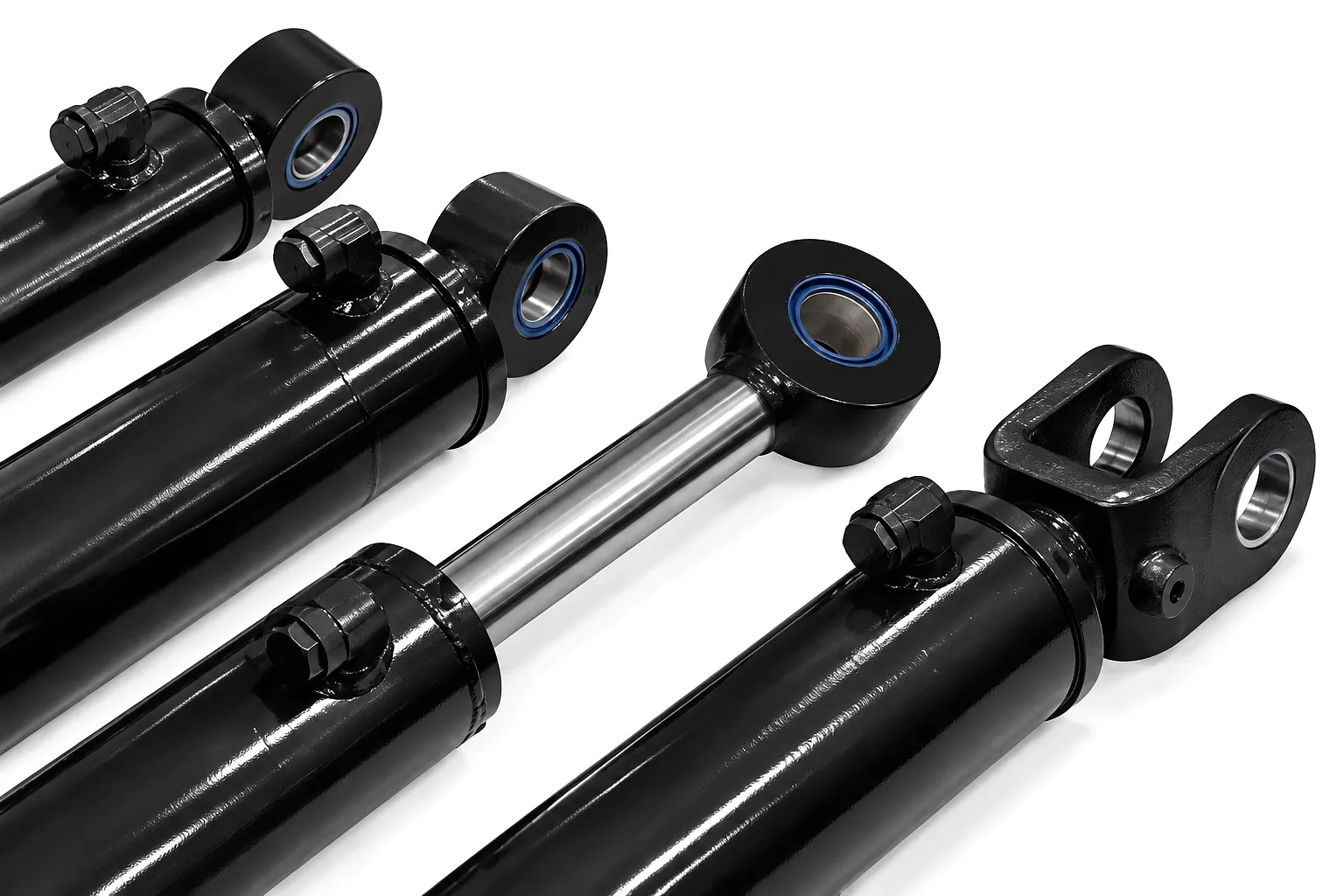
- CNC deep-boring to H7 tolerance on bore diameters 40–500 mm
- Hard chrome plating line — Ra ≤ 0.2 µm, chrome depth 0.03–0.3 mm
- Induction hardening of rod surfaces to 55–62 HRC
- Hydrostatic test bench: up to 600 bar test pressure
- Integrated valve body machining — pilot-operated check valves in-house
- Zinc-phosphate + powder coat exterior treatment
- EN 10204 3.1 material traceability on all pressure-bearing components
- Sample lead time: 15–25 working days; batch: 30–45 working days
Customer Success Story: North-West England Aerospace MRO Facility
Aeroframe Technical Services, an MRO (maintenance, repair, and overhaul) contractor based in Preston, Lancashire, operates a large-format hangar facility servicing regional and narrow-body commercial aircraft. The facility uses a fleet of nine articulated boom platforms — ranging from 16-metre to 22-metre working height — for fuselage inspection, engine nacelle access, and wing leading-edge maintenance. These platforms are in service across two-shift operations, accumulating more annual duty cycles than comparable units in most other UK industries.
In 2024, Aeroframe’s maintenance manager identified premature cylinder seal failure across three of their platforms — a problem traced to replacement cylinders sourced through a non-specialist channel that had supplied standard construction boom cylinders rather than AWP-specific units. The financial impact included unplanned downtime, third-party platform hire at short notice, and a LOLER re-inspection cost for the affected machines. Aeroframe contacted Ever Power through their UK logistics partner, and our engineering team provided a full technical review of the failed cylinders within five working days.
Ever Power supplied nine replacement hydraulic cylinders — matched exactly to the original OEM bore, stroke, rod diameter, and port configuration — with upgraded PU/PTFE double-lip seal packs, hard chrome rods finished to Ra 0.35 µm, and integrated pilot-operated check valves tested to 1.5× rated pressure. Full EN 10204 3.1 material certification and individual hydrostatic pressure test reports were included with each unit, satisfying the site’s quality management system requirements without additional documentation requests.
Fourteen months into service, none of the replacement cylinders have returned for seal repair — a significant improvement against the previous 6-to-8-month seal replacement interval that had been accepted as normal under the previous supply arrangement. The total cost saving over a three-year projection, accounting for seal kits, engineer time, and downtime avoidance, was estimated by Aeroframe’s engineering department at approximately £34,000 across the nine-unit fleet.
“After fourteen months running Ever Power’s cylinders across our platform fleet, we have not had a single seal failure. The surface finish on these rods is noticeably better than anything we received from our previous supplier — they clearly understand what AWP duty cycles actually demand, not just the headline pressure rating.”
“The EN 10204 3.1 certificates and individual pressure test reports that came with each cylinder made our LOLER re-inspection straightforward. Our inspector commented that the documentation package was more complete than most UK-manufactured equivalents he reviews. Ever Power’s attention to traceability saved us a significant amount of time on the quality review side.”
“We gave Ever Power a failed cylinder with no drawing and a vague application description. Within 48 hours we had a detailed proposal with dimensional options and a delivery schedule. The customisation capability is genuinely impressive — bore, port thread, rod end, valve integration — all discussed and agreed before anything was machined. That’s the kind of supplier engagement we need when we’re managing unplanned breakdowns.”
Vanliga frågor
Talk to Ever Power’s engineering team. We’ll review your application, confirm the specification, and deliver a competitive quote within 48 hours — with full documentation to satisfy your LOLER and quality system requirements.
 Swedish
  English
  Italian
  Portuguese
  Dutch
Dutch  Danish
  Finnish
  Polish
  Hindi
Hindi  Kazakh
  Turkish
  Ukrainian
  Romanian
  Spanish
  German
  Russian
  Korean
  Japanese
  Vietnamese
  Thai
Thai  Indonesian
  Malay
Malay  French
  Greek
Greek