
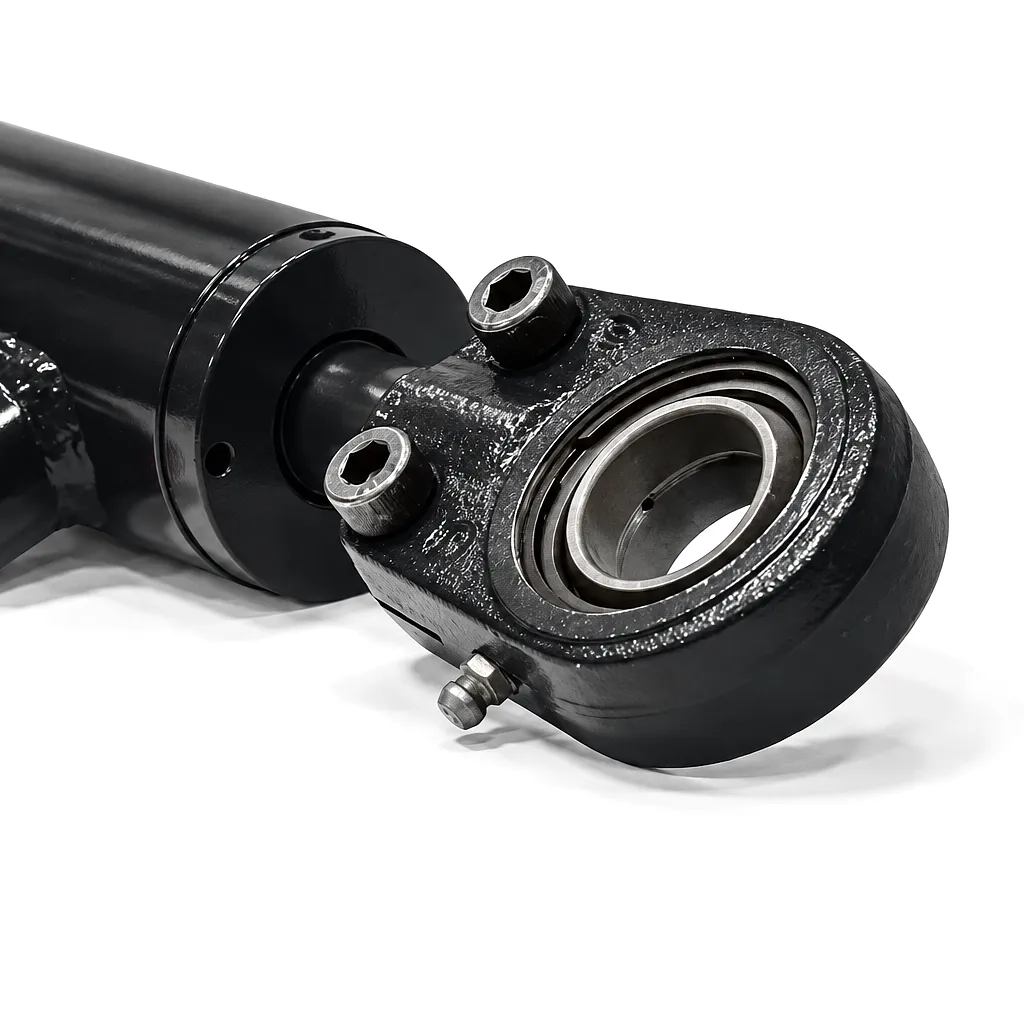
 Specifying a hydraulic cylinder for a 3000 PSI system is not simply a matter of matching bore size to available force output. The rod diameter is one of the most consequential engineering decisions in the entire selection process, yet it is routinely underestimated by purchasing teams who focus almost entirely on stroke length or cylinder bore. At 3000 PSI — the operating pressure widely adopted across UK construction machinery, steel fabrication, marine deck equipment, and offshore hydraulic systems — an under-dimensioned rod can lead to catastrophic buckling, seal failure, and costly unplanned downtime on a production line or a live job site. Getting the rod diameter right from the outset protects both the asset and the people operating near it. This guide is written specifically for engineers and procurement specialists who need a rigorous, practical methodology for selecting rod diameter in high-pressure hydraulic applications, with particular reference to operational environments encountered across the UK’s manufacturing heartlands from Birmingham to Sheffield and beyond.
Response within 24 hours · Custom specifications welcome · UK orders prioritised
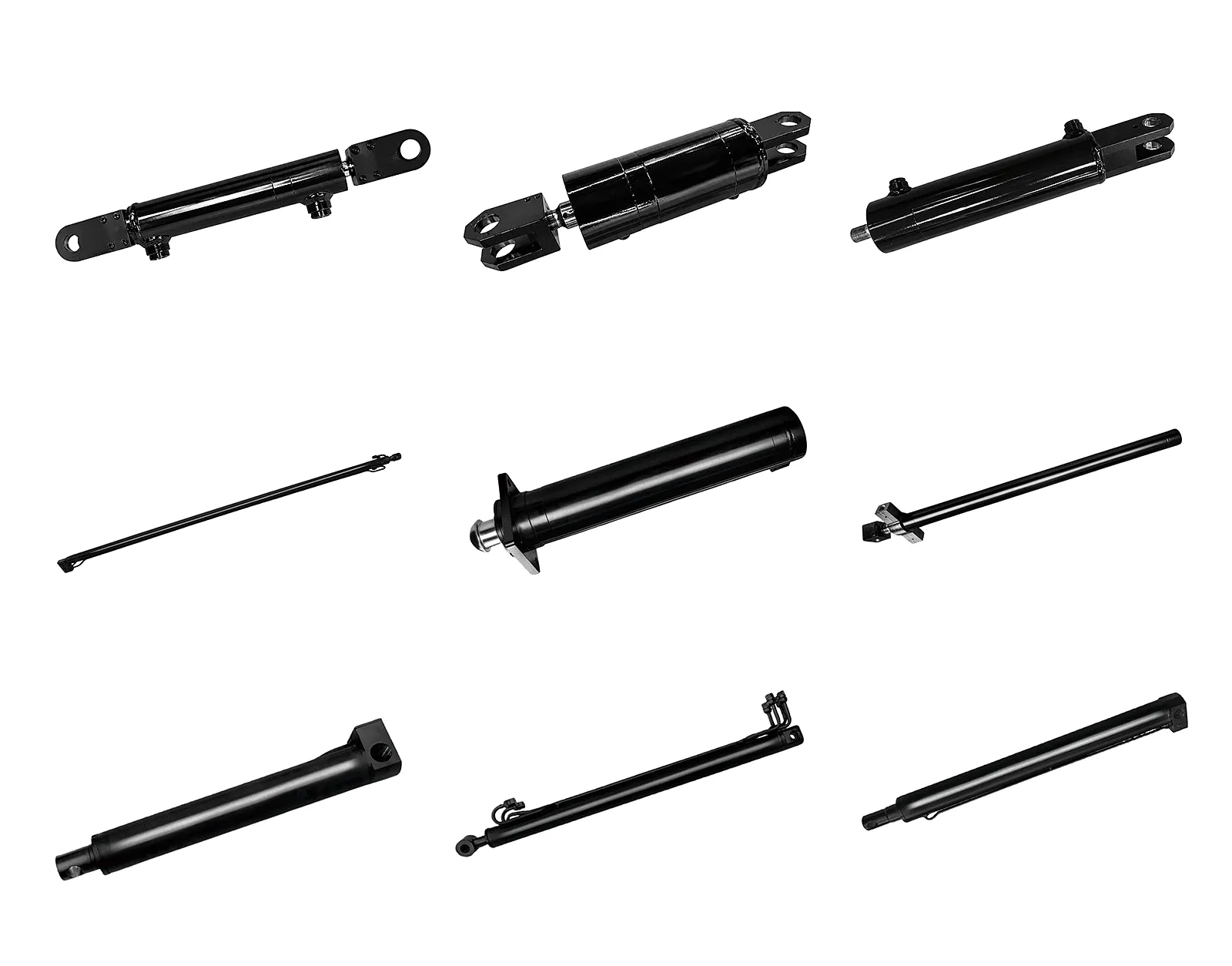
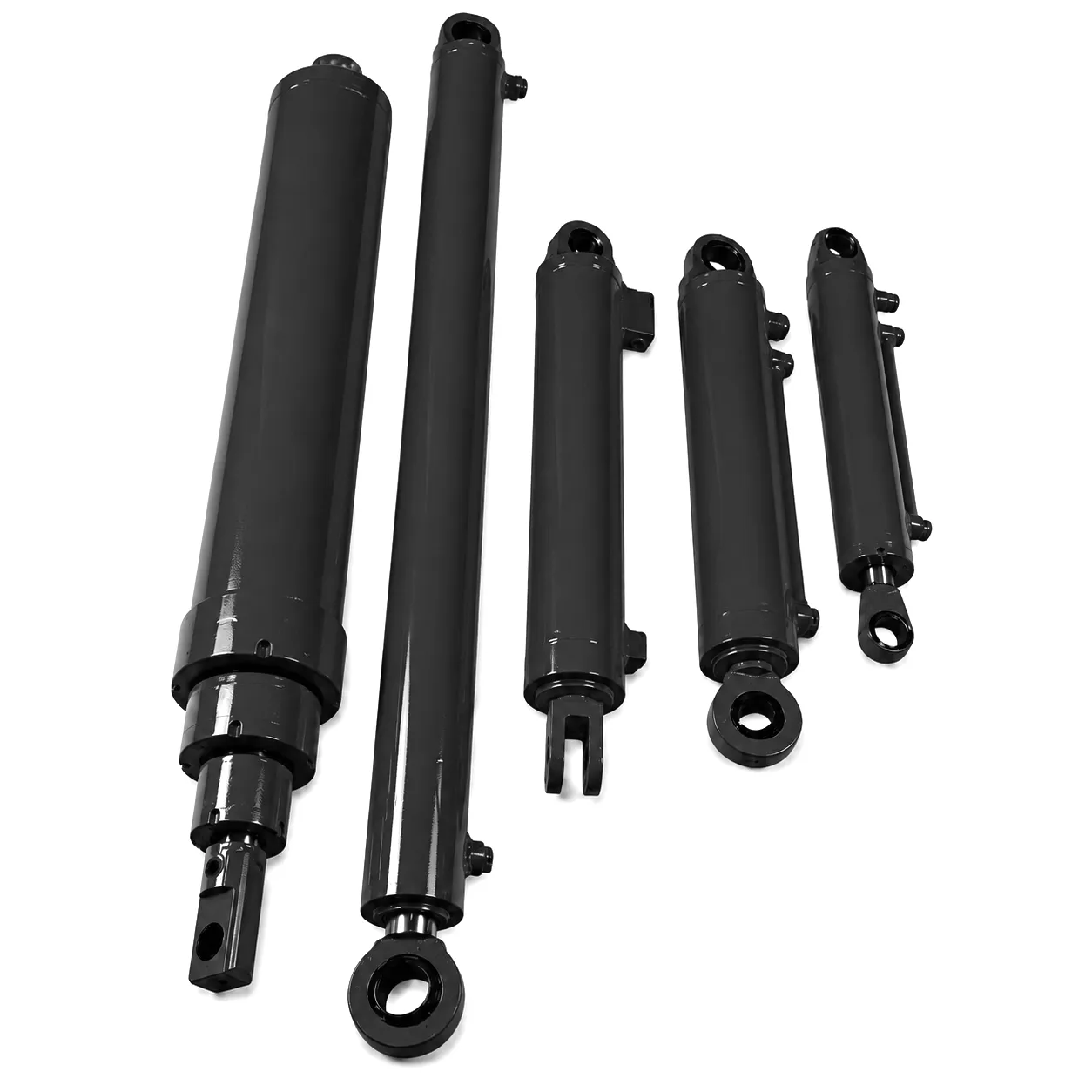
Ever Power full-range hydraulic cylinder collection — 3000 PSI rated configurations available
ENGINEERING PRINCIPLES
How a 3000 PSI Hydraulic Cylinder Actually Works
Pascal’s Law at Scale
A hydraulic cylinder converts pressurised fluid energy into linear mechanical force by applying Pascal’s Law: force equals pressure multiplied by the effective piston area. At 3000 PSI, even a relatively modest bore diameter generates substantial push force. A 4-inch bore cylinder at 3000 PSI, for instance, can develop approximately 37,700 lbf of extension force. What engineers frequently overlook is that this very force subjects the rod to extreme compressive and tensile loading during reciprocation, which is why rod geometry is as critical as the cylinder bore itself. Hydraulic fluid — typically ISO VG 46 mineral oil in UK industrial settings — enters the cap end port, pressurises the full bore face, and drives the piston and attached rod forward through the stroke. Return travel uses the rod-side annular area, which is smaller, meaning pull force is always lower than push force for a given pressure.
Buckling and Euler’s Column Theory
The hydraulic rod behaves mechanically as a slender column under compressive load. When the cylinder extends, the rod protrudes from the barrel and is subject to side loads, vibration, and the full compressive thrust of the piston force. If the rod is too slender relative to its free length, it will buckle — bending laterally and permanently deforming rather than delivering thrust. Engineers use Euler’s critical buckling load formula to assess this risk: critical load = (pi² × E × I) / (L_eff²), where E is Young’s modulus, I is the second moment of area (strongly proportional to rod diameter to the power of four), and L_eff is the effective unsupported length. This relationship makes clear that doubling the rod diameter increases buckling resistance by a factor of sixteen — a dramatic difference that justifies the selection of larger rod diameters in long-stroke 3000 PSI applications even at the cost of additional weight and material.
Seal Integrity and Surface Finish
At 3000 PSI, the quality of the rod surface finish is not merely an aesthetic concern — it is the primary determinant of seal longevity. The rod slides through the front gland seal assembly thousands of times per day in production environments. A rod with a surface roughness Ra greater than 0.4 micrometres will abrade polyurethane or NBR seal lips progressively, leading to fluid weeping, then to outright leakage that triggers environmental and safety concerns on UK-regulated manufacturing sites. High-pressure cylinder rods must be precision ground and hard chrome plated to a minimum depth of 25 microns, delivering surface finishes in the Ra 0.1–0.2 range. The chrome layer also provides corrosion resistance in humid or salt-laden atmospheres found in coastal UK installations, such as offshore supply bases in Aberdeen or tidal barrier maintenance facilities along the Thames estuary.
Core Materials Engineering: What Goes Into a 3000 PSI Cylinder
BARREL / TUBE
ST52 / DIN 2391 Seamless Cold-Drawn Steel
Honed to Ra 0.4 µm internally. Tensile strength 520–680 MPa. Standard in European hydraulic cylinder manufacturing and fully compliant with UK pressure equipment directives for systems above 1000 PSI.
PISTON ROD
Ck45 / C45E Induction-Hardened Chrome-Plated Steel
Surface hardness 58–62 HRC post induction hardening. Chrome plating 25–35 µm minimum at 3000 PSI. Alternative: 316 stainless steel rods for corrosive environments in chemical processing or marine applications.
PISTON
GGG40 Nodular Cast Iron or Forged Steel
Nodular iron provides good machining characteristics and wear resistance. Forged steel specified for cylinders above 3000 PSI or severe-duty cycling applications. Piston carries PTFE-filled wear rings and O-ring-energised seals.
SEALS
Polyurethane (PU), Nitrile (NBR), and PTFE Composites
Polyurethane rod seals rated to 250 bar continuous. PTFE-backed seals in high-temperature steel mill environments. Viton (FKM) seals used when phosphate ester fire-resistant hydraulic fluid is specified under UK fire regulations.
END CAPS & HEADS
Steel S355 / BS EN 10025 Grade
Cap and head flanges machined from S355 structural steel conforming to British Standard EN 10025. Welded or bolted configurations available. All weld procedures qualify under BS EN ISO 15614 for UK Pressure Equipment Regulations compliance.
How to Select the Right Rod Diameter for 3000 PSI Applications
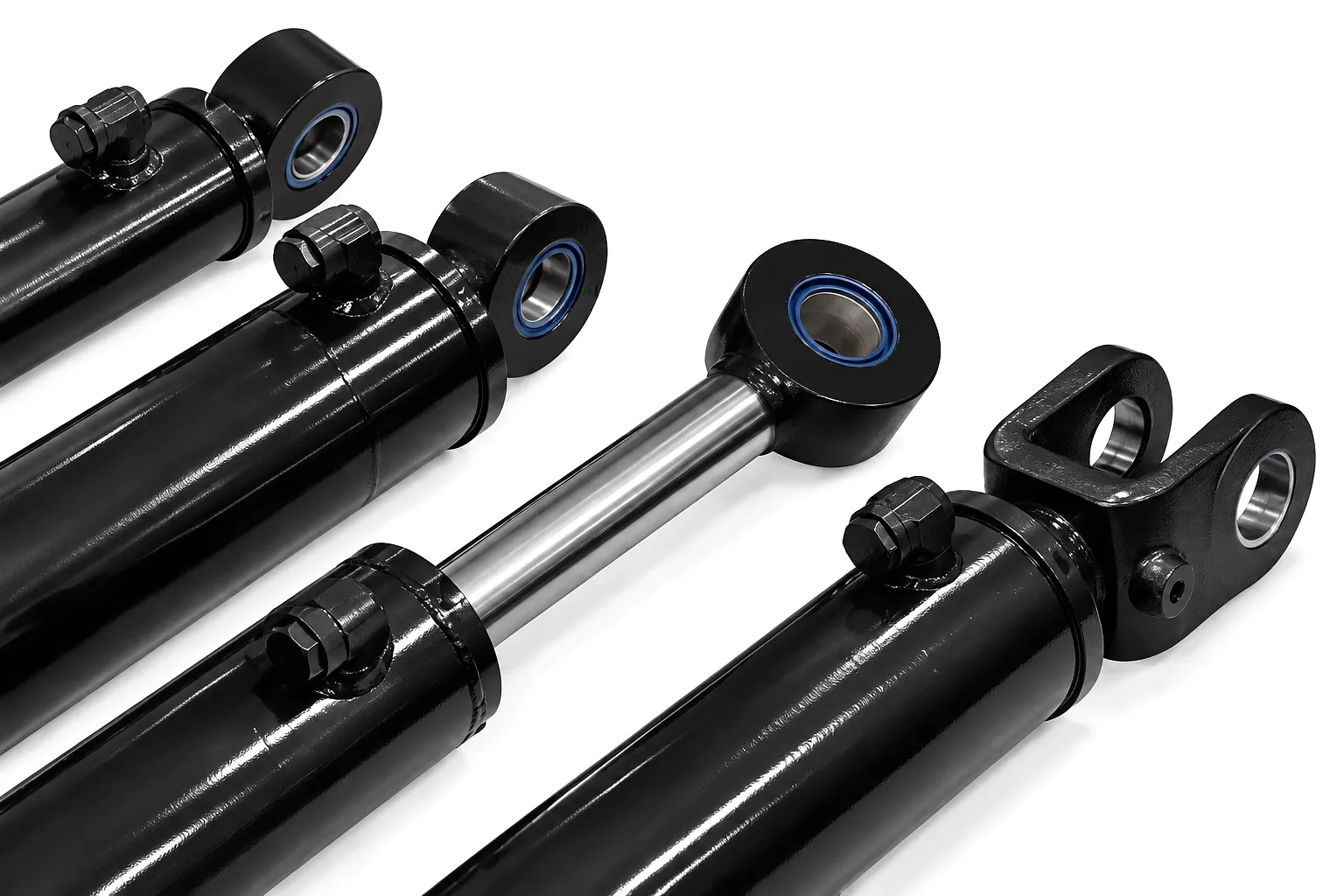
Rod selection at 3000 PSI is a calculated process that integrates three engineering disciplines simultaneously: structural mechanics for buckling resistance, tribology for seal and surface life, and fluid dynamics for annular area calculations. The most common mistake made by procurement teams is choosing rod diameter purely based on standard catalogue ratios — typically a 1:2 rod-to-bore ratio — without validating that ratio against the actual stroke length and side-load conditions of the installation. A hydraulic cylinder supporting a 2500 mm stroke on a deep-bore horizontal press in a Sheffield forging shop faces entirely different rod stresses than a 400 mm stroke cylinder on a compact injection moulding clamp in a Coventry plastics facility, even if both run at 3000 PSI. Understanding the following methodology will protect against costly field failures and enable accurate specification from the outset.
Calculate the Required Push Force
Determine the maximum compressive load the rod must transmit in Newtons or kilonewtons. Include dynamic load factors — typically 1.25× for normal machine cycling and 1.5× for shock-loading environments like hydraulic presses or shear machinery. At 3000 PSI (approximately 207 bar), the push force for a given bore diameter is: Force (N) = Pressure (Pa) × Bore Area (m²). Verify this against the machine’s actual resistance — including friction, gravity components, and any preload.
Determine the Effective Buckling Length
The effective unsupported rod length (L_eff) depends on how the cylinder is mounted and restrained. A cylinder mounted with a clevis or pivot at both ends has an effective length equal to its full stroke plus the rod extension length. Fixed-mount cylinders have shorter effective buckling lengths. In practice, L_eff is the full extended rod length from the front gland to the end attachment point when at maximum stroke. This is where many errors occur: engineers use the stroke length alone rather than the total free rod length at full extension.
Apply Euler’s Buckling Criterion with a Safety Factor
The critical buckling load must exceed the applied force by a safety factor of at least 3.5× for hydraulic cylinders in industrial service, per ISO 10100 guidance. Since the second moment of area I = (pi × d^4) / 64 for a solid rod of diameter d, increasing d dramatically raises the safe load capacity. For a 207 bar (3000 PSI) system, engineers commonly find that rods must step up from a 1:2 ratio to a 1:1.5 or even 1:1.3 rod-to-bore ratio when stroke lengths exceed 1000 mm. Catalogue data should never substitute for a direct Euler calculation in high-pressure, long-stroke applications.
Verify Side-Load and Alignment Conditions
Pure compressive loading rarely exists in real machines. Misalignment between the cylinder centreline and the load path introduces bending moments that are additive to buckling stresses. In UK construction machinery, where mounting frames distort under load and field alignment is imperfect, a lateral side-load allowance of 5–10% of the axial force is prudent. This pushes rod diameter selection further toward the larger end of any calculated range. Spherical rod-end bearings mitigate some bending moment, but they do not eliminate misalignment-induced side loads entirely.
Working with clevis-mounted cylinders at 3000 PSI?
Clevis mount configurations have the longest effective buckling lengths — critical reading for rod diameter selection.
Technical Performance Parameters — 3000 PSI Hydraulic Cylinders
The following table presents key technical specifications for standard and custom-configured hydraulic cylinders rated at 3000 PSI (207 bar), manufactured by Ever Power. These parameters represent validated production data across our 63,000 m² facility. Custom configurations are available for all values upon request.
| พารามิเตอร์ | Standard Range | Custom / Max | Notes |
|---|---|---|---|
| Working Pressure | Up to 207 bar (3000 PSI) | Up to 350 bar (5076 PSI) | Pressure tested at 1.5× WP |
| เส้นผ่านศูนย์กลางรูเจาะ | 40 mm – 320 mm | Up to 500 mm | Custom bore on request |
| เส้นผ่านศูนย์กลางของแท่ง | 25 mm – 200 mm | Up to 320 mm | Engineered per Euler calculation |
| ความยาวช่วงชัก | 50 mm – 3000 mm | Up to 8000 mm | Long-stroke with guided support |
| Rod Surface Finish | Ra 0.1 – 0.2 µm (HCr plated) | Ra 0.05 µm (mirror finish) | Nikasil / ceramic coating optional |
| วัสดุแท่ง | Ck45 induction-hardened | 316 SS / 42CrMo4 alloy | For marine / corrosive duty |
| ระบบซีล | PU / NBR compound | Viton (FKM) / PTFE / PEEK | Temperature -40°C to +200°C |
| Max Piston Speed | 0.1 – 0.5 m/s | Up to 1.2 m/s | Cushioning required above 0.3 m/s |
| Mounting Options | Flange, clevis, trunnion, foot | Custom weld-on / integrated | ISO 6020/6022 compatible |
| Temperature Range | -20°C to +100°C | -40°C to +200°C | Seal compound dependent |
| Cylinder Standards | ISO 6020-1, ISO 10100 | NFPA T3.6.7, DIN 24334 | CE-marked for UK/EU export |
| Typical Rod:Bore Ratio at 3000 PSI | 1:2 (short stroke) to 1:1.3 (long stroke) | 1:1 (heavy-duty press) | Euler verified per application |
Core Technical Advantages of a Properly Specified 3000 PSI Cylinder
A well-engineered hydraulic cylinder operating at 3000 PSI delivers performance outcomes that justify its specification over lower-pressure alternatives in demanding UK industrial environments. The advantages outlined below reflect genuine engineering realities rather than marketing language, and each is directly connected to a design or manufacturing decision that distinguishes quality cylinders from commodity products imported without proper engineering validation.
Higher Force Density
Operating at 3000 PSI allows a significantly smaller bore diameter to achieve the same force output as a lower-pressure cylinder with a larger bore. A 100 mm bore cylinder at 207 bar generates approximately 162 kN of thrust. Achieving the same force at 100 bar would require a 143 mm bore — a 43% size penalty that translates directly into heavier mounting structures, larger installation envelopes, and higher material costs. The compact force density of 3000 PSI hydraulic cylinders is a fundamental reason why they dominate space-constrained applications across UK aerospace tooling, injection moulding machinery, and compact mobile plant.
Extended Service Life Through Correct Rod Sizing
When the rod diameter is sized correctly for the buckling load, surface stresses remain within the elastic range of the rod material throughout the operating life of the cylinder. This prevents the micro-fatigue cracking at chrome layer interfaces that characterises undersized rods in high-cycle applications. In UK steel service centres and stamping press lines running three-shift operations — such as those found in Rotherham’s special steel sector — correctly sized rods routinely achieve service intervals of 18–24 months between scheduled seal replacements, compared to 4–6 months for undersized alternatives running at the same operating pressure.
Reliable Seal Performance
A larger rod provides more rod-wall contact length within the gland seal assembly, which distributes the seal lip pressure over a greater area and reduces unit loading per millimetre of seal contact. Combined with the superior surface finish achievable on larger rod diameters — where the grinding and chrome plating process is more controllable — this translates into measurably longer seal life at 3000 PSI. For UK operators subject to HSE regulations on hydraulic fluid leak management and environmental protection, this is not simply a maintenance cost issue: it is a compliance and audit consideration that affects PSSR 2000 inspection records and insurance liability.
System Energy Efficiency
Higher operating pressure means lower volumetric flow rate is required to deliver equivalent power. Power = Pressure × Flow Rate; at 207 bar rather than 100 bar, only 48% of the flow rate is needed for the same power output. Smaller hydraulic power units, thinner pipework, and lower heat rejection loads all result directly from this relationship. For UK manufacturers facing rising energy costs and tightening ESG reporting obligations, the 3000 PSI cylinder system represents not just a performance choice but an energy efficiency decision that can demonstrably reduce the carbon intensity of hydraulic operations on the production floor.
Industrial Application Scenarios Across UK Sectors
The 3000 PSI hydraulic cylinder serves as the force backbone of some of Britain’s most demanding industrial processes. The following scenarios illustrate specific deployment contexts where correct rod diameter selection determines whether these systems perform reliably for years or fail within weeks.
🏗️
Steel Fabrication & Forging — Sheffield, Rotherham
Sheffield’s special steel sector, including producers of tool steel, stainless long products, and aerospace-grade alloys, relies on 3000 PSI hydraulic cylinders in forging presses, rolling mill side-guides, and billet manipulation systems. Stroke lengths in excess of 1500 mm are common, and operating temperatures from the furnace and hot billet radiation frequently exceed 80°C at the cylinder. Correct rod diameter selection in these environments must account for thermal expansion of the rod material — Ck45 has a linear expansion coefficient of approximately 11 µm per metre per degree Celsius — and elevated temperature seal specification.
🚜
Construction Plant & Earthmoving — Birmingham, West Midlands
Birmingham-area OEMs manufacturing compact excavators, telehandlers, and road-rail plant routinely specify 3000 PSI cylinders for boom, dipper arm, and bucket actuation. These applications involve severe side-loading from soil resistance and bucket impact forces, combined with vibration from engine and terrain transmission. The rod must be sized not only for Euler buckling under the rated hydraulic force but for the combined fatigue loading from repeated side impacts. A rod-to-bore ratio of 1:1.6 or better is frequently required in dipper arm cylinders where the arm geometry generates significant off-axis moments at the rod-end clevis connection.
🛳️
Marine Deck Equipment & Offshore — Aberdeen, Humberside
Offshore supply vessels operating out of Aberdeen and subsea construction platforms servicing the UK North Sea use 3000 PSI hydraulic cylinders in mooring winch brakes, ramp actuation, crane luffing, and subsea tooling systems. Marine environments impose the most demanding corrosion challenge on any hydraulic cylinder rod: salt spray, condensation cycles, and biological fouling all attack the chrome plating. For these applications, 316L stainless steel rods with minimum 50 µm chrome plating — or alternative HVOF tungsten carbide coatings — are specified, and rod diameter calculations must account for the weight of connective sea-water hoses and umbilicals adding to the side-load budget.
🏭
Plastics & Rubber Processing — Coventry, Leicester
Injection moulding machines in the Coventry and Leicester polymer processing sector rely on hydraulic cylinders for clamp actuation, ejector systems, and core-pull mechanisms. Clamp cylinders in machines producing automotive components can require tie-bar forces exceeding 5000 kN, delivered through a multi-cylinder arrangement operating at 3000 PSI. The key rod diameter challenge in moulding machine application is rapid cycling — over 200,000 full-stroke cycles per year — combined with the thermal environment of mould heaters. Oil temperature stability and seal compound selection are as critical as rod geometry, with Viton seals typically specified in combination with thermostatically controlled oil coolers.
✈️
Aerospace Tooling & Ground Support — Bristol, Derby
Aerospace manufacturing facilities in Bristol — home to Airbus UK wing manufacturing and a dense cluster of composite structure suppliers — and Derby, where Rolls-Royce operates aero engine assembly lines, deploy 3000 PSI cylinders in jacking rigs, assembly fixtures, and engine test stand actuation. Specification requirements here are among the most stringent in UK industry: rod surface finishes to Ra 0.1 µm, load capacity documentation traceable to named standards, material certificates to aerospace supply chain requirements, and full traceability of heat and lot number across all components. These demands necessitate a manufacturing partner with both the technical capability and quality management infrastructure to deliver fully certified hydraulic cylinders.
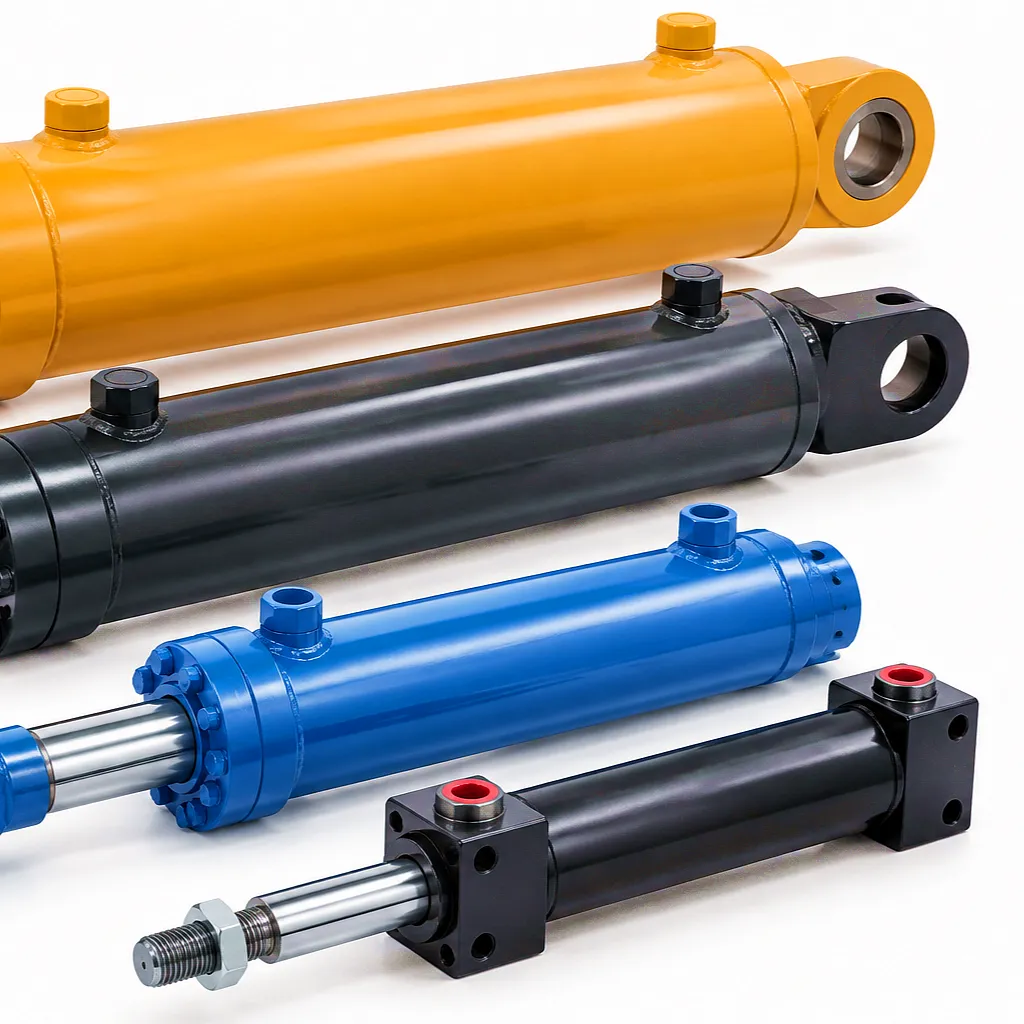
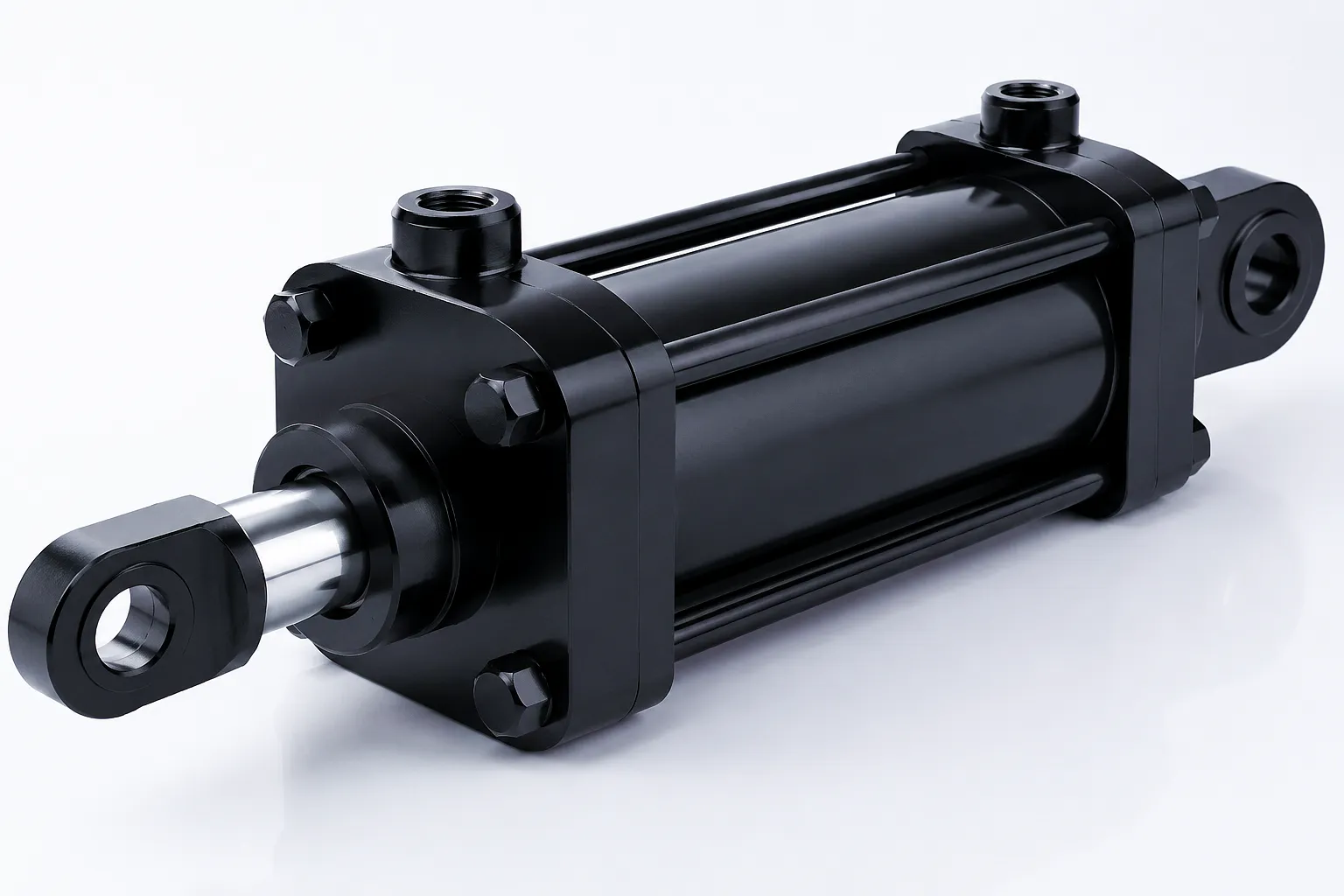
Need telescopic hydraulic cylinders for multi-stage high-pressure systems?
Our telescopic range covers bore diameters from 50 mm to 400 mm with 3000 PSI stage ratings and full Euler verification.
How a Sheffield Special Steel Service Centre Eliminated Cylinder Rod Failures on Its Coil Slitting Line
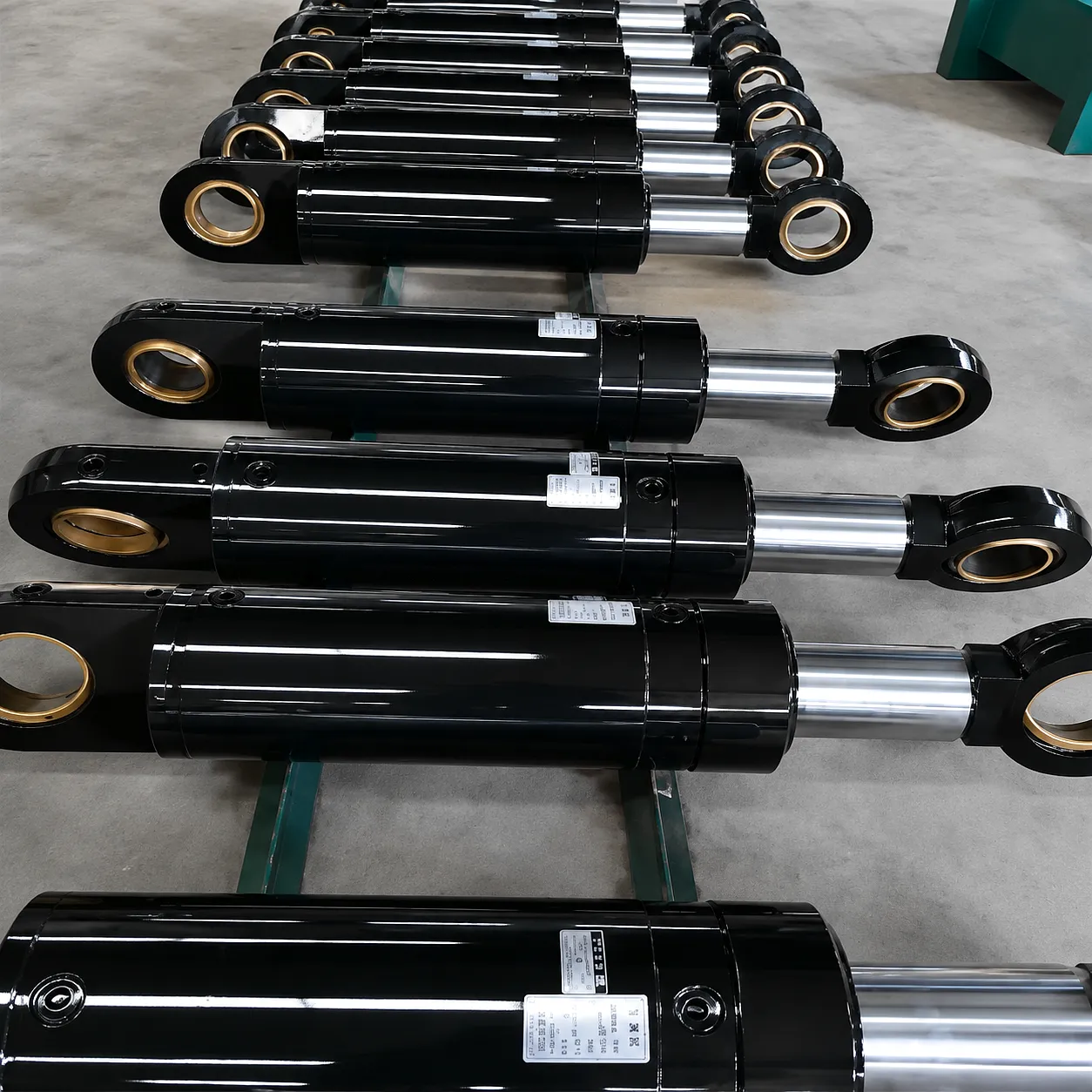 Hallamshire Precision Steel Ltd, a special steel distribution and processing business operating from a 12-acre site on the outskirts of Sheffield, had been experiencing chronic rod seal failures on the hydraulic hold-down cylinders of their primary coil slitting line. The line processes stainless and high-tensile coil stock for the UK automotive and aerospace supply chains, and the hold-down cylinders operate at 3000 PSI to provide the clamping force required to prevent coil wander during the slitting pass. The original cylinders — a generic import specification with a 1:2 rod-to-bore ratio — had been failing at the front gland seal every 6–8 weeks, requiring shutdown of the line for 4–6 hours per replacement and generating over £40,000 per year in lost production and maintenance labour.
The Hallamshire engineering team contacted Ever Power with the symptom data: repeated chrome layer cracking visible on rod removal, seal lip abrasion in the direction of rod travel, and measurable lateral displacement of the rod under load. After reviewing the installation drawings and the actual stroke length of 820 mm against the rod diameter of 50 mm, Ever Power’s hydraulic engineering team identified the core problem: with a 160 mm bore at 207 bar, the rod was under a theoretical compressive load of approximately 415 kN, but the Euler critical buckling load for a 50 mm rod at 820 mm effective length was only 380 kN — below the applied load with the standard safety factor applied. The rod was operating in a marginal buckling condition in every cycle, causing micro-deflection that abraded the chrome surface against the seal and gland bushing.
Ever Power engineered a direct-replacement cylinder with an uprated 70 mm rod diameter — raising the Euler critical load to over 1450 kN and providing a buckling safety factor of 3.5×. The rod material was upgraded to 42CrMo4 alloy steel for higher tensile strength, and the seal system was changed from standard NBR to a polyurethane primary/PTFE secondary combination rated for continuous 207 bar service at elevated temperature. The replacement cylinders were manufactured to the existing envelope dimensions, requiring no modification to the slitting line frame or hydraulic circuit. Since installation eighteen months ago, Hallamshire has recorded zero unplanned cylinder stoppages on the line, and the seal replacement interval has extended to an estimated 30+ months based on current wear measurement data. The total estimated saving over three years of operation exceeds £140,000 in direct maintenance and lost production costs.
สิ่งที่ลูกค้าของเราพูด
“The Euler buckling analysis Ever Power provided before we placed the order was a level of engineering support we simply hadn’t received from any previous cylinder supplier. They identified a problem our own team had missed for two years. The replacement cylinders have been faultless since day one.”
D. Thornton, Engineering Manager
Hallamshire Precision Steel Ltd, Sheffield
“We needed 3000 PSI cylinders with non-standard stroke lengths and stainless rods for a marine deck winch project out of Humberside. Ever Power turned the complete specification around in three weeks and the cylinders arrived fully tested with all the documentation we needed for MCA acceptance. Impressive supply chain for a custom order.”
R. McAlister, Projects Director
Meridian Marine Equipment, Grimsby
“The price was competitive — meaningfully below what our West Midlands hydraulic distributor had quoted for an equivalent specification — and the delivery was exactly on time. But what keeps us coming back to Ever Power is the technical honesty: they told us upfront which rod diameter we actually needed rather than just matching what we originally asked for. That saved us from a repeat of a very expensive mistake.”
A. Parikh, Procurement Lead
Coventry Polymer Systems Ltd, Coventry
คำถามที่พบบ่อย
Answers to the questions most commonly raised by UK engineers and buyers evaluating 3000 PSI hydraulic cylinders.
Start Your 3000 PSI Cylinder Enquiry Today
Tell Ever Power your bore, stroke, pressure, and application — and receive a fully engineered quotation with rod diameter validation included.
Response within 24 hours · Engineering support included · UK orders welcome · edit by gzl
 Thai
Thai  English
  Italian
  Portuguese
  Dutch
Dutch  Swedish
  Danish
  Finnish
  Polish
  Hindi
Hindi  Kazakh
  Turkish
  Ukrainian
  Romanian
  Spanish
  German
  Russian
  Korean
  Japanese
  Vietnamese
  Indonesian
  Malay
Malay  French
  Greek
Greek