
Hydraulic Cylinder Rod Seal Leaking:Diagnosis, Causes, and Repair Options
A field engineer’s guide to understanding why rod seals fail, how to identify the root cause, and what repair strategy best protects your equipment and uptime — with specific guidance for UK heavy industry operations.
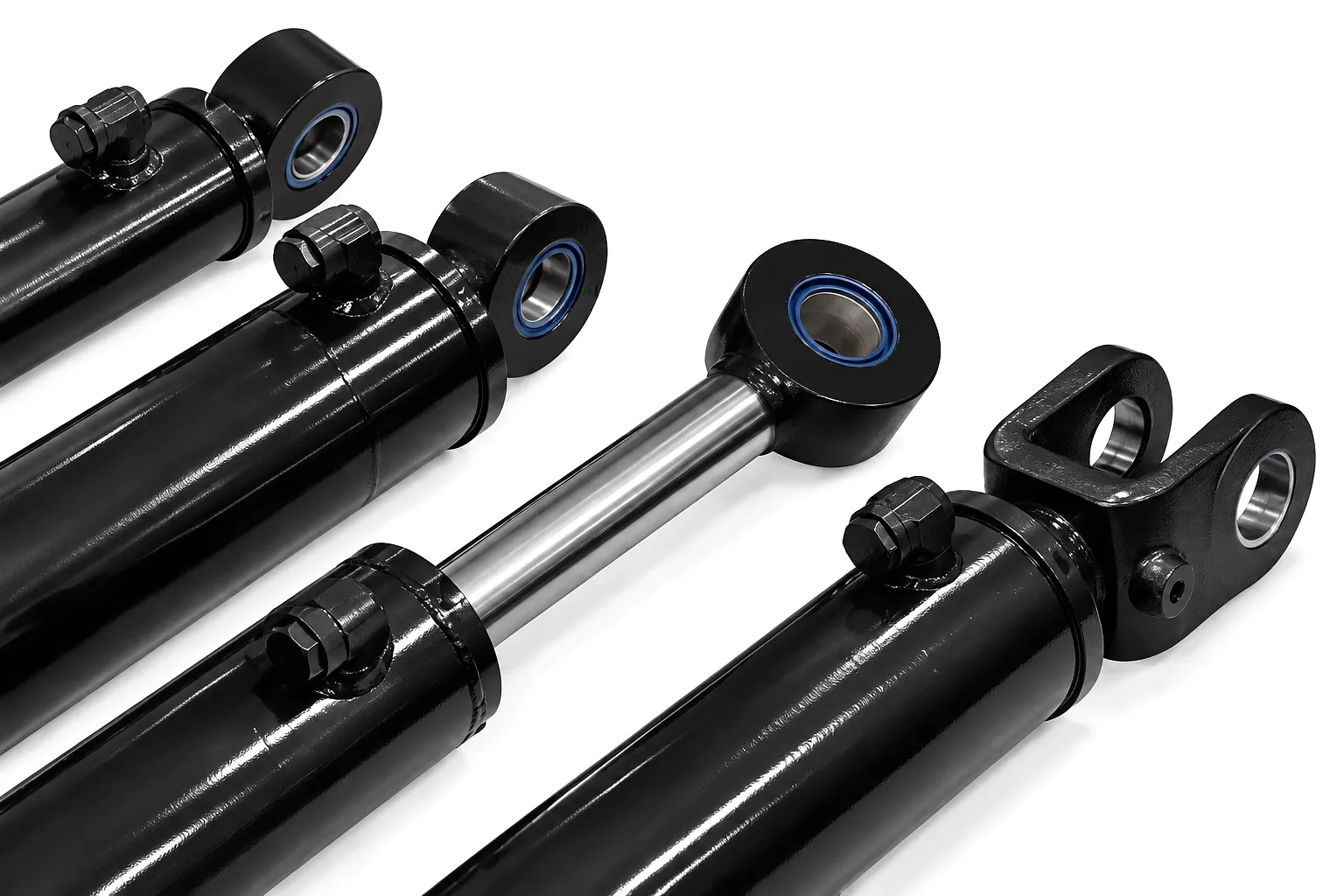 A hydraulic cylinder rod seal leaking is one of the most common — and most consequential — faults encountered across UK manufacturing, construction, and agriculture. When the rod seal fails, pressurised oil escapes along the cylinder rod, contaminating the surrounding environment, reducing actuator force, and in severe cases causing complete system failure. The economic cost is real: unplanned downtime on a Birmingham press line or a Sheffield steel-handling gantry can run into thousands of pounds per hour, making rapid and accurate diagnosis essential.
How the Rod Seal System Actually Works
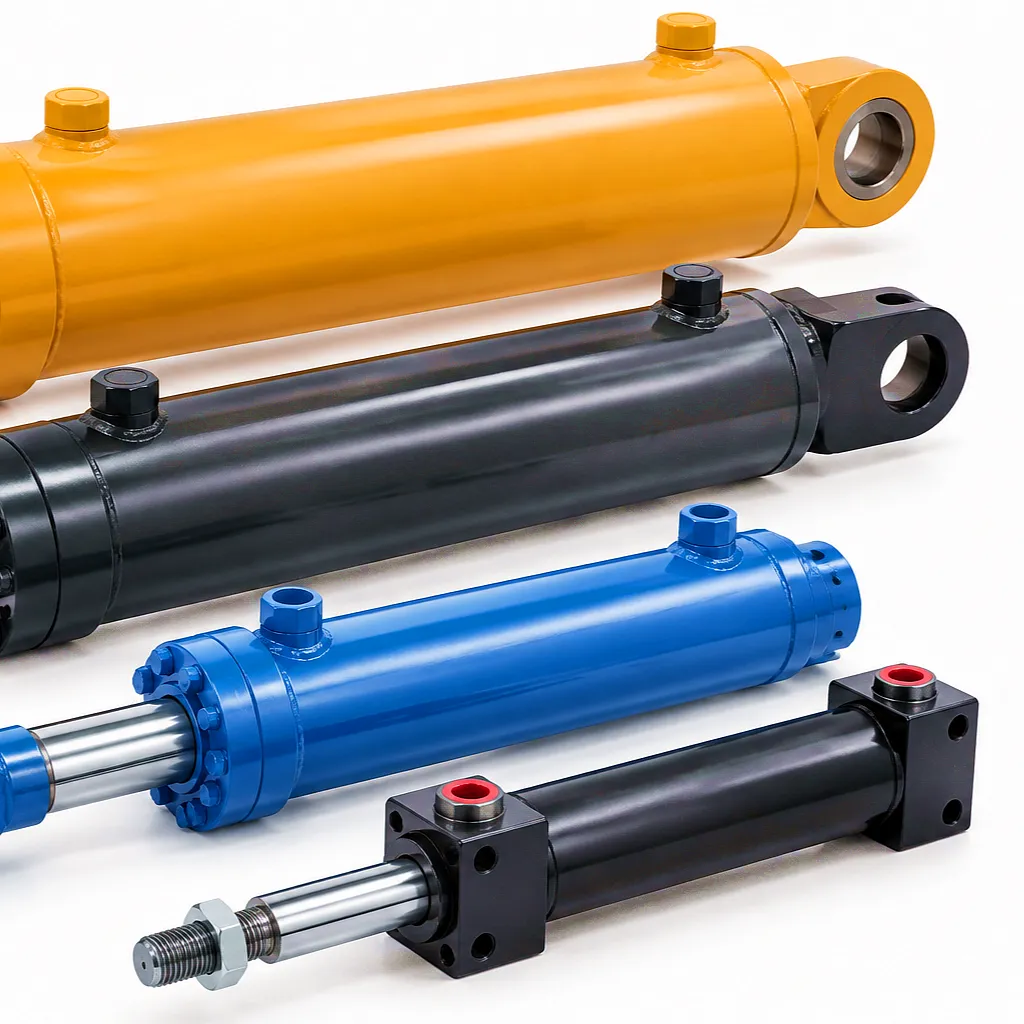
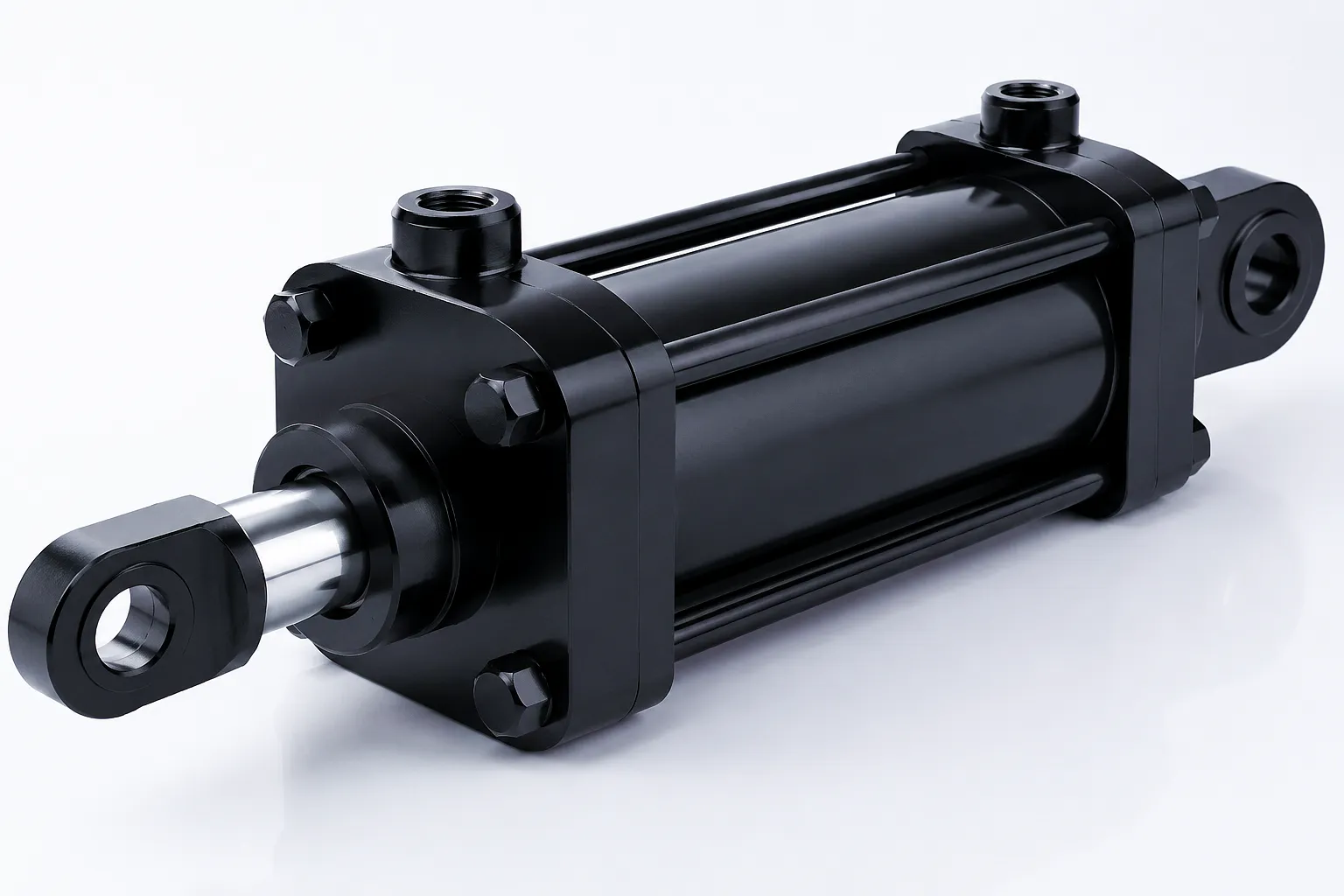
The rod seal assembly in a hydraulic cylinder is not a single component — it is a carefully engineered stack. At its core sits the primary rod seal, often a polyurethane lip seal or a composite PTFE ring, whose job is to prevent pressurised fluid from escaping along the chrome-plated steel rod as it strokes in and out of the cylinder barrel. Immediately outboard of that sits a wiper seal (also called a scraper seal), which strips contamination — dirt, moisture, abrasive particles — from the rod surface before it re-enters the cylinder. Between the two, a buffer seal smooths pressure peaks and protects the primary seal from hydraulic shock. Depending on the cylinder design and operating pressure, a guide ring may also be present to centralise the rod and prevent metal-to-metal contact.
Each element in this stack has a defined operating envelope. The primary seal depends on the rod surface finish being within a very narrow Ra roughness band — typically 0.2–0.4 µm Ra for dynamic rod seals. The wiper depends on being able to flex without tearing as it encounters debris. The buffer seal depends on fluid viscosity remaining stable across operating temperature. When any one of those conditions falls outside its design range, the entire seal system is at risk. Understanding this interdependency is why a good diagnosis goes far beyond simply pulling the old seal and fitting a new one.
Root Causes of Hydraulic Cylinder Rod Seal Leaking
Chrome-plated or induction-hardened rod surfaces rely on an extremely fine surface finish to maintain the lip contact of the seal. Even a single longitudinal scratch — from a stone strike on agricultural equipment working in Yorkshire’s fields, or from a mishandled bar during maintenance in a Manchester hydraulic workshop — can create a direct leak path that no seal, however new, can bridge. The scratch does not need to be deep. A groove just 5–10 µm wide can allow pressurised fluid to bypass the seal lip at rated pressure. Field identification is straightforward: look for a directional oil track on the rod that originates at a specific mark rather than weeping uniformly around the full circumference. Rod damage of this kind is also caused by mechanical side-loading when the cylinder is used to take up structural misalignment, particularly on older plant where mounting pivots have worn.
Hydraulic seals are formulated from specific elastomers chosen to resist the base fluid, its additive package, and the operating temperature range. Substituting a different hydraulic oil — even one that appears superficially similar — can trigger chemical attack on the seal compound. Polyurethane seals perform superbly in standard mineral oil at moderate temperatures but swell and soften rapidly when exposed to water-glycol fire-resistant fluids or certain synthetic esters. Nitrile (NBR) seals resist mineral oil well but crack when exposed to phosphate ester fluids used in some aerospace-adjacent manufacturing. In UK plants that have switched hydraulic fluid brands without updating seal specifications, this incompatibility is a surprisingly frequent cause of recurring rod seal failure. Physical signs include seal swelling, extrusion into clearances, or surface tackiness when the old seal is removed.
Every thermal cycle — startup warming, sustained operation, shutdown cooling — places stress on the elastomeric seal compound. Over thousands of cycles, the plasticisers that keep the seal pliable gradually migrate out of the compound. The seal becomes progressively harder, eventually losing the ability to conform to minor rod surface irregularities. Once the seal lip has hardened beyond approximately 85 Shore A (from a design value of 70–80 Shore A), reliable sealing becomes impossible. This degradation accelerates when the hydraulic system runs consistently above 60°C — common in enclosed machine rooms in Sheffield steel facilities with inadequate cooler capacity, or during summer operation of mobile plant without thermostatically controlled cooling circuits. Inspection reveals a seal that has flattened, cracked at the lip, or shows circumferential surface crazing.
A seal fitted upside-down, rolled during installation, or forced past a sharp gland edge without a proper installation sleeve is damaged before the machine is even restarted. The lip may be inverted, meaning it actively pumps oil out rather than retaining it. A seal groove machined to incorrect depth allows insufficient squeeze, resulting in a seal that cannot generate enough radial contact force to hold rated pressure. Conversely, excessive groove depth over-stresses the seal and accelerates fatigue. These installation errors are particularly common when maintenance is performed under time pressure — a reality in high-throughput UK manufacturing environments. Using a proper seal installation tool, verifying groove dimensions against the seal manufacturer’s datasheet, and inspecting the gland lead-in chamfer before installation eliminates the majority of fitment-related failures.
ISO 4406 contamination codes are not merely administrative housekeeping. Hydraulic fluid carrying particles above 15 µm in significant quantities acts as an abrasive lapping compound against the seal lip and rod surface simultaneously. Each outstroke carries contaminated fluid against the seal; each instroke drags abrasive particles into the dynamic sealing zone. A system running at ISO 20/18/15 when the cylinder specification demands ISO 16/14/11 will consume rod seals and rod surface chrome at a rate far above design life expectations. In agricultural machinery returning from UK harvest operations — combines working in dusty conditions across Lincolnshire’s arable plains, for example — wiper seal damage allowing ingress of crop debris is a common initiating event that then rapidly destroys the primary seal beneath it.
Step-by-Step Field Diagnosis
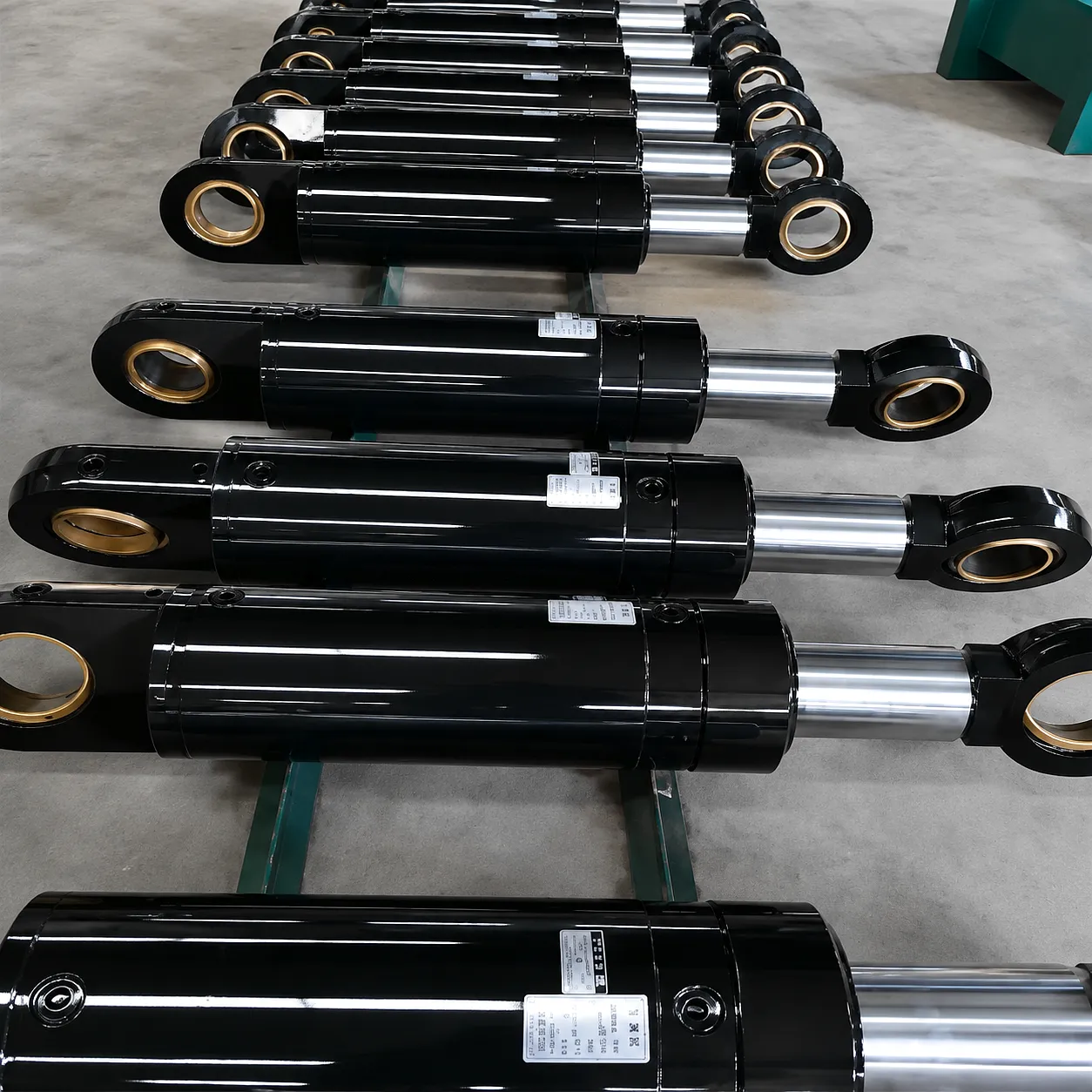
Observe whether the leak is circumferential (uniform around the rod — points to seal groove tolerances, seal hardening, or radial seal damage) or localised (oil track along one side of the rod — points to a scratch, flat spot, or corrosion pit). Time the leak rate: a weep that only occurs under pressure indicates a higher-pressure bypass channel than a constant drip at rest. Record your observations in writing before disassembly.
With the cylinder depressurised and the rod wiped clean with a lint-free cloth, run a fingernail along the rod surface perpendicular to the rod axis and then parallel. You are looking for any score, groove, pitting, or flat section detectable by touch. A profilometer reading below 0.4 µm Ra confirms adequate surface finish; above 0.8 µm Ra, the rod surface itself is a contributing cause regardless of seal condition. Also check for chrome delamination — visible as a matte or chalky appearance on the otherwise bright rod.
Cut — never lever — the old seal out of its groove to preserve its geometry for examination. A seal that has hardened, cracked at the lip, or shows extrusion damage beyond its backup ring indicates a thermal or pressure-cycle problem rather than simple wear. Swelling or tackiness points to fluid incompatibility. A torn wiper indicates debris ingress. A lip that is turned outward or shows installation roll marks means the previous seal was fitted incorrectly. Each of these physical profiles leads to a different corrective action, which is why seal condition inspection is a non-negotiable step.
Draw a fluid sample from the reservoir — not from the cylinder circuit, which may have localised contamination. Send it to a laboratory for ISO 4406 particle count, water content (Karl Fischer), viscosity at 40°C and 100°C, and TAN (total acid number). A TAN above 2.0 mg KOH/g indicates significant oxidative degradation. Elevated water content above 0.1% accelerates both corrosion of the rod and embrittlement of certain seal compounds. This analysis costs very little relative to the cost of another seal failure and points directly at whether a fluid change or a filtration upgrade is required.
Hydraulic Cylinder Rod Seal: Technical Performance Parameters
| พารามิเตอร์ | Standard Range | High-Performance / Custom | Notes |
|---|---|---|---|
| Primary Seal Material | Polyurethane (PU) | PTFE composite / HNBR / FKM | Material selected to match fluid type |
| Operating Pressure | Up to 250 bar | Up to 400 bar (with backup ring) | Backup ring required above 250 bar |
| Temperature Range | -20°C to +80°C (PU) | -40°C to +200°C (FKM) | FKM for high-temp steel/foundry use |
| Rod Surface Finish (Ra) | 0.2–0.4 µm Ra | 0.1–0.2 µm Ra (precision grade) | Critical for seal life; measure before refit |
| Rod Hardness (Chrome) | 800–1000 HV | 1100+ HV (ceramic/HVOF coating) | Higher hardness extends seal service life |
| Rod Diameter Range | 20–200 mm | Up to 500 mm (custom) | Ever Power supplies full range |
| Stroke Speed | Up to 0.5 m/s | Up to 1.5 m/s (low-friction PTFE) | High-speed: PTFE or PTFE-filled seal |
| Seal Hardness (Shore A) | 70–80 Shore A | 85–92 Shore A (high pressure) | Higher durometer resists extrusion |
| Fluid Compatibility | Mineral oil, HF, HE fluids | Phosphate ester, water-glycol, bio-oil | Confirm material before ordering |
Industrial Application Scenarios Where Rod Seal Integrity Is Critical
Combine harvesters, bale handlers, and cultivators working across East Anglian arable farms and Lincolnshire’s flat open fields subject their hydraulic cylinders to constant vibration, shock loading, and dust ingress. Rod seals on header lift cylinders and reel drive cylinders typically operate for thousands of hours per season, often with minimal scheduled maintenance between harvests. The wiper seal on these applications sees some of the harshest conditions of any industrial use case, encountering crop debris, silica-rich soil particles, and moisture. Specifying a heavy-duty, grooved polyurethane wiper combined with a PTFE-backed primary seal significantly extends service intervals and reduces the unplanned downtime that has an outsized impact during the narrow UK harvest window. See our range of Hydraulic Cylinders for Combine Harvester Machine designed for exactly these operating conditions.
Mobile elevated work platforms operating across London construction sites, Birmingham city-centre regeneration projects, and infrastructure maintenance across the UK motorway network demand hydraulic cylinders that hold position accurately under static load. Rod seal integrity is directly linked to lift platform safety — a weeping rod seal reduces effective system pressure over time, causing unacceptable platform drift and triggering safety cutouts. For double-acting telescopic configurations used on large scissor lifts and boom platforms, the seal stack on every stage must maintain its sealing performance through repeated thermal cycling as equipment sits idle overnight before resuming full-pressure operation in the morning. Our custom Double Acting Telescopic Hydraulic Cylinders for Lifting Platform are engineered with precisely this thermal cycling challenge in mind.
In Sheffield’s remaining steel and specialty alloy processing facilities, hydraulic cylinders control press platens, rolling mill gap adjustments, and casting extraction mechanisms. These environments combine elevated ambient temperatures from furnace radiation, mill scale contamination, and very high operating pressures — often above 300 bar on forging presses. Rod seals here must tolerate thermal shock as cylinders cycle from ambient to 80°C+ within a single working shift. FKM (fluorocarbon) seal compounds rated to 200°C continuous service, combined with hardened chrome rods maintained to 0.2 µm Ra or better, are the standard specification for this class of application. Seal replacement intervals are tracked by cycle count rather than calendar time in these facilities, with detailed service records supporting planned maintenance schedules that avoid costly unscheduled press downtime.
Hydraulic cylinders on offshore supply vessels, dock handling equipment, and marine ramp systems operating out of Aberdeen, Lowestoft, and Great Yarmouth face a combination of salt-laden atmospheric exposure, immersion risk, and dynamic loading from vessel motion. Rod seals in marine applications must be complemented by highly corrosion-resistant rod materials — typically 316 stainless steel or chrome-plated high-tensile steel with supplementary corrosion-inhibiting coatings — and by wiper seals that positively exclude seawater from the dynamic sealing zone. A rod seal failure in a marine application does not just cause oil contamination — in overboard applications it constitutes an environmental discharge event with regulatory consequences under UK Environment Agency and Maritime Coastguard Agency rules, making zero-tolerance seal performance a commercial and legal necessity.
Ever Power Hydraulic Cylinder Product Range
Repair Options: Matching the Fix to the Fault
Where rod surface condition is acceptable (Ra below 0.5 µm, no visible scoring), the cylinder can often be resealed without removal from the machine. The gland nut is removed, the old seal stack extracted, groove dimensions verified, and a new seal kit installed using appropriate tools. This is the fastest and lowest-cost repair when the root cause was seal age or a single installation error. It is not appropriate when rod damage is present, when seal groove dimensions are out of tolerance, or when there is any uncertainty about the cause of failure. A seal-only repair that fails again within weeks generates more total cost than a thorough strip and inspection the first time.
Scored or corroded rods can often be recovered by stripping the existing chrome, grinding the base rod back to clean and round, applying a fresh hard chrome layer to the original OD dimension, and grinding and polishing to specification. UK specialist re-chroming workshops in the Midlands and Yorkshire can typically turn around rods up to 3m in length within 5–10 working days. This route is economical when the base steel rod is structurally sound and when the cost of a new replacement rod would be high due to size or obsolescence. Post-rechroming dimensional verification and surface finish measurement are mandatory before reassembly — a re-chromed rod that is not checked to drawing can fail its new seal within hours of return to service.
Where a cylinder has suffered repeated seal failures, accumulated bore scoring, bent rod, or cracked welds, the economically correct decision is replacement rather than repair. A replacement cylinder sourced to the original specification — or improved specification if the original design has shown chronic weaknesses — can be supplied with an upgraded seal compound, higher-quality rod chrome, and improved filtration ports. Ever Power manufactures and supplies replacement hydraulic cylinders to UK customers from stock and to custom specification, with typical lead times of 2–4 weeks for standard bore/stroke combinations and 4–8 weeks for fully custom builds. Cylinders are shipped on documented freight services from our facility to UK ports, with all necessary compliance documentation for CE/UKCA conformity.
Ever Power: Precision Manufacture, Complete Customisation
B2B hydraulic cylinder manufacturer supplying the UK and global markets
Ever Power operates a dedicated hydraulic cylinder manufacturing facility equipped with CNC deep-hole boring machines capable of processing cylinder bores from 30mm to 500mm diameter, precision honing lines achieving bore surface finishes to H8 tolerance and Ra 0.2–0.4 µm, and automated chrome plating lines for rod diameters up to 360mm. Welding to ISO 15614 and cylinder testing to 1.5x rated pressure are standard across every production batch. The manufacturing process is governed by a quality management system certified to ISO 9001:2015, and all hydraulic cylinders for CE/UKCA markets are produced under a documented technical file with third-party inspection available on request.
No standard catalogue matches every application. Ever Power offers full design-from-brief customisation for bore, stroke, mounting configuration, rod end connection, porting arrangement, seal material and compound, surface treatment, and painted finish. Customers supply operating pressure, stroke requirement, mounting envelope dimensions, fluid type, and operating temperature — Ever Power’s engineering team returns a design proposal and dimensional drawing within 3 working days. Seal specification is always matched to the confirmed fluid type and temperature range, eliminating the chemical incompatibility failures that plague cylinders sourced from stock without engineering review. For UK customers managing mixed fleets, Ever Power can supply a single seal kit reference that covers all cylinders of the same bore/stroke family, simplifying spare parts stockholding.
Ever Power exports to the UK under established freight arrangements using bonded logistics partners with UK customs brokerage, ensuring smooth clearance through major entry points including Felixstowe, Southampton, and London Gateway. Standard shipments are dispatched with full commercial invoice, packing list, bill of lading, country of origin certificate, and CE/UKCA declarations of conformity. For urgent replacement orders, air freight from our facility to UK airports including Heathrow and East Midlands Cargo is available, with customs clearance typically completed within 24–48 hours of arrival. UK-based distributors with stocked inventory of Ever Power standard-bore cylinders provide same-day or next-day availability for the most commonly specified bore/stroke combinations.
📧 Request a Custom Quote from Ever Power
Reply within 1 business day · Technical review included · UKCA/CE documentation standard
Customer Success Story: Birmingham Automotive Press Line
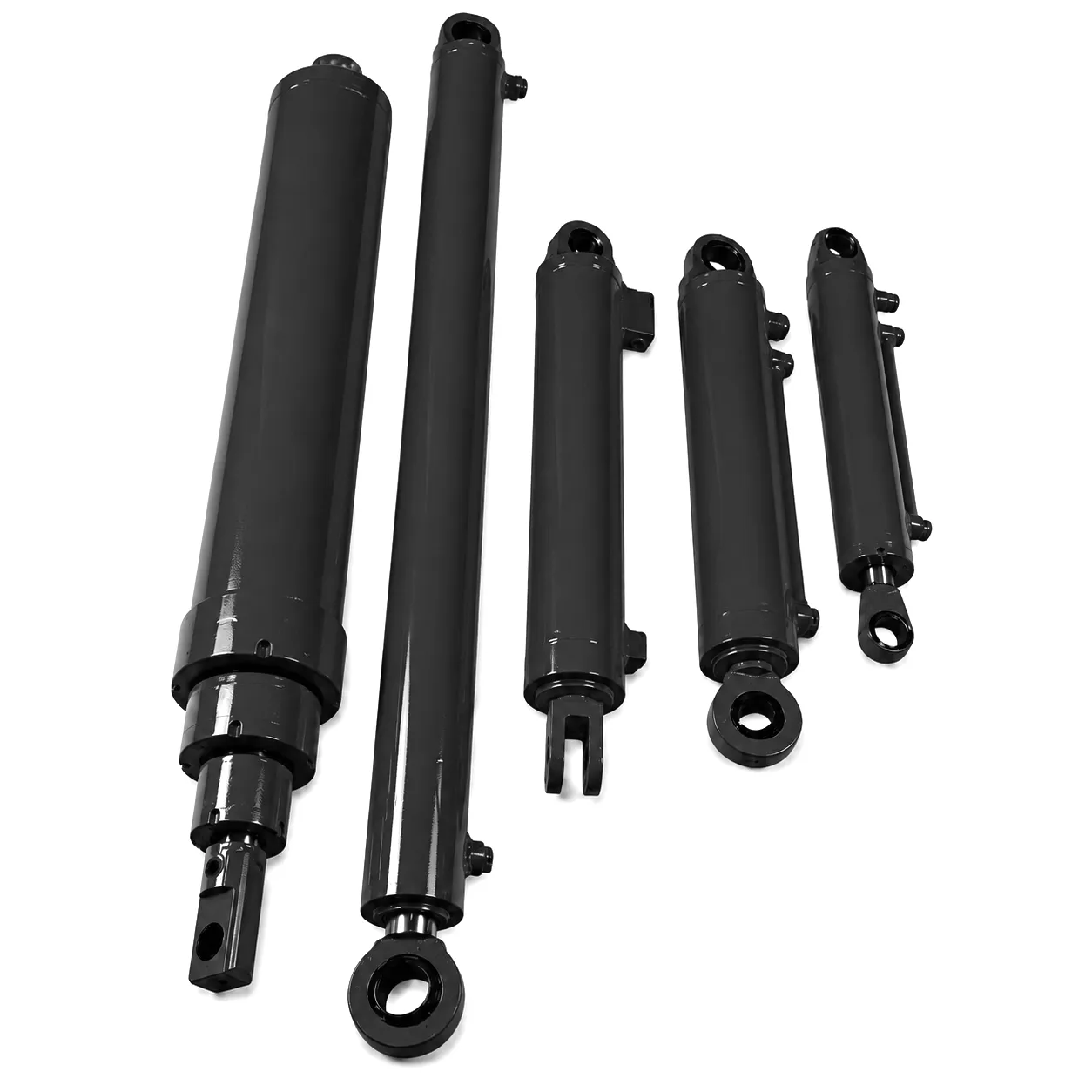 A Tier 2 automotive component manufacturer operating a 1,200-tonne hydraulic press line in Birmingham’s Tyseley industrial corridor was experiencing rod seal failures on four identical 320-bar press cylinders at intervals of 6–8 weeks. Each failure required a planned shutdown of between 4 and 6 hours, with associated production loss calculated at over £8,000 per incident. The engineering team had already replaced seals three times using locally sourced kits that nominally matched the bore dimension but had not been specified against the operating fluid — a phosphate ester fire-resistant fluid mandated by the facility’s insurance policy.
Ever Power was contacted for technical consultation. Our engineering team reviewed the cylinder drawings, the fluid specification datasheet, and the worn seal samples the customer photographed and emailed across. The diagnosis was unambiguous: standard polyurethane seals are chemically incompatible with phosphate ester fluid, swelling and softening within weeks, losing contact force, and ultimately extruding into the clearance gap at 320 bar. The correct specification was PTFE-backed FKM lip seals with PTFE secondary rings — a combination resistant to phosphate ester across the full temperature range of this application.
Ever Power supplied four complete seal kits to the confirmed FKM/PTFE specification, along with a technical note on installation sequence and gland groove dimension verification. The press line has now operated for 14 months without a rod seal incident. The customer has since placed a standing order for annual seal kits covering all hydraulic cylinders in the facility, with Every Power holding safety stock against their order profile. Total annual seal maintenance cost has dropped by over 60% compared with the period of repeated failures.
“The Ever Power team identified the root cause of our repeated rod seal failures within 48 hours of us sending over the seal samples and fluid spec — something our previous UK supplier had not done across three repair cycles. The FKM seal kits they supplied have performed flawlessly for over a year at 320 bar. The technical documentation was thorough and made our internal audit straightforward.”
“We run a fleet of 26 bale handlers across four farms in Lincolnshire and have been sourcing replacement cylinders from Ever Power for the past two seasons. The wiper and primary seal combination they specified has virtually eliminated in-field hydraulic leakage during harvest — previously our biggest cause of unplanned stoppages. Their logistics team is reliable and the paperwork is always complete, which matters when you need parts quickly at harvest time.”
“When our dock ramp cylinder failed during a busy vessel turnaround at the port, we needed a replacement fast. Ever Power had a matching-bore cylinder in stock to our specification and shipped it air freight, arriving at our facility within 3 days of the enquiry. The cylinder arrived tested, certified, and with all customs documentation in order. The quality is visibly better than the original OEM part and it’s now been in service for 11 months without any seal issues.”
คำถามที่พบบ่อย
How can I tell whether my hydraulic cylinder rod seal leaking is caused by rod damage or a failed seal on a machine operating at a UK construction site? +
Wipe the rod clean and inspect the leak pattern closely. If oil tracks along one side of the rod from a specific point, a score or pit on the rod surface is the likely cause — run a fingernail across the rod; any detectable groove confirms this. If the leak is uniform around the full circumference of the rod, the seal itself has failed from hardening, wrong material, or incorrect installation. Sending a photo to Ever Power’s engineering team at [email protected] with the cylinder’s bore dimension and operating pressure gets you a specific recommendation within 24 hours.
What is the typical cost of a hydraulic cylinder rod seal replacement for industrial machinery in the UK, and how do I get an accurate quote? +
The seal kit itself for a 63mm bore cylinder typically costs £15–£80 depending on seal compound and the number of elements in the stack. Labour for an in-situ replacement by an experienced hydraulic engineer runs £80–£150 per hour in most UK regions, with the job taking 1–3 hours depending on access. If rod rechroming is required, add £200–£600 per rod depending on length and diameter. For a replacement cylinder, contact Ever Power at [email protected] with your bore, stroke, and pressure rating for a competitive ex-works price with UK delivery costing.
Which hydraulic cylinder rod seal material is best suited for heavy industrial press machinery operating in a Sheffield steel processing environment? +
For Sheffield steel plant environments where ambient temperatures are elevated, operating pressures typically exceed 250 bar, and thermal cycling is frequent, FKM (fluorocarbon) primary rod seals are the standard specification. FKM retains its elasticity and contact force up to 200°C continuous service, resists the mineral oil and additive packages used in most press hydraulic systems, and holds its geometry under the pressure excursions characteristic of forging operations. PTFE-backed buffer seals reduce friction during the high-speed return stroke common in these applications.
Where can I find a reliable hydraulic cylinder rod seal supplier in the UK who can also provide custom seal kits for non-standard bore sizes? +
Ever Power supplies both standard and custom hydraulic cylinder seal kits to UK customers directly from our manufacturing facility. Custom kits for non-standard bore sizes are manufactured against the groove dimensions and operating specification you provide, with seal compound selected to match your confirmed hydraulic fluid type. Contact our sales team at [email protected] with the bore diameter, rod diameter, groove cross-section dimensions, fluid type, and operating pressure — we’ll confirm the seal specification and price within 1 working day.
How often should hydraulic cylinder rod seals be replaced on agricultural machinery that is used intensively during the UK harvest season? +
For combine harvesters and bale handlers working through the typical UK harvest period, a pre-season inspection of all cylinder rod seals is recommended as a minimum. Any seal showing surface cracking, reduced spring back when compressed, or a visible oil film on the rod at rest should be replaced before harvest begins. Machines that operate more than 800 hours per year should be considered for annual seal replacement as a preventive measure, particularly on cylinders with limited access in the field. Carrying a spare seal kit for each critical cylinder in the field service kit eliminates the need for time-critical delivery during the harvest window.
What should I check before fitting a new rod seal to a hydraulic cylinder to ensure the repair does not fail again within a few weeks? +
Before fitting any new rod seal, verify the following: rod surface finish within 0.2–0.5 µm Ra (check with a profilometer if available, or by feel for any detectable scoring); seal groove depth and width within the seal manufacturer’s specified tolerance; gland lead-in chamfer smooth and free of burrs; new seal is the correct compound for the hydraulic fluid in use; and installation is carried out with the correct tool to avoid rolling the seal lip. Each of these checks individually reduces failure probability; missing any one of them can result in a repeat failure in days to weeks regardless of seal quality.
Ready to Eliminate Hydraulic Rod Seal Failures?
Send Ever Power your cylinder specification, fluid type, and operating conditions. Our engineering team responds within 1 business day with a seal specification recommendation and competitive pricing for UK delivery.
📧 Get a Quote — [email protected]
แก้ไขโดย gzl
 Thai
Thai  English
  Italian
  Portuguese
  Dutch
Dutch  Swedish
  Danish
  Finnish
  Polish
  Hindi
Hindi  Kazakh
  Turkish
  Ukrainian
  Romanian
  Spanish
  German
  Russian
  Korean
  Japanese
  Vietnamese
  Indonesian
  Malay
Malay  French
  Greek
Greek