
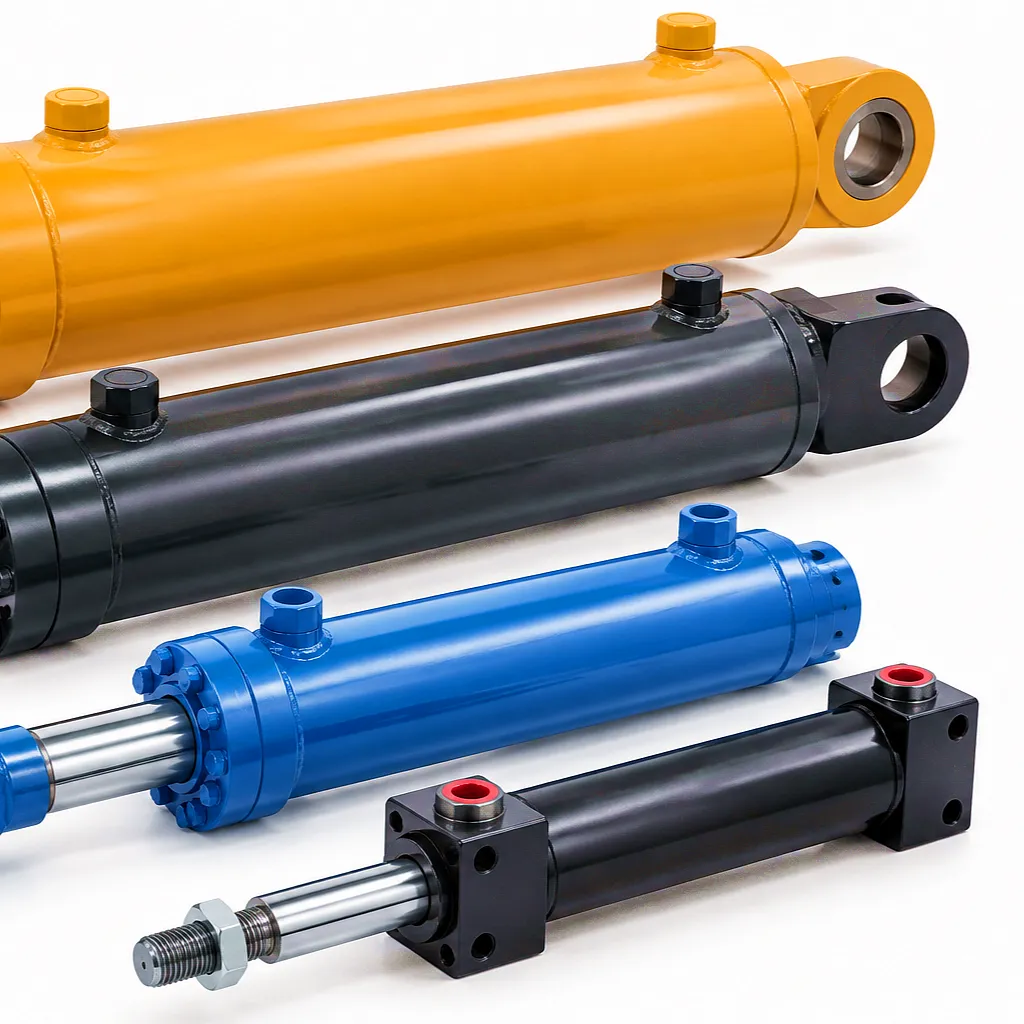
 When a hydraulic system operates in salt-laden coastal air off the North Sea, inside a steel processing plant in Sheffield, or aboard a combine harvester working through muddy Yorkshire fields, material selection stops being an engineering footnote and becomes the single most critical decision in the entire design cycle. The choice between carbon steel and stainless steel hydraulic cylinders shapes not just initial cost, but long-term reliability, maintenance intervals, and the safety of the entire machine around which that cylinder sits.
The Metallurgy Behind the Choice: What Carbon Steel and Stainless Steel Actually Are
Carbon Steel (e.g., E355, ST52)
Carbon steel hydraulic cylinders are manufactured from iron-carbon alloys where carbon content typically ranges from 0.15% to 0.60%, with manganese, silicon, and trace quantities of sulphur and phosphorus comprising the remainder of the alloy composition. The EN 10305-1 specification — commonly referenced across UK engineering workshops — defines the cold-drawn seamless tubes used in hydraulic cylinder barrels, delivering consistent bore tolerances critical to seal performance. Carbon content gives the material its tensile strength, with grades like E355 routinely achieving yield strengths of 355 MPa and ultimate tensile strengths exceeding 520 MPa. The trade-off is oxidation vulnerability. Without surface treatment, carbon steel begins to rust on contact with moisture, which is why surface coatings — hard chrome plating on rods, electroless nickel, or phosphating on barrels — are applied in production. These coatings add a layer of corrosion protection but do not replicate the intrinsic corrosion resistance built into the stainless steel alloy itself. In applications where coatings remain intact and environments are controlled, carbon steel performs reliably at significantly lower cost per kilogram than its stainless counterpart.
Stainless Steel (316L, 304, Duplex 2205)
Stainless steel gains its defining property — resistance to oxidation and chemical attack — from a minimum chromium content of 10.5% by mass. When chromium is exposed to oxygen, it spontaneously forms a thin, self-repairing chromium oxide film on the surface. This passive layer regenerates when scratched or damaged, providing ongoing protection that a plated carbon steel surface cannot replicate once its coating is breached. For hydraulic cylinder applications, the most relevant grades are 316L (adding 2–3% molybdenum to 304’s composition, dramatically improving resistance to chloride pitting — critical in offshore or coastal UK environments), 304 (the workhorse grade, suitable for food processing and pharmaceutical washdown environments), and duplex grades like 2205 (offering higher yield strength than austenitic grades while retaining excellent corrosion performance, though at a premium price point). The higher density of alloying elements makes stainless steel approximately 60–80% more expensive per kilogram than equivalent carbon steel grades, meaning the material decision must always be justified by performance requirements rather than preference alone.
How Hydraulic Cylinders Generate Force: The Operating Principle
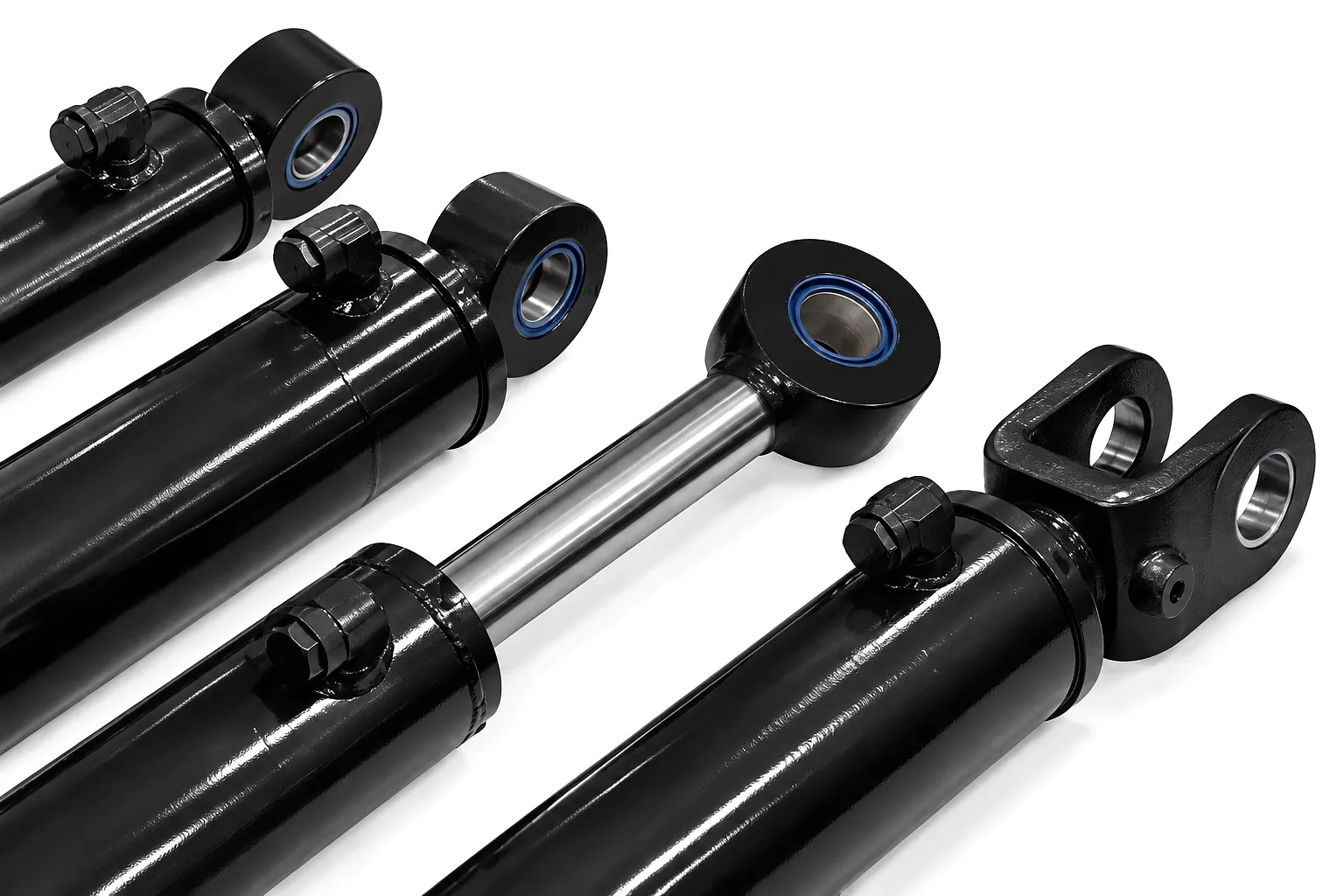 A hydraulic cylinder converts pressurised fluid energy into linear mechanical force. The operating principle applies Pascal’s Law directly: pressure applied to a contained fluid transmits undiminished in all directions. When a pump delivers hydraulic oil to the port of the cylinder barrel, that pressure acts on the cross-sectional area of the piston face, generating a push or pull force equal to Pressure × Area. A 50 mm bore cylinder operating at 250 bar, for example, generates a theoretical push force of approximately 49 kN — enough to actuate a heavy-duty industrial press, extend a boom arm on a construction excavator, or operate the tailgate mechanism of a tipper lorry navigating a construction site in Manchester or Leeds.
The cylinder barrel — whether manufactured from carbon steel or stainless steel — must contain that pressure without deformation or fatigue failure. The internal bore surface is honed to a mirror finish (typically Ra 0.2–0.4 µm) to maximise seal effectiveness and minimise stick-slip motion. The piston rod, the element that extends and retracts to transmit force to the external load, is ground and polished to equally tight tolerances. In double-acting cylinders, pressurised oil drives both the extension and retraction strokes. In single-acting cylinders, oil powers one direction while a spring or the load itself returns the rod. The fundamental thermodynamic relationship remains constant regardless of material — but the material determines how long the cylinder maintains that relationship reliably under the corrosive, abrasive, or thermally extreme conditions of the operating environment.
Surface finish integrity is particularly critical to the material discussion: once a carbon steel rod’s chrome plating pits or peels, the underlying steel corrodes rapidly, accelerating seal wear. A stainless steel rod, by contrast, maintains its corrosion resistance even if the polished surface suffers minor abrasion, because the passive film regenerates. This behaviour fundamentally changes the maintenance calculus in harsh environments.
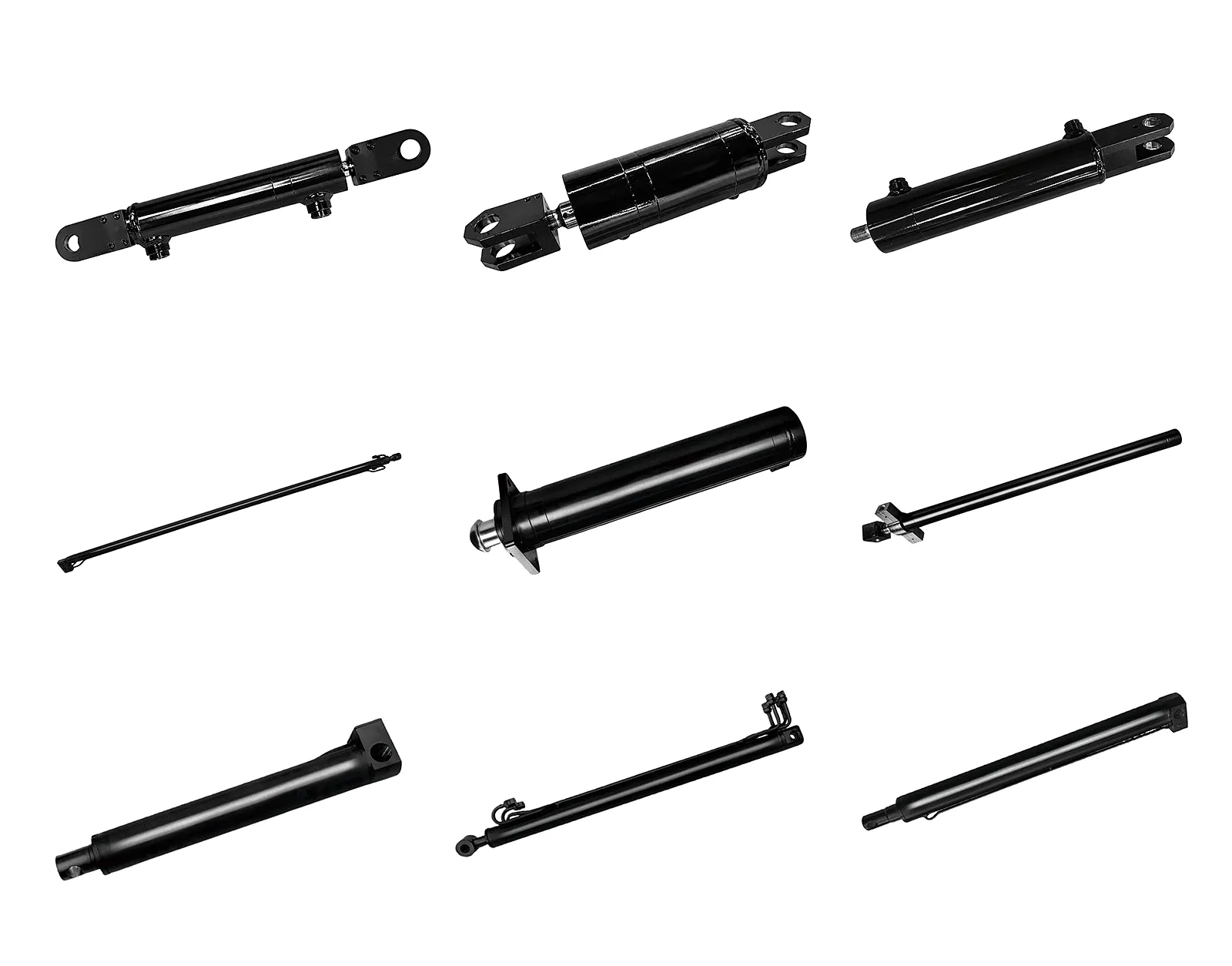
Ever Power Hydraulic Cylinder Range
Technical Performance & Specification Comparison Table
The following table consolidates the key specification parameters across both material families as manufactured and supplied by Ever Power for standard and custom hydraulic cylinder applications. These figures represent production-grade specifications — actual parameters for bespoke orders are confirmed at the engineering stage.
Core Technical Advantages: Where Each Material Excels
Recommended Products from Ever Power
Гідравлічні циліндри для зернозбирального комбайна
Heavy Duty Single Acting Hydraulic Cylinders
Application Scenarios: Matching Material to Environment
Industry-by-industry breakdown of optimal hydraulic cylinder material selection across UK industrial sectors
Agriculture & Farming — Yorkshire, Lincolnshire
Recommended: Carbon Steel (Hard Chrome Rod)
Agricultural machinery — from combine harvesters to telehandlers working across the arable flatlands of Lincolnshire and the mixed farms of Yorkshire — operates in highly abrasive, mud-laden conditions. The carbon steel hydraulic cylinder with a hard chrome plated rod offers the ideal balance: high-pressure capability to handle heavy lifting loads, excellent abrasion resistance on the rod surface from the chrome layer, and a unit cost that aligns with the agricultural sector’s tight capital equipment budgets. Cylinders on combine harvesters must handle repeated full-stroke cycling across multi-day harvesting seasons. Carbon steel, correctly sealed and maintained, delivers 8–12 years of reliable service in this application. The key maintenance interval is rod seal inspection and rod surface examination after each season to catch chrome pitting before it develops into a seal failure.
Food & Beverage Processing — Manchester, Northamptonshire
Recommended: Stainless Steel 316L
The UK food and beverage sector operates under strict hygiene regulations governed by the Food Standards Agency (FSA) and the British Retail Consortium (BRC). Any hydraulic cylinder in a food-adjacent application — actuating conveyor gates, operating filling machine heads, or controlling portioning equipment — must withstand daily washdown cycles involving hot water, alkaline detergents, and occasionally dilute acidic sanitisers. Stainless steel 316L is the only material that satisfies this requirement without surface coating risk: there is no chrome layer to delaminate, no risk of iron oxide contamination, and no surface porosity that could harbour bacterial biofilm. Manchester’s food manufacturing cluster and the substantial meat processing facilities of Northamptonshire regularly specify 316L stainless hydraulic cylinders as standard — and the incremental cost over carbon steel alternatives is easily justified against the cost of a single food safety recall or FSA compliance failure.
Heavy Press & Metal Forming — Sheffield, Birmingham
Recommended: Carbon Steel (High-Grade E355/ST52)
Sheffield’s steel processing heritage and Birmingham’s deep manufacturing corridor rely on hydraulic presses, forging hammers, and rolling mill equipment that generate extraordinary forces — often exceeding 200 bar operating pressure in sustained duty cycles. In these applications, the superior yield strength of high-grade carbon steel makes it the unambiguous material of choice. Stainless steel’s relatively lower yield strength in standard austenitic grades cannot match the structural performance of E355 or ST52 carbon steel at these pressure levels without significantly larger wall sections, adding weight and cost that erase the corrosion benefit. The shop environment in a forging plant is hot, oily, and mechanically aggressive rather than chemically corrosive — exactly the scenario where carbon steel hydraulic cylinders with good external paintwork and sealed end caps deliver decades of reliable service at the most competitive total cost.
Offshore & Marine — Aberdeen, Great Yarmouth
Recommended: Stainless Steel 316L / Duplex 2205
The North Sea offshore environment is arguably the most aggressive corrosion challenge that hydraulic equipment faces in British industry. Chloride ion concentration in sea-spray, constant humidity, wave wash over deck equipment, and the practical impossibility of frequent maintenance interventions create conditions where a coated carbon steel cylinder’s service life can drop to two years or less before rod corrosion compromises the seal. Operators servicing platforms out of Aberdeen and Great Yarmouth have progressively shifted specification toward 316L stainless as minimum standard, with duplex 2205 specified on deck-mounted equipment fully exposed to seawater. The higher upfront capital expenditure is absorbed against offshore installation and service exchange costs — swapping a cylinder on a production platform can cost ten to twenty times the cylinder’s own value in rig time and logistics. The extended maintenance interval from a stainless hydraulic cylinder is not a luxury; it is a fundamental economic requirement of the offshore operating model.
Lifting Platforms & Access Equipment — London, Bristol
Recommended: Carbon Steel (Standard) / Stainless where outdoor
Scissor lifts, aerial work platforms, and passenger lifting systems operating in urban environments across London, Bristol, and other UK cities face a split material requirement: indoor applications in climate-controlled warehousing or construction sites suit carbon steel hydraulic cylinders perfectly, while outdoor lifting platforms on building facades, car parks, or waterfront locations benefit from stainless cylinder rods to resist UK’s persistent damp and salt-contaminated urban air. The custom telescopic hydraulic cylinders for lifting platforms available from Ever Power can be specified in either material to match the precise operating environment and LOLER (Lifting Operations and Lifting Equipment Regulations) compliance requirements standard across UK lifting equipment applications.
Ever Power Manufacturing: Precision, Customisation, and Supply Chain Depth
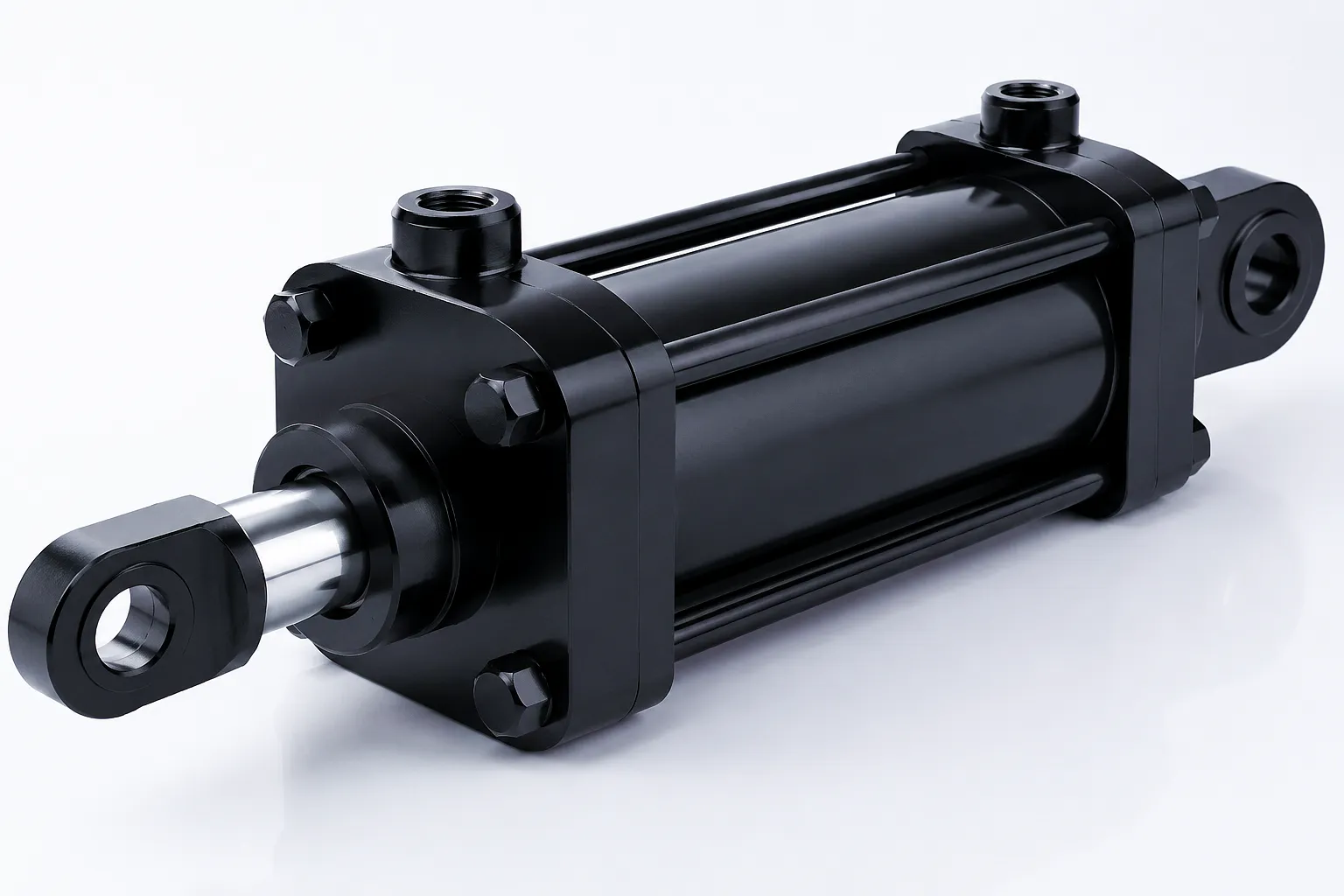
Ever Power operates a vertically integrated hydraulic cylinder manufacturing facility equipped with precision honing lines capable of processing bores from 20 mm through to 1,200 mm, deep-hole boring centres with ±0.01 mm positional accuracy, and a full in-house surface treatment department covering hard chrome plating, electroless nickel, thermal spray (HVOF), and industrial mirror polishing for stainless steel rods. Every cylinder barrel is pressure-tested to 1.5× rated operating pressure before leaving the factory, with hydrostatic test certificates issued as standard and third-party witness testing available through Bureau Veritas and Lloyd’s Register for offshore and critical lifting applications.
Customisation is not an afterthought at Ever Power — it is the core manufacturing model. UK engineering teams requiring non-standard mounting geometries (clevis, trunnion, flange, foot-mount), special port positions, integrated position sensors, or dual-seal configurations for particularly aggressive media find that our engineering team works directly from customer-supplied drawings, offering DXF/STEP file review and written engineering confirmation within 48 hours. Material traceability is maintained across every production batch, with mill certificates provided for both carbon and stainless steel inputs — a requirement that is increasingly standard in UK manufacturing supply chains governed by ISO 9001:2015 quality management standards.
Customer Success Story: Offshore Support Fleet Overhaul, Aberdeen
North Caledonian Subsea Services Ltd — Aberdeen, Scotland
Offshore ROV support vessel hydraulics | 2024 project
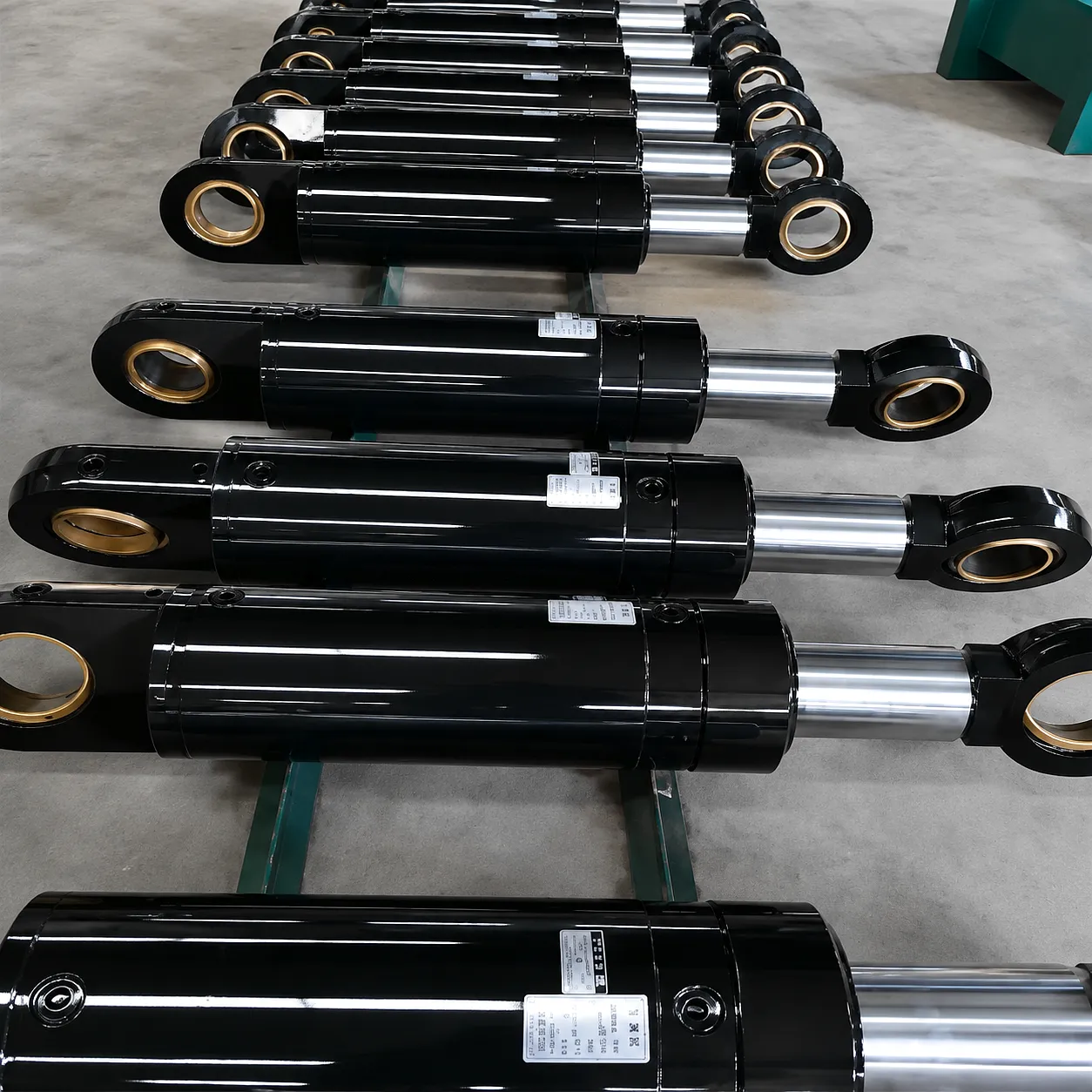 North Caledonian Subsea Services Ltd operates a fleet of ROV (Remotely Operated Vehicle) support vessels out of Aberdeen Harbour, serving North Sea oil and gas infrastructure maintenance contracts. Their legacy hydraulic cylinder specification used coated carbon steel cylinders across the deck handling equipment — A-frames, crane outreach systems, and moon-pool gates — all mounted externally and subject to continuous North Sea spray, temperature cycling between -5°C and +18°C, and annual inspection under MCA (Maritime and Coastguard Agency) requirements. By 2023, the carbon steel cylinders were requiring chrome rod replacement every 14–18 months due to pitting corrosion, with each exchange requiring the vessel to enter dry dock in Aberdeen. The downtime cost per exchange, including lost charter revenue and labour, exceeded £85,000 per event across the fleet.
The engineering team approached Ever Power with a request for a full re-specification using stainless steel hydraulic cylinders in 316L grade across the deck handling systems, with duplex 2205 specified for the most exposed moon-pool gate actuators. Ever Power’s engineering team reviewed all eight cylinder specifications within 36 hours, produced STEP file confirmation of mounting compatibility, and provided full mill certificate traceability for all stainless steel inputs. Production and shipment to Aberdeen was completed within eleven weeks. Following installation in spring 2024, the fleet has now operated for sixteen months without a single cylinder-related maintenance intervention — a stark contrast to the previous 14-month forced replacement cycle. The projected saving over a five-year period, accounting for the higher initial capital outlay for stainless cylinders, exceeds £290,000 across the fleet.
Що кажуть наші клієнти
★★★★★
“The 316L cylinders Ever Power supplied have been performing in full North Sea conditions for over a year now without a single issue. The engineering turnaround from drawing submission to shipping confirmation was genuinely impressive — the fastest we’ve had from any manufacturer.”
— Fleet Engineering Manager, North Caledonian Subsea Services, Aberdeen
★★★★★
“We specified duplex 2205 for the moon-pool gate actuators because the exposure there is essentially continuous seawater immersion. Ever Power sourced the duplex tube, provided full traceability certificates, and delivered exactly to our custom dimensional drawings. No other supplier we approached could match the combination of material availability and delivery schedule.”
— Procurement Director, North Caledonian Subsea Services, Aberdeen
★★★★★
“After switching from hard chrome carbon steel to Ever Power’s stainless cylinders on our offshore cranes, we’re looking at maintenance intervals that are three times longer than before. The total cost of ownership calculation makes stainless the obvious choice when you account for offshore service costs. We’re now standardising on stainless across the entire fleet based on this experience.”
— Vessel Superintendent, North Caledonian Subsea Services, Aberdeen
The Practical Decision Framework: How to Choose
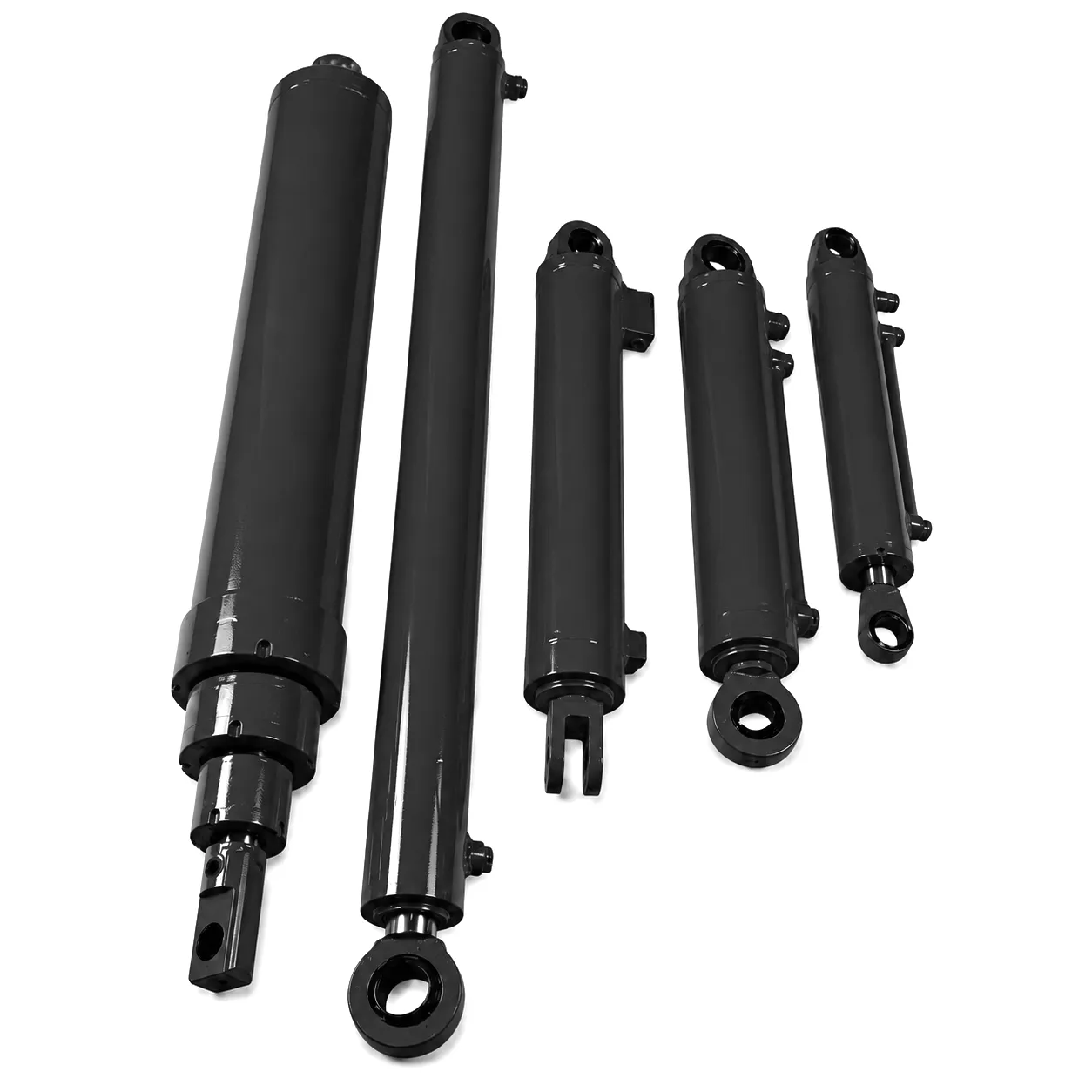
Procurement teams and engineers approaching a hydraulic cylinder specification for the first time sometimes reduce the carbon vs stainless question to a simple corrosion vs cost comparison. The reality is more nuanced. The environment is the starting point, but it is not the only variable. Operating pressure, cycle frequency, fluid media compatibility, regulatory compliance requirements, and the practical cost of maintenance access all contribute to the optimal material selection — and the answer can differ on the same machine between the cylinder rod and the cylinder barrel.
Часті запитання
Ready to Specify?
Get Expert Material Guidance and a Custom Cylinder Quote
Share your bore, stroke, pressure rating, and environment — Ever Power’s engineering team will recommend the correct material and return a full written quotation within 48 hours.
Отримайте цінову пропозицію зараз — [email protected]
редагування від gzl
 Ukrainian
  English
  Italian
  Portuguese
  Dutch
Dutch  Swedish
  Danish
  Finnish
  Polish
  Hindi
Hindi  Kazakh
  Turkish
  Romanian
  Spanish
  German
  Russian
  Korean
  Japanese
  Vietnamese
  Thai
Thai  Indonesian
  Malay
Malay  French
  Greek
Greek