
Mô tả sản phẩm
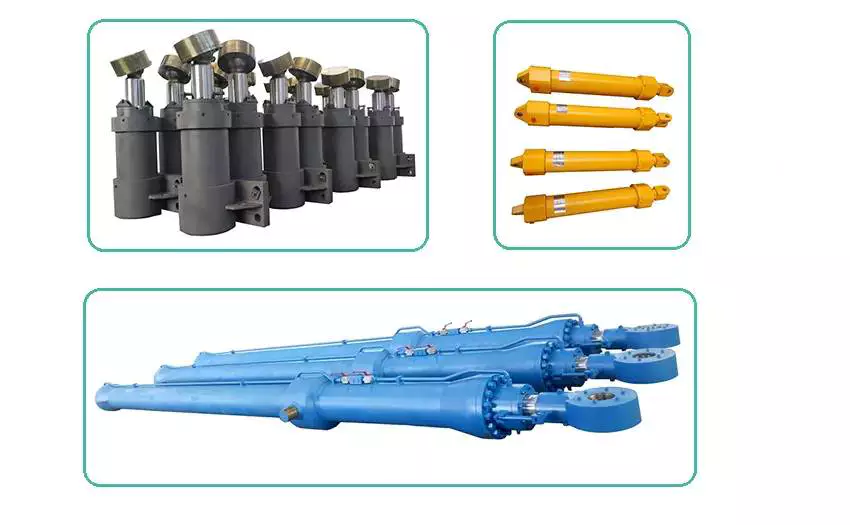
FE/FC/FEE/FSE Telescopic Hydraulic Cylinder For Dump Truck/Trailer
| Mục | Dump Truck Telescopic Hydraulic Cylinder |
| Type | FC/FE/FEE/FSE/Pin to Pin Mounting/Pin to Trunnion Mounting |
| HS Code | 8412210090 |
| Each Stage Diameter(mm) | 221/196/172/150/129/110/91/75/60; 214/191/169/149/129/110/91/75/60; 202/179/157/137/118/99/80/63; 9.375”/8.125”/7”/6”/5”/4”/3”; |
| Max.Stroke(mm) | 12000mm |
| Raw Materials | 27SiMn,16Mn,45#,20# seamless steel pipe with quenched&tempered |
| Seal Kits | Kaden,Hallite,Merkel,Guarnitec etc |
| Max.Pressure | 25MPa/250Bar |
| Chrome Plating | Hard chrome plated |
| Chrome Thickness | 0.015-0.571mm |
| Color | According to your needs,you can choose your favorite color (Black/Blue/Red/Yellow/Gray/White etc) |
| Quality Check | All the parts and the finished hydraulic cylinders will be tested before delivery |
| Warranty | 14 Months |
| Lead Time | 30-35 working days after deposit payment |
| Package | Plywood pallet or steel box suitable for export |
| Customers | USA,Canada,Mexico,Russia,Australia,New Zealand,Netherlands,Poland,Italy,South Korea, South America,South Africa etc |
| OEM/ODM | Yes |
Hydraulic Cylinder Production Process
Hydraulic Cylinder Test
Each hydraulic cylinder is strictly tested before delivery.
Hydraulic Cylinder Application
Other Hot Selling Hydraulic Cylinders
Hydraulic System
Package&Shipping
Our Overseas Customers
Câu hỏi thường gặp
A. Compared with CHINAMFG cylinder, what are your cylinder advantages?
1. Rod are chrome plated.
2. Tubes are quenched and tempered.
3.Tube inner hole goes through deep hole boring machine processing. Surface roughness is 0.4Ra
and circular degree is 0.571.
4. Good quality yet lower price.
B: Are you a manufacture or a trade company?
Manufacture, we are the leader manufacturer of hydraulic industry in China with 14 years’ experience and technology accumulation.
With strong technical team we could solve any annoyance of you.
C: How can I get a booklet and buy a cylinder from you?
Just leave me a message or email or call me directly, let me know you are interesting in our products. I will talk with you for the details soon!
1. Please advice the drawing with technical requirement.
2. Please advice the model No. after you check our booklet.
3. Please advice the tipping capacity, number of stages, closed length, mounting type and size.
4. Please also help advice the quantities, this is very important.
D: Do your products come with a warranty?
Yes, we have 14 months warranty. In this year, if the quality problem we will free repair for you.
E: What about the quality feedback of your products?
We have never received even once quality complaint for many years of international business.
F: Can you help me to install or recommend what kind of hydraulic cylinder or power pack should I use for specific machine?
Yes, we have 6 experienced engineers who are always ready to help you. If you do not know what kind of hydraulic cylinders should be used in your machine, please just contact us, our engineers will design the exact products match your need.
G: What is the delivery time?
Within 15 days for samples.
25-30 days for bulk production, which is depend on quality, production process and so on.
H: What is your main payment term?
T/T, L/C, either is available.
| Certification: | CE, ISO9001 |
|---|---|
| Pressure: | High Pressure |
| Work Temperature: | Normal Temperature |
| Acting Way: | Single Acting |
| Working Method: | Straight Trip |
| Adjusted Form: | Regulated Type |
| Samples: | US$ 280/Piece 1 Piece(Min.Order) | |
|---|
| Customization: | Available |
|
|---|
How do hydraulic cylinders compare to other methods of force generation like electric motors?
Hydraulic cylinders and electric motors are two different methods of force generation with distinct characteristics and applications. While both hydraulic cylinders and electric motors can generate force, they differ in terms of their working principles, performance attributes, and suitability for specific applications. Here’s a detailed comparison of hydraulic cylinders and electric motors:
1. Working Principle:
– Hydraulic Cylinders: Hydraulic cylinders generate force through the conversion of fluid pressure into linear motion. They consist of a cylinder barrel, piston, piston rod, and hydraulic fluid. When pressurized hydraulic fluid enters the cylinder, it pushes against the piston, causing the piston rod to extend or retract, thereby generating linear force.
– Electric Motors: Electric motors generate force through the conversion of electrical energy into rotational motion. They consist of a stator, rotor, and electromagnetic field. When an electrical current is applied to the motor’s windings, it creates a magnetic field that interacts with the rotor, causing it to rotate and generate torque.
2. Force and Power:
– Hydraulic Cylinders: Hydraulic cylinders are known for their high force capabilities. They can generate substantial linear forces, making them suitable for heavy-duty applications that require lifting, pushing, or pulling large loads. Hydraulic systems can provide high force output even at low speeds, allowing for precise control over force application. However, hydraulic systems typically operate at lower speeds compared to electric motors.
– Electric Motors: Electric motors excel in providing high rotational speeds and are commonly used for applications that require rapid motion. While electric motors can generate significant torque, they tend to have lower force output compared to hydraulic cylinders. Electric motors are suitable for applications that involve continuous rotary motion, such as driving conveyor belts, rotating machinery, or powering vehicles.
3. Control and Precision:
– Hydraulic Cylinders: Hydraulic systems offer excellent control over force, speed, and positioning. By regulating the flow of hydraulic fluid, the force and speed of hydraulic cylinders can be precisely controlled. Hydraulic systems can provide gradual acceleration and deceleration, allowing for smooth and precise movements. This level of control makes hydraulic cylinders well-suited for applications that require precise positioning, such as in industrial automation or construction equipment.
– Electric Motors: Electric motors also offer precise control over speed and positioning. Through motor control techniques such as varying voltage, frequency, or pulse width modulation (PWM), the rotational speed and position of electric motors can be accurately controlled. Electric motors are commonly used in applications that require precise speed control, such as robotics, CNC machines, or servo systems.
4. Efficiency and Energy Consumption:
– Hydraulic Cylinders: Hydraulic systems can be highly efficient, especially when properly sized and designed. However, hydraulic systems typically have higher energy losses due to factors such as fluid leakage, friction, and heat generation. The overall efficiency of a hydraulic system depends on the design, component selection, and maintenance practices. Hydraulic systems require a hydraulic power unit to pressurize the hydraulic fluid, which consumes additional energy.
– Electric Motors: Electric motors can have high efficiency, especially when operated at their optimal operating conditions. Electric motors have lower energy losses compared to hydraulic systems, primarily due to the absence of fluid leakage and lower friction losses. The overall efficiency of an electric motor depends on factors such as motor design, load conditions, and control techniques. Electric motors require an electrical power source, and their energy consumption depends on the motor’s power rating and the duration of operation.
5. Environmental Considerations:
– Hydraulic Cylinders: Hydraulic systems typically use hydraulic fluids that can pose environmental concerns if they leak or are not properly disposed of. The choice of hydraulic fluid can impact factors such as biodegradability, toxicity, and potential environmental hazards. Proper maintenance and leak prevention practices are essential to minimize the environmental impact of hydraulic systems.
– Electric Motors: Electric motors are generally considered more environmentally friendly since they do not require hydraulic fluids. However, the environmental impact of electric motors depends on the source of electricity used to power them. When powered by renewable energy sources, such as solar or wind, electric motors can offer a greener solution compared to hydraulic systems.
6. Application Suitability:
– Hydraulic Cylinders: Hydraulic cylinders are commonly used in applications that require high force output, precise control, and durability. They are widely employed in industries such as construction, manufacturing, mining, and aerospace. Hydraulic systems are well-suited for heavy-duty applications, such as lifting heavy objects, operating heavy machinery, or controlling large-scale movements.
– Electric Motors: Electric motors are widely used in various industries and applications that require rotational motion, speed control, and precise positioning. They are commonly found in appliances, transportation, robotics, HVAC systems, and automation. Electric motorsare suitable for applications that involve continuous rotary motion, such as driving conveyor belts, rotating machinery, or powering vehicles.In summary, hydraulic cylinders and electric motors have different working principles, force capabilities, control characteristics, efficiency levels, and application suitability. Hydraulic cylinders excel in providing high force output, precise control, and durability, making them ideal for heavy-duty applications. Electric motors, on the other hand, offer high rotational speeds, precise speed control, and are commonly used for applications that involve continuous rotary motion. The choice between hydraulic cylinders and electric motors depends on the specific requirements of the application, including the type of motion, force output, control precision, and environmental considerations.
Utilizing Hydraulic Cylinders in Conjunction with Alternative Energy Sources
Hydraulic cylinders can indeed be used in conjunction with alternative energy sources. The versatile nature of hydraulic systems allows them to be integrated with various alternative energy technologies to enhance efficiency, control, and power generation. Let’s explore some examples of how hydraulic cylinders can be utilized alongside alternative energy sources:
- Hydraulic Energy Storage: Hydraulic cylinders can be employed in energy storage systems that utilize alternative energy sources such as renewable sources (e.g., solar or wind) or waste energy recovery. These systems convert excess energy into hydraulic potential energy by pumping fluid into a high-pressure accumulator. When the energy is needed, the pressurized fluid is released, driving the hydraulic cylinder and generating mechanical power.
- Wave and Tidal Energy Conversion: Hydraulic cylinders can be utilized in wave and tidal energy conversion systems. These systems harness the power of ocean waves or tidal currents and convert it into usable energy. Hydraulic cylinders, along with associated pumps and valves, can be used to capture and control the energy from the waves or tides, driving the cylinders and generating mechanical power or producing electricity.
- Hydroelectric Power Generation: Hydraulic cylinders play a crucial role in traditional hydroelectric power generation. However, alternative approaches such as small-scale or micro-hydropower systems can also benefit from hydraulic cylinders. These systems utilize natural or man-made water flows to drive turbines connected to hydraulic cylinders, which then convert the hydraulic energy into mechanical power or electricity.
- Hydraulic Actuation in Wind Turbines: Hydraulic cylinders can be employed in wind turbines to enhance performance and control. For example, hydraulic pitch control systems use hydraulic cylinders to adjust the pitch angle of wind turbine blades, optimizing their aerodynamic performance based on wind conditions. This allows for efficient power generation and protection against excessive wind loads.
- Geothermal Energy Extraction: Geothermal energy extraction involves utilizing the natural heat from the Earth’s interior to generate power. Hydraulic cylinders can be utilized in geothermal systems to control and regulate fluid flow, allowing for efficient extraction and utilization of geothermal energy. They can also be used in geothermal heat pumps for heating and cooling applications.
In summary, hydraulic cylinders can be effectively utilized in conjunction with alternative energy sources to enhance energy storage, power generation, and control. Whether it’s through hydraulic energy storage systems, wave and tidal energy conversion, hydroelectric power generation, hydraulic actuation in wind turbines, or geothermal energy extraction, hydraulic cylinders offer versatile and efficient solutions for harnessing and utilizing alternative energy sources.
Những biện pháp bảo dưỡng nào là cần thiết để kéo dài tuổi thọ của xi lanh thủy lực?
Việc bảo trì xi lanh thủy lực rất quan trọng để kéo dài tuổi thọ và đảm bảo hiệu suất tối ưu. Bảo trì thường xuyên giúp ngăn ngừa sự hao mòn, hư hỏng và sự cố sớm, cuối cùng giúp giảm thời gian ngừng hoạt động và tiết kiệm chi phí. Dưới đây là một số biện pháp bảo trì thiết yếu cần xem xét để kéo dài tuổi thọ của xi lanh thủy lực:
1. Kiểm tra định kỳ:
– Tiến hành kiểm tra trực quan định kỳ các xi lanh thủy lực để phát hiện bất kỳ dấu hiệu hư hỏng, rò rỉ hoặc mài mòn nào. Kiểm tra thân xi lanh, cần piston, gioăng và các điểm lắp đặt. Tìm kiếm các vết rò rỉ chất lỏng, rỉ sét, vết lõm hoặc bất kỳ kiểu mài mòn bất thường nào. Phát hiện sớm các vấn đề cho phép sửa chữa hoặc thay thế kịp thời, ngăn ngừa hư hỏng thêm và kéo dài tuổi thọ của xi lanh.
2. Vệ sinh:
– Duy trì môi trường sạch sẽ xung quanh các xi lanh thủy lực để ngăn ngừa chất gây ô nhiễm xâm nhập vào hệ thống. Bụi, bẩn và mảnh vụn có thể làm hỏng các gioăng và các bộ phận bên trong khác, dẫn đến mài mòn nhanh hơn và giảm hiệu suất. Thường xuyên vệ sinh xi lanh và khu vực xung quanh để giảm thiểu nguy cơ ô nhiễm.
3. Bôi trơn đúng cách:
– Bôi trơn đầy đủ là yếu tố then chốt cho hoạt động trơn tru và tuổi thọ của xi lanh thủy lực. Hãy tuân theo khuyến nghị của nhà sản xuất về khoảng thời gian bôi trơn và sử dụng chất bôi trơn phù hợp. Bôi trơn các bộ phận chuyển động của xi lanh, chẳng hạn như cần piston, để giảm ma sát và giảm thiểu mài mòn.
4. Bảo trì gioăng:
– Gioăng phớt đóng vai trò quan trọng trong việc ngăn ngừa rò rỉ dầu thủy lực và duy trì hiệu suất hoạt động của xi lanh. Kiểm tra và thay thế gioăng phớt bị mòn hoặc hư hỏng kịp thời. Đảm bảo gioăng phớt được lắp đặt và bôi trơn đúng cách. Thường xuyên làm sạch các rãnh gioăng để loại bỏ cặn bẩn có thể làm giảm hiệu quả làm kín.
5. Kiểm tra áp suất:
– Thường xuyên kiểm tra áp suất hệ thống thủy lực để đảm bảo nằm trong phạm vi hoạt động khuyến nghị. Áp suất quá cao có thể gây quá tải cho xi lanh và các bộ phận của nó, dẫn đến mài mòn sớm. Theo dõi mức áp suất và điều chỉnh khi cần thiết để tránh quá tải xi lanh.
6. Bảo trì van điều khiển:
– Bảo trì và kiểm tra các van điều khiển điều chỉnh lưu lượng và hướng dòng chảy của chất lỏng thủy lực. Đảm bảo các van hoạt động chính xác và không gây ra ứng suất quá mức hoặc tăng áp đột ngột trong xi lanh. Vệ sinh hoặc thay thế các van điều khiển nếu chúng bị hư hỏng hoặc trục trặc.
7. Căn chỉnh xi lanh:
– Việc căn chỉnh đúng cách các xi lanh thủy lực là rất cần thiết cho tuổi thọ của chúng. Sự sai lệch có thể gây ra tải trọng ngang quá mức, dẫn đến mài mòn không đều và có thể gây hư hỏng. Hãy đảm bảo rằng xi lanh được căn chỉnh chính xác với các bộ phận khác và các điểm lắp đặt được chắc chắn.
8. Ngăn ngừa tình trạng quá tải:
– Tránh để các xi lanh thủy lực chịu tải vượt quá khả năng định mức của chúng. Quá tải có thể gây hư hỏng bên trong, hỏng gioăng và giảm tuổi thọ. Hãy đảm bảo rằng yêu cầu tải trọng nằm trong khả năng của xi lanh và cân nhắc sử dụng các thiết bị an toàn như hệ thống bảo vệ quá tải khi cần thiết.
9. Đào tạo và nâng cao nhận thức của người vận hành:
– Cung cấp đào tạo bài bản cho người vận hành thiết bị về cách sử dụng và vận hành đúng cách các xi lanh thủy lực. Người vận hành cần nắm rõ giới hạn của xi lanh, quy trình vận hành an toàn và tầm quan trọng của việc bảo trì thường xuyên. Thúc đẩy văn hóa bảo trì chủ động và khuyến khích người vận hành báo cáo kịp thời mọi sự cố tiềm ẩn.
10. Tài liệu và lưu trữ hồ sơ:
– Duy trì hồ sơ chi tiết về tất cả các hoạt động bảo trì, bao gồm kiểm tra, sửa chữa và thay thế. Ghi chép lịch bôi trơn, kiểm tra áp suất và mọi hoạt động bảo trì được thực hiện trên các xi lanh thủy lực. Hồ sơ này giúp theo dõi lịch sử của xi lanh, xác định các sự cố thường xuyên xảy ra và lập kế hoạch bảo trì hiệu quả trong tương lai.
Bằng cách tuân thủ các quy trình bảo dưỡng này, tuổi thọ của xi lanh thủy lực có thể được kéo dài, đảm bảo hiệu suất đáng tin cậy và giảm nguy cơ hỏng hóc bất ngờ. Việc kiểm tra thường xuyên, vệ sinh, bôi trơn đúng cách, bảo dưỡng gioăng, kiểm tra áp suất, bảo dưỡng van điều khiển, căn chỉnh xi lanh, ngăn ngừa quá tải, đào tạo người vận hành và lập hồ sơ góp phần vào tuổi thọ tổng thể và hoạt động tối ưu của xi lanh thủy lực.


editor by CX 2023-10-27
 Vietnamese
  English
  Italian
  Portuguese
  Dutch
Dutch  Swedish
  Danish
  Finnish
  Polish
  Hindi
Hindi  Kazakh
  Turkish
  Ukrainian
  Romanian
  Spanish
  German
  Russian
  Korean
  Japanese
  Thai
Thai  Indonesian
  Malay
Malay  French
  Greek
Greek