
Mô tả sản phẩm
- Product Information
- Related Products
HangZhou GD Machinery CO.,LTD. | |
Sản phẩm | |
tie rod hydraulic cylinder, welded hydraulic cylinder, telescopic cylinders cylinder, flange type hydraulic cylinder, hydraulic cylinder with valve function, hydraulic power unit, Hydraulic manifold block, pneumatic fitting, | |
Vật liệu | Tube – Cold Drawn Precision seamless Tubing Mounts – Trunnion with angular Swivels |
Application | Agriculture, Concrete & Asphalt, Cranes, Fire & Rescue, Forestry & Logging,Mining & Rock Crushing,Oil & Gas, Snow & Ice Control,Waste Management and Material Recycling Industry , Engineering Equipment, Special Vehicle |
Feature | 1.High quality with a reasonable price 2.ISO9001-2008 3.Customized specification are accepted |
Payment | T/T;L/C, Paypal |
Port | HangZhou ,China |
Quotation | According to the specific request |
Số lượng đặt hàng tối thiểu | According to the product |
Bao bì | metal case;plywood case;carton or as requirement |
Delivery time | 30days upon receipt of 30% deposit; or upon receipt of relevant L/C; |
- Our Service
1. Sample service: samples will be provided according to customer’s instruction.
2. Customized services: a variety of cylinders can be customized according to customer demand.
3. Warranty service: In case of quality problems under 1 year warranty period, free replacement will be made for customer.
- Working Process
- Packing and Shipping
The products are fully protected by metal shelves, wood boxes and plastic fillers.
- Company Information
HangZhou GD Machinery is specialized to offer high precision all kind of hydraulic valves and hydraulic cylinder.we also have some hydraulic valve from CHINAMFG brand aboard
With a wide range, good quality ,reasonable price,our products are extensively used in the industries of construction machinery,machine tool,plastic machinery,vehicle. mining equipment,metallurgy,shipyard,food machinery,agricultural machinery,and other industries.
Our products are widely recognized and trusted by users and can meet continuously changing economic and social needs.
Welcome new and old customers to contact us for future business. we will offer you good quality and best price.
- Company Show
- FAQ
Q: Do you accept OEM manufacturing?
A: Yes! We do accept OEM manufacturing. We will quote you the exact price and make the exact cylinder according to your specification and drawing.
Q: Can we design our own package or print our own logo?
A: Yes! Package and logo will be made acording to your requirements.
Q: Could we get small quantity samples?
A: Yes! We understand the quality test is important and we are glad to make the sample for you. The MOQ is 1pcs.
Q: How long is the production time?
A: Generally the production time is 30 days.
Q: What is your payment term?
A: For sample payment, generally 100% T/T payment in advance, west union, paypal.
For order payment, generally is 30% T/T in advance, 70% balance before shipment. If you require the different payment term, let us negotiate it together.
| Certification: | ISO9001, SGS |
|---|---|
| Pressure: | Medium Pressure |
| Work Temperature: | Normal Temperature |
| Samples: | US$ 60/Piece 1 Piece(Min.Order) | Order Sample |
|---|
| Customization: | Available |
|
|---|
.shipping-cost-tm .tm-status-off{background: none;padding:0;color: #1470cc}
| Shipping Cost: Estimated freight per unit. | about shipping cost and estimated delivery time. |
|---|
| Payment Method: |
|
|---|---|
| Initial Payment Full Payment |
| Currency: | US$ |
|---|
| Return&refunds: | You can apply for a refund up to 30 days after receipt of the products. |
|---|
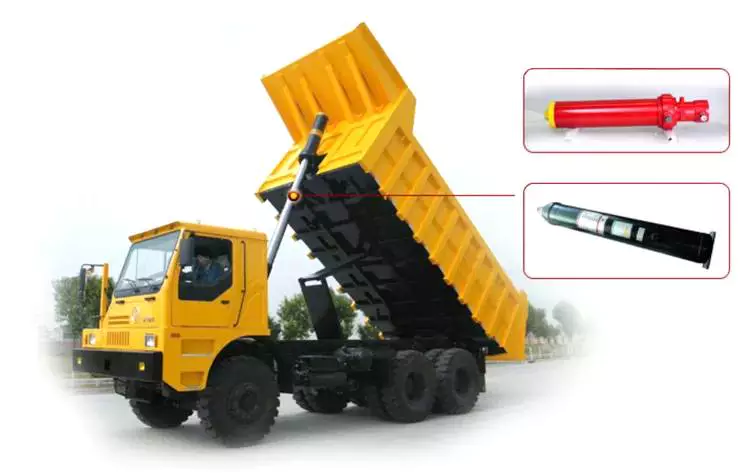
Can hydraulic cylinders be adapted for specialized applications like material handling?
Yes, hydraulic cylinders can be effectively adapted for specialized applications such as material handling. The versatility, power, and precise control offered by hydraulic cylinders make them well-suited for a wide range of material handling tasks. Hydraulic systems, including cylinders, are commonly used in industrial settings to lift, position, push, pull, and manipulate various types of materials. Here’s a detailed explanation of how hydraulic cylinders can be adapted for specialized material handling applications:
1. Lifting and Lowering:
– Hydraulic cylinders are commonly used for lifting and lowering heavy loads in material handling applications. By utilizing the force generated by hydraulic pressure, cylinders can provide the necessary power to lift and hold loads at different elevations. The precise control offered by hydraulic systems allows for accurate positioning of materials, ensuring efficient and safe lifting operations.
2. Pushing and Pulling:
– Hydraulic cylinders are capable of generating substantial pushing and pulling forces, making them ideal for applications that involve moving or manipulating materials. They can be used to push or pull heavy objects, control the movement of conveyors or rollers, or engage mechanisms for material transfer. The ability to exert high forces with precise control enables hydraulic cylinders to efficiently handle a variety of material handling tasks.
3. Tilting and Rotating:
– Hydraulic cylinders can be adapted to provide tilting and rotating functions in material handling equipment. By integrating cylinders into the design, equipment such as forklifts, cranes, or material handling arms can tilt or rotate to facilitate material placement or maneuvering. Hydraulic cylinders offer the required force and control to achieve smooth and controlled tilting or rotating motions, enhancing operational efficiency in material handling processes.
4. Gripping and Clamping:
– Hydraulic cylinders can be utilized to provide gripping and clamping functions for secure material handling. By incorporating specialized gripping or clamping mechanisms with hydraulic actuation, materials of various shapes and sizes can be securely held or clamped during transportation or processing. Hydraulic cylinders enable precise and adjustable gripping or clamping forces, ensuring the safe and reliable handling of materials.
5. Material Compaction and Forming:
– Hydraulic cylinders can be adapted for material compaction and forming applications. For example, in the production of bricks, hydraulic cylinders are used to apply high pressure and force to compact the raw materials into desired shapes. Similarly, in metal forming processes, hydraulic cylinders are employed to exert force on metal sheets or components, enabling precise shaping and forming operations.
6. Conveyor and Sorting Systems:
– Hydraulic cylinders can be integrated into conveyor and sorting systems to facilitate material movement and sorting. By incorporating hydraulic actuators, conveyor belts or sorting mechanisms can be efficiently controlled for optimal material flow and distribution. Hydraulic cylinders provide the necessary force and control to handle varying load capacities and adjust the speed and position of material transfer, improving the overall efficiency of handling and sorting operations.
7. Customized Designs:
– Hydraulic cylinders can be customized and adapted to meet specific requirements of specialized material handling applications. Engineers can design cylinders with unique dimensions, stroke lengths, mounting options, and sealing arrangements to fit into equipment or systems with specific space limitations or operating conditions. Customized hydraulic cylinders ensure optimal performance and compatibility for specialized material handling tasks.
In summary, hydraulic cylinders can be effectively adapted for specialized material handling applications, offering the necessary force, control, and versatility required in various material handling tasks. Whether it involves lifting and lowering, pushing and pulling, tilting and rotating, gripping and clamping, material compaction and forming, or integration into conveyor and sorting systems, hydraulic cylinders provide reliable and efficient solutions. Their adaptability, precise control, and ability to handle heavy loads make hydraulic cylinders a valuable component in optimizing material handling processes across different industries.
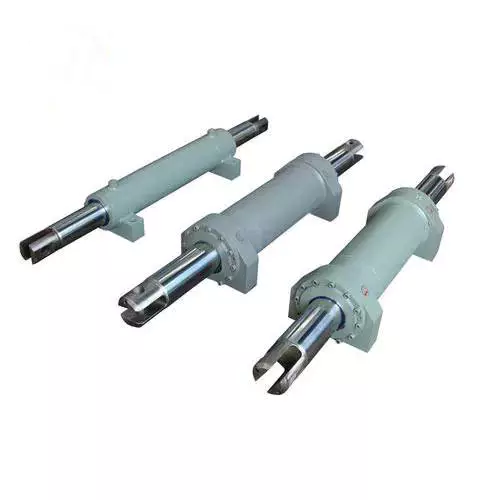
Ensuring Stable Performance of Hydraulic Cylinders Under Fluctuating Loads
Hydraulic cylinders are designed to provide stable performance even under fluctuating loads. They achieve this through various mechanisms and features that allow for efficient load control and compensation. Let’s explore how hydraulic cylinders ensure stable performance under fluctuating loads:
- Piston Design: The piston inside the hydraulic cylinder plays a crucial role in load control. It is typically equipped with seals and rings that prevent leakage of hydraulic fluid and ensure effective transfer of force. The piston design may incorporate features such as stepped or tandem pistons, which provide enhanced load-bearing capabilities and improved stability by distributing the load across multiple surfaces.
- Cylinder Cushioning: Hydraulic cylinders often incorporate cushioning mechanisms to minimize the impact and shock caused by fluctuating loads. Cushioning can be achieved through various methods, such as adjustable cushion screws, hydraulic cushioning valves, or elastomeric cushioning rings. These mechanisms slow down the piston’s movement near the end of the stroke, reducing the impact and preventing sudden stops that could lead to instability.
- Pressure Compensation: Fluctuating loads can result in pressure variations within the hydraulic system. To ensure stable performance, hydraulic cylinders are equipped with pressure compensation mechanisms. These mechanisms maintain a consistent pressure level in the system, regardless of load changes. Pressure compensation can be achieved through the use of pressure relief valves, compensating pistons, or pressure-compensated flow control valves.
- Flow Control: Hydraulic cylinders often incorporate flow control valves to regulate the speed of the cylinder’s movement. By controlling the flow rate of hydraulic fluid, the cylinder’s motion can be adjusted to match the changing load conditions. Flow control valves allow for smooth and controlled movement, preventing abrupt changes that could lead to instability.
- Feedback Systems: To ensure stable performance under fluctuating loads, hydraulic cylinders can be integrated with feedback systems. These systems provide real-time information on the cylinder’s position, velocity, and force. By continuously monitoring these parameters, the hydraulic system can make immediate adjustments to maintain stability and compensate for load fluctuations. Feedback systems can include position sensors, pressure sensors, or load sensors, depending on the specific application.
- Proper Sizing and Selection: Ensuring stable performance under fluctuating loads starts with proper sizing and selection of hydraulic cylinders. It is crucial to choose cylinders with appropriate bore size, rod diameter, and stroke length to match the anticipated load conditions. Oversized or undersized cylinders can lead to instability and reduced performance. Proper sizing also involves considering factors such as the required force, speed, and duty cycle of the application.
In summary, hydraulic cylinders ensure stable performance under fluctuating loads through features such as piston design, cushioning mechanisms, pressure compensation, flow control, feedback systems, and proper sizing and selection. These mechanisms and considerations allow hydraulic cylinders to provide consistent and controlled movement, even in dynamic load conditions, resulting in reliable and stable performance.
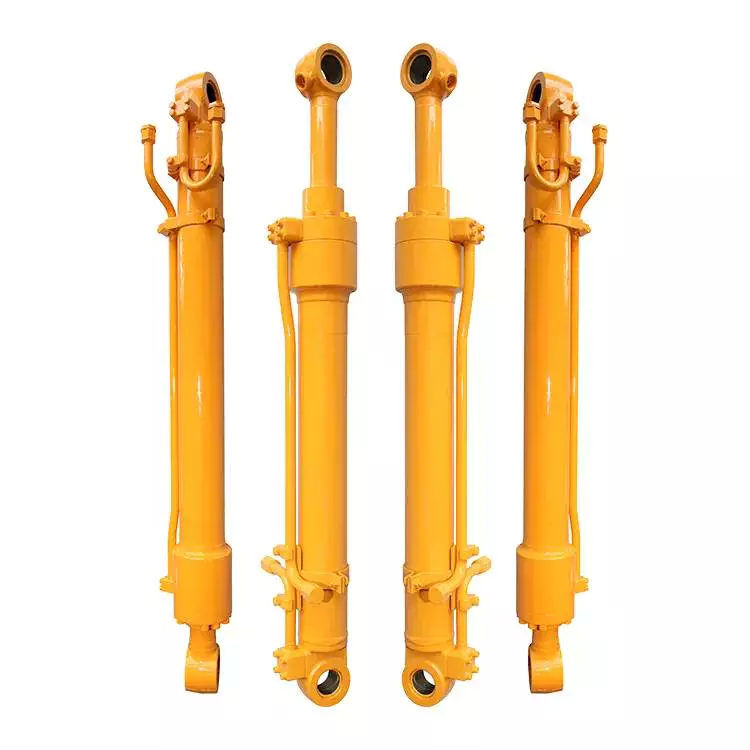
Những biện pháp bảo dưỡng nào là cần thiết để kéo dài tuổi thọ của xi lanh thủy lực?
Việc bảo trì xi lanh thủy lực rất quan trọng để kéo dài tuổi thọ và đảm bảo hiệu suất tối ưu. Bảo trì thường xuyên giúp ngăn ngừa sự hao mòn, hư hỏng và sự cố sớm, cuối cùng giúp giảm thời gian ngừng hoạt động và tiết kiệm chi phí. Dưới đây là một số biện pháp bảo trì thiết yếu cần xem xét để kéo dài tuổi thọ của xi lanh thủy lực:
1. Kiểm tra định kỳ:
– Tiến hành kiểm tra trực quan định kỳ các xi lanh thủy lực để phát hiện bất kỳ dấu hiệu hư hỏng, rò rỉ hoặc mài mòn nào. Kiểm tra thân xi lanh, cần piston, gioăng và các điểm lắp đặt. Tìm kiếm các vết rò rỉ chất lỏng, rỉ sét, vết lõm hoặc bất kỳ kiểu mài mòn bất thường nào. Phát hiện sớm các vấn đề cho phép sửa chữa hoặc thay thế kịp thời, ngăn ngừa hư hỏng thêm và kéo dài tuổi thọ của xi lanh.
2. Vệ sinh:
– Duy trì môi trường sạch sẽ xung quanh các xi lanh thủy lực để ngăn ngừa chất gây ô nhiễm xâm nhập vào hệ thống. Bụi, bẩn và mảnh vụn có thể làm hỏng các gioăng và các bộ phận bên trong khác, dẫn đến mài mòn nhanh hơn và giảm hiệu suất. Thường xuyên vệ sinh xi lanh và khu vực xung quanh để giảm thiểu nguy cơ ô nhiễm.
3. Bôi trơn đúng cách:
– Bôi trơn đầy đủ là yếu tố then chốt cho hoạt động trơn tru và tuổi thọ của xi lanh thủy lực. Hãy tuân theo khuyến nghị của nhà sản xuất về khoảng thời gian bôi trơn và sử dụng chất bôi trơn phù hợp. Bôi trơn các bộ phận chuyển động của xi lanh, chẳng hạn như cần piston, để giảm ma sát và giảm thiểu mài mòn.
4. Bảo trì gioăng:
– Gioăng phớt đóng vai trò quan trọng trong việc ngăn ngừa rò rỉ dầu thủy lực và duy trì hiệu suất hoạt động của xi lanh. Kiểm tra và thay thế gioăng phớt bị mòn hoặc hư hỏng kịp thời. Đảm bảo gioăng phớt được lắp đặt và bôi trơn đúng cách. Thường xuyên làm sạch các rãnh gioăng để loại bỏ cặn bẩn có thể làm giảm hiệu quả làm kín.
5. Kiểm tra áp suất:
– Thường xuyên kiểm tra áp suất hệ thống thủy lực để đảm bảo nằm trong phạm vi hoạt động khuyến nghị. Áp suất quá cao có thể gây quá tải cho xi lanh và các bộ phận của nó, dẫn đến mài mòn sớm. Theo dõi mức áp suất và điều chỉnh khi cần thiết để tránh quá tải xi lanh.
6. Bảo trì van điều khiển:
– Bảo trì và kiểm tra các van điều khiển điều chỉnh lưu lượng và hướng dòng chảy của chất lỏng thủy lực. Đảm bảo các van hoạt động chính xác và không gây ra ứng suất quá mức hoặc tăng áp đột ngột trong xi lanh. Vệ sinh hoặc thay thế các van điều khiển nếu chúng bị hư hỏng hoặc trục trặc.
7. Căn chỉnh xi lanh:
– Việc căn chỉnh đúng cách các xi lanh thủy lực là rất cần thiết cho tuổi thọ của chúng. Sự sai lệch có thể gây ra tải trọng ngang quá mức, dẫn đến mài mòn không đều và có thể gây hư hỏng. Hãy đảm bảo rằng xi lanh được căn chỉnh chính xác với các bộ phận khác và các điểm lắp đặt được chắc chắn.
8. Ngăn ngừa tình trạng quá tải:
– Tránh để các xi lanh thủy lực chịu tải vượt quá khả năng định mức của chúng. Quá tải có thể gây hư hỏng bên trong, hỏng gioăng và giảm tuổi thọ. Hãy đảm bảo rằng yêu cầu tải trọng nằm trong khả năng của xi lanh và cân nhắc sử dụng các thiết bị an toàn như hệ thống bảo vệ quá tải khi cần thiết.
9. Đào tạo và nâng cao nhận thức của người vận hành:
– Cung cấp đào tạo bài bản cho người vận hành thiết bị về cách sử dụng và vận hành đúng cách các xi lanh thủy lực. Người vận hành cần nắm rõ giới hạn của xi lanh, quy trình vận hành an toàn và tầm quan trọng của việc bảo trì thường xuyên. Thúc đẩy văn hóa bảo trì chủ động và khuyến khích người vận hành báo cáo kịp thời mọi sự cố tiềm ẩn.
10. Tài liệu và lưu trữ hồ sơ:
– Duy trì hồ sơ chi tiết về tất cả các hoạt động bảo trì, bao gồm kiểm tra, sửa chữa và thay thế. Ghi chép lịch bôi trơn, kiểm tra áp suất và mọi hoạt động bảo trì được thực hiện trên các xi lanh thủy lực. Hồ sơ này giúp theo dõi lịch sử của xi lanh, xác định các sự cố thường xuyên xảy ra và lập kế hoạch bảo trì hiệu quả trong tương lai.
Bằng cách tuân thủ các quy trình bảo dưỡng này, tuổi thọ của xi lanh thủy lực có thể được kéo dài, đảm bảo hiệu suất đáng tin cậy và giảm nguy cơ hỏng hóc bất ngờ. Việc kiểm tra thường xuyên, vệ sinh, bôi trơn đúng cách, bảo dưỡng gioăng, kiểm tra áp suất, bảo dưỡng van điều khiển, căn chỉnh xi lanh, ngăn ngừa quá tải, đào tạo người vận hành và lập hồ sơ góp phần vào tuổi thọ tổng thể và hoạt động tối ưu của xi lanh thủy lực.


editor by CX 2023-10-23
 Vietnamese
  English
  Italian
  Portuguese
  Dutch
Dutch  Swedish
  Danish
  Finnish
  Polish
  Hindi
Hindi  Kazakh
  Turkish
  Ukrainian
  Romanian
  Spanish
  German
  Russian
  Korean
  Japanese
  Thai
Thai  Indonesian
  Malay
Malay  French
  Greek
Greek