
Productbeschrijving
- Product Information
- Related Products
|
HangZhou GD Machinery CO.,LTD. |
|
|
Product |
|
|
tie rod hydraulic cylinder, welded hydraulic cylinder, telescopic cylinders cylinder, flange type hydraulic cylinder, hydraulic cylinder with valve function, hydraulic power unit, Hydraulic manifold block, pneumatic fitting, |
|
|
Materiaal |
Tube – Cold Drawn Precision seamless Tubing Mounts – Trunnion with angular Swivels |
|
Application |
Agriculture, Concrete & Asphalt, Cranes, Fire & Rescue, Forestry & Logging,Mining & Rock Crushing,Oil & Gas, Snow & Ice Control,Waste Management and Material Recycling Industry , Engineering Equipment, Special Vehicle |
|
Feature |
1.High quality with a reasonable price 2.ISO9001-2008 3.Customized specification are accepted |
|
Payment |
T/T;L/C, Paypal |
|
Port |
HangZhou ,China |
|
Quotation |
According to the specific request |
|
MOQ |
According to the product |
|
Verpakking |
metal case;plywood case;carton or as requirement |
|
Delivery time |
30days upon receipt of 30% deposit; or upon receipt of relevant L/C; |
- Our Service
1. Sample service: samples will be provided according to customer’s instruction.
2. Customized services: a variety of cylinders can be customized according to customer demand.
3. Warranty service: In case of quality problems under 1 year warranty period, free replacement will be made for customer.
- Working Process
- Packing and Shipping
The products are fully protected by metal shelves, wood boxes and plastic fillers.
- Company Information
HangZhou GD Machinery is specialized to offer high precision all kind of hydraulic valves and hydraulic cylinder.we also have some hydraulic valve from CHINAMFG brand aboard
With a wide range, good quality ,reasonable price,our products are extensively used in the industries of construction machinery,machine tool,plastic machinery,vehicle. mining equipment,metallurgy,shipyard,food machinery,agricultural machinery,and other industries.
Our products are widely recognized and trusted by users and can meet continuously changing economic and social needs.
Welcome new and old customers to contact us for future business. we will offer you good quality and best price.
- Company Show
- FAQ
Q: Do you accept OEM manufacturing?
A: Yes! We do accept OEM manufacturing. We will quote you the exact price and make the exact cylinder according to your specification and drawing.
Q: Can we design our own package or print our own logo?
A: Yes! Package and logo will be made acording to your requirements.
Q: Could we get small quantity samples?
A: Yes! We understand the quality test is important and we are glad to make the sample for you. The MOQ is 1pcs.
Q: How long is the production time?
A: Generally the production time is 30 days.
Q: What is your payment term?
A: For sample payment, generally 100% T/T payment in advance, west union, paypal.
For order payment, generally is 30% T/T in advance, 70% balance before shipment. If you require the different payment term, let us negotiate it together.
| Certification: | ISO9001, SGS |
|---|---|
| Pressure: | Medium Pressure |
| Work Temperature: | Normal Temperature |
| Samples: |
US$ 60/Piece
1 Piece(Min.Order) | Order Sample |
|---|
| Customization: |
Available
|
|
|---|
.shipping-cost-tm .tm-status-off{background: none;padding:0;color: #1470cc}
| Shipping Cost:
Estimated freight per unit. |
about shipping cost and estimated delivery time. |
|---|
| Payment Method: |
|
|---|---|
|
Initial Payment Full Payment |
| Currency: | US$ |
|---|
| Return&refunds: | You can apply for a refund up to 30 days after receipt of the products. |
|---|
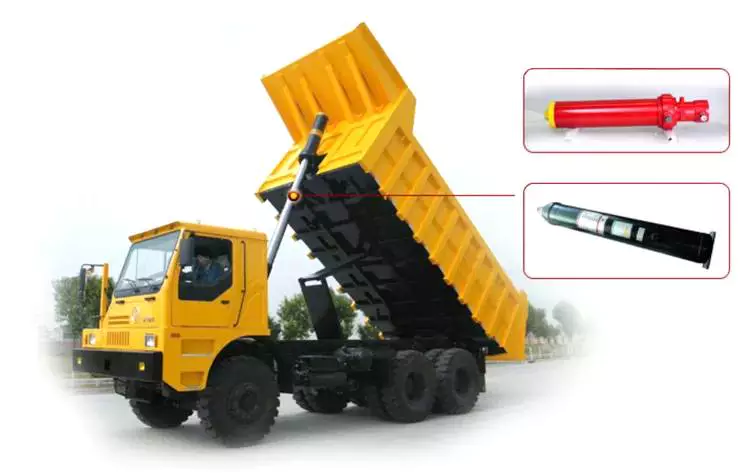
Can hydraulic cylinders be adapted for specialized applications like material handling?
Yes, hydraulic cylinders can be effectively adapted for specialized applications such as material handling. The versatility, power, and precise control offered by hydraulic cylinders make them well-suited for a wide range of material handling tasks. Hydraulic systems, including cylinders, are commonly used in industrial settings to lift, position, push, pull, and manipulate various types of materials. Here’s a detailed explanation of how hydraulic cylinders can be adapted for specialized material handling applications:
1. Lifting and Lowering:
– Hydraulic cylinders are commonly used for lifting and lowering heavy loads in material handling applications. By utilizing the force generated by hydraulic pressure, cylinders can provide the necessary power to lift and hold loads at different elevations. The precise control offered by hydraulic systems allows for accurate positioning of materials, ensuring efficient and safe lifting operations.
2. Pushing and Pulling:
– Hydraulic cylinders are capable of generating substantial pushing and pulling forces, making them ideal for applications that involve moving or manipulating materials. They can be used to push or pull heavy objects, control the movement of conveyors or rollers, or engage mechanisms for material transfer. The ability to exert high forces with precise control enables hydraulic cylinders to efficiently handle a variety of material handling tasks.
3. Tilting and Rotating:
– Hydraulic cylinders can be adapted to provide tilting and rotating functions in material handling equipment. By integrating cylinders into the design, equipment such as forklifts, cranes, or material handling arms can tilt or rotate to facilitate material placement or maneuvering. Hydraulic cylinders offer the required force and control to achieve smooth and controlled tilting or rotating motions, enhancing operational efficiency in material handling processes.
4. Gripping and Clamping:
– Hydraulic cylinders can be utilized to provide gripping and clamping functions for secure material handling. By incorporating specialized gripping or clamping mechanisms with hydraulic actuation, materials of various shapes and sizes can be securely held or clamped during transportation or processing. Hydraulic cylinders enable precise and adjustable gripping or clamping forces, ensuring the safe and reliable handling of materials.
5. Material Compaction and Forming:
– Hydraulic cylinders can be adapted for material compaction and forming applications. For example, in the production of bricks, hydraulic cylinders are used to apply high pressure and force to compact the raw materials into desired shapes. Similarly, in metal forming processes, hydraulic cylinders are employed to exert force on metal sheets or components, enabling precise shaping and forming operations.
6. Conveyor and Sorting Systems:
– Hydraulic cylinders can be integrated into conveyor and sorting systems to facilitate material movement and sorting. By incorporating hydraulic actuators, conveyor belts or sorting mechanisms can be efficiently controlled for optimal material flow and distribution. Hydraulic cylinders provide the necessary force and control to handle varying load capacities and adjust the speed and position of material transfer, improving the overall efficiency of handling and sorting operations.
7. Customized Designs:
– Hydraulic cylinders can be customized and adapted to meet specific requirements of specialized material handling applications. Engineers can design cylinders with unique dimensions, stroke lengths, mounting options, and sealing arrangements to fit into equipment or systems with specific space limitations or operating conditions. Customized hydraulic cylinders ensure optimal performance and compatibility for specialized material handling tasks.
In summary, hydraulic cylinders can be effectively adapted for specialized material handling applications, offering the necessary force, control, and versatility required in various material handling tasks. Whether it involves lifting and lowering, pushing and pulling, tilting and rotating, gripping and clamping, material compaction and forming, or integration into conveyor and sorting systems, hydraulic cylinders provide reliable and efficient solutions. Their adaptability, precise control, and ability to handle heavy loads make hydraulic cylinders a valuable component in optimizing material handling processes across different industries.
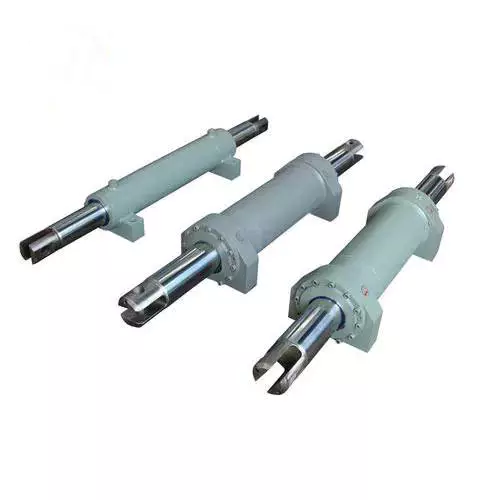
Ensuring Stable Performance of Hydraulic Cylinders Under Fluctuating Loads
Hydraulic cylinders are designed to provide stable performance even under fluctuating loads. They achieve this through various mechanisms and features that allow for efficient load control and compensation. Let’s explore how hydraulic cylinders ensure stable performance under fluctuating loads:
- Piston Design: The piston inside the hydraulic cylinder plays a crucial role in load control. It is typically equipped with seals and rings that prevent leakage of hydraulic fluid and ensure effective transfer of force. The piston design may incorporate features such as stepped or tandem pistons, which provide enhanced load-bearing capabilities and improved stability by distributing the load across multiple surfaces.
- Cylinder Cushioning: Hydraulic cylinders often incorporate cushioning mechanisms to minimize the impact and shock caused by fluctuating loads. Cushioning can be achieved through various methods, such as adjustable cushion screws, hydraulic cushioning valves, or elastomeric cushioning rings. These mechanisms slow down the piston’s movement near the end of the stroke, reducing the impact and preventing sudden stops that could lead to instability.
- Pressure Compensation: Fluctuating loads can result in pressure variations within the hydraulic system. To ensure stable performance, hydraulic cylinders are equipped with pressure compensation mechanisms. These mechanisms maintain a consistent pressure level in the system, regardless of load changes. Pressure compensation can be achieved through the use of pressure relief valves, compensating pistons, or pressure-compensated flow control valves.
- Flow Control: Hydraulic cylinders often incorporate flow control valves to regulate the speed of the cylinder’s movement. By controlling the flow rate of hydraulic fluid, the cylinder’s motion can be adjusted to match the changing load conditions. Flow control valves allow for smooth and controlled movement, preventing abrupt changes that could lead to instability.
- Feedback Systems: To ensure stable performance under fluctuating loads, hydraulic cylinders can be integrated with feedback systems. These systems provide real-time information on the cylinder’s position, velocity, and force. By continuously monitoring these parameters, the hydraulic system can make immediate adjustments to maintain stability and compensate for load fluctuations. Feedback systems can include position sensors, pressure sensors, or load sensors, depending on the specific application.
- Proper Sizing and Selection: Ensuring stable performance under fluctuating loads starts with proper sizing and selection of hydraulic cylinders. It is crucial to choose cylinders with appropriate bore size, rod diameter, and stroke length to match the anticipated load conditions. Oversized or undersized cylinders can lead to instability and reduced performance. Proper sizing also involves considering factors such as the required force, speed, and duty cycle of the application.
In summary, hydraulic cylinders ensure stable performance under fluctuating loads through features such as piston design, cushioning mechanisms, pressure compensation, flow control, feedback systems, and proper sizing and selection. These mechanisms and considerations allow hydraulic cylinders to provide consistent and controlled movement, even in dynamic load conditions, resulting in reliable and stable performance.
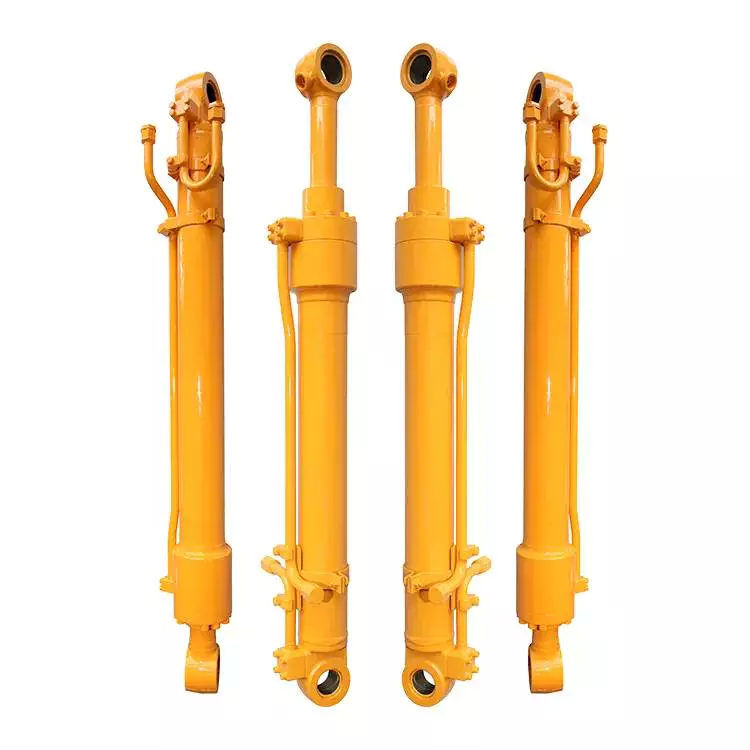
Welke onderhoudsprocedures zijn essentieel voor het verlengen van de levensduur van hydraulische cilinders?
Het onderhouden van hydraulische cilinders is cruciaal voor het verlengen van hun levensduur en het garanderen van optimale prestaties. Regelmatig onderhoud helpt vroegtijdige slijtage, schade en storingen te voorkomen, waardoor uiteindelijk de stilstandtijd wordt verminderd en kosten worden bespaard. Hieronder volgen enkele essentiële onderhoudsmaatregelen om de levensduur van hydraulische cilinders te verlengen:
1. Regelmatige inspecties:
– Voer routinematige visuele inspecties uit van hydraulische cilinders om eventuele schade, lekkages of slijtage op te sporen. Inspecteer de cilinderbehuizing, de zuigerstang, de afdichtingen en de bevestigingspunten. Let op vloeistoflekkages, roest, deuken of abnormale slijtagepatronen. Vroegtijdige detectie van problemen maakt tijdige reparaties of vervangingen mogelijk, waardoor verdere schade wordt voorkomen en de levensduur van de cilinder wordt verlengd.
2. Netheid:
– Zorg voor een schone omgeving rond hydraulische cilinders om te voorkomen dat er vuil in het systeem terechtkomt. Stof, vuil en ander afval kunnen afdichtingen en andere interne onderdelen beschadigen, wat leidt tot versnelde slijtage en verminderde prestaties. Reinig de cilinder en de omgeving regelmatig om het risico op vervuiling te minimaliseren.
3. Juiste smering:
Voldoende smering is cruciaal voor een soepele werking en een lange levensduur van hydraulische cilinders. Volg de aanbevelingen van de fabrikant voor de smeerintervallen en gebruik het juiste smeermiddel. Breng smeermiddel aan op de bewegende delen van de cilinder, zoals de zuigerstang, om wrijving te verminderen en slijtage te minimaliseren.
4. Onderhoud van de afdichting:
– Afdichtingen spelen een cruciale rol bij het voorkomen van lekkage van hydraulische vloeistof en het behoud van de prestaties van de cilinder. Controleer en vervang versleten of beschadigde afdichtingen onmiddellijk. Zorg ervoor dat de afdichtingen correct zijn gemonteerd en gesmeerd. Reinig de groeven van de afdichtingen regelmatig om vuil te verwijderen dat de effectiviteit van de afdichting kan verminderen.
5. Drukcontroles:
– Controleer periodiek de druk in het hydraulische systeem om er zeker van te zijn dat deze binnen het aanbevolen werkingsbereik ligt. Overmatige druk kan de cilinder en de onderdelen ervan belasten, wat leidt tot voortijdige slijtage. Houd de drukniveaus in de gaten en pas deze indien nodig aan om overbelasting van de cilinder te voorkomen.
6. Onderhoud van de regelklep:
– Onderhoud en inspecteer de regelkleppen die de stroom en richting van de hydraulische vloeistof regelen. Zorg ervoor dat de kleppen correct functioneren en geen overmatige spanning of drukpieken in de cilinder veroorzaken. Reinig of vervang de regelkleppen indien ze beschadigd of defect zijn.
7. Cilinderuitlijning:
– Een correcte uitlijning van hydraulische cilinders is essentieel voor hun levensduur. Een verkeerde uitlijning kan leiden tot overmatige zijdelingse belasting, waardoor ongelijkmatige slijtage en mogelijke schade ontstaan. Zorg ervoor dat de cilinder correct is uitgelijnd met andere componenten en dat de bevestigingspunten goed vastzitten.
8. Overbelasting voorkomen:
– Vermijd het belasten van hydraulische cilinders met een belasting die hun nominale capaciteit overschrijdt. Overbelasting kan interne schade, defecten aan de afdichtingen en een kortere levensduur veroorzaken. Zorg ervoor dat de belasting binnen de mogelijkheden van de cilinder ligt en overweeg indien nodig het gebruik van veiligheidsvoorzieningen zoals overbelastingsbeveiligingssystemen.
9. Training en bewustwording bij de operator:
– Zorg voor een gedegen training van de operators over het correcte gebruik en de juiste hantering van hydraulische cilinders. Operators moeten op de hoogte zijn van de beperkingen van de cilinder, de veilige bedieningsprocedures en het belang van regelmatig onderhoud. Stimuleer een cultuur van proactief onderhoud en moedig operators aan om eventuele problemen direct te melden.
10. Documentatie en archivering:
– Houd gedetailleerde documentatie bij van alle onderhoudsactiviteiten, inclusief inspecties, reparaties en vervangingen. Registreer smeerschema's, drukmetingen en al het uitgevoerde onderhoud aan de hydraulische cilinders. Deze documentatie helpt bij het bijhouden van de geschiedenis van de cilinder, het identificeren van terugkerende problemen en het effectief plannen van toekomstig onderhoud.
Door deze onderhoudsprocedures te volgen, kan de levensduur van hydraulische cilinders worden verlengd, waardoor betrouwbare prestaties worden gegarandeerd en het risico op onverwachte storingen wordt verminderd. Regelmatige inspecties, reiniging, juiste smering, onderhoud van afdichtingen, drukcontroles, onderhoud van regelkleppen, uitlijning van cilinders, voorkomen van overbelasting, training van de operator en documentatie dragen bij aan de algehele levensduur en optimale werking van hydraulische cilinders.


editor by CX 2023-10-23
 Dutch
Dutch  English
  Italian
  Portuguese
  Swedish
  Danish
  Finnish
  Polish
  Hindi
Hindi  Kazakh
  Turkish
  Ukrainian
  Romanian
  Spanish
  German
  Russian
  Korean
  Japanese
  Vietnamese
  Thai
Thai  Indonesian
  Malay
Malay  French
  Greek
Greek