
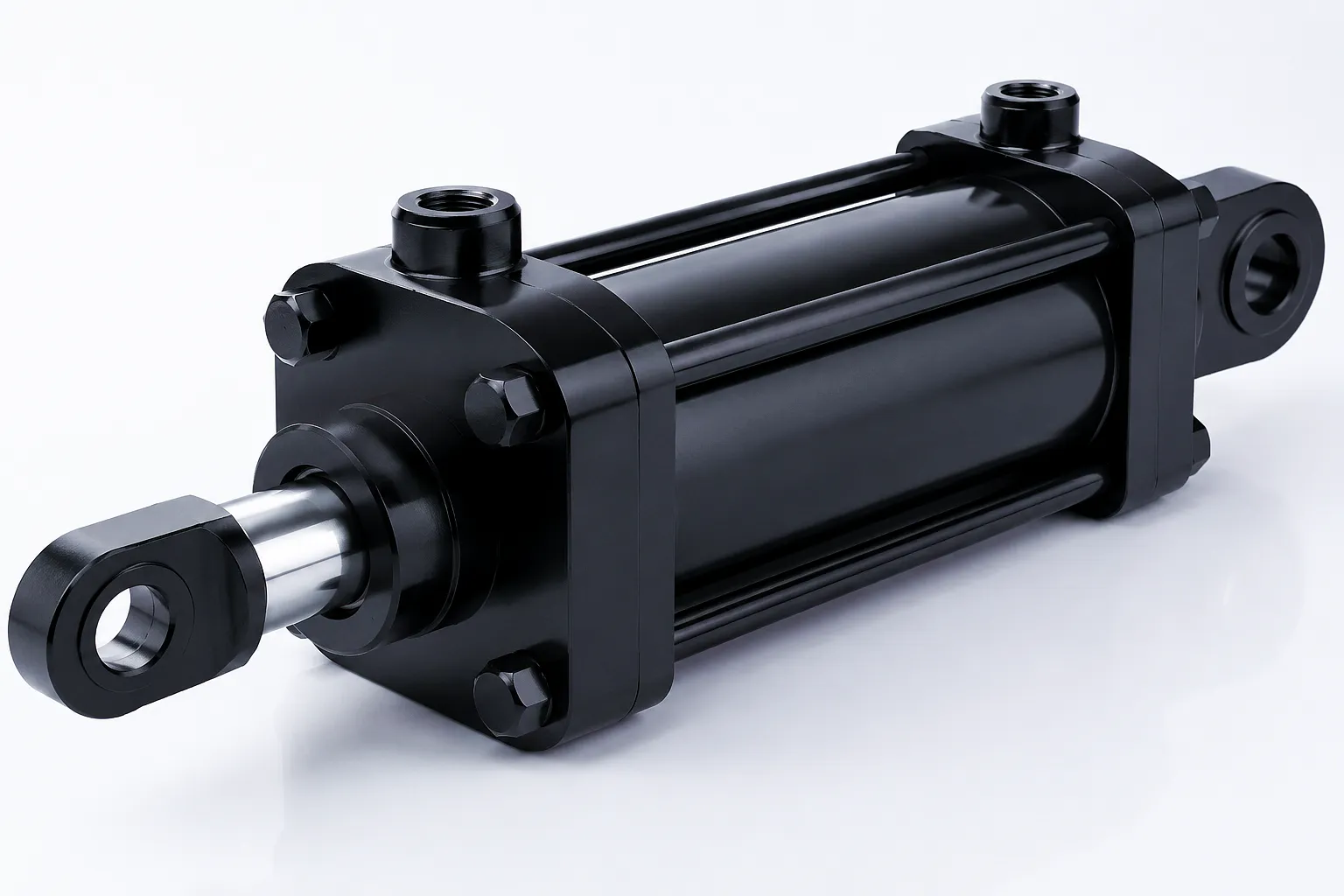
 Every excavator arm, agricultural loader, timber crane, and refuse collection vehicle operating across the UK relies on at least one hydraulic cylinder to generate usable linear force. Yet despite the technology being over a century old, the single-acting vs. double-acting cylinder selection question still trips up procurement engineers, fleet managers, and OEM designers on a regular basis. The wrong choice does not just cost money — it introduces safety risk, inflates maintenance intervals, and can cause premature seal failure under British weather conditions where temperature swings and moisture ingress are ever-present challenges.
Need boom cylinders for your UK operation? Our engineering team responds within 24 hours.
How Each Cylinder Configuration Works
The engineering fundamentals that separate these two cylinder families
Single-Acting Boom Cylinder
A single-acting cylinder receives pressurised hydraulic fluid from the pump on only one side of the piston — typically the cap end. This fluid pressure pushes the piston and rod outward to extend the boom arm. Retraction is accomplished not by a second oil supply, but by an external mechanical force: most commonly the dead weight of the boom itself, a return spring pre-loaded inside the cylinder body, or the gravitational pull on an attached implement such as a bucket or grab. The hydraulic circuit feeding a single-acting unit requires just one port and one supply line, which immediately simplifies the valve block, hose routing, and manifold design.
The mechanical simplicity of single-acting designs makes them inherently attractive where cost-per-unit matters, where the machine’s geometry guarantees reliable gravity retraction, and where reduced hydraulic fluid volume is a packaging advantage. Tipper trucks, front-end agricultural loaders, and certain forestry applications around Scotland’s commercial timber industry all make routine use of single-acting cylinders precisely because the dump or lower function is handled by gravity rather than active hydraulic pressure. The internal sealing arrangement is also simpler, with fewer dynamic seal interfaces to maintain, which lowers long-term service cost and reduces the chance of internal cross-port leakage contaminating the fluid.
Double-Acting Boom Cylinder
A double-acting cylinder receives pressurised fluid on both sides of its piston, with independent ports at the cap end and the rod end. When the cap-end port is pressurised and the rod-end port opens to tank, the piston extends with full hydraulic force. When the rod-end port is pressurised and the cap-end returns to tank, the piston retracts under controlled hydraulic pressure. This bidirectional force generation is what makes double-acting cylinders the definitive choice for any application where retraction must happen quickly, against an external load, or with precisely metered speed control.
Because both the extend and retract strokes are hydraulically powered, the machine operator has full control over the boom’s travel in both directions regardless of the implement’s mass, the angle of the machine, or external forces acting on the structure. This matters enormously on excavators operating on sloped ground near Sheffield’s steel fabrication sites, on marine crane booms aboard vessels where the ship’s pitch alters gravitational loading unpredictably, and on forestry grab arms where the weight distribution changes every time a log is picked up or set down. Double-acting cylinders require a four-way directional control valve and two hose lines to each cylinder, but the operational flexibility they deliver almost always justifies the additional circuit complexity.
Working Principle: Inside the Cylinder
Pressure, geometry, and flow — how force is generated and controlled
Pascal’s Law in Practice
Every hydraulic cylinder operates on Pascal’s Principle: pressure applied to a confined fluid is transmitted equally in all directions. Inside a boom cylinder, the pump raises system pressure — typically between 200 and 350 bar for heavy-duty plant — and that pressure acts on the piston’s cross-sectional area to generate push force. The extend force of a cylinder is calculated as the system pressure multiplied by the full bore area of the piston. The retract force of a double-acting cylinder is calculated as pressure multiplied by the annular area — that is, the bore area minus the rod cross-section. This difference between extend and retract force is called the differential ratio, and it is a critical parameter when sizing double-acting units for applications where retraction must overcome a specific load. For single-acting cylinders, the retract force equation is replaced entirely by the weight of the suspended structure, which is why gravity retraction must always be verified before this configuration is committed to a design.
Seal Dynamics and Fluid Control
The piston seal is the component that separates the two pressure chambers in a double-acting cylinder and prevents cross-port leakage. Modern seal kits for boom cylinders use a combination of polyurethane or PTFE-backed lip seals for primary sealing and a guide ring to prevent metal-to-metal contact between the piston and barrel. The rod seal assembly at the gland end must resist both internal pressure and external contamination — a particularly demanding requirement for UK plant operating in wet, abrasive conditions. A wiper seal is always fitted outboard of the rod seal to strip particulate and moisture from the rod surface on each retract stroke. For single-acting cylinders, the internal seal arrangement is lighter because only one pressure face requires dynamic sealing; however, the rod seal and wiper remain equally critical since the rod is exposed to the same environmental contamination.
Featured Product
Hydraulic Rotary Actuator Steering Cylinder
Precision-engineered for complex motion control in heavy plant and marine steering systems, with fully customisable bore and stroke configurations.
Core Materials in Boom Cylinder Manufacturing
Material selection determines service life, pressure rating, and suitability for harsh UK conditions
▶ Honed Steel Barrel (Cylinder Bore)
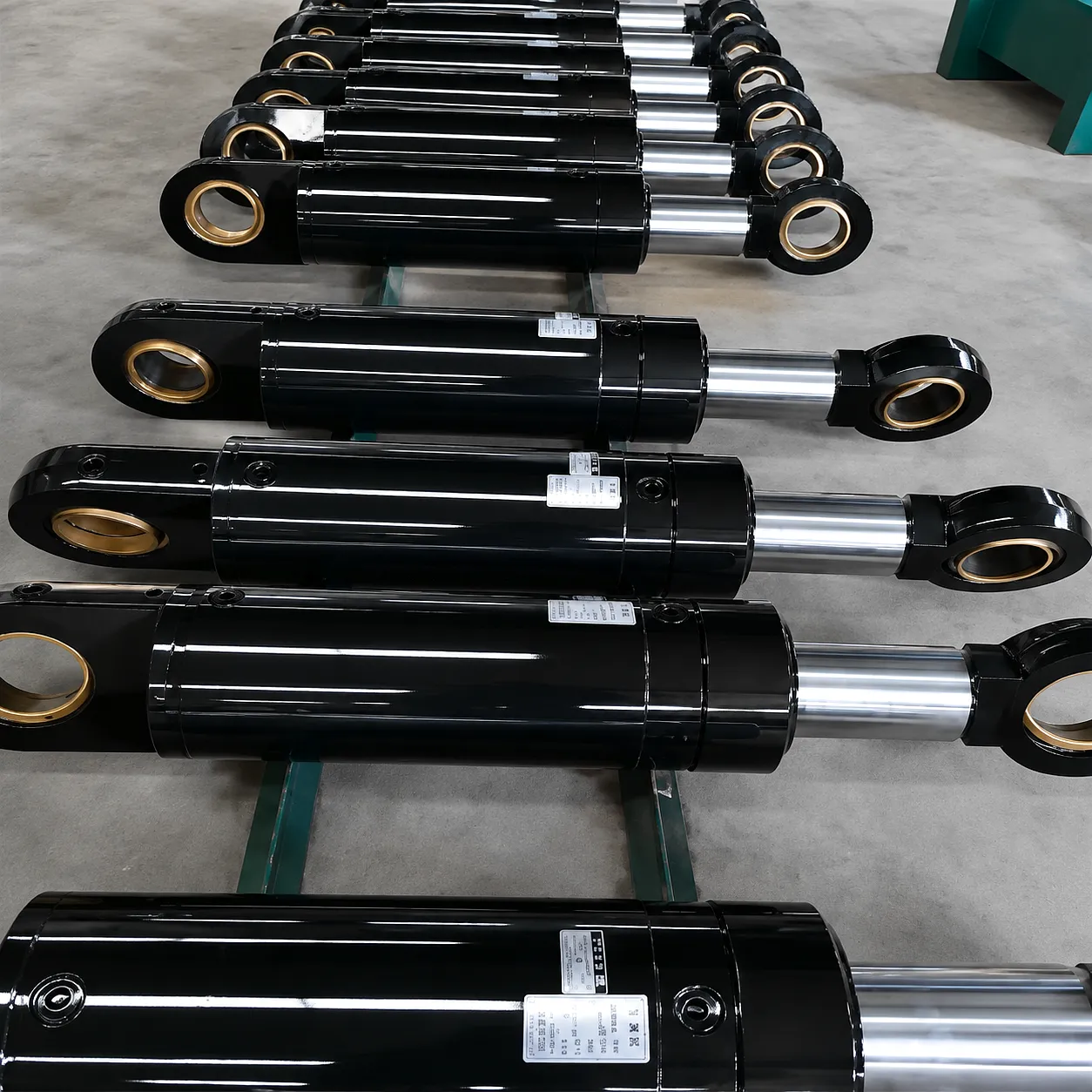
The barrel tube is machined from seamless cold-drawn steel — typically ST52 or E355 grade — and internally honed to a surface finish of Ra 0.2–0.4 micrometres. This mirror-like bore finish is mandatory to ensure the piston seal maintains a consistent hydrodynamic oil film at all operating pressures. ST52 steel offers a yield strength of approximately 355 MPa and excellent weldability, allowing the end caps and port bosses to be welded directly to the tube rather than mechanically threaded, which eliminates a potential leak path under cyclic loading. For boom cylinders on demolition equipment around Birmingham’s urban renewal sites, barrel wall thickness is calculated using a safety factor of at least 4:1 against burst pressure to comply with EN 13445 pressure vessel standards relevant to UK operations.
▶ Chrome-Plated Piston Rod
The piston rod is machined from high-tensile steel — commonly C45 or 42CrMo4 — and then hard chrome-plated to a depth of 15–30 micrometres, achieving a surface hardness of 800–1000 HV. Hard chrome provides exceptional wear resistance against the wiper and rod seal, and its corrosion resistance is critical for boom cylinders operating outdoors across UK infrastructure projects where salt spray, acid rain, and standing water are routine hazards. Induction hardening of the rod’s core further improves resistance to bending fatigue in applications where the boom arm is subjected to lateral side loads, such as the crowd cylinder on a 20-tonne excavator. Rods with diameters above 100 mm are often manufactured from 42CrMo4 steel due to its superior quench-and-temper response, delivering yield strength values above 700 MPa in finished condition.
▶ Piston, End Caps, and Gland
Pistons for heavy-duty boom cylinders are typically machined from ductile iron GGG-40 or GGG-70 to balance machinability with mechanical strength. The piston carries the primary seal grooves and must maintain dimensional accuracy within ±0.02 mm over its service life to prevent excessive bypass flow at high pressure. End caps — both the cap-end weld flange and the rod-end gland — are machined from structural steel or high-strength cast iron, with seal grooves precision-ground after heat treatment. The gland is threaded or flanged into the barrel depending on the design specification; flanged glands are preferred for rapid field service in hire-fleet applications because they allow complete rod assembly removal without disturbing the end-cap weld. Seal kits themselves are typically assembled from polyurethane, NBR, and PTFE-backed materials graded for mineral hydraulic oil, biodegradable ester oils, and the wide temperature range — roughly -20°C to +80°C — that UK seasons demand.
Product Technical and Performance Specification Table
Standard and extended-range parameters for single-acting and double-acting boom cylinders
| Tham số | Single-Acting | Double-Acting | Unit / Note |
|---|---|---|---|
| Phạm vi đường kính lỗ | 40 – 250 | 40 – 400 | mm |
| Rod Diameter Range | 25 – 180 | 25 – 320 | mm |
| Stroke Length Range | 100 – 3,000 | 100 – 6,000 | mm |
| Max. Operating Pressure | 200 | 350 | bar (standard range) |
| Vật liệu thùng | ST52 / E355 | ST52 / E355 / 45 Steel | Seamless, honed |
| Rod Material | C45 hard chrome | C45 / 42CrMo4 hard chrome | Chrome depth 15–30 µm |
| Seal Temperature Range | -20 to +80 | -30 to +100 | °C (low-temp option) |
| Surface Finish (Bore Ra) | 0.3 – 0.5 | 0.2 – 0.4 | µm Ra |
| Mounting Options | Clevis, flange, trunnion | Clevis, flange, trunnion, foot | Custom available |
| Hydraulic Ports | 1 (cap end) | 2 (cap + rod end) | BSP / SAE / metric |
| Retract Force Type | Gravity / spring | Active hydraulic | — |
| Cushioning | Cap-end optional | Both ends optional | Adjustable needle |
| Position Sensing | External limit switch | Integrated magnetostrictive / external | Optional |
| Fluid Compatibility | Mineral, HF-E | Mineral, HF-E, biodegradable ester | Seal grade dependent |
| Surface Protection | Zinc phosphate + epoxy | Zinc phosphate + epoxy / zinc-nickel | Salt spray 480 h+ |
Core Technical Advantages of Each Configuration
Understanding the design strengths that justify each cylinder type’s place in the field
Single-Acting: Key Advantages
Simplified Circuit Design
One pressure port, one return line, and a simpler directional valve reduce component count by up to 40% compared to a double-acting circuit. Fewer fittings means fewer potential leak points and lower assembly cost for OEMs in the UK agricultural machinery sector.
Lower Manufacturing and Replacement Cost
With fewer internal seal interfaces and a simpler gland arrangement, single-acting units cost less to manufacture, stock, and replace in service. This is particularly valuable for fleet operations running large numbers of tipper bodies or compact telehandlers across the Midlands.
Energy-Efficient Retraction
Where gravity retraction is available, the hydraulic pump does no work on the return stroke. This reduces cycle energy consumption and lowers heat generation in the hydraulic fluid, extending oil change intervals and reducing cooling system demands.
Double-Acting: Key Advantages
Full Bidirectional Force Control
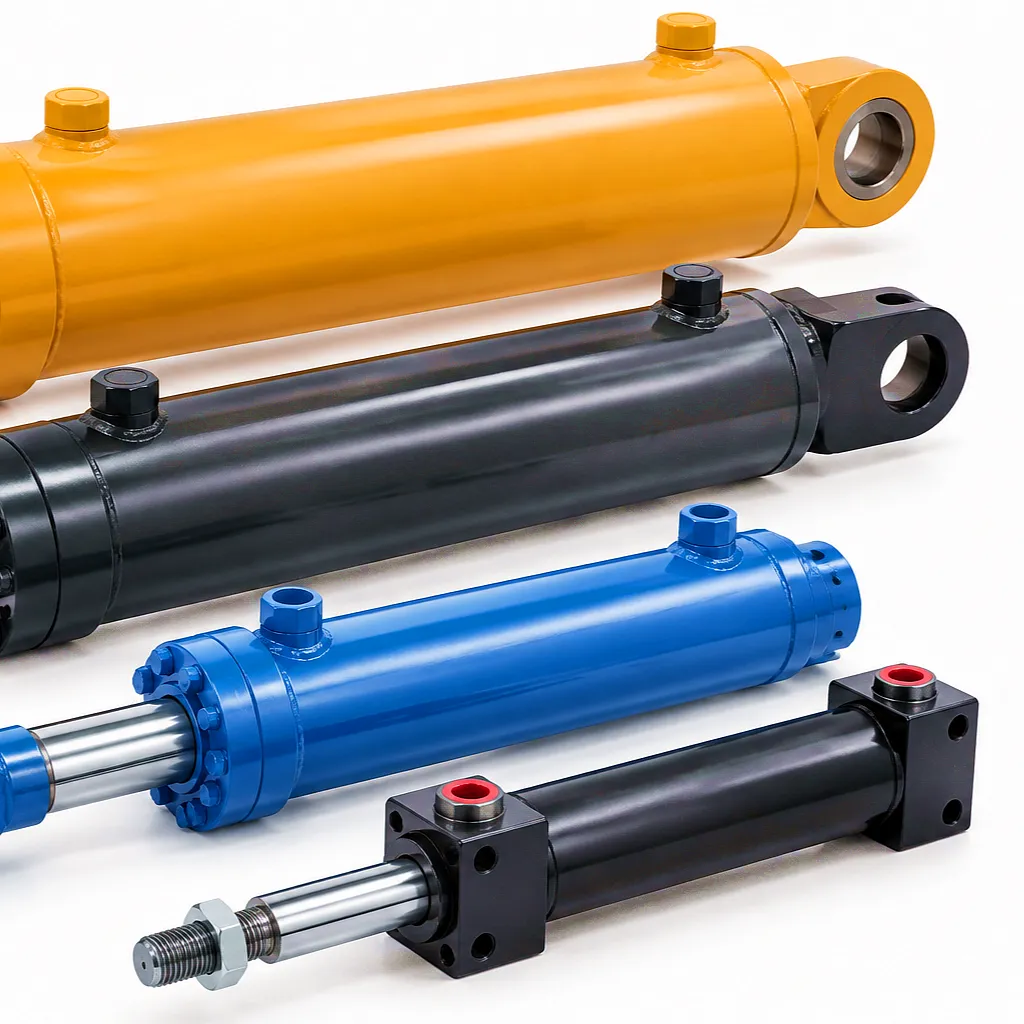
The ability to apply controlled hydraulic force in both extend and retract directions makes double-acting cylinders indispensable wherever loads act against the return stroke. Excavator booms on irregular terrain near construction sites in Sheffield are a textbook example: the dipper arm must push through material regardless of the machine’s orientation.
Precise Speed and Position Control
With proportional or servo valve control, double-acting cylinders deliver millimetre-level position accuracy. This is critical for automated material handling systems in UK warehousing and for the pitch adjustment mechanism on offshore wind turbines along the North Sea coast, where blade angle must be controlled to within fractions of a degree.
Higher Duty Cycle Capability
Because retraction is powered rather than gravity-dependent, cycle times can be optimised independently of the machine’s geometry or payload weight. Double-acting boom cylinders can sustain higher cycle rates in continuous-production environments — a significant competitive advantage for manufacturers supplying round-the-clock automated press lines in the UK metals sector.
Industrial Application Scenarios
Where each configuration delivers its greatest performance in real-world UK industry
▲ Excavator and Demolition — Sheffield & Birmingham
Urban regeneration and infrastructure work around Sheffield’s former steelworks districts and Birmingham’s expanding tram network requires excavators operating in confined sites with variable ground conditions. Double-acting boom cylinders are specified universally on these machines: the dipper arm must exert full crowd force to break concrete and cut through reinforced structures, then retract rapidly against the weight of the bucket and its payload. Position feedback from integrated sensors allows the operator’s cab display to show real-time boom angle, improving both productivity and site safety in line with UK CDM regulations. Cylinder bore sizes on 20–40 tonne excavators in this sector typically run between 120 mm and 200 mm, with operating pressures reaching 320 bar during peak loading events.
△ Agricultural Front Loader and Bale Handling — Lincolnshire & Yorkshire
The flat arable landscapes of Lincolnshire and the mixed farming topography of North Yorkshire represent two of the UK’s most intensive agricultural equipment markets. Front-end loader booms on compact tractors — typically 50–120 hp — very commonly use single-acting cylinders for the lift function, relying on the implement’s own weight and gravity to return the boom to the lowered position. This configuration is perfectly adequate for grain bucket work and round bale handling, where the operator simply lowers the boom by releasing the control valve and allowing the load to descend at a metered rate through a flow control restrictor. However, specialist attachments such as silage grabs and pallet forks often upgrade to double-acting circuits to provide powered crowd-in and crowd-out motion, which gravity cannot generate.
■ Offshore Wind Turbine Pitch Control — North Sea / East Anglia
The rapid expansion of offshore wind capacity across the North Sea and along the East Anglian coast has created significant demand for hydraulic pitch cylinders that can endure millions of load cycles in salt-laden air and marine spray. Double-acting cylinders in this application must extend and retract the blade pitch mechanism continuously in response to wind speed changes, storm protection commands, and maintenance access routines. The cylinders are typically 80–140 mm bore, operating at 200–250 bar, and must achieve positioning accuracy within ±0.5°. The seals are specified in fluorocarbon (FKM) or low-temperature polyurethane grades to handle the wide temperature range experienced between North Sea winter nights (-15°C offshore wind-chill equivalent) and summer electronics-bay temperatures.
◆ Marine and Port Crane Boom — Southampton & Immingham
Harbour cranes and ship-to-shore gantries at major UK port facilities including Southampton and Immingham Dock must lift and precisely position loads up to hundreds of tonnes across boom spans that change throughout the lift cycle. The boom cylinder on a port crane operates in both tension and compression as the boom angle changes, meaning single-acting designs are entirely unsuitable — gravity cannot provide a reliable or controllable retract force when the crane is at an extreme up-luff position. Double-acting cylinders with dual-load holding valves (counterbalance or overcenter valves) are mandatory to prevent uncontrolled boom drift in the event of a hose failure, which is a critical safety requirement under the UK Lifting Operations and Lifting Equipment Regulations (LOLER).
● Refuse Collection and Municipal Vehicles — Greater Manchester & London
Rear-loading refuse collection vehicles in UK urban environments operate the hopper-lift and compaction functions through hydraulic cylinder circuits that must perform reliably in stop-start inner-city duty cycles, often in sub-zero overnight temperatures. The hopper tipping boom typically uses a single-acting cylinder, accepting gravity return of the empty hopper after tipping. Compaction rams, however, use double-acting cylinders because the sweeping blade must apply consistent force in both the forward compaction stroke and the return draw-back stroke against partially compacted waste material. Fleet managers at Greater Manchester’s municipal vehicle workshops specify EN 13849-compliant cylinder kits with food-grade compatible seals where vehicles operate near public spaces.
Offshore & Renewables Sector
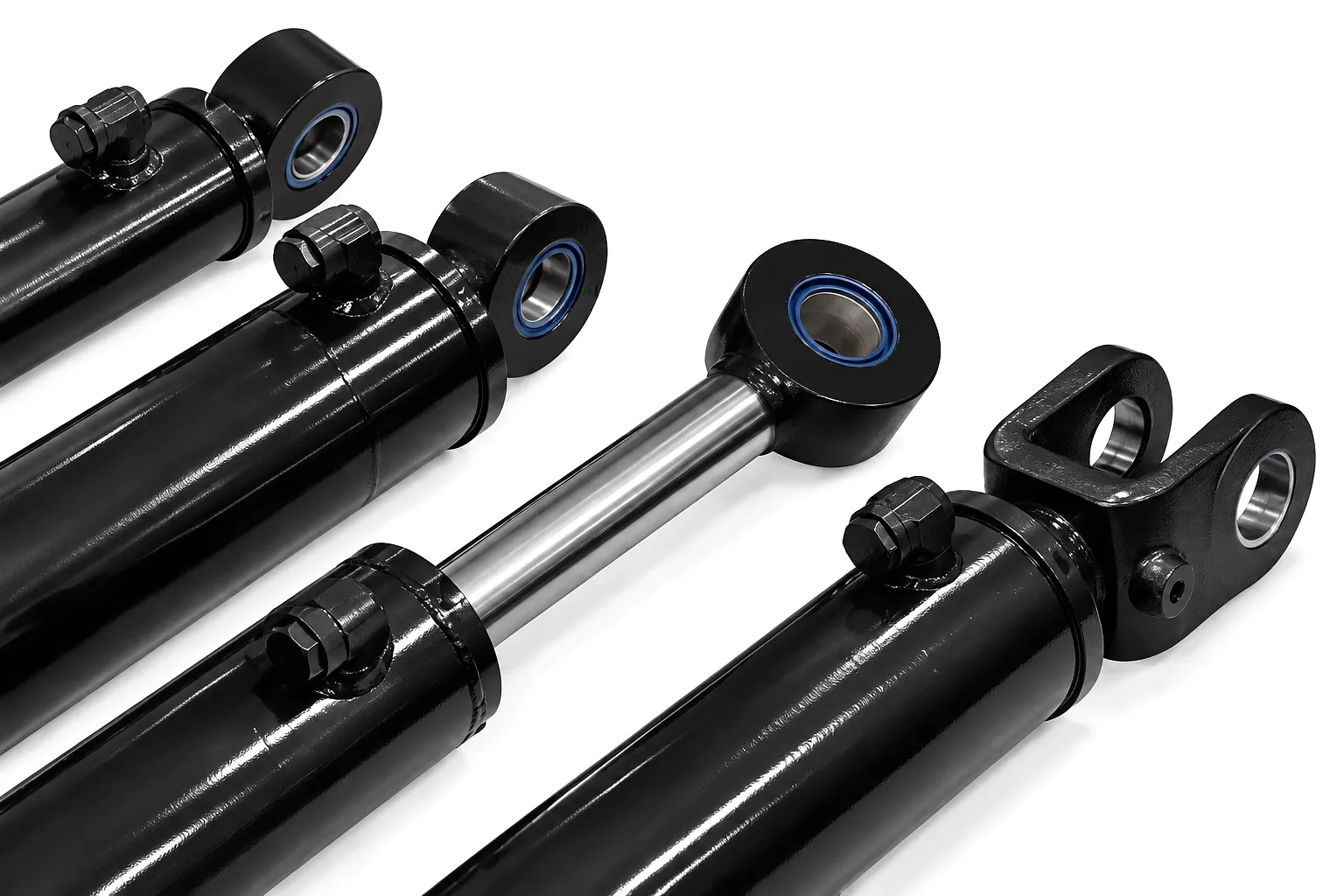
Wind Turbine Hydraulic Pitch Cylinder
Engineered for multi-million-cycle reliability in North Sea conditions. Available with FKM seals, corrosion-protected coatings, and ATEX-compatible options for offshore deployment.
Ever Power: Manufacturing Strength and Custom Engineering
From bespoke single units to high-volume OEM programmes — the factory that delivers
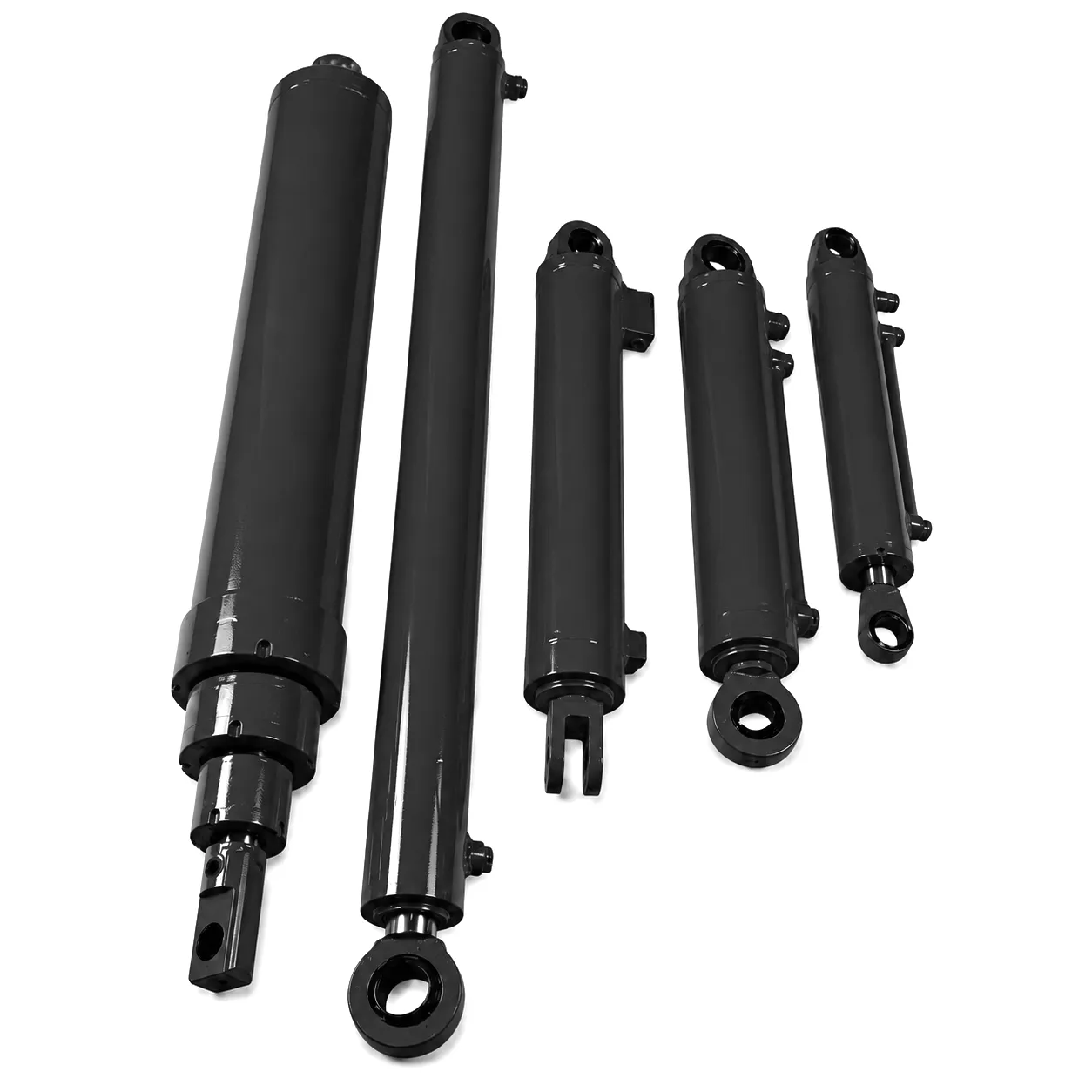
Ever Power operates a fully integrated hydraulic cylinder manufacturing facility equipped with CNC honing lines capable of processing bores from 40 mm to 500 mm diameter, automated hard chrome plating cells with recovery and recycling systems that meet European environmental discharge standards, and a dedicated seal assembly clean room that eliminates the particulate contamination that causes premature seal failure in high-pressure applications. The quality management system is certified to ISO 9001:2015, and the design engineering team works to ISO 6020 and ISO 6022 cylinder standards as a baseline, deviating where custom applications demand it.
Customisation is not a secondary service at Ever Power — it is the core competency that has built long-term supply agreements with UK OEM machinery manufacturers, hire fleet procurement managers, and engineering-to-order fabricators who need hydraulic cylinders built to precise drawings rather than off-the-shelf selections. The engineering team can receive DXF or STEP CAD files, review the loading conditions, confirm the material specification, and return a formal drawing for approval within 5 working days. Production lead times for custom units start from 15 working days for standard material grades, with expedited 10-day programmes available for critical replacement orders shipped to UK distribution centres in Birmingham, Bristol, and Leeds by international freight partner networks.
✔ Precision CNC Manufacturing
Barrel honing to Ra 0.2 µm. Piston grinding to H7 tolerance. Rod chrome plating with 100% thickness verification by magnetic gauge before assembly.
✔ Full Custom Configuration
Non-standard bore/rod combinations, special port locations, trunnion positions, cushion needle sizing, and integrated position sensor housings are all achievable from customer drawings. CE-marking documentation provided where required.
✔ Supply Chain Reliability
Vertically integrated raw material sourcing — steel billet, chrome chemicals, and seal compounds are controlled at origin — gives Ever Power the supply security to maintain confirmed delivery schedules even during periods of global material price volatility.
Ready to specify a custom boom cylinder for your UK project?
Submit your bore, stroke, and pressure requirements. Our engineers will respond with a technical proposal within 24 hours.
Customer Success Story: Rotherham Steel Processing Plant
How a heavy industry site in South Yorkshire eliminated repeated cylinder failures and cut maintenance downtime by 60%
Location
Rotherham, South Yorkshire
Industry
Steel Coil Processing & Handling
Loại hình trụ
Double-Acting, 160 mm bore / 100 mm rod / 1,400 mm stroke
Operating Pressure
280 bar peak, 220 bar continuous
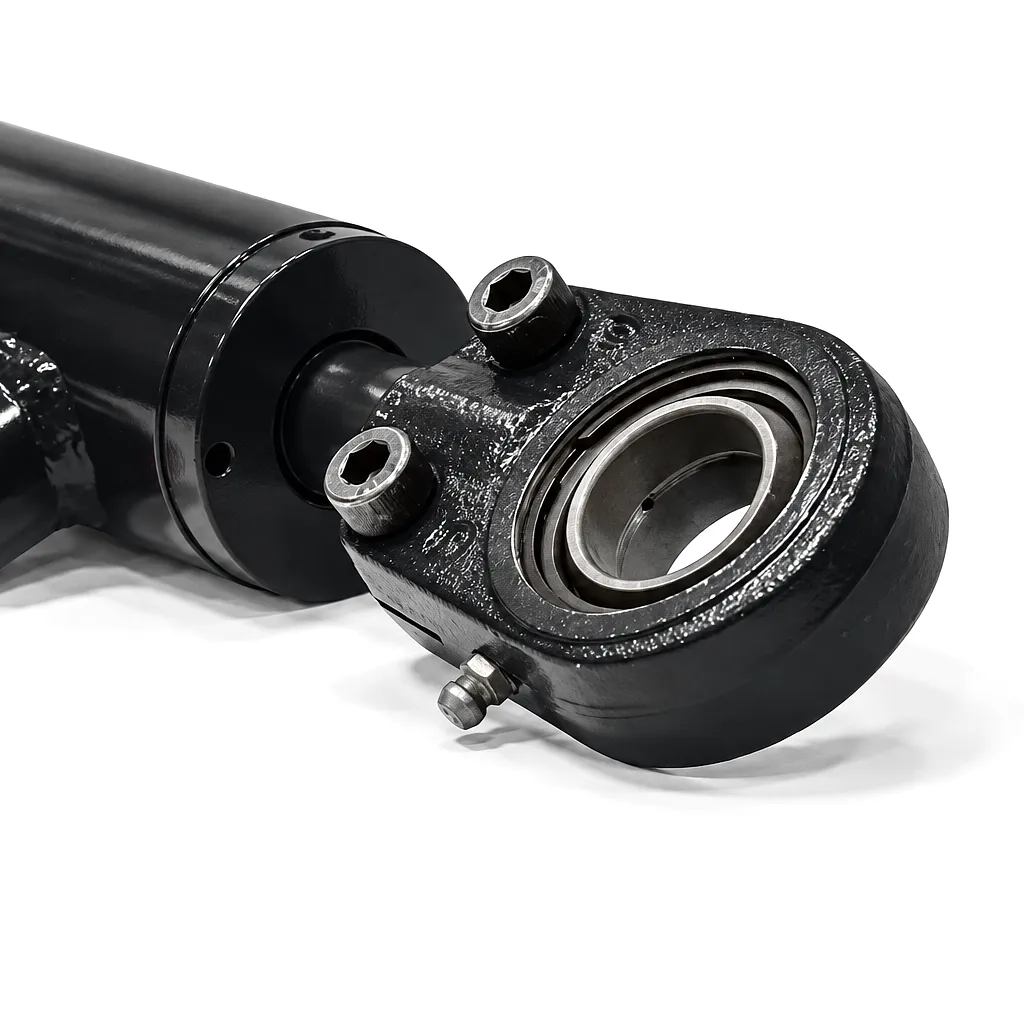 A steel coil processing plant in Rotherham had been running a series of boom cylinders on its overhead coil transfer crane for three years. The cylinders — sourced from a European catalogue supplier — were experiencing piston seal failure at intervals of roughly eight months, causing an average of three unplanned shutdowns per year. Each shutdown cost the plant an estimated £18,000 in lost production plus parts and labour, with crane engineer call-out charges adding a further £2,200 per incident. The root cause analysis identified two problems: the bore finish on the original cylinders was Ra 0.6 µm — too rough to maintain a stable oil film under the 280 bar peak pressure generated during coil acceleration — and the seals had been specified in standard NBR rather than the high-nitrile compound needed for the plant’s high-aniline hydraulic fluid blend.
The plant’s maintenance engineering team contacted Ever Power after finding the product range through a UK hydraulics distributor. The Ever Power application engineering team specified replacement double-acting cylinders honed to Ra 0.25 µm, with 42CrMo4 chrome rods and a seal kit assembled from high-nitrile compounds compatible with the plant’s specific fluid. Adjustable end cushions were added to both the cap and rod ends to absorb the inertia shock of the coil carrier at stroke end — a feature absent from the original design. Delivery was made to the plant’s Rotherham stores within 12 working days, allowing fitment during a scheduled maintenance window.
Since the Ever Power cylinders entered service, the plant has completed 22 months of operation without a single cylinder-related unplanned shutdown. The maintenance team calculates a direct saving of approximately £54,000 per year against the previous failure pattern, and the improved bore finish has reduced hydraulic fluid contamination levels measured by ISO particle count from ISO 18/16/14 to ISO 16/14/11 — a significant improvement in overall system cleanliness.
Khách hàng của chúng tôi nói gì?
★★★★★
“The bore finish quality on these cylinders is clearly a step above anything we had previously installed on the crane. We specified a custom rod-end port orientation to clear an existing hose bracket, and Ever Power delivered exactly to drawing first time. Twenty-two months in and we have not touched them.”
— James Hartley, Maintenance Engineering Manager, Steel Coil Processing, Rotherham
★★★★★
“We run a hire fleet of 35 excavators across the East Midlands, and sourcing reliable replacement boom cylinders at competitive cost has always been a challenge. Ever Power’s standard turnaround from order to UK delivery is now our benchmark. The 42CrMo4 rod units have outlasted our previous supplier’s C45 equivalents by a significant margin in the abrasive conditions on demolition sites around Nottingham.”
— Sarah Mitchell, Fleet Procurement Director, Plant Hire Ltd, East Midlands
★★★★★
“We needed a hydraulic pitch cylinder solution for a turbine retrofit project off the Norfolk coast. The FKM seal specification, the marine-grade external coating, and the torque verification documentation provided by Ever Power made the offshore certification process genuinely straightforward. The technical team understood exactly what we needed without a lengthy back-and-forth.”
— Tom Ashworth, Offshore Systems Engineer, Renewable Energy Contractor, Norwich
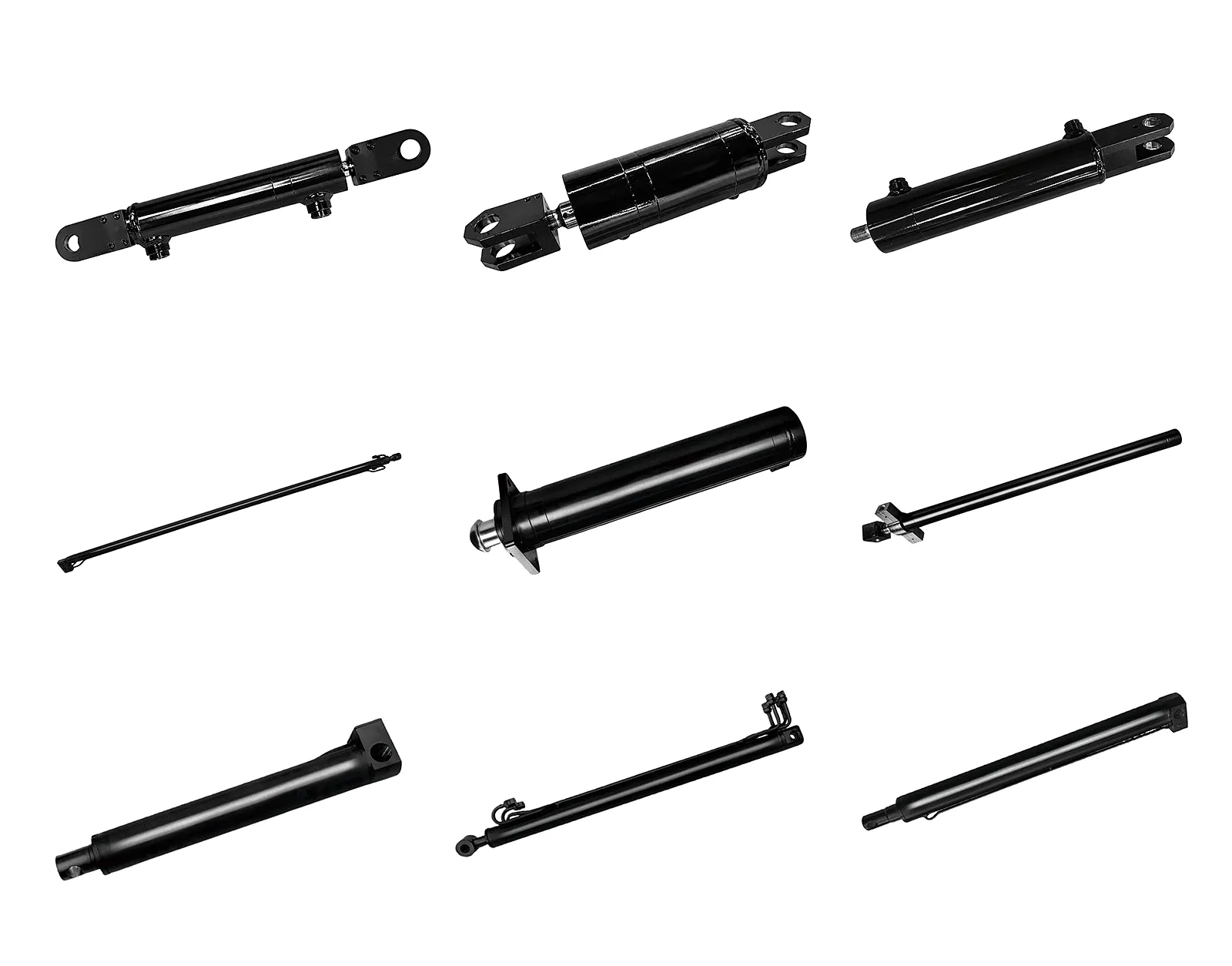
The Full Range
Ever Power Boom Cylinder Product Collection
Câu hỏi thường gặp
Answers to the questions UK plant engineers and buyers ask most
 Vietnamese
  English
  Italian
  Portuguese
  Dutch
Dutch  Swedish
  Danish
  Finnish
  Polish
  Hindi
Hindi  Kazakh
  Turkish
  Ukrainian
  Romanian
  Spanish
  German
  Russian
  Korean
  Japanese
  Thai
Thai  Indonesian
  Malay
Malay  French
  Greek
Greek