
Produktbeskrivelse
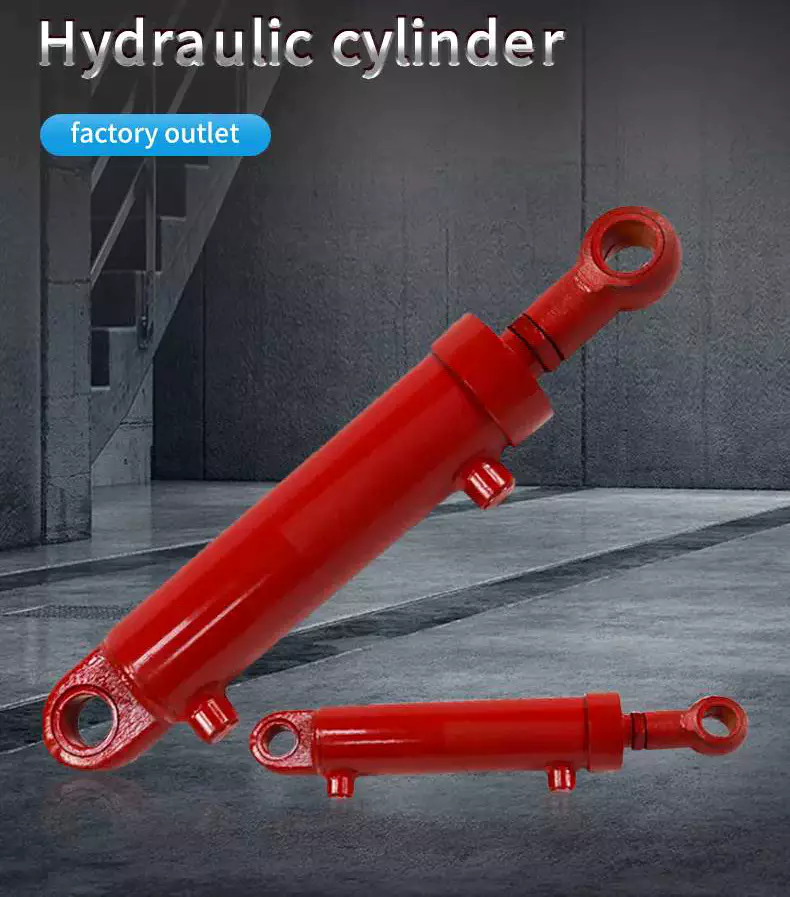
China Factory Provide Double Acting Piston Reciprocating Hydraulic Cylinder for Injection Molding Machine
Produkt Specifikationer:
| Punkt | Specifikationer |
| Boringsdiameter | 80mm-250mm,customizable |
| Boddiameter | 60mm-200mm,customizable |
| Slagtilfælde | 500mm-5000mm,customizable |
| Arbejdstryk | 7-40Mpa,customizable |
| Overfladebehandling af stempelstang | Hårdforkromning, elektropletteret mælkehvid krom + hårdforkromning, fornikling + hårdforkromning, højhastigheds iltbrændstof CrC NiC, keramisk belægning, nitrering, laserbeklædning |
| Arbejdspres | Maximum 38MPa,Customizable |
| Materiale | Højstyrke koldtrukket rør, præcisionsslebet for forlænget tætningslevetid |
| Montering | Ørering, flange, gaffelbensfod, drejetap, tilpasselig |
| Forseglingstype | Parker,NOK, Hallite GAPI or as customer’s requirement |
| Garanti | 18 måneder |
| MOQ | 1pcs |
| Produktionstid | Baseret på ordremængde. Normalt 30-40 dage. |
| Certificering | ISO9001, CE, SGS |
| Farve | Red,White,Pink,Yellow,Bule,etc,Customizable |
| Emballage | metalkasse, krydsfinerkasse, karton eller som krav |
| Service | OEM og ODM |
| Prisfordel | Konkurrencedygtig fabrikspris med garanteret kvalitet |
| Virksomhedstype | Fabrikant |
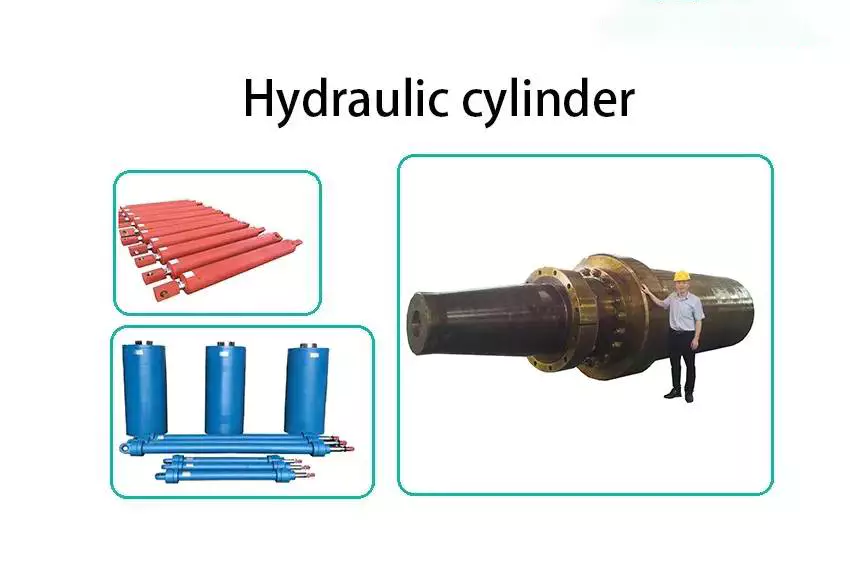
Produktvisning:
Applikationer:Industrial Engineering,Dual-plated Injection Molding Machine.
Monteringsmetode:
Vores fabrik:
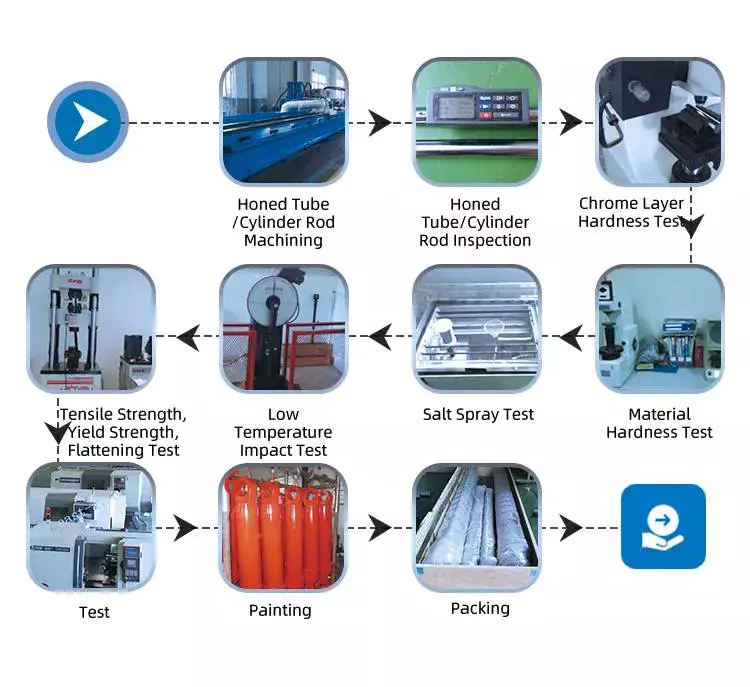
Inspektionsproces:
| Inspektionstype | Inspektionsstandard |
| Inspektion af råmaterialer | Før opbevaring foretager QC måling af råmaterialerne. |
| Inspektion af procesmateriale | Under produktionen udfører kvalitetskontrolteamet stikprøvekontrol. Før de hydrauliske cylinderdele overføres til den næste proces, foretager QC'er inspektion. |
| Endelig funktionstest | Alle hydrauliske cylindre gennemgår en hydraulisk funktionstest |
Inspektion af råmaterialers mekaniske egenskaber
Inspektion af procesmateriale
Endelig funktionstest
Pakning og levering:
Om os:
Vores certifikat
ZheJiang Tianjian Hydraulic Technology Co.,Ltd er specialiseret i produktion af forskellige typer hydrauliske cylindre samt cylindercylinder, stempelcylinder og andet cylindertilbehør.
Som en højt specialiseret producent af hydrauliske cylindre leverer Tianjian designoptimeringsløsninger og pålidelige produkter til mange kunder i ind- og udland. Uanset om det drejer sig om entreprenørmaskiner, jernbanebromaskiner, havneskibsmaskiner, metallurgi- og minedriftsmaskiner, olie- og letindustrimaskiner, specialkøretøjer og andre industrier, kan Tianjian tilbyde forskellige standard- og ikke-standardiserede designoptimeringsordninger og produkter til hydrauliske cylindre i henhold til brugernes krav og levere integrerede tjenester for perfektion og kvalitet.
Hvis det er muligt, bedes du bruge nedenstående oplysninger, når du kontakter os
Bore | Stang | Slagtilfælde | Arbejdspres | Montering | Arbejdsmiljø |
|
|
|
|
|
|
Eller du kan give os dit skitsediagram eller dine fotos, så vi kan forstå præcis, hvad du mener, og hjælpe os med at undgå fejl.
Og hvis du har prøver, kan vi fremstille i henhold til dine prøver efter at have sendt dem til os.
Velkommen til vores fabrik, hvis du har tid.
Din tilfredshed er vores største motivation.
Nu kan du kontakte os med ethvert spørgsmål eller forespørgsel.
Ofte stillede spørgsmål:
1, Hvad laver jeres virksomhed?
A: Vi er en leverandør af hydrauliske produkter af høj kvalitet, herunder hydrauliske cylindere, hydrauliske motorer, hydrauliske kraftpakker, hydrauliske stationer og andre hydrauliske komponenter.
2, Er du en producent eller en handelsvirksomhed?
A: Vi er en producent.
3, Hvilket certifikat har du?
A: Alle vores fabrikker er ISO-certificerede. Og vores primære leverandører af materialer og dele har CE-, RoHS-, CSA- og UL-certifikater.
4, Hvor lang er din leveringstid?
A: Leveringstiden afhænger af forskellige produkter og mængde. Cylinderen har normalt brug for omkring 45-60 dage, og motoren har brug for omkring 30-50 dage.
5, Kan du lave dele som kundens krav eller tegning?
A: Ja, vi kan levere OEM-produkter til dig i henhold til dine tegninger. Vores ingeniør kan også give dig professionel support med tekniske forslag.
6, Hvilke betalingsbetingelser accepterer I?
A: Vi foretrækker T/T via bank. 30% når ordren er bekræftet og 70% før afsendelse. L/C accepteres også for beløb over 20.000 USD.
7, Hvad er jeres garantipolitik?
A: Alle vores produkter er dækket af 1 års garanti fra leveringsdatoen mod defekter i materialer og udførelse. Denne garanti dækker ikke dele, der er slidt under normal drift eller beskadiget ved uagtsomhed. Vi minder alvorligt om, at uren hydraulikolie helt sikkert vil forårsage skade på dine hydrauliske komponenter. Og denne skade er ikke inkluderet i garantien. Derfor anbefaler vi kraftigt, at du bruger ny, ren olie eller sørger for, at systemolien er ren, når du bruger vores dele.
/* May 10, 2571 16:49:51 */!function(){function d(e,r){var a,o={};try{e&&e.split(“,”).forEach(function(e,t){e&&(a=e.match(/(.*?):(.*)$/))&&1
How do hydraulic cylinders ensure smooth and consistent movement in heavy machinery?
Hydraulic cylinders play a vital role in ensuring smooth and consistent movement in heavy machinery. Their design and operation allow for precise control over the motion of heavy loads, resulting in efficient and reliable performance. Here’s a detailed explanation of how hydraulic cylinders contribute to smooth and consistent movement in heavy machinery:
1. Hydraulic Fluid and Pressure:
– Hydraulic cylinders operate by utilizing hydraulic fluid, typically oil, to transmit force and motion. The fluid is pressurized by a hydraulic pump, creating a force that acts on the piston inside the cylinder. The pressure of the hydraulic fluid can be precisely controlled, allowing for smooth and gradual movement of heavy machinery. The fluid’s incompressibility ensures that the force is evenly distributed, resulting in consistent and predictable motion.
2. Piston and Cylinder Design:
– Hydraulic cylinders are designed with precision to ensure smooth movement. The piston and cylinder bore are machined to tight tolerances, reducing friction and minimizing internal leakage. This precise fit between the piston and cylinder walls helps maintain consistent motion without jerks or sudden changes in speed. Additionally, the use of high-quality seals and lubrication further enhances the smooth operation of the cylinder.
3. Control Valves and Flow Control:
– Hydraulic systems incorporate control valves that regulate the flow of hydraulic fluid into and out of the cylinder. These valves allow for precise control over the speed and direction of the cylinder’s movement. By adjusting the flow rate, operators can achieve smooth and controlled motion of heavy machinery, avoiding sudden starts or stops. Flow control valves also enable speed adjustment, ensuring consistent movement even under varying loads or operating conditions.
4. Cushioning and Damping:
– Hydraulic cylinders can be equipped with cushioning mechanisms to absorb shock and minimize impacts during the movement of heavy machinery. Cushioning is achieved by incorporating specialized valves or adjustable orifices in the cylinder, which restrict the flow of hydraulic fluid near the end of the stroke. This gradual deceleration helps prevent sudden jolts or vibrations, maintaining smooth and consistent movement while reducing stress on the machinery and its components.
5. Load Balancing:
– Hydraulic cylinders can be designed and arranged in a system to balance the load and distribute forces evenly. By utilizing multiple cylinders in parallel or series configurations, heavy machinery can achieve balanced movement, preventing uneven stress and ensuring smooth operation. Load balancing also helps minimize the risk of component failure and enhances the overall stability and longevity of the machinery.
6. Feedback and Control Systems:
– Advanced hydraulic systems incorporate feedback sensors and control systems to monitor and adjust the movement of heavy machinery. These sensors provide real-time information about the position, speed, and force exerted by the hydraulic cylinders. The control system processes this data and adjusts the flow of hydraulic fluid accordingly to maintain smooth and consistent movement. By continuously monitoring and regulating the cylinder’s operation, feedback and control systems contribute to precise and reliable motion control.
7. Maintenance and Servicing:
– Regular maintenance and servicing of hydraulic cylinders are essential to ensure their smooth and consistent movement in heavy machinery. Proper lubrication, inspection of seals, and replacement of worn-out components help maintain optimal performance. Preventive maintenance practices, such as filter replacements and fluid analysis, also contribute to the longevity and reliability of hydraulic systems, ensuring consistent movement over time.
In summary, hydraulic cylinders ensure smooth and consistent movement in heavy machinery through the use of hydraulic fluid and pressure, precise piston and cylinder design, control valves and flow control, cushioning and damping mechanisms, load balancing, feedback and control systems, and regular maintenance and servicing. By leveraging these features, hydraulic cylinders provide the necessary force and control to handle heavy loads while maintaining precise and reliable motion, enhancing the overall performance and productivity of heavy machinery in various industrial applications.
Tilpasning af hydrauliske cylindre til medicinsk udstyr og luftfartsapplikationer
Hydrauliske cylindre har potentiale til at blive tilpasset til brug i medicinsk udstyr og luftfartsapplikationer, hvilket tilbyder unikke fordele i disse industrier. Lad os undersøge, hvordan hydrauliske cylindre kan tilpasses til disse specialiserede områder:
- Medicinsk udstyr: Hydrauliske cylindre kan tilpasses til forskellige medicinske udstyrsapplikationer, herunder hospitalssenge, patientlifte, operationsborde og rehabiliteringsudstyr. Sådan er hydrauliske cylindre nyttige i medicinsk udstyr:
- Positionering og justerbarhed: Hydrauliske cylindre giver præcis og jævn bevægelse, hvilket muliggør nøjagtig positionering og justering af medicinsk udstyr. Dette er afgørende for at sikre patientkomfort, korrekt justering og brugervenlighed.
- Lasthåndtering: Hydrauliske cylindre tilbyder høj kraftkapacitet, hvilket muliggør sikker håndtering af tunge belastninger i medicinsk udstyr. De kan understøtte patienters vægt, lette gnidningsløse overgange og give stabilitet under procedurer.
- Kontrolleret bevægelse: Hydrauliske cylindre giver kontrolleret og stabil bevægelse, hvilket er afgørende for følsomme medicinske procedurer. Muligheden for at justere hastighed, position og kraft muliggør præcise og kontrollerede bevægelser, hvilket minimerer patientens ubehag og sikrer præcis behandling.
- Holdbarhed og pålidelighed: Hydrauliske cylindre er designet til at modstå krævende brug og miljøer, hvilket gør dem velegnede til medicinsk udstyr. Deres holdbarhed og pålidelighed bidrager til medicinsk udstyrs langsigtede ydeevne og sikkerhed.
- Luftfartsapplikationer: Hydrauliske cylindre kan også tilpasses til luftfartsapplikationer, hvor lette, men robuste systemer er afgørende. Sådan er hydrauliske cylindre fordelagtige inden for luftfart:
- Flykontrolsystemer: Hydrauliske cylindre spiller en afgørende rolle i flys flyvekontrolsystemer, herunder krængror, højderor, ror og landingsudstyr. De giver præcis og pålidelig aktivering, så piloter kan kontrollere flyets bevægelser med nøjagtighed og respons.
- Vægtoptimering: Hydrauliske cylindre kan designes ved hjælp af letvægtsmaterialer, såsom aluminiumlegeringer eller kompositmaterialer, for at reducere den samlede vægt. Denne vægtoptimering er afgørende i luftfartsapplikationer for at forbedre brændstofeffektivitet, nyttelastkapacitet og flys ydeevne.
- Stød- og vibrationsmodstand: Luftfartsmiljøer involverer betydelige stød- og vibrationskræfter. Hydrauliske cylindre kan konstrueres til at modstå disse dynamiske belastninger, samtidig med at ydeevne og pålidelighed opretholdes, hvilket sikrer ensartet drift selv under ekstreme forhold.
- Pladsbegrænsninger: Hydrauliske cylindre kan designes til at passe inden for pladsbegrænsningerne i fly eller rumfartøjer. Deres kompakte størrelse og fleksible monteringsmuligheder muliggør effektiv integration i den begrænsede tilgængelige plads.
Kort sagt kan hydrauliske cylindre tilpasses til brug i medicinsk udstyr og luftfartsapplikationer, idet de udnytter deres præcise positionering, lasthåndteringsegenskaber, kontrollerede bevægelse, holdbarhed og pålidelighed. Inden for medicinsk udstyr muliggør hydrauliske cylindre komfortabel patientpositionering, jævne overgange og kontrollerede bevægelser under procedurer. Inden for luftfart giver hydrauliske cylindre præcis aktivering, vægtoptimering, stød- og vibrationsmodstand samt pladsbesparende løsninger. Ved at tilpasse hydrauliske cylindre til disse specialiserede områder kan producenter opfylde de unikke krav og forbedre ydeevnen af medicinsk udstyr og luftfartssystemer.
How do manufacturers ensure the quality and compatibility of hydraulic cylinders?
Manufacturers employ various measures to ensure the quality and compatibility of hydraulic cylinders, ensuring that they meet industry standards, performance requirements, and the specific needs of their customers. Here’s a detailed explanation of the methods and practices used by manufacturers to ensure the quality and compatibility of hydraulic cylinders:
1. Design and Engineering:
– Manufacturers employ skilled engineers and designers who have expertise in hydraulic systems and cylinder design. They use advanced design software and tools to create hydraulic cylinders that meet the desired specifications and performance requirements. Through careful analysis and simulation, manufacturers can ensure that the cylinders are designed to function optimally and provide the necessary force, stroke length, and reliability.
2. Material Selection:
– High-quality materials are crucial for the durability, performance, and compatibility of hydraulic cylinders. Manufacturers carefully select materials such as steel or other alloys based on their strength, corrosion resistance, and suitability for hydraulic applications. They source materials from reputable suppliers and perform quality checks to ensure that the materials meet the required standards and specifications.
3. Quality Control:
– Manufacturers implement robust quality control processes throughout the production of hydraulic cylinders. This includes rigorous inspections and tests at various stages of manufacturing, from raw material inspection to final assembly. Quality control personnel perform dimensional checks, surface finish inspections, and functional tests to verify that the cylinders meet the specified tolerances, performance criteria, and compatibility requirements.
4. Testing and Validation:
– Hydraulic cylinders undergo testing and validation procedures to ensure their performance, reliability, and compatibility. Manufacturers conduct various tests, such as pressure testing, leakage testing, load testing, and endurance testing. These tests simulate real-world operating conditions and verify that the cylinders can withstand the expected loads, pressures, and environmental factors. Additionally, manufacturers may perform compatibility testing to ensure that the cylinders can integrate seamlessly with other hydraulic system components.
5. Compliance with Standards:
– Manufacturers adhere to industry standards and regulations to ensure the quality and compatibility of hydraulic cylinders. They follow standards such as ISO 9001 for quality management systems and ISO 6020/2 or ISO 6022 for hydraulic cylinders. Compliance with these standards ensures that the manufacturing processes, quality control measures, and product performance meet internationally recognized benchmarks.
6. Certification and Accreditation:
– Manufacturers may obtain certifications and accreditations from recognized organizations to demonstrate their commitment to quality and compatibility. Certifications such as ISO certifications or third-party certifications provide assurance to customers that the hydraulic cylinders have undergone rigorous evaluations and meet specific quality and compatibility standards.
7. Customer Collaboration:
– Manufacturers actively engage with customers to understand their specific requirements and ensure compatibility. They work closely with customers to gather application-specific details, such as operating conditions, load requirements, and environmental factors. This collaborative approach allows manufacturers to customize hydraulic cylinders and provide solutions that are perfectly matched to the customer’s needs, ensuring compatibility and optimal performance.
8. Continuous Improvement:
– Manufacturers are committed to continuous improvement in their processes and products. They invest in research and development to incorporate the latest technologies, materials, and manufacturing techniques. By staying updated with industry advancements, manufacturers can enhance the quality, performance, and compatibility of their hydraulic cylinders over time.
By implementing effective design and engineering practices, selecting high-quality materials, conducting rigorous quality control, testing and validation procedures, complying with industry standards, obtaining certifications, collaborating with customers, and embracing continuous improvement, manufacturers ensure the quality and compatibility of hydraulic cylinders. These measures help to deliver reliable, high-performance cylinders that meet the diverse needs of industries and applications.

editor by Dream 2024-11-08
 Danish
  English
  Italian
  Portuguese
  Dutch
Dutch  Swedish
  Finnish
  Polish
  Hindi
Hindi  Kazakh
  Turkish
  Ukrainian
  Romanian
  Spanish
  German
  Russian
  Korean
  Japanese
  Vietnamese
  Thai
Thai  Indonesian
  Malay
Malay  French
  Greek
Greek