
Description du produit
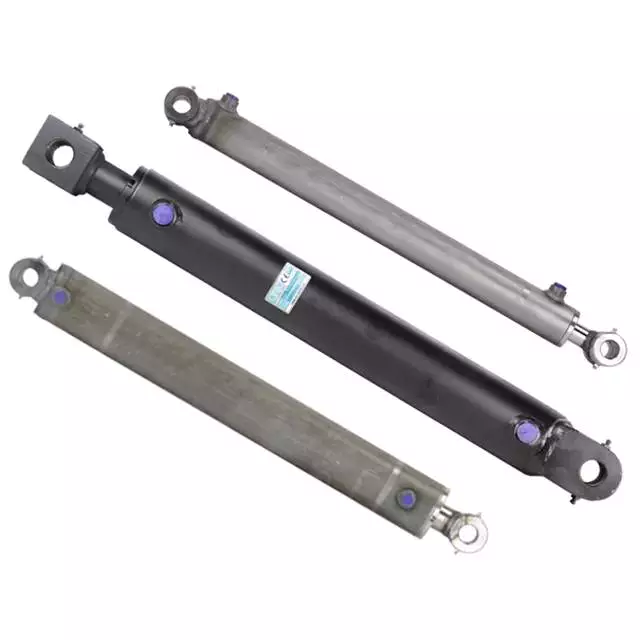
hydraulic cylinder tipping gear system for dump truck manufacturer
The hydraulc self-charging system for dump truck includes telescopic hydraulic cylinder,supporting bracket, hydraulic hose, gear pump, limit valve and other fittings. It has simple structure, high strength and safe operation with competitive price and excellent quality.
1. dump truck telescopic hydraulic cylinder drawing and parameter
Features | customer hydraulic cylinder |
Bore Diameter | 2′-60’/50-1500mm |
Rod Diameter | 1′ – 60’/25 -1500 mm |
Wall Thickness | 0.1′-4’/3-100 mm |
Max Stroke | 366’/9280 mm |
Max Pressure | 9600 psi/600 bar |
Test Pressure | 14500 psi/1000 bar |
Matériel | 20#,40#,45#,16Mn,27SiMn,etc |
Seal Kits | Hallite,Parker,NOK,DICHTOMATIK,Trelleborg,Merkel,etc |
Diamensional Accuracy | H7-H11 |
Bore Roughness | Ra 0.4-1.6mm |
Coating | hard chrome |
Purpose | Construction,metallurgical,mining,agricultural,forestry machinery,etc |
OEM | Yes |
MOQ | 1 Piece |
Certificates | ISO9001,ISO/TS16949,ABS,AQA,API,CCS,CCRI,DNV |
Product details:
Production process:
hydraulic cylinder for dump truck , trail truck,garbage truck,crane
1.Sinciput telescopic hydraulic cylinder is used in lager-tonnage sinciput hydraulic system. Together with hydraulic pump, change valve, and limit valve, it can realize the function of lifting pausing and falling. And the product can be designed and made according to the demands of customers.
2.underbody telescopic hydraulic cylinder is used in large-tonnage side-dumping hydraulic system. Together with hydraulic pump, change valve, and limit valve, it can realize the function of lifting pausing and falling. And the product can be designed and made according to the demands of customers.
hydraulic cylinder for coal mine dump truck
3.Hydraulic cylinder is the most important component in hydraulic systems, it will transfer hydraulic energy into mechanical energy, and is matched with various transmission mechanism, to complete a variety of mechanical motion.
4.Hydraulic cylinder has the advantages of simple structure, large output force, stable and reliable performance, easy maintenance, wide application.
5. customer hydraulic cylinder can be used for dump truck, marine, drilling machine, industry, elevator , workover rig , mining, agriculture, industry, construction ,etc.
| Certification: | GS, RoHS, CE, ISO9001 |
|---|---|
| Pressure: | High Pressure |
| Work Temperature: | High Temperature |
| Samples: | US$ 200/Piece 1 Piece(Min.Order) | Order Sample |
|---|
| Customization: | Available |
|
|---|
.shipping-cost-tm .tm-status-off{background: none;padding:0;color: #1470cc}
| Shipping Cost: Estimated freight per unit. | about shipping cost and estimated delivery time. |
|---|
| Payment Method: |
|
|---|---|
| Initial Payment Full Payment |
| Currency: | US$ |
|---|
| Return&refunds: | You can apply for a refund up to 30 days after receipt of the products. |
|---|

How do hydraulic cylinders contribute to the overall cost-effectiveness of industrial processes?
Hydraulic cylinders play a crucial role in enhancing the overall cost-effectiveness of industrial processes. They offer several advantages and contribute to increased productivity, improved efficiency, reduced maintenance costs, and enhanced operational performance. Here’s a detailed explanation of how hydraulic cylinders contribute to the cost-effectiveness of industrial processes:
1. High Power Density:
– Hydraulic cylinders provide a high power-to-weight ratio, allowing them to generate substantial force in a compact design. This power density enables the use of smaller and lighter equipment, reducing material and manufacturing costs, and increasing the efficiency of industrial processes.
2. Precise Force and Position Control:
– Hydraulic cylinders offer precise force and position control, allowing for accurate movement and positioning of machinery or workpieces. This level of control enhances process efficiency, reduces material waste, and improves overall product quality. Precise force control also minimizes the risk of equipment damage, further reducing maintenance and repair costs.
3. High Load Handling Capacity:
– Hydraulic cylinders are known for their ability to handle high loads. They can exert significant force, making them suitable for heavy-duty industrial applications. By efficiently handling heavy loads, hydraulic cylinders contribute to increased productivity and throughput, reducing the need for additional equipment and streamlining industrial processes.
4. Flexibility and Versatility:
– Hydraulic cylinders offer a high degree of flexibility and versatility in industrial processes. They can be easily integrated into various types of machinery and equipment, allowing for diverse applications. This adaptability reduces the need for specialized equipment, resulting in cost savings and increased operational efficiency.
5. Energy Efficiency:
– Hydraulic systems, including hydraulic cylinders, can be designed to operate with high energy efficiency. By utilizing efficient hydraulic circuit designs, advanced control systems, and energy recovery mechanisms, hydraulic cylinders minimize energy waste and reduce operational costs. Energy-efficient hydraulic systems also contribute to a more sustainable and environmentally friendly industrial operation.
6. Durability and Longevity:
– Hydraulic cylinders are built to withstand demanding industrial environments and heavy usage. They are constructed with robust materials and undergo stringent quality control measures to ensure durability and longevity. Their ability to withstand harsh conditions and repetitive motion reduces the need for frequent replacements, minimizing downtime and maintenance costs.
7. Reduced Maintenance Requirements:
– Hydraulic cylinders require relatively low maintenance compared to other types of actuators. Properly designed hydraulic systems with efficient filtration and contamination control mechanisms can prevent damage to the cylinders and extend their service life. Reduced maintenance requirements result in lower downtime, decreased labor costs, and improved cost-effectiveness of industrial processes.
8. System Integration and Automation:
– Hydraulic cylinders can be seamlessly integrated into automated industrial processes. By incorporating hydraulic cylinders into automated systems, tasks can be performed with precision and repeatability, reducing human error and optimizing efficiency. Automation also allows for continuous operation, increasing productivity and overall cost-effectiveness.
9. Cost-Effective Replacement:
– In situations where hydraulic cylinders require replacement or repair, the cost-effectiveness of the process is still maintained. Hydraulic cylinders are typically modular in design, allowing for easy replacement of individual components or complete units. This modularity reduces downtime and associated costs, as only the affected components need to be replaced, rather than the entire system.
In summary, hydraulic cylinders contribute to the overall cost-effectiveness of industrial processes through their high power density, precise control capabilities, high load handling capacity, flexibility, energy efficiency, durability, reduced maintenance requirements, system integration, and cost-effective replacement options. Their ability to enhance productivity, efficiency, and operational performance while minimizing maintenance and downtime costs makes hydraulic cylinders a valuable component in various industrial applications.
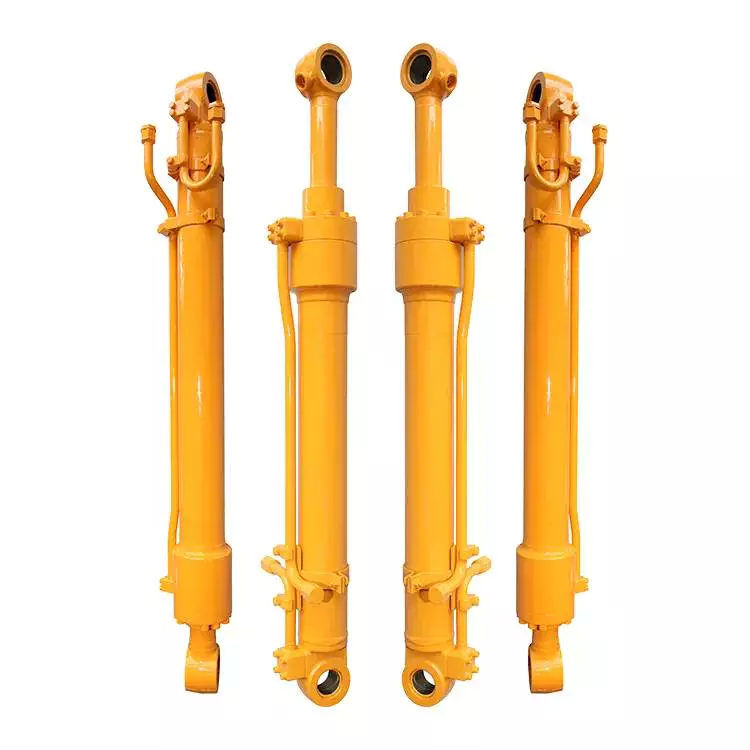
What considerations are important when selecting hydraulic cylinders for mobile equipment?
To select hydraulic cylinders for mobile equipment, several important considerations need to be taken into account. Here are the key factors to consider:
- Load Capacity: Determine the maximum load or force that the hydraulic cylinder will need to support. This includes both the static load and any dynamic or shock loads that may be encountered during operation.
- Stroke Length: Consider the required stroke length, which is the distance the hydraulic cylinder can extend and retract. Ensure that the stroke length is sufficient for the specific application and range of motion needed.
- Operating Pressure: Determine the maximum operating pressure required for the hydraulic system. This will depend on the load and the specific application. Select a hydraulic cylinder with a pressure rating that exceeds the maximum operating pressure to ensure safety and durability.
- Mounting Style: Consider the available space and the mounting requirements of the mobile equipment. Hydraulic cylinders come in various mounting styles, such as flange, trunnion, clevis, and pivot, among others. Choose a mounting style that is compatible with the equipment and provides the necessary support and stability.
- Size and Weight: Take into account the physical dimensions and weight of the hydraulic cylinder. Ensure that it can fit within the available space and that the equipment can support its weight without compromising performance or safety.
- Speed and Precision: Evaluate the required speed and precision of the hydraulic cylinder’s movement. Different cylinder designs and configurations can affect the speed and accuracy of motion. Consider factors such as cylinder bore size, rod diameter, and the presence of cushioning or dampening features.
- Environmental Factors: Assess the operating environment of the mobile equipment. Consider factors such as temperature extremes, exposure to moisture, dust, and chemicals. Select hydraulic cylinders with appropriate seals and coatings that can withstand the environmental conditions and prevent corrosion or damage.
- Reliability and Maintenance: Consider the reliability and maintenance requirements of the hydraulic cylinders. Look for reputable manufacturers that provide high-quality products with a proven track record. Evaluate factors such as expected service life, availability of spare parts, and ease of maintenance.
- Cost: Finally, consider the cost of the hydraulic cylinders, including the initial purchase price, installation costs, and long-term maintenance expenses. While it is essential to find a cost-effective solution, prioritize quality and performance to ensure safe and efficient operation.
Quelles sont les pratiques de maintenance essentielles pour prolonger la durée de vie des vérins hydrauliques ?
L'entretien des vérins hydrauliques est essentiel pour prolonger leur durée de vie et garantir des performances optimales. Un entretien régulier permet de prévenir l'usure prématurée, les dommages et les pannes, réduisant ainsi les temps d'arrêt et les coûts. Voici quelques pratiques d'entretien essentielles à adopter pour prolonger la durée de vie des vérins hydrauliques :
1. Inspections régulières :
Effectuez des inspections visuelles régulières des vérins hydrauliques afin de déceler tout signe de dommage, de fuite ou d'usure. Inspectez le corps du vérin, la tige de piston, les joints et les points de fixation. Recherchez les fuites de fluide, la rouille, les bosses ou toute usure anormale. La détection précoce des problèmes permet d'effectuer les réparations ou les remplacements nécessaires en temps opportun, évitant ainsi d'autres dommages et prolongeant la durée de vie du vérin.
2. Propreté :
Maintenez un environnement propre autour des vérins hydrauliques afin d'éviter toute contamination du système. La poussière, la saleté et les débris peuvent endommager les joints et autres composants internes, entraînant une usure prématurée et une baisse de performance. Nettoyez régulièrement le vérin et ses alentours pour minimiser les risques de contamination.
3. Lubrification adéquate :
Une lubrification adéquate est essentielle au bon fonctionnement et à la longévité des vérins hydrauliques. Respectez les intervalles de lubrification préconisés par le fabricant et utilisez le lubrifiant approprié. Lubrifiez les pièces mobiles du vérin, notamment la tige de piston, afin de réduire les frottements et l'usure.
4. Entretien des joints :
Les joints d'étanchéité jouent un rôle essentiel dans la prévention des fuites d'huile hydraulique et le maintien des performances du vérin. Inspectez et remplacez rapidement les joints usés ou endommagés. Assurez-vous que les joints sont correctement installés et lubrifiés. Nettoyez régulièrement les gorges des joints afin d'éliminer tout débris susceptible de compromettre leur étanchéité.
5. Contrôles de pression :
Contrôlez régulièrement la pression du système hydraulique afin de vous assurer qu'elle se situe dans la plage de fonctionnement recommandée. Une pression excessive peut endommager le vérin et ses composants, entraînant une usure prématurée. Surveillez les niveaux de pression et effectuez les ajustements nécessaires pour éviter toute surcharge du vérin.
6. Entretien des vannes de régulation :
– Entretenir et inspecter les distributeurs qui régulent le débit et la direction du fluide hydraulique. S’assurer de leur bon fonctionnement et de l’absence de contraintes excessives ou de surpressions dans le vérin. Nettoyer ou remplacer les distributeurs endommagés ou défectueux.
7. Alignement des cylindres :
Un alignement correct des vérins hydrauliques est essentiel à leur longévité. Un mauvais alignement peut engendrer des contraintes latérales excessives, provoquant une usure irrégulière et des dommages potentiels. Assurez-vous que le vérin est correctement aligné avec les autres composants et que les points de fixation sont bien serrés.
8. Prévention des surcharges :
Évitez de soumettre les vérins hydrauliques à des charges supérieures à leur capacité nominale. Une surcharge peut entraîner des dommages internes, une défaillance des joints et une réduction de leur durée de vie. Assurez-vous que la charge requise est compatible avec les capacités du vérin et envisagez l'utilisation de dispositifs de sécurité tels que des systèmes de protection contre les surcharges, le cas échéant.
9. Formation et sensibilisation des opérateurs :
– Dispenser une formation adéquate aux opérateurs d'équipement sur l'utilisation et la manipulation correctes des vérins hydrauliques. Les opérateurs doivent connaître les limites des vérins, les procédures d'utilisation sécuritaires et l'importance d'un entretien régulier. Promouvoir une culture de maintenance préventive et inciter les opérateurs à signaler rapidement tout problème potentiel.
10. Documentation et tenue des registres :
– Conserver une documentation détaillée de toutes les interventions de maintenance, y compris les inspections, les réparations et les remplacements. Tenir un registre des échéances de lubrification, des contrôles de pression et de toute intervention de maintenance effectuée sur les vérins hydrauliques. Cette documentation permet de suivre l'historique des vérins, d'identifier les problèmes récurrents et de planifier efficacement la maintenance future.
En respectant ces pratiques d'entretien, la durée de vie des vérins hydrauliques peut être prolongée, garantissant ainsi leur fiabilité et réduisant les risques de pannes inattendues. Des inspections régulières, la propreté, une lubrification adéquate, l'entretien des joints, les contrôles de pression, la maintenance des distributeurs, l'alignement des vérins, la prévention des surcharges, la formation des opérateurs et la documentation contribuent à la longévité et au fonctionnement optimal des vérins hydrauliques.


editor by CX 2023-10-26
 French
  English
  Italian
  Portuguese
  Dutch
Dutch  Swedish
  Danish
  Finnish
  Polish
  Hindi
Hindi  Kazakh
  Turkish
  Ukrainian
  Romanian
  Spanish
  German
  Russian
  Korean
  Japanese
  Vietnamese
  Thai
Thai  Indonesian
  Malay
Malay  Greek
Greek