
Productbeschrijving
hydraulic cylinder tipping gear system for dump truck manufacturer
The hydraulc self-charging system for dump truck includes telescopic hydraulic cylinder,supporting bracket, hydraulic hose, gear pump, limit valve and other fittings. It has simple structure, high strength and safe operation with competitive price and excellent quality.
1. dump truck telescopic hydraulic cylinder drawing and parameter
Features | customer hydraulic cylinder |
Bore Diameter | 2′-60’/50-1500mm |
Rod Diameter | 1′ – 60’/25 -1500 mm |
Wall Thickness | 0.1′-4’/3-100 mm |
Max Stroke | 366’/9280 mm |
Max Pressure | 9600 psi/600 bar |
Test Pressure | 14500 psi/1000 bar |
Materiaal | 20#,40#,45#,16Mn,27SiMn,etc |
Seal Kits | Hallite,Parker,NOK,DICHTOMATIK,Trelleborg,Merkel,etc |
Diamensional Accuracy | H7-H11 |
Bore Roughness | Ra 0.4-1.6mm |
Coating | hard chrome |
Purpose | Construction,metallurgical,mining,agricultural,forestry machinery,etc |
OEM | Yes |
MOQ | 1 Piece |
Certificates | ISO9001,ISO/TS16949,ABS,AQA,API,CCS,CCRI,DNV |
Product details:
Production process:
hydraulic cylinder for dump truck , trail truck,garbage truck,crane
1.Sinciput telescopic hydraulic cylinder is used in lager-tonnage sinciput hydraulic system. Together with hydraulic pump, change valve, and limit valve, it can realize the function of lifting pausing and falling. And the product can be designed and made according to the demands of customers.
2.underbody telescopic hydraulic cylinder is used in large-tonnage side-dumping hydraulic system. Together with hydraulic pump, change valve, and limit valve, it can realize the function of lifting pausing and falling. And the product can be designed and made according to the demands of customers.
hydraulic cylinder for coal mine dump truck
3.Hydraulic cylinder is the most important component in hydraulic systems, it will transfer hydraulic energy into mechanical energy, and is matched with various transmission mechanism, to complete a variety of mechanical motion.
4.Hydraulic cylinder has the advantages of simple structure, large output force, stable and reliable performance, easy maintenance, wide application.
5. customer hydraulic cylinder can be used for dump truck, marine, drilling machine, industry, elevator , workover rig , mining, agriculture, industry, construction ,etc.
| Certification: | GS, RoHS, CE, ISO9001 |
|---|---|
| Pressure: | High Pressure |
| Work Temperature: | High Temperature |
| Samples: | US$ 200/Piece 1 Piece(Min.Order) | Order Sample |
|---|
| Customization: | Available |
|
|---|
.shipping-cost-tm .tm-status-off{background: none;padding:0;color: #1470cc}
| Shipping Cost: Estimated freight per unit. | about shipping cost and estimated delivery time. |
|---|
| Payment Method: |
|
|---|---|
| Initial Payment Full Payment |
| Currency: | US$ |
|---|
| Return&refunds: | You can apply for a refund up to 30 days after receipt of the products. |
|---|
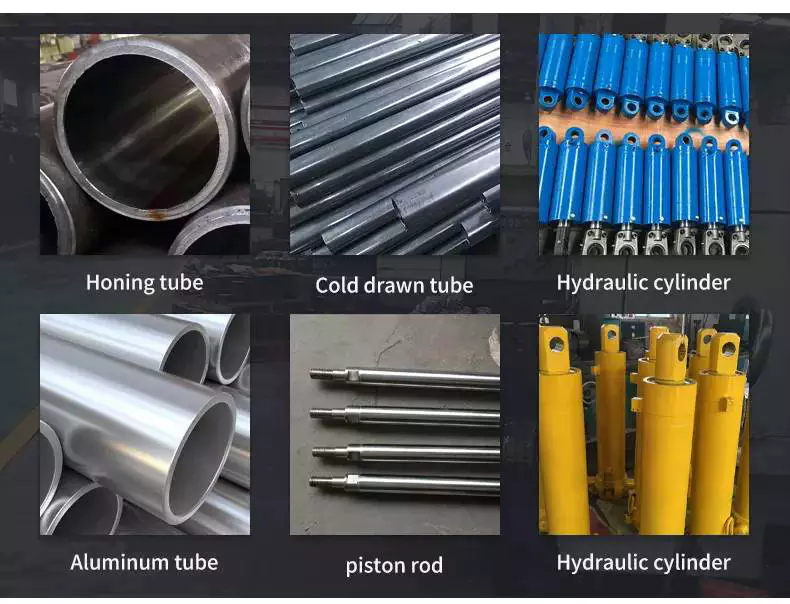
How do hydraulic cylinders contribute to the overall cost-effectiveness of industrial processes?
Hydraulic cylinders play a crucial role in enhancing the overall cost-effectiveness of industrial processes. They offer several advantages and contribute to increased productivity, improved efficiency, reduced maintenance costs, and enhanced operational performance. Here’s a detailed explanation of how hydraulic cylinders contribute to the cost-effectiveness of industrial processes:
1. High Power Density:
– Hydraulic cylinders provide a high power-to-weight ratio, allowing them to generate substantial force in a compact design. This power density enables the use of smaller and lighter equipment, reducing material and manufacturing costs, and increasing the efficiency of industrial processes.
2. Precise Force and Position Control:
– Hydraulic cylinders offer precise force and position control, allowing for accurate movement and positioning of machinery or workpieces. This level of control enhances process efficiency, reduces material waste, and improves overall product quality. Precise force control also minimizes the risk of equipment damage, further reducing maintenance and repair costs.
3. High Load Handling Capacity:
– Hydraulic cylinders are known for their ability to handle high loads. They can exert significant force, making them suitable for heavy-duty industrial applications. By efficiently handling heavy loads, hydraulic cylinders contribute to increased productivity and throughput, reducing the need for additional equipment and streamlining industrial processes.
4. Flexibility and Versatility:
– Hydraulic cylinders offer a high degree of flexibility and versatility in industrial processes. They can be easily integrated into various types of machinery and equipment, allowing for diverse applications. This adaptability reduces the need for specialized equipment, resulting in cost savings and increased operational efficiency.
5. Energy Efficiency:
– Hydraulic systems, including hydraulic cylinders, can be designed to operate with high energy efficiency. By utilizing efficient hydraulic circuit designs, advanced control systems, and energy recovery mechanisms, hydraulic cylinders minimize energy waste and reduce operational costs. Energy-efficient hydraulic systems also contribute to a more sustainable and environmentally friendly industrial operation.
6. Durability and Longevity:
– Hydraulic cylinders are built to withstand demanding industrial environments and heavy usage. They are constructed with robust materials and undergo stringent quality control measures to ensure durability and longevity. Their ability to withstand harsh conditions and repetitive motion reduces the need for frequent replacements, minimizing downtime and maintenance costs.
7. Reduced Maintenance Requirements:
– Hydraulic cylinders require relatively low maintenance compared to other types of actuators. Properly designed hydraulic systems with efficient filtration and contamination control mechanisms can prevent damage to the cylinders and extend their service life. Reduced maintenance requirements result in lower downtime, decreased labor costs, and improved cost-effectiveness of industrial processes.
8. System Integration and Automation:
– Hydraulic cylinders can be seamlessly integrated into automated industrial processes. By incorporating hydraulic cylinders into automated systems, tasks can be performed with precision and repeatability, reducing human error and optimizing efficiency. Automation also allows for continuous operation, increasing productivity and overall cost-effectiveness.
9. Cost-Effective Replacement:
– In situations where hydraulic cylinders require replacement or repair, the cost-effectiveness of the process is still maintained. Hydraulic cylinders are typically modular in design, allowing for easy replacement of individual components or complete units. This modularity reduces downtime and associated costs, as only the affected components need to be replaced, rather than the entire system.
In summary, hydraulic cylinders contribute to the overall cost-effectiveness of industrial processes through their high power density, precise control capabilities, high load handling capacity, flexibility, energy efficiency, durability, reduced maintenance requirements, system integration, and cost-effective replacement options. Their ability to enhance productivity, efficiency, and operational performance while minimizing maintenance and downtime costs makes hydraulic cylinders a valuable component in various industrial applications.
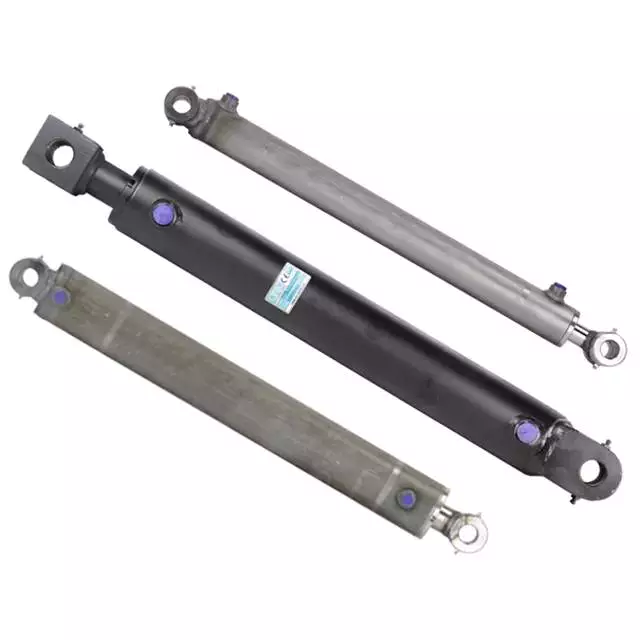
What considerations are important when selecting hydraulic cylinders for mobile equipment?
To select hydraulic cylinders for mobile equipment, several important considerations need to be taken into account. Here are the key factors to consider:
- Load Capacity: Determine the maximum load or force that the hydraulic cylinder will need to support. This includes both the static load and any dynamic or shock loads that may be encountered during operation.
- Stroke Length: Consider the required stroke length, which is the distance the hydraulic cylinder can extend and retract. Ensure that the stroke length is sufficient for the specific application and range of motion needed.
- Operating Pressure: Determine the maximum operating pressure required for the hydraulic system. This will depend on the load and the specific application. Select a hydraulic cylinder with a pressure rating that exceeds the maximum operating pressure to ensure safety and durability.
- Mounting Style: Consider the available space and the mounting requirements of the mobile equipment. Hydraulic cylinders come in various mounting styles, such as flange, trunnion, clevis, and pivot, among others. Choose a mounting style that is compatible with the equipment and provides the necessary support and stability.
- Size and Weight: Take into account the physical dimensions and weight of the hydraulic cylinder. Ensure that it can fit within the available space and that the equipment can support its weight without compromising performance or safety.
- Speed and Precision: Evaluate the required speed and precision of the hydraulic cylinder’s movement. Different cylinder designs and configurations can affect the speed and accuracy of motion. Consider factors such as cylinder bore size, rod diameter, and the presence of cushioning or dampening features.
- Environmental Factors: Assess the operating environment of the mobile equipment. Consider factors such as temperature extremes, exposure to moisture, dust, and chemicals. Select hydraulic cylinders with appropriate seals and coatings that can withstand the environmental conditions and prevent corrosion or damage.
- Reliability and Maintenance: Consider the reliability and maintenance requirements of the hydraulic cylinders. Look for reputable manufacturers that provide high-quality products with a proven track record. Evaluate factors such as expected service life, availability of spare parts, and ease of maintenance.
- Cost: Finally, consider the cost of the hydraulic cylinders, including the initial purchase price, installation costs, and long-term maintenance expenses. While it is essential to find a cost-effective solution, prioritize quality and performance to ensure safe and efficient operation.
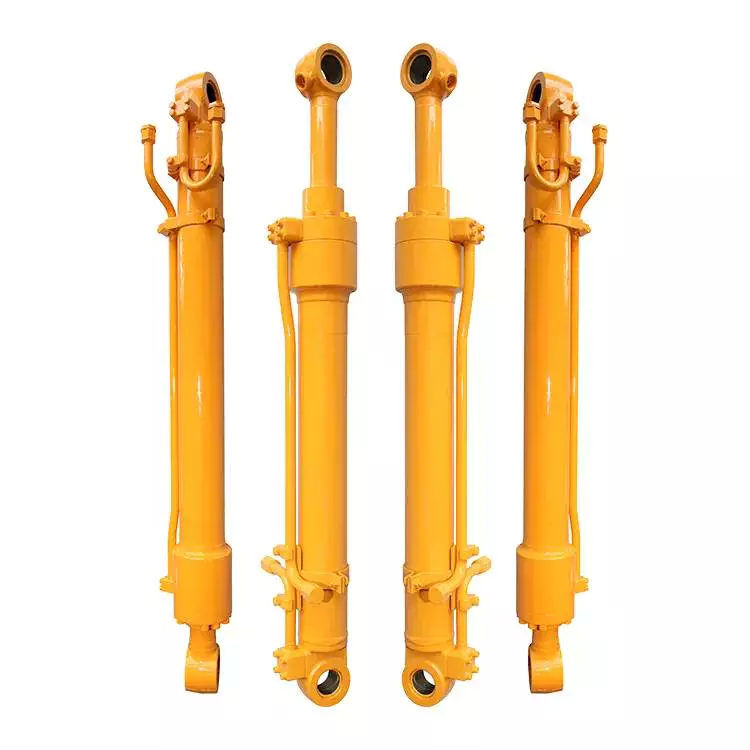
Welke onderhoudsprocedures zijn essentieel voor het verlengen van de levensduur van hydraulische cilinders?
Het onderhouden van hydraulische cilinders is cruciaal voor het verlengen van hun levensduur en het garanderen van optimale prestaties. Regelmatig onderhoud helpt vroegtijdige slijtage, schade en storingen te voorkomen, waardoor uiteindelijk de stilstandtijd wordt verminderd en kosten worden bespaard. Hieronder volgen enkele essentiële onderhoudsmaatregelen om de levensduur van hydraulische cilinders te verlengen:
1. Regelmatige inspecties:
– Voer routinematige visuele inspecties uit van hydraulische cilinders om eventuele schade, lekkages of slijtage op te sporen. Inspecteer de cilinderbehuizing, de zuigerstang, de afdichtingen en de bevestigingspunten. Let op vloeistoflekkages, roest, deuken of abnormale slijtagepatronen. Vroegtijdige detectie van problemen maakt tijdige reparaties of vervangingen mogelijk, waardoor verdere schade wordt voorkomen en de levensduur van de cilinder wordt verlengd.
2. Netheid:
– Zorg voor een schone omgeving rond hydraulische cilinders om te voorkomen dat er vuil in het systeem terechtkomt. Stof, vuil en ander afval kunnen afdichtingen en andere interne onderdelen beschadigen, wat leidt tot versnelde slijtage en verminderde prestaties. Reinig de cilinder en de omgeving regelmatig om het risico op vervuiling te minimaliseren.
3. Juiste smering:
Voldoende smering is cruciaal voor een soepele werking en een lange levensduur van hydraulische cilinders. Volg de aanbevelingen van de fabrikant voor de smeerintervallen en gebruik het juiste smeermiddel. Breng smeermiddel aan op de bewegende delen van de cilinder, zoals de zuigerstang, om wrijving te verminderen en slijtage te minimaliseren.
4. Onderhoud van de afdichting:
– Afdichtingen spelen een cruciale rol bij het voorkomen van lekkage van hydraulische vloeistof en het behoud van de prestaties van de cilinder. Controleer en vervang versleten of beschadigde afdichtingen onmiddellijk. Zorg ervoor dat de afdichtingen correct zijn gemonteerd en gesmeerd. Reinig de groeven van de afdichtingen regelmatig om vuil te verwijderen dat de effectiviteit van de afdichting kan verminderen.
5. Drukcontroles:
– Controleer periodiek de druk in het hydraulische systeem om er zeker van te zijn dat deze binnen het aanbevolen werkingsbereik ligt. Overmatige druk kan de cilinder en de onderdelen ervan belasten, wat leidt tot voortijdige slijtage. Houd de drukniveaus in de gaten en pas deze indien nodig aan om overbelasting van de cilinder te voorkomen.
6. Onderhoud van de regelklep:
– Onderhoud en inspecteer de regelkleppen die de stroom en richting van de hydraulische vloeistof regelen. Zorg ervoor dat de kleppen correct functioneren en geen overmatige spanning of drukpieken in de cilinder veroorzaken. Reinig of vervang de regelkleppen indien ze beschadigd of defect zijn.
7. Cilinderuitlijning:
– Een correcte uitlijning van hydraulische cilinders is essentieel voor hun levensduur. Een verkeerde uitlijning kan leiden tot overmatige zijdelingse belasting, waardoor ongelijkmatige slijtage en mogelijke schade ontstaan. Zorg ervoor dat de cilinder correct is uitgelijnd met andere componenten en dat de bevestigingspunten goed vastzitten.
8. Overbelasting voorkomen:
– Vermijd het belasten van hydraulische cilinders met een belasting die hun nominale capaciteit overschrijdt. Overbelasting kan interne schade, defecten aan de afdichtingen en een kortere levensduur veroorzaken. Zorg ervoor dat de belasting binnen de mogelijkheden van de cilinder ligt en overweeg indien nodig het gebruik van veiligheidsvoorzieningen zoals overbelastingsbeveiligingssystemen.
9. Training en bewustwording bij de operator:
– Zorg voor een gedegen training van de operators over het correcte gebruik en de juiste hantering van hydraulische cilinders. Operators moeten op de hoogte zijn van de beperkingen van de cilinder, de veilige bedieningsprocedures en het belang van regelmatig onderhoud. Stimuleer een cultuur van proactief onderhoud en moedig operators aan om eventuele problemen direct te melden.
10. Documentatie en archivering:
– Houd gedetailleerde documentatie bij van alle onderhoudsactiviteiten, inclusief inspecties, reparaties en vervangingen. Registreer smeerschema's, drukmetingen en al het uitgevoerde onderhoud aan de hydraulische cilinders. Deze documentatie helpt bij het bijhouden van de geschiedenis van de cilinder, het identificeren van terugkerende problemen en het effectief plannen van toekomstig onderhoud.
Door deze onderhoudsprocedures te volgen, kan de levensduur van hydraulische cilinders worden verlengd, waardoor betrouwbare prestaties worden gegarandeerd en het risico op onverwachte storingen wordt verminderd. Regelmatige inspecties, reiniging, juiste smering, onderhoud van afdichtingen, drukcontroles, onderhoud van regelkleppen, uitlijning van cilinders, voorkomen van overbelasting, training van de operator en documentatie dragen bij aan de algehele levensduur en optimale werking van hydraulische cilinders.


editor by CX 2023-10-26
 Dutch
Dutch  English
  Italian
  Portuguese
  Swedish
  Danish
  Finnish
  Polish
  Hindi
Hindi  Kazakh
  Turkish
  Ukrainian
  Romanian
  Spanish
  German
  Russian
  Korean
  Japanese
  Vietnamese
  Thai
Thai  Indonesian
  Malay
Malay  French
  Greek
Greek