
Описание продукта
Long Stroke Hydraulic Cylinder for Mine Filter Press
| Item | Specifications |
| Bore diameter | 160mm-800mm,customizable |
| Bod diameter | 110mm-500mm,customizable |
| Stroke | 400mm-6000mm,customizable |
| Working Pressure | 7-45Mpa,customizable |
| Surface treatment of piston rod | HaHard Chrome Plating,Electroplated Milky White Chromium+Hard Chromium,Nickel Plating+Hard Chromium Plating,High-Velocity Oxygen-Fuel CrC NiC,Ceramic Coating,Nitriding,Laser Cladding |
| Work Pressure | Maximum 38MPa,Customizable |
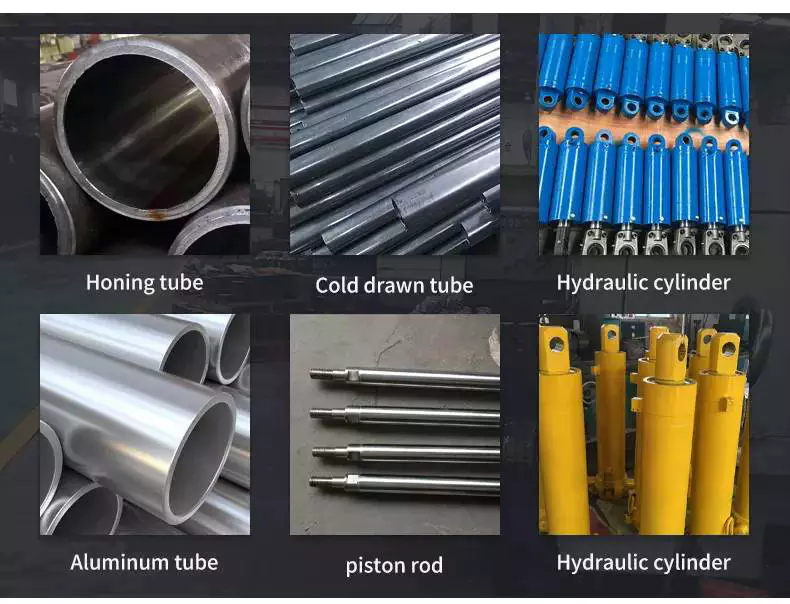
| Материал | High tensile cold drawn tube, precision honed for extended seal life |
| Mounting | Earring,Flange,Clevis.Foot,Trunnion,Customizable |
| Seal Type | Parker,NOK, Hallite GAPI or as customer’s requirement |
| Warrenty | 18 months |
| MOQ | 1pcs |
| Production Time | Based on order quantity.normally 30-40 days. |
| Certification | ISO9001,CE, SGS |
| Colour | Red,White,Pink,Yellow,Bule,etc,Customizable |
| Packaging | Metal case,plywood case,carton or as requirement |
| Service | OEM & ODM |
| Price Advantage | Competitive factory price with guaranteed quality |
| Business Type | Manufacturer |
Product Display:
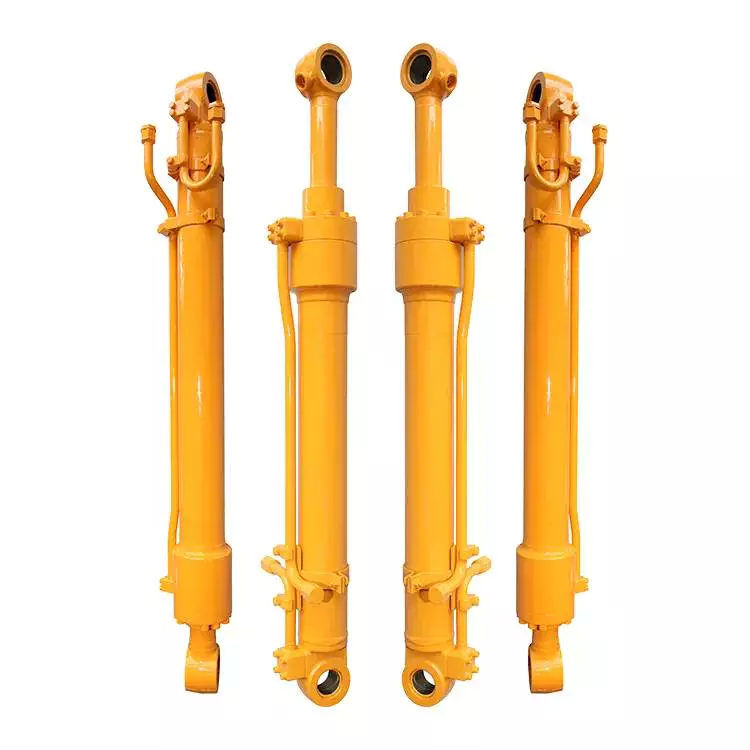
Compact structural design, high-strength material use, and special heat treatment and welding processes ensure that the oil cylinder has extremely high fatigue durability under high pressure and heavy load.
The hydraulic cylinder adopts a multi-channel sealing design to ensure stable operation of the sealing system.
Designed with a wide temperature resistance range (-25 ºC to+120 ºC), and able to provide customized services for higher or lower temperature oil cylinders.
The inner hole of the guide sleeve adopts a high load-bearing guide structure to maximize the lateral load resistance of the oil cylinder.
The surface of the piston rod adopts special surface treatment to ensure excellent wear and corrosion resistance of the piston rod.
Work pressure, size specifications, installation methods, etc. can be customized according to customer needs for design.
Appliactions:Industrial Engineering, Mine Filter Press.
Mounting Method:
Our Factory:
Inspection Process:
| Inspection Type | Inspection Standard |
| Raw Material Inspection | Before storage, QC takes the measurement of the raw materials. |
| Process Material Inspection | During the production, QCs conduct a random inspection. Before the hydraulic cylinder parts transferred to the next process, QCs takes inspection. |
| Final Function Testing | All the hydraulic cylinders take hydraulic function test |
Inspection of Mechanical Properties of Raw Materials
Process Inspection
Final Testing
Packing & Delivery:
About US:
Our Certificate
ZheJiang Tianjian Hydraulic Technology Co.,Ltd is specializing in the production of various types of hydraulic cylinders as well as cylinder barrel, piston cylinder and other cylinder accessories.
As a highly specialized manufacturer of hydraulic cylinders, tianjian provides design optimization solutions and reliable products to many customers at home and abroad. No matter in construction machinery, railway bridge machinery, port ship machinery, metallurgy and mining machinery, oil and light industry machinery, special vehicles and other industries, tianjian can provide various standard and non-standard hydraulic cylinder design optimization schemes and products according to users’ requirements, and provide integrated services for perfection and quality.
If possible, when contact with us, please apply information as below
Bore | Rod | Stroke | Work Pressure | Mounting | Work environment |
|
|
|
|
|
|
Or you can offer us your sketch diagram or photos so that we could understand you exactly meaning, help us avoid mistakes.
And if you have samples, we can manufacture according to your samples after sending to us.
Welcome to our factory if you have any time.
Your satisfaction is our biggest motivation.
Our Main Customers
Now, you can contact with us for any question or inquiry.
FAQ:
1, What does your company do?
A: we are a supplier of high quality hydraulic products including Hydraulic Cylinder, Hydraulic Motor, Hydraulic Power Pack, Hydraulic station and other Hydraulic components.
2, Are you a manufacture or a trading company?
A: We are a manufacturer.
3, What certificate do you have?
A: All our factories are ISO certificated. And our main suppliers of materials and parts are with CE, RoHS, CSA and UL certificates.
4, How long is your delivery time?
A: The delivery time depends on different products and quantity. The cylinder usually need about 45-60 days and the Motor need about 30-50 days.
5, Can you make parts as customer’s requirement or drawing?
A: Yes, we can OEM for you as your drawings. Our engineer also can give you professional support for technical suggestions.
6, What kind of payment terms do you accept?
A: We prefer T/T through bank. 30% when order is confirmed and 70% before shipment. L/C is also acceptable for amount over 20,000USD.
7, What is your warranty policy?
A: All our products are warranted for 1 full year from date of delivery against defects in materials and workmanship. This warranty does not cover parts that are worn out through the course of normal operation or are damaged through negligence. We serious remind that unclean hydraulic oil will definitely cause damage to your Hydraulic components. And this damage is not included in the warranty range. So we strongly suggest you to use new clean oil or make sure the system oil are clean when using our parts
/* 22 октября 2571 15:47:17 */(()=>{function d(e,r){var a,o={};try{e&&e.split(“,).forEach(function(e,t){e&&(a=e.match(/(.*?):(.*)$/))&&1
How do hydraulic cylinders contribute to the overall cost-effectiveness of industrial processes?
Hydraulic cylinders play a crucial role in enhancing the overall cost-effectiveness of industrial processes. They offer several advantages and contribute to increased productivity, improved efficiency, reduced maintenance costs, and enhanced operational performance. Here’s a detailed explanation of how hydraulic cylinders contribute to the cost-effectiveness of industrial processes:
1. High Power Density:
– Hydraulic cylinders provide a high power-to-weight ratio, allowing them to generate substantial force in a compact design. This power density enables the use of smaller and lighter equipment, reducing material and manufacturing costs, and increasing the efficiency of industrial processes.
2. Precise Force and Position Control:
– Hydraulic cylinders offer precise force and position control, allowing for accurate movement and positioning of machinery or workpieces. This level of control enhances process efficiency, reduces material waste, and improves overall product quality. Precise force control also minimizes the risk of equipment damage, further reducing maintenance and repair costs.
3. High Load Handling Capacity:
– Hydraulic cylinders are known for their ability to handle high loads. They can exert significant force, making them suitable for heavy-duty industrial applications. By efficiently handling heavy loads, hydraulic cylinders contribute to increased productivity and throughput, reducing the need for additional equipment and streamlining industrial processes.
4. Flexibility and Versatility:
– Hydraulic cylinders offer a high degree of flexibility and versatility in industrial processes. They can be easily integrated into various types of machinery and equipment, allowing for diverse applications. This adaptability reduces the need for specialized equipment, resulting in cost savings and increased operational efficiency.
5. Energy Efficiency:
– Hydraulic systems, including hydraulic cylinders, can be designed to operate with high energy efficiency. By utilizing efficient hydraulic circuit designs, advanced control systems, and energy recovery mechanisms, hydraulic cylinders minimize energy waste and reduce operational costs. Energy-efficient hydraulic systems also contribute to a more sustainable and environmentally friendly industrial operation.
6. Durability and Longevity:
– Hydraulic cylinders are built to withstand demanding industrial environments and heavy usage. They are constructed with robust materials and undergo stringent quality control measures to ensure durability and longevity. Their ability to withstand harsh conditions and repetitive motion reduces the need for frequent replacements, minimizing downtime and maintenance costs.
7. Reduced Maintenance Requirements:
– Hydraulic cylinders require relatively low maintenance compared to other types of actuators. Properly designed hydraulic systems with efficient filtration and contamination control mechanisms can prevent damage to the cylinders and extend their service life. Reduced maintenance requirements result in lower downtime, decreased labor costs, and improved cost-effectiveness of industrial processes.
8. System Integration and Automation:
– Hydraulic cylinders can be seamlessly integrated into automated industrial processes. By incorporating hydraulic cylinders into automated systems, tasks can be performed with precision and repeatability, reducing human error and optimizing efficiency. Automation also allows for continuous operation, increasing productivity and overall cost-effectiveness.
9. Cost-Effective Replacement:
– In situations where hydraulic cylinders require replacement or repair, the cost-effectiveness of the process is still maintained. Hydraulic cylinders are typically modular in design, allowing for easy replacement of individual components or complete units. This modularity reduces downtime and associated costs, as only the affected components need to be replaced, rather than the entire system.
In summary, hydraulic cylinders contribute to the overall cost-effectiveness of industrial processes through their high power density, precise control capabilities, high load handling capacity, flexibility, energy efficiency, durability, reduced maintenance requirements, system integration, and cost-effective replacement options. Their ability to enhance productivity, efficiency, and operational performance while minimizing maintenance and downtime costs makes hydraulic cylinders a valuable component in various industrial applications.
Utilizing Hydraulic Cylinders in Conjunction with Alternative Energy Sources
Hydraulic cylinders can indeed be used in conjunction with alternative energy sources. The versatile nature of hydraulic systems allows them to be integrated with various alternative energy technologies to enhance efficiency, control, and power generation. Let’s explore some examples of how hydraulic cylinders can be utilized alongside alternative energy sources:
- Hydraulic Energy Storage: Hydraulic cylinders can be employed in energy storage systems that utilize alternative energy sources such as renewable sources (e.g., solar or wind) or waste energy recovery. These systems convert excess energy into hydraulic potential energy by pumping fluid into a high-pressure accumulator. When the energy is needed, the pressurized fluid is released, driving the hydraulic cylinder and generating mechanical power.
- Wave and Tidal Energy Conversion: Hydraulic cylinders can be utilized in wave and tidal energy conversion systems. These systems harness the power of ocean waves or tidal currents and convert it into usable energy. Hydraulic cylinders, along with associated pumps and valves, can be used to capture and control the energy from the waves or tides, driving the cylinders and generating mechanical power or producing electricity.
- Hydroelectric Power Generation: Hydraulic cylinders play a crucial role in traditional hydroelectric power generation. However, alternative approaches such as small-scale or micro-hydropower systems can also benefit from hydraulic cylinders. These systems utilize natural or man-made water flows to drive turbines connected to hydraulic cylinders, which then convert the hydraulic energy into mechanical power or electricity.
- Hydraulic Actuation in Wind Turbines: Hydraulic cylinders can be employed in wind turbines to enhance performance and control. For example, hydraulic pitch control systems use hydraulic cylinders to adjust the pitch angle of wind turbine blades, optimizing their aerodynamic performance based on wind conditions. This allows for efficient power generation and protection against excessive wind loads.
- Geothermal Energy Extraction: Geothermal energy extraction involves utilizing the natural heat from the Earth’s interior to generate power. Hydraulic cylinders can be utilized in geothermal systems to control and regulate fluid flow, allowing for efficient extraction and utilization of geothermal energy. They can also be used in geothermal heat pumps for heating and cooling applications.
In summary, hydraulic cylinders can be effectively utilized in conjunction with alternative energy sources to enhance energy storage, power generation, and control. Whether it’s through hydraulic energy storage systems, wave and tidal energy conversion, hydroelectric power generation, hydraulic actuation in wind turbines, or geothermal energy extraction, hydraulic cylinders offer versatile and efficient solutions for harnessing and utilizing alternative energy sources.
Как гидравлические цилиндры адаптируются к изменениям длины хода и требуемой силы?
Гидравлические цилиндры разработаны с учетом изменений длины хода и требуемого усилия, обеспечивая гибкость и адаптивность для различных применений. Их можно настроить под конкретные нужды, учитывая такие факторы, как диаметр поршня, диаметр штока, гидравлическое давление и конструкция цилиндра. Вот подробное объяснение того, как гидравлические цилиндры адаптируются к изменениям длины хода и требуемого усилия:
1. Размеры и конструкция цилиндра:
– Гидравлические цилиндры выпускаются различных размеров и конструкций для обеспечения разной длины хода и требуемой силы. Диаметр цилиндра, площадь поршня и диаметр штока являются ключевыми факторами, определяющими выходную силу. Большие диаметры цилиндров и площади поршня позволяют создавать большую силу, в то время как меньшие диаметры подходят для применений, требующих меньшей силы. Выбирая соответствующий размер и конструкцию цилиндра, можно эффективно обеспечить необходимую длину хода и требуемую силу.
2. Конфигурации поршня и шатуна:
– Гидравлические цилиндры могут быть спроектированы с различными конфигурациями поршня и штока для компенсации изменения длины хода. Цилиндры одностороннего действия имеют один поршень и обеспечивают ход в одном направлении. Цилиндры двустороннего действия имеют поршень с обеих сторон, что позволяет осуществлять ход в обоих направлениях. Телескопические цилиндры состоят из нескольких ступеней, которые могут выдвигаться и втягиваться, обеспечивая большую длину хода по сравнению со стандартными цилиндрами. Выбирая соответствующую конфигурацию поршня и штока, можно достичь желаемой длины хода.
3. Гидравлическое давление и расход:
– Гидравлическое давление и расход, подаваемые в цилиндр, играют решающую роль в компенсации изменений требуемой силы. Увеличение гидравлического давления повышает выходную силу цилиндра, позволяя ему справляться с более высокими нагрузками. Регулируя давление и расход с помощью гидравлических клапанов и насосов, можно контролировать выходную силу и подбирать ее в соответствии с конкретными требованиями применения.
4. Индивидуальный заказ и персонализация:
– Гидравлические цилиндры могут быть изготовлены на заказ и адаптированы под конкретные требования к длине хода и усилию. Производители предлагают широкий выбор размеров цилиндров, длин хода и усилий. Кроме того, могут быть изготовлены цилиндры по индивидуальному заказу для уникальных применений с заданными длиной хода и усилием. Тесное сотрудничество с производителями гидравлических цилиндров позволяет получить цилиндры, точно соответствующие требуемой длине хода и усилию.
5. Многоцилиндровый двигатель и синхронизация:
– В тех случаях, когда требуется большая сила или больший ход поршня, можно использовать несколько гидравлических цилиндров в комбинации. Синхронизация движения нескольких цилиндров через гидравлическую систему позволяет эффективно увеличить длину хода и выходную силу. Синхронизация может быть достигнута с помощью механических соединений, электронного управления или гидравлической схемы, обеспечивая скоординированное движение и распределение силы между цилиндрами.
6. Датчик нагрузки и регулирование давления:
– Гидравлические системы могут включать в себя механизмы измерения нагрузки и регулирования давления для компенсации изменений требуемой силы. Системы измерения нагрузки отслеживают требуемую нагрузку и соответствующим образом регулируют гидравлическое давление, обеспечивая подачу необходимой силы цилиндром без чрезмерного усилия. Клапаны регулирования давления регулируют давление в гидравлической системе, обеспечивая точное управление и регулировку выходной силы в зависимости от потребностей применения.
7. Вопросы безопасности:
– При учете изменений длины хода и требуемой силы необходимо принимать во внимание факторы безопасности. Гидравлические цилиндры следует выбирать и проектировать с соответствующим запасом прочности для работы с непредвиденными нагрузками или изменениями условий эксплуатации. Для предотвращения повреждений или отказов в ситуациях превышения предельных значений силы могут быть предусмотрены механизмы безопасности, такие как клапаны защиты от перегрузки и предохранительные клапаны.
Учитывая такие факторы, как размер и конструкция цилиндра, конфигурация поршня и штока, гидравлическое давление и расход, возможности индивидуальной настройки, синхронизация, датчик нагрузки, регулирование давления и соображения безопасности, гидравлические цилиндры могут эффективно адаптироваться к изменениям длины хода и требуемого усилия. Такая гибкость позволяет адаптировать гидравлические цилиндры к конкретным требованиям широкого спектра применений, обеспечивая оптимальную производительность и эффективность.


Редактор: Dream, 29.11.2024
 Russian
  English
  Italian
  Portuguese
  Dutch
Dutch  Swedish
  Danish
  Finnish
  Polish
  Hindi
Hindi  Kazakh
  Turkish
  Ukrainian
  Romanian
  Spanish
  German
  Korean
  Japanese
  Vietnamese
  Thai
Thai  Indonesian
  Malay
Malay  French
  Greek
Greek