
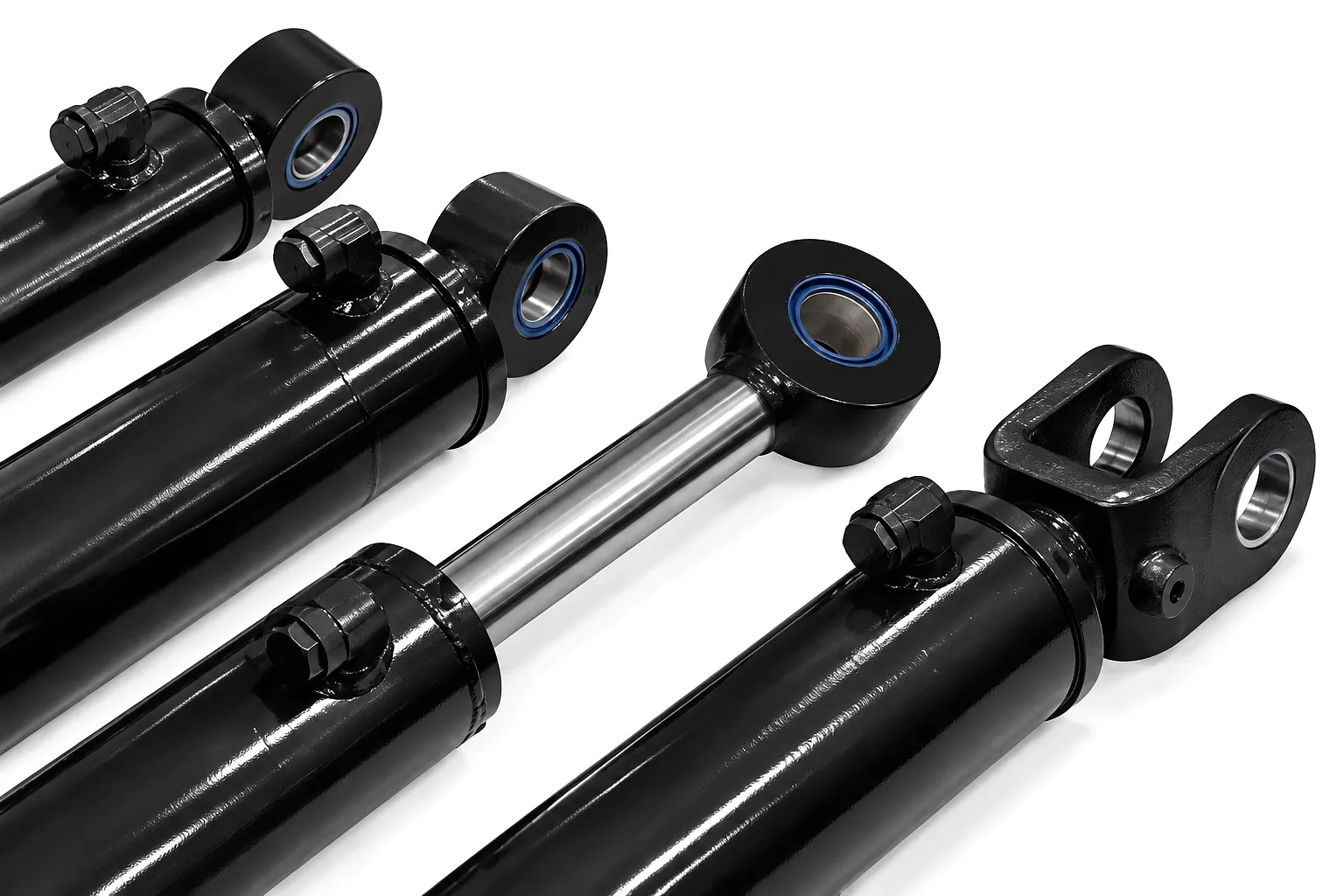
 In hydraulic engineering, the piston rod is far more than a structural component — it is the interface between fluid power and mechanical output. Every time a cylinder extends or retracts, the rod passes through a seal pack that demands an extraordinarily consistent surface. Too rough, and the seals erode. Too smooth, and lubrication film cannot anchor properly. The science of surface finish in hydraulic cylinders is precise, unforgiving, and commercially significant.
How Chrome Plating Works on a Hydraulic Piston Rod
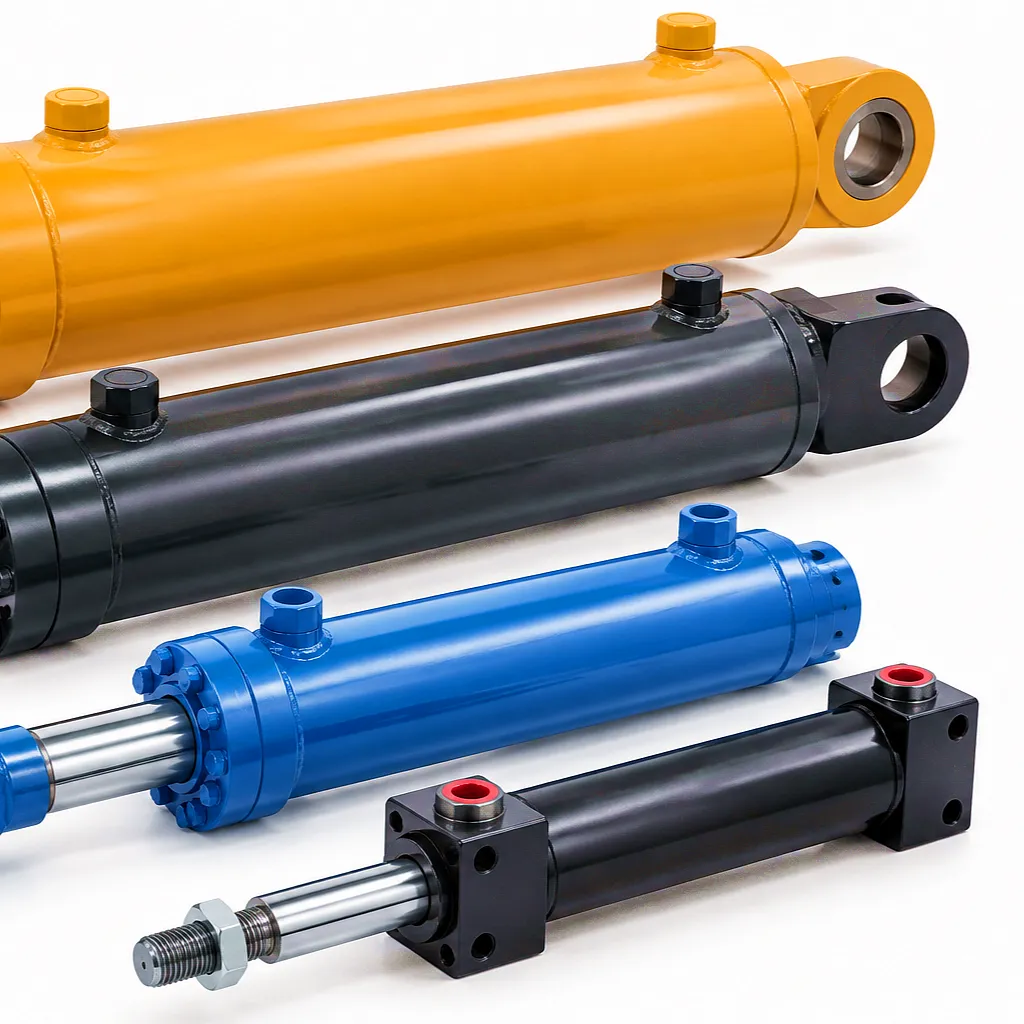 The electroplating process for hard chrome begins with a thoroughly cleaned and ground steel rod — typically manufactured from 45# steel, 40Cr, or 42CrMo alloy — being submerged in a chromic acid electrolyte bath. An electric current drives chromium ions onto the rod surface, building up a dense, crystalline chrome layer at a controlled rate. Unlike decorative chrome, which may be as thin as 0.5–2 microns, hard chrome for hydraulic rods typically ranges between 20 and 100 microns in thickness, applied in multiple passes to avoid hydrogen embrittlement and ensure adhesion integrity.
What makes this process demanding is the interplay between bath temperature, current density, and acid concentration. Any deviation introduces microcracks, pitting, or poor adhesion — defects that shorten seal life and cause cylinder leakage in the field. At Ever Power, our chrome plating lines are monitored with automated sensors throughout each cycle, and every rod undergoes magnetic particle inspection and surface roughness measurement before dispatch. The target Ra (arithmetic mean roughness) for a finished hydraulic piston rod is typically between Ra 0.1 µm and Ra 0.4 µm — a window narrow enough to make the difference between a 5-year service life and a 5-month failure.
Core Materials in Chrome-Plated Hydraulic Cylinder Manufacturing
Standard-grade medium carbon steel widely used for general-purpose hydraulic cylinders in agricultural and light industrial applications. Cost-effective, machinable, and compatible with hard chrome adhesion after surface preparation. Yield strength typically 355–490 MPa.
Chromium-molybdenum alloy steel is the premium choice for high-pressure and heavy-duty cylinders. With tensile strength reaching 1080 MPa and excellent fatigue resistance, it is the rod material specified by engineers in offshore lifting, mining, and steel-pressing applications across Yorkshire and the Scottish Highlands.
For marine environments, food processing facilities in Humberside, and chemical plants in Teesside, stainless steel rods eliminate chrome plating entirely in favour of inherent corrosion resistance. 316 grade — with its 2–3% molybdenum content — resists chloride attack in coastal and offshore British installations.
The barrel or tube housing the piston is typically cold-drawn from ST52 (DIN 2391) or EN 10305-2 E355 seamless tubing. These materials combine high burst pressure ratings with internal bore tolerances of H8 or finer, ensuring a proper fit for the piston seal and minimising internal leakage losses throughout the cylinder’s service life.
Why Chrome-Plated Piston Rods Outperform Alternatives
Six engineering advantages that define performance in real-world British industrial conditions
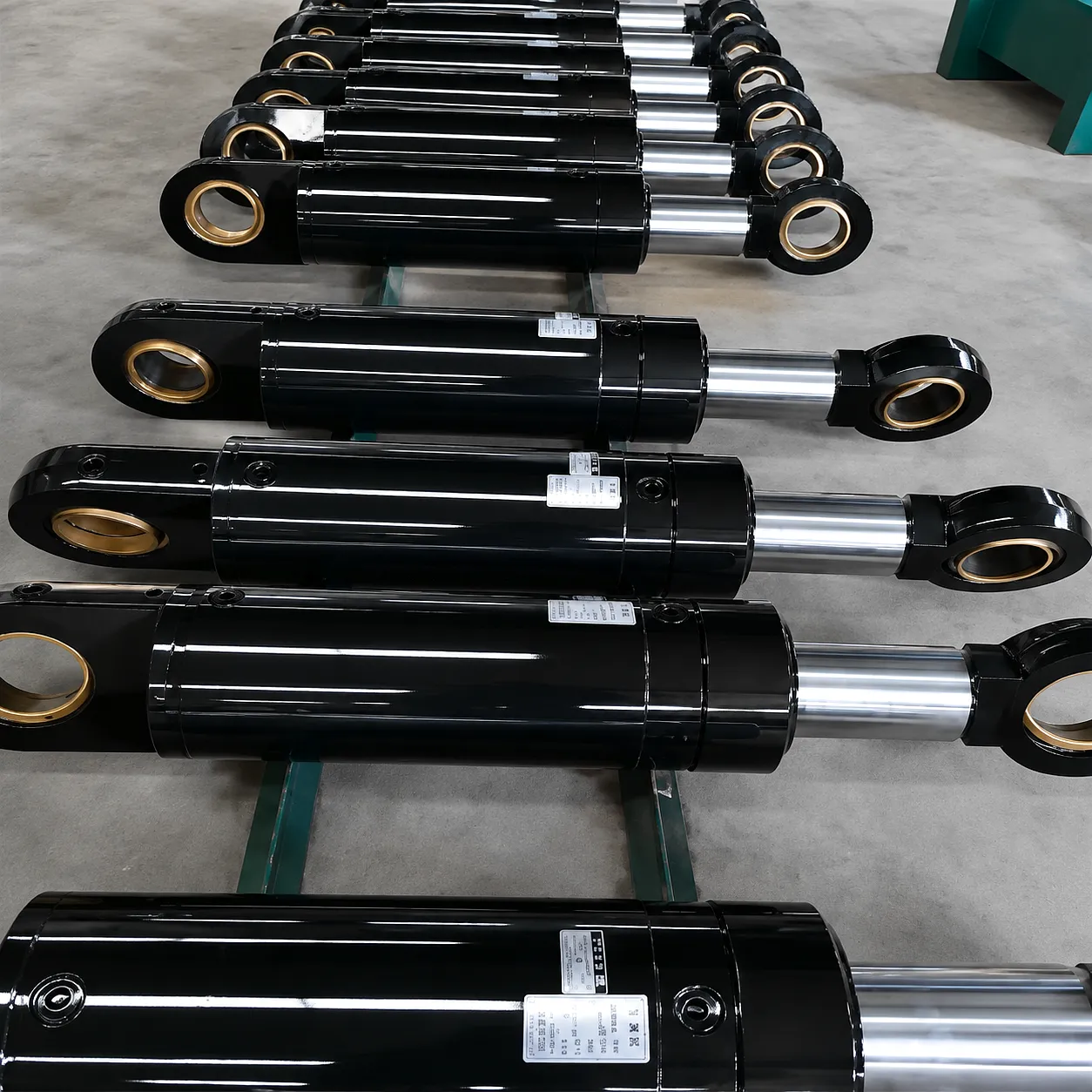
Hard chrome achieves a Vickers hardness two to three times greater than the underlying steel substrate. This exceptional hardness resists scoring from contaminated hydraulic fluid and abrasive particles, which is particularly important in construction and quarrying environments where dust and grit are unavoidable.
Britain’s damp maritime climate accelerates oxidation on unprotected steel components. Chrome-plated rods offer a passive, electrochemically stable surface that resists salt spray, acid rain, and condensation-driven corrosion. Salt spray testing to BS EN ISO 9227 demonstrates that properly applied hard chrome resists corrosion beyond 500 hours without degradation.
Hydraulic seals — whether polyurethane, NBR, or PTFE-based — perform predictably only when the rod surface Ra is within the manufacturer’s specified window. A correctly finished chrome rod at Ra 0.1–0.4 µm lubricates the seal rather than wearing it, extending seal life from as little as 6 months on poorly finished rods to more than 5 years in standard industrial service.
The smooth, dense chrome surface produces a coefficient of friction (µ) as low as 0.12–0.16 against standard seal materials. This translates directly into lower starting pressures, reduced heat generation at the seal interface, and a more energy-efficient hydraulic system overall — a consideration increasingly relevant in the UK’s push towards electrified hydraulic machinery and low-carbon manufacturing.
One of chrome plating’s commercial strengths — particularly appealing to UK maintenance engineers managing capital equipment budgets — is recoverability. When a rod wears beyond specification, the old chrome can be stripped electrolytically, the rod reground to remove surface damage, and fresh chrome applied to restore OEM dimensions. This circular approach to cylinder maintenance aligns well with BS 8900 sustainability frameworks and reduces replacement cost by 40–60% versus full rod replacement.
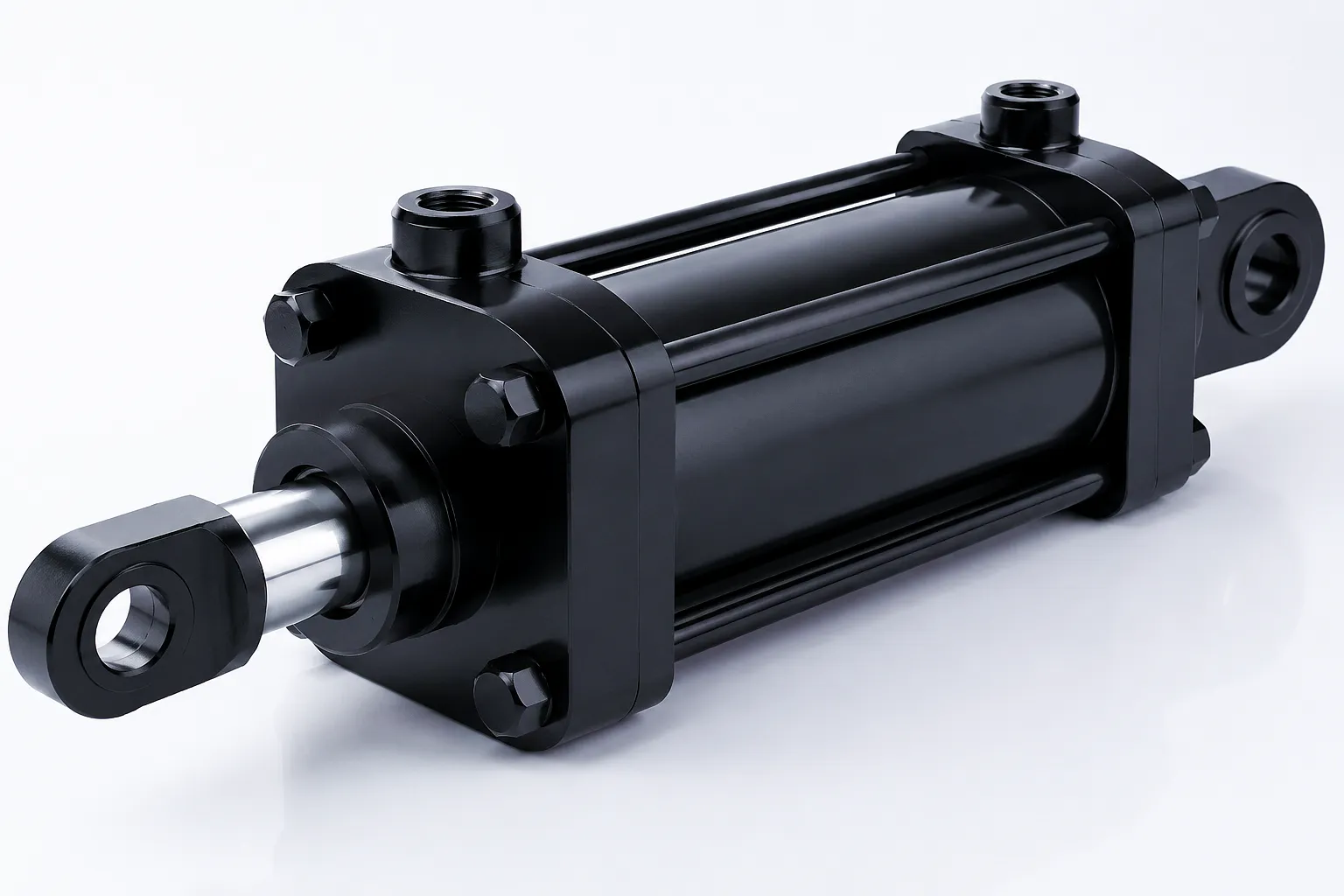
Chrome deposition is controllable to ±5 microns when properly managed, enabling final rod diameters to be held within h6 or f7 tolerances after grinding. This level of accuracy is non-negotiable in tie-rod cylinder assemblies where interchange of rods between cylinder bodies must be guaranteed, and in OEM supply chains where cylinder-to-machine fits are engineered to exact specifications.
Technical Performance Specification Table
Chrome-plated piston rod hydraulic cylinders — standard and heavy-duty parameter ranges
| พารามิเตอร์ | Standard Grade | Heavy Duty Grade | Unit / Note |
|---|---|---|---|
| Chrome Layer Thickness | 20–50 | 50–100 | µm (per side) |
| Surface Hardness | 800–900 | 900–1000 | HV (Vickers) |
| Surface Roughness Ra | 0.2–0.4 | 0.1–0.2 | µm |
| Operating Pressure | Up to 200 | Up to 350 | bar |
| Bore Diameter Range | 40–200 | 200–500 | mm |
| Rod Diameter Range | 25–150 | 150–400 | mm |
| ความยาวช่วงชัก | Up to 3,000 | Up to 8,000 | mm |
| วัสดุแท่ง | 45#, 40Cr | 42CrMo, 316SS | Steel grade |
| วัสดุถัง | ST52, E355 | ST52, E355+QT | Seamless tube |
| Salt Spray Resistance | 300–500 | 500–1,000 | Hours (ISO 9227) |
| อุณหภูมิในการทำงาน | -20 to +80 | -40 to +120 | °C |
| Mounting Options | Clevis, Flange, Trunnion | All + Custom | — |
| Cushioning | Optional | Standard / Adjustable | End-of-stroke |
Industrial Application Scenarios Across British Industry
Where chrome-plated hydraulic cylinders serve UK engineers every day
Application Scenario 1: Agricultural Machinery in East Anglia and Yorkshire
Application Scenario 2: Lifting Platforms and Access Equipment in London and Manchester
The construction boom across Greater London, Manchester city centre, and the major urban regeneration projects of the Midlands has driven demand for hydraulic lifting platforms capable of reaching heights between 12 and 30 metres with load capacities from 500 kg to several tonnes. These platforms — scissor lifts, telescopic boom lifts, and vehicle-mounted elevating work platforms — rely entirely on the consistent performance of their hydraulic cylinders for operator safety.
Telescopic cylinder designs, which use multiple nested rod stages to achieve long extended strokes in compact retracted lengths, are particularly sensitive to surface finish quality. Each stage must seal against the next with minimal leakage, demanding consistent Ra values across all rod stages. Our custom double-acting telescopic hydraulic cylinders for lifting platforms are precision-ground and chrome-plated to exacting tolerances, ensuring lift operators across UK construction sites have the confidence that their equipment extends and retracts predictably at every operation.
Application Scenario 3: Steel Pressing and Forging in Sheffield and Rotherham
Sheffield’s identity as a global steel city is still very much alive in the precision forming and forging workshops of South Yorkshire. Press hydraulic cylinders in these facilities operate at some of the most extreme duty cycles seen in any manufacturing sector — delivering forces measured in hundreds of tonnes at rapid cycling rates, often in the presence of scale, lubricating oils, and elevated ambient temperatures from furnaces and quench tanks.
Heavy-duty hydraulic cylinders in press applications require rods built from 42CrMo steel — quenched and tempered to achieve tensile strengths of 1000–1080 MPa — before chrome plating at the thicker end of the specification range. This combination ensures the rod resists both the bending stress imposed by off-axis press loads and the fatigue damage from millions of pressure cycles. Maintenance engineers in these facilities consistently report that investing in premium-specification chrome finish pays back within a single production year through reduced unplanned downtime and eliminated seal replacement costs.
Application Scenario 4: Offshore and Marine Hydraulics in Aberdeen and the North Sea
Offshore oil and gas platforms, pipe-laying vessels, and subsea remotely operated vehicles operating out of Aberdeen and other North Sea logistics hubs represent the apex of corrosion challenge for hydraulic cylinder engineers. Salt spray, humidity levels approaching saturation, and seawater splash are constants. No unprotected steel surface survives for long in this environment without significant degradation.
In these applications, hard chrome rods may be supplemented with nickel underplating to improve adhesion and provide a secondary corrosion barrier, or substituted entirely with 316L stainless steel rods for the most aggressive saltwater environments. Both approaches are available from Ever Power as standard specification options, and all offshore-specification cylinders are subject to extended 720-hour salt spray testing before clearance for shipment. Hydraulic cylinders destined for North Sea work typically also incorporate V-ring seal stacks and wiper seals with embedded scrapers to strip contamination from the rod surface during retraction.
Application Scenario 5: Waste Management and Environmental Processing in Birmingham
Birmingham’s waste management and environmental processing sector — encompassing compaction vehicles, refuse transfer stations, and materials recovery facilities — makes heavy use of hydraulic cylinders in environments that combine chemical aggression with high mechanical loading. Compactor blade cylinders, tipper hoist cylinders, and press ram cylinders in these facilities encounter leachate, cleaning chemicals, and organic debris that rapidly attack unprotected or poorly finished rod surfaces.
For these applications, cylinders are often specified with chrome thicknesses at the upper end of the range — 60–100 µm — to provide a deep reserve of corrosion protection, combined with additional epoxy-painted barrel exteriors and stainless steel gland nuts. The combination of a properly finished chrome rod and chemical-resistant seals rated for pH 4–12 gives environmental processing equipment service intervals that align with scheduled vehicle maintenance, removing cylinders from the list of unplanned failure modes entirely.
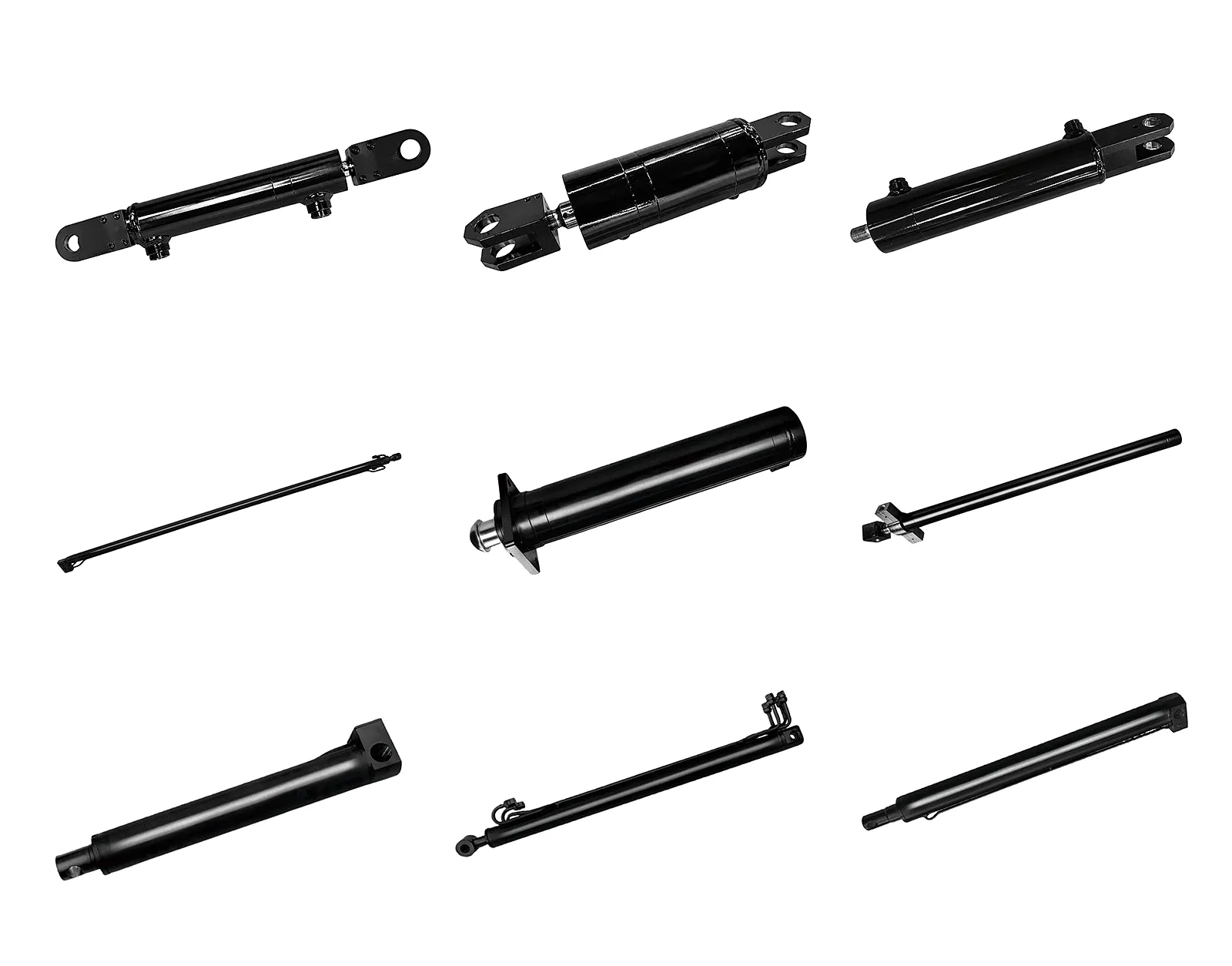
Ever Power — Complete Range of Chrome-Plated Hydraulic Cylinders for UK Industrial Supply
Ever Power: Precision Manufacturing and Custom Hydraulic Cylinder Supply
At Ever Power, hydraulic cylinder manufacturing is not an assembly operation — it is a precision engineering discipline that begins with raw material certification and ends with documented performance testing on every finished unit.
Our machining centres hold barrel bore tolerances of H8 and rod diameter tolerances of h6, achieved on CNC turning and boring machines with live measurement feedback. Rod straightness is verified by laser alignment before chrome plating, ensuring the basis for coating quality is established at the machining stage rather than corrected after plating.
Ever Power operates its own chrome plating facility with temperature-controlled baths, automated current density management, and real-time bath chemistry monitoring. This in-house capability eliminates the quality variability that comes from outsourcing plating to third parties, and allows rapid turnaround on custom stroke and diameter combinations without minimum order constraints.
UK procurement engineers frequently require non-standard stroke lengths, bespoke mounting configurations, custom port orientations, or high-specification seal packages for aggressive environments. Ever Power’s engineering team works directly from customer drawings or application descriptions to produce cylinders that match exactly what the machine demands — not a closest standard approximation. Lead times for custom units are 15–25 working days with documented material traceability included as standard.
All cylinders destined for British customers ship under DDP (Delivered Duty Paid) Incoterms, meaning import duties, customs clearance, and final-mile delivery to the customer’s facility in Birmingham, Leeds, Aberdeen, or any other UK location are included in the quoted price. No hidden import charges, no customs handling surprises — just a cylinder delivered to your door at the agreed specification.
✉ Get a Custom Quote from Ever Power
Response within 24 hours · DDP delivery to any UK address · Full material certification included
Surface Finish Options: Chrome vs Alternative Coatings
Hard chrome plating does not operate in isolation as the only surface treatment available for hydraulic piston rods. In recent years, alternatives such as HVOF (High-Velocity Oxygen Fuel) tungsten carbide coatings and electroless nickel plating have been promoted as replacements — particularly as environmental regulations around hexavalent chromium tighten under REACH compliance requirements. Understanding the practical performance differences between these options is essential for specification engineers who need to match surface treatment to application demands rather than following market trends uncritically.
| Coating Type | Hardness (HV) | Typical Ra (µm) | Cost Index | Best For |
|---|---|---|---|---|
| Hard Chrome (Electroplated) | 800–1000 | 0.1–0.4 | Low–Medium | General industrial, agricultural, OEM |
| HVOF WC-Co Coating | 1100–1400 | 0.05–0.2 (after grinding) | Very High | Aerospace, offshore, severe abrasion |
| Electroless Nickel | 500–700 | 0.2–0.5 | Medium | Chemical resistance, food grade |
| Nitrocarburising (Tenifer) | 700–900 | 0.3–0.8 | Low | Light-duty, dry environments |
| Bare Stainless Steel 316 | 200–300 | 0.2–0.6 | Medium | Marine, food, pharmaceutical |
Hard chrome electroplating remains the best cost-performance balance for the majority of UK industrial hydraulic cylinder applications. Alternatives are appropriate where specific environmental or regulatory drivers justify the additional cost.
Customer Success Story: Steel Fabricator in Sheffield Eliminates Cylinder Downtime
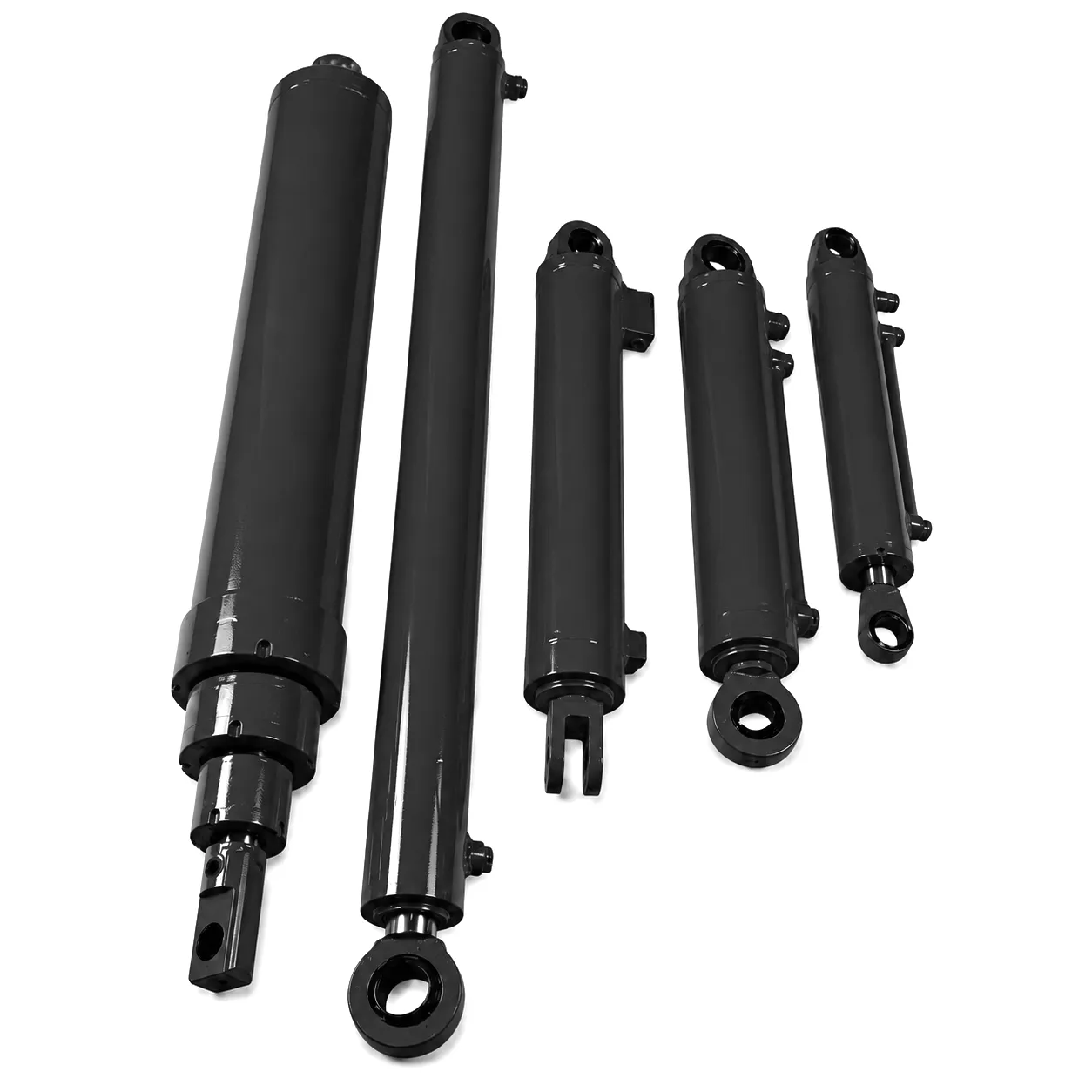 Steelform Pressings Ltd operates a fleet of hydraulic press lines in their 18,000 sq ft facility on the eastern edge of Sheffield’s Advanced Manufacturing Park corridor. Their 250-tonne C-frame presses run two shifts, five days per week, producing structural brackets and chassis components for the UK rail and construction sectors. By 2023, their maintenance team was replacing press ram cylinders every 6–8 months, driven primarily by seal failure caused by rod surface scoring.
The root cause analysis conducted by their engineering lead identified the original cylinder supplier’s chrome thickness at just 18–22 µm — inadequate for the cyclic bending stress and abrasive scale particles present in the pressing environment. After switching to Ever Power’s heavy-duty specification — 42CrMo rods with 65 µm chrome, ground to Ra 0.15 µm, with polyurethane wiper seals and adjustable end cushioning — the replacement interval extended to over 28 months on identical press lines running identical shifts.
The commercial outcome was straightforward: cylinder replacement cost reduced by approximately 72% annually, unplanned downtime on these press lines fell to zero in the first 18 months of operation, and the maintenance team’s time previously spent on cylinder-related callouts was redirected to planned preventive maintenance tasks across the wider facility. Steelform now specifies Ever Power cylinders across all press and clamping positions in the plant.
What Our UK Customers Say
“We had persistent seal failures on our press ram cylinders — went through four sets in a year. Ever Power’s specification team identified the chrome thickness issue immediately and supplied replacements at 65 µm with a proper Ra finish. Zero seal failures since. The DDP delivery meant no customs headaches either. These are now our standard specification for all press cylinders.”
Steelform Pressings Ltd, Sheffield
“Our combine harvester hydraulic cylinders used to be an annual expense — every season we were repairing or replacing them after the harvest. Ever Power’s chrome-plated units have now run two full harvest seasons across our fleet of nine machines with no issues at all. The surface finish quality is visibly different — you can see the quality in the rod surface when they arrive. Thoroughly recommend for any agricultural contractor dealing with the abrasive conditions we see in Lincolnshire.”
Broughton Agricultural Services, Spalding, Lincolnshire
“We needed a telescopic cylinder to a very specific extended length and retracted height for a new access platform design we were developing for a Manchester client. Most suppliers would have pushed a standard size and asked us to redesign the platform. Ever Power built exactly what the drawing called for — correct stroke, correct flange pattern, correct port positions — in 18 working days. The Ra measurement data came with the certificate of conformity. Exactly what a professional supply chain should look like.”
UrbanLift Access Solutions, Manchester
Frequently Asked Questions About Hydraulic Cylinders in the UK
Voice-search-optimised answers for engineers and procurement teams across Britain
For heavy industrial applications — press lines in Sheffield, mining equipment in Wales, or offshore lifting in Aberdeen — chrome thickness should be specified at a minimum of 50 µm per side, with 65–100 µm recommended for environments with abrasive contamination or chemical exposure. Thinner coatings applied by budget suppliers are typically in the 15–25 µm range and will fail prematurely under these conditions.
Pricing for custom chrome-plated hydraulic cylinders delivered DDP to the UK typically ranges from £280–£650 for standard-grade agricultural and light industrial units (bore 40–100 mm, stroke up to 1,500 mm), rising to £1,200–£4,500 for heavy-duty press and offshore units with large bores, long strokes, or premium material specifications. Contact Ever Power at [email protected] for a specific quotation against your requirements.
Ever Power supplies custom hydraulic cylinders with full material certification, dimensional inspection reports, surface roughness data, and hydrostatic pressure test records as standard documentation. This documentation package satisfies the quality management requirements of most UK engineering clients and is supplied in English with each order. Delivery to Birmingham facilities is available via DDP road freight with typical transit of 5–7 business days from our dispatch confirmation.
The most reliable indicators are increased seal oil consumption (external leakage past the gland), visible scoring or pitting marks on the rod surface visible to the naked eye, and surface roughness measurements above Ra 0.8 µm confirmed by a portable profilometer. When these symptoms appear, the rod should be withdrawn, measured for dimensional loss, and assessed for re-chroming viability — typically practical if the dimensional reduction does not exceed 0.5 mm below nominal diameter.
Send your cylinder specifications — bore diameter, rod diameter, stroke length, operating pressure, and mounting configuration — to [email protected]. Ever Power’s technical sales team typically responds within 24 hours with a competitive price and lead time. For agricultural cylinder enquiries in advance of the harvest season, ordering 8–10 weeks ahead is recommended to guarantee stock availability and DDP delivery within the required window.
For lifting platform hydraulic cylinders, specify Ra 0.1–0.2 µm on the chrome-plated rod surface. This range gives the best balance between seal longevity and adequate oil film retention for the polyurethane or PTFE seals typically used in access equipment. Avoid accepting cylinders without a surface roughness measurement certificate — any legitimate manufacturer will provide this data as part of the quality documentation package.
Ready to Specify Your Hydraulic Cylinder?
Tell us your bore, stroke, pressure, and application. Ever Power will come back to you within 24 hours with a full specification, price, and delivery timeline — DDP to any UK address included.
✉ Get a Quote — [email protected]
✓ Full material certification
✓ DDP UK delivery
✓ 24h response
© Ever Power Group · Hydraulic Cylinders · boom-cylinders.com · Serving the UK industrial market · edit by gzl
 Thai
Thai  English
  Italian
  Portuguese
  Dutch
Dutch  Swedish
  Danish
  Finnish
  Polish
  Hindi
Hindi  Kazakh
  Turkish
  Ukrainian
  Romanian
  Spanish
  German
  Russian
  Korean
  Japanese
  Vietnamese
  Indonesian
  Malay
Malay  French
  Greek
Greek