
Опис продукту
- Product Information
- Related Products
HangZhou GD Machinery CO.,LTD. | |
Продукт | |
tie rod hydraulic cylinder, welded hydraulic cylinder, telescopic cylinders cylinder, flange type hydraulic cylinder, hydraulic cylinder with valve function, hydraulic power unit, Hydraulic manifold block, pneumatic fitting, | |
Матеріал | Tube – Cold Drawn Precision seamless Tubing Mounts – Trunnion with angular Swivels |
Application | Agriculture, Concrete & Asphalt, Cranes, Fire & Rescue, Forestry & Logging,Mining & Rock Crushing,Oil & Gas, Snow & Ice Control,Waste Management and Material Recycling Industry , Engineering Equipment, Special Vehicle |
Feature | 1.High quality with a reasonable price 2.ISO9001-2008 3.Customized specification are accepted |
Payment | T/T;L/C, Paypal |
Port | HangZhou ,China |
Quotation | According to the specific request |
Мінімальна кількість замовлення | According to the product |
Packaging | metal case;plywood case;carton or as requirement |
Delivery time | 30days upon receipt of 30% deposit; or upon receipt of relevant L/C; |
- Our Service
1. Sample service: samples will be provided according to customer’s instruction.
2. Customized services: a variety of cylinders can be customized according to customer demand.
3. Warranty service: In case of quality problems under 1 year warranty period, free replacement will be made for customer.
- Working Process
- Packing and Shipping
The products are fully protected by metal shelves, wood boxes and plastic fillers.
- Company Information
HangZhou GD Machinery is specialized to offer high precision all kind of hydraulic valves and hydraulic cylinder.we also have some hydraulic valve from CHINAMFG brand aboard
With a wide range, good quality ,reasonable price,our products are extensively used in the industries of construction machinery,machine tool,plastic machinery,vehicle. mining equipment,metallurgy,shipyard,food machinery,agricultural machinery,and other industries.
Our products are widely recognized and trusted by users and can meet continuously changing economic and social needs.
Welcome new and old customers to contact us for future business. we will offer you good quality and best price.
- Company Show
- FAQ
Q: Do you accept OEM manufacturing?
A: Yes! We do accept OEM manufacturing. We will quote you the exact price and make the exact cylinder according to your specification and drawing.
Q: Can we design our own package or print our own logo?
A: Yes! Package and logo will be made acording to your requirements.
Q: Could we get small quantity samples?
A: Yes! We understand the quality test is important and we are glad to make the sample for you. The MOQ is 1pcs.
Q: How long is the production time?
A: Generally the production time is 30 days.
Q: What is your payment term?
A: For sample payment, generally 100% T/T payment in advance, west union, paypal.
For order payment, generally is 30% T/T in advance, 70% balance before shipment. If you require the different payment term, let us negotiate it together.
| Сертифікація: | ISO9001, SGS |
|---|---|
| Тиск: | Середній тиск |
| Робоча температура: | Normal Temperature |
| Зразки: | US$ 60/Piece 1 штука (мінімальне замовлення) | Order Sample |
|---|
| Налаштування: | Доступно |
|
|---|
.shipping-cost-tm .tm-status-off{background: none;padding:0;color: #1470cc}
| Shipping Cost: Estimated freight per unit. | about shipping cost and estimated delivery time. |
|---|
| Payment Method: |
|
|---|---|
| Initial Payment Full Payment |
| Currency: | US$ |
|---|
| Return&refunds: | You can apply for a refund up to 30 days after receipt of the products. |
|---|
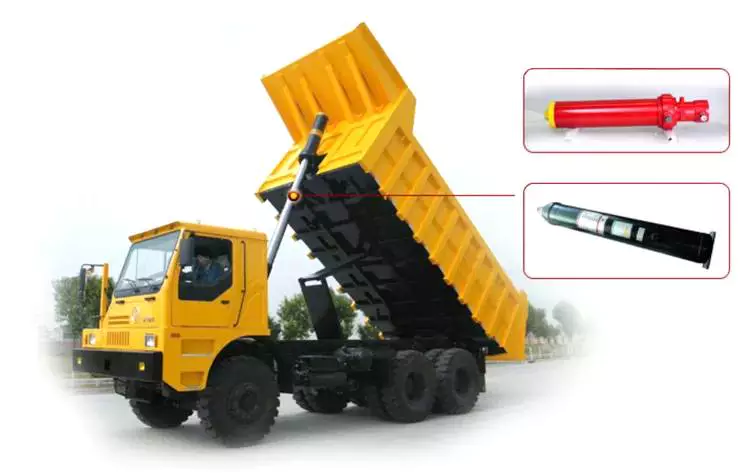
Can hydraulic cylinders be adapted for specialized applications like material handling?
Yes, hydraulic cylinders can be effectively adapted for specialized applications such as material handling. The versatility, power, and precise control offered by hydraulic cylinders make them well-suited for a wide range of material handling tasks. Hydraulic systems, including cylinders, are commonly used in industrial settings to lift, position, push, pull, and manipulate various types of materials. Here’s a detailed explanation of how hydraulic cylinders can be adapted for specialized material handling applications:
1. Lifting and Lowering:
– Hydraulic cylinders are commonly used for lifting and lowering heavy loads in material handling applications. By utilizing the force generated by hydraulic pressure, cylinders can provide the necessary power to lift and hold loads at different elevations. The precise control offered by hydraulic systems allows for accurate positioning of materials, ensuring efficient and safe lifting operations.
2. Pushing and Pulling:
– Hydraulic cylinders are capable of generating substantial pushing and pulling forces, making them ideal for applications that involve moving or manipulating materials. They can be used to push or pull heavy objects, control the movement of conveyors or rollers, or engage mechanisms for material transfer. The ability to exert high forces with precise control enables hydraulic cylinders to efficiently handle a variety of material handling tasks.
3. Tilting and Rotating:
– Hydraulic cylinders can be adapted to provide tilting and rotating functions in material handling equipment. By integrating cylinders into the design, equipment such as forklifts, cranes, or material handling arms can tilt or rotate to facilitate material placement or maneuvering. Hydraulic cylinders offer the required force and control to achieve smooth and controlled tilting or rotating motions, enhancing operational efficiency in material handling processes.
4. Gripping and Clamping:
– Hydraulic cylinders can be utilized to provide gripping and clamping functions for secure material handling. By incorporating specialized gripping or clamping mechanisms with hydraulic actuation, materials of various shapes and sizes can be securely held or clamped during transportation or processing. Hydraulic cylinders enable precise and adjustable gripping or clamping forces, ensuring the safe and reliable handling of materials.
5. Material Compaction and Forming:
– Hydraulic cylinders can be adapted for material compaction and forming applications. For example, in the production of bricks, hydraulic cylinders are used to apply high pressure and force to compact the raw materials into desired shapes. Similarly, in metal forming processes, hydraulic cylinders are employed to exert force on metal sheets or components, enabling precise shaping and forming operations.
6. Conveyor and Sorting Systems:
– Hydraulic cylinders can be integrated into conveyor and sorting systems to facilitate material movement and sorting. By incorporating hydraulic actuators, conveyor belts or sorting mechanisms can be efficiently controlled for optimal material flow and distribution. Hydraulic cylinders provide the necessary force and control to handle varying load capacities and adjust the speed and position of material transfer, improving the overall efficiency of handling and sorting operations.
7. Customized Designs:
– Hydraulic cylinders can be customized and adapted to meet specific requirements of specialized material handling applications. Engineers can design cylinders with unique dimensions, stroke lengths, mounting options, and sealing arrangements to fit into equipment or systems with specific space limitations or operating conditions. Customized hydraulic cylinders ensure optimal performance and compatibility for specialized material handling tasks.
In summary, hydraulic cylinders can be effectively adapted for specialized material handling applications, offering the necessary force, control, and versatility required in various material handling tasks. Whether it involves lifting and lowering, pushing and pulling, tilting and rotating, gripping and clamping, material compaction and forming, or integration into conveyor and sorting systems, hydraulic cylinders provide reliable and efficient solutions. Their adaptability, precise control, and ability to handle heavy loads make hydraulic cylinders a valuable component in optimizing material handling processes across different industries.
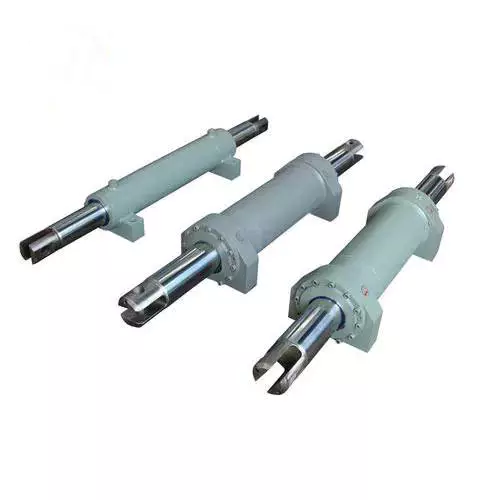
Забезпечення стабільної роботи гідравлічних циліндрів при коливальних навантаженнях
Гідравлічні циліндри розроблені для забезпечення стабільної роботи навіть за коливань навантажень. Вони досягають цього за допомогою різних механізмів та функцій, які дозволяють ефективно контролювати та компенсувати навантаження. Давайте розглянемо, як гідравлічні циліндри забезпечують стабільну роботу за коливань навантажень:
- Конструкція поршня: Поршень усередині гідравлічного циліндра відіграє вирішальну роль у контролі навантаження. Зазвичай він оснащений ущільненнями та кільцями, які запобігають витоку гідравлічної рідини та забезпечують ефективну передачу зусилля. Конструкція поршня може включати такі елементи, як ступінчасті або тандемні поршні, які забезпечують покращену несучу здатність та покращену стійкість, розподіляючи навантаження по кількох поверхнях.
- Амортизація циліндра: Гідравлічні циліндри часто містять механізми амортизації для мінімізації ударів та поштовхів, спричинених коливаннями навантажень. Амортизації можна досягти різними методами, такими як регульовані гвинти амортизації, гідравлічні клапани амортизації або еластомерні кільця амортизації. Ці механізми уповільнюють рух поршня ближче до кінця ходу, зменшуючи удар та запобігаючи раптовим зупинкам, які можуть призвести до нестабільності.
- Компенсація тиску: Коливання навантаження можуть призвести до коливань тиску в гідравлічній системі. Для забезпечення стабільної роботи гідравлічні циліндри оснащені механізмами компенсації тиску. Ці механізми підтримують постійний рівень тиску в системі, незалежно від змін навантаження. Компенсації тиску можна досягти за допомогою запобіжних клапанів, компенсаційних поршнів або клапанів регулювання потоку з компенсацією тиску.
- Контроль потоку: Гідравлічні циліндри часто оснащені клапанами регулювання потоку для регулювання швидкості руху циліндра. Контролюючи швидкість потоку гідравлічної рідини, рух циліндра можна регулювати відповідно до змінних умов навантаження. Клапани регулювання потоку забезпечують плавний та контрольований рух, запобігаючи різким змінам, які можуть призвести до нестабільності.
- Системи зворотного зв'язку: Для забезпечення стабільної роботи при коливаннях навантажень гідравлічні циліндри можна інтегрувати із системами зворотного зв'язку. Ці системи надають інформацію в режимі реального часу про положення, швидкість та силу циліндра. Завдяки постійному контролю цих параметрів гідравлічна система може негайно вносити корективи для підтримки стабільності та компенсації коливань навантаження. Системи зворотного зв'язку можуть включати датчики положення, датчики тиску або датчики навантаження, залежно від конкретного застосування.
- Правильний підбір розміру та розміру: Забезпечення стабільної роботи за коливальних навантажень починається з правильного вибору розмірів та гідравлічних циліндрів. Вкрай важливо вибрати циліндри з відповідним розміром отвору, діаметром штока та довжиною ходу, щоб відповідати очікуваним умовам навантаження. Завеликі або замалі циліндри можуть призвести до нестабільності та зниження продуктивності. Правильний вибір розмірів також включає врахування таких факторів, як необхідна сила, швидкість та робочий цикл застосування.
Підсумовуючи, гідроциліндри забезпечують стабільну роботу при коливаннях навантажень завдяки таким функціям, як конструкція поршня, механізми амортизації, компенсація тиску, регулювання потоку, системи зворотного зв'язку, а також правильний вибір та визначення розмірів. Ці механізми та міркування дозволяють гідроциліндрам забезпечувати стабільний та контрольований рух навіть в умовах динамічного навантаження, що призводить до надійної та стабільної роботи.
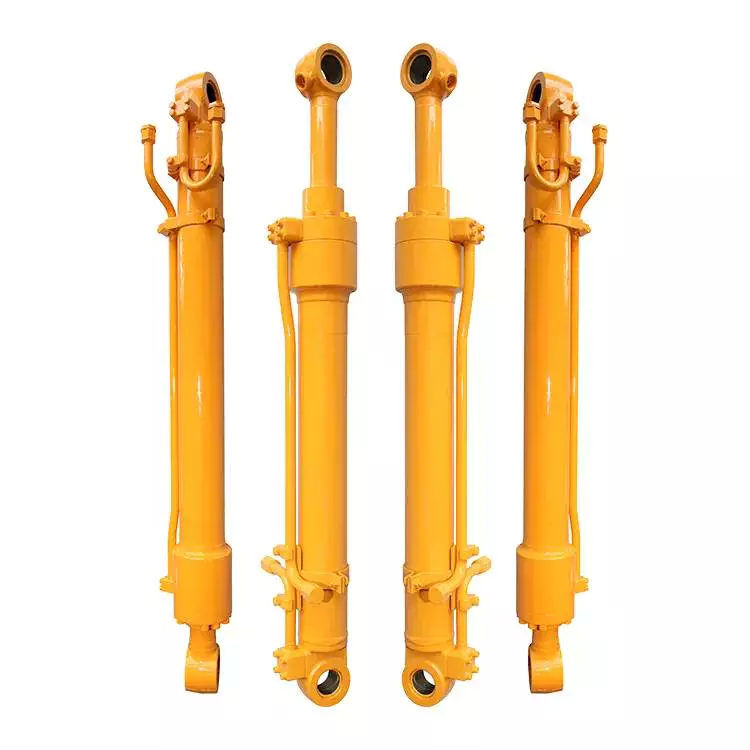
What maintenance practices are essential for extending the lifespan of hydraulic cylinders?
Maintaining hydraulic cylinders is crucial for extending their lifespan and ensuring optimal performance. Regular maintenance helps prevent premature wear, damage, and failure, ultimately reducing downtime and saving costs. Here are some essential maintenance practices to consider for extending the lifespan of hydraulic cylinders:
1. Regular Inspections:
– Conduct routine visual inspections of hydraulic cylinders to identify any signs of damage, leaks, or wear. Inspect the cylinder body, piston rod, seals, and mounting points. Look for fluid leaks, rust, dents, or any abnormal wear patterns. Early detection of issues allows for timely repairs or replacements, preventing further damage and extending the lifespan of the cylinder.
2. Cleanliness:
– Maintain a clean environment around hydraulic cylinders to prevent contaminants from entering the system. Dust, dirt, and debris can damage seals and other internal components, leading to accelerated wear and reduced performance. Regularly clean the cylinder and its surroundings to minimize the risk of contamination.
3. Proper Lubrication:
– Adequate lubrication is critical for the smooth operation and longevity of hydraulic cylinders. Follow the manufacturer’s recommendations for lubrication intervals and use the appropriate lubricant. Apply lubrication to the cylinder’s moving parts, such as the piston rod, to reduce friction and minimize wear.
4. Seal Maintenance:
– Seals play a vital role in preventing hydraulic fluid leaks and maintaining the cylinder’s performance. Inspect and replace worn or damaged seals promptly. Ensure that seals are properly installed and lubricated. Regularly clean the seal grooves to remove any debris that could compromise seal effectiveness.
5. Pressure Checks:
– Periodically check the hydraulic system’s pressure to ensure it is within the recommended operating range. Excessive pressure can strain the cylinder and its components, leading to premature wear. Monitor pressure levels and make adjustments as necessary to prevent overloading the cylinder.
6. Control Valve Maintenance:
– Maintain and inspect control valves that regulate the flow and direction of hydraulic fluid. Ensure that the valves are functioning correctly and not causing excessive stress or pressure spikes in the cylinder. Clean or replace control valves if they are damaged or malfunctioning.
7. Cylinder Alignment:
– Proper alignment of hydraulic cylinders is essential for their longevity. Misalignment can cause excessive side loads, leading to uneven wear and potential damage. Ensure that the cylinder is correctly aligned with other components and that the mounting points are secure.
8. Preventing Overloading:
– Avoid subjecting hydraulic cylinders to loads exceeding their rated capacity. Overloading can cause internal damage, seal failure, and reduced lifespan. Ensure that the load requirements are within the cylinder’s capabilities and consider using safety devices like overload protection systems when necessary.
9. Training and Operator Awareness:
– Provide proper training to equipment operators on the correct use and handling of hydraulic cylinders. Operators should be aware of the cylinder’s limitations, safe operating procedures, and the importance of regular maintenance. Promote a culture of proactive maintenance and encourage operators to report any potential issues promptly.
10. Documentation and Record-Keeping:
– Maintain detailed documentation of all maintenance activities, including inspections, repairs, and replacements. Keep records of lubrication schedules, pressure checks, and any maintenance performed on the hydraulic cylinders. This documentation helps track the cylinder’s history, identify recurring issues, and plan future maintenance effectively.
By following these maintenance practices, hydraulic cylinder lifespan can be extended, ensuring reliable performance and reducing the risk of unexpected failures. Regular inspections, cleanliness, proper lubrication, seal maintenance, pressure checks, control valve maintenance, cylinder alignment, preventing overloading, operator training, and documentation contribute to the overall longevity and optimal functioning of hydraulic cylinders.


editor by CX 2023-10-23
 Ukrainian
  English
  Italian
  Portuguese
  Dutch
Dutch  Swedish
  Danish
  Finnish
  Polish
  Hindi
Hindi  Kazakh
  Turkish
  Romanian
  Spanish
  German
  Russian
  Korean
  Japanese
  Vietnamese
  Thai
Thai  Indonesian
  Malay
Malay  French
  Greek
Greek