
Descrição do produto
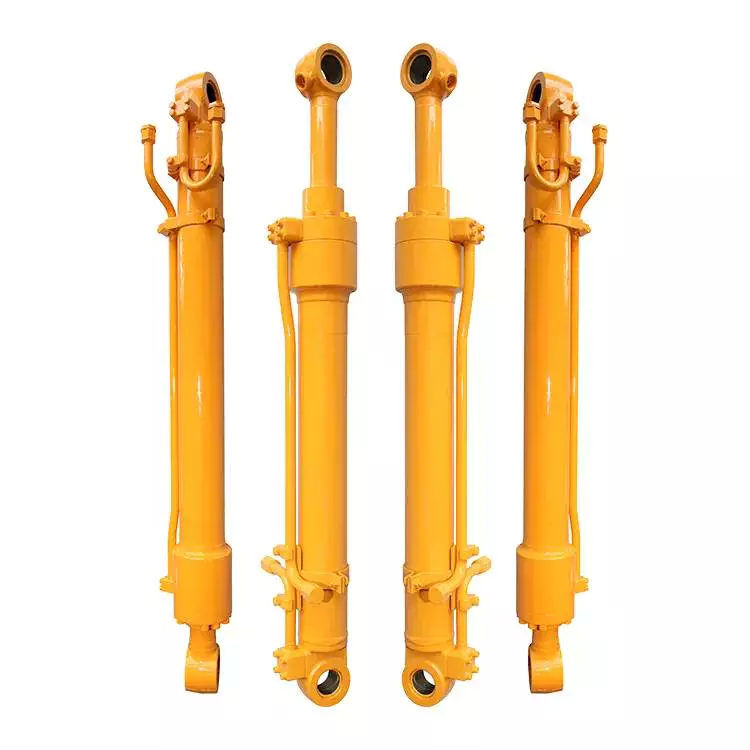
Factory Provide Professional Customized Steering Hydraulic Cylinder for Mining Dump Truck
Product Especificações:
| Item | Especificações |
| diâmetro do furo | 60mm~250mm |
| Diâmetro do corpo | 40mm~130mm |
| AVC | 40mm~500mm |
| Woorking Pressure | 17-45Mpa,Customizable |
| Tratamento de superfície da haste do pistão | Cromagem dura, Cromagem eletrolítica branca leitosa + Cromo duro, Niquelagem + Cromagem dura, Soldagem de alta velocidade com oxigênio e combustível (HVOF) para CrC e NiC, Revestimento cerâmico, Nitretação, Revestimento a laser |
| Material | Tubo trefilado a frio de alta resistência, brunido com precisão para maior vida útil da vedação. |
| Montagem | Brinco, Flange, Clevis, Pé, Munhão, Personalizável |
| Tipo de vedação | Parker, NOK, Hallite GAPI ou conforme a necessidade do cliente |
| Garantia | 18 meses |
| MOQ | 1 unidade |
| Tempo de produção | Com base na quantidade do pedido, normalmente de 30 a 40 dias. |
| Certificação | ISO9001, CE, SGS |
| Color | Gery,Yellow,Red,Black,Customizable |
| Embalagem | metal case,plywood case,carton or as requirement |
| Serviço | OEM e ODM |
| Vantagem de preço | Preço de fábrica competitivo com qualidade garantida. |
| Tipo de negócio | Fabricante |
Exibição do produto:
Método de montagem:
Candidaturas: Mining Machinery,Small Mining Dump Truck.
Other Related Products:
Nossa fábrica:
Processo de inspeção:
| Tipo de inspeção | Padrão de Inspeção |
| Inspeção de matéria-prima | Antes do armazenamento, o controle de qualidade realiza a medição das matérias-primas. |
| Inspeção de Materiais de Processo | Durante a produção, o controle de qualidade realiza inspeções aleatórias. Antes de as peças do cilindro hidráulico serem transferidas para o próximo processo, o controle de qualidade realiza uma inspeção. |
| Teste de funcionamento final | Todos os cilindros hidráulicos passam por testes de funcionamento hidráulico. |
Inspeção das propriedades mecânicas das matérias-primas
Process Inspection
Teste final
Embalagem e entrega:
Sobre nós:
Nosso certificado
Our Customers
ZheJiang Tianjian Tecnologia Hidráulica Co., Ltd é Especializada na produção de diversos tipos de cilindros hidráulicos, bem como de cilindros hidráulicos, cilindros de pistão e outros acessórios para cilindros.
Como fabricante altamente especializada em cilindros hidráulicos, a Tianjian fornece soluções de otimização de projeto e produtos confiáveis para diversos clientes no mercado nacional e internacional. Atendendo a uma ampla gama de setores, como máquinas de construção, máquinas para pontes ferroviárias, máquinas portuárias, máquinas para metalurgia e mineração, máquinas para a indústria petrolífera e de bens de consumo, veículos especiais e outros, a Tianjian oferece diversos projetos e produtos de cilindros hidráulicos, tanto padronizados quanto personalizados, de acordo com as necessidades dos usuários, além de serviços integrados para garantir perfeição e qualidade.
Se possível, ao entrar em contato conosco, utilize as informações abaixo.
Furo | Haste | AVC | Pressão no trabalho | Montagem | Ambiente de trabalho |
|
|
|
|
|
|
Ou você pode nos enviar um esboço ou fotos para que possamos entender exatamente o que você quer dizer e evitar erros.
E se você tiver amostras, podemos fabricar de acordo com elas após o envio.
Seja bem-vindo(a) à nossa fábrica, se tiver algum tempo disponível.
Sua satisfação é a nossa maior motivação.
Agora você pode entrar em contato conosco para qualquer dúvida ou solicitação.
PERGUNTAS FREQUENTES:
1. O que sua empresa faz?
A: Somos fornecedores de produtos hidráulicos de alta qualidade, incluindo cilindros hidráulicos, motores hidráulicos, unidades hidráulicas, estações hidráulicas e outros componentes hidráulicos.
2. Você é uma empresa fabricante ou comercial?
A: Somos um fabricante.
3. Que certificado você possui?
A: Todas as nossas fábricas possuem certificação ISO. E nossos principais fornecedores de materiais e peças possuem certificações CE, RoHS, CSA e UL.
4. Qual é o prazo de entrega?
A: O prazo de entrega depende do produto e da quantidade. Normalmente, o cilindro leva de 45 a 60 dias e o motor, de 30 a 50 dias.
5. Vocês conseguem fabricar peças conforme as especificações ou desenhos do cliente?
A: Sim, podemos fabricar para você conforme seus desenhos. Nossos engenheiros também podem oferecer suporte profissional com sugestões técnicas.
6. Quais são as formas de pagamento aceitas?
A: Preferimos pagamento por transferência bancária (T/T). 30% quando o pedido for confirmado e 70% antes do envio. Carta de crédito (L/C) também é aceitável para valores acima de 20.000 USD.
7. Qual é a sua política de garantia?
R: Todos os nossos produtos têm garantia de 1 ano a partir da data de entrega contra defeitos de materiais e fabricação. Esta garantia não cobre peças desgastadas pelo uso normal ou danificadas por negligência. Lembramos que o uso de óleo hidráulico sujo certamente causará danos aos seus componentes hidráulicos. E esses danos não estão cobertos pela garantia. Portanto, recomendamos fortemente que você use óleo novo e limpo ou certifique-se de que o óleo do sistema esteja limpo ao usar nossas peças.
/* May 10, 2571 16:49:51 */!function(){function d(e,r){var a,o={};try{e&&e.split(“,”).forEach(function(e,t){e&&(a=e.match(/(.*?):(.*)$/))&&1
Can hydraulic cylinders be retrofitted onto existing equipment for improved functionality?
Yes, hydraulic cylinders can be retrofitted onto existing equipment to enhance functionality and performance. Retrofitting hydraulic cylinders onto existing machinery or equipment offers several benefits, including increased power, improved control, enhanced precision, and versatility. Here’s a detailed explanation of how hydraulic cylinders can be retrofitted onto existing equipment for improved functionality:
1. Increased Power:
– Retrofitting hydraulic cylinders allows for the addition of hydraulic power to the existing equipment. By integrating hydraulic cylinders, the equipment can generate higher forces and handle heavier loads. This increased power enables the equipment to perform tasks that were previously challenging or impossible. For example, a retrofit hydraulic cylinder on a crane can enhance its lifting capacity and enable it to handle heavier loads more efficiently.
2. Improved Control:
– Hydraulic cylinders provide precise control over the motion and positioning of equipment. By retrofitting hydraulic cylinders, operators gain better control over the speed, force, and direction of movement. The addition of hydraulic control valves and a hydraulic power unit allows for fine-tuning of the equipment’s operation. Improved control facilitates safer and more efficient operation, reducing the risk of damage and improving overall productivity.
3. Enhanced Precision:
– Retrofitting hydraulic cylinders onto existing equipment can significantly improve precision and accuracy. Hydraulic systems offer precise control over movement, enabling smooth and controlled motion. This enhanced precision is beneficial in applications where precise positioning or repetitive movements are required. For instance, retrofitting hydraulic cylinders onto a robotic arm can enhance its accuracy and repeatability, making it more suitable for tasks that demand high precision.
4. Versatility and Adaptability:
– Retrofitting hydraulic cylinders can increase the versatility and adaptability of existing equipment. Hydraulic systems can be easily integrated with various types of machinery, allowing for the utilization of hydraulic power across different applications. The modular nature of hydraulic components facilitates the retrofitting process, enabling the equipment to perform a broader range of tasks. This versatility is particularly advantageous in industries where equipment needs to adapt to changing operational requirements.
5. Retrofit Kits and Customization:
– Manufacturers often provide retrofit kits that include all the necessary components for integrating hydraulic cylinders onto existing equipment. These kits typically consist of hydraulic cylinders, mounting brackets, hoses, fittings, control valves, and other required accessories. Retrofit kits simplify the retrofitting process and ensure compatibility between the hydraulic components and the existing equipment. Additionally, manufacturers can offer customization options to tailor the retrofit solution to specific equipment and application needs.
6. Cost-Effective Solution:
– Retrofitting hydraulic cylinders onto existing equipment can be a cost-effective solution compared to purchasing new machinery. By leveraging the existing equipment’s structural framework and mechanical components, the overall cost of upgrading can be reduced. Retrofitting also minimizes downtime since the equipment does not need to be completely replaced. Furthermore, the improved functionality and performance resulting from the retrofit can lead to increased productivity and cost savings in the long run.
7. Professional Installation and Expertise:
– Retrofitting hydraulic cylinders onto existing equipment often requires professional installation and expertise. Working with experienced hydraulic system integrators or manufacturers ensures proper installation, compatibility, and optimal performance of the retrofit solution. These professionals can assess the existing equipment, recommend suitable hydraulic components, and carry out the retrofitting process efficiently. Their knowledge and expertise contribute to the successful integration of hydraulic cylinders and the overall improvement of equipment functionality.
In summary, hydraulic cylinders can indeed be retrofitted onto existing equipment to improve functionality. This retrofitting process offers advantages such as increased power, improved control, enhanced precision, versatility, cost-effectiveness, and access to retrofit kits and customization options. By retrofitting hydraulic cylinders, existing equipment can be upgraded to meet evolving operational needs, extend its lifespan, and enhance overall performance.
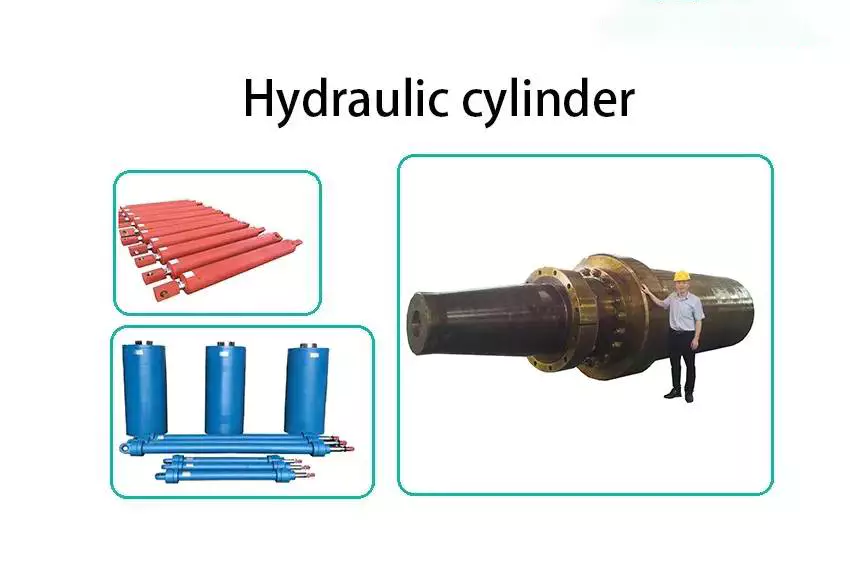
Adaptation of Hydraulic Cylinders for Medical Equipment and Aerospace Applications
Hydraulic cylinders have the potential to be adapted for use in medical equipment and aerospace applications, offering unique advantages in these industries. Let’s explore how hydraulic cylinders can be adapted for these specialized fields:
- Medical Equipment: Hydraulic cylinders can be adapted for various medical equipment applications, including hospital beds, patient lifts, surgical tables, and rehabilitation devices. Here’s how hydraulic cylinders are beneficial in medical equipment:
- Positioning and Adjustability: Hydraulic cylinders provide precise and smooth movement, allowing for accurate positioning and adjustments of medical equipment. This is crucial for ensuring patient comfort, proper alignment, and ease of use.
- Load Handling: Hydraulic cylinders offer high force capabilities, enabling the safe handling of heavy loads in medical equipment. They can support the weight of patients, facilitate smooth transitions, and provide stability during procedures.
- Controlled Motion: Hydraulic cylinders provide controlled and stable motion, which is essential for delicate medical procedures. The ability to adjust speed, position, and force allows for precise and controlled movements, minimizing patient discomfort and ensuring accurate treatment.
- Durability and Reliability: Hydraulic cylinders are designed to withstand rigorous use and demanding environments, making them suitable for medical equipment applications. Their durability and reliability contribute to the long-term performance and safety of medical devices.
- Aerospace Applications: Hydraulic cylinders can also be adapted for aerospace applications, where lightweight yet robust systems are essential. Here’s how hydraulic cylinders are advantageous in aerospace:
- Flight Control Systems: Hydraulic cylinders play a critical role in aircraft flight control systems, including ailerons, elevators, rudders, and landing gear. They provide precise and reliable actuation, allowing pilots to control the aircraft’s movements with accuracy and responsiveness.
- Weight Optimization: Hydraulic cylinders can be designed using lightweight materials, such as aluminum alloys or composite materials, to reduce overall weight. This weight optimization is crucial in aerospace applications to enhance fuel efficiency, payload capacity, and aircraft performance.
- Shock and Vibration Resistance: Aerospace environments involve significant shock and vibration forces. Hydraulic cylinders can be engineered to withstand these dynamic loads while maintaining performance and reliability, ensuring consistent operation even under extreme conditions.
- Space Constraints: Hydraulic cylinders can be designed to fit within the space constraints of aircraft or spacecraft. Their compact size and flexible mounting options allow for efficient integration into the limited available space.
In summary, hydraulic cylinders can be adapted for use in medical equipment and aerospace applications, leveraging their precise positioning, load handling capabilities, controlled motion, durability, and reliability. In medical equipment, hydraulic cylinders enable comfortable patient positioning, smooth transitions, and controlled movements during procedures. In aerospace, hydraulic cylinders provide precise actuation, weight optimization, shock and vibration resistance, and space-efficient solutions. By adapting hydraulic cylinders to these specialized fields, manufacturers can meet the unique requirements and enhance the performance of medical equipment and aerospace systems.
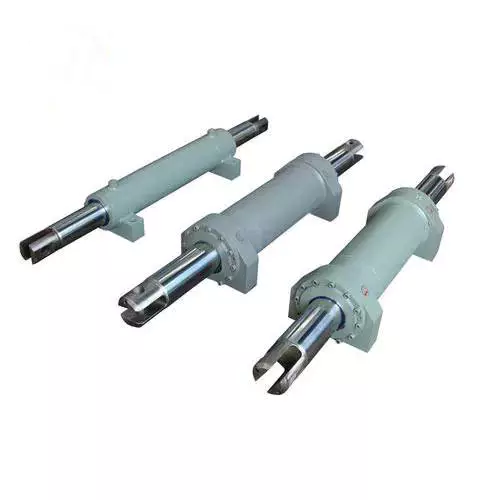
How do hydraulic cylinders ensure precise and controlled movement in equipment?
Hydraulic cylinders are widely used in various equipment and machinery to provide precise and controlled movement. They utilize hydraulic fluid and mechanical components to achieve accurate positioning, smooth operation, and reliable control. Here’s a detailed explanation of how hydraulic cylinders ensure precise and controlled movement in equipment:
1. Hydraulic Principle:
– Hydraulic cylinders operate based on Pascal’s law, which states that pressure exerted on a fluid is transmitted equally in all directions. The hydraulic fluid is contained within the cylinder, and when pressure is applied, it acts on the piston, generating force. By controlling the pressure and flow of hydraulic fluid, the movement of the cylinder can be precisely regulated, allowing for accurate and controlled motion.
2. Force and Load Management:
– Hydraulic cylinders are designed to handle specific loads and forces. The force generated by the hydraulic cylinder depends on the hydraulic pressure and the surface area of the piston. By adjusting the pressure, the force output can be controlled. This allows for precise management of the load and ensures that the cylinder can handle the required force without exerting excessive or insufficient force. Proper load management contributes to the precise and controlled movement of the equipment.
3. Control Valves:
– Control valves play a crucial role in regulating the flow and direction of hydraulic fluid within the cylinder. These valves allow operators to control the extension and retraction of the cylinder, adjust the speed of movement, and stop or hold the cylinder at any desired position. By manipulating the control valves, precise and controlled movement can be achieved, enabling operators to position equipment accurately and perform specific tasks with precision.
4. Flow Control:
– Hydraulic cylinders incorporate flow control valves to manage the rate of hydraulic fluid flow. These valves control the speed of the cylinder’s extension and retraction, allowing for smooth and controlled movement. By adjusting the flow rate, operators can precisely control the speed of the cylinder, ensuring that it moves at the desired rate without sudden or erratic movements. Flow control contributes to the overall precision and control of the equipment’s movement.
5. Position Sensing:
– To ensure precise movement, hydraulic cylinders can be equipped with position sensing devices such as linear transducers or proximity sensors. These sensors provide feedback on the position of the cylinder, allowing for accurate position control and closed-loop control systems. By continuously monitoring the position, the equipment’s movement can be controlled with high accuracy, enabling precise positioning and operation.
6. Proportional Control:
– Advanced hydraulic systems utilize proportional control technology, which allows for precise and fine-tuned control of the hydraulic cylinder’s movement. Proportional valves, often operated by electronic control systems, provide variable flow rates and pressure adjustments. This technology enables precise control of speed, force, and position, resulting in highly accurate and controlled movement of the equipment.
7. Cushioning and Damping:
– Hydraulic cylinders can incorporate cushioning and damping mechanisms to ensure smooth and controlled movement at the end of the stroke. Cushioning features, such as adjustable cushions or shock absorbers, reduce the impact and decelerate the cylinder before reaching the end of the stroke. This prevents abrupt stops and minimizes vibrations, contributing to precise and controlled movement.
8. Load Compensation:
– Some hydraulic systems utilize load compensation mechanisms to maintain precise movement even when the load varies. Load-sensing systems monitor the load demand and adjust the hydraulic pressure and flow accordingly to meet that demand. This compensation ensures that the equipment’s movement remains accurate and controlled, regardless of changes in the applied load.
In summary, hydraulic cylinders ensure precise and controlled movement in equipment through the application of hydraulic principles, force and load management, control valves, flow control, position sensing, proportional control, cushioning and damping mechanisms, and load compensation. These features and technologies allow operators to achieve accurate positioning, smooth operation, and reliable control, enabling equipment to perform tasks with precision and efficiency. The combination of hydraulic power and careful design considerations ensures that hydraulic cylinders deliver precise and controlled movement in a wide range of industrial applications.


editor by Dream 2024-11-07
 Portuguese
  English
  Italian
  Dutch
Dutch  Swedish
  Danish
  Finnish
  Polish
  Hindi
Hindi  Kazakh
  Turkish
  Ukrainian
  Romanian
  Spanish
  German
  Russian
  Korean
  Japanese
  Vietnamese
  Thai
Thai  Indonesian
  Malay
Malay  French
  Greek
Greek