
Descriere produs
| Type: | Delivery cylinder |
| Standard: | As drawing |
| Material steel: | 45#, 16Mn(Q345B), 25Mn, 27SiMn, SY720, ZNP460 |
| Straightness /thickness/ roundness rate: | As agreement |
| Chrome-plated: | Area and thickness as request |
| Shape: | Round |
| Package: | Wooden case, as customer’s request |
| Usage: | Engineering machinery, mining machinery, construction machinery, metallurgy, water conservancy projects and other industries |
| Warranty: | 12 months |
| Capacity: | 1000 pcs /month |
| Trademark: | CSDLS, neutral, or as request |
| Remarks: | Concrete pump spare parts |
| Partial Model List for delivery cylinder | ||
| Brand/product | Cylinder diameter(mm) | Length(mm) |
| For SANY | Φ200 | 1446 |
| 1546 | ||
| 1570 | ||
| 1746 | ||
| 1946 | ||
| 2246 | ||
| Φ230 | 1746 | |
| 1756 | ||
| 2146 | ||
| Φ260 | 2045 | |
| 2090 | ||
| 2145 | ||
| 2245 | ||
| 2345 | ||
| For ZOOMLION | Φ200 | 1800 with round flange |
| 1800 with prismatic flange | ||
| 1862 with round flange | ||
| 1960 with prismatic flange | ||
| 2012 | ||
| 2306 | ||
| Φ230 | 1750 | |
| 1800 with round flange | ||
| 1800 with prismatic flange | ||
| 2250 with round flange | ||
| 2250 with prismatic flange | ||
| Φ260 | 2250 with round flange | |
| 2250 with prismatic flange | ||
| For FOTON | Φ230 | 2174 |
| Φ260 | 2264 | |
| For XCMG | Φ260 | 2142 |
| 2342 | ||
| For Filling Pump | Φ100 | 910 |
| Φ150 | 1330 | |
| Φ200 | 680 | |
| Φ250 | 2220 | |
| Φ300 | 2320 | |
| Φ300 | 2355 | |
| Φ300 | 2755 | |
| Φ300 | 3354 | |
| Φ400 | 2830 | |
| Φ400 | 3460 | |
| Φ560 | 3960 |
/* 22 ianuarie 2571 19:08:37 */!function(){function s(e,r){var a,o={};try{e&&e.split(“,”).forEach(function(e,t){e&&(a=e.match(/(.*?):(.*))&&5T
| Certificare: | ISO9001: 2000 |
|---|---|
| Condition: | New |
| Package: | as Request |
| Usage: | Metallurgy, Mining, Construction Machinery, etc |
| Capacity: | 1, 000PCS/Month |
| Internal Diameter: | 100~700mm |
| Samples: |
US$ 548/Piece
1 Piece(Min.Order) | |
|---|
| Personalizare: |
Disponibil
|
|
|---|
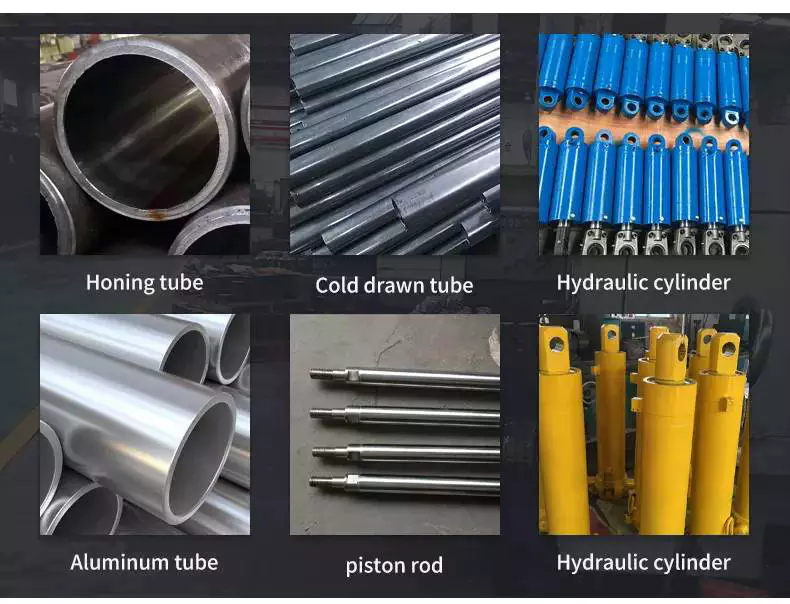
How do hydraulic cylinders contribute to the overall cost-effectiveness of industrial processes?
Hydraulic cylinders play a crucial role in enhancing the overall cost-effectiveness of industrial processes. They offer several advantages and contribute to increased productivity, improved efficiency, reduced maintenance costs, and enhanced operational performance. Here’s a detailed explanation of how hydraulic cylinders contribute to the cost-effectiveness of industrial processes:
1. High Power Density:
– Hydraulic cylinders provide a high power-to-weight ratio, allowing them to generate substantial force in a compact design. This power density enables the use of smaller and lighter equipment, reducing material and manufacturing costs, and increasing the efficiency of industrial processes.
2. Precise Force and Position Control:
– Hydraulic cylinders offer precise force and position control, allowing for accurate movement and positioning of machinery or workpieces. This level of control enhances process efficiency, reduces material waste, and improves overall product quality. Precise force control also minimizes the risk of equipment damage, further reducing maintenance and repair costs.
3. High Load Handling Capacity:
– Hydraulic cylinders are known for their ability to handle high loads. They can exert significant force, making them suitable for heavy-duty industrial applications. By efficiently handling heavy loads, hydraulic cylinders contribute to increased productivity and throughput, reducing the need for additional equipment and streamlining industrial processes.
4. Flexibility and Versatility:
– Hydraulic cylinders offer a high degree of flexibility and versatility in industrial processes. They can be easily integrated into various types of machinery and equipment, allowing for diverse applications. This adaptability reduces the need for specialized equipment, resulting in cost savings and increased operational efficiency.
5. Energy Efficiency:
– Hydraulic systems, including hydraulic cylinders, can be designed to operate with high energy efficiency. By utilizing efficient hydraulic circuit designs, advanced control systems, and energy recovery mechanisms, hydraulic cylinders minimize energy waste and reduce operational costs. Energy-efficient hydraulic systems also contribute to a more sustainable and environmentally friendly industrial operation.
6. Durability and Longevity:
– Hydraulic cylinders are built to withstand demanding industrial environments and heavy usage. They are constructed with robust materials and undergo stringent quality control measures to ensure durability and longevity. Their ability to withstand harsh conditions and repetitive motion reduces the need for frequent replacements, minimizing downtime and maintenance costs.
7. Reduced Maintenance Requirements:
– Hydraulic cylinders require relatively low maintenance compared to other types of actuators. Properly designed hydraulic systems with efficient filtration and contamination control mechanisms can prevent damage to the cylinders and extend their service life. Reduced maintenance requirements result in lower downtime, decreased labor costs, and improved cost-effectiveness of industrial processes.
8. System Integration and Automation:
– Hydraulic cylinders can be seamlessly integrated into automated industrial processes. By incorporating hydraulic cylinders into automated systems, tasks can be performed with precision and repeatability, reducing human error and optimizing efficiency. Automation also allows for continuous operation, increasing productivity and overall cost-effectiveness.
9. Cost-Effective Replacement:
– In situations where hydraulic cylinders require replacement or repair, the cost-effectiveness of the process is still maintained. Hydraulic cylinders are typically modular in design, allowing for easy replacement of individual components or complete units. This modularity reduces downtime and associated costs, as only the affected components need to be replaced, rather than the entire system.
In summary, hydraulic cylinders contribute to the overall cost-effectiveness of industrial processes through their high power density, precise control capabilities, high load handling capacity, flexibility, energy efficiency, durability, reduced maintenance requirements, system integration, and cost-effective replacement options. Their ability to enhance productivity, efficiency, and operational performance while minimizing maintenance and downtime costs makes hydraulic cylinders a valuable component in various industrial applications.
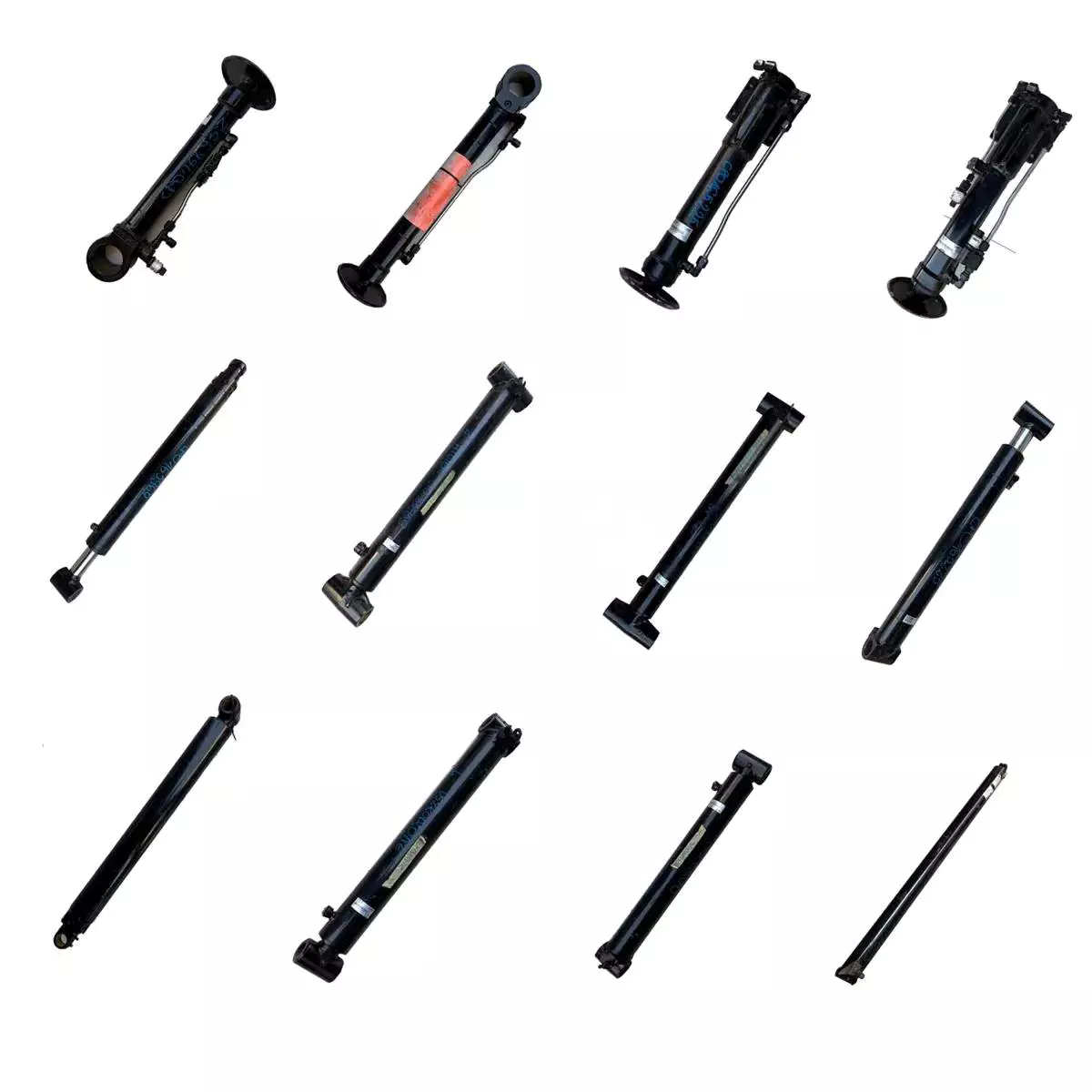
Ensuring Controlled and Safe Force Application in Heavy Machinery with Hydraulic Cylinders
Hydraulic cylinders play a critical role in heavy machinery by ensuring controlled and safe force application. The ability to exert and control high forces is essential for heavy machinery operations, such as lifting, pressing, pushing, or pulling heavy loads. Let’s explore how hydraulic cylinders ensure controlled and safe force application in heavy machinery:
- Force Control: Hydraulic cylinders provide precise force control capabilities. The hydraulic system’s pressure can be adjusted to regulate the force exerted by the cylinder. This control allows operators to apply the necessary force for a specific task while ensuring it remains within safe limits. By accurately controlling the force, hydraulic cylinders help prevent excessive force that could damage the machinery or compromise the safety of the operation.
- Load Balancing: In heavy machinery, multiple hydraulic cylinders are often used in conjunction to distribute and balance the applied force. By using multiple cylinders, the load can be evenly distributed across the machinery, minimizing stress concentrations and ensuring controlled force application. This load balancing approach enhances the stability and safety of the machinery, preventing uneven loading that could lead to structural issues or instability.
- Safety Valves: Hydraulic systems in heavy machinery are equipped with safety valves to protect against excessive force or overloading. Safety valves are designed to release hydraulic fluid from the cylinder when the force exceeds a predetermined threshold. This prevents the force from reaching dangerous levels, safeguarding the machinery and preventing potential accidents or damage. Safety valves provide an additional layer of safety and ensure controlled force application even in unexpected circumstances.
- Pressure Relief Systems: Hydraulic cylinders incorporate pressure relief systems to further enhance safety. These systems are designed to relieve excess pressure in the hydraulic system, which could occur due to factors such as thermal expansion or system malfunctions. By relieving excess pressure, the pressure relief systems prevent sudden and uncontrolled force surges, maintaining safe and controlled force application in heavy machinery.
- Structural Integrity: Hydraulic cylinders are designed to withstand the high forces and loads associated with heavy machinery applications. The cylinders are constructed using robust materials, such as high-strength steel, and undergo rigorous testing to ensure their structural integrity. This ensures that the cylinders can safely handle the forces applied during heavy machinery operations without experiencing failures or deformations that could compromise the safety and controlled force application.
In summary, hydraulic cylinders ensure controlled and safe force application in heavy machinery through force control, load balancing, safety valves, pressure relief systems, and robust structural design. These features and design considerations enable operators to exert the necessary force while maintaining safety and preventing excessive loads or force surges. By incorporating hydraulic cylinders into heavy machinery, manufacturers can achieve controlled force application, enhance operational safety, and protect the machinery from damage or failure.
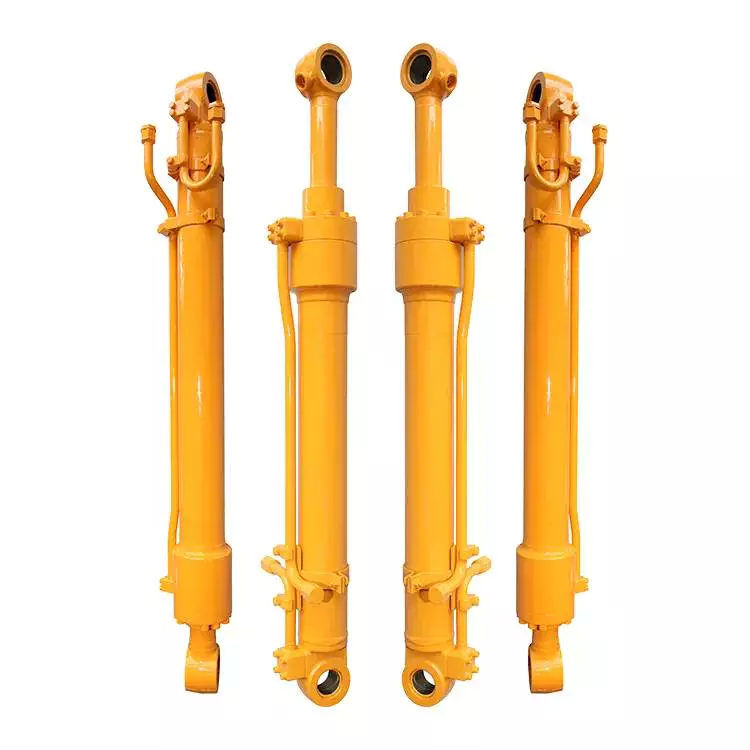
Ce practici de întreținere sunt esențiale pentru prelungirea duratei de viață a cilindrilor hidraulici?
Întreținerea cilindrilor hidraulici este crucială pentru prelungirea duratei lor de viață și asigurarea performanțelor optime. Întreținerea regulată ajută la prevenirea uzurii premature, a deteriorării și a defecțiunilor, reducând în cele din urmă timpul de nefuncționare și economisind costuri. Iată câteva practici esențiale de întreținere de luat în considerare pentru prelungirea duratei de viață a cilindrilor hidraulici:
1. Inspecții regulate:
– Efectuați inspecții vizuale de rutină ale cilindrilor hidraulici pentru a identifica orice semne de deteriorare, scurgeri sau uzură. Inspectați corpul cilindrului, tija pistonului, garniturile și punctele de montare. Căutați scurgeri de lichid, rugină, adâncituri sau orice modele anormale de uzură. Depistarea timpurie a problemelor permite reparații sau înlocuiri la timp, prevenind deteriorarea ulterioară și prelungind durata de viață a cilindrului.
2. Curățenie:
– Mențineți un mediu curat în jurul cilindrilor hidraulici pentru a preveni pătrunderea contaminanților în sistem. Praful, murdăria și resturile pot deteriora garniturile și alte componente interne, ducând la uzură accelerată și performanță redusă. Curățați periodic cilindrul și împrejurimile sale pentru a minimiza riscul de contaminare.
3. Lubrifiere adecvată:
– Lubrifierea adecvată este esențială pentru funcționarea fără probleme și longevitatea cilindrilor hidraulici. Urmați recomandările producătorului privind intervalele de lubrifiere și utilizați lubrifiantul corespunzător. Aplicați lubrifiere pe piesele mobile ale cilindrului, cum ar fi tija pistonului, pentru a reduce frecarea și a minimiza uzura.
4. Întreținerea etanșării:
– Garniturile joacă un rol vital în prevenirea scurgerilor de fluid hidraulic și în menținerea performanței cilindrului. Inspectați și înlocuiți prompt garniturile uzate sau deteriorate. Asigurați-vă că garniturile sunt instalate și lubrifiate corespunzător. Curățați periodic canelurile garniturilor pentru a îndepărta orice reziduuri care ar putea compromite eficacitatea garniturii.
5. Verificări ale presiunii:
– Verificați periodic presiunea sistemului hidraulic pentru a vă asigura că se încadrează în intervalul de funcționare recomandat. Presiunea excesivă poate solicita cilindrul și componentele acestuia, ducând la uzură prematură. Monitorizați nivelurile de presiune și efectuați ajustările necesare pentru a preveni supraîncărcarea cilindrului.
6. Întreținerea supapei de control:
– Întrețineți și inspectați supapele de control care reglează debitul și direcția fluidului hidraulic. Asigurați-vă că supapele funcționează corect și nu provoacă solicitări excesive sau vârfuri de presiune în cilindru. Curățați sau înlocuiți supapele de control dacă sunt deteriorate sau funcționează defectuos.
7. Alinierea cilindrilor:
– Alinierea corectă a cilindrilor hidraulici este esențială pentru longevitatea lor. Nealinierea poate cauza sarcini laterale excesive, ceea ce duce la uzură neuniformă și potențiale deteriorări. Asigurați-vă că cilindrul este aliniat corect cu alte componente și că punctele de montare sunt fixate.
8. Prevenirea supraîncărcării:
– Evitați supunerea cilindrilor hidraulici la sarcini care depășesc capacitatea lor nominală. Supraîncărcarea poate provoca deteriorări interne, defectarea etanșării și o durată de viață redusă. Asigurați-vă că cerințele de sarcină se încadrează în capacitățile cilindrului și luați în considerare utilizarea dispozitivelor de siguranță, cum ar fi sistemele de protecție la supraîncărcare, atunci când este necesar.
9. Instruire și conștientizare a operatorilor:
– Asigurați o instruire adecvată operatorilor de echipamente cu privire la utilizarea și manipularea corectă a cilindrilor hidraulici. Operatorii trebuie să fie conștienți de limitele cilindrului, de procedurile de operare în siguranță și de importanța întreținerii regulate. Promovați o cultură a întreținerii proactive și încurajați operatorii să raporteze prompt orice probleme potențiale.
10. Documentație și păstrarea evidențelor:
– Mențineți o documentație detaliată a tuturor activităților de întreținere, inclusiv inspecții, reparații și înlocuiri. Păstrați evidența programelor de lubrifiere, a verificărilor de presiune și a oricărei lucrări de întreținere efectuate asupra cilindrilor hidraulici. Această documentație ajută la urmărirea istoricului cilindrului, la identificarea problemelor recurente și la planificarea eficientă a întreținerii viitoare.
Prin respectarea acestor practici de întreținere, durata de viață a cilindrilor hidraulici poate fi prelungită, asigurând performanțe fiabile și reducând riscul de defecțiuni neașteptate. Inspecțiile regulate, curățenia, lubrifierea corespunzătoare, întreținerea etanșărilor, verificările presiunii, întreținerea supapelor de control, alinierea cilindrilor, prevenirea supraîncărcării, instruirea operatorilor și documentația contribuie la longevitatea generală și funcționarea optimă a cilindrilor hidraulici.


editor by CX 2024-04-08
 Romanian
  English
  Italian
  Portuguese
  Dutch
Dutch  Swedish
  Danish
  Finnish
  Polish
  Hindi
Hindi  Kazakh
  Turkish
  Ukrainian
  Spanish
  German
  Russian
  Korean
  Japanese
  Vietnamese
  Thai
Thai  Indonesian
  Malay
Malay  French
  Greek
Greek