
Mô tả sản phẩm
| Type: | Delivery cylinder |
| Standard: | As drawing |
| Material steel: | 45#, 16Mn(Q345B), 25Mn, 27SiMn, SY720, ZNP460 |
| Straightness /thickness/ roundness rate: | As agreement |
| Chrome-plated: | Area and thickness as request |
| Shape: | Round |
| Package: | Wooden case, as customer’s request |
| Usage: | Engineering machinery, mining machinery, construction machinery, metallurgy, water conservancy projects and other industries |
| Warranty: | 12 months |
| Capacity: | 1000 pcs /month |
| Trademark: | CSDLS, neutral, or as request |
| Remarks: | Concrete pump spare parts |
| Partial Model List for delivery cylinder | ||
| Brand/product | Cylinder diameter(mm) | Length(mm) |
| For SANY | Φ200 | 1446 |
| 1546 | ||
| 1570 | ||
| 1746 | ||
| 1946 | ||
| 2246 | ||
| Φ230 | 1746 | |
| 1756 | ||
| 2146 | ||
| Φ260 | 2045 | |
| 2090 | ||
| 2145 | ||
| 2245 | ||
| 2345 | ||
| For ZOOMLION | Φ200 | 1800 with round flange |
| 1800 with prismatic flange | ||
| 1862 with round flange | ||
| 1960 with prismatic flange | ||
| 2012 | ||
| 2306 | ||
| Φ230 | 1750 | |
| 1800 with round flange | ||
| 1800 with prismatic flange | ||
| 2250 with round flange | ||
| 2250 with prismatic flange | ||
| Φ260 | 2250 with round flange | |
| 2250 with prismatic flange | ||
| For FOTON | Φ230 | 2174 |
| Φ260 | 2264 | |
| For XCMG | Φ260 | 2142 |
| 2342 | ||
| For Filling Pump | Φ100 | 910 |
| Φ150 | 1330 | |
| Φ200 | 680 | |
| Φ250 | 2220 | |
| Φ300 | 2320 | |
| Φ300 | 2355 | |
| Φ300 | 2755 | |
| Φ300 | 3354 | |
| Φ400 | 2830 | |
| Φ400 | 3460 | |
| Φ560 | 3960 |
/* January 22, 2571 19:08:37 */!function(){function s(e,r){var a,o={};try{e&&e.split(“,”).forEach(function(e,t){e&&(a=e.match(/(.*?):(.*)$/))&&1
| Certification: | ISO9001: 2000 |
|---|---|
| Condition: | New |
| Package: | as Request |
| Usage: | Metallurgy, Mining, Construction Machinery, etc |
| Capacity: | 1, 000PCS/Month |
| Internal Diameter: | 100~700mm |
| Samples: | US$ 548/Piece 1 Piece(Min.Order) | |
|---|
| Customization: | Available |
|
|---|
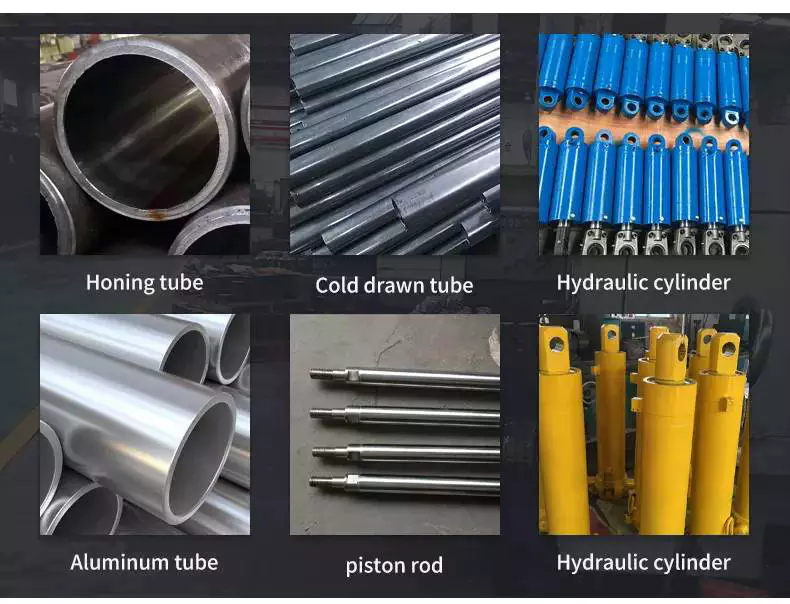
How do hydraulic cylinders contribute to the overall cost-effectiveness of industrial processes?
Hydraulic cylinders play a crucial role in enhancing the overall cost-effectiveness of industrial processes. They offer several advantages and contribute to increased productivity, improved efficiency, reduced maintenance costs, and enhanced operational performance. Here’s a detailed explanation of how hydraulic cylinders contribute to the cost-effectiveness of industrial processes:
1. High Power Density:
– Hydraulic cylinders provide a high power-to-weight ratio, allowing them to generate substantial force in a compact design. This power density enables the use of smaller and lighter equipment, reducing material and manufacturing costs, and increasing the efficiency of industrial processes.
2. Precise Force and Position Control:
– Hydraulic cylinders offer precise force and position control, allowing for accurate movement and positioning of machinery or workpieces. This level of control enhances process efficiency, reduces material waste, and improves overall product quality. Precise force control also minimizes the risk of equipment damage, further reducing maintenance and repair costs.
3. High Load Handling Capacity:
– Hydraulic cylinders are known for their ability to handle high loads. They can exert significant force, making them suitable for heavy-duty industrial applications. By efficiently handling heavy loads, hydraulic cylinders contribute to increased productivity and throughput, reducing the need for additional equipment and streamlining industrial processes.
4. Flexibility and Versatility:
– Hydraulic cylinders offer a high degree of flexibility and versatility in industrial processes. They can be easily integrated into various types of machinery and equipment, allowing for diverse applications. This adaptability reduces the need for specialized equipment, resulting in cost savings and increased operational efficiency.
5. Energy Efficiency:
– Hydraulic systems, including hydraulic cylinders, can be designed to operate with high energy efficiency. By utilizing efficient hydraulic circuit designs, advanced control systems, and energy recovery mechanisms, hydraulic cylinders minimize energy waste and reduce operational costs. Energy-efficient hydraulic systems also contribute to a more sustainable and environmentally friendly industrial operation.
6. Durability and Longevity:
– Hydraulic cylinders are built to withstand demanding industrial environments and heavy usage. They are constructed with robust materials and undergo stringent quality control measures to ensure durability and longevity. Their ability to withstand harsh conditions and repetitive motion reduces the need for frequent replacements, minimizing downtime and maintenance costs.
7. Reduced Maintenance Requirements:
– Hydraulic cylinders require relatively low maintenance compared to other types of actuators. Properly designed hydraulic systems with efficient filtration and contamination control mechanisms can prevent damage to the cylinders and extend their service life. Reduced maintenance requirements result in lower downtime, decreased labor costs, and improved cost-effectiveness of industrial processes.
8. System Integration and Automation:
– Hydraulic cylinders can be seamlessly integrated into automated industrial processes. By incorporating hydraulic cylinders into automated systems, tasks can be performed with precision and repeatability, reducing human error and optimizing efficiency. Automation also allows for continuous operation, increasing productivity and overall cost-effectiveness.
9. Cost-Effective Replacement:
– In situations where hydraulic cylinders require replacement or repair, the cost-effectiveness of the process is still maintained. Hydraulic cylinders are typically modular in design, allowing for easy replacement of individual components or complete units. This modularity reduces downtime and associated costs, as only the affected components need to be replaced, rather than the entire system.
In summary, hydraulic cylinders contribute to the overall cost-effectiveness of industrial processes through their high power density, precise control capabilities, high load handling capacity, flexibility, energy efficiency, durability, reduced maintenance requirements, system integration, and cost-effective replacement options. Their ability to enhance productivity, efficiency, and operational performance while minimizing maintenance and downtime costs makes hydraulic cylinders a valuable component in various industrial applications.
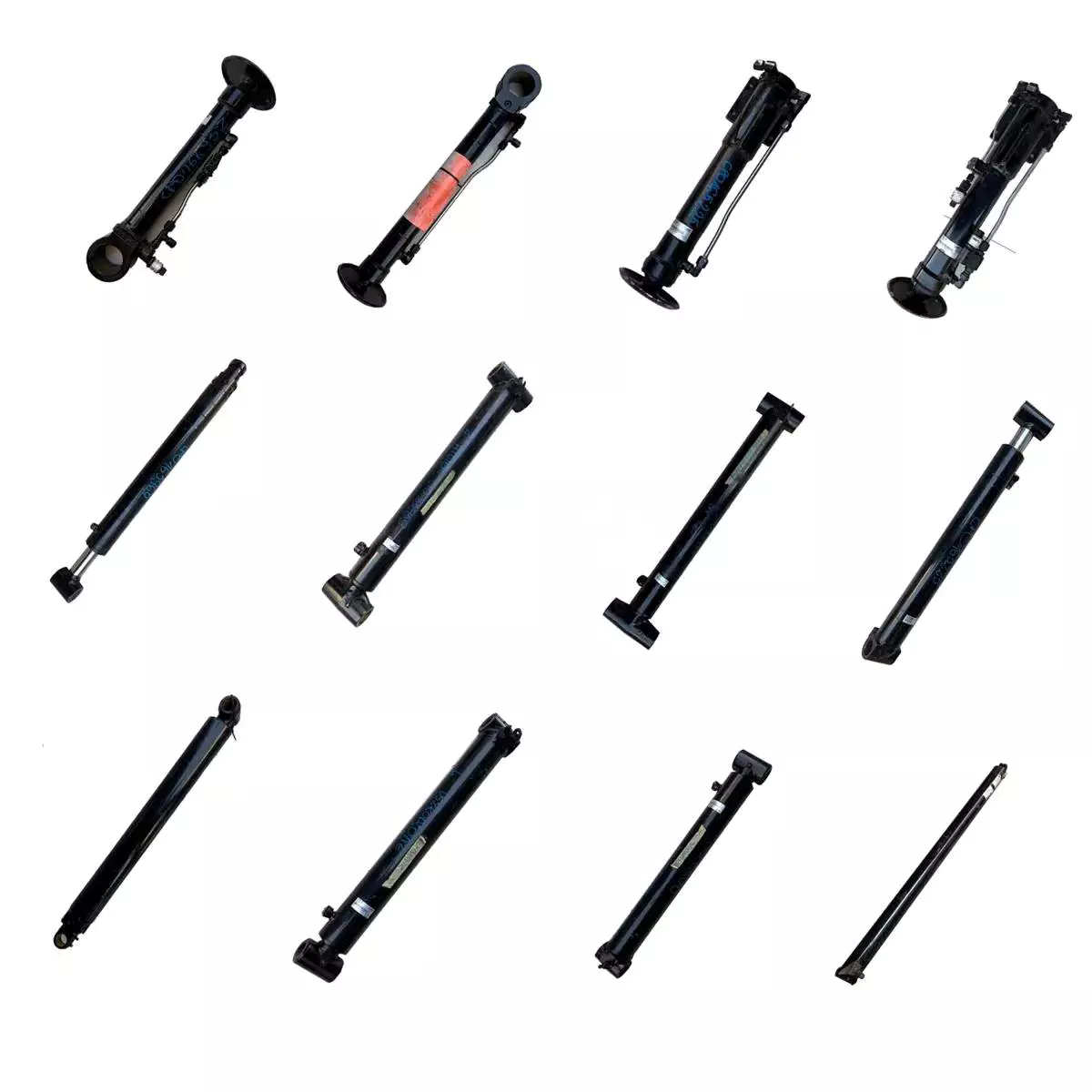
Ensuring Controlled and Safe Force Application in Heavy Machinery with Hydraulic Cylinders
Hydraulic cylinders play a critical role in heavy machinery by ensuring controlled and safe force application. The ability to exert and control high forces is essential for heavy machinery operations, such as lifting, pressing, pushing, or pulling heavy loads. Let’s explore how hydraulic cylinders ensure controlled and safe force application in heavy machinery:
- Force Control: Hydraulic cylinders provide precise force control capabilities. The hydraulic system’s pressure can be adjusted to regulate the force exerted by the cylinder. This control allows operators to apply the necessary force for a specific task while ensuring it remains within safe limits. By accurately controlling the force, hydraulic cylinders help prevent excessive force that could damage the machinery or compromise the safety of the operation.
- Load Balancing: In heavy machinery, multiple hydraulic cylinders are often used in conjunction to distribute and balance the applied force. By using multiple cylinders, the load can be evenly distributed across the machinery, minimizing stress concentrations and ensuring controlled force application. This load balancing approach enhances the stability and safety of the machinery, preventing uneven loading that could lead to structural issues or instability.
- Safety Valves: Hydraulic systems in heavy machinery are equipped with safety valves to protect against excessive force or overloading. Safety valves are designed to release hydraulic fluid from the cylinder when the force exceeds a predetermined threshold. This prevents the force from reaching dangerous levels, safeguarding the machinery and preventing potential accidents or damage. Safety valves provide an additional layer of safety and ensure controlled force application even in unexpected circumstances.
- Pressure Relief Systems: Hydraulic cylinders incorporate pressure relief systems to further enhance safety. These systems are designed to relieve excess pressure in the hydraulic system, which could occur due to factors such as thermal expansion or system malfunctions. By relieving excess pressure, the pressure relief systems prevent sudden and uncontrolled force surges, maintaining safe and controlled force application in heavy machinery.
- Structural Integrity: Hydraulic cylinders are designed to withstand the high forces and loads associated with heavy machinery applications. The cylinders are constructed using robust materials, such as high-strength steel, and undergo rigorous testing to ensure their structural integrity. This ensures that the cylinders can safely handle the forces applied during heavy machinery operations without experiencing failures or deformations that could compromise the safety and controlled force application.
In summary, hydraulic cylinders ensure controlled and safe force application in heavy machinery through force control, load balancing, safety valves, pressure relief systems, and robust structural design. These features and design considerations enable operators to exert the necessary force while maintaining safety and preventing excessive loads or force surges. By incorporating hydraulic cylinders into heavy machinery, manufacturers can achieve controlled force application, enhance operational safety, and protect the machinery from damage or failure.
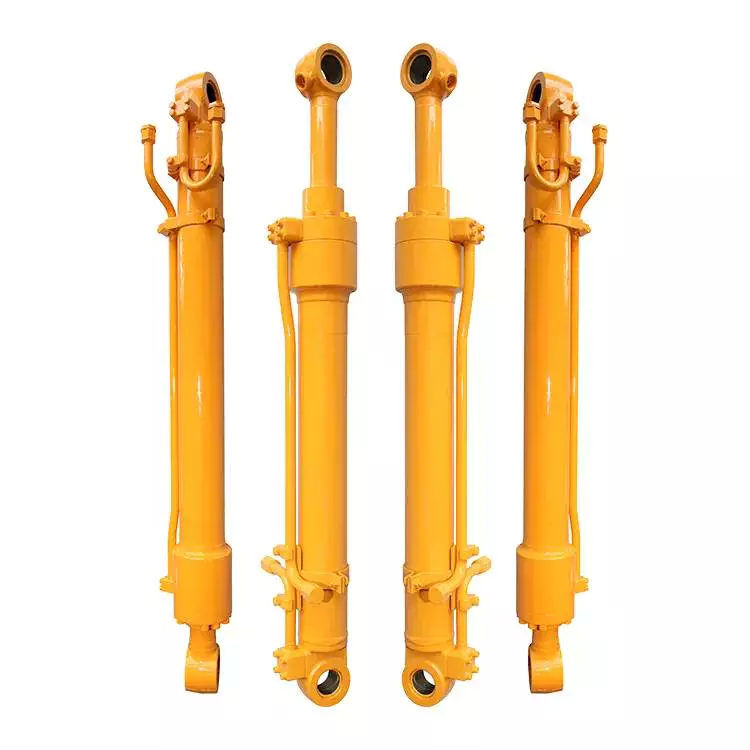
Những biện pháp bảo dưỡng nào là cần thiết để kéo dài tuổi thọ của xi lanh thủy lực?
Việc bảo trì xi lanh thủy lực rất quan trọng để kéo dài tuổi thọ và đảm bảo hiệu suất tối ưu. Bảo trì thường xuyên giúp ngăn ngừa sự hao mòn, hư hỏng và sự cố sớm, cuối cùng giúp giảm thời gian ngừng hoạt động và tiết kiệm chi phí. Dưới đây là một số biện pháp bảo trì thiết yếu cần xem xét để kéo dài tuổi thọ của xi lanh thủy lực:
1. Kiểm tra định kỳ:
– Tiến hành kiểm tra trực quan định kỳ các xi lanh thủy lực để phát hiện bất kỳ dấu hiệu hư hỏng, rò rỉ hoặc mài mòn nào. Kiểm tra thân xi lanh, cần piston, gioăng và các điểm lắp đặt. Tìm kiếm các vết rò rỉ chất lỏng, rỉ sét, vết lõm hoặc bất kỳ kiểu mài mòn bất thường nào. Phát hiện sớm các vấn đề cho phép sửa chữa hoặc thay thế kịp thời, ngăn ngừa hư hỏng thêm và kéo dài tuổi thọ của xi lanh.
2. Vệ sinh:
– Duy trì môi trường sạch sẽ xung quanh các xi lanh thủy lực để ngăn ngừa chất gây ô nhiễm xâm nhập vào hệ thống. Bụi, bẩn và mảnh vụn có thể làm hỏng các gioăng và các bộ phận bên trong khác, dẫn đến mài mòn nhanh hơn và giảm hiệu suất. Thường xuyên vệ sinh xi lanh và khu vực xung quanh để giảm thiểu nguy cơ ô nhiễm.
3. Bôi trơn đúng cách:
– Bôi trơn đầy đủ là yếu tố then chốt cho hoạt động trơn tru và tuổi thọ của xi lanh thủy lực. Hãy tuân theo khuyến nghị của nhà sản xuất về khoảng thời gian bôi trơn và sử dụng chất bôi trơn phù hợp. Bôi trơn các bộ phận chuyển động của xi lanh, chẳng hạn như cần piston, để giảm ma sát và giảm thiểu mài mòn.
4. Bảo trì gioăng:
– Gioăng phớt đóng vai trò quan trọng trong việc ngăn ngừa rò rỉ dầu thủy lực và duy trì hiệu suất hoạt động của xi lanh. Kiểm tra và thay thế gioăng phớt bị mòn hoặc hư hỏng kịp thời. Đảm bảo gioăng phớt được lắp đặt và bôi trơn đúng cách. Thường xuyên làm sạch các rãnh gioăng để loại bỏ cặn bẩn có thể làm giảm hiệu quả làm kín.
5. Kiểm tra áp suất:
– Thường xuyên kiểm tra áp suất hệ thống thủy lực để đảm bảo nằm trong phạm vi hoạt động khuyến nghị. Áp suất quá cao có thể gây quá tải cho xi lanh và các bộ phận của nó, dẫn đến mài mòn sớm. Theo dõi mức áp suất và điều chỉnh khi cần thiết để tránh quá tải xi lanh.
6. Bảo trì van điều khiển:
– Bảo trì và kiểm tra các van điều khiển điều chỉnh lưu lượng và hướng dòng chảy của chất lỏng thủy lực. Đảm bảo các van hoạt động chính xác và không gây ra ứng suất quá mức hoặc tăng áp đột ngột trong xi lanh. Vệ sinh hoặc thay thế các van điều khiển nếu chúng bị hư hỏng hoặc trục trặc.
7. Căn chỉnh xi lanh:
– Việc căn chỉnh đúng cách các xi lanh thủy lực là rất cần thiết cho tuổi thọ của chúng. Sự sai lệch có thể gây ra tải trọng ngang quá mức, dẫn đến mài mòn không đều và có thể gây hư hỏng. Hãy đảm bảo rằng xi lanh được căn chỉnh chính xác với các bộ phận khác và các điểm lắp đặt được chắc chắn.
8. Ngăn ngừa tình trạng quá tải:
– Tránh để các xi lanh thủy lực chịu tải vượt quá khả năng định mức của chúng. Quá tải có thể gây hư hỏng bên trong, hỏng gioăng và giảm tuổi thọ. Hãy đảm bảo rằng yêu cầu tải trọng nằm trong khả năng của xi lanh và cân nhắc sử dụng các thiết bị an toàn như hệ thống bảo vệ quá tải khi cần thiết.
9. Đào tạo và nâng cao nhận thức của người vận hành:
– Cung cấp đào tạo bài bản cho người vận hành thiết bị về cách sử dụng và vận hành đúng cách các xi lanh thủy lực. Người vận hành cần nắm rõ giới hạn của xi lanh, quy trình vận hành an toàn và tầm quan trọng của việc bảo trì thường xuyên. Thúc đẩy văn hóa bảo trì chủ động và khuyến khích người vận hành báo cáo kịp thời mọi sự cố tiềm ẩn.
10. Tài liệu và lưu trữ hồ sơ:
– Duy trì hồ sơ chi tiết về tất cả các hoạt động bảo trì, bao gồm kiểm tra, sửa chữa và thay thế. Ghi chép lịch bôi trơn, kiểm tra áp suất và mọi hoạt động bảo trì được thực hiện trên các xi lanh thủy lực. Hồ sơ này giúp theo dõi lịch sử của xi lanh, xác định các sự cố thường xuyên xảy ra và lập kế hoạch bảo trì hiệu quả trong tương lai.
Bằng cách tuân thủ các quy trình bảo dưỡng này, tuổi thọ của xi lanh thủy lực có thể được kéo dài, đảm bảo hiệu suất đáng tin cậy và giảm nguy cơ hỏng hóc bất ngờ. Việc kiểm tra thường xuyên, vệ sinh, bôi trơn đúng cách, bảo dưỡng gioăng, kiểm tra áp suất, bảo dưỡng van điều khiển, căn chỉnh xi lanh, ngăn ngừa quá tải, đào tạo người vận hành và lập hồ sơ góp phần vào tuổi thọ tổng thể và hoạt động tối ưu của xi lanh thủy lực.


editor by CX 2024-04-08
 Vietnamese
  English
  Italian
  Portuguese
  Dutch
Dutch  Swedish
  Danish
  Finnish
  Polish
  Hindi
Hindi  Kazakh
  Turkish
  Ukrainian
  Romanian
  Spanish
  German
  Russian
  Korean
  Japanese
  Thai
Thai  Indonesian
  Malay
Malay  French
  Greek
Greek