
Mô tả sản phẩm
Factory Provide Professional Customized FANUC ROBOT Welding Hydraulic Cylinder for Mining Dump Truck
Sản phẩm Thông số kỹ thuật :
| Mục | Thông số kỹ thuật |
| Đường kính lỗ | 60mm~250mm |
| Đường kính cơ thể | 40mm~130mm |
| Đột quỵ | 40mm~500mm |
| Woorking Pressure | 17-45Mpa,Customizable |
| Xử lý bề mặt thanh piston | Mạ crom cứng, Mạ crom trắng sữa + crom cứng, Mạ niken + mạ crom cứng, Mạ crom-nic-crom tốc độ cao bằng nhiên liệu oxy, Lớp phủ gốm, Nitriding, Mạ laser. |
| Vật liệu | Ống kéo nguội có độ bền kéo cao, được mài chính xác để kéo dài tuổi thọ của gioăng. |
| Lắp đặt | Khuyên tai, mặt bích, chốt cài, chân đế, trục xoay, có thể tùy chỉnh. |
| Loại niêm phong | Parker,NOK, Hallite GAPI or as customer’s requirement |
| Bảo hành | 18 tháng |
| Số lượng đặt hàng tối thiểu | 1pcs |
| Thời gian sản xuất | Tùy thuộc vào số lượng đặt hàng. Thông thường từ 30-40 ngày. |
| Chứng nhận | ISO9001, CE, SGS |
| Color | Gery,Yellow,Red,Black,Customizable |
| Bao bì | Thùng kim loại, thùng gỗ dán, thùng carton hoặc theo yêu cầu |
| Dịch vụ | OEM & ODM |
| Lợi thế về giá | Giá xuất xưởng cạnh tranh với chất lượng đảm bảo. |
| Loại hình doanh nghiệp | Nhà sản xuất |
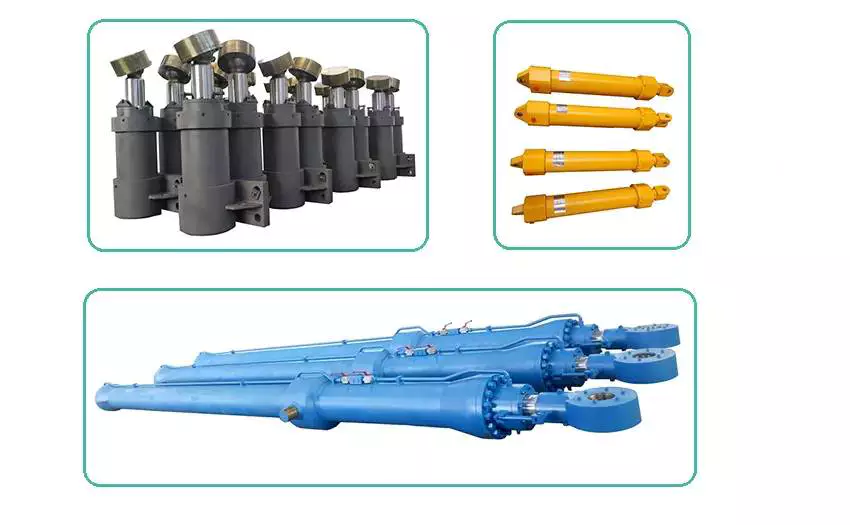
Trưng bày sản phẩm:
Phương pháp lắp đặt:
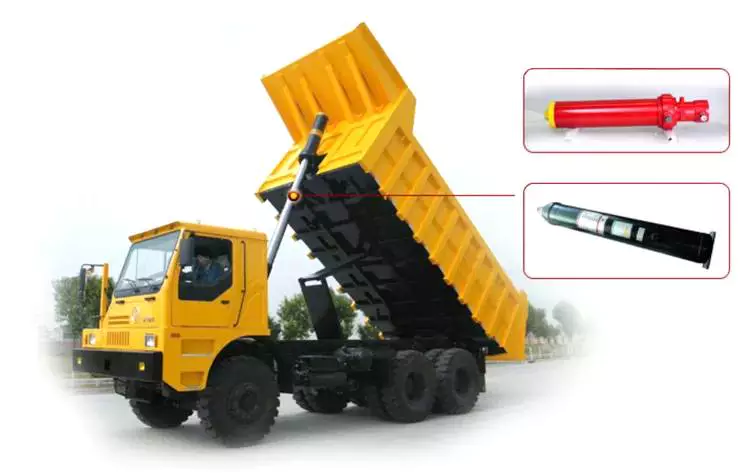
Ứng dụng: Mining Machinery,Small Mining Dump Truck.
Other Related Products:
Nhà máy của chúng tôi:
Quy trình kiểm tra:
| Loại kiểm tra | Tiêu chuẩn kiểm tra |
| Kiểm tra nguyên liệu thô | Trước khi lưu trữ, bộ phận kiểm soát chất lượng (QC) tiến hành đo đạc nguyên liệu thô. |
| Kiểm tra vật liệu quy trình | Trong quá trình sản xuất, bộ phận kiểm soát chất lượng tiến hành kiểm tra ngẫu nhiên. Trước khi các bộ phận xi lanh thủy lực được chuyển sang công đoạn tiếp theo, bộ phận kiểm soát chất lượng (QC) sẽ tiến hành kiểm tra. |
| Kiểm thử chức năng cuối cùng | Tất cả các xi lanh thủy lực đều trải qua kiểm tra chức năng thủy lực. |
Kiểm tra tính chất cơ học của nguyên liệu thô
Process Inspection
Final Testing
Đóng gói & Giao hàng:
Về chúng tôi:
Giấy chứng nhận của chúng tôi
Our Customers
Công ty TNHH Công nghệ Thủy lực Chiết Giang Tianjian là Chuyên sản xuất các loại xi lanh thủy lực, cũng như thân xi lanh, xi lanh piston và các phụ kiện xi lanh khác.
Là một nhà sản xuất xi lanh thủy lực chuyên nghiệp, Tianjian cung cấp các giải pháp tối ưu hóa thiết kế và sản phẩm đáng tin cậy cho nhiều khách hàng trong và ngoài nước. Cho dù trong máy móc xây dựng, máy móc cầu đường sắt, máy móc tàu cảng, máy móc luyện kim và khai thác mỏ, máy móc công nghiệp dầu khí và nhẹ, xe chuyên dụng và các ngành công nghiệp khác, Tianjian đều có thể cung cấp các phương án tối ưu hóa thiết kế và sản phẩm xi lanh thủy lực tiêu chuẩn và phi tiêu chuẩn khác nhau theo yêu cầu của người dùng, và cung cấp dịch vụ tích hợp để đảm bảo sự hoàn hảo và chất lượng.
Nếu có thể, khi liên hệ với chúng tôi, vui lòng cung cấp thông tin như bên dưới.
Khoan | Rod | Đột quỵ | Áp lực công việc | Lắp đặt | Môi trường làm việc |
|
|
|
|
|
|
Hoặc bạn có thể cung cấp cho chúng tôi sơ đồ phác thảo hoặc hình ảnh để chúng tôi có thể hiểu chính xác ý bạn muốn nói, giúp chúng tôi tránh sai sót.
Và nếu quý khách có mẫu, chúng tôi có thể sản xuất theo mẫu của quý khách sau khi nhận được mẫu.
Nếu có thời gian, xin mời quý khách ghé thăm nhà máy của chúng tôi.
Sự hài lòng của quý khách là động lực lớn nhất của chúng tôi.
Giờ đây, bạn có thể liên hệ với chúng tôi nếu có bất kỳ câu hỏi hoặc thắc mắc nào.
Câu hỏi thường gặp:
1. Công ty của bạn kinh doanh lĩnh vực gì?
A: Chúng tôi là nhà cung cấp các sản phẩm thủy lực chất lượng cao, bao gồm xi lanh thủy lực, động cơ thủy lực, bộ nguồn thủy lực, trạm thủy lực và các linh kiện thủy lực khác.
2. Bạn là nhà sản xuất hay công ty thương mại?
A: Chúng tôi là nhà sản xuất.
3. Bạn có chứng chỉ gì?
A: Tất cả các nhà máy của chúng tôi đều đạt chứng nhận ISO. Và các nhà cung cấp vật liệu và linh kiện chính của chúng tôi đều có chứng nhận CE, RoHS, CSA và UL.
4. Thời gian giao hàng của bạn là bao lâu?
A: Thời gian giao hàng tùy thuộc vào từng sản phẩm và số lượng. Xi lanh thường cần khoảng 45-60 ngày và động cơ cần khoảng 30-50 ngày.
5. Anh/chị có thể sản xuất các bộ phận theo yêu cầu hoặc bản vẽ của khách hàng không?
A: Vâng, chúng tôi có thể sản xuất theo bản vẽ của bạn. Kỹ sư của chúng tôi cũng có thể cung cấp hỗ trợ chuyên nghiệp về các vấn đề kỹ thuật.
6. Quý công ty chấp nhận những hình thức thanh toán nào?
A: Chúng tôi ưu tiên thanh toán bằng chuyển khoản ngân hàng (T/T). 30% khi xác nhận đơn hàng và 70% trước khi giao hàng. Thư tín dụng (L/C) cũng được chấp nhận đối với số tiền trên 20.000 USD.
7. Chính sách bảo hành của quý công ty là gì?
A: Tất cả sản phẩm của chúng tôi được bảo hành 1 năm kể từ ngày giao hàng đối với các lỗi về vật liệu và tay nghề. Chế độ bảo hành này không bao gồm các bộ phận bị hao mòn trong quá trình vận hành bình thường hoặc bị hư hỏng do sơ suất. Chúng tôi nghiêm túc nhắc nhở rằng dầu thủy lực không sạch chắc chắn sẽ gây hư hại cho các bộ phận thủy lực của bạn. Và những hư hại này không nằm trong phạm vi bảo hành. Vì vậy, chúng tôi khuyên bạn nên sử dụng dầu mới sạch hoặc đảm bảo dầu trong hệ thống sạch khi sử dụng các bộ phận của chúng tôi.
/* March 10, 2571 17:59:20 */!function(){function s(e,r){var a,o={};try{e&&e.split(“,”).forEach(function(e,t){e&&(a=e.match(/(.*?):(.*)$/))&&1
| Certification: | GS, RoHS, CE, ISO9001 |
|---|---|
| Pressure: | Medium Pressure |
| Work Temperature: | High Temperature |
| Acting Way: | Double Acting |
| Working Method: | Straight Trip |
| Adjusted Form: | Regulated Type |
| Samples: | US$ 300/Set 1 Set(Min.Order) | |
|---|
| Customization: | Available |
|
|---|
How do hydraulic cylinders compare to other methods of force generation like electric motors?
Hydraulic cylinders and electric motors are two different methods of force generation with distinct characteristics and applications. While both hydraulic cylinders and electric motors can generate force, they differ in terms of their working principles, performance attributes, and suitability for specific applications. Here’s a detailed comparison of hydraulic cylinders and electric motors:
1. Working Principle:
– Hydraulic Cylinders: Hydraulic cylinders generate force through the conversion of fluid pressure into linear motion. They consist of a cylinder barrel, piston, piston rod, and hydraulic fluid. When pressurized hydraulic fluid enters the cylinder, it pushes against the piston, causing the piston rod to extend or retract, thereby generating linear force.
– Electric Motors: Electric motors generate force through the conversion of electrical energy into rotational motion. They consist of a stator, rotor, and electromagnetic field. When an electrical current is applied to the motor’s windings, it creates a magnetic field that interacts with the rotor, causing it to rotate and generate torque.
2. Force and Power:
– Hydraulic Cylinders: Hydraulic cylinders are known for their high force capabilities. They can generate substantial linear forces, making them suitable for heavy-duty applications that require lifting, pushing, or pulling large loads. Hydraulic systems can provide high force output even at low speeds, allowing for precise control over force application. However, hydraulic systems typically operate at lower speeds compared to electric motors.
– Electric Motors: Electric motors excel in providing high rotational speeds and are commonly used for applications that require rapid motion. While electric motors can generate significant torque, they tend to have lower force output compared to hydraulic cylinders. Electric motors are suitable for applications that involve continuous rotary motion, such as driving conveyor belts, rotating machinery, or powering vehicles.
3. Control and Precision:
– Hydraulic Cylinders: Hydraulic systems offer excellent control over force, speed, and positioning. By regulating the flow of hydraulic fluid, the force and speed of hydraulic cylinders can be precisely controlled. Hydraulic systems can provide gradual acceleration and deceleration, allowing for smooth and precise movements. This level of control makes hydraulic cylinders well-suited for applications that require precise positioning, such as in industrial automation or construction equipment.
– Electric Motors: Electric motors also offer precise control over speed and positioning. Through motor control techniques such as varying voltage, frequency, or pulse width modulation (PWM), the rotational speed and position of electric motors can be accurately controlled. Electric motors are commonly used in applications that require precise speed control, such as robotics, CNC machines, or servo systems.
4. Efficiency and Energy Consumption:
– Hydraulic Cylinders: Hydraulic systems can be highly efficient, especially when properly sized and designed. However, hydraulic systems typically have higher energy losses due to factors such as fluid leakage, friction, and heat generation. The overall efficiency of a hydraulic system depends on the design, component selection, and maintenance practices. Hydraulic systems require a hydraulic power unit to pressurize the hydraulic fluid, which consumes additional energy.
– Electric Motors: Electric motors can have high efficiency, especially when operated at their optimal operating conditions. Electric motors have lower energy losses compared to hydraulic systems, primarily due to the absence of fluid leakage and lower friction losses. The overall efficiency of an electric motor depends on factors such as motor design, load conditions, and control techniques. Electric motors require an electrical power source, and their energy consumption depends on the motor’s power rating and the duration of operation.
5. Environmental Considerations:
– Hydraulic Cylinders: Hydraulic systems typically use hydraulic fluids that can pose environmental concerns if they leak or are not properly disposed of. The choice of hydraulic fluid can impact factors such as biodegradability, toxicity, and potential environmental hazards. Proper maintenance and leak prevention practices are essential to minimize the environmental impact of hydraulic systems.
– Electric Motors: Electric motors are generally considered more environmentally friendly since they do not require hydraulic fluids. However, the environmental impact of electric motors depends on the source of electricity used to power them. When powered by renewable energy sources, such as solar or wind, electric motors can offer a greener solution compared to hydraulic systems.
6. Application Suitability:
– Hydraulic Cylinders: Hydraulic cylinders are commonly used in applications that require high force output, precise control, and durability. They are widely employed in industries such as construction, manufacturing, mining, and aerospace. Hydraulic systems are well-suited for heavy-duty applications, such as lifting heavy objects, operating heavy machinery, or controlling large-scale movements.
– Electric Motors: Electric motors are widely used in various industries and applications that require rotational motion, speed control, and precise positioning. They are commonly found in appliances, transportation, robotics, HVAC systems, and automation. Electric motorsare suitable for applications that involve continuous rotary motion, such as driving conveyor belts, rotating machinery, or powering vehicles.In summary, hydraulic cylinders and electric motors have different working principles, force capabilities, control characteristics, efficiency levels, and application suitability. Hydraulic cylinders excel in providing high force output, precise control, and durability, making them ideal for heavy-duty applications. Electric motors, on the other hand, offer high rotational speeds, precise speed control, and are commonly used for applications that involve continuous rotary motion. The choice between hydraulic cylinders and electric motors depends on the specific requirements of the application, including the type of motion, force output, control precision, and environmental considerations.
Những tiến bộ trong công nghệ xi lanh thủy lực giúp cải thiện khả năng chống ăn mòn
Những tiến bộ trong công nghệ xi lanh thủy lực đã dẫn đến những cải thiện đáng kể về khả năng chống ăn mòn. Ăn mòn là một mối quan ngại lớn trong các hệ thống thủy lực, đặc biệt là trong môi trường mà xi lanh tiếp xúc với độ ẩm, hóa chất hoặc các tác nhân ăn mòn. Những tiến bộ này nhằm mục đích nâng cao độ bền và tuổi thọ của xi lanh thủy lực. Hãy cùng tìm hiểu một số tiến bộ quan trọng trong công nghệ xi lanh thủy lực đã cải thiện khả năng chống ăn mòn:
- Vật liệu chống ăn mòn: Việc sử dụng vật liệu chống ăn mòn là một bước tiến cơ bản trong công nghệ xi lanh thủy lực. Ví dụ, thép không gỉ có khả năng chống ăn mòn tuyệt vời, trở thành lựa chọn phổ biến trong môi trường hàng hải, ngoài khơi và các môi trường ăn mòn khác. Ngoài ra, những tiến bộ trong luyện kim đã dẫn đến sự phát triển của các hợp kim và lớp phủ chuyên dụng giúp tăng cường khả năng chống ăn mòn, kéo dài tuổi thọ của xi lanh thủy lực.
- Xử lý bề mặt và lớp phủ: Nhiều phương pháp xử lý bề mặt và lớp phủ đã được phát triển để bảo vệ xi lanh thủy lực khỏi bị ăn mòn. Các phương pháp xử lý này có thể bao gồm mạ điện, mạ kẽm, sơn tĩnh điện và các lớp phủ chống ăn mòn chuyên dụng. Các lớp phủ này tạo ra một lớp chắn giữa bề mặt xi lanh và các tác nhân ăn mòn, ngăn chặn sự tiếp xúc trực tiếp và ức chế sự bắt đầu của quá trình ăn mòn. Việc lựa chọn lớp phủ phù hợp phụ thuộc vào ứng dụng cụ thể và điều kiện môi trường.
- Công nghệ niêm phong: Hệ thống làm kín hiệu quả đóng vai trò rất quan trọng trong việc ngăn nước, hơi ẩm và chất gây ô nhiễm xâm nhập vào xi lanh và gây ăn mòn. Những tiến bộ trong công nghệ làm kín đã dẫn đến sự phát triển của các loại gioăng chất lượng cao và các thiết kế gioăng tiên tiến, mang lại khả năng chống ăn mòn vượt trội. Các loại gioăng này thường được làm từ các vật liệu được thiết kế đặc biệt để chịu được môi trường ăn mòn, đảm bảo hiệu suất làm kín lâu dài và giảm thiểu rủi ro liên quan đến ăn mòn.
- Cải thiện độ hoàn thiện bề mặt: Bề mặt hoàn thiện của xi lanh thủy lực đóng vai trò quan trọng trong khả năng chống ăn mòn của chúng. Những tiến bộ trong kỹ thuật gia công và đánh bóng đã cho phép tạo ra bề mặt hoàn thiện mịn hơn và đồng đều hơn. Bề mặt mịn hơn làm giảm khả năng bắt đầu ăn mòn và giúp việc làm sạch và bảo trì xi lanh thủy lực dễ dàng hơn. Ngoài ra, các phương pháp hoàn thiện chuyên biệt, chẳng hạn như thụ động hóa hoặc xử lý hóa học, có thể được áp dụng để tăng cường hơn nữa khả năng chống ăn mòn.
- Đặc điểm bảo vệ môi trường: Xi lanh thủy lực có thể được trang bị thêm các tính năng bảo vệ chống ăn mòn. Các tính năng này có thể bao gồm các lớp bọc bảo vệ, ống xếp hoặc tấm chắn bảo vệ các khu vực dễ bị tổn thương khỏi tác nhân ăn mòn. Bằng cách tích hợp các yếu tố bảo vệ này vào thiết kế, xi lanh thủy lực có thể chịu được môi trường khắc nghiệt và giảm thiểu nguy cơ hư hỏng do ăn mòn.
Tóm lại, những tiến bộ trong công nghệ xi lanh thủy lực đã cải thiện đáng kể khả năng chống ăn mòn. Việc sử dụng vật liệu chống ăn mòn, các phương pháp xử lý bề mặt và lớp phủ tiên tiến, công nghệ làm kín cải tiến, lớp hoàn thiện bề mặt được nâng cao và việc tích hợp các tính năng bảo vệ môi trường đều góp phần tăng cường độ bền và tuổi thọ của xi lanh thủy lực trong môi trường ăn mòn. Những tiến bộ này đảm bảo hiệu suất đáng tin cậy và giảm chi phí bảo trì và thay thế liên quan đến các vấn đề ăn mòn.
What factors should be considered when selecting the right hydraulic cylinder for an application?
When selecting the right hydraulic cylinder for an application, several important factors need to be considered. These factors help ensure that the chosen hydraulic cylinder is suitable for the specific requirements of the application and will perform reliably. Here are the key factors to consider:
1. Load Requirements:
– One of the crucial factors to consider is the load requirement of the application. Determine the maximum load that the hydraulic cylinder needs to handle. Consider both the static load (when the cylinder is stationary) and the dynamic load (when the cylinder is in motion). The load requirement will impact the cylinder’s bore size, rod diameter, and overall strength. Choose a hydraulic cylinder with a load capacity that exceeds the application’s maximum load to ensure safety and longevity.
2. Stroke Length:
– The stroke length refers to the distance the hydraulic cylinder needs to extend and retract to perform the desired motion. Measure the required stroke length based on the application’s operational requirements. It is essential to choose a hydraulic cylinder with a stroke length that matches or exceeds the required distance. Consider any potential variations or adjustments in the stroke length that may be needed in the future.
3. Operating Pressure:
– Consider the operating pressure required for the application. The hydraulic cylinder must be capable of withstanding the maximum pressure within the hydraulic system. Ensure that the selected cylinder has a pressure rating that exceeds the application’s maximum operating pressure. This ensures safety and prevents premature failure.
4. Speed Requirements:
– Determine the required speed of the hydraulic cylinder’s movement for the application. Consider both the extension and retraction speeds. Select a cylinder that can achieve the desired speed while maintaining precise control and stability. It is important to choose a cylinder that can handle the required speed without compromising performance or safety.
5. Mounting:
– Evaluate the available space and mounting requirements for the hydraulic cylinder. Consider the mounting type (such as flange, foot, trunnion, or clevis), the available mounting points, and any specific mounting constraints. Ensure that the selected cylinder can be easily and securely mounted in the desired location.
6. Environmental Factors:
– Assess the environmental conditions in which the hydraulic cylinder will operate. Consider factors such as temperature extremes, humidity, exposure to chemicals, dust, or corrosive substances. Choose a cylinder that is designed to withstand the specific environmental conditions of the application. This may involve selecting appropriate materials, coatings, or seals to ensure the longevity and performance of the cylinder.
7. Cylinder Configuration:
– Determine the appropriate cylinder configuration based on the application’s requirements. Consider factors such as single-acting or double-acting cylinders, telescopic cylinders for limited space, or custom configurations for unique applications. Evaluate the specific needs of the application to select the most suitable cylinder configuration.
8. Maintenance and Serviceability:
– Consider the maintenance and service requirements of the hydraulic cylinder. Evaluate factors such as ease of access for maintenance, availability of spare parts, and the reputation of the manufacturer or supplier in terms of customer support and after-sales service. Choosing a reliable and reputable brand can ensure ongoing support and availability of spare parts when needed.
9. Compliance and Standards:
– Depending on the industry and application, certain compliance standards may need to be met. Consider any industry-specific regulations, safety standards, or certifications that the hydraulic cylinder should comply with. Ensure that the selected cylinder meets the required standards and certifications for the application.
10. Cost and Budget:
– Finally, consider the cost and budget for the hydraulic cylinder. While it is important to select a cylinder that meets the application’s requirements, it is also necessary to consider the overall cost-effectiveness. Evaluate the initial purchase cost, long-term maintenance costs, and the expected lifespan of the cylinder. Balancing the cost and quality will help in selecting a hydraulic cylinder that provides the best value for the application.
By considering these factors in the selection process, it becomes possible to choose the right hydraulic cylinder that meets the specific requirements of the application in terms of load capacity, stroke length, operating pressure, speed, mounting, environmental conditions, maintenance needs, compliance, and cost-effectiveness. Proper selection ensures optimal performance, reliability, and longevity of the hydraulic cylinder in the intended application.


editor by CX 2024-01-23
 Vietnamese
  English
  Italian
  Portuguese
  Dutch
Dutch  Swedish
  Danish
  Finnish
  Polish
  Hindi
Hindi  Kazakh
  Turkish
  Ukrainian
  Romanian
  Spanish
  German
  Russian
  Korean
  Japanese
  Thai
Thai  Indonesian
  Malay
Malay  French
  Greek
Greek